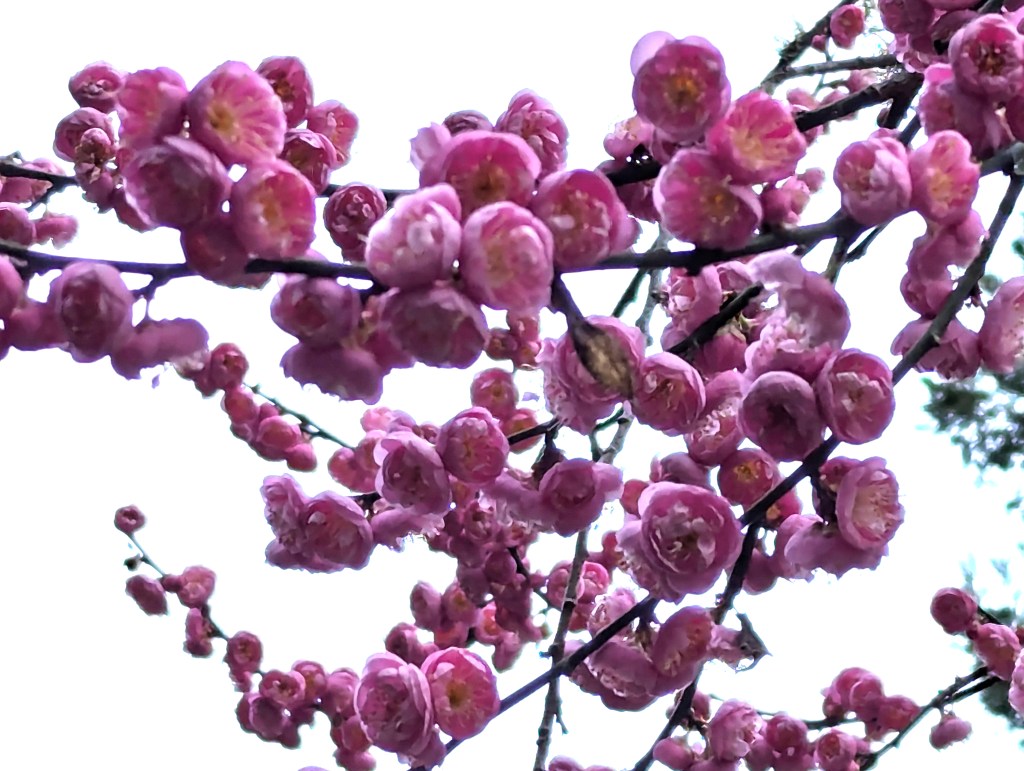
Sunday Best – Landon’s Tree
El Catedral de Santa Clara de Los Gatos is merely the Mount Hermon Memorial Chapel, which is a more proportionate name that does not trivialize its Memorial status. I prefer it to seem grander than it is. Also, I maintain a strict standard for its minimal landscape. All of its flowers bloom exclusively white. However, most of its flowers have been rather pekid because of aggressive invasion of consumptive redwood roots into irrigated areas. Because I can not stop the encroachment, I removed the soil from four primary planters. Within the front pair of planters, I suspended customized planter boxes. Within the rear pair of planters, I suspended a few nursery cans that contain new plants. Redwood roots can not reach into these planters or cans. The recycled vegetation still looks shabby, but should perform better than ever for this summer.
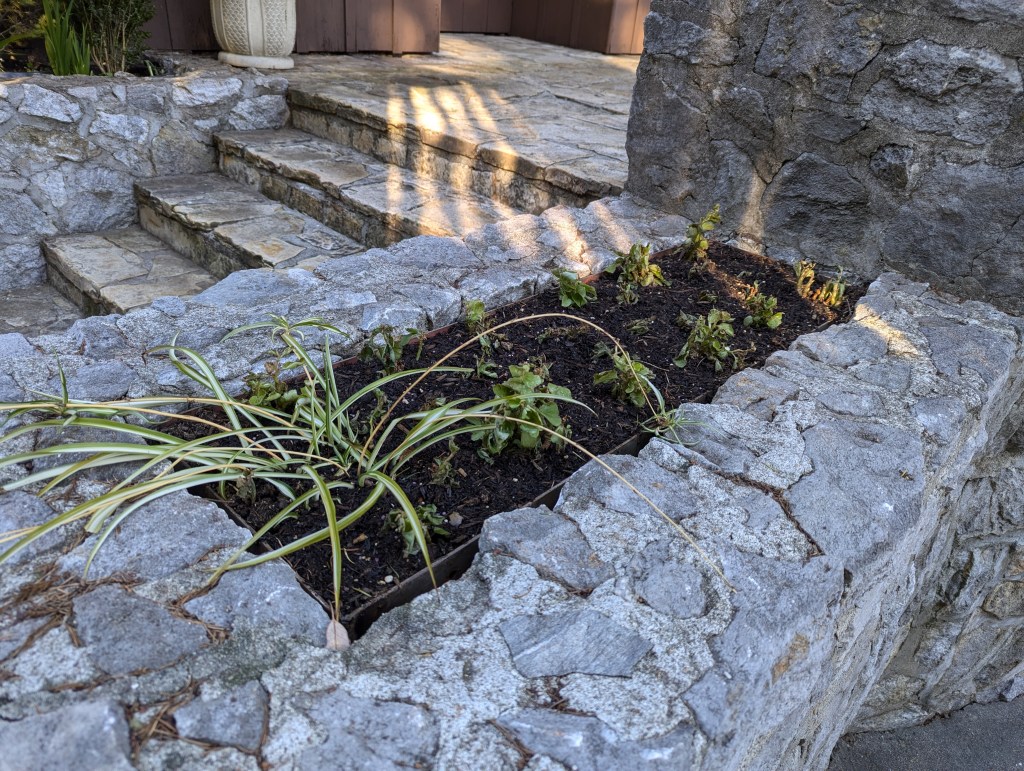
1. Chlorophytum comosum, spider plant, with Begonia X semperflorens–cultorum, wax begonia, are icky through winter, but should perform better than ever by spring without aggressive redwood roots. Their planter within their planter is visible at the front corner.
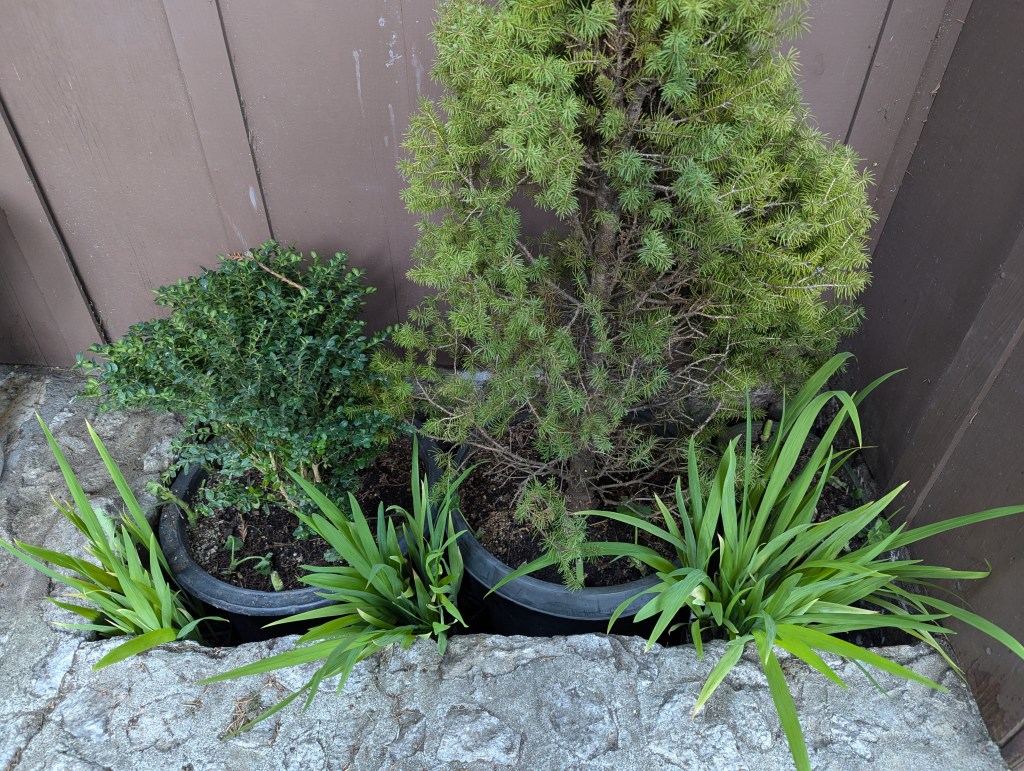
2. Picea glauca var. albertiana ‘Conica’, dwarf Alberta spruce, and Buxus sempervirens, English boxwood, are within #15 cans within their planters. Crocosmia X crocosmiiflora are in 4″ pots. It is trashy, but is for their own protection from aggressive redwood roots.
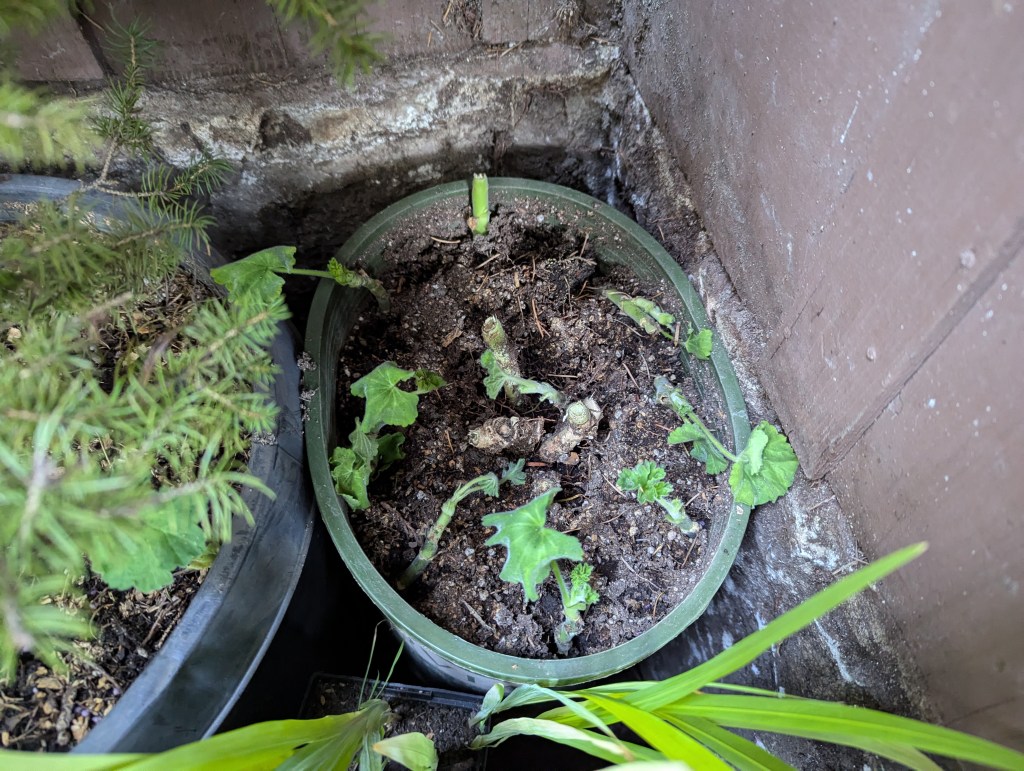
3. Pelargonium X hortorum, zonal geranium, within a #5 can that is obscured to the far right of the items described above, is merely cuttings from what was here prior. They, as well as several more within the cans of the other items, should grow to obscure the cans.
4. Pelargonium X hortorum, zonal geranium, that was here prior to this renovation was abundant enough to provide many more cuttings that we could utilize. These few should obscure these bare bases of a pair of lemon cypress, Cupressus macrocarpa ‘Goldcrest’.

5. Collectively, it should look sharp for summer. The Crocosmia X crocosmiiflora is just temporary until the zonal geranium grows to replace it. I do not want their bright orange bloom within this exclusively white garden. Everything in this new landscape is recycled.

6. It only looks puny from across the road because the stone wall is so big and ominous. It will be prettier as the zonal geranium and wax begonia begin to bloom for late spring. The cypress may not conform to a white garden, but their color is foliar instead of floral.

This is the link for Six on Saturday, for anyone else who would like to participate: https://thepropagatorblog.wordpress.com/2017/09/18/six-on-saturday-a-participant-guide/
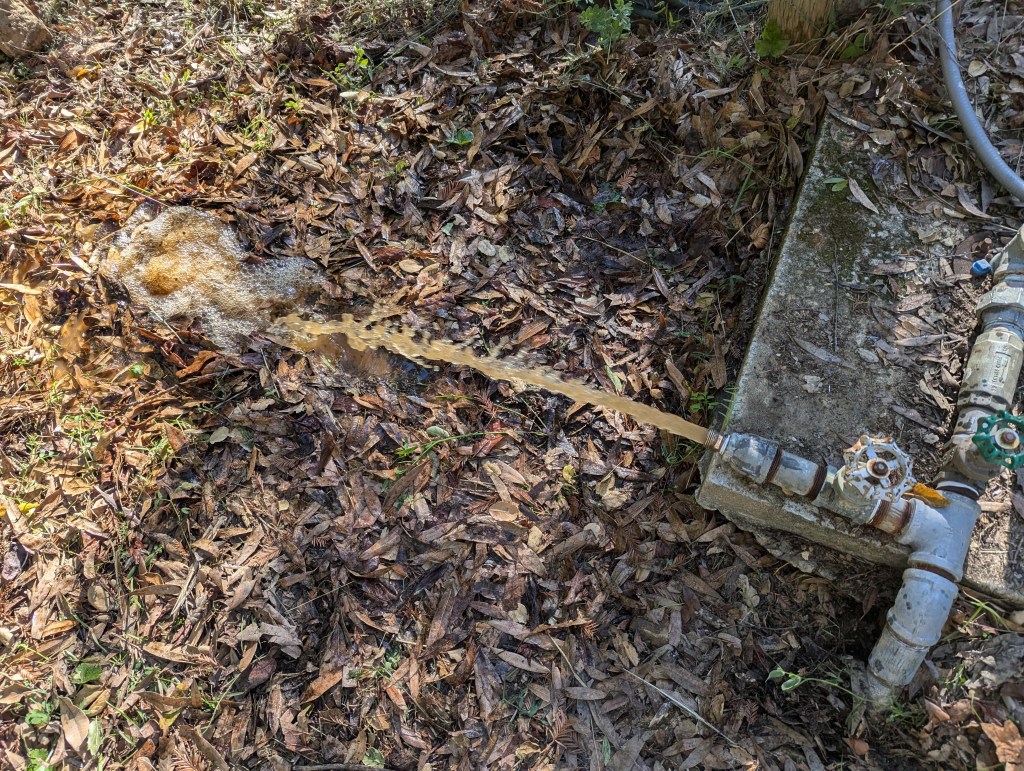
Ferrum, which is abbreviated as “Fe”, is the chemical and element name of iron. It is apparently too abundant in this well water. Actually though, it is from the lining of the well. It accumulated because the pump has been inactive for so long. I am impressed that it functions at all after being idle for so long. I am concerned about the lining of the well, though. The hydrologic engineer tells me that I must superchlorinate the well to kill most of the iron oxidizing bacteria, and then flush the well by operating the pump for a long time. That all sounds like quite a bit of risky work. I do not like the concept of pouring something into a well that does not belong there. I am also concerned about what to do with the chlorinated water as it gets pumped out. I suppose that I could apply it to undesirable vegetation around the well. There will undoubtedly be a large volume of such water; but there is also a large amount of undesirable vegetation. I suppose that I could collect some or much of the water into an otherwise unusable tank to let the chlorine slowly volatilize from it. For now, until this superchlorination process begins, I suspect that this water is safe for irrigation. I do not mind if it leaves a temporary rusty residue that eventually rinses away. The water was even muckier before, and will get less mucky as more of it is used, so it could appear to be clean before superchlorination. Besides, I suspect that mucky water is less toxic to vegetation than superchlorinated water is. Because the rain stopped as suddenly as the rainy season began, and no rain is forecast for the next week, irrigation is now becoming a priority.

Only one of these six is as yellow as it should be. Two are not yellow enough. Two are too yellow. One is not yellow at all, but is affiliated with another who is.
1. Yucca X recurvifolia, curve leaf yucca, which is now known by its new botanical name of Yucca gloriosa var. tristis, remains impressively green after transplant, but is related to the rather sickly looking cultivar, ‘Mellow Yellow’, with ghastly chartreuse foliar color.
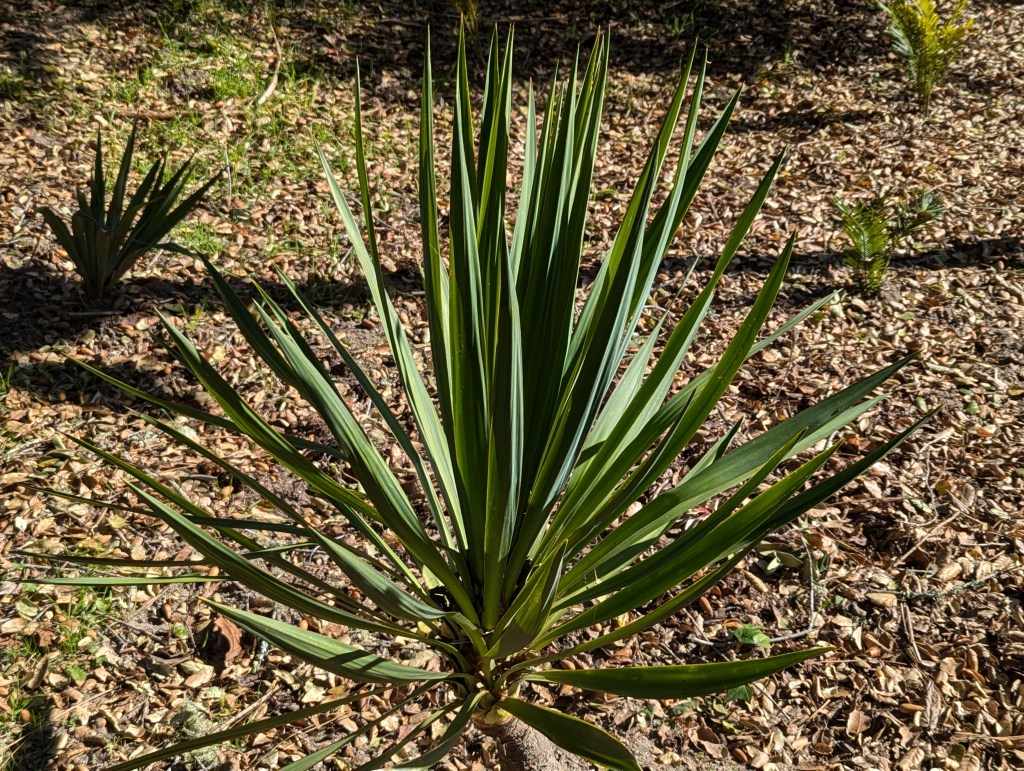
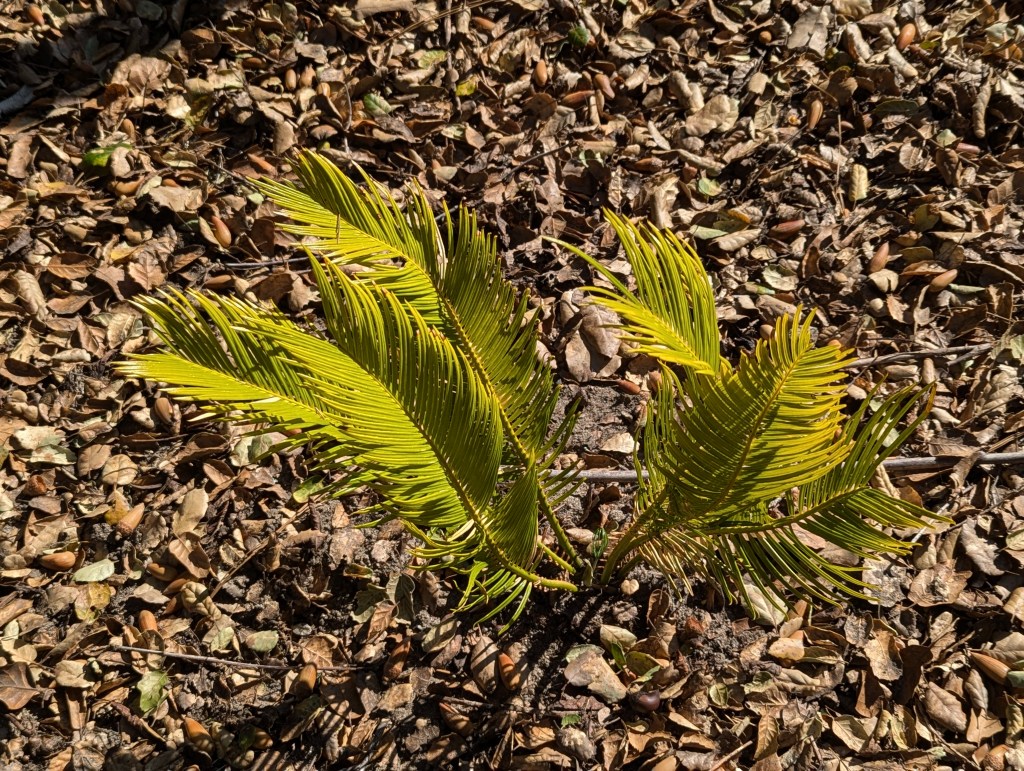
2. Cycas revoluta, sago palm, which was transplanted with the curve leaf yucca, displays this more predictably yellowish foliar color now. It should develop its more typical richly dark green color and foliar symmetry as it resumes growth with warmer spring weather.
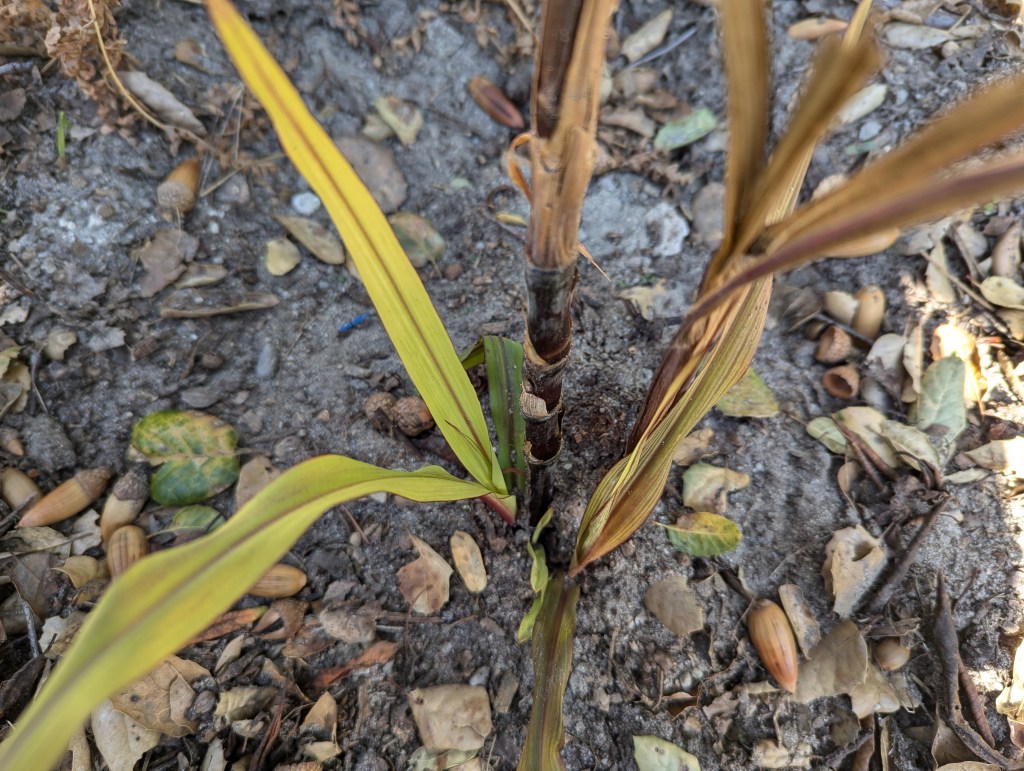
3. Saccharum officinarum ‘Pele’s Smoke’ sugarcane retains its cultivar designation only because I do not know what it is. It is likely a different cultivar, and might be a different species. Its new foliage is yellow because the weather is still too cool for it to be bronze.
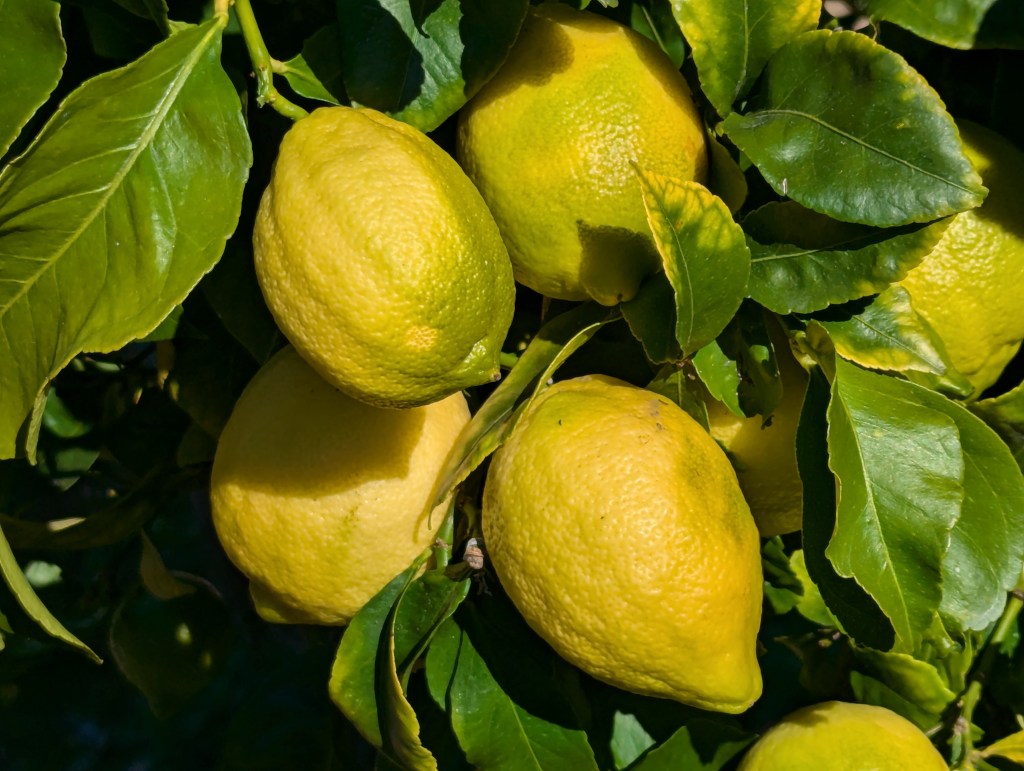
4. Citrus X limon ‘Eureka’ lemon should be more yellow than this by now. None seem to be completely ripe. Variation of ripening is an attribute of ‘Eureka’ since, unlike ‘Lisbon’, it provides a few ripe lemons randomly throughout the year. Still, most ripen for winter.
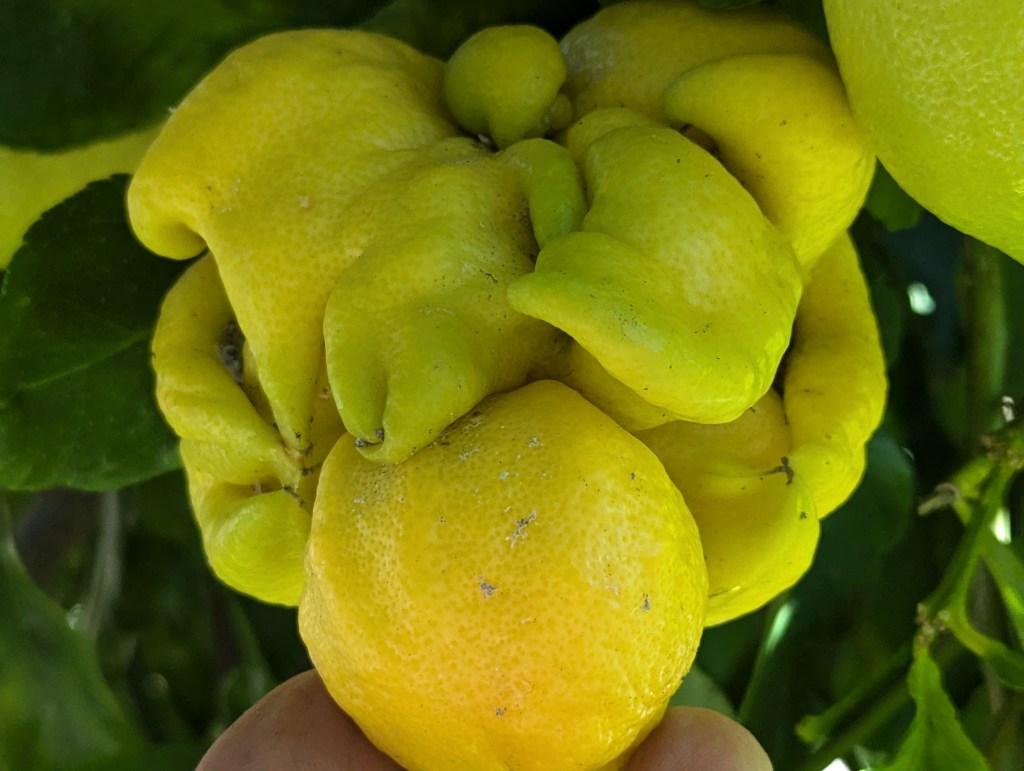
5. Citrus X limon ‘Eureka’ lemon is susceptible to minor damage from citrus bud mite. It may seem to be more than minor, and for this particular lemon, the damage is obviously quite major. However, only a few of the hundreds of lemons of this tree will be damaged.
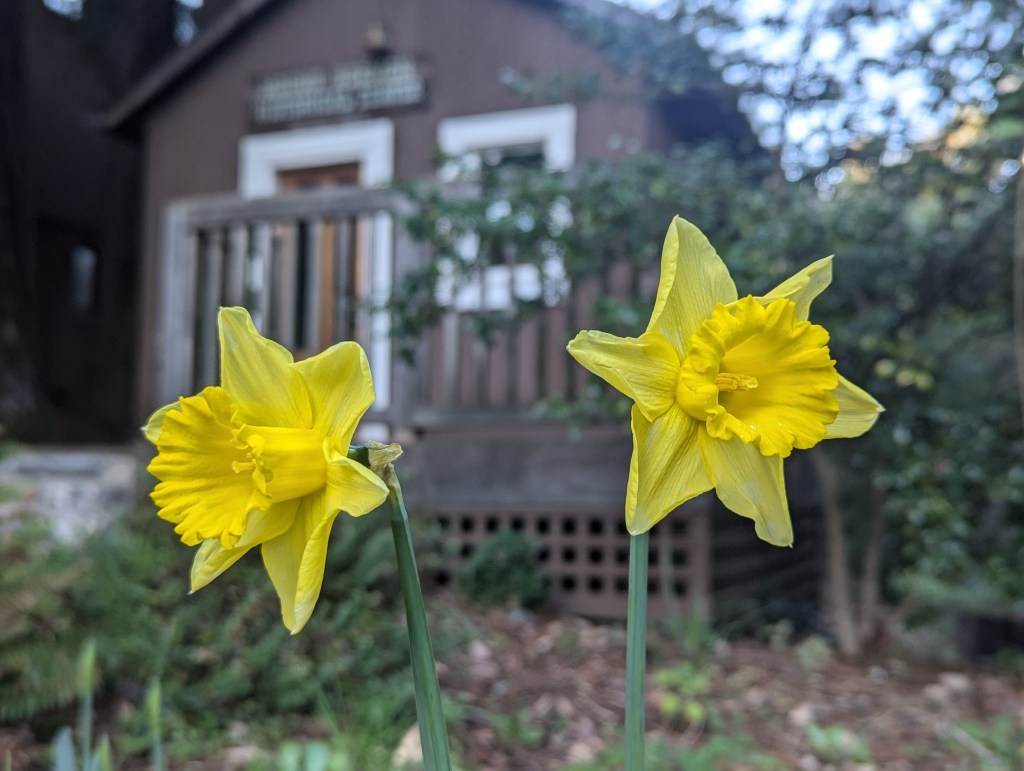
6. Narcissus pseudonarcissus ‘King Alfred’ daffodil may be a more modern cultivar, but has been naturalized here long enough to be genuine. Although happy to bloom like this annually, bulbs do not multiply, which is why I can not get many flowers in one picture.
This is the link for Six on Saturday, for anyone else who would like to participate: https://thepropagatorblog.wordpress.com/2017/09/18/six-on-saturday-a-participant-guide/
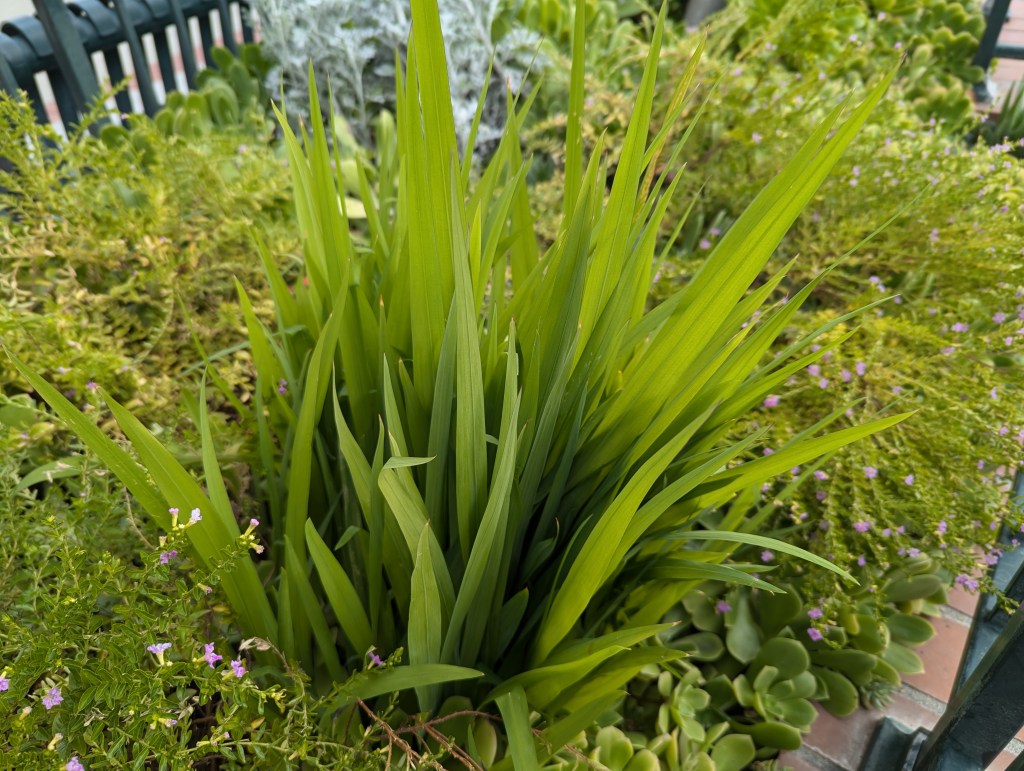
Many exotic species that became aggressively naturalized here escaped from home gardens and landscapes before anyone who enjoyed growing them was aware of how invasive they could be. Although I am aware of this, I was not particularly concerned with it while I lived within a suburban area in town through the 1990s. If I chose to grow something there that had potential to be invasive, it had no place to escape to. I mean that, from my suburban home garden, it could not migrate into a natural ecosystem to naturalize into it. Even if seed from something managed to get into the suburban drainage system, which flows into Los Gatos Creek, it would not be the first. I mean that anything that could naturalize there had likely already done so from seed from the countless other home gardens and landscapes in town. I have not lived within that suburban neighborhood for a very long time, though. I need to be more careful with what I select to inhabit my home garden. For example, the yellow flag iris and montrebetia that I enjoy growing at work can not inhabit my home garden, from which each has potential to escape and naturalize into the wild. The montbretia seems to be sterile and noninvasive, and I have been acquainted with it since childhood, but I just do not trust it. Another variety of montbretia that has inhabited my downtown planter box since before my time, and that I have been acquainted with for many years, also seems to be sterile and even less invasive than my first variety. After all this time, it was tediously slow to migrate outwardly, and provided me with only a few spare bulbs. Nonetheless, I can only enjoy it within the confinement of the downtown planter box.
While away from work and home, and tending to errands downtown, I got these pictures from my downtown planter, which inadvertently became something of a Memorial.
1. Cuphea hyssopifolia, Mexican heather is not my favorite component of the downtown planter, but remains because it was installed by someone who was here prior to my time. A uniquely confined colony of montrebia that I will discuss on Wednesday also remains.

2. Senecio cineraria, dusty miller and the stonecrop below are from the garden of a now deceased client so can only be removed if a bit of it gets established in my home garden. It and the Mexican heather above are the only two of these six which are not succulents.

3. Sedum reflexum ‘Blue Spruce’ stonecrop is being displaced by the unidentified species of Aeonium below, but is also already established in my home garden. I expected it to be displaced eventually when I put it here several years ago. It is gratifying to see remnants.

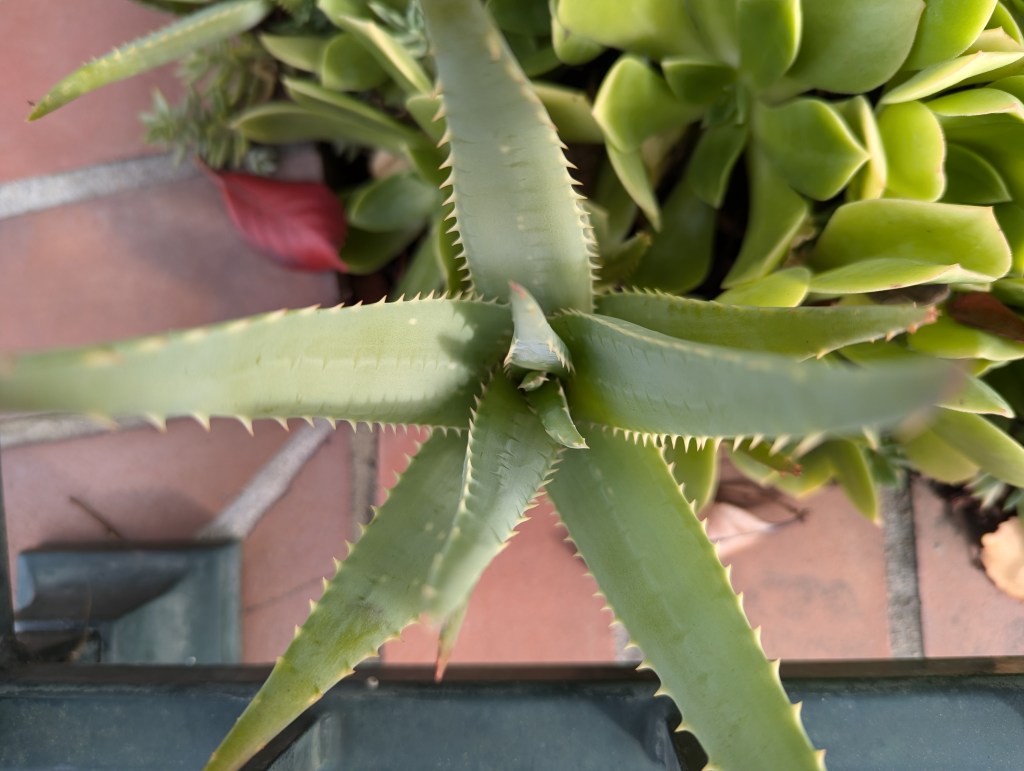
4. Aloe, as the Aeonium at the bottom of this list, is unidentified. It and both of the last six are from the garden of the deceased mother of a deceased friend who happened to be a direct descendant of Spanish explorers who were the first to arrive where Monterey is.
5. Aeonium arboreum, tree houseleek is the most striking vegetation within the planter, but is also occasionally disfigured by theft of its most sculptural stems. A darkly bronzed cultivar from the same special origin was taken piece by piece until none of it remained.
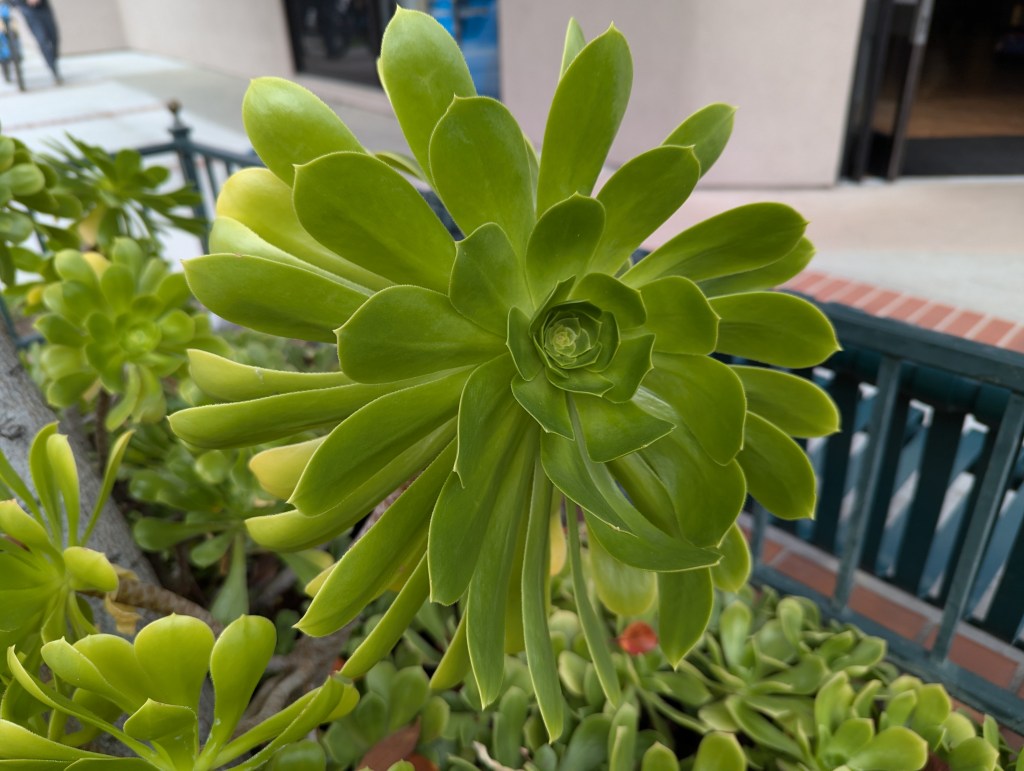
6. Aeonium is as unidentified as the Aloe above. It initially resembles the tree houseleek, also above, but remains low, dense and mounding. It is the most abundant vegetation of the planter, so was the primary culprit of the displacement of the stonecrop, also above.

This is the link for Six on Saturday, for anyone else who would like to participate: https://thepropagatorblog.wordpress.com/2017/09/18/six-on-saturday-a-participant-guide/

This is the other side of the landslide that I posted a picture of for Six on Saturday a few days ago. As I mentioned then, it looked worse from this side. I suspect that it came down immediately prior to my arrival. No one else was aware of it, and there was no indication that anyone had tried to get around it or move any of its debris. It was just past my driveway, which is where Carson, the Roadmaster, was parked. However, because there are two households beyond it, the debris needed to be removed promptly. I did not want anyone else to do it, though. I wanted to separate the stone from the soil because I can use the stone to construct low retaining walls. Also, I wanted to use the soil to fill low spots within parking spaces at the top of the driveway. Although these low spots are very close to where the soil and stone was, and it should have been very obvious that soil could have been used to fill them, I know from experience that few put much effort into performing such a tasks in an efficient manner. Actually, they often seem to put significant effort into inefficiency. For example, the mound to the far right of the picture is debris from an landslide that occurred earlier. It is directly adjacent to a low spot that remains low because no one bothered to put any debris into it. So, now, there is a high spot directly adjacent to a low spot. Large stones were pushed over the edge, where they rolled into a portion of my garden below, bashed bark from trees, and are now where I do not want them to be. I hoped to avoid such problems with this landslide.

 Tony Tomeo