Horridculture – Headless

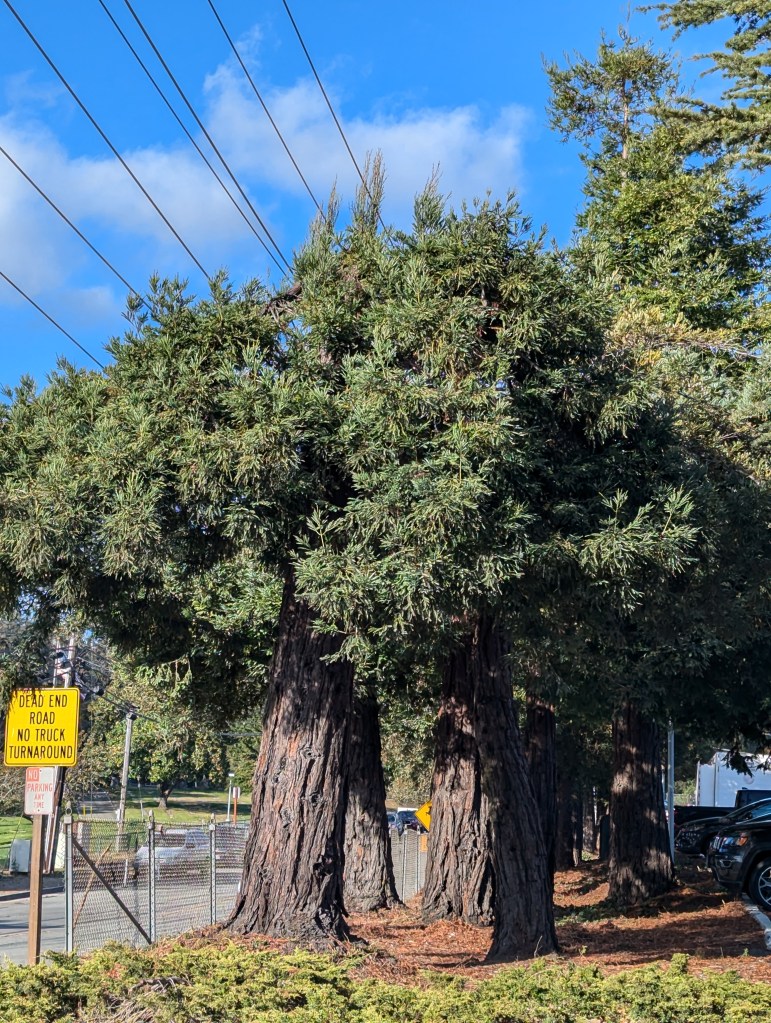
Appropriately, this picture was taken on Halloween. The ‘DEAD END’ sign and cemetery beyond, which are visible to the lower left of the picture, were also coincidental. The several headless redwood trees are the primary topic. Obviously, they were decapitated because of the electrical cables above. Otherwise, redwoods with such healthily plump trunks would be rather tall by now. After all, coastal redwoods are the tallest trees in the World. Unfortunately for them and those who are now appalled by their disfigurement, reliable and safe electrical service is more of a priority than poorly situated trees. It is no fault of the trees. Nor should this atrocity be blamed on those who executed it. Their only better option would be complete removal of the subjects, and perhaps replacement with smaller trees that will not grow tall enough to get too close to the electrical cables above. Maintenance of clearance of the vigorously upright redwoods from the cables above is a chronic problem that must be morally challenging for the arborist who must perform the necessary procedures. However, removal of several such significant trees would be very objectionable to the Community, which is very likely why these trees remain, regardless of their severe and irreparable disfigurement. Application for permits for their removal requires posting of such intentions on the trunks of the subject trees, to which neighbors would very likely protest. None of this would be such a problem now if only trees that are more appropriate to this particular situation were installed instead! Did the landscape designer who designed this landscape even visit the site during the design process, or was it all done on paper in a remote studio? Why did those who installed these trees not foresee this problem and modify the landscape plan and species selection accordingly?

Red Alert

Acer platanoides

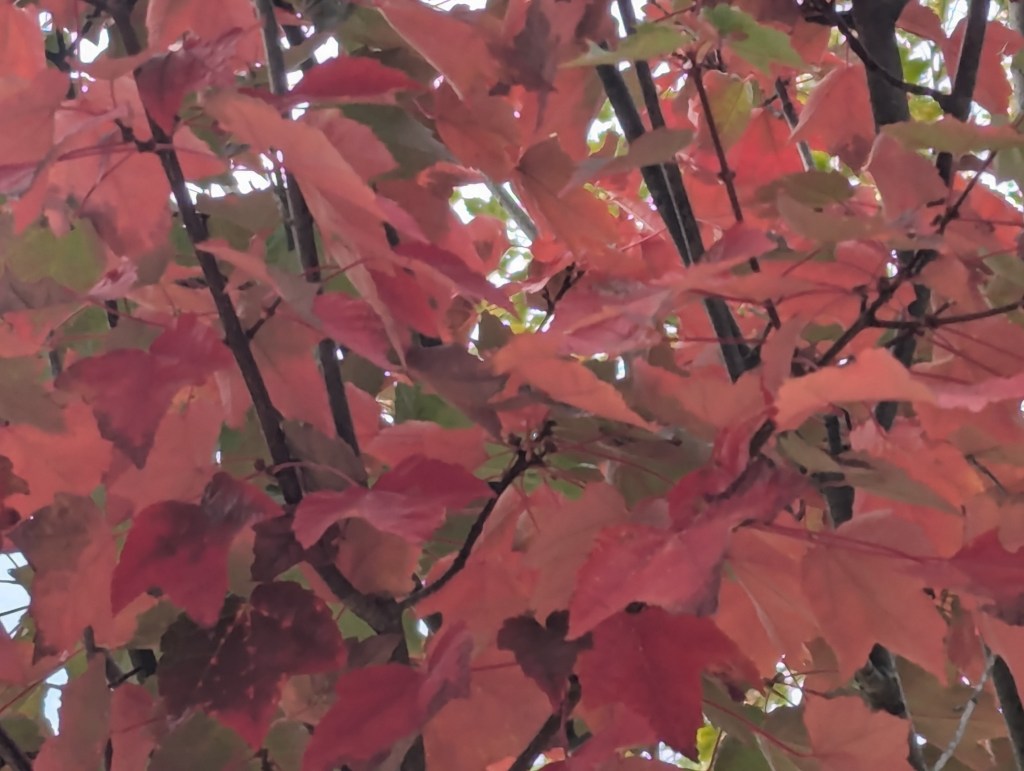
Acer platanoides ‘Schwedleri’, is Schwedler’s maple, which is an old fashioned cultivar of Norway maple. It is not a red maple. However, because its new foliage initially emerges with deep burgundy red color, it is often mistaken for red maple, particularly where red maple is uncommon. Its deep burgundy red foliar color does not last long before developing deeper purplish bronze color, with tiny contrastingly greenish yellow flowers. For autumn, the foliage turns yellow. Schwedler’s maple was a common street tree for the many large tracts of suburban homes that were built within the Santa Clara Valley during the late 1950s. Although it has not been available from nurseries for the past few decades, at least two similar but more modern and darker bronze cultivars of Norway maple are becoming more available. Modern cultivars are generally sterile, so are not invasive like the simple species has been within some ecosystems that are more favorable to naturalization than that of the Santa Clara Valley. The Norway maple in the picture above is not ‘Schwedleri’ but looks very much like it.

Acer rubrum is the real red maple, not just because of its often bright red autumn foliar color, but primarily because of its red floral buds that emerge immediately prior to foliation in spring. However, prior to autumn, its foliage is simple green. Red maple was rare here prior to 1990, and by the turn of the Century was still only mildly popular in the Santa Clara Valley. It could be more popular than it is, and realistically, performs better as a street tree than cultivars of Norway maple. Although not as colorful as bronzed cultivars of Norway maple are through summer, its vibrant yellow, orange and typifying red autumn foliar color is superior, even in response to only mild chill.

Acer rubrum

Taking Sides

This is what taking sides looks like. The right side was taken completely off, leaving only the left. The view from the other side would show that the left side was taken completely off, leaving only the right. It is not such a good picture because it is difficult to distinguish the extent of the damage from what is going on in the background. Realistically though, a better picture would be even worse, since the extent of the damage would be more obvious. The justification for such damage here is more obvious, since, obviously, this is a bad situation, with no room for balanced growth. Although survival is possible, this is not what nature intended. Natural growth should be an asset, and efficiently directed to where it can be useful, which would most likely be much more balanced than this. Incidentally, this is a coastal redwood, which is the Official State Tree of California. This sort of pruning would be just as damaging to Western hemlock, Douglas fir or blue spruce. For that matter, it would be just as damaging to longleaf pine, Western white pine or Ponderosa pine. Ultimately, it is bad technique for any tree in any situation.

Six on Saturday: Attempted Autumn

Astronomical autumn began more than a month ago. It is about a third done, with about two thirds remaining. Meteorological autumn can start at any time. Sometimes, it starts, but then pauses before restarting a bit later. Sometimes, the first rain is the beginning of the rainy season, which typically continues through winter. A bit of rain arrived between Wednesday and Thursday, and a bit more is here now, but no more is in the forecast for next week. Regardless of future weather, some flowers bloom, or at least try to, as late as they possibly can. Of course, some actually prefer to bloom even later and during winter. Apologies for the lack of focus of pictures #4 and #6.

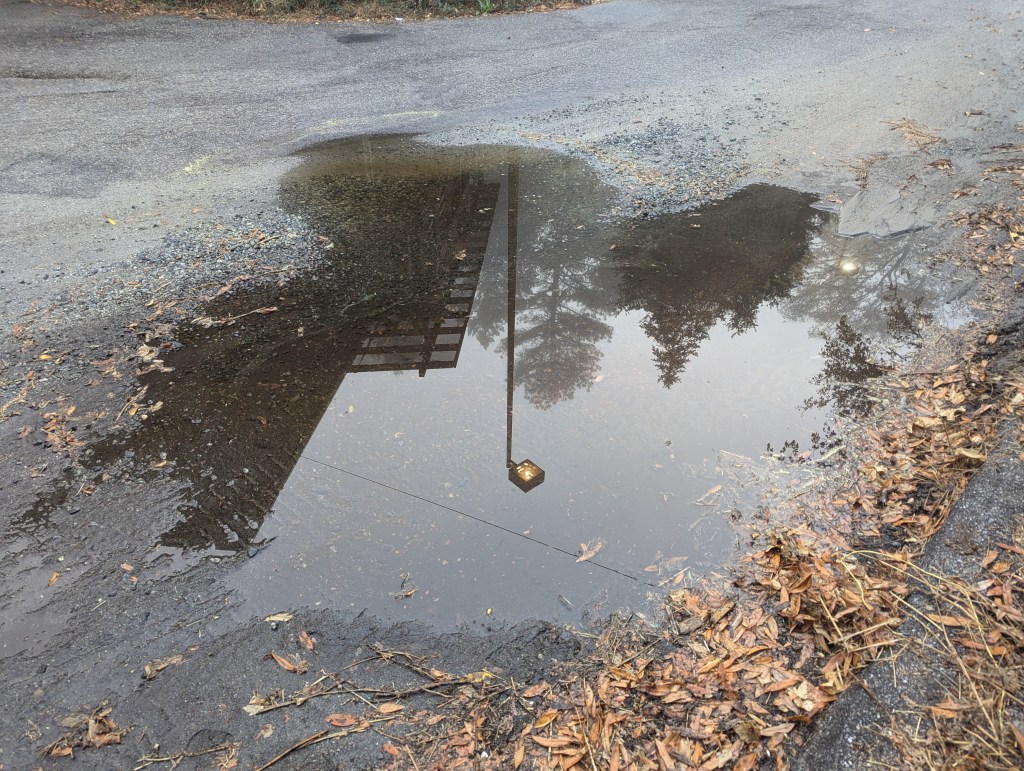
1. A ‘chance or rain’ in the weather forecast here is generally not taken too seriously until something like this happens. It is a genuine puddle. It is wet, and full of water from rain.

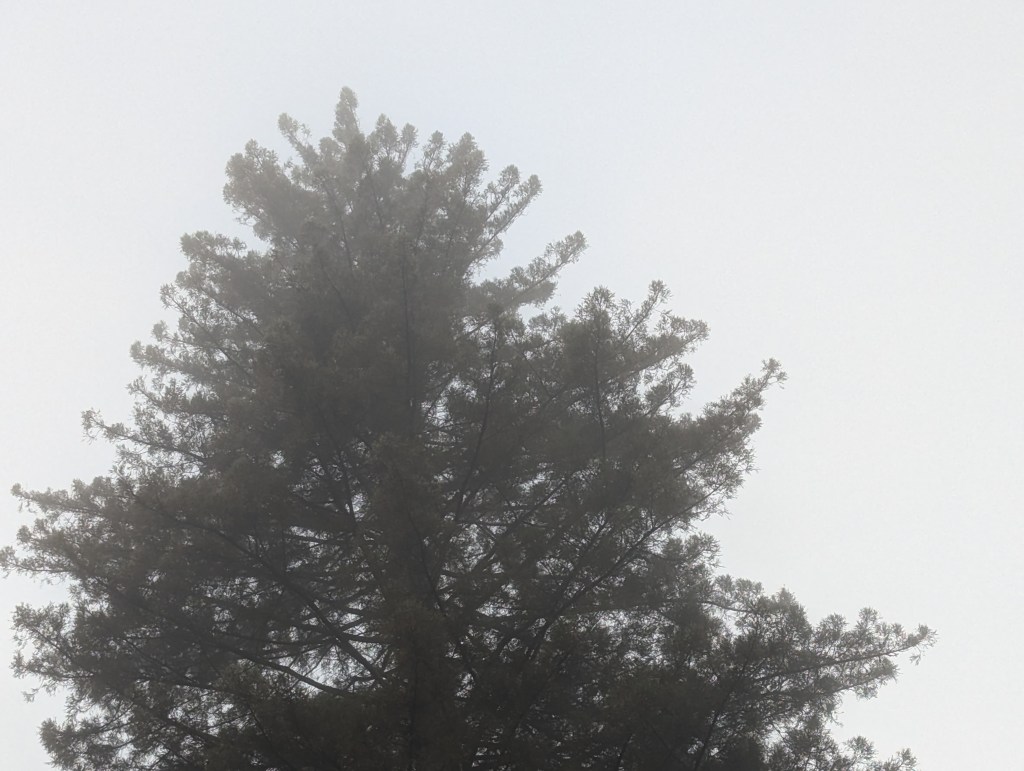
2. Sequoia sempervirens, coastal redwood seems to enjoy this damp weather. It actually enjoys all weather, but appears to be more refreshed by any interruption of arid warmth.

3. Lemna minor, duckweed is even weirder with this border of white foam that develops as the first rain washes away pollen and dusty crud that accumulated since the last rain.

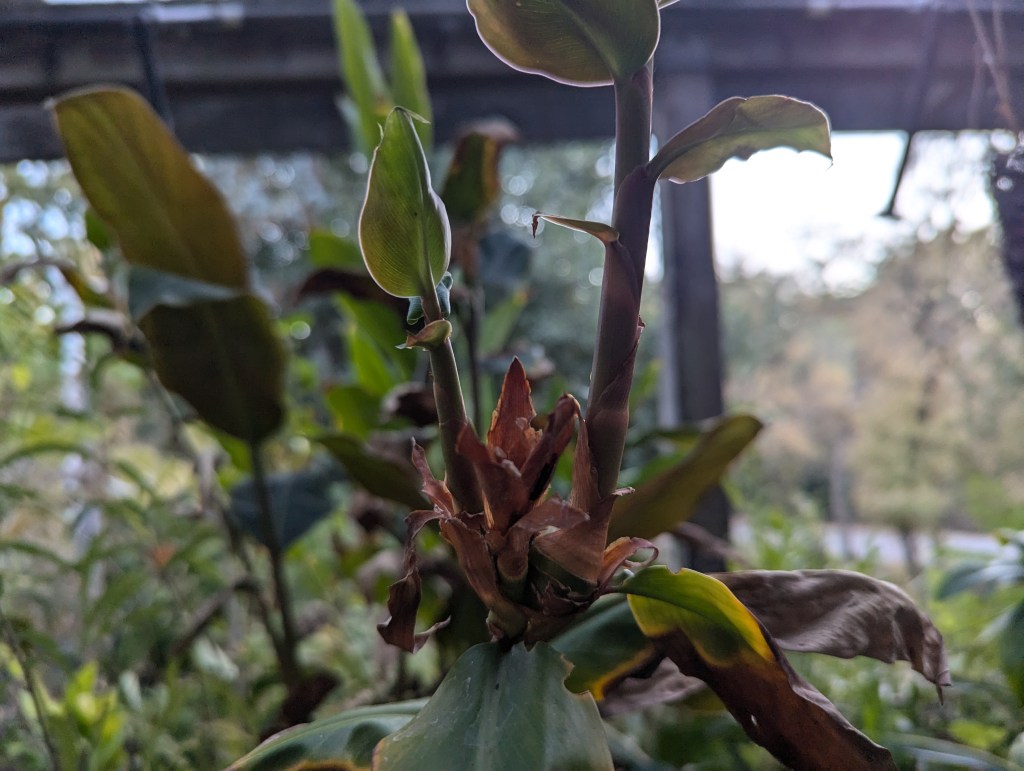
4. Hedychium coccineum X coronarium ‘Peach Delight’ ginger lily, which was blooming for last Saturday, is trying to bloom again. I already doubted its ability to follow through.

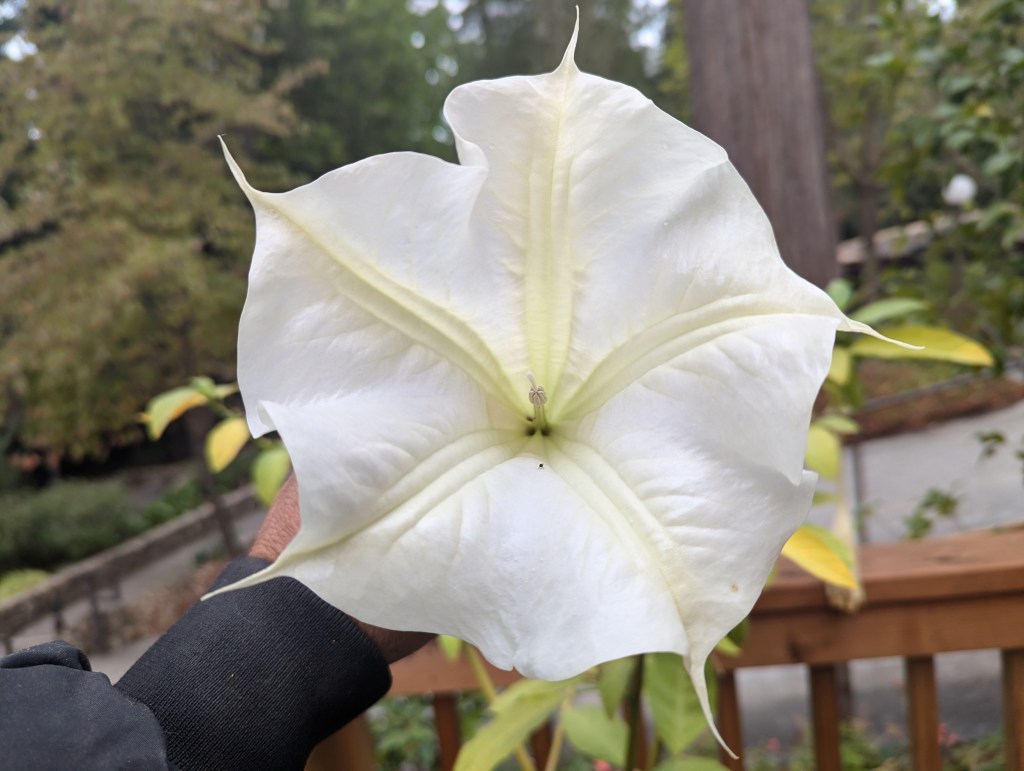
5. Brugmansia X cubensis ‘Charles Grimaldi’ angel’s trumpet looks like Carl’s Junior ate too much of its own food. I added this because of response to angel’s trumpet last week.

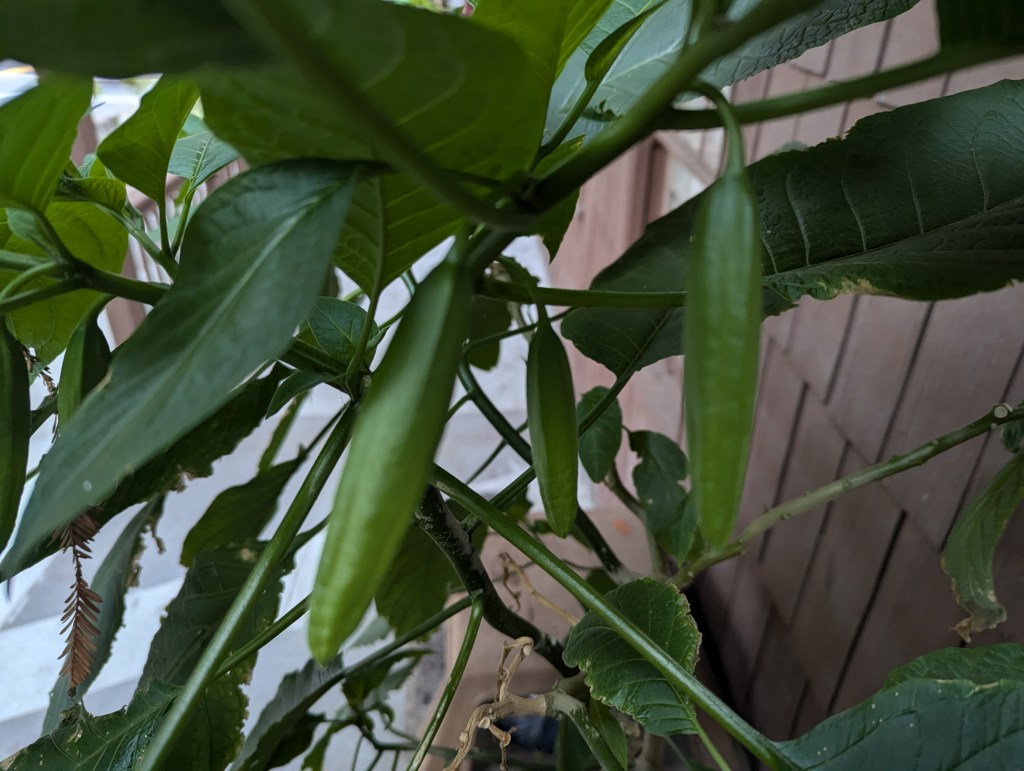
6. More interestingly, it produced this seed pod. Such hybrids should be sterile. I can not help but wonder if seed is true to type. If so, propagation by cuttings is easier than seed.

This is the link for Six on Saturday, for anyone else who would like to participate: https://thepropagatorblog.wordpress.com/2017/09/18/six-on-saturday-a-participant-guide/

Horridculture – Rocky XXIV . . . or XXV . . . or XXVI . . . Oh, I can not count them all.

another sequel

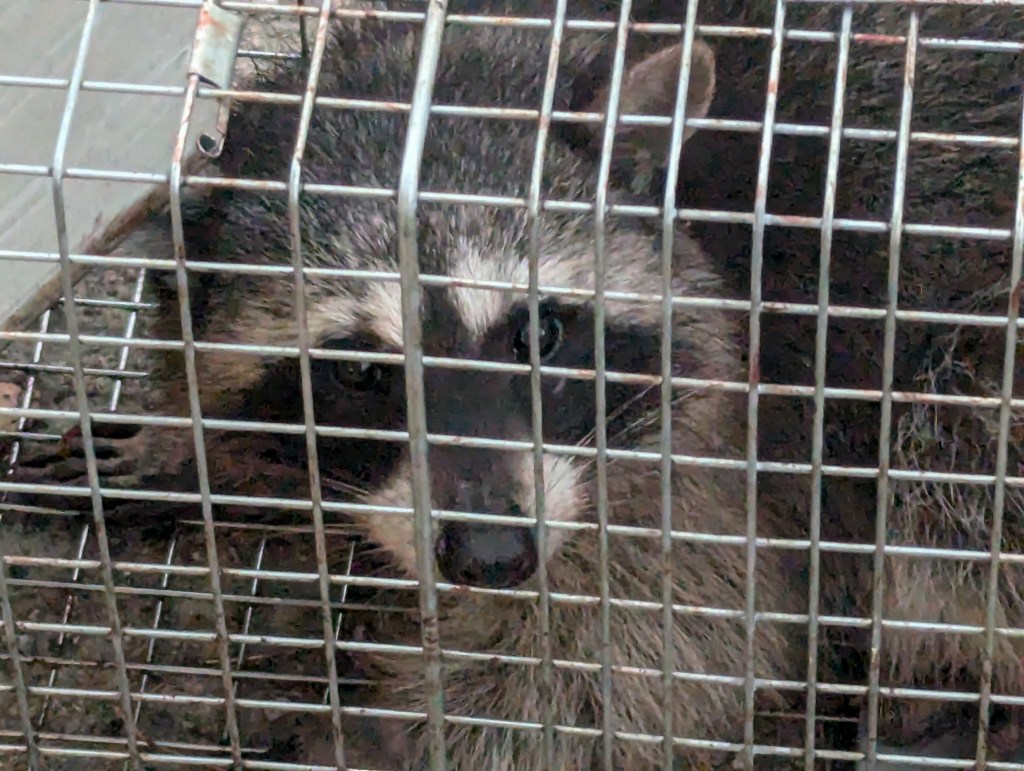
Winters are not very cold here. Otherwise, I might have assembled a fur coat. Instead, relocation of furs has been more practical than utilization. Besides, without exception, all were already in use when I encountered them. Actually, they were not relocated merely because I had no practical use for them, but, more importantly, because relocation was significantly less inconvenient to those who were wearing them at the time. Of course, it was not totally convenient either. That was sort of the objective. The inconvenience of relocation is a deterrent to those who wear the furs, who identify as racoons. They are unwelcome here. I realize that they eat mollusks and rodents; but neither mollusks nor rodents are problems here. I do not grow much vegetation that mollusks find to be appealing. Heather the kitty who identifies as a feline person is too proficient at deterrence of rodents to have use for any assistance. Actually, Heather is one of the two primary reasons that it is necessary to relocate raccoons. Rhody is the other. Unfortunately, raccoons have potential to become impolite or even dangerously hostile with my canine and feline housemates. Relocation does not permanently eliminate them, but it annoys them enough that, by the time they return, they are much more careful about avoiding us and our space. Also, their impressionable associates seem to learn from their examples. Because they can not be relocated off of the property, they go less than a mile away. So far, that seems to be sufficient. I do not know how long it takes for them to return, but I suspect that it takes quite a while. After this most recent relocation, I do not expect another relocation to become necessary until members of the most recent generation mature enough to become a problem.

Off Color – Very Variable Variegation

‘Stuttgart’ canna

Reversion among vegetation is the loss of an aberrative genetic characteristic, such as variegation or bronze foliar color. Because most genetic aberrations that are susceptible to reversion are disadvantages, reverted growth generally performs more efficiently, and displaces remaining genetic aberrative growth. For example, because its variegated portions lack chlorophyll, variegated foliage is less vigorous than foliage that is not variegated. Therefore, if not removed, unvariegated reverted foliage is likely to grow faster and replace variegated foliage. This ‘Stuttgart’ canna leaf seems to have done the opposite of reversion, by exhibiting such extreme variegation that all green color is lacking. Fortunately, it is not as bad as it looks. This is merely very variable variegation. Just as a few leaves may be completely green without actually reverting permanently, a few leaves are extremely variegated, and on rare occasion, a few, such as this leaf, may lack any obvious green color. Leaves that developed after and above this leaf exhibited more typical variegation with both green and white. Otherwise, this particular cane would not survive for long without chlorophyll for photosynthesis. The flowers are unaffected because they derive their floral color from pigment rather than chlorophyll. White redwood foliage can survive without chlorophyll only because it can rely on resources provided by the normal growth with green foliage that it is attached to, almost parasitically. Such growth is considered to be albino, but because it merely lacks chlorophyll rather than pigment, it is technically not albino. Furthermore, it is technically not variegated, since it is so completely white, without any green chlorophyll. Oh, this is more complicated than it should be. It is probably better to simply appreciate appealing genetic aberrations such as white, variegated or other colorful foliage. ‘Stuttgart’ canna will not refresh its variegated foliage until the end of winter.

Messy Mast

This is the mess that remains after acorns get raked or blown off pavement.

Masting is a technique that oaks and many other genera use to both outsmart and exploit squirrels and other wildlife that both consumes and disperses their seed. For several years, oaks here produce enough acorns to sustain a population of squirrels that is limited by their production of acorns. It may not seem to be very effective, since the squirrels consume almost all of the acorns, leaving very few or none to grow into new trees. Then, every several years, the same oaks collectively produce a ‘mast’, which is a crop of acorns that is too excessive for the limited population of squirrels to consume as thoroughly as they typically do. Squirrels instinctually bury many of the surplus acorns anyway. Because they do not return to dig and eat all of their buried acorns, some acorns grow as new trees. This is how the oaks sustain those who disperse their seed, but also get them to disperse their seed without eating all of it. Mast crops of acorns supposedly typically precede exceptionally rainy winters. So far, the mast this year is only coinciding with a messy situation with drippy nut disease. It is caused by bacterial infection of wounds that are caused by filbert weevils, filbert worms or other insects that damage developing acorns. Consequently, squirrels are ignoring many of the unusually abundant but damaged acorns, leaving icky messes of infected acorns and the goo that they exude. When it eventually arrives, the first rain will make this mess even messier. Later rain should rinse some of it away. It is impossible to know how successful this mast will be, since it is impossible to know how many viable acorns will actually contribute to the abundance and grow later, and how many will merely contribute to this unusually messy mast.

Six on Saturday: Firsts & Lasts

Angel’s trumpet should be finishing bloom by now. Instead, and even while their foliage is fading with cooler weather, their bloom continues. Only the unidentified cultivar with single pink flowers currently lacks open flowers, but even it is budded for potential later bloom. (I neglected to get a picture of a flower of ‘Charles Grimaldi’ angel’s trumpet only because two pictures of angel’s trumpet is sufficient.) While angel’s trumpet is finishing, Algerian iris and ‘Peach Delight’ ginger lily are blooming for their first time here and red butterfly ginger is generating bulbils for its first time here. I was not aware that this sort of ginger generates bulbils. Otherwise, I could have allowed the other gingers do so also.

1. Hedychium greenii, red butterfly ginger is making bulbils! I did not know that it knew how to do so. I am now glad that I refrained from pruning the bloomed canes out earlier.

2. Hedychium coccineum X cornonarium ‘Peach Delight’ ginger lily started to bloom so late that I did not expect for it to actually show this much color and confirm its identity.

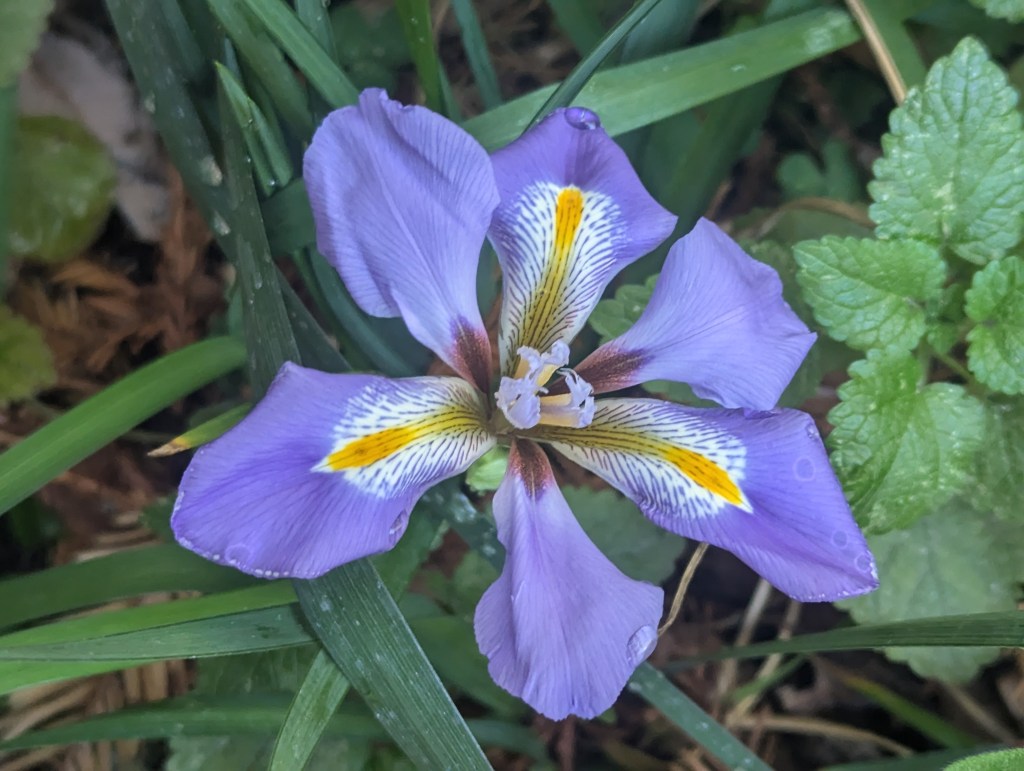
3. Iris unguicularis, Algerian iris is also blooming for the first time here, since its arrival from Tangly Cottage Gardening. It should bloom more for winter. Is it blue or purplish?

4. Brugmansia, angel’s trumpet of an unidentified cultivar, species or perhaps hybrid, is trying to bloom with its last big single pink flowers of the season, and it just might do so.

5. Brugmansia insignis ‘Single White’ angel’s trumpet is my favorite in regard to bloom, but not one that I recommend. It is blooming nicely though, now that its season is done.

6. Brugmansia candida ‘Double White’ angel’s trumpet also intends to bloom until it no longer can. It bloomed only sporadically since spring, but better than the ‘Single White’.

This is the link for Six on Saturday, for anyone else who would like to participate: https://thepropagatorblog.wordpress.com/2017/09/18/six-on-saturday-a-participant-guide/

Horridculture – Pave Paradise

pavement within pavement within pavement

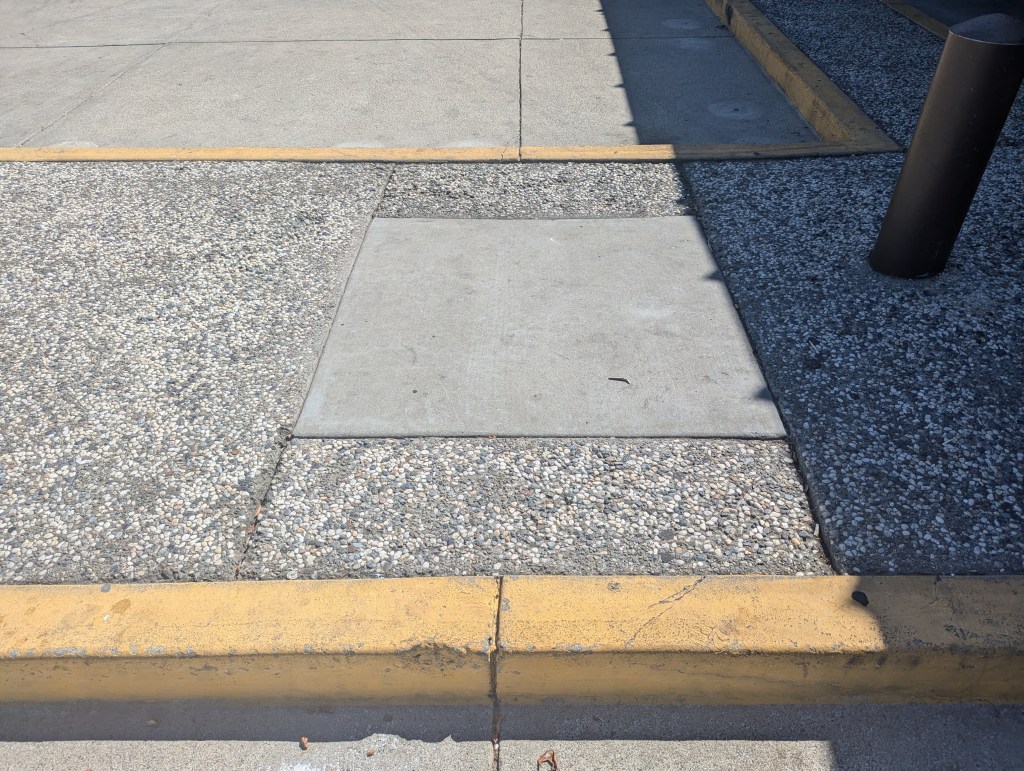
The Santa Clara Valley really is, as it was formerly known, the Valley of Heart’s Delight. A long time ago, it was famous for vast orchards that thrived in its exemplary climate and soil. The climate is still here, but so are nearly two million people who now live where orchards formerly were. Not so much of the formerly productive soil remains exposed, and almost none is appreciated for its potential. Urban development continues to expand to occupy more of it. At a strip mall in the Berryessa District of San Jose, I noticed what appeared to be gravesites of small patches of once exposed soil that died slow deaths after all other soil around them was developed. The concrete pavement outside of and below the yellow curbs was likely the original parking area, walkway and paved patio, which were separated from each other by what was likely small landscaped patches of exposed soil within and at the same level as the yellow curbs. Sometime after the area outside of the curbs were paved, most of what was likely exposed soil within was also paved with exposed aggregate concrete, leaving only what was likely three smaller square patches of exposed soil, perhaps for trees to survive in. Eventually, even these three smaller square patches of exposed soil were also paved with simpler concrete. It is impossible to say why all this concrete pavement was necessary, or why exposed soil was so objectionable. Perhaps the dirt was dirty. Perhaps it was infested with weeds. Perhaps all this concrete is some sort of Brutalistic art. Regardless, the good soil below is now useless. The patio now lacks shade from trees. A little bit more of the Santa Clara Valley can not sustain any vegetation. A little bit more of Paradise is paved.

Brutalism?

Off Color – Reversion

‘Siam Ruby’ banana started to display bronze foliar color before it seemed to revert to chartreuse.

Of the two dozen or so cultivars of banana here, ‘Siam Ruby’ is one of only two that are merely ornamental. It and ‘Zebrina’ produce fruit that is too seedy to be reasonably palatable. Both are instead grown more for their colorful foliage. ‘Siam Ruby’ develops bronze foliage with yellowish green spots. ‘Zebrina’ develops darker bronze or brown color mixed with more but darker green. Since their distinct foliar colors are their primary attributes, I was initially disappointed when ‘Siam Ruby’ seemed to revert to chartreuse green without any bronze foliar color. I was informed that it is typically chartreuse while very young or if shaded, but develops bronze foliar color as it matures with adequate sun exposure. However, I still suspect reversion because it started to display broad bands of bronze foliar color earlier, but became exclusively chartreuse green afterward. While inquiring about the potential for reversion with this particular cultivar, I learned that ‘Margarita’ originated as a reverted sport of ‘Siam Ruby’ with exclusively bright chartreuse foliage, just like the specimen of ‘Siam Ruby’ here that I suspect reverted. So, I may have indirectly acquired a fake copy of ‘Margarita’, which should contrast splendidly with the bronze foliage of both ‘Siam Ruby’ and ‘Zebrina’! The grower who sent the original pup of ‘Siam Ruby’ already sent a replacement. Now I want to see what the original pup does. If it recovers its bronze foliar color, there will be two copies of ‘Siam Ruby’ here. If it does not, I will consider it to be ‘Margarita’, which is still a rare cultivar. In a way, I sort of hope that it does not recover. A glitch such as this is a good excuse to try something that I would not try otherwise. Actually, we already have plans for it.

New foliage of ‘Siam Ruby’ banana is exclusively chartreuse green, without any bronze.