Sunday Best – Seventh For Saturday (Yesterday)
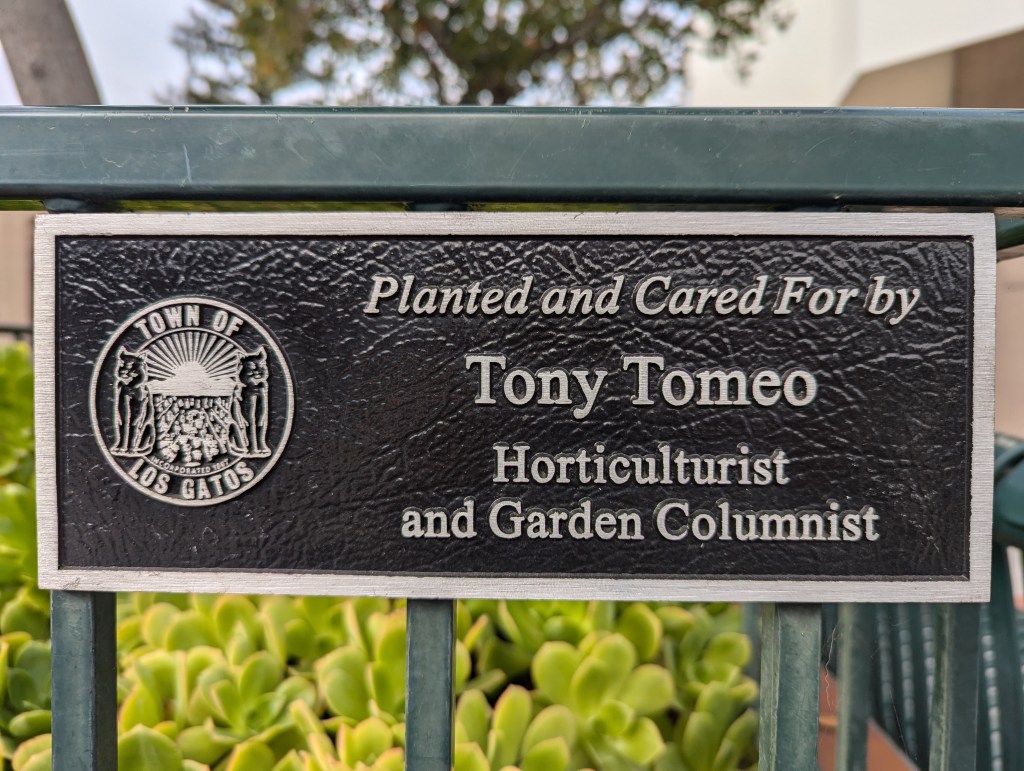
While away from work and home, and tending to errands downtown, I got these pictures from my downtown planter, which inadvertently became something of a Memorial.
1. Cuphea hyssopifolia, Mexican heather is not my favorite component of the downtown planter, but remains because it was installed by someone who was here prior to my time. A uniquely confined colony of montrebia that I will discuss on Wednesday also remains.

2. Senecio cineraria, dusty miller and the stonecrop below are from the garden of a now deceased client so can only be removed if a bit of it gets established in my home garden. It and the Mexican heather above are the only two of these six which are not succulents.

3. Sedum reflexum ‘Blue Spruce’ stonecrop is being displaced by the unidentified species of Aeonium below, but is also already established in my home garden. I expected it to be displaced eventually when I put it here several years ago. It is gratifying to see remnants.

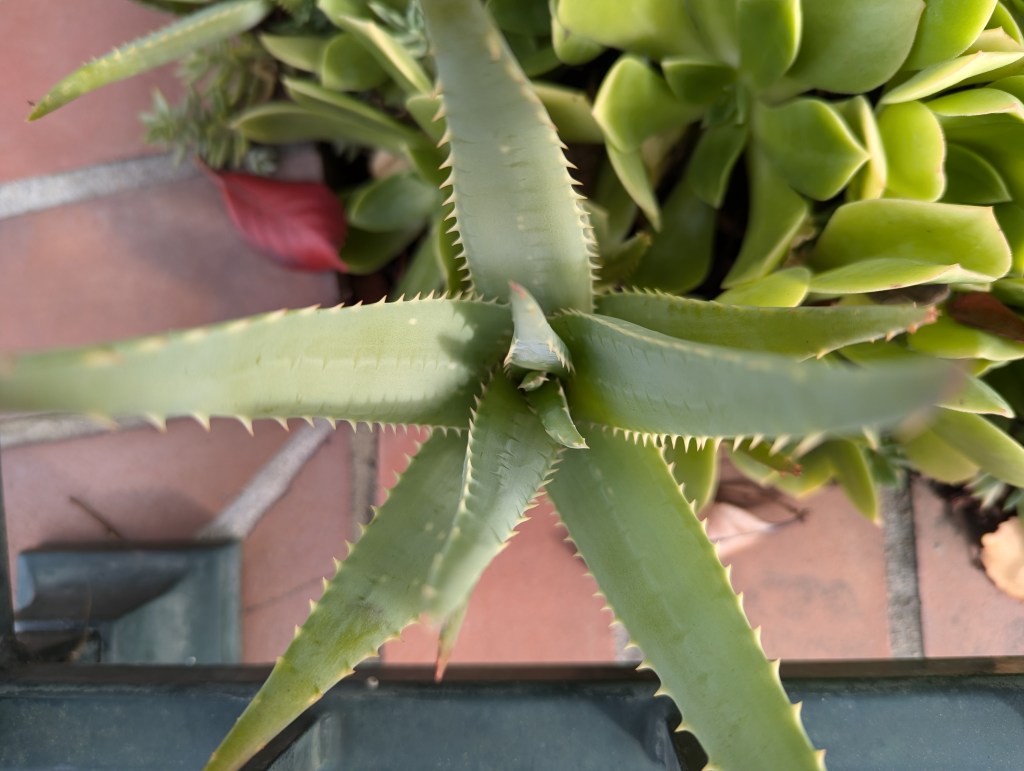
4. Aloe, as the Aeonium at the bottom of this list, is unidentified. It and both of the last six are from the garden of the deceased mother of a deceased friend who happened to be a direct descendant of Spanish explorers who were the first to arrive where Monterey is.
5. Aeonium arboreum, tree houseleek is the most striking vegetation within the planter, but is also occasionally disfigured by theft of its most sculptural stems. A darkly bronzed cultivar from the same special origin was taken piece by piece until none of it remained.
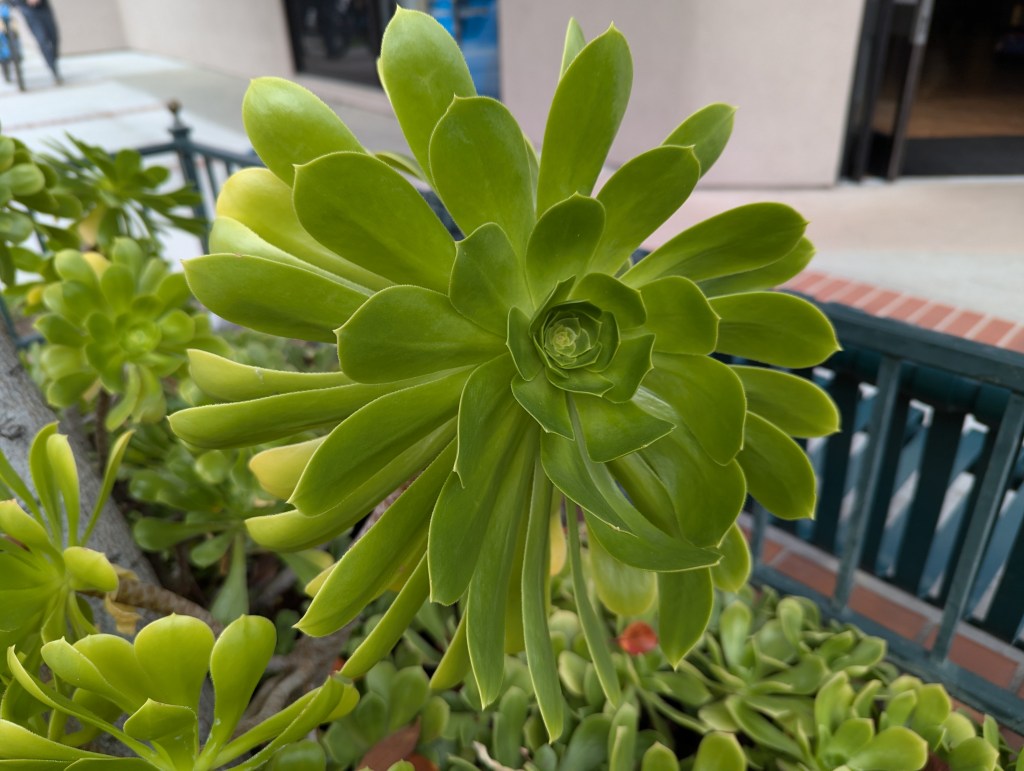
6. Aeonium is as unidentified as the Aloe above. It initially resembles the tree houseleek, also above, but remains low, dense and mounding. It is the most abundant vegetation of the planter, so was the primary culprit of the displacement of the stonecrop, also above.

This is the link for Six on Saturday, for anyone else who would like to participate: https://thepropagatorblog.wordpress.com/2017/09/18/six-on-saturday-a-participant-guide/

This is the other side of the landslide that I posted a picture of for Six on Saturday a few days ago. As I mentioned then, it looked worse from this side. I suspect that it came down immediately prior to my arrival. No one else was aware of it, and there was no indication that anyone had tried to get around it or move any of its debris. It was just past my driveway, which is where Carson, the Roadmaster, was parked. However, because there are two households beyond it, the debris needed to be removed promptly. I did not want anyone else to do it, though. I wanted to separate the stone from the soil because I can use the stone to construct low retaining walls. Also, I wanted to use the soil to fill low spots within parking spaces at the top of the driveway. Although these low spots are very close to where the soil and stone was, and it should have been very obvious that soil could have been used to fill them, I know from experience that few put much effort into performing such a tasks in an efficient manner. Actually, they often seem to put significant effort into inefficiency. For example, the mound to the far right of the picture is debris from an landslide that occurred earlier. It is directly adjacent to a low spot that remains low because no one bothered to put any debris into it. So, now, there is a high spot directly adjacent to a low spot. Large stones were pushed over the edge, where they rolled into a portion of my garden below, bashed bark from trees, and are now where I do not want them to be. I hoped to avoid such problems with this landslide.

The ‘Week of Flowers’ theme was fun for the past several weeks, but the beginning of the rainy season is rather important locally. I suppose I should have gotten more interesting pictures instead of rotting stumps, a leaky gutter and a bare cottonwood tree. Hopefully, they are not as bad as this sounds. If the first five are, the sixth might compensate. There really are no flowers, though.
1. Winter is the rainy season here. It is probably appreciated more than in other climates because it is the only time that significant rain falls. If a thunderstorm passes through in summer, it might start a fire without enough rain to put it out. Anyway, gutters still leak.

2. Rain was sufficient to finish defoliation of this grand cottonwood out back. The foliage had been bright yellow for quite a while. It does not need much chill to develop splendid color. Windy weather typically dislodges the last of it. This year, rain finished it off first.

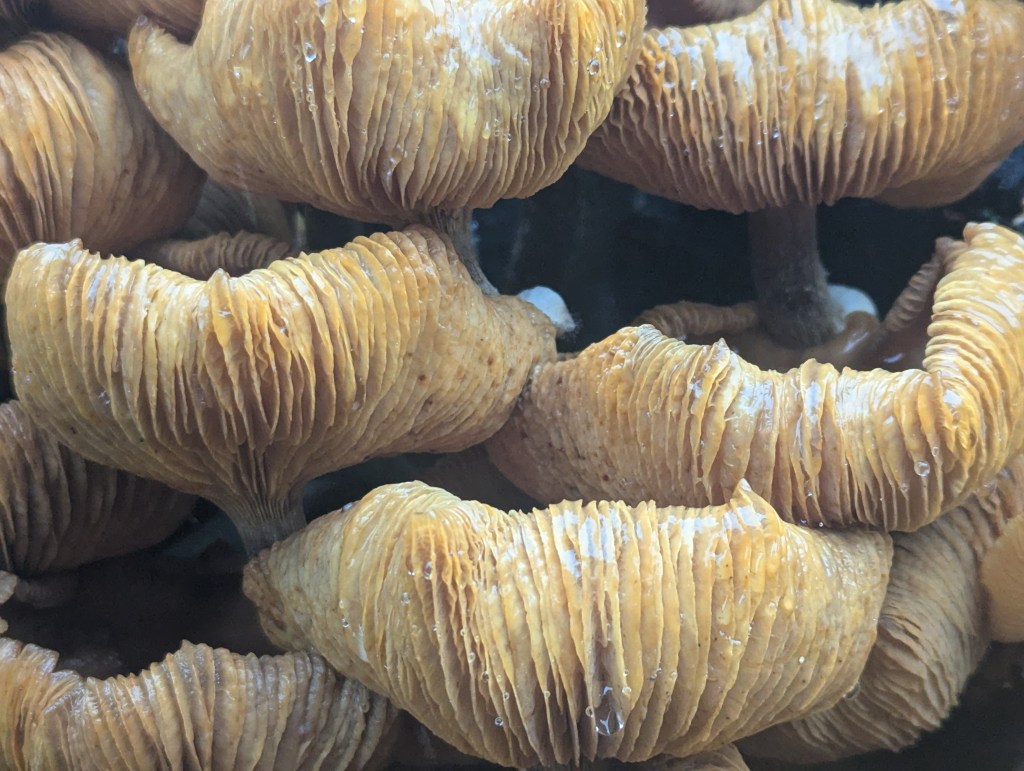
3. Mushrooms grow as the forest dampens through the rainy season. These are growing from a coast live oak stump that has been rotting for several years, but is somehow quite sound. I have been unable to dislodge it, even as the roots rot enough for the soil to sink.

4. Mushrooms that are growing from a rotten toyon stump are weirder, but could be the same sort at a more advanced state. I should recognize them since they do this annually. Some hideously big mushrooms grew elsewhere, but are already melting into black goo.
5. The madrone stump that was maintaining the integrity of the top of this embankment has been rotting for many years. Actually, I am impressed that it remained intact as long as it has. It looks worse from the other side. I could post a picture of that on Wednesday.

6. Heather would not cooperate for a picture against the clear sky between rainy weather a few days ago. She really just wanted to roll around on the sunny pavement, which was still damp and probably cold. She is impressively tolerant of this sort of embarrassment.

This is the link for Six on Saturday, for anyone else who would like to participate: https://thepropagatorblog.wordpress.com/2017/09/18/six-on-saturday-a-participant-guide/
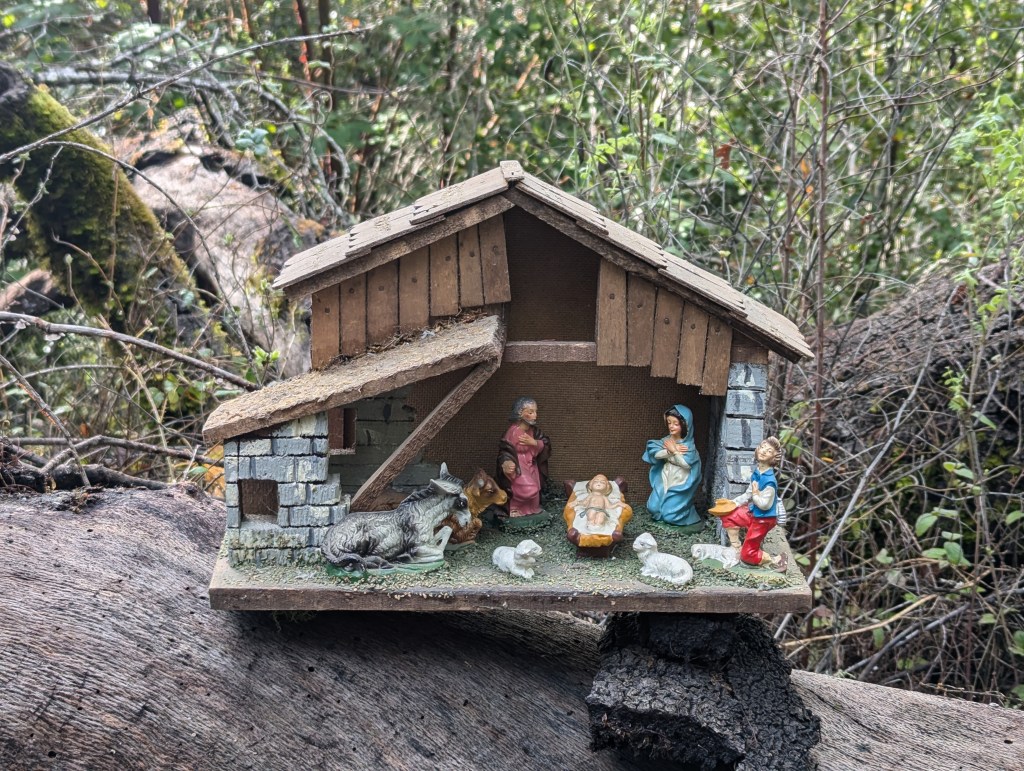
Is exclusive bloom becoming redundant? Well, one of these is actually foliar rather than floral, although it resembles real floral bloom enough to qualify for the title above. Most of these six are annuals.
1. Cyclamen persicum, Persian cyclamen is now a Ghost of Christmas Past that will stay as long as it performs. If it does not mold by the end of the rainy season, it will hibernate by the warmly dry season. It is sadly exploited as an expensively cheap annual perennial.
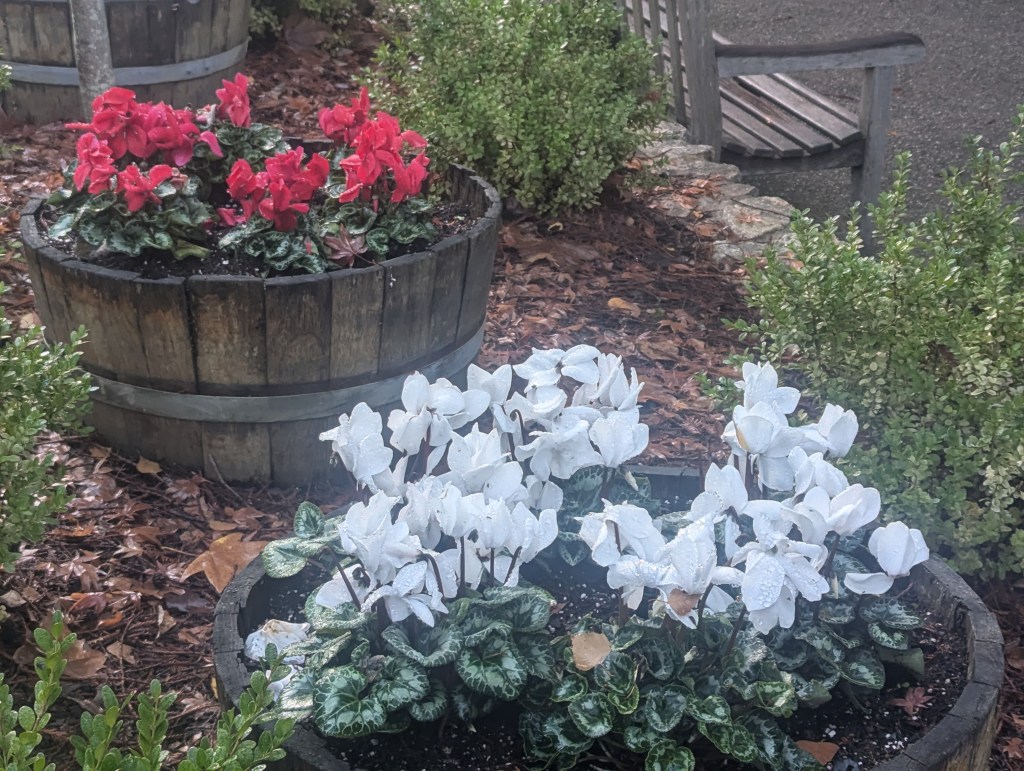
2. Lobularia maritima, alyssum remains from last summer as a genuinely cheap annual that wants to be a perennial. Although it has potential to perform as a perennial, salvage after winter is less practical than replacement, especially since alyssum is not expensive.

3. Rosmarinus officinalis ‘Prostratus’ creeping rosemary is neither annual nor perennial like the others. It is instead a very prostrate shrub that sprawls as a ground cover. Bloom seems to be continuous, although not as impressive as bloom of annuals and perennials.

4. Viola X wittrockiana, pansy is probably the most popular cool season annual here. It has potential to be perennial, but like alyssum, it is easier to replace when it is in season than salvage after it was not in season. It gets thrashed through the warmth of summer.

5. Osteospermum ecklonis, African daisy tries to bloom as continuously as rosemary. Its flowers do not last for long while the weather is cool and damp, though, and might mold before they unfurl. Several cultivars with distinct floral colors bloom in the same garden.

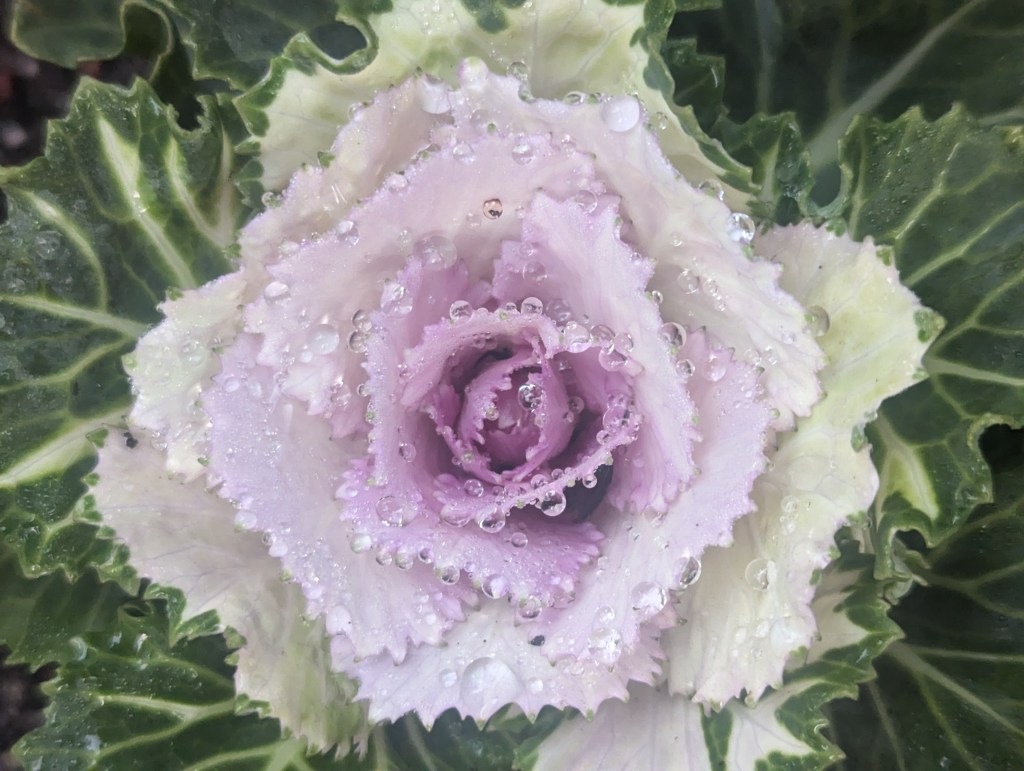
6. Brassica oleracea var. acephala, ornamental cabbage is the only one of these six that is foliar rather than floral. Actually, it deteriorates as it eventually blooms with warming summer weather. Yet, it is the biggest and boldest of these six even without floral bloom.
This is the link for Six on Saturday, for anyone else who would like to participate: https://thepropagatorblog.wordpress.com/2017/09/18/six-on-saturday-a-participant-guide/
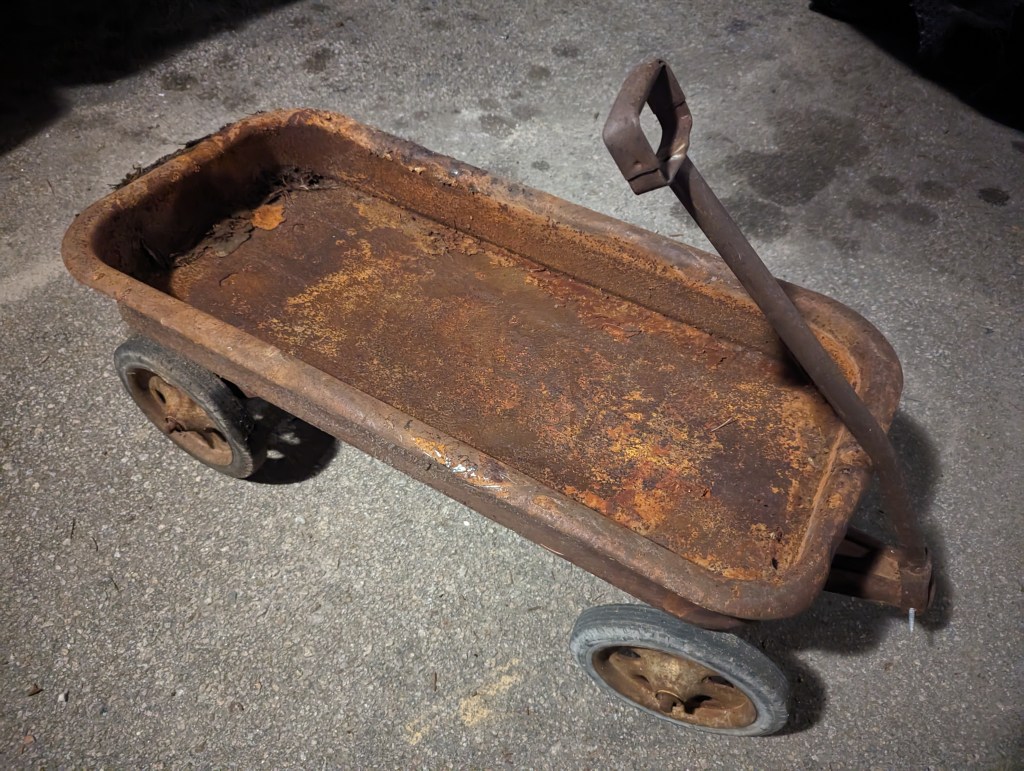
Happy Birthday Jesus!
What is a suitable birthday gift for Someone Who has no use for anything worldly, but lived like He did? Gold, frankincense and myrrh seemed like good ideas in the beginning, although they were presented a year prior to His first birthday. Contrary to modern commercialism, a Lexus or Mercedes Benz might not be so appropriate for Someone Who preferred to come into town on a colt, and not the Dodge sort. Perhaps that is why it is customary to present gifts to others instead. Such gifts are Christmas gifts because so few have the same birthday.
Although overly elaborate or abundant gifts are a tradition that I find to be objectionable, I enjoyed many relatively minor gifts when I was a kid. Within my first few years, although I do not remember exactly when, I received my first tree, which was a seedling of Calocedrus decurrens, California incense cedar, from Amador County. A year or two afterward, I received a ‘Meyer’ lemon tree. During the same time, I received seed for many types of vegetables and a few flowers, as well as a set of child-sized gardening tools of premium quality. They lasted long enough for my mother to use the shovel to clean ash from the woodstove long after I graduated to a real shovel.
The most awesomely awesome Christmas gift that I received back then was my deluxe Radio Flyer wagon! It was my first luxury sedan that worked like a pickup! It was as durable as the other gardening tools. After I went to college, my mother used it to bring in firewood. It is out back right now, more than half a century after I received it new. It may continue to work in my garden as long as I do.

A Week Of Flowers’ at ‘Words And Herbs’ got me started. It finished two weeks ago, and I did not even participate, but it reminded me that I should exhibit more floral pictures. Although the original project featured any floral pictures from any time of year, these six are all from yesterday, and actually, all are from the same relatively confined landscape. Minor frost that damages some vulnerable species within nearby landscapes is somehow less bothersome within this particular landscape. Elsewhere, some flowers are not quite as fresh. The only other common lantana within another landscape here was already cut back to the ground because its foliage succumbed to frost. It seems to know to postpone regeneration until after frost, but will likely succumb to frost next winter also. Although frost is mild here, it does happen.
1. Lantana camara, lantana was already damaged by mild frost at a lower elevation and less than a mile away. Even while damaged, though, it was still trying to bloom like this.
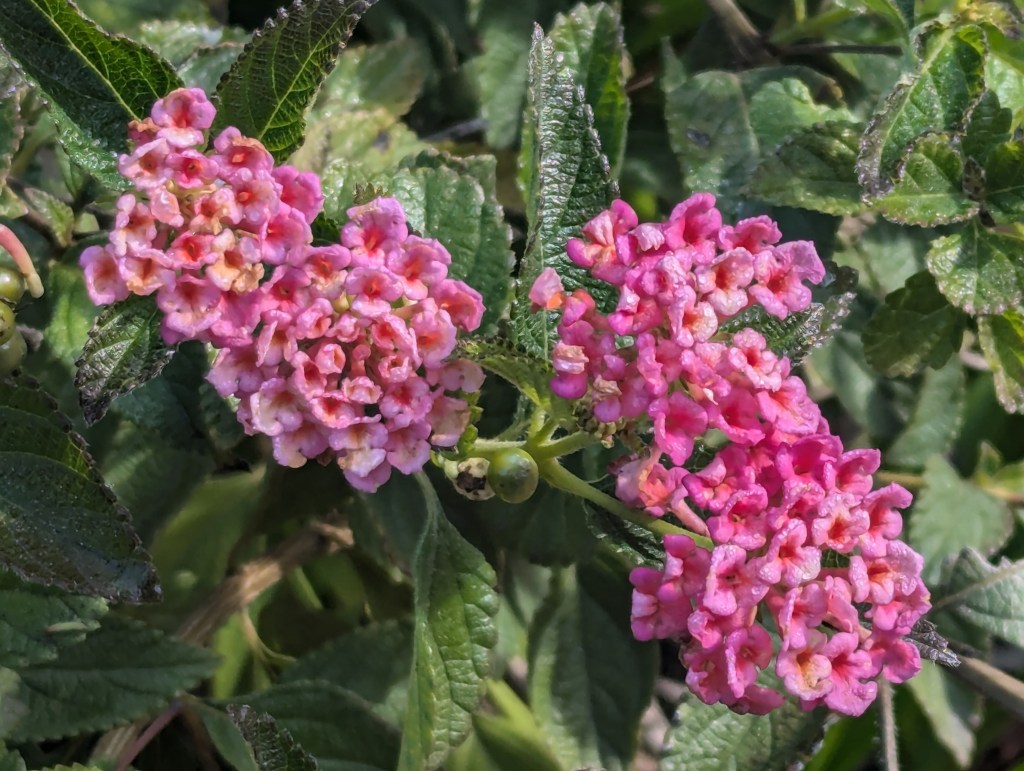
2. Lantana montevidensis, trailing lantana is purportedly slightly more resilient to frost than common lantana. However, its foliage can become very dark, as if it were damaged.
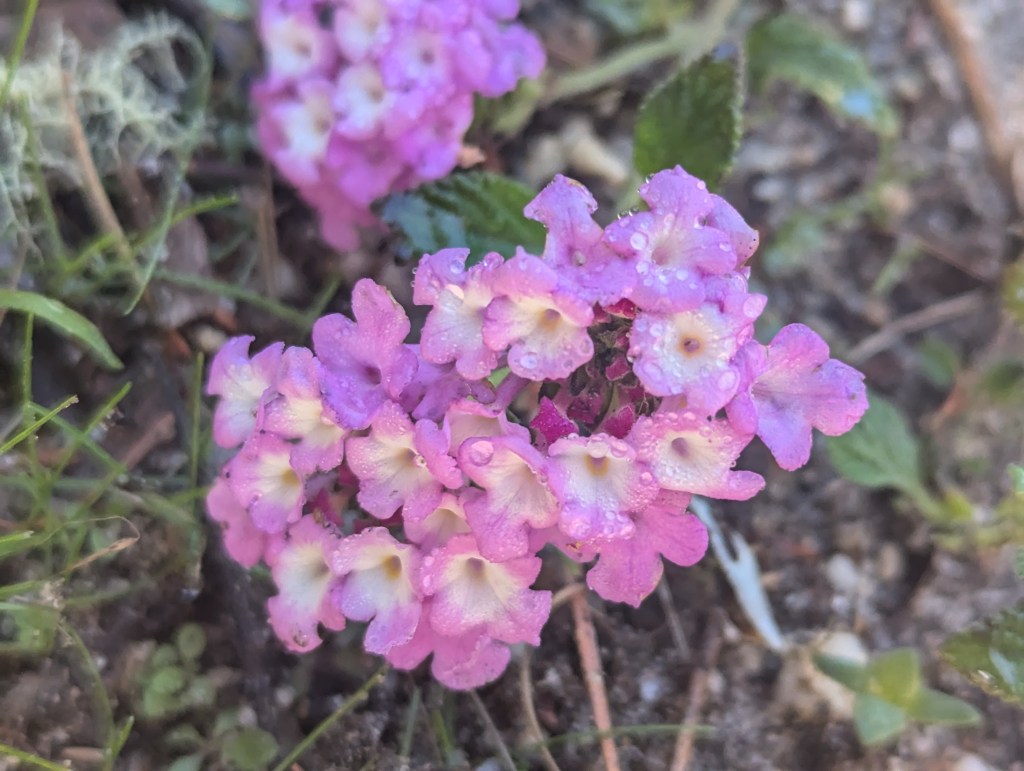
3. Tecomaria capensis, Cape honeysuckle is overrated. Its orange floral color is nice, but its flowers and floral trusses are too small and too scarce to display the color adequately.

4. Leonotis leonurus, lion’s tail bloom seems to resemble that of Cape honeysuckle, most likely because both attract sunbirds as pollinators where they are native in South Africa.

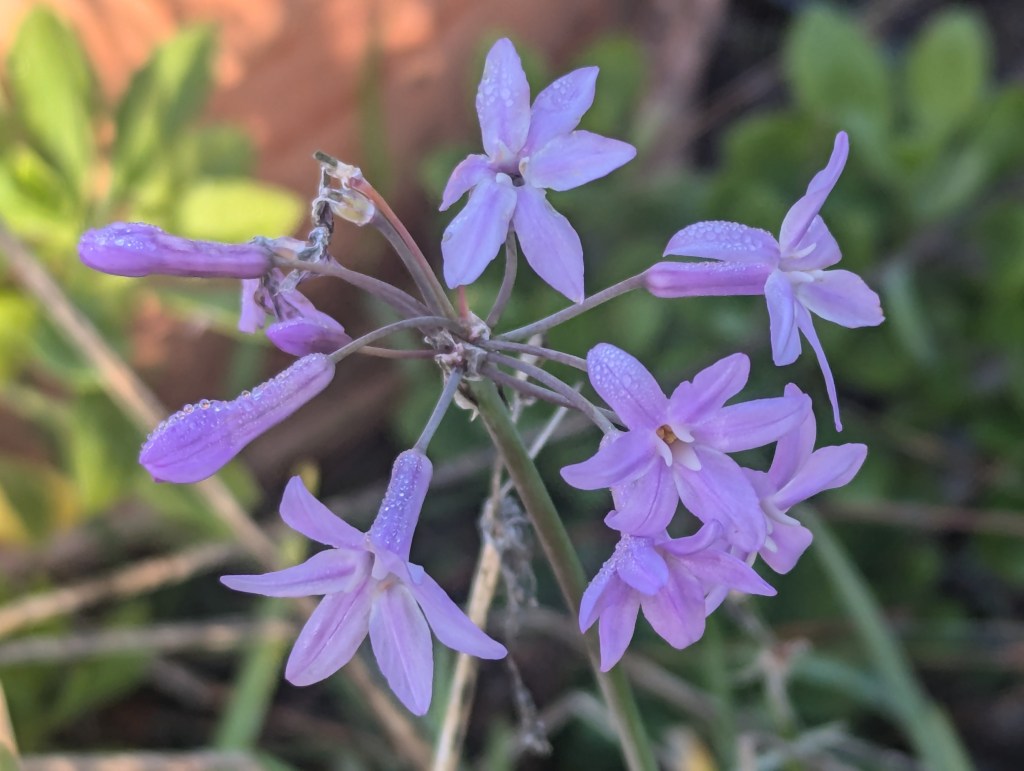
5. Tulbaghia violacea, society garlic is not among my favorite perennials, but is resilient and undemanding. This specimen has been abandoned for years, but constantly blooms.
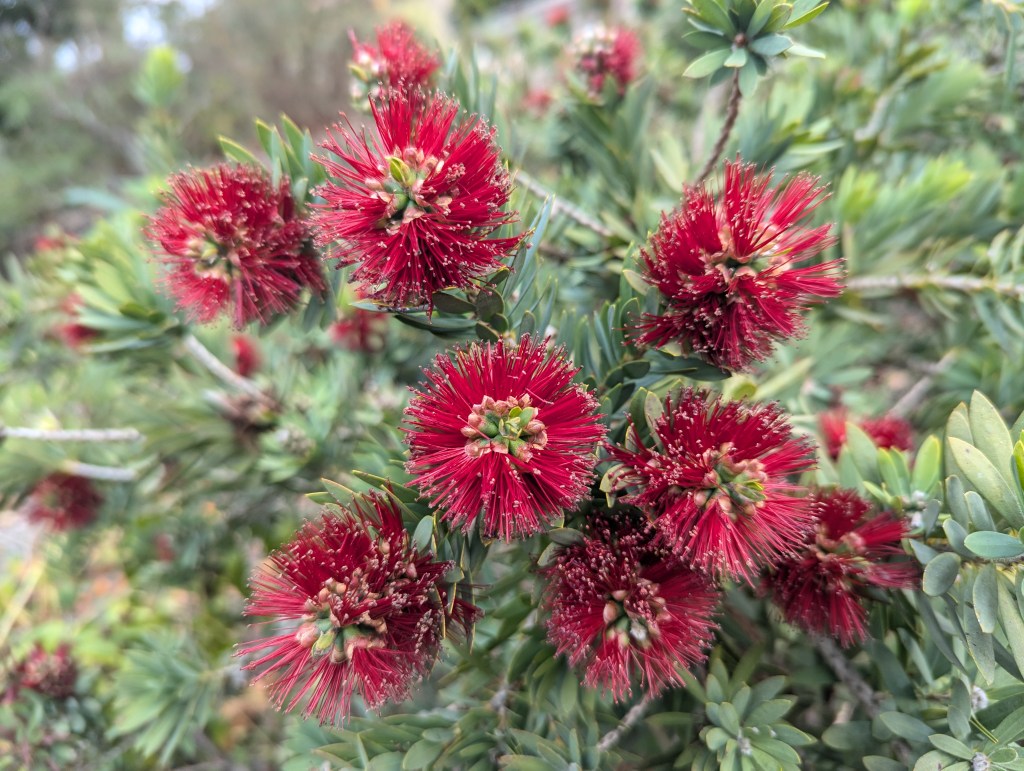
6. Callistemon viminalis ‘Little John’ bottlebrush is now Melaleuca viminalis. I learned it as a cultivar of Callistemon citriodora that is more proportionate to compact gardens.
This is the link for Six on Saturday, for anyone else who would like to participate: https://thepropagatorblog.wordpress.com/2017/09/18/six-on-saturday-a-participant-guide/

