Blue or Pink

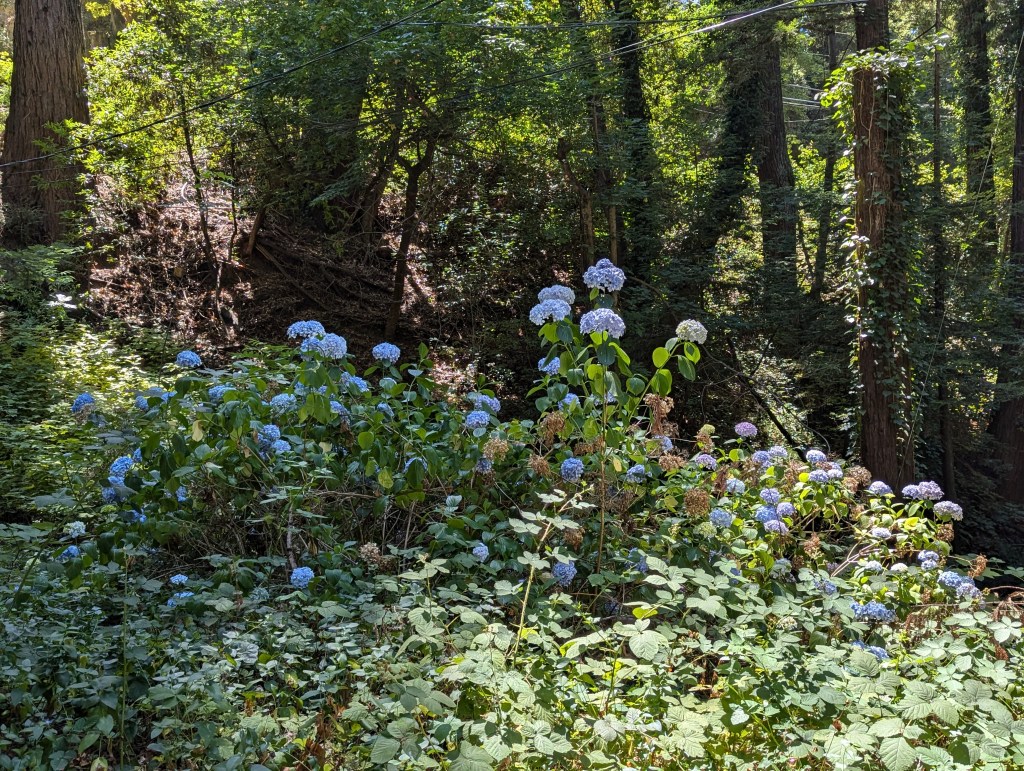
As a native of the Santa Clara Valley, I am still impressed by blue feral hydrangeas.

Hydrangeas were so much more predictable only a few decades ago. They were either colored or white. White was obviously white. In the Santa Clara Valley, colored was pink. We knew them as colored only because they technically had potential to be blue, whether or not we actually saw it. Application of aluminum sulfate was necessary for blue floral color. Such color was only temporary, and could fade in the process of bloom if the dosage of aluminum sulfate was inadequate. Consequently, blue hydrangeas were rare. However, within the redwood forests of the Santa Cruz Mountains to the south and west of the Santa Clara Valley, most colored hydrangeas were blue. Application of lime was necessary to make them pink. Just like blue floral color within the Santa Clara Valley, pink floral color within the redwood forests was only temporary, and could fade in the process of bloom if the dosage of lime was inadequate. Nowadays modern hydrangeas are not so sensitive to soil pH. Blue hydrangeas bloom a bit more purplish in the Santa Clara Valley, but are still mostly blue. Pink hydrangeas likewise bloom a bit more purplish in the Santa Cruz Mountains, but are still mostly pink.

Hazards

Horticultural industries are innately hazardous. Most horticultural professionals work outside in all sorts of weather, regardless of what that weather might be; stormy, cold hot and so on. Some of us who grow horticultural commodities might occasionally work with hazardous chemicals, and many of us work exhaustingly long hours, and sometimes in the dark of night. Those who work with landscapes might also work with the same chemicals, as well as potentially hazardous motorized tools. Arborists work with the most hazardous machinery, as well as dangerously heavy debris falling from great heights, and those who climb do their work dangerously high above the ground. Then there is this, which sounds much worse than its bad punctuation. “!PLEASE DO NOT! SIT (I WAS HIT BY A STRAY METEOR)” It sounds like all sorts of bad! I do not know what is worse, sitting or a stray meteor. It is not actually a horticultural concern, but the implication is that whatever happened, it happened on this now broken bench that was formerly located within one of the landscapes that we work in. I suspect that the bench merely broke because it was deteriorated by the weather, which is a concern of meteorology.

Six on Saturday: P III

P was about a white blooming perennial pea, Lathyrus latifolius, that I recently found to replace what I inadvertently lost earlier. P II was irrelevant to both that and this, but did happen to get a title that incorrectly designates it as a sequel to P, and prevents me from using that title for this Six on Saturday post with three variants of perennial pea and the more typical sort. Perhaps I should not have expended such effort for such a weed. What is worse is that I canned and am now growing copies of the three variants as well as the favored white blooming variant.

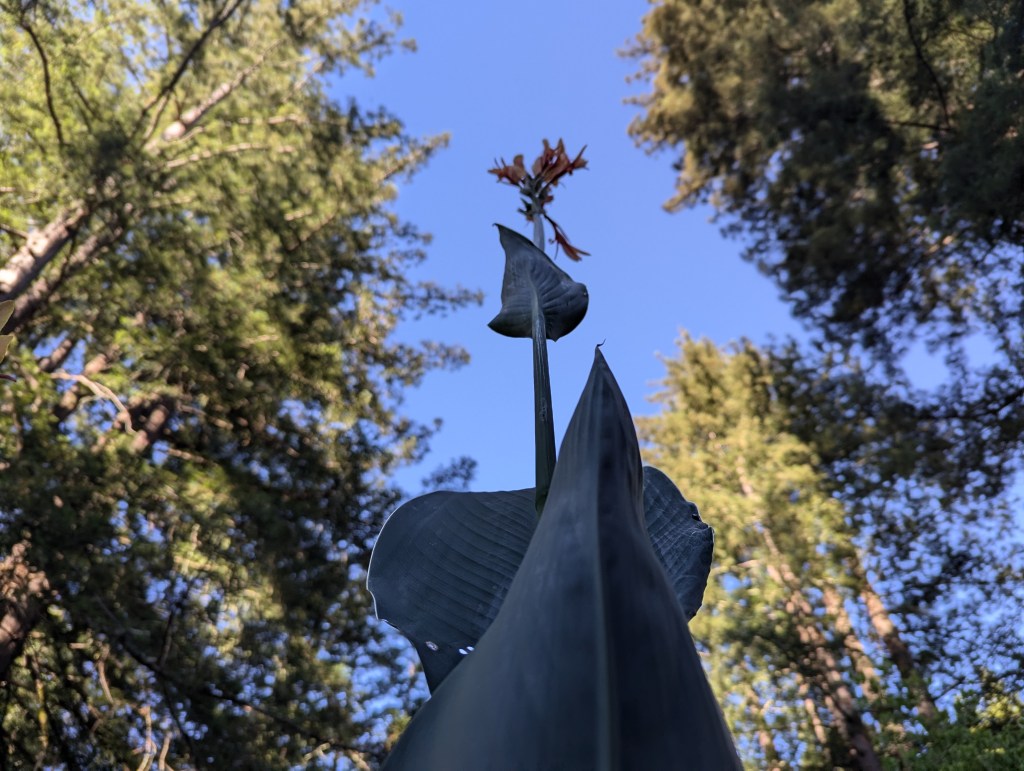
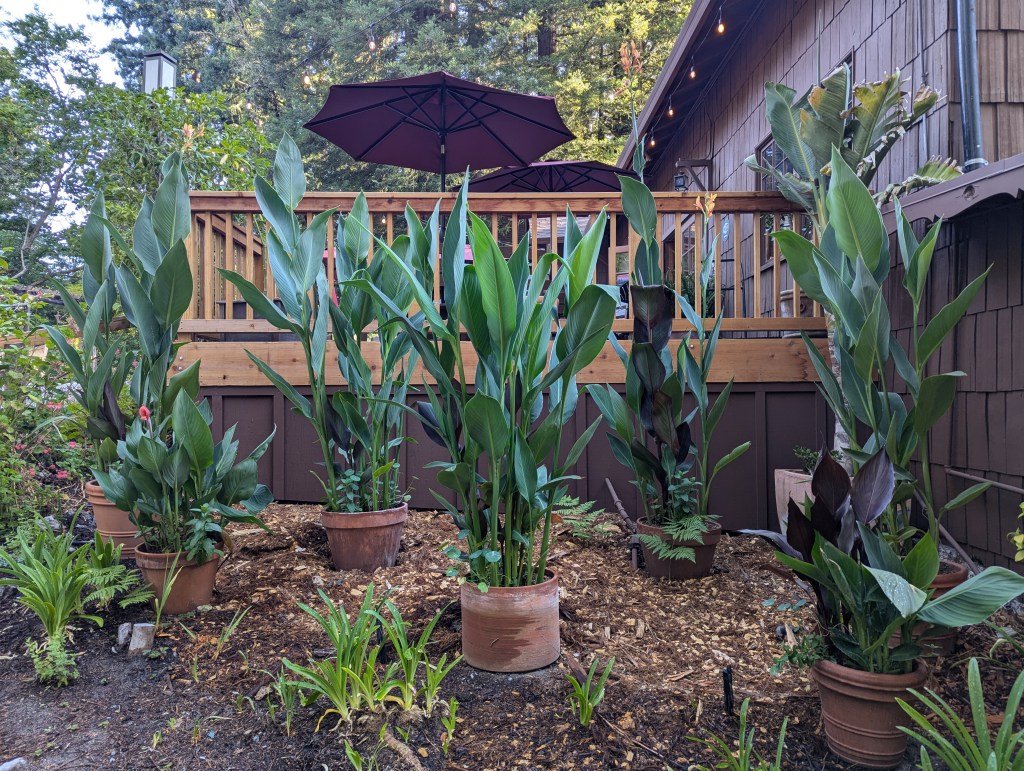
1. Canna are irrelevant to the primary topic, but are too cool to not mention. These were placed here temporarily in random pots until a new landscape gets installed next winter.

2. Canna musifolia dominates, which is why there is not much bloom. This one stands a bit more than eight feet high in its pot. It might be ‘Omega’ like the compact Oldsmobile.

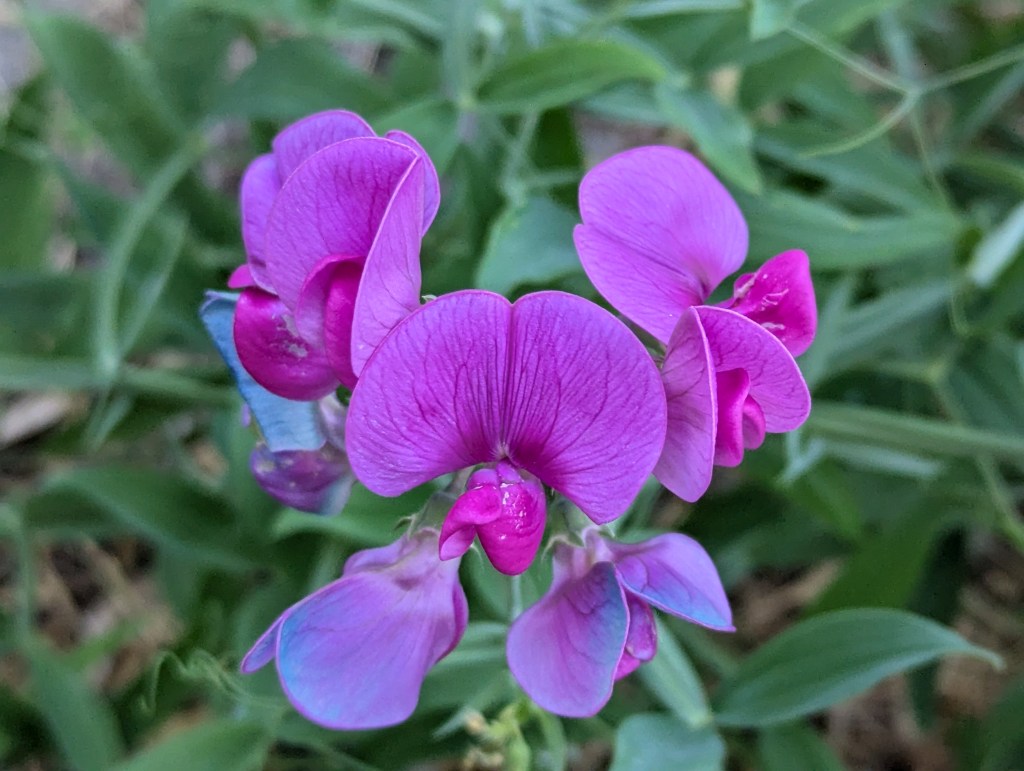
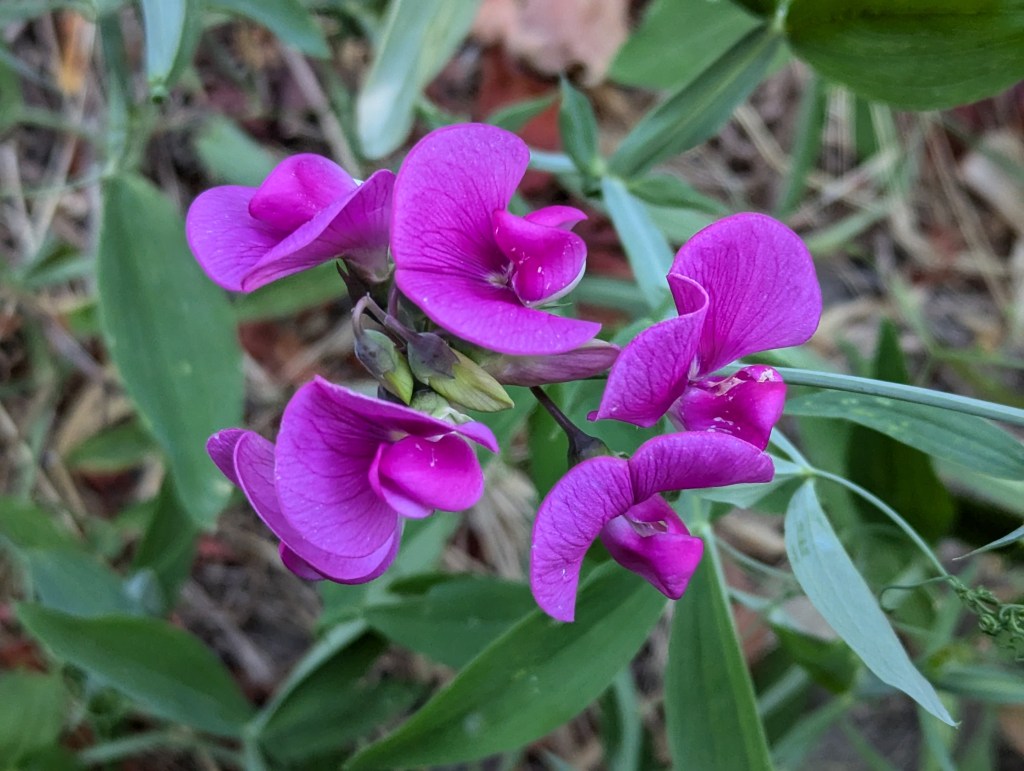
3. Lathyrus latifolius, perennial pea is the primary topic because I found three variants. This one blooms with swirled pink flowers. It is about as rare as those that bloom white.

4. This looks white in this picture but is actually blushed very slightly with pink. I should have gotten a better picture. I dug and canned a copy because I had never seen it before.

5. This is the typical floral color of the species. To me, it looks purplish pink. I am not so proficient with color. Others say it is pinkish purple. It justifies my preference for white.

6. Like the picture of the very slightly blushed white flowers, this is not a good picture of flowers that seem to be slightly richer purple than the typical purplish pink. I got a copy.

This is the link for Six on Saturday, for anyone else who would like to participate: https://thepropagatorblog.wordpress.com/2017/09/18/six-on-saturday-a-participant-guide/

Sports

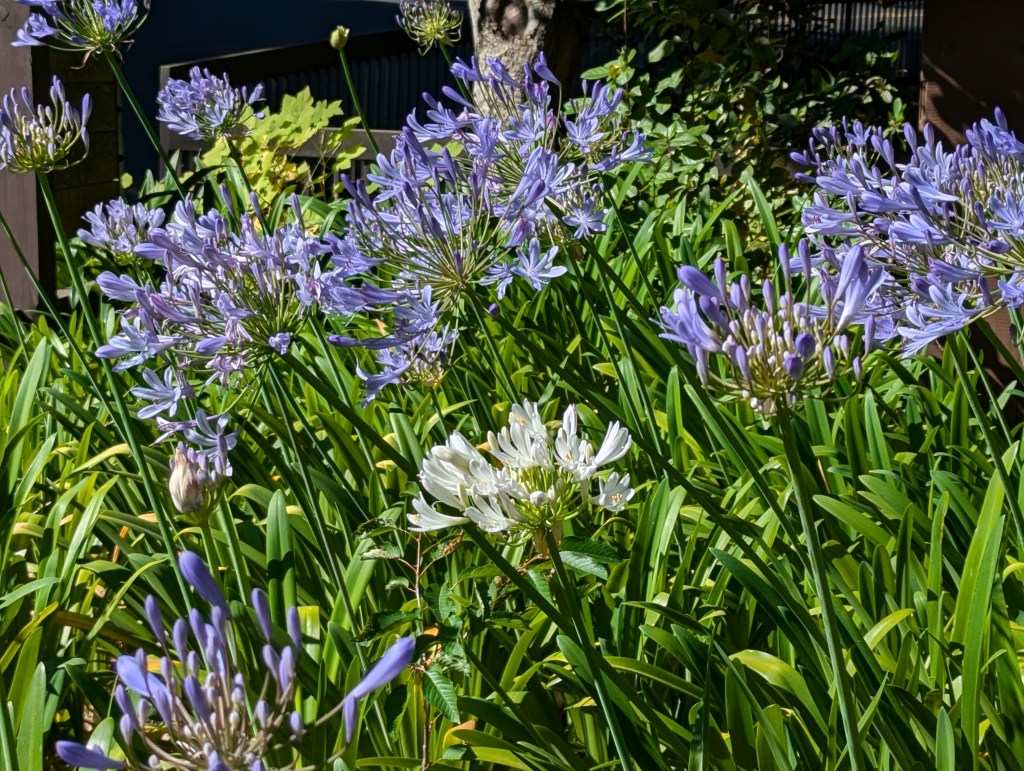
This white lily of the Nile appeared this summer within this exclusively blue colony.

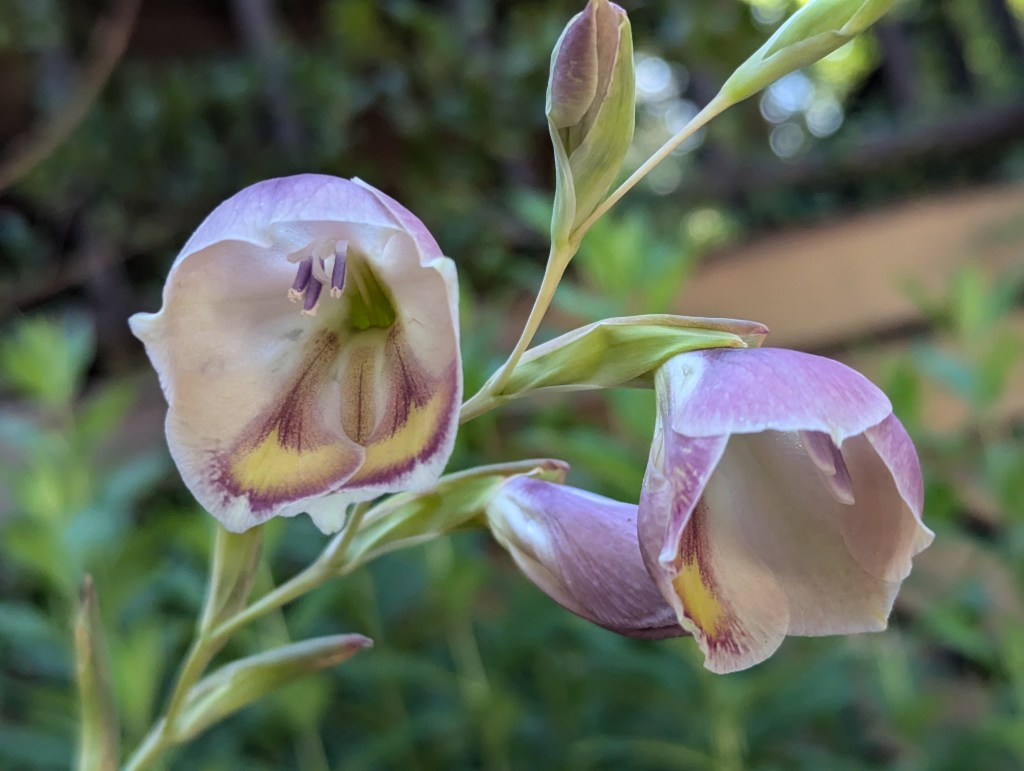
Horticulturally, a sport is a genetically variant growth. Although it is more common among extensively bred or genetically aberrative cultivars than simple species, the most basic of lily of the Nile can, on rare occasion, change floral color from blue to white or from white to blue, as I mentioned on the sixth of July. Unvariegated or ‘green’ sports are a more common annoyance among some cultivars with variegated foliage, such as popular cultivars of Euonymus japonica, since they grow faster with more chlorophyll, and can overwhelm the original and more desirable variegated growth. The yellow hybrid gladiola that I posted a picture of for Six on Saturday on the twenty-ninth of June could be a sport of an adjacent orange and yellow hybrid gladiola. I did not give it much consideration because I assumed it to be the first bloom that I noticed from one of a few bulbs that somehow survived for a few years longer than expected. Until last summer, the only hybrid gladiolas to survive from a mixed batch planted years earlier had been either purple or the aforementioned orange and yellow. However, now that the yellow bloom is gone, an equally unfamiliar orangish red bloom emerged from the same small colony of bulbs that had bloomed only orange and yellow. As their common name suggests, hybrid gladiolas are hybrids, so are innately genetically unpredictable, and therefore have potential to generate sports as they multiply. Although I do not know for certain that this new orangish red hybrid gladiola did not survive without blooming for the past few years, I sort of suspect that it and the new yellow hybrid gladiola are more recently developed sports of the original orange and yellow hybrid gladiola. I hope that both are as reliably perennial as the original.

This orangish red hybrid gladiola seems to be a sport of the orange and yellow hybrid gladiola.

July 12, 2024 – Memorial Tree Update (July 14)

The Memorial Tree is becoming a productive member of its ecosystem!

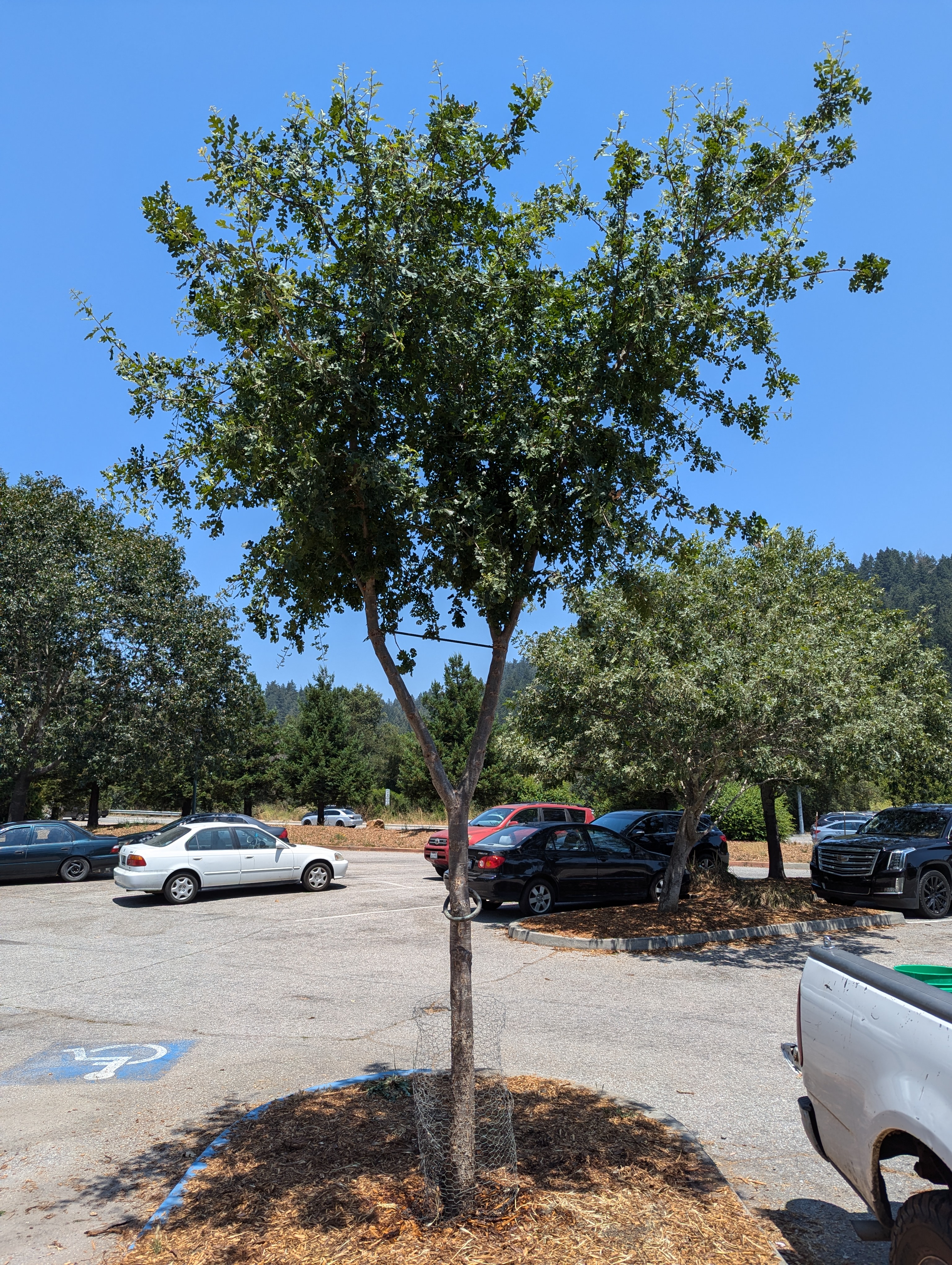
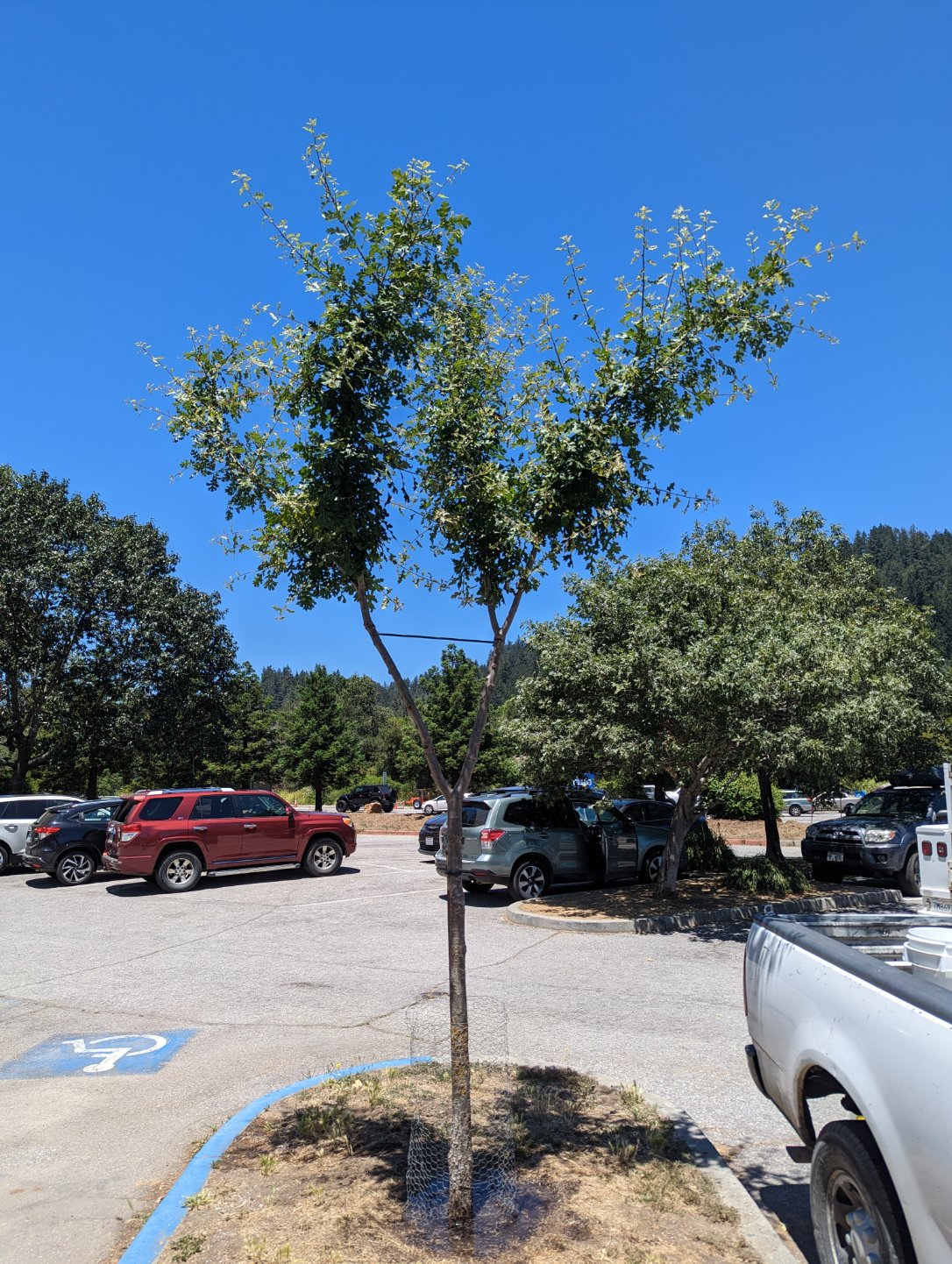
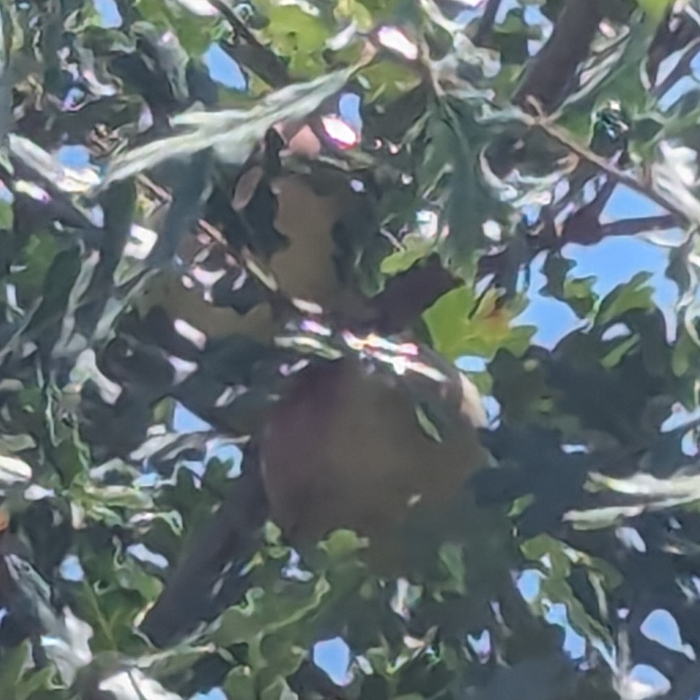
Every year, there is less to write about regarding the Memorial Tree in Felton Covered Bridge Park. That is because every year, it becomes more independent. It no longer needs structure pruning for clearance above the surrounding parking lot. It no longer benefits from supplemental irrigation. The mesh around the base of the trunk really should be removed. So should the truss between the two lowest main limbs. The stake remains merely as a precaution for strong winds, but is likely completely unnecessary. It can be removed after defoliation next winter. The trunk is quite sturdy. Growth is quite vigorous. The branch structure seems to be rather awkward, but such structure is normal for such young specimens of this particular species, and is very unlikely to compromise structural integrity as the tree matures. The canopy is slightly asymmetrical, but not problematically so. The crew who maintains the park replenishes the mulch within the parking lot island around the tree more regularly than they had in the past, and cuts weeds when necessary. They are very protective of this tree, so pull weeds between the trunk and the surrounding mesh rather than get too close to the trunk with their weed whackers. Recently, a neighbor pulled weeds before weed whacking became necessary. Although oaks can technically bloom and produce acorns after only about five years, almost all delay bloom until they are about twenty years old, and some wait until they are twice as old. A lack of bloom this early is therefore normal. The development of two oak apples was a surprise though. Apparently, an oak apple gall moth considers this tree to be mature enough to sustain its eggs. It is as if this little Memorial Tree is already growing up to become a productive member of its ecosystem!

From the ground, I could not get a good picture of these first oak apples.

Perennial Gladiolus

Gladiolus papilio, butterfly gladiolus

Gladiolus papilio, butterfly gladiolus has been performing very well, and, unlike the more common fancy hybrid gladiolus, it has been very reliably perennial. It multiplies and migrates like a wildflower. I know that I brag about it more than I should, and I just posted a picture of it for Six on Saturday last Saturday, but it happens to be one of my favorite perennials now. It was a gift from Tangly Cottage Gardening in the autumn of 2018, almost six years ago. Prior to that, I had been wanting to grow perennial gladiolus for quite a while, although I was not familiar with such species. I was only familiar with the common fancy hybrid sorts, which are generally not reliably perennial. Gladiolus murielae, Abyssinian gladiolus that arrived a few years ago as a gift from a neighbor may eventually inhabit a different portion of the same landscape that the butterfly gladiolus inhabits. It neither multiplies nor migrates as much as the butterfly gladiolus, and is a bit more garish in bloom, but is both reliably perennial and compatible with wildflowers, and technically, is probably more appropriate to that particular refined landscape. Various cultivars of Watsonia, bugle lily, most of which also came from Tangly Cottage Gardening, could also inhabit the same landscape. There is no rush to decide anytime soon, and the refined landscapes at work are constantly evolving. Within my home garden, I can be less concerned with how visually compatible some of such species and cultivars are, and be more concerned with growing what I enjoy. After all, that is how I acquire so many odd species and cultivars with so much history and from so many important gardens, and even from so many natural ecosystems. It is what makes my home garden so important to me.

Six on Saturday: ‘Variegata’

‘Variegata’ is a common designation for the first variegated cultivar of a species. Fancier or later distinct cultivars get fancier cultivar designations. The first three of these six are variegated, but lack a cultivar designation as if variegation is normal for the species. The fourth seems to have a few cultivars with the same designation. The last two could be the only variegated cultivars of their respective species. I can not remember ever seeing any of the first four without variegation. The fifth is still rare. The sixth is now more popular than unvariegated.

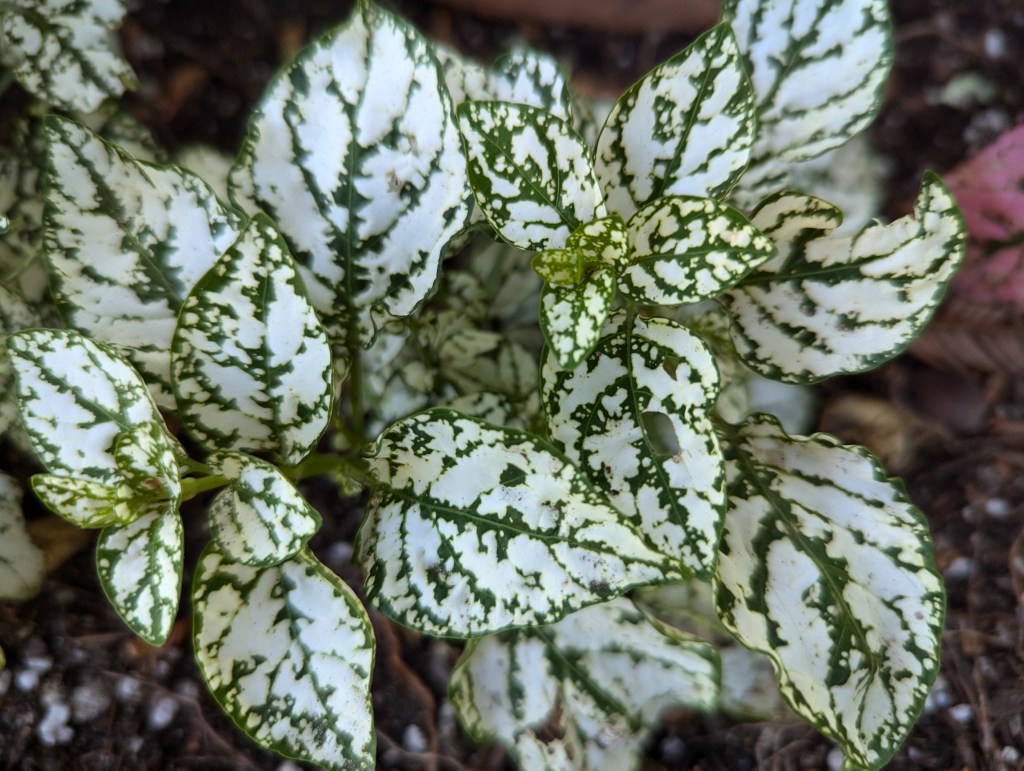
1. Hypoestes phyllostachya, polka dot plant lacks cultivar designation. This was labeled merely as white. Variation of foliar variegation indicate that they were grown from seed.

2. Hypoestes phyllostachya, polka dot plant is also pink, which is exactly how this other half of them was labeled, likewise without cultivar designation. ‘Variegata’ would suit it.

3. Hypoestes phyllostachya, polka dot plant variegation is variable. Some specimens are more green than others. At least two of the pink sort are variegated with red such as this.

4. Aucuba japonica ‘Variegata’, gold dust plant is about as variable as polka dot plant is, but is known by the same cultivar name. Of course, modern cultivars have other names.

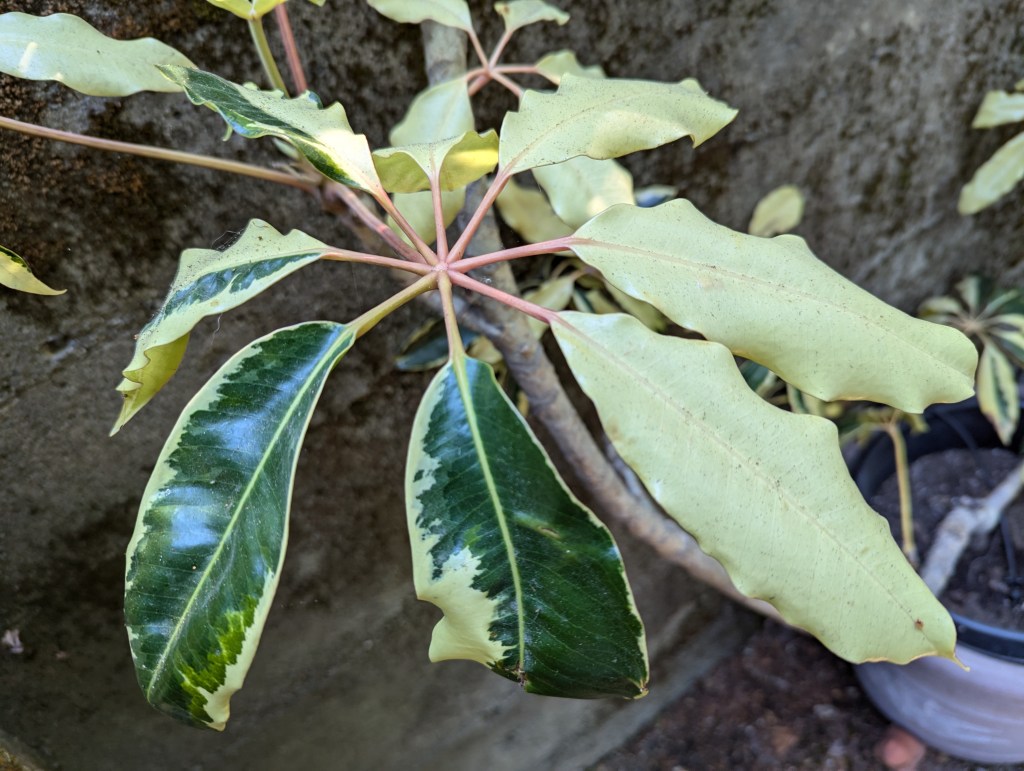
5. Tupidanthus calyptratus ‘Variegata’, mallet flower was not planned. I have wanted to grow the typical unvariegated type since I met it in 1986. Brent sent me this raggedy old but rare variegated specimen so that I would grow more for him. I am learning to like it.

6. Solandra maxima ‘Variegata’, cup of gold vine was also unplanned. I grew the typical unvariegated type to the left first. Then, Brent got me the variegated cultivar to the right. I am getting to like it because it is more docile. The unvariegated sort grows like a weed!

This is the link for Six on Saturday, for anyone else who would like to participate: https://thepropagatorblog.wordpress.com/2017/09/18/six-on-saturday-a-participant-guide/

North & South

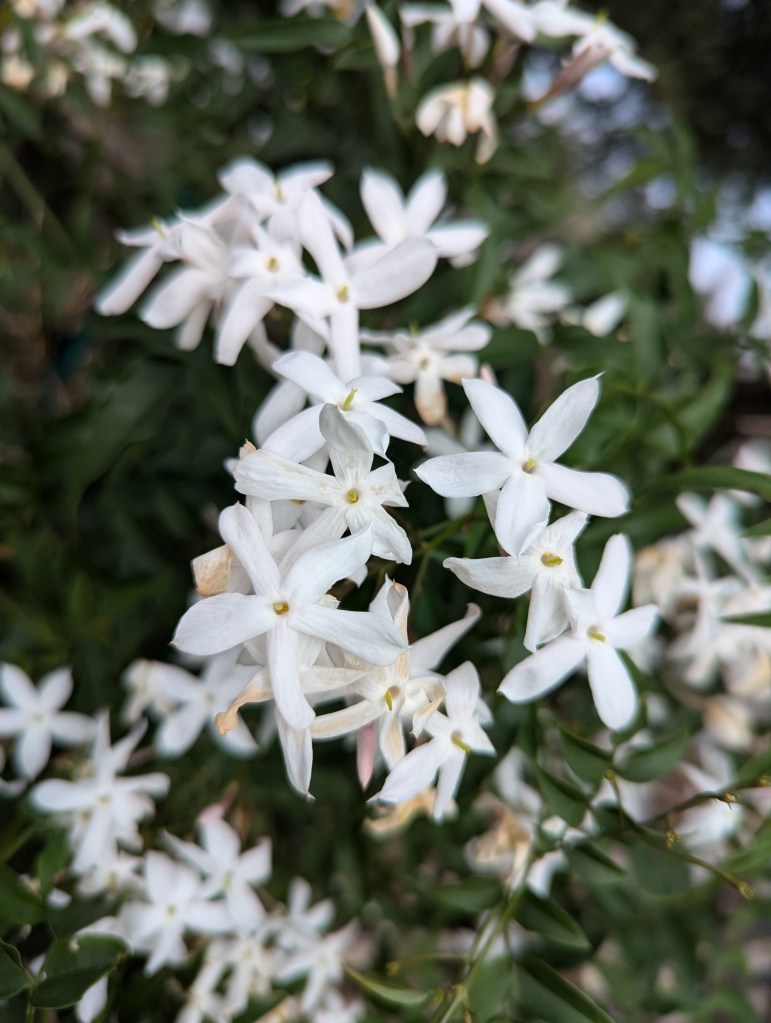
pink jasmine, Jasminum polyanthum

Brent and I studied horticulture through the second half of the 1980s at California Polytechnic State University at San Luis Obispo, which is known more simply as Cal Poly. San Luis Obispo is exactly halfway between where each of us came from. He came from the region west of Los Angeles, two hundred miles to the southeast, which is considered to be south by the standards of California. I came from the region west of San Jose, two hundred miles to the northwest, which is considered to be north by the standards of California. He considered San Luis Obispo to be within Northern California. I considered it to be within Southern California. Consequently, when either of us encountered a species with which we lacked prior experience, we assumed it to be regionally popular within the respectively unfamiliar half of California. Such assumptions were accurate for some species. For example, Brent was as fascinated with redwoods as I was with desert fan palms. He knew that redwoods are more popular here than in Southern California, and eventually went to experience them growing wild within their native range near Santa Cruz. I knew that desert fan palms are more popular in Southern California than here, and eventually went to experience them growing wild within their native range near Palm Springs. Pink jasmine, Jasminum polyanthum, was an odd one. Because Brent had never encountered it before, he assumed that it had been popular in Northern California. Because I had never encountered it before, I assumed that it had been popular in Southern California. In actuality, it only became commonly available throughout California at about the time that we encountered it, so had previously been popular neither here nor there. Nonetheless, to Brent, it is still as northern as it is southern to me.

What Is This IV?!

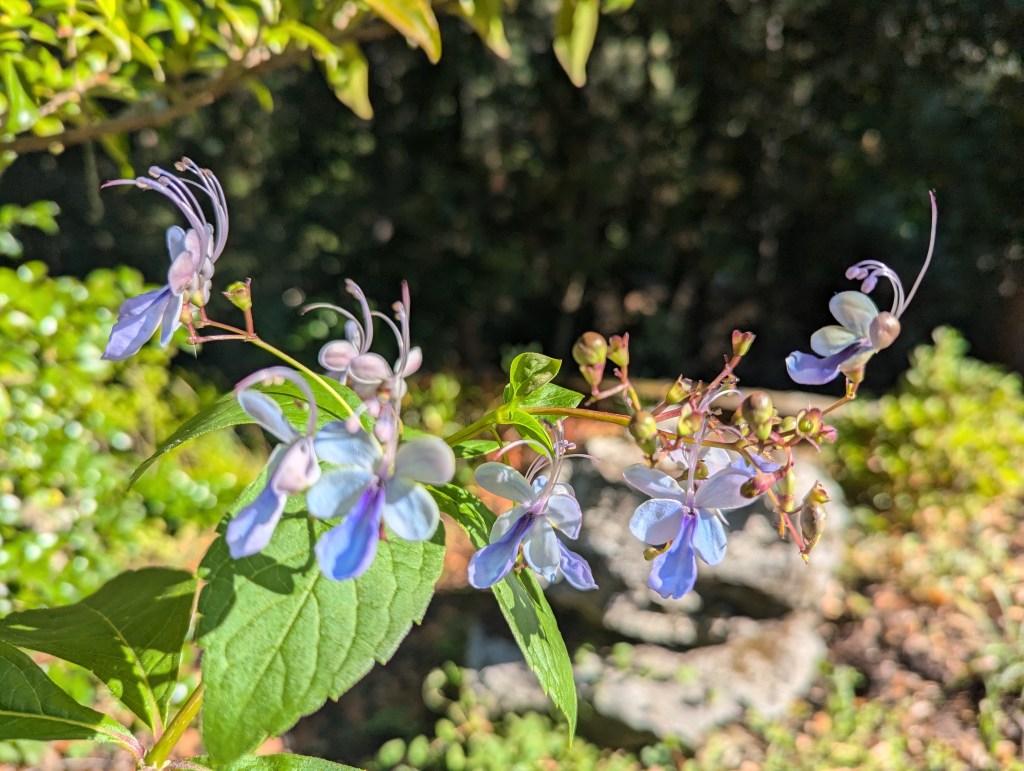
Rotheca myricoides / Clerodendrum myricoides ?

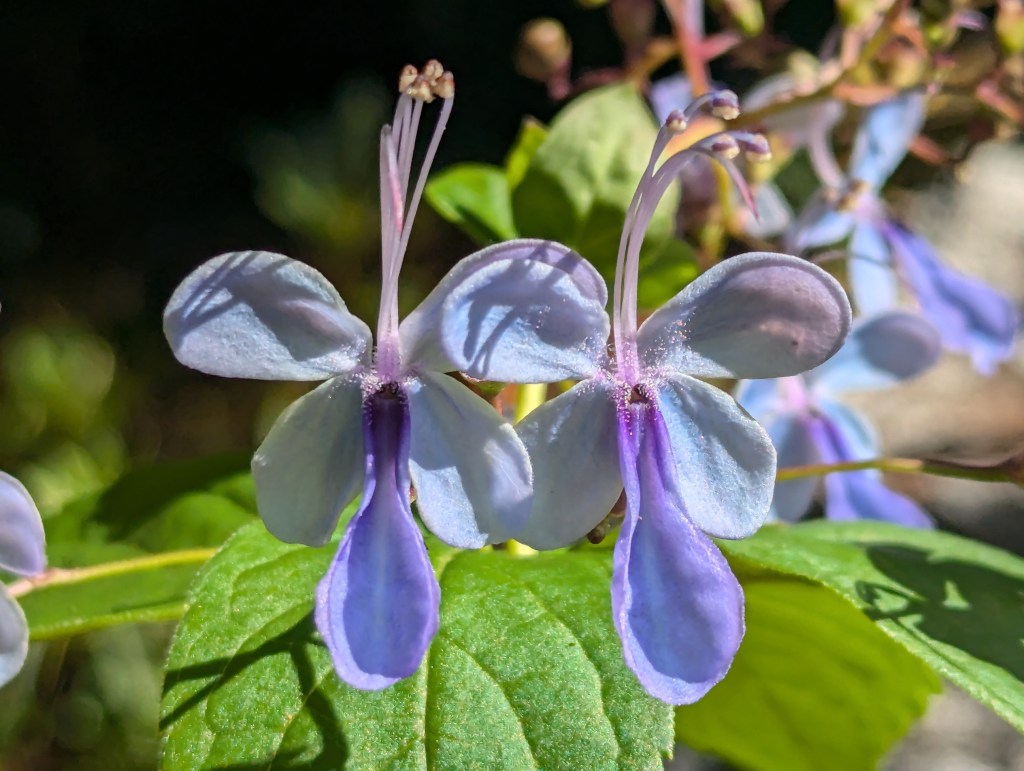
It is not a species of ivy. ‘IV’ is merely its Roman numeric designation as the fourth species that I am unable to identify since I started assigning numeric designations to them. So then, what is it? I suspect that it is likely Rotheca myricoides, which is alternatively known as Clerodendrum myricoides. ‘Ugandense’ is a cultivar name that, in typical modern tradition of botanic nomenclature that violates the simple standards of botanic nomenclature, now seems to be an acceptable species name in conjunction with either genus name. Its common names include butterfly flower, blue butterfly plant and blue butterfly bush, although the latter sounds more like a cultivar of Buddleia. I have not actually confirmed its identity, and I have no idea how it got into one of our landscapes. It grew under the carcass of a Brunfelsia pauciflora, yesterday, today and tomorrow, which did not survive my meager attempt to salvage it from compost. I can only assume that it arrived, most likely as an ungerminated seed, with the now deceased yesterday, today and tomorrow. It initially grew quickly with only two straight canes about four feet tall. I would have pulled it as a weed, but was intrigued by it. It did not grow much this year, but instead took time to branch, and is now taking time to bloom with these few intricate flowers on top. I am now pleased that I did not pull it as a weed. If it really is butterfly flower, it can get a bit taller than it already is. So, because it grew in front of an exemplary sasanqua camellia, I will likely relocate it to a more appropriate situation during its winter dormancy. I am fond enough of its sky blue flowers to propagate a few more copies of it.

The delicate pastel blue flowers are prettier up close.

Second White

How did this get in here?!

Lily of the Nile had previously been exclusively blue at work. Many from undoubtedly several different sources had been added to the landscapes for the past century or so, but, until recently, none were white. Even within a large and likely original colony, where genetic variability is evident among specimens that were added from different sources, or that grew from seed over the years, all bloomed monochromatically blue. I added the first white lily of the Nile only a few years ago. They are a significant herd of the same cultivar that I grew from only seven original pups that I acquired in the early 1990s. They are separate from the other lily of the Nile, in a neat row in front of the White Garden of el Catedral de Santa Clara de Los Gatos. They are not as fancy as they sound of course, and bloom with only a few flowers in the partial shade there, but they were supposedly the only white lily of the Nile. However, I recently found this other white lily of the Nile within the large and very established colony that provided many lily of the Nile for other landscapes. It could have grown from seed, and finally matured enough to bloom. I suspect that it merely reverted, as lily of the Nile sometimes does. I suppose that I should be pleased with it, but I am not so certain. It is almost intrusive, both to the exclusivity of the single white cultivar, and also to the exclusivity of the monochromatically blue colony. I have noticed within other old landscapes that, once one pup blooms white, others can follow its example. The same applies to a pup that blooms blue within a white colony. I may tag this particular pup for removal after bloom.