Reveille

Angel’s trumpet, Brugmansia X cubensis ‘Charles Grimaldi’

Summer has been slow to arrive. Now, some flowers that have been waiting for a bit of warmth to bloom are ready to make up for lost time.

These angel’s trumpets are fortunately silent. Even prior to full bloom, so much bloom looks silly with such minimal foliage.This picture is a few days old; so they are in full bloom by now. More foliage will develop as the summer progresses.

This particular cultivar is the common ‘Charles Grimaldi’, with splendidly fragrant single yellow flowers. Two other cultivars are blooming nearby. One is somewhat less vigorous, with single white but perhaps less fragrant flowers. The other is more compact than ‘Charles Grimaldi’, with double white and comparably fragrant flowers.

All were grown from cuttings, and have potential to grow like weeds. Six more of the cultivar with double white flowers were added to another landscape nearby. Several of both cultivars with white flowers are developing in the nursery, and will need homes either in the landscapes or neighbors’ gardens by next year. Another cultivar in the nursery may bloom with mildly fragrant single pastel orange flowers in the next few days, but we will not know until it actually does so. We have not seen it bloom yet. It could actually be another copy of ‘Charles Grimaldi’.

Daylilies are beginning to bloom now also. Like angel’s trumpet, they seem to have been waiting a bit longer than they wanted to, so are ready to bloom simultaneously in atypical profusion. I hope that such profusion does not compromise subsequent bloom, since they continue to bloom throughout summer and until frost. Also like angel’s trumpet, daylilies are so easy to grow and propagate that there has been no incentive to acquire more cultivars than the three or so that are already here.

Six on Saturday: No Rhododendrons

Rhody’s rhodies were spectacular in bloom. This year, I refrained from posting too many pictures of them by posting none at all. I thought that I might get a few at the end of the season; but now find that the few that remain are either shabby or difficult to get a good picture of. There is plenty of other bloom though, even without exploitation of the warm season annuals. Now that daylilies are blooming, they will continue until autumn. Roses continue at least as late, but bloom in phases since most are partially shaded. All but one of these six species were recycled, although one was recycled by remaining where it was.

1. Daylily is not actually a lily. With all the bickering amongst botanists, its classification remains vague. This surplus from thinning a congested colony now borders the iris bed.

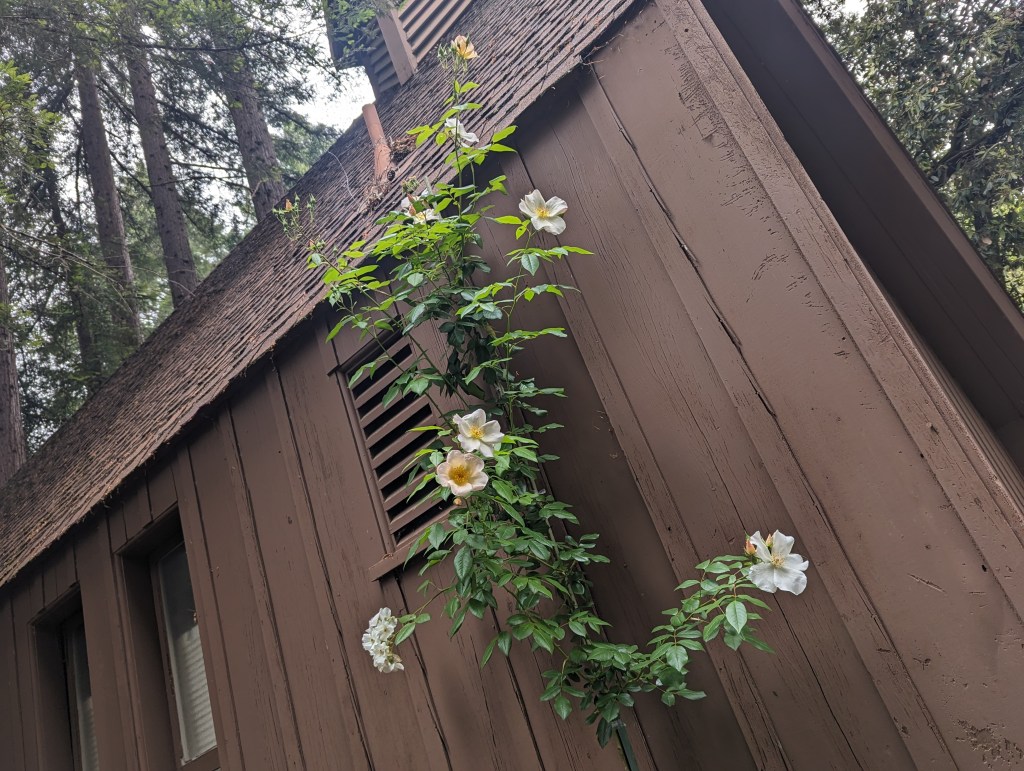
2. White climbing rose that was removed from the garden of a renovated cabin has been relocated to el Catedral de Santa Clara de Los Gatos, where merely white flowers bloom.

3. Rose lily that was plumply budded for Six on Saturday two weeks ago is now finishing. It recycled itself from a previous froufrou garden as the rose garden was installed over it.

4. Carpet rose was originally too close to a walkway, so was relocated to a wide roadside embankment. I am none too keen on carpet rose, but it is appropriate for its application.

5. Easter lily that was left from a wedding at el Catedral de Santa Clara de Los Gatos was added to the perennials across the road, but could have remained with the white flowers.

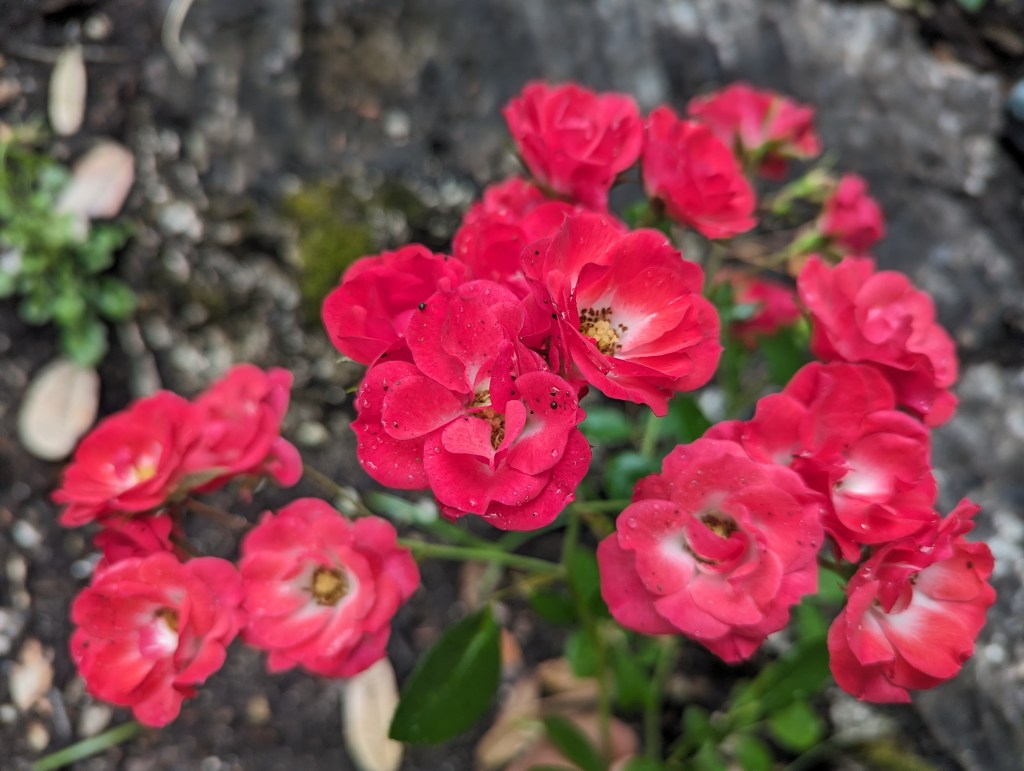
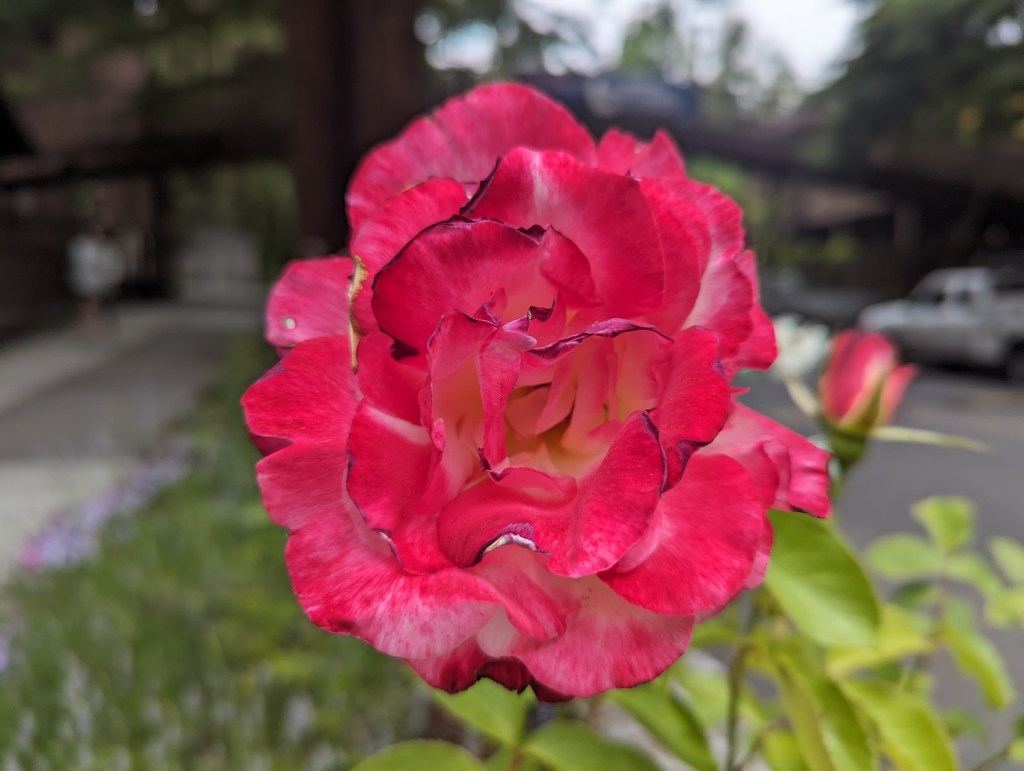
6. Unidentified hybrid tea rose, which had the color but not the form of ‘Double Delight’ before it began to fade, blooms in the rose garden, which was installed over the rose lily.

This is the link for Six on Saturday, for anyone else who would like to participate: https://thepropagatorblog.wordpress.com/2017/09/18/six-on-saturday-a-participant-guide/

Locusts!

the SWARM!

Well, not exactly locusts; although, until they were reclassified within the Order Mantodea, they were of the same Order Orthoptera as locusts. Nor are they affiliated with either honey locust, Gleditsia triacanthos that I wrote about for last Tuesday, or carob, Ceratonia siliqua that I wrote about for the previous Tuesday, and which is the sort of locust that sustained John the Baptist in the desert. These abundant critters are young mantises, which likely hatched shortly before posing for this picture that my niece took on her front porch. My niece had seen a slow moving adult mantis there last autumn, and guessed that it might have deposited eggs, and then later died in privacy. Fortunately, she enjoys all sorts of flora and fauna, and was not too disturbed by this scene, or by the mother last autumn, as even some who work outside might have been. In fact, to the contrary, she was pleased that their mother felt that her porch was safe enough for them to start their lives on. She knows that there are plenty of insects for them to eat within the vegetation that inhabits the landscape there, as well as in nearby landscapes. This many mantises will eventually disperse into the neighborhood to satisfy their voracious appetites as they grow. That is why mantis eggs are available for sale from some nurseries. They are beneficially predatory insects because they consume detrimental insects. Since their arrival, my niece did a bit of research on their sort, and found that some people actually raise certain rare varieties of mantises as pets. As weird as it seems, it is no weirder than pet tarantulas. Anyway, this picture was taken more than a week ago. These baby mantises are likely already growing fast and dispersing elsewhere into Los Angeles.

Road to Nowhere

Music videos were so artistic in the 1980s. Some of them said as much as their associated music. The Talking Heads composed a music video for Road to Nowhere that, although it seems ridiculous now, was captivating at the time. It seemed to be about how life is dynamic with deviations from that which is expected. To me, it also seemed to be about enjoyment of being here now, or perhaps, there then. After all, it was filmed near Hi Vista in 1985, far away and long ago.

I did not experience Hi Vista in 1985, but did manage to get to Littlerock in about 1987, about two years later and thirty miles to the southwest. I am glad to have seen the region then. It has changed so much that I sort of hope to never see it again. Although I do not intend to avoid it if there is ever any reason for me to return, I would prefer to remember it how it was about thirty-seven years ago. There are plenty of other scenic regions of the Mojave Desert to tour.

While in the region, I noticed that a few interchanges on the highways that we drove on were more substantial than the highways were. They were proportionate to the urban development that was expected for the region. The portions of the highways between the interchanges were upgraded later, which is now a long time ago. So much of what I remember as rural is now suburban or urban.

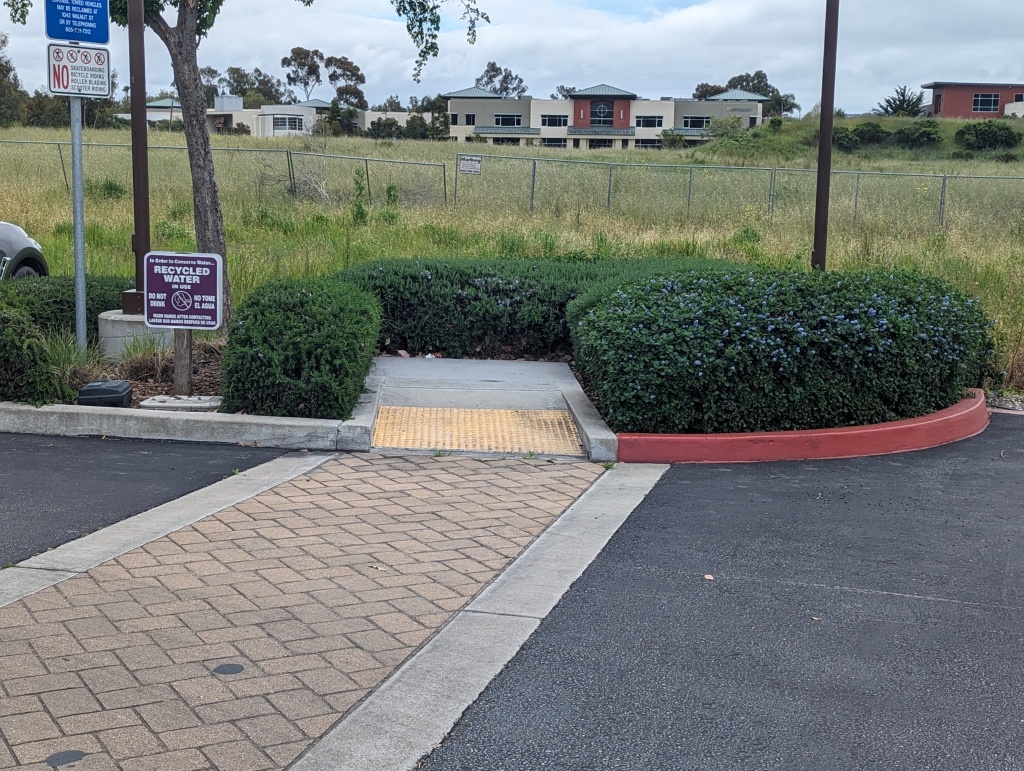
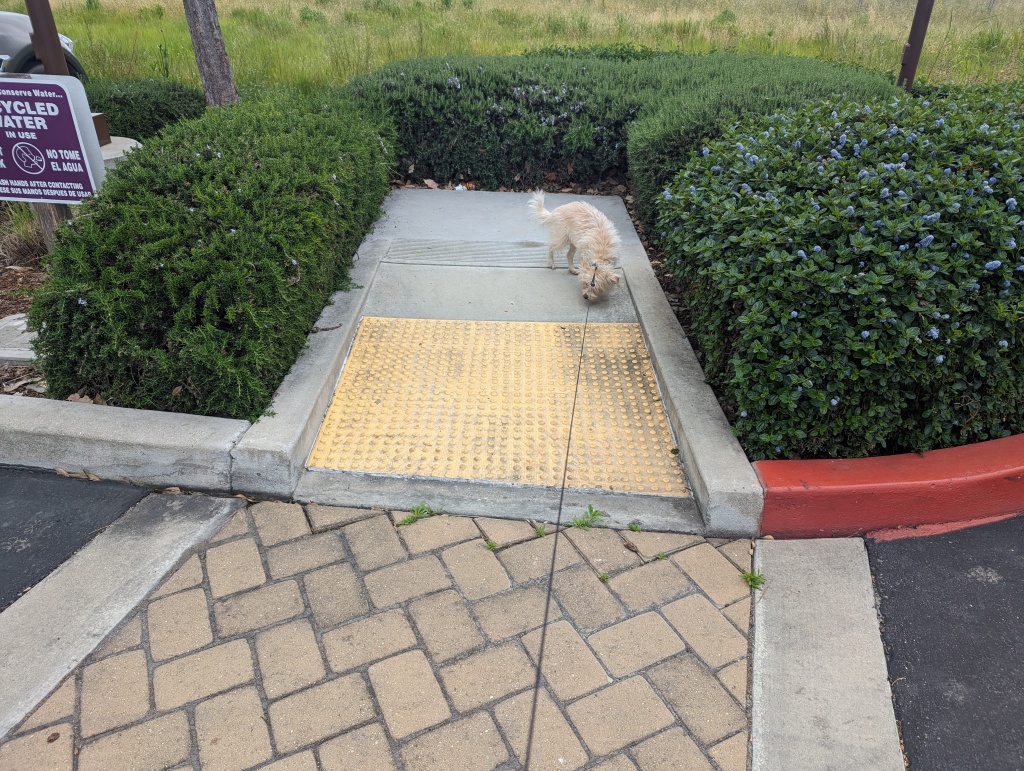
That is what this landscape reminded me of. It is near my formerly rural home south of San Luis Obispo, where I lived while in college. Although this parking lot was here before I was, it has since been renovated. The area beyond was merely pasture occupied by cattle. This long and prominent crosswalk crosses the parking lot as if going somewhere important, only to terminate at this empty landing, which is surrounded by ceanothus. It certainly looks odd. Obviously, the walkway is intended to continue in some form into development that is planned for the adjacent site. I had not been here in about thirty-four years, so should not be surprised by such changes. Perhaps I am no more surprised than I am amused by this landscape and its associated road to nowhere.

Six on Saturday: &

Odds & ends. Bits & pieces. Rhythm & blues. That is all I got here. The latter might make sense with #4 below. It makes this no easier for me though. I have difficulty writing with characters such as “&”, and even “#”, although I do use “#” when necessary to describe a caption number or can size as for #6 below. Perhaps I should challenge my comfort zone a bit more, as I did when I tried using contractions a few months ago. Although I did not continue using them afterward, it was not nearly as awkward as I thought it would be. At least I now realize that I could do so if I choose to. I simply choose to not do so. In other simpler words, I could, but I don’t.

1. Carson, Rhody’s Roady, posed for this thumbnail illustration for a recent article about how similar binomial botanical nomenclature is to traditional automotive nomenclature.

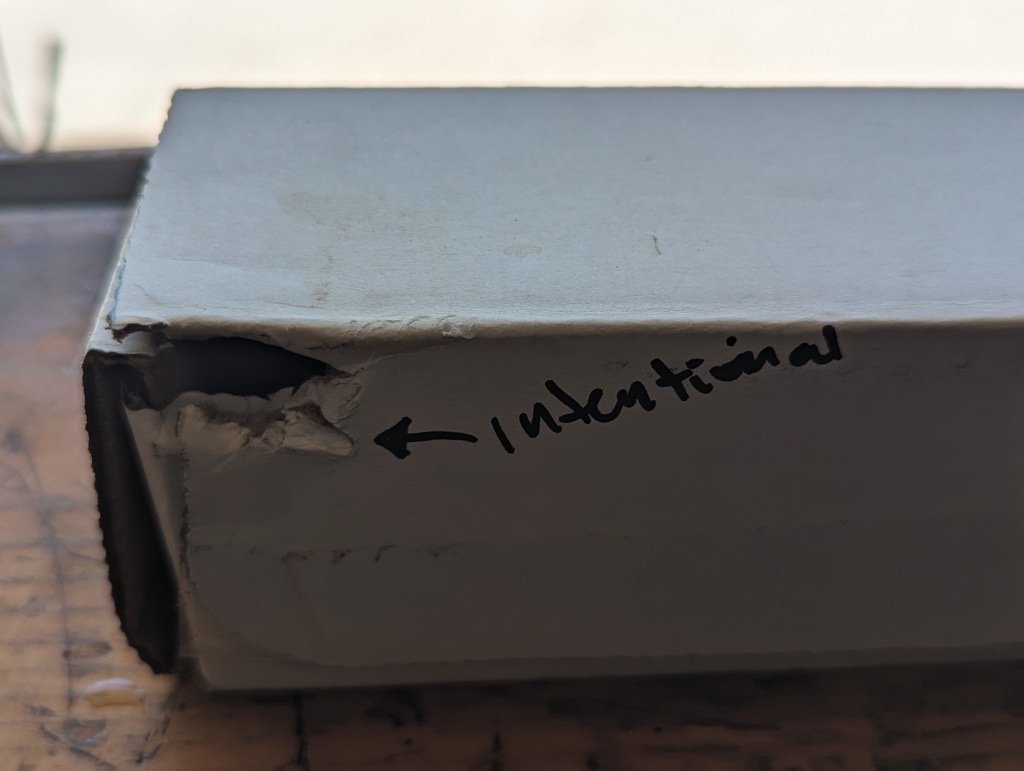
2. Purchases are almost against the rules in my garden. They can only involve items that I lack access to. This purchase that was delivered by mail apparently needed ventilation.

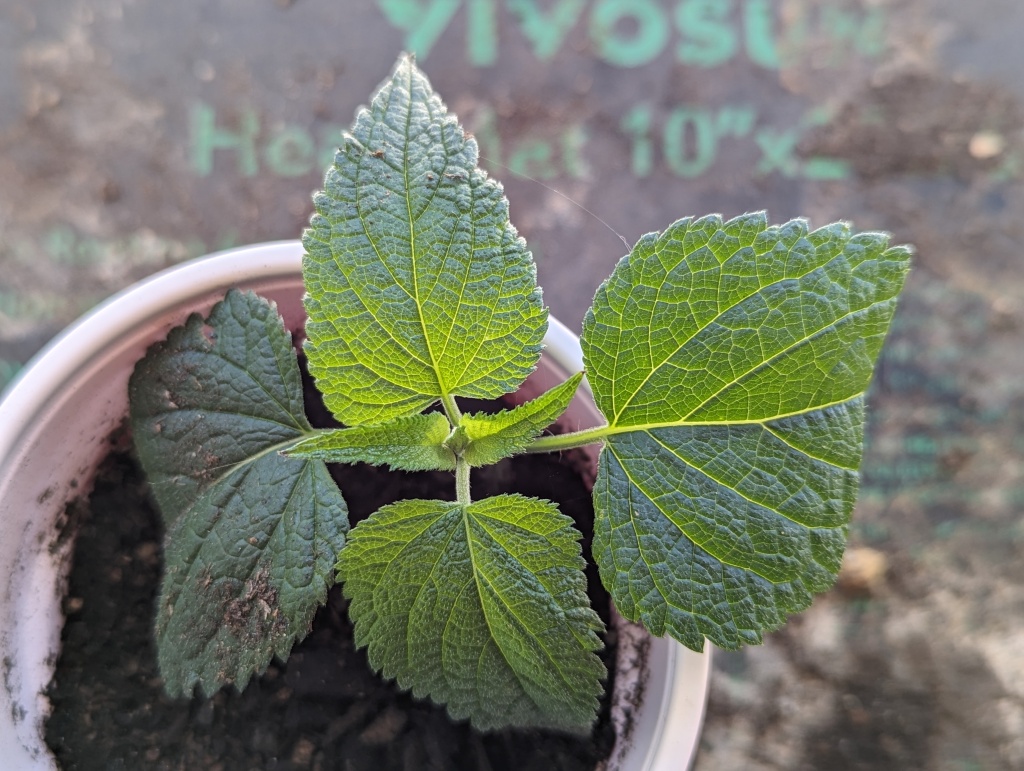
3. Someone who does not take compliments well diverted this one to me. No one knows what seed it contains, but I suppose that we will find out when it grows after next winter.

4. Salvia guaranitica ‘Rhythm & Blues’ came as a cutting in a red Solo cup with the pack of unidentified wildflower seed. This is why I abide by my rule that disallows purchases.

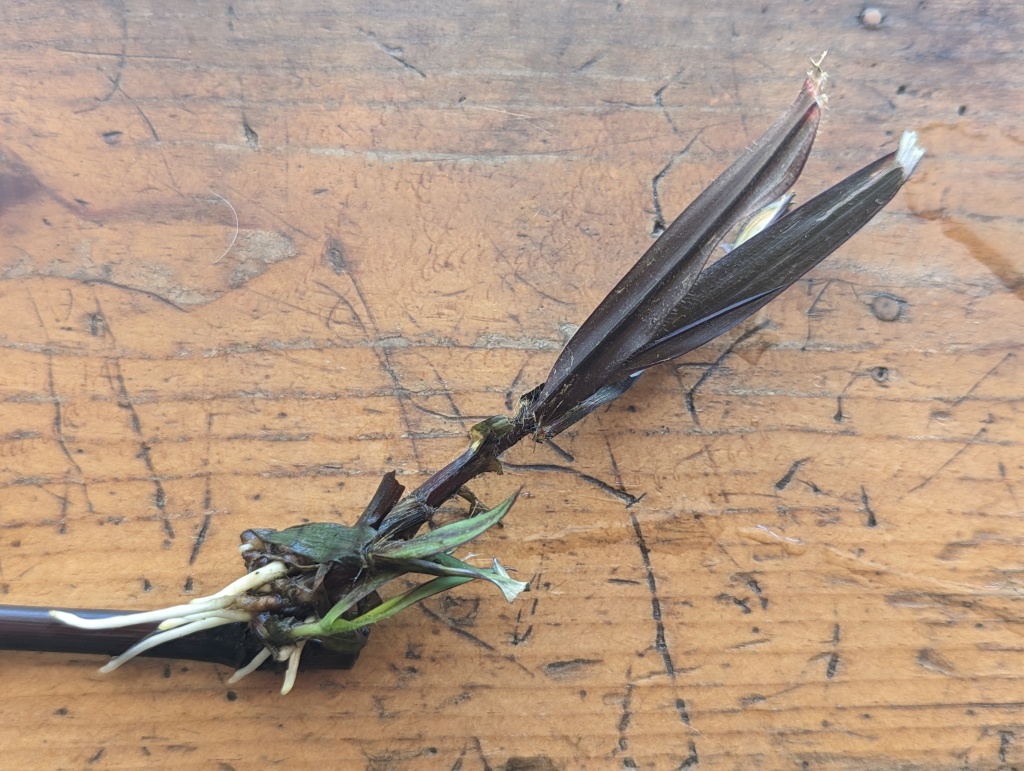
5. Saccharum officinarum ‘Pele’s Smoke’ sugarcane provided more cuttings than I knew what to do with. Fortunately, most succumbed to frost. I can accommodate these fifteen.

6. However, they are merely the fifteen best specimens that were big enough for #1 cans. At least as many smaller cuttings that got separated from them still need four inch pots.

This is the link for Six on Saturday, for anyone else who would like to participate: https://thepropagatorblog.wordpress.com/2017/09/18/six-on-saturday-a-participant-guide/

Perennial Annuals

New Guinea impatiens (with ivy geranium) from last year.

Annuals complete their entire lifespans within a single year.

Perennials survive for more than a single year.

Biennials grow vegetatively during their first year, and then bloom, disperse seed and die during their second year, but that is another story.

Most species that are appreciated as annuals here actually have potential to be perennials, even if only short term perennials. They are only replaced annually because it is easier than maintaining them through their dormant season.

For example, busy Lizzy is a warm season annual that gets installed for spring and replaced with cool season annuals for autumn. However, if cut back and sheltered from frost, it can survive through winter to perform for the following spring and summer. Actually, it can survive perennially like this for quite a few years, and as it ultimately deteriorates, it can replace itself with its own cuttings or layered stems.

Brent did this with New Guinea impatiens from last year. He neglected to replace them for winter (which is quite brief there), and then noticed that they resumed growth as winter ended. Now, they are huge and even more spectacularly florific than they were last summer.

The picture above shows where I camp out in his backyard when I go to Southern California. Most of the white bloom to the right is actually ivy geranium that cascades below the New Guinea impatiens, but most of the white bloom to the left is New Guinea impatiens above ivy geranium. (White on white was not quite as monotonous when each of the two species maintained its distinct form last year.)

Small terrace at the western margin of the garden.

This other pair of potted dwarf Alberta spruce surrounded with the same New Guinea impatiens above, with a close up below, flanks the steps to a small terrace at far western margin of the garden.

These New Guinea impatiens are huge because they resumed growth from last year.

Arrest

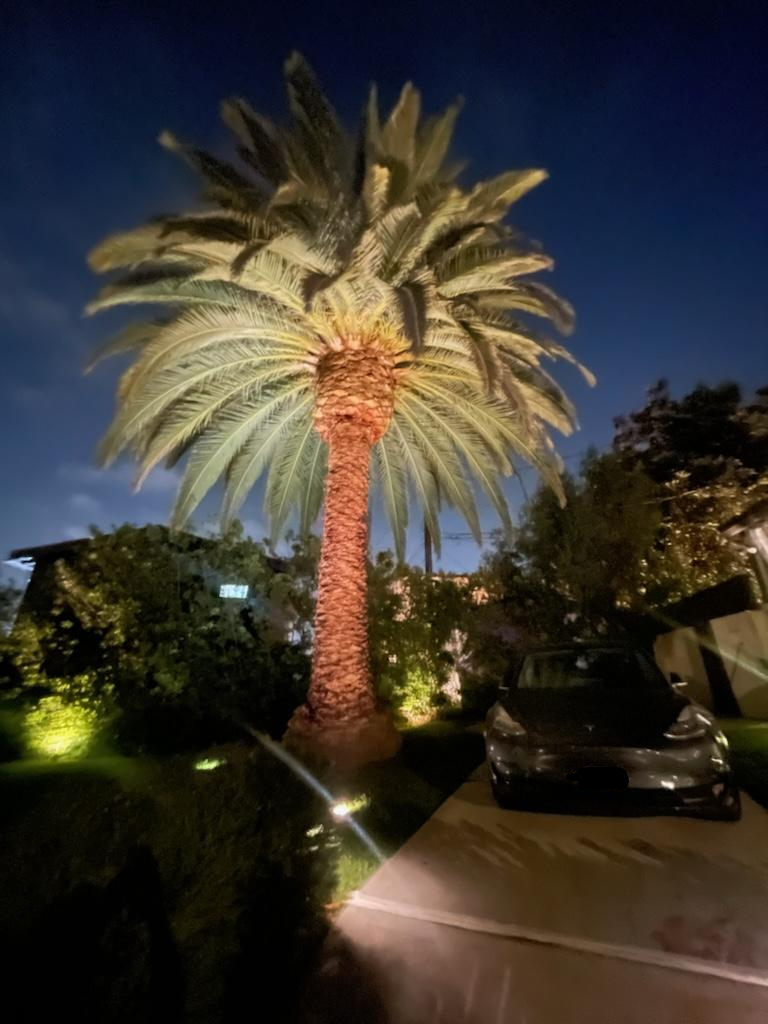
Phoenix canariensis, Canary Island date palm

“Put your hands in the air!

That is what this uplit Canary Island date palm seems to be responding to. It seems to be surrounded by police, with their spotlights aimed at it as they proceed with an arrest. It actually seems to be guilty, although it might merely be humiliated.

Brent is a renowned landscape designer in the Los Angeles region. I know that I should not question his work. After all, aside from all the other unusual horticultural work that I do, my primary work is supposed to be on the farm. I merely grow the material that Brent’s crews assemble into their landscapes. I know that Brent knows what he is doing, and his clients appreciate it very much. I just do not quite get it.

Although I happen to be fond of Canary Island date palms in other peoples’ landscapes, I do not think that I would want one in my own garden. I would prefer a fruiting pair of date palms. Even that is a stretch. They occupy significant space, and probably would not produce good fruit here anyway. Even if such palms inhabited my garden, I know that I would not want them uplit like this. Such trees seem to be embarrassed or annoyed about being kept up late. They really deserve to get some sleep at night like everyone else.

Uplighting became popular in the 1970s. By the time that Brent and I were in school, and he was studying landscape design, lighting of various colors had become popular. I can remember a landscape in his Parents’ neighborhood that was done up like a horror movie with red lights. Another was done up like a circus with various tacky colors. Eventually, white lights became most popular, although colorful lights are not completely unpopular.

Six on Saturday: Crosswalk

A crosswalk connects a rose garden at work to a fancy perennial and annual bed across a narrow road. As much as I would like to maintain certain standards within both of these two distinct gardens, neither is perfect. Each is inhabited by something that should be of the other. One stays because of its justification for being there. The other stays because I can not easily separate it from the roots of what moved in over it, and because we sort of like it there now. Anyway, I added another picture from Arizona a month ago, and one of Brent’s useless pictures, just because they are too pretty to discard without sharing here.

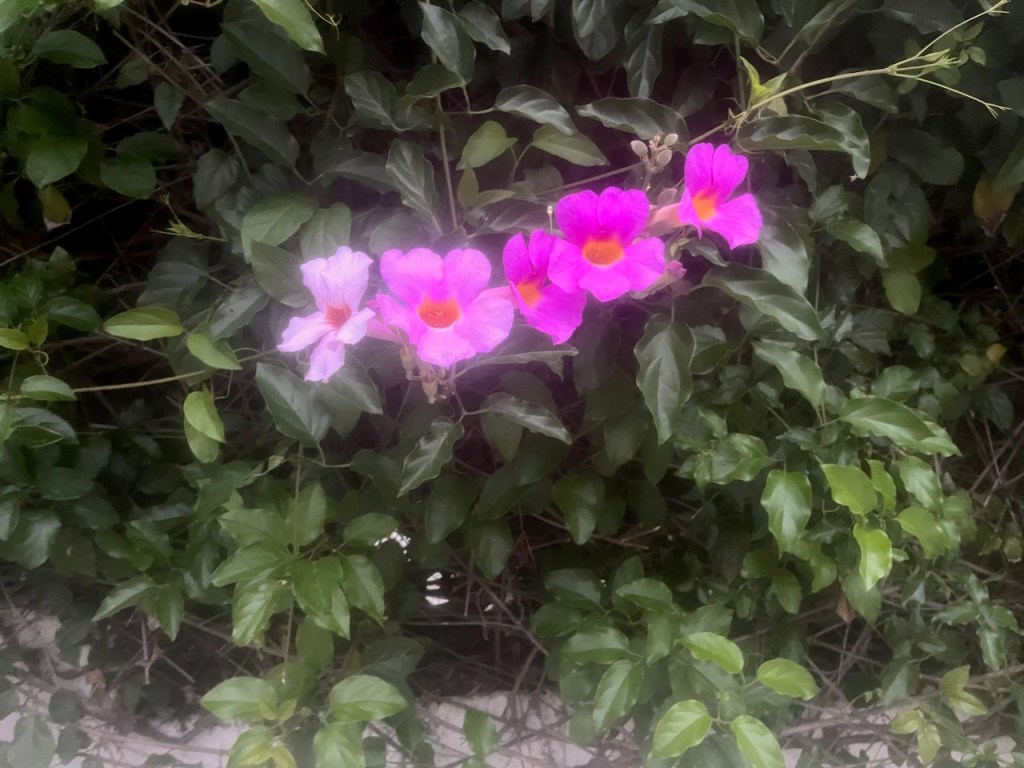
1. Distictis riversii, royal trumpet vine demonstrates that, no matter how much he wants to get one of his pictures into his local Canyon News, Brent does not provide a good one.

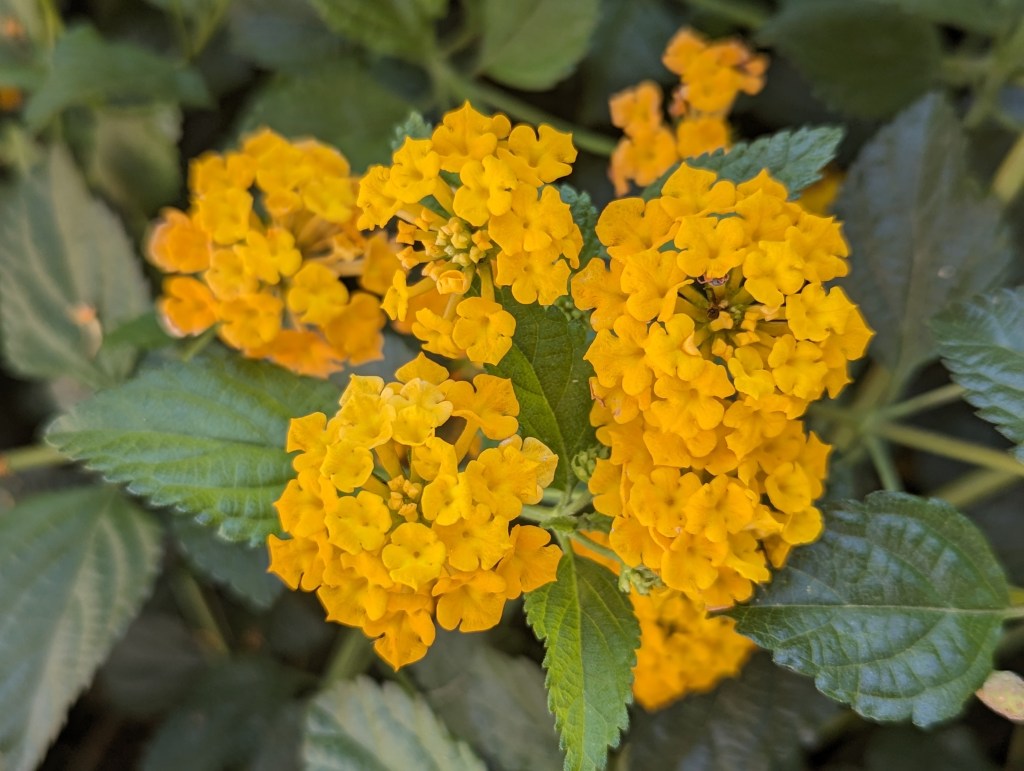
2. Lantana camara, which is known simply as lantana, bloomed within the same garden as the orange cultivar of last Saturday; so this picture is from a month ago near Phoenix.

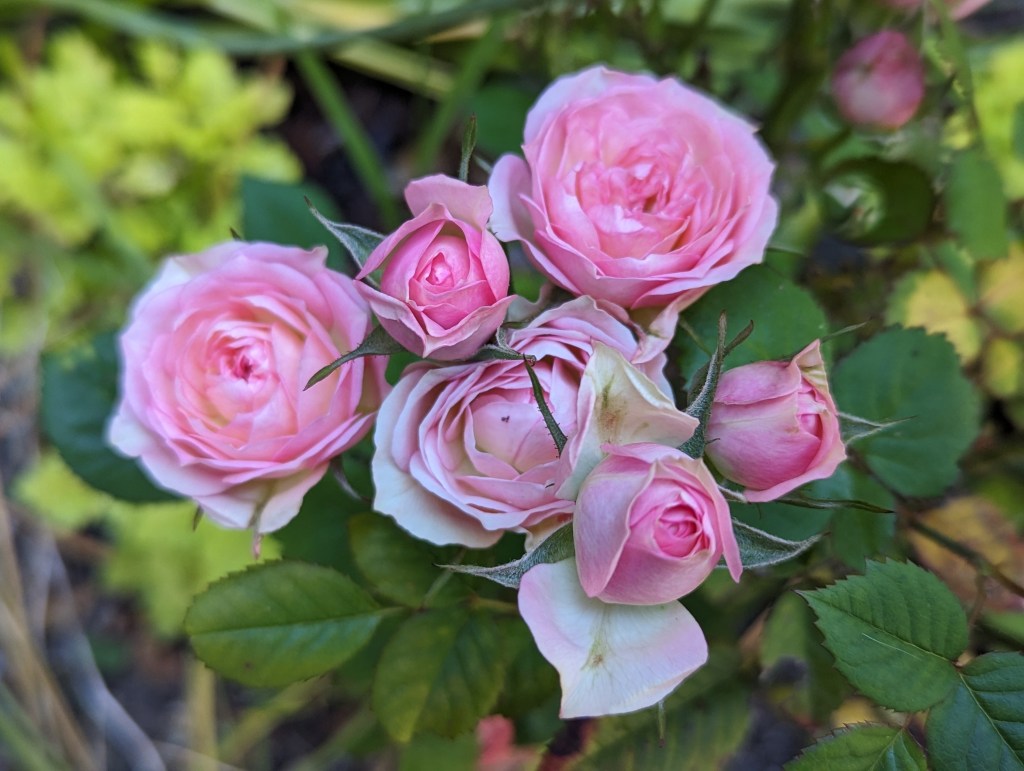
3. Rosa, which is an unidentified miniature rose, is designated as the lily rose because of its stubborn occupancy of a former lily colony within a garish perennial and annual bed.

4. Although pretty, it really should be in the rose garden across the road. I can not move it over there, because of its sentimental significance for the person who installed it here.

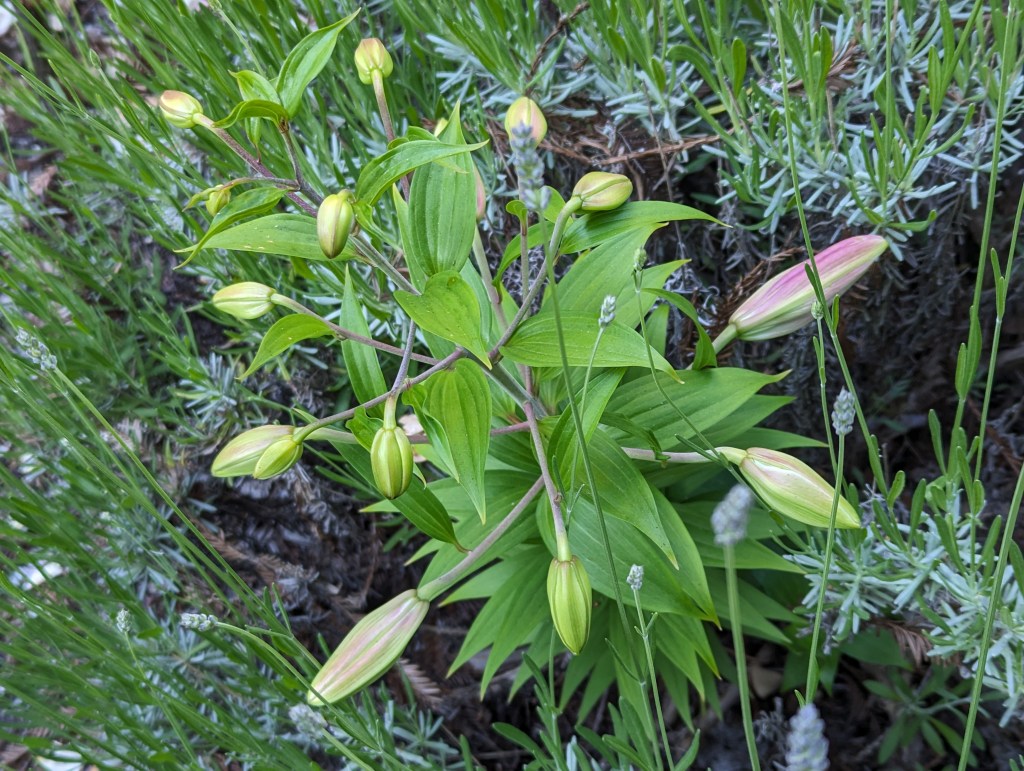
5. Lilium, which is an unidentified Oriental lily, is designated as the rose lily because of its stubborn occupancy of a former perennial and annual bed that is now a rose garden.

6. Although pretty in bloom, it really should be with this colony of abundant lilies, which I shared a picture of last Saturday, in a garish perennial and annual bed across the road.

This is the link for Six on Saturday, for anyone else who would like to participate: https://thepropagatorblog.wordpress.com/2017/09/18/six-on-saturday-a-participant-guide/

Horridculture – Graffiti

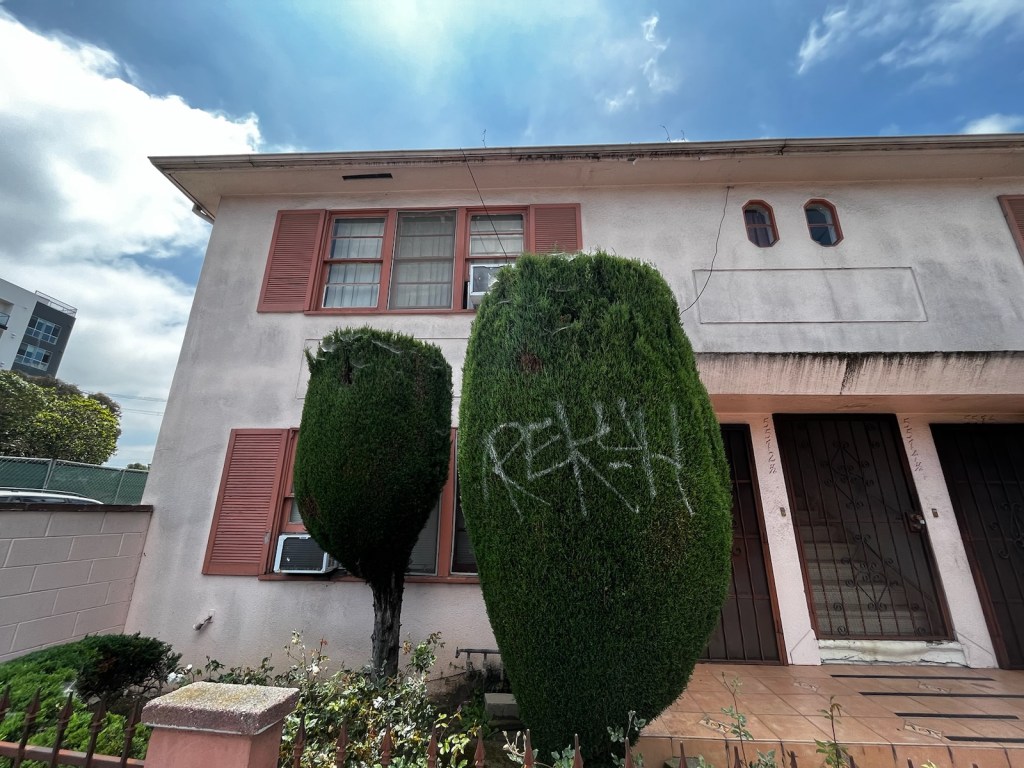
Is this some sort of abstract art?!

This picture is all sorts of wrong! Brent sent it to me from Los Angeles. He has a habit of sending obnoxious pictures such as this.

Firstly, why would anyone install Italian cypress in such pointless situations?! The specimen to the left is centered on a prominent window. It is an unsightly obstruction to the window, and would be just as unsightly and obstructive to the window above if only it had not been so severely disfigured. Although the larger specimen is a bit farther from the window, it is just as unsightly, obstructive and pointless.

Secondly, why would anyone disfigure Italian cypress by topping them like this?! It would be more practical to remove them if their naturally upright form is undesirable for this particular situation. Then, some other preferable vegetation could be installed instead, or perhaps nothing at all.

Thirdly, why would anyone maintain these already disfigured Italian cypress like this?! Just remove them already! They are unsightly! Seriously, someone obviously puts quite a bit of effort into shearing them so systematically. Are they that important?! Does someone actually like these pathetic trees in this pathetic condition?! Am I missing something here?!

Finally, or fourthly, how could someone make this situation any worse by defacing the larger of these two Italian cypress with graffiti?! Seriously, that takes a bit of effort also. Cut the trees down already! Why do these trees not simply die of embarrassment?! Is this supposed to be some sort of conceptual or abstract art?! Is this here merely to see what sorts of reactions it gets?! Can anyone even read what that graffiti says?! Perhaps it translates to “PLEASE CUT THESE TREES DOWN!” This picture leaves me with way too many unanswered questions. Well, if nothing else, these sad Italian cypress were strangely entertaining.

No Shame

Nature still does what it wants to.

Squirrels are annoying. I do not care that gray squirrels are native, or that their ancestors were here before mine. They are still annoying. They ruin bulbs, seedlings, fruits, nuts and vegetables. Although I do nothing to exclude them from my garden, I do not want them there.

Some native vegetation is also annoying. It grows like weeds where I want other vegetation to grow. Like for squirrels, I do not care if it is native. It is still annoying, and I do not want it trying to infest my garden where I grow vegetation that I want to grow.

I have been told that native species can not be invasive merely because it was here before I was. That is completely false. If it aggressively invades my garden, then it is invasive. Claiming otherwise is comparable to claiming that I can move into any home here that I choose simply because I am native.

Everyone who lives here inhabits space that was formerly occupied by native flora and fauna. So does all the infrastructure. Anyone who disapproves should leave, and relocate to where they do not occupy space that was formerly occupied by native species. I do not know where that is, but perhaps they do.

Realistically, I do my part. I live very simply, in compact and minimally consumptive homes. Although I enjoy gardening, I do not use much more space than is necessary to sustain my simple lifestyle. I do not live so simply because I would feel guilty about living more lavishly. I do so because it appeals to me, and allows me to feel less sheltered from the same sort of nature that some might accuse me of being inadequately protective of. Ultimately, nature does what it wants to here, with or without my assistance.