‘Rosalie Figge’?

Bearded iris should bloom for early spring, not winter.

Each of the several bearded iris that I grow have history. Their origins are more significant than their performance. None were merely purchased. I obtained my first, which is actually Dalmatian iris rather than bearded iris, from the garden of my maternal maternal great grandmother when I was about five years old, before I was in kindergarten.

Some of the seventeen or so that inhabit my garden may be added to a designated iris garden at work as they multiply. Some of the eight or so that inhabit the designated iris garden at work may be added to my garden as they multiply. I will likely procure at least two additional cultivars when I return to the Pacific Northwest later in winter, as well as Louisiana iris from another source.

The most abundant of the bearded iris within the designated iris garden at work were recycled from where they had become too abundant in a home garden in Santa Cruz. They are unidentified. I suspected that they might be a simpler species, rather than a hybrid bearded iris, because they resemble my simple Dalmatian iris. Their floral stems are similarly slender. The leaves are similarly somewhat narrow. The fragrance is similar. The main differences are that the floral stems are a bit shorter, the flowers are rich purple rather than lavender blue, and instead of blooming promptly and thoroughly only for early spring, they bloom sporadically throughout spring, and again about now.

After posting a picture of them last winter, I was informed that they could be ‘Rosalie Figge’. They conform to the description of the cultivar, although they bloom for winter rather than autumn. They were blooming a month ago, and are still blooming now. Although I do not care what they are, it would be nice to know.
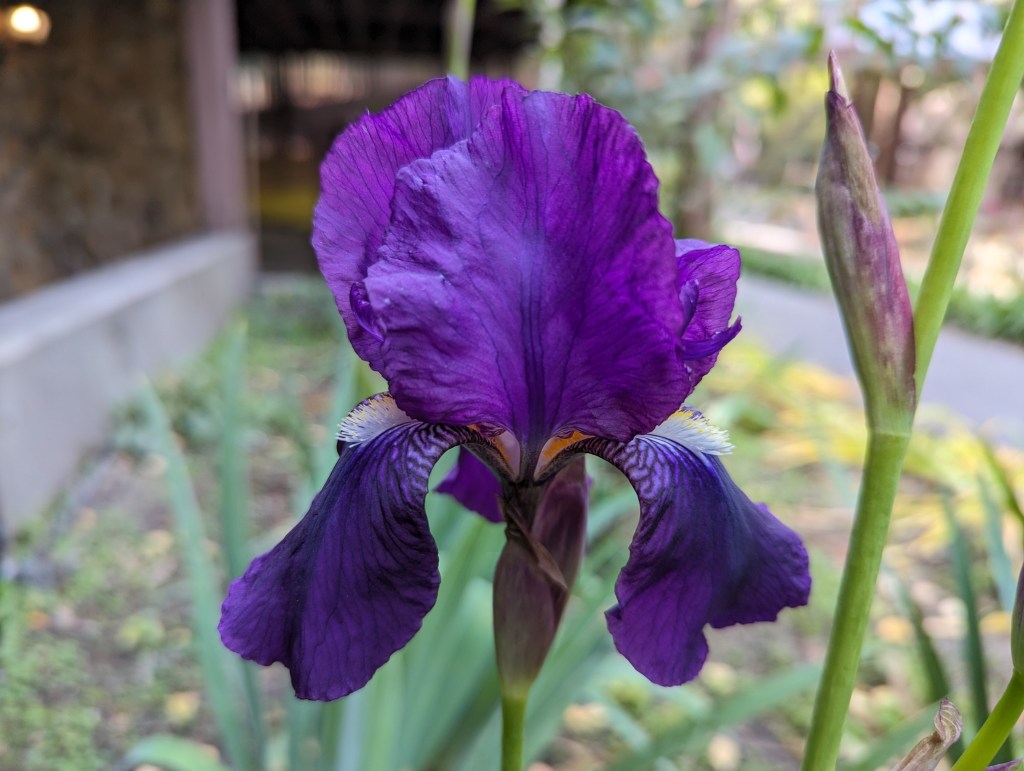
It was blooming a month ago.

Analysis

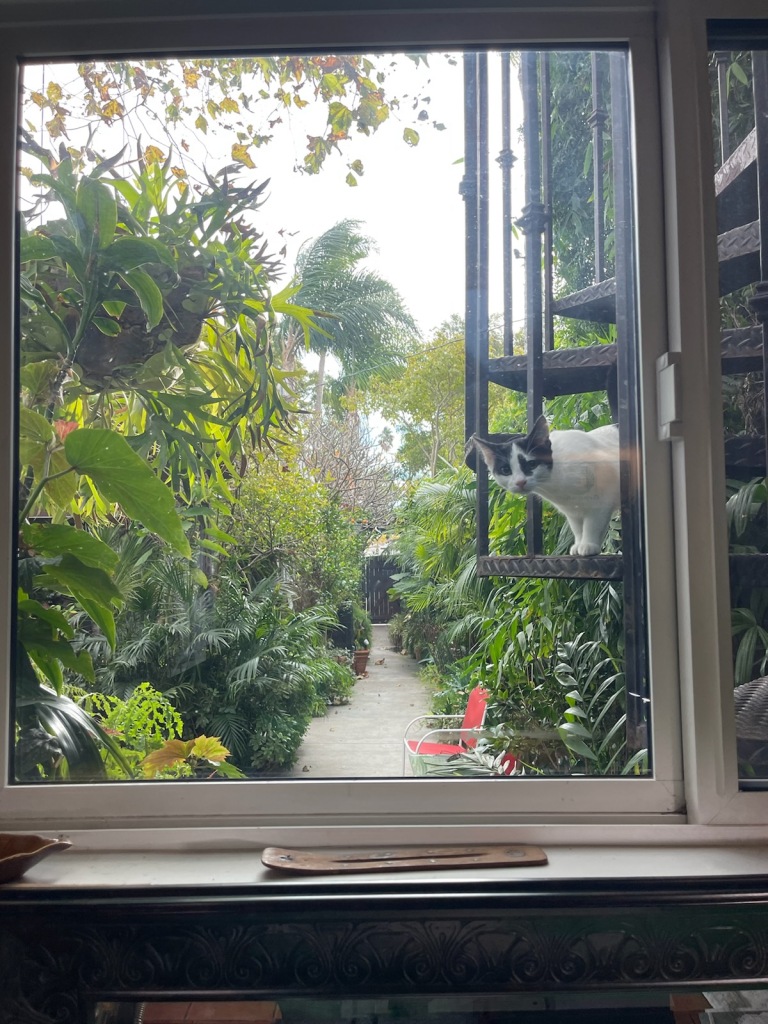
There is so much more to this picture than the kitty.

As Brent mentioned when he sent me this picture, which was included with my ‘Six on Saturday’ post earlier this morning, “There’s a lot going on in the picture.”

Slightly above the exact center of the picture, to the left of the tip of the kitty’s right ear, a Mexican fan palm peeks through a small void in the vegetation. It is at the curb of a home on the west side of the next street to the east. It is what Brent would have taken a picture of if he had zoomed in as intended. It leans to the right and south, as tall Mexican fan palms do there in response the the Santa Ana Winds.

The foliage of the queen palm above and to the left demonstrates that the Santa Ana Winds were blowing when the picture was taken.

The trunk that extends upward through another smaller void in the vegetation below the queen palm foliage is of another Mexican fan palm at the curb in front of Brent’s Jungalow. It is in alignment with the other Mexican fan palm to the east. Its canopy is obscured by that of the queen palm.

The foliage above and to the right of the primary Mexican fan palm, but below and to the right of the queen palm, is pink trumpet tree, which blooms spectacularly bright pink for spring.

The defoliated thicket of stems below and to the left of the primary Mexican fan palm is a large plumeria, which Brent, while very young, acquired from an elderly neighbor. He got it at about the same age that I was when I acquired my Dalmatian iris and rhubarb. More than a dozen other plumeria grow and bloom in a row that extends parallel to the walkway, in front of and behind the large specimen that is visible.

The somewhat yellowish foliage below and to the left of the plumeria is an impressively large Mexican lime that is somehow productive within all that shade.

The strange foliage that hangs outwardly from a dark central mass above and to the left of the Mexican lime, and left of the queen palm is a large colony of staghorn fern that is much closer to the window. Some sort of weird begonia foliage is below and to the left of it. California sycamore foliage is above it.

The top of a tall Indian laurel hedge is visible to the upper right of the picture. Some sort of odd dracaena and odd fern are visible to the lower left corner. Much but not all of the remaining vegetation is a mixture of understory palms, including various bamboo palms, Raphis palms and kentia palms. The spiral stairs lead to an upper deck, which has a splendid view of the rest of the garden that extends to the left, beyond the view of this picture. Finally, on the spiral stairs, is this kitty.

Six on Saturday: Bad Botany II

Botany is bad this week for a different reason than it was last week. It is lacking. I mean, there is none. Only common names are mentioned. The first picture, which is not mine, includes too many different species to cite. Even if I wanted to, I could not identify all of them from this picture, and I can not remember what all of them are. The other pictures conversely show only a few common species that need no introduction.

1. Brent sent this picture of a view from his primary landscape design studio west of Los Angeles. The Jungalow is obscured by overgrown vegetation on the left. More species of flora inhabit this compact garden than all the combined acreage that I work and live on.

2. Scenery from my work is very different. Redwoods are the primary species. The bland foliage to the left is tanoak. Only a few species of trees grow wild here. The scenery from my writing studio is embarrassingly less interesting, but that is a topic for another time.

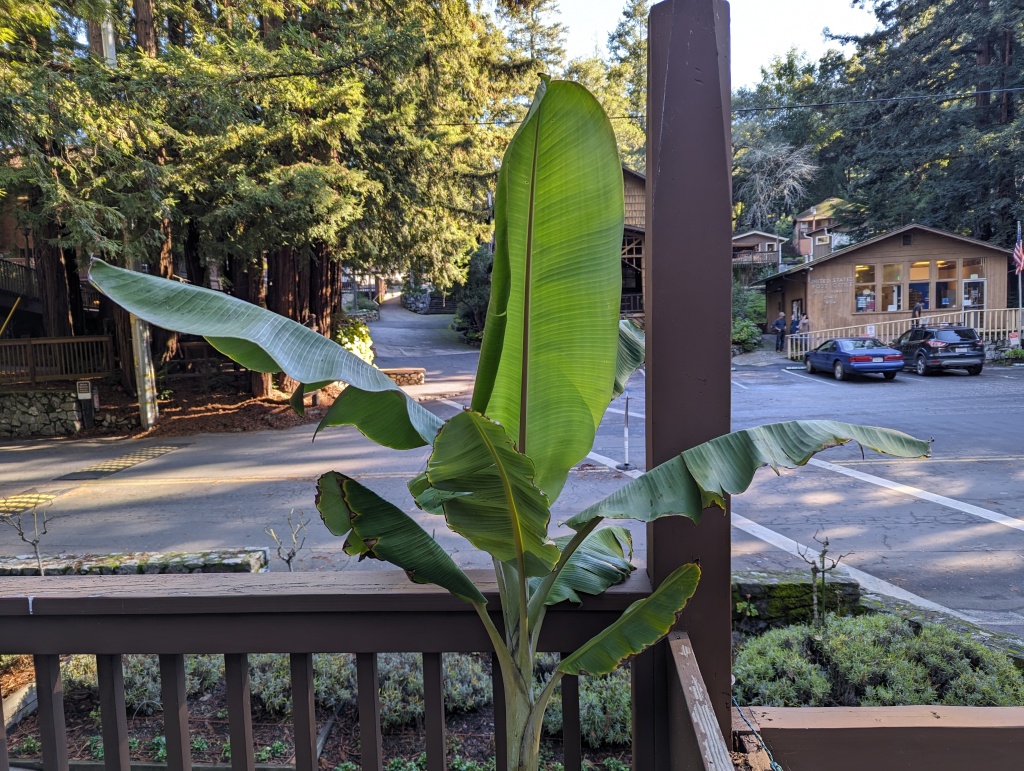
3. Banana trees live at work because I like a few species that, to me, seem to be the sort of vegetation that is more common in the Los Angeles region. They got frosted at home.

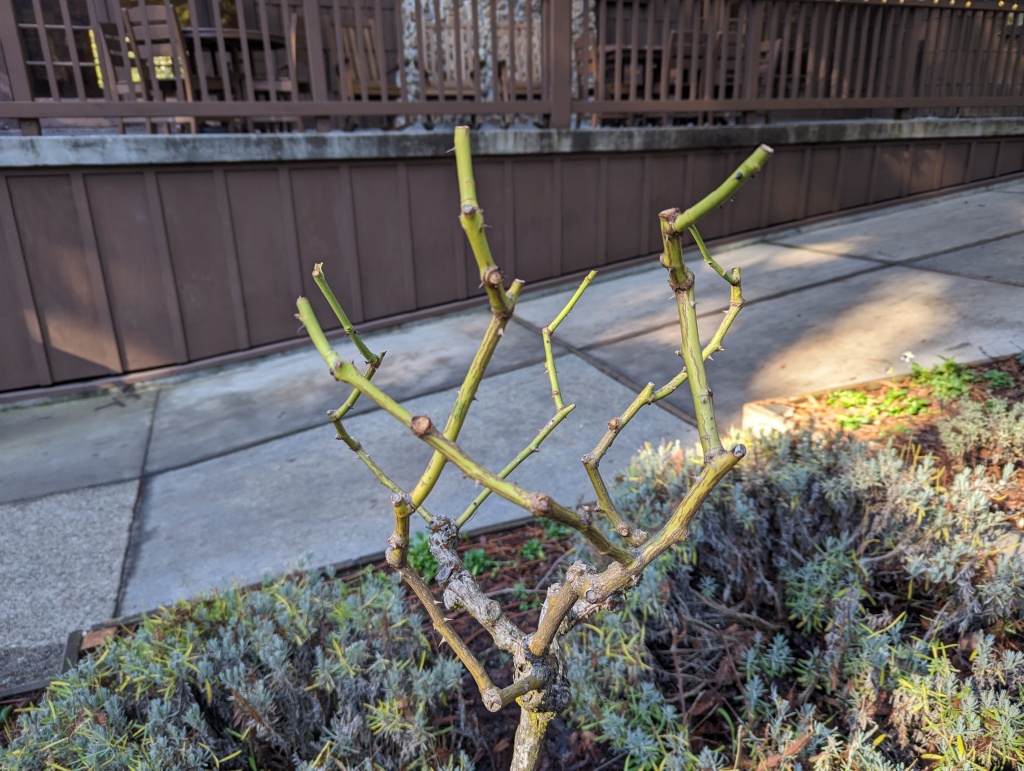
4. Roses, which are in the background of the banana tree, are more popular here than in the Los Angeles region, and are actually dormant for winter. This one does not generate new canes from its base though, which is why it is now so gnarly after dormant pruning.

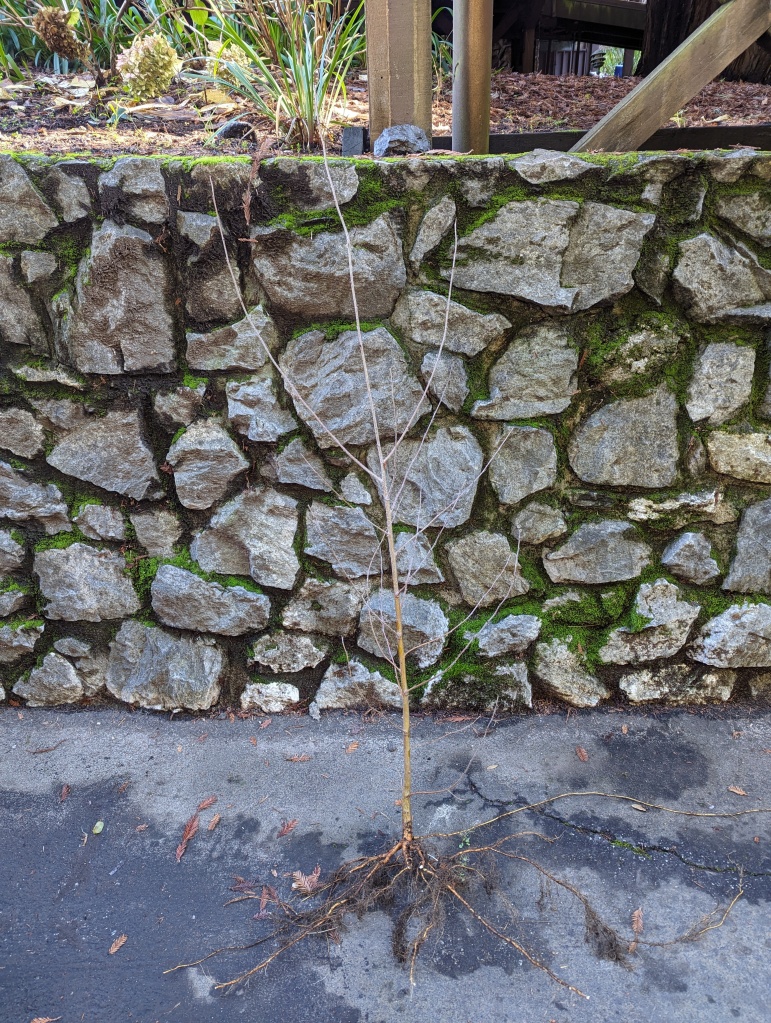
5. European white birch are also dormant during the slightly cooler wintry weather here. I can easily relocate feral specimens like bare root stock. Cooler weather has advantages.

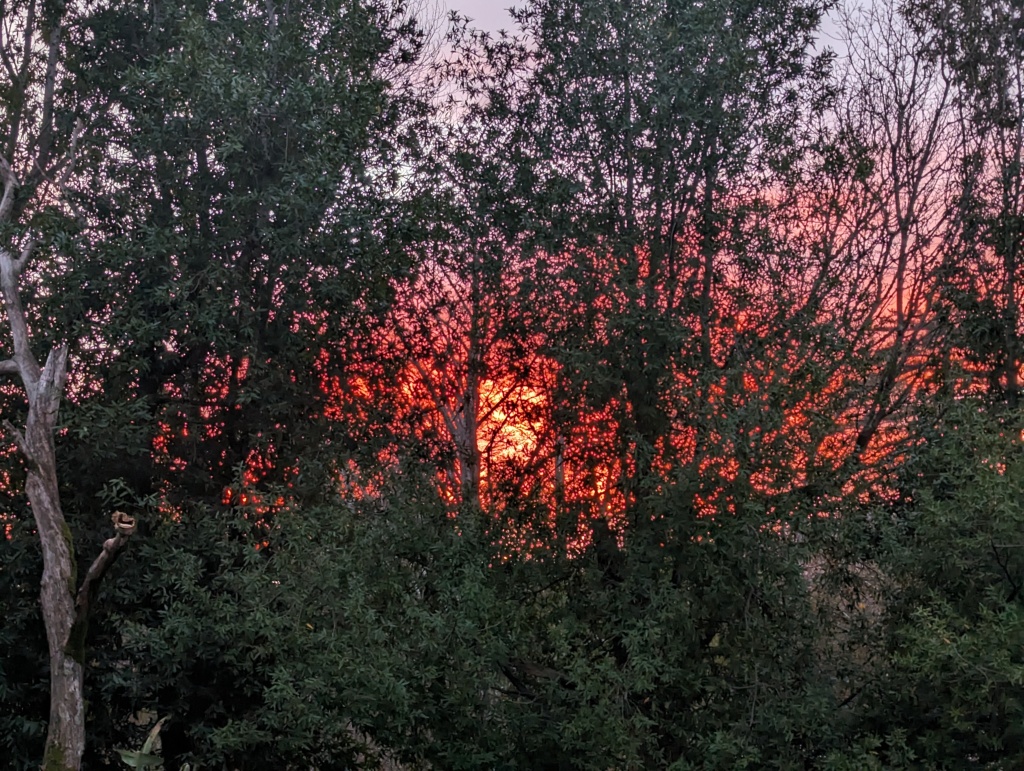
6. Bay and box elder obscure this local sunset that looks like it should be in Los Angeles.

This is the link for Six on Saturday, for anyone else who would like to participate: https://thepropagatorblog.wordpress.com/2017/09/18/six-on-saturday-a-participant-guide/

Horridculture – Pseudo-Sustainability

This would not survive for long in the wild.

Sustainability is a good idea gone bad. Theoretically, it is commendable. Horticulturally, it involves growing species and cultivars that require minimal intervention or resources that they can not obtain naturally from their environment. In more extreme application, it can involve growing only native species, but not their cultivars that would not be naturally occurring, in order to limit interference with natural and endemic ecosystems.

Capitalism is a good idea too. Unfortunately though, it too often compromises other good ideas. It is how sustainability became a cheap fad, which now involves all sorts of artificial but marketable products and interventions that are contrary to its original intention. Regardless of their sources, water, fertilizers and amendments that are not provided by nature are unnatural. Container gardening infrastructure, irrigation systems, artificial illumination and really anything that is made of unnatural material are violations of sustainability that should be more obvious than they are.

‘Sustainability’ has become a buzzword for marketing.

There is certainly nothing wrong with appealing exotic vegetation with the garden or home. Almost all of the best and most popular vegetation is not native, and most of it relies on unnatural intervention and resources to perform as desired. However, it should be recognized for what it is, and not marketed as ‘sustainable’ if it is not.

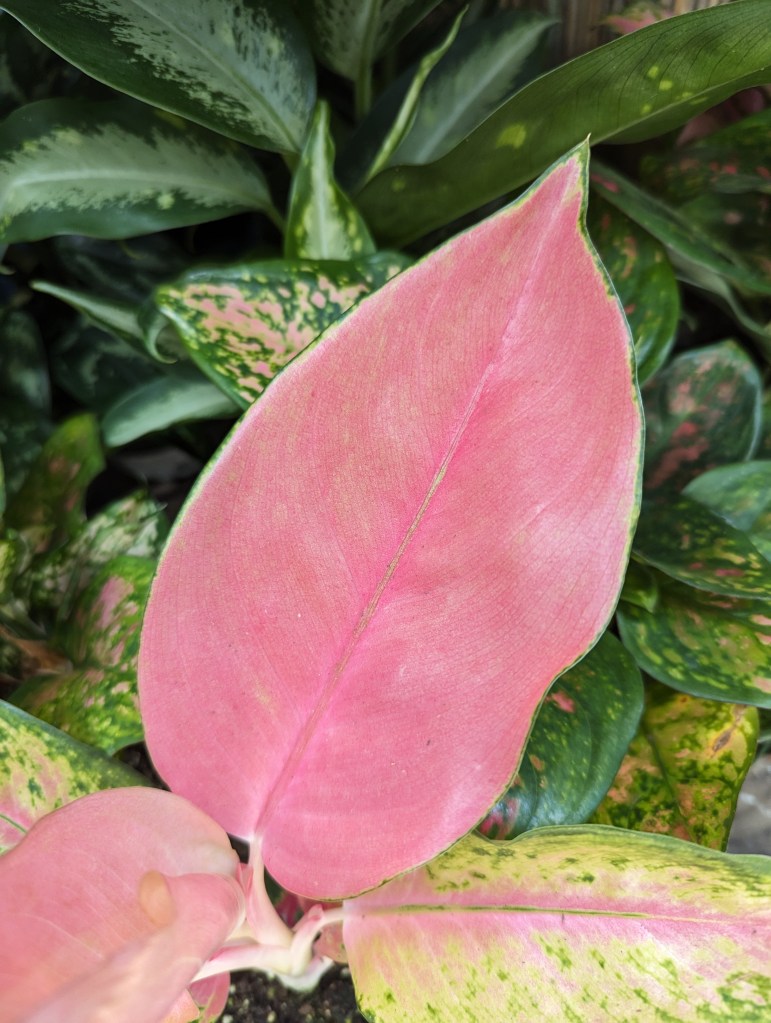
This unusual cultivar of Aglaonema was unnaturally selected or developed from species that are native to tropical or subtropical climates of southeastern Asia. it grows primarily as a houseplant here because it is vulnerable to even very mild frost. It grew in artificial potting medium, within a plastic pot. It will always be reliant on artificial irrigation, and will perform better with unnatural application of fertilizer. It will always be less vigorous than greener cultivars because it lacks chlorophyll. Yet, it is marketed as ‘sustainable’.

Resolution

I got so much more than blogging going on.

I am not one to make resolutions for a New Year. Such resolutions can be made at any time. Most should probably be made as they become necessary.

I will say though, that in the future, I should post less frequently to this blog than I have been. I mentioned this a few times since I began posting here a few years ago, but never followed through with doing so.

My weekly gardening column posts in two parts, typically for Mondays and Tuesdays. That is really all that is necessary. Old columns also post in two parts, typically on Thursdays and Fridays. I could continue to recycle them, although, because topics are seasonal, the old articles are often redundant to the new articles that post at about the same time.

All other articles that post on other days are quite unnecessary. Horridculture articles that post on Wednesdays involve too much sniveling. Six on Saturday articles that post on Saturdays are fun for me, but lack substance for readers. Random articles that post on Saturdays at noon and Sundays have become somewhat too random and mundane.

Unfortunately, I can not write well with so much else happening. It is a long story, but what it comes down to is that I really should write less than I have been.

Therefore, for the future, I should commit only to posting my weekly gardening articles, from the gardening column, on Mondays and Tuesdays. I will likely continue to post recycled gardening articles for Thursdays and Fridays, even if redundant, only because they are already written. Although I may continue to post articles for Wednesdays and weekends, I may not. If not, this blog will become merely a compilation of the gardening column articles rather than a real blog. Perhaps less will be better.

Sugarless

‘Pele’s Smoke’ is an ornamental sugarcane that should bronze with better exposure.

The internet is surprisingly deficient. It contains an amazing abundance of information, including a majority of information that most of us should not want. No one can filter out all the previews to disturbingly violent cinema, disturbingly idiotic political scandal, disturbingly aberrative sexual content, and so on. Yet, some of the simplest information remains mysteriously elusive.

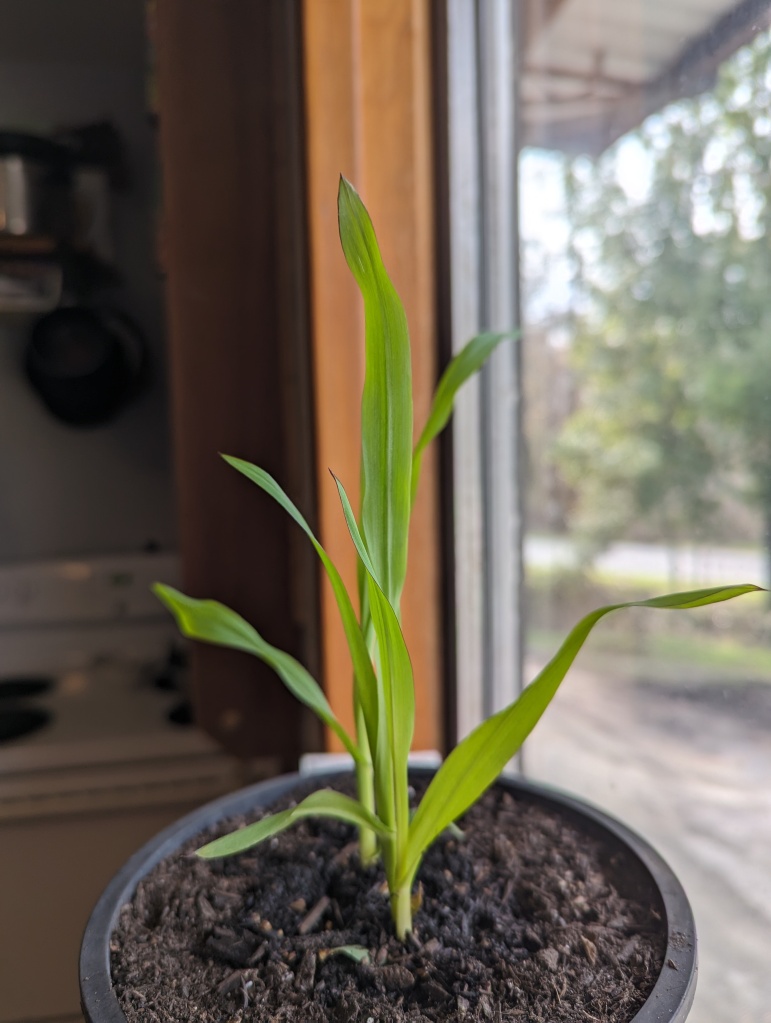
I grow ‘Pele’s Smoke’ sugarcane only because it is what I obtained first. I grew it from scraps that I pruned from a specimen in the garden of a colleague in the Los Angeles region. It grows like a weed. I happen to enjoy growing it. It is primarily an ornamental cultivar though. With its bronze foliage, it is intended to be prettier than it is functional. Although it is considered to be productive, the canes are small and relatively tough.

I would like to grow a variety of sugarcane that is more utilitarian than ornamental. There are many varieties within three types of sugarcane that I should be able to choose from. Chewing cane is the sort that develops a soft and chewable pulp within its canes that can be chewed like a confection, leaving less inedible fibrous pith than other varieties. I do not want to bother growing chewing cane. Syrup cane may produce a bit more fibrous pith, but generates an abundance of sugar syrup, which unfortunately does not crystalize as readily as that of other varieties. I do not want to bother growing syrup cane. Crystal cane is the sort that produces the most sucrose, which should crystalize more readily than the combinations of sugars that other varieties produce. That is what I am still trying to find! Several varieties of sugarcane are available online, but very few are classified as chewing, syrup or crystal canes! I am still searching!

Six on Saturday: Bad Botany

These six lack a common theme. I do find the botany of four of them to be annoying, but that is no theme. Leyland cypress has a new genus name, which I did not mention. I still do not believe that the native blue elderberry is the same species as the black elderberry of the East. I still do not know for certain if the double white angel’s trumpet is a hybrid, although I do believe that it is. Although I exceeded my preferred word count limit here, I tried to abbreviate some of the redundancy of nomenclature while including both Latin and common names with the same cultivar name. Otherwise, the first of these six would be Saccharum officinarum ‘Pele’s Smoke’, ‘Pele’s Smoke’ sugarcane, with ‘Pele’s Smoke’ mentioned twice, with a comma in between. I may continue this technique in the future.

1. Saccharum officinarum ‘Pele’s Smoke’ sugarcane continues to grow like a weed on the warm windowsill in the galley at work. It is not bronzing though. I suspect that this fresh new foliage will be too tender to survive outside even after early spring. It is no problem. It will simply make more. Many more cuttings are growing outside. They are slower but more resilient. For less redundancy, I used its same cultivar name after its species name and before its common name. Of course this explanation is longer than any redundancy.

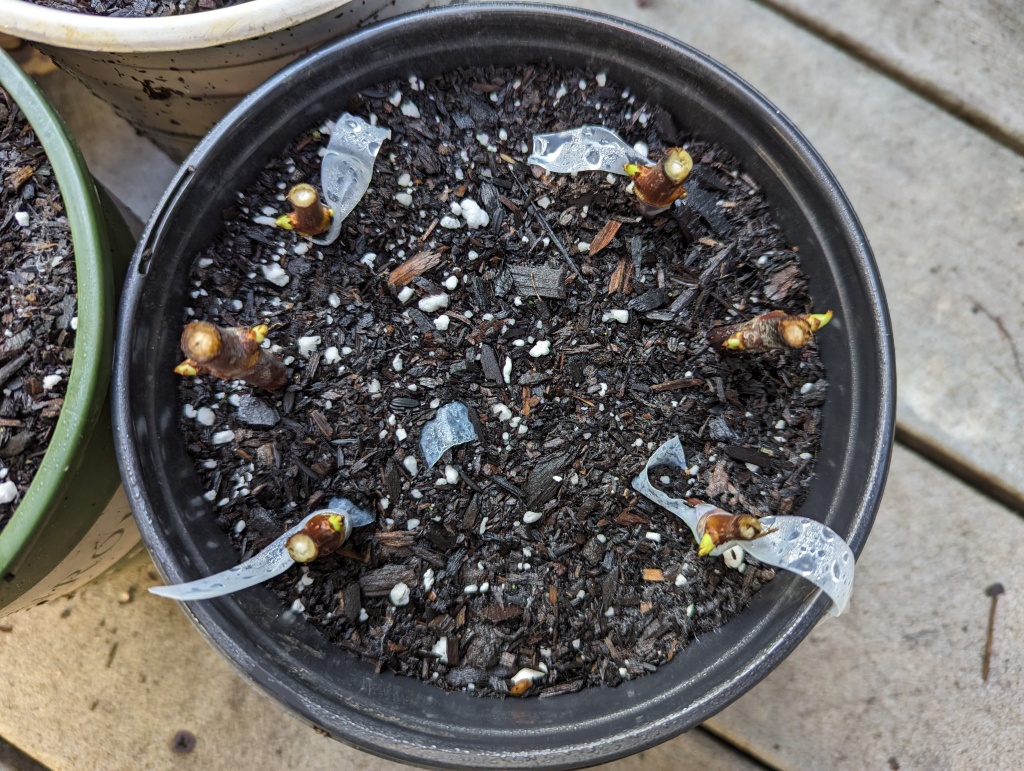
2. Sambucus cerulea, blue elderberry is classified by most botanists as a Western variety of American black elderberry. I know better. I am Californian. Regardless, I am growing a few cuttings from a few different parents because no one seems to know if they should be more productive with pollinators, like European black elderberry is. Four tagged bits are from the same very productive specimen, which must be removed from a landscape. The other pair is from a random roadside specimen. Three other pairs were added later.

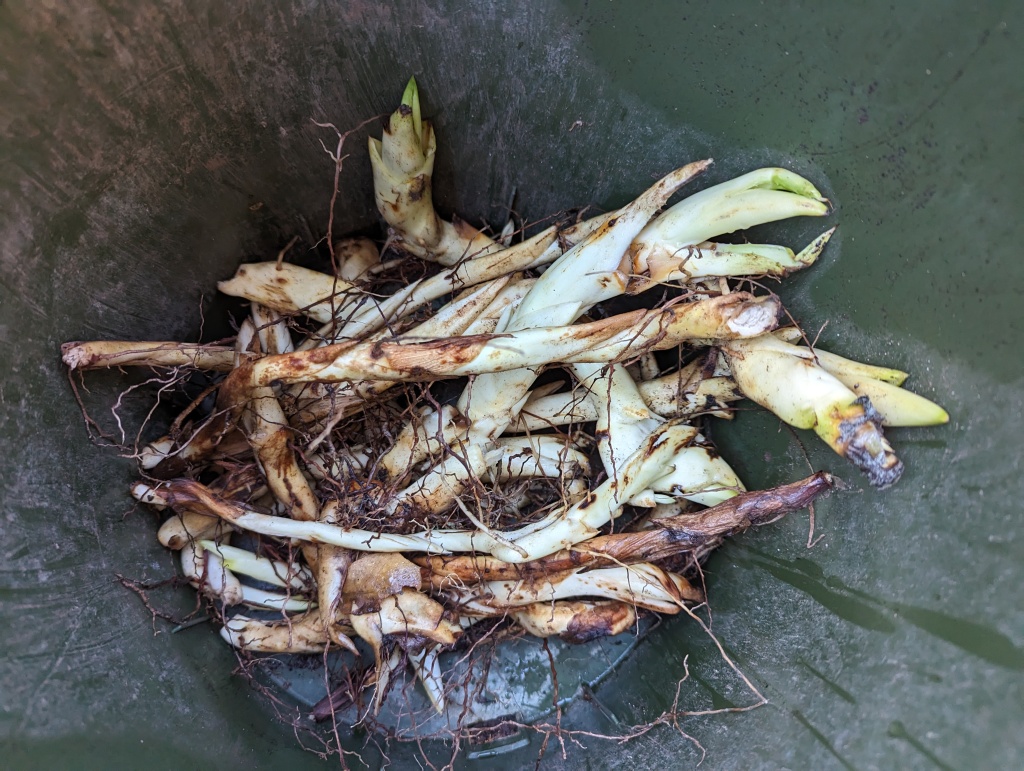
3. Agave americana, century plant is too prolific. We installed one of several ‘unwanted’ specimens and found all these pups within its can underneath. We can not use them all.

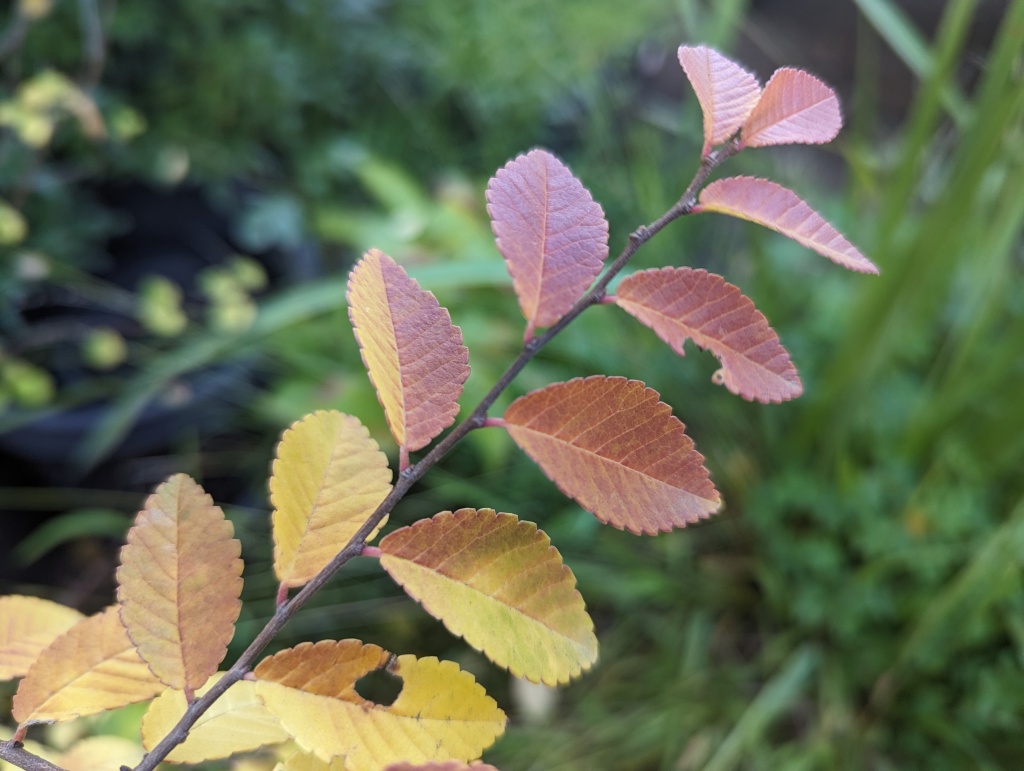
4. Ulmus parvifolia, Chinese elm became unavailable years ago after it was identified as a host for Dutch elm disease. Watersprouts continue to grow from a stump of a tree that was cut down years ago. If I could, I would grow several of this formerly familiar species.

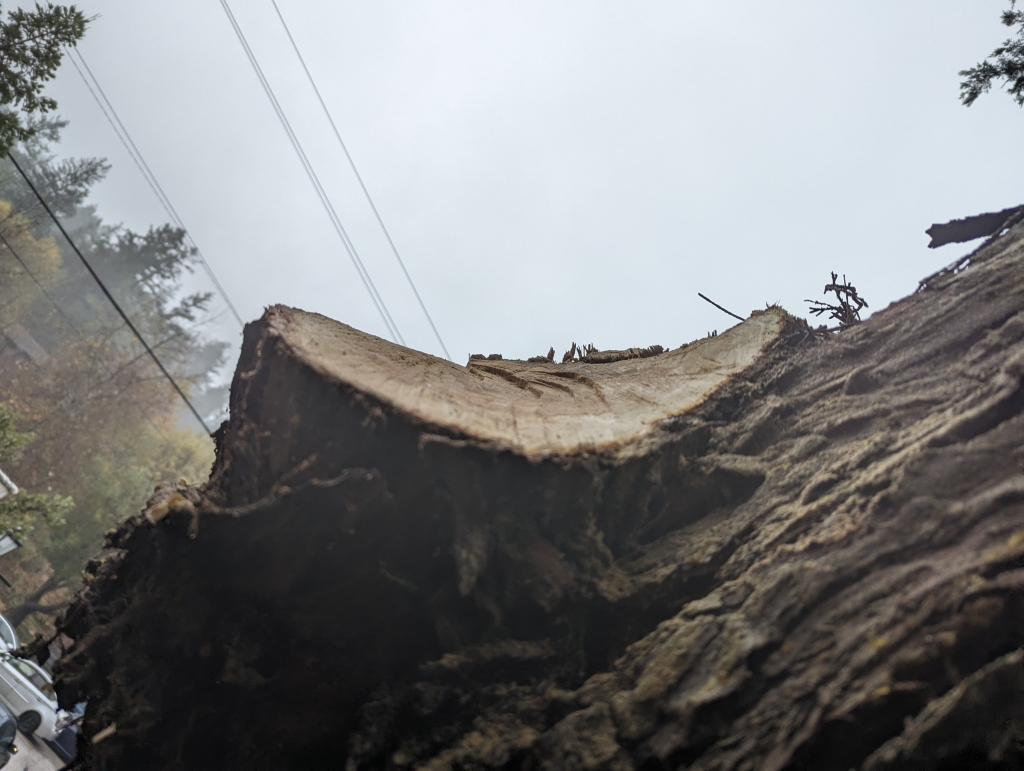
5. X Cupressocyparis leylandii, Leyland cypress is irrelevant to this illustration of how a chainsaw cuts if one side is sharper than the other. Another saw cut the flatter surface to the left. Incidentally, the ‘X’ preceding the genus name indicates an intergeneric hybrid.

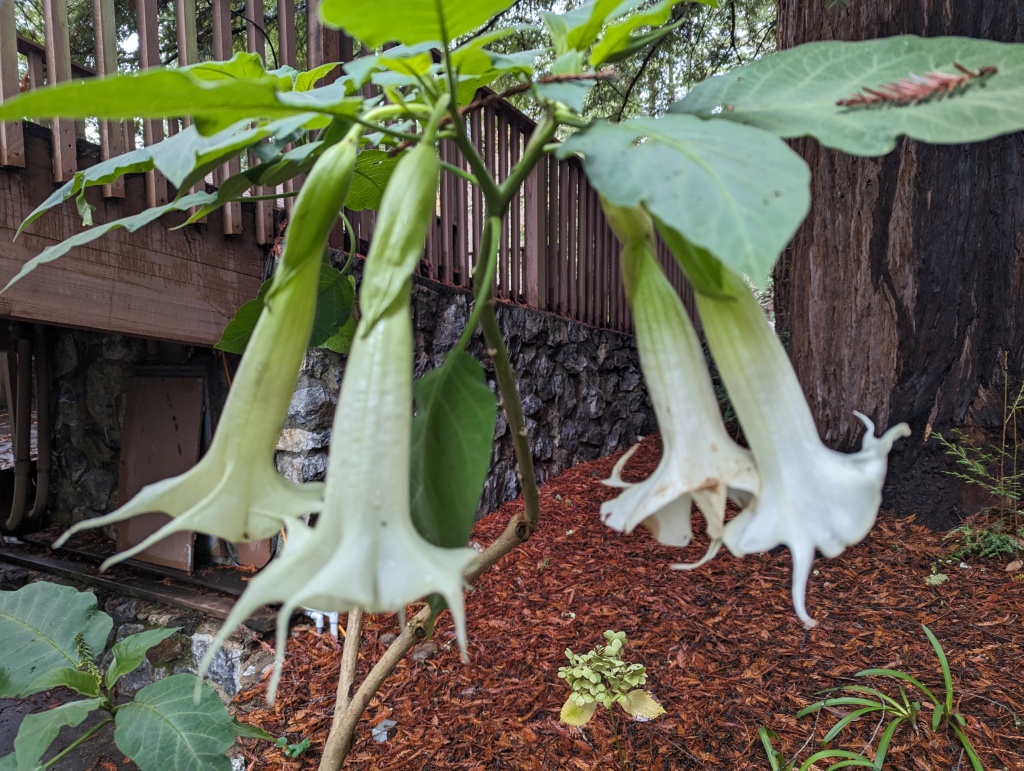
6. Brugmansia X candida ‘Double White’ angel’s trumpet should not bloom now. Either it does not know, or it does not care. Incidentally, the ‘X’ between the genus and species names indicates an interspecific hybrid. Like for the sugarcane, I used the same cultivar name after its species name, and before its common name. Is such abbreviation proper?

This is the link for Six on Saturday, for anyone else who would like to participate: https://thepropagatorblog.wordpress.com/2017/09/18/six-on-saturday-a-participant-guide/

Merry Christmas!

This was much more awesome than gold, frankincense or myrrh!

Happy Birthday Jesus!

What is a suitable birthday gift for Someone Who has no use for anything worldly, but lived like He did? Gold, frankincense and myrrh seemed like good ideas in the beginning, although they were presented a year prior to His first birthday. Contrary to modern commercialism, a Lexus or Mercedes Benz might not be so appropriate for Someone Who preferred to come into town on a colt, and not the Dodge sort. Perhaps that is why it is customary to present gifts to others instead. Such gifts are Christmas gifts because so few have the same birthday.

Although overly elaborate or abundant gifts are a tradition that I find to be objectionable, I enjoyed many relatively minor gifts when I was a kid. Within my first few years, although I do not remember exactly when, I received my first tree, which was a seedling of Calocedrus decurrens, California incense cedar, from Amador County. A year or two afterward, I received a ‘Meyer’ lemon tree. During the same time, I received seed for many types of vegetables and a few flowers, as well as a set of child-sized gardening tools of premium quality. They lasted long enough for my mother to use the shovel to clean ash from the woodstove long after I graduated to a real shovel.

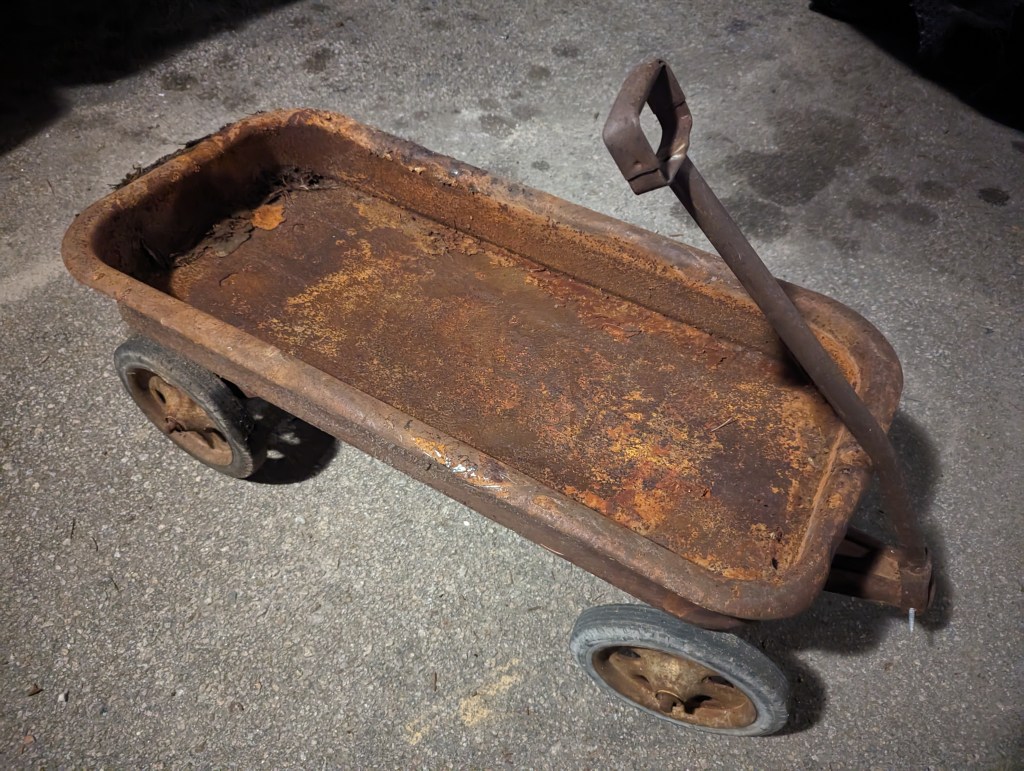
The most awesomely awesome Christmas gift that I received back then was my deluxe Radio Flyer wagon! It was my first luxury sedan that worked like a pickup! It was as durable as the other gardening tools. After I went to college, my mother used it to bring in firewood. It is out back right now, more than half a century after I received it new. It may continue to work in my garden as long as I do.

Heather (not Calluna vulgaris)

Heather – rodent mitigation specialist

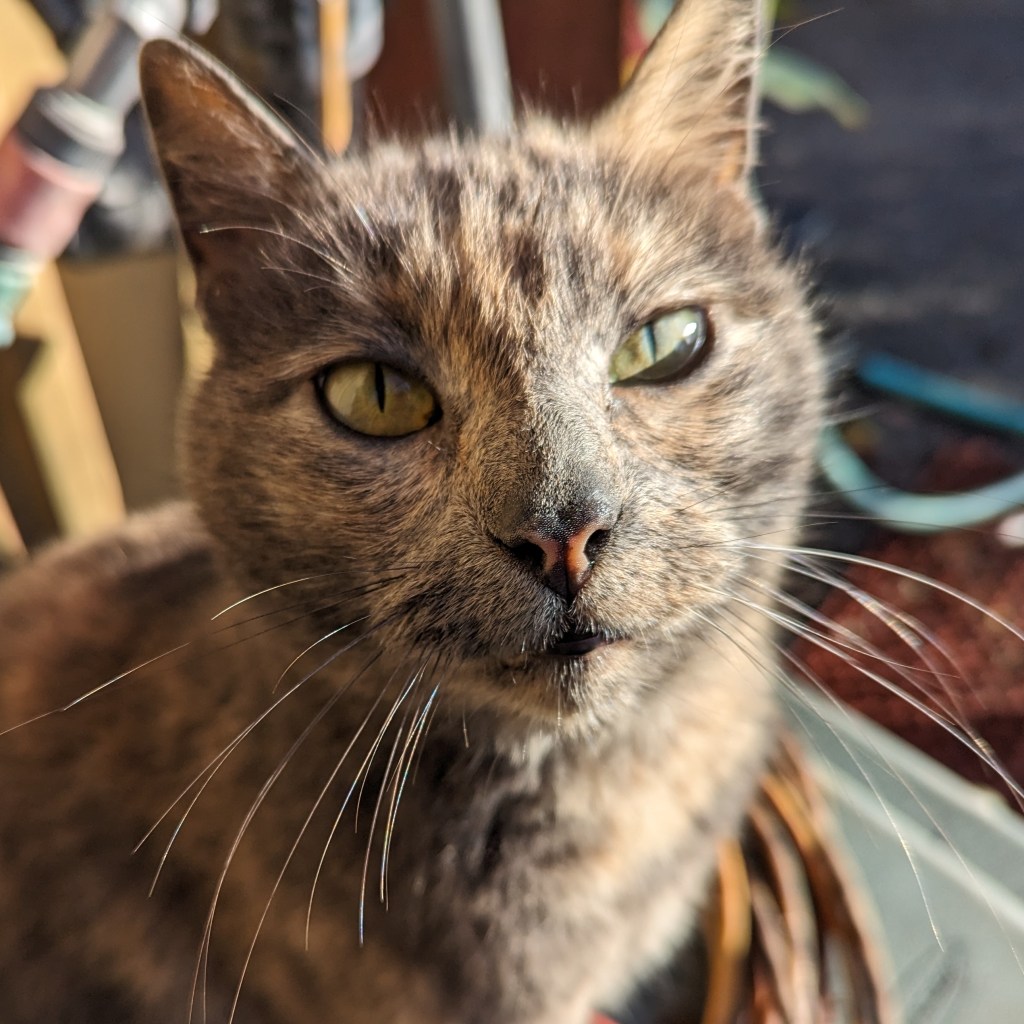
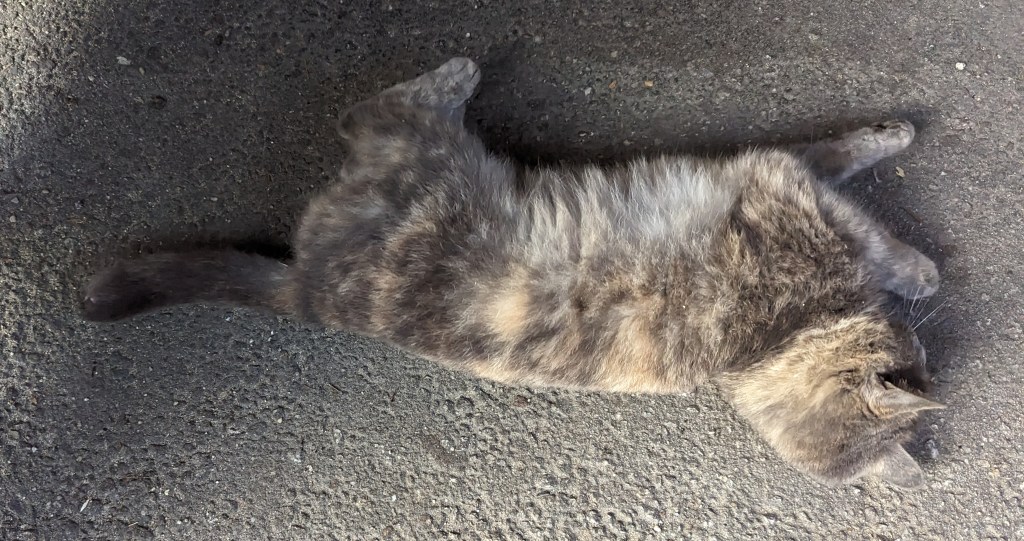
Heather is the new rodent mitigation specialist. She has been here for quite a while. We have been unable to determine where she originated from. Unless or until we do, she can stay here to dissuade rodent incursion. She has been remarkably effective with her expertise. None of the formerly bothersome rodents have been observed since her arrival. The seedlings and small perennials that the rodents had been eating previously have incurred no subsequent damage.

This will take some getting accustomed to. I am not particularly familiar with kitties. I give her a can of food in the evening, with dry food available at other times. She has a sheltered bunk out in the nursery, but might want to come into the foyer when the weather gets frosty or rainy. If so, I may put a warming pad for kitties under her bunk, since it will be close to an electrical outlet. She does not seem to be too demanding yet, but I have no idea how kitties operate. She could get demanding later, and because she is a kitty, I can not argue with her.

She does not have much to say though. She meows when hungry. When petted, she makes that weirdly distinctive purring sound that kitties make, but mysteriously, without actually speaking. She was quite fond of Rhody before people could get close to her, and seemed to enjoy how he chewed her head, but now that people regularly pet her, she avoids Rhody, and actually hisses at him if he wants to chew her head. She could not tell us what her name is, so, after some minor deliberation, we named her Heather.

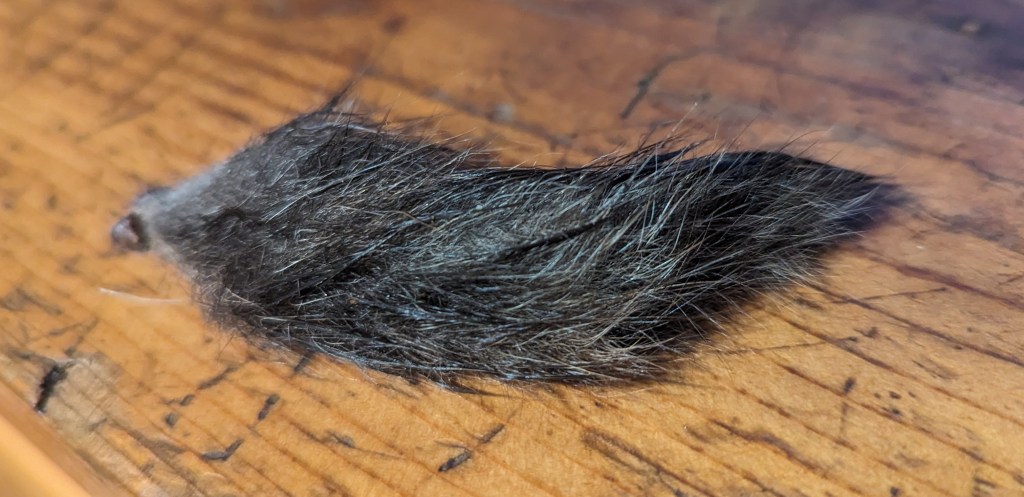
Notice her tail.

We do not know exactly how long Heather has been here, but after her arrival and prior to her socialization, we noticed that the tip of her tail was kinked. As she became socialized and pettable, we noticed that the tip of her tail beyond the kink seemed to be necrotic, and felt like an old fashioned rabbit’s foot keychain. A few days later, the kinked tip was no longer a concern.

tippy toupee

Stick in the Mud

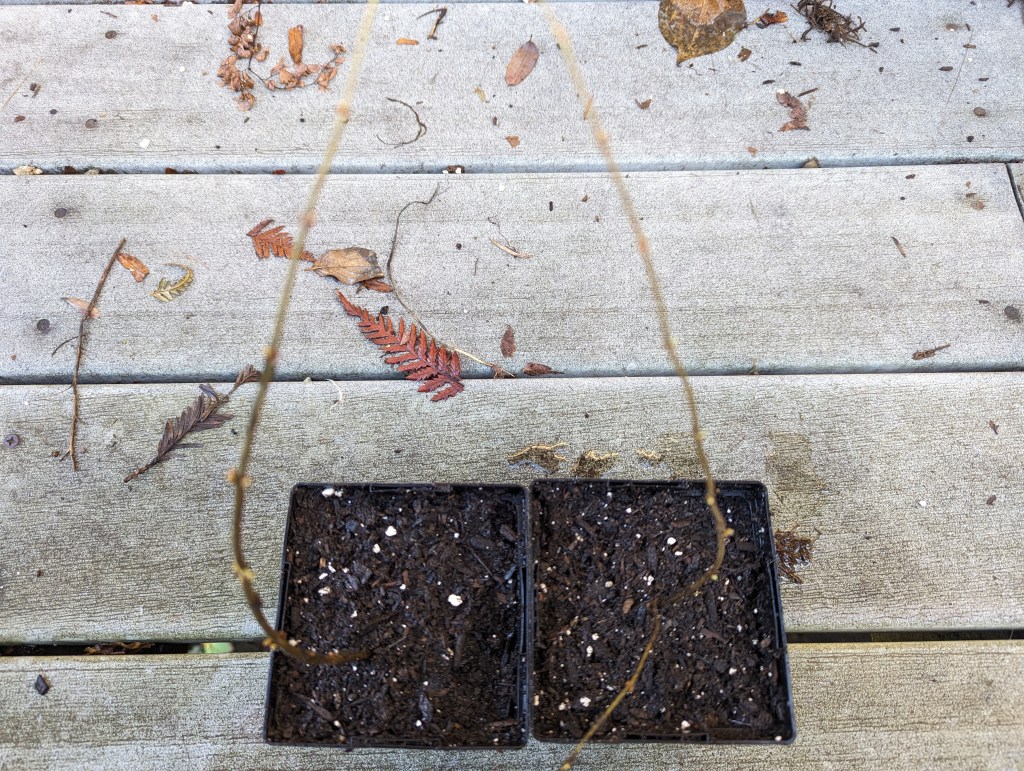
Correction: two sticks in potting medium

This is why I did not brag about my recently acquired snowberry within the context of my ‘Six on Saturday’ post this morning. They are not much to look at. Even if this illustration were more in focus, these bare twigs are indistinguishable from similar dormant twigs.

Nonetheless, I am pleased with their acquisition. I can not explain why, but I am pleased. The species, Symphoricarpos albus, is native, but not popular. I am beginning to realize why. Not only is it not much to look at in this particular condition, but it will unlikely ever become much to look at. It always looks scraggly, even while generating new foliage for spring. Its foliar color is unimpressively bland light green. Its twigs are very twiggy. Its dinky pale pink flowers are grungy and almost always infested with something or other. Its white berries, which is its primary attribute, are very scarce.

After so gleefully pulling this particular seedling from a landscape that it needed to be removed from, splitting it into two, and canning them as seen here, I realized that a rather large colony of snowberry inhabits another of the landscapes here. I could take as many rooted bits from it as I want without noticeably depleting it. For now, I am very satisfied with these. I have no plans for them, but will figure that out as they grow.

I suspect that snowberry can be more appealing in cultivation than in the wild. I intend to promote growth that is more vigorous than typical, which should enhance berry production. After this first winter, in which I dug and canned it, I will likely cut all of its growth to the ground annually during winter dormancy. I will not notice improvement this first year, but might after two years.