
Sunday Best – Laurustinus
Half of these blooms are right on time. The other half are azaleas that really should wait until spring to bloom. I hope that some refrain from blooming now to bloom in season.
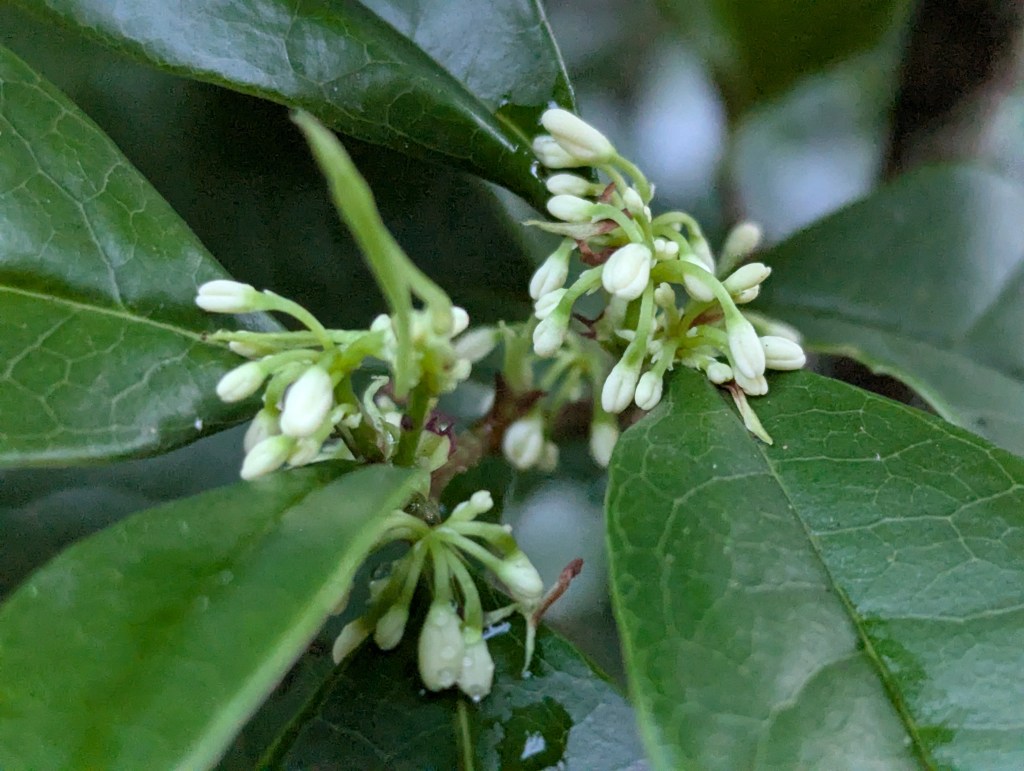
1. Osmanthus fragrans, sweet osmanthus may not be much to look at, but is exquisitely fragrant. I believe that the current cool and humid weather enhances its floral fragrance.
2. Viburnum tinus, laurustinus, which is not typically very fragrant, likewise seems to be more fragrant with cool and humid weather. This one blooms white without pink blush.

3. Osteospermum ecklonis, African daisy blooms significantly less while weather is cool, but seems to never be completely without bloom. This one blooms with a billowy center.

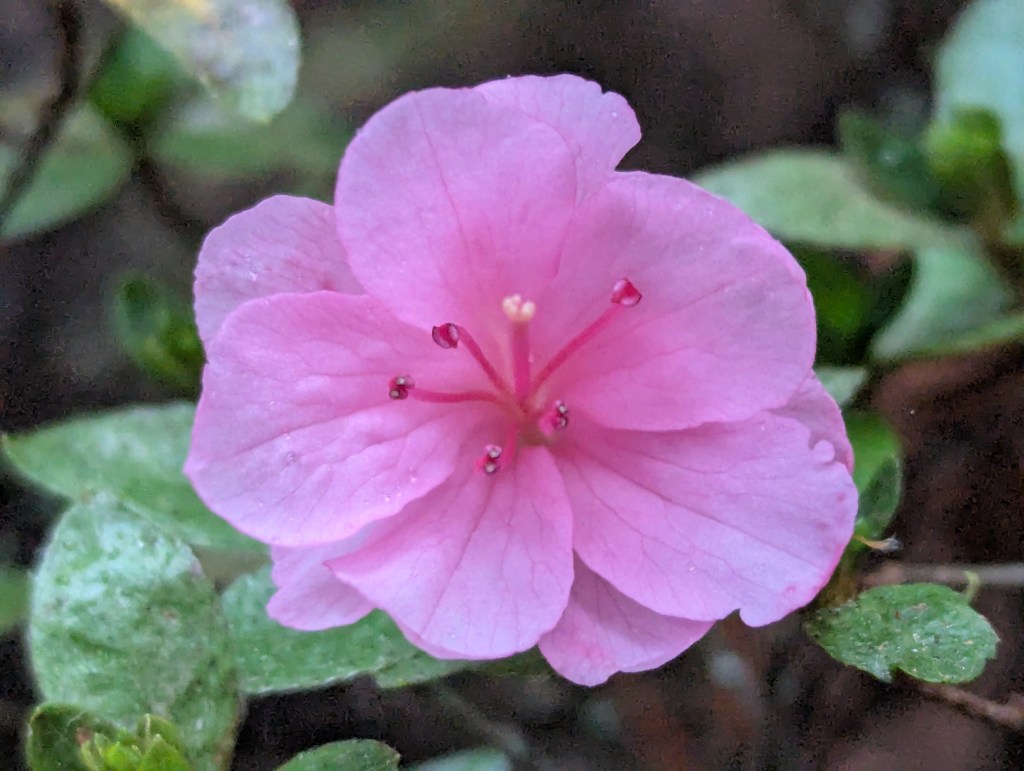
4. Rhododendron spp., azalea should not be blooming now. Flowers that bloom now will be finished and unavailable to bloom in spring. I believe that this cultivar is ‘Coral Bells’.
5. Rhododendron spp., azalea, which is likely ‘Fielder’s White’, is blooming prematurely also. If I remember correctly, it typically does this, but somehow blooms for spring also.

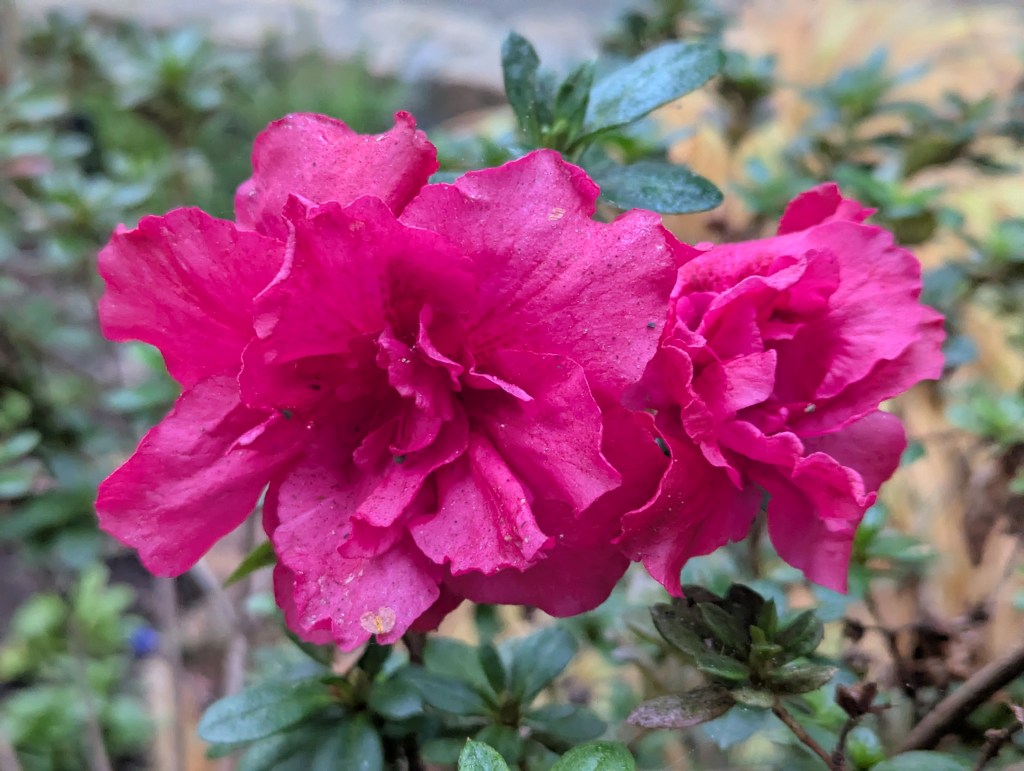
6. Rhododendron spp., azalea with double bloom is probably a recycled florist specimen. I have no idea what cultivar it is. It certainly is colorful. I hope it saves bloom for spring.
This is the link for Six on Saturday, for anyone else who would like to participate: https://thepropagatorblog.wordpress.com/2017/09/18/six-on-saturday-a-participant-guide/
A pollinator is a vector of pollen, besides wind. Most are insects. Some are animals. Their only qualification is that they collect and deliver pollen between flowers. Almost all are unaware that they do it as they visit flowers for nectar, which the flowers produce to attract pollinators. Bees, which are probably the most common pollinators, visit flowers to collect pollen with which to make their honey, and pollinate in the process.
So, what about the flowers that provide pollen for pollination, particularly for dioecious species such as hollies, date palms and kiwi vines? (Dioecious plants are either male or female.) ‘Bing’ cherry is not dioecious, but is not self pollinating either, so needs another cultivar of sweet cherry for cross pollination. Such a cultivar is known as a pollinator.
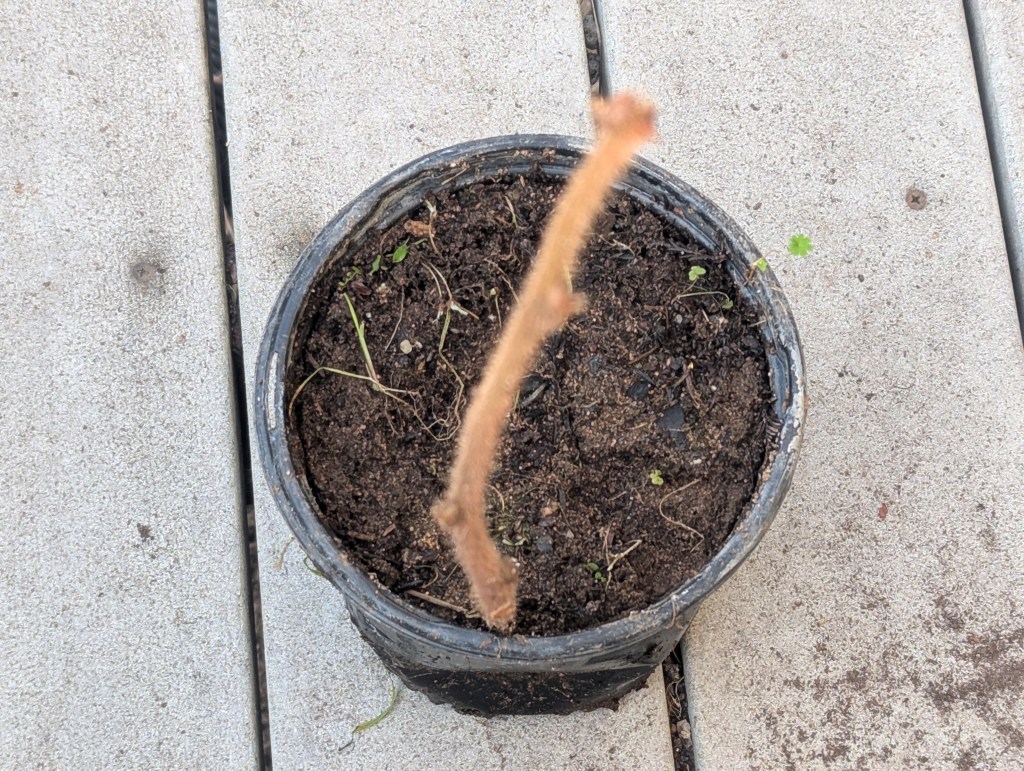
My female kiwi vine just recently acquired a male pollinator. It does not look like much yet, but will grow up to bloom with male flowers to provide pollen for the female flowers of the vemale vine. Because kiwi vines are dioecious, the female vine would be fruitless without pollination from the male vine. Perhaps the male pollinator will need a pollinator to deliver its pollen to the female vine.
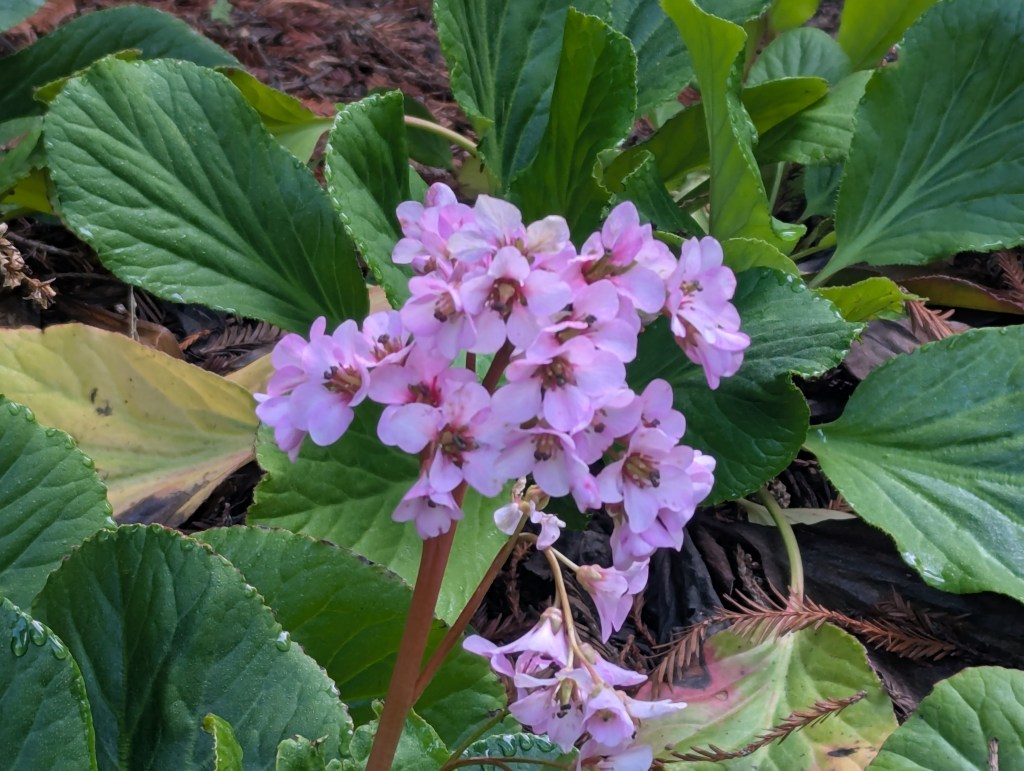
After the warm and arid summers here, ferns enjoy the beginning of the rainy season in late autumn or early winter, which is about now.
1. Adiantum capillus–veneris, Southern maidenhair fern replaces all its tired old foliage for autumn. It resembles native species of maidenhair fern, but with distinct foliar form.
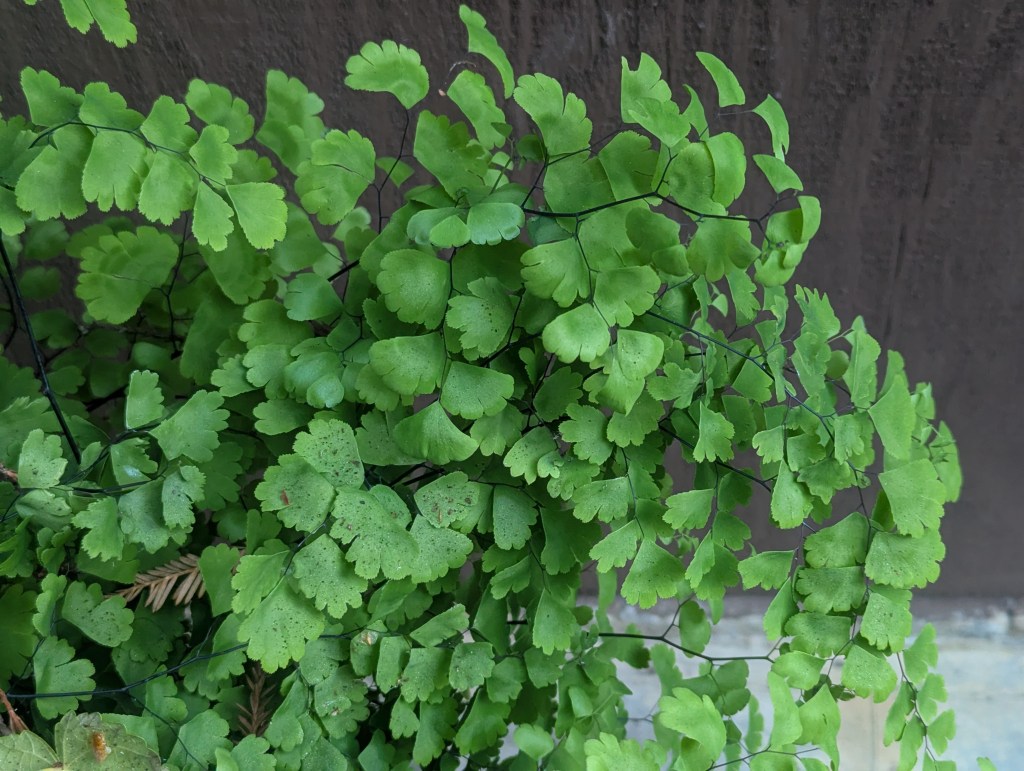
2. Nephrolepis cordifolia, sword fern remains within a big pot because it can be invasive in the ground. It is directly related to Boston fern, but is not quite as soft and pendulous.
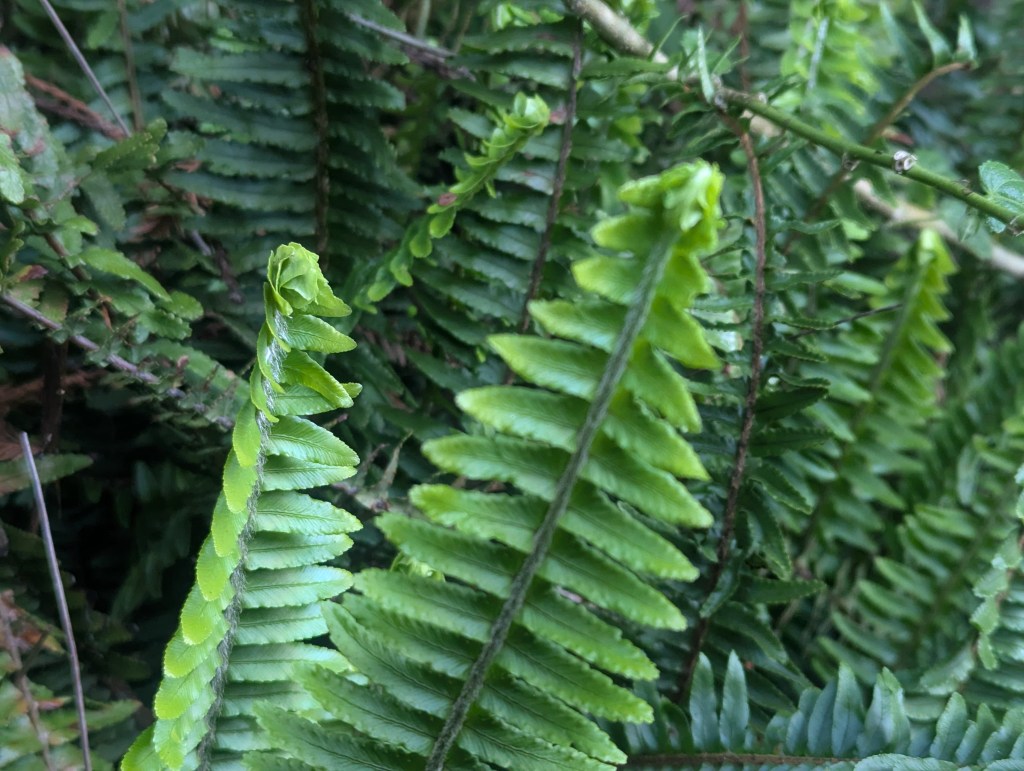
3. Dryopteris erythrosora, autumn fern is the only fern here that exhibits autumn foliar color. It is pretty, but quite diminutive. It is no bigger now than it was several years ago.
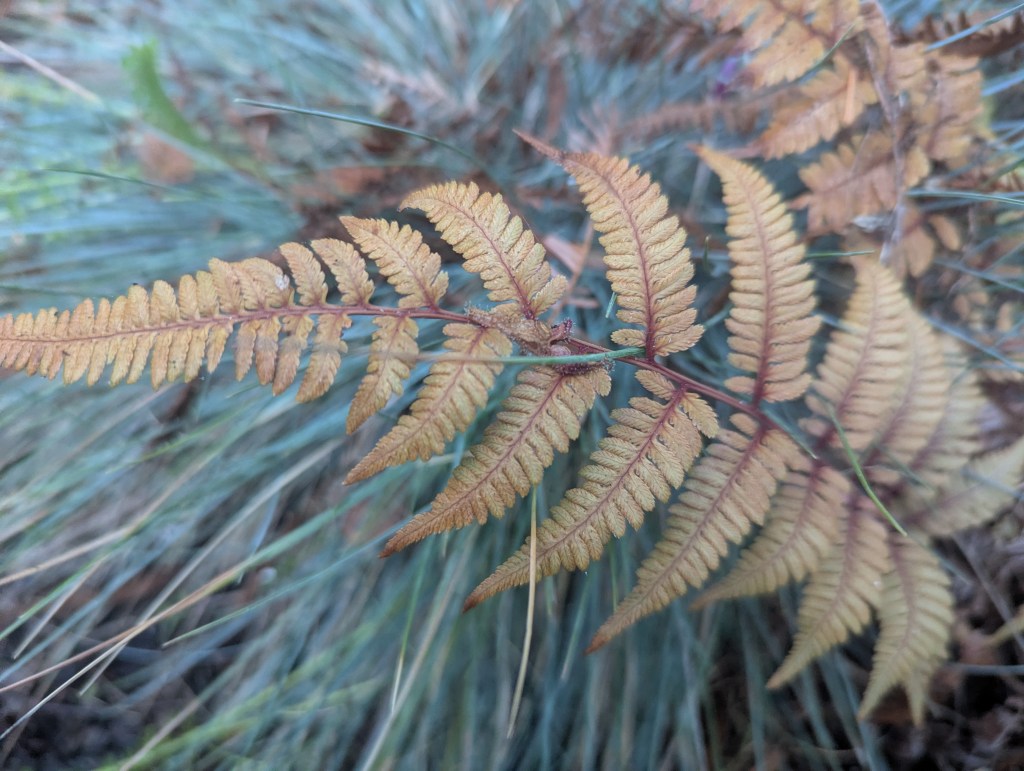
4. Polystichum munitum, Western sword fern and the next two ferns are native here. All three grow wild within some of our landscapes; and all are remarkably tolerant of shade.
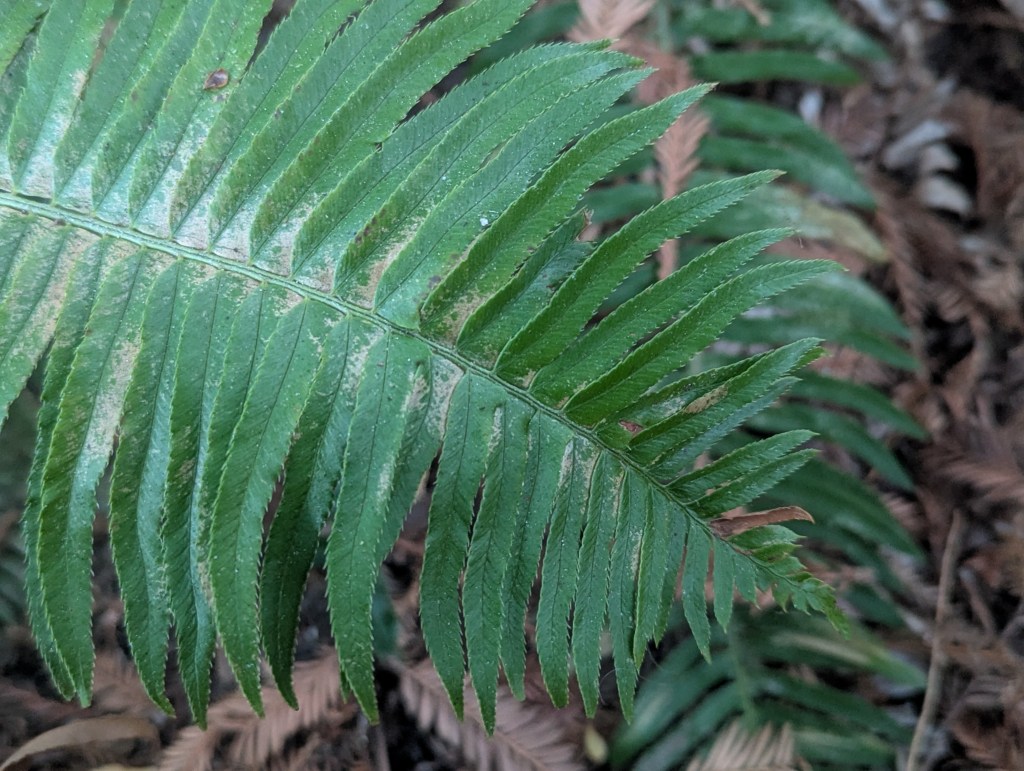
5. Athyrium filix–femina, lady fern is also known locally as ostrich plume fern, but is not related. It has tender leaves with almost succulent rachises that break easily if disturbed.
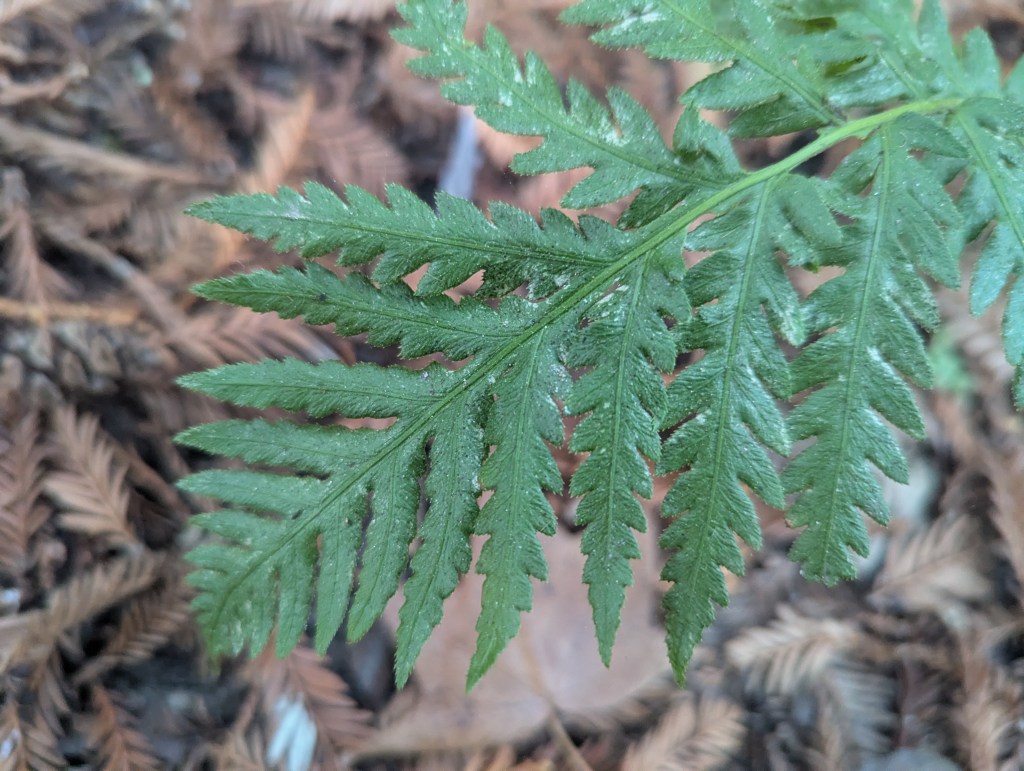
6. Woodwardia fimbriata, giant chain fern has a similar foliar texture, but is bigger and more resilient than lady fern. We sometimes need to remove big superfluous specimens.
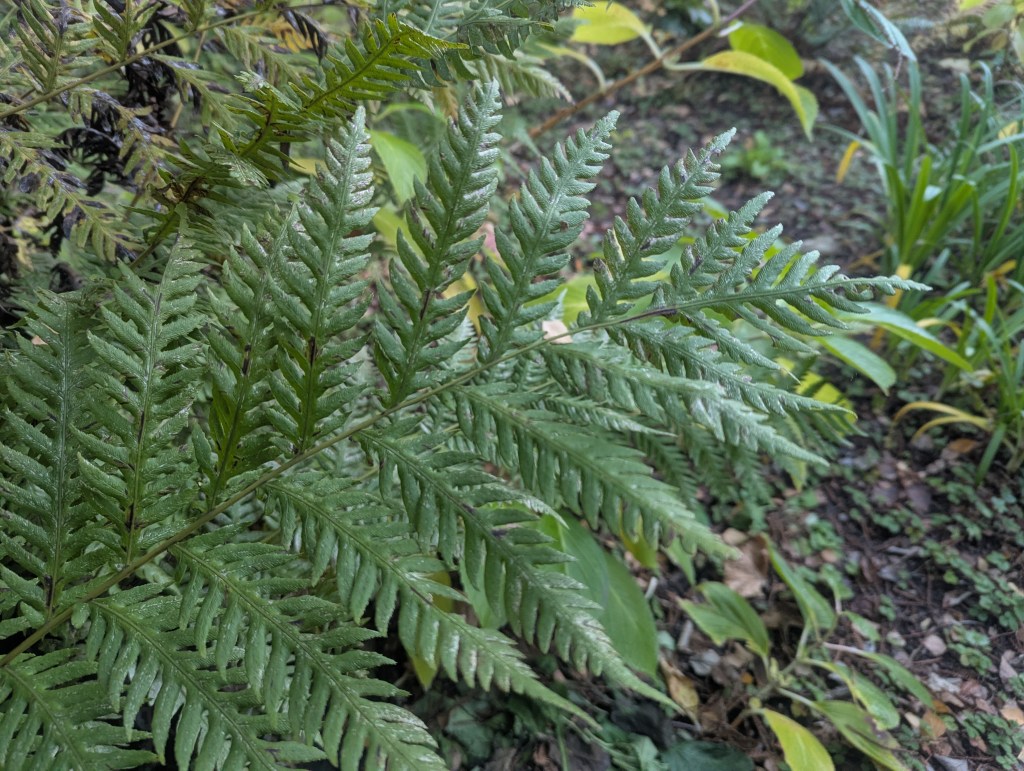
This is the link for Six on Saturday, for anyone else who would like to participate: https://thepropagatorblog.wordpress.com/2017/09/18/six-on-saturday-a-participant-guide/
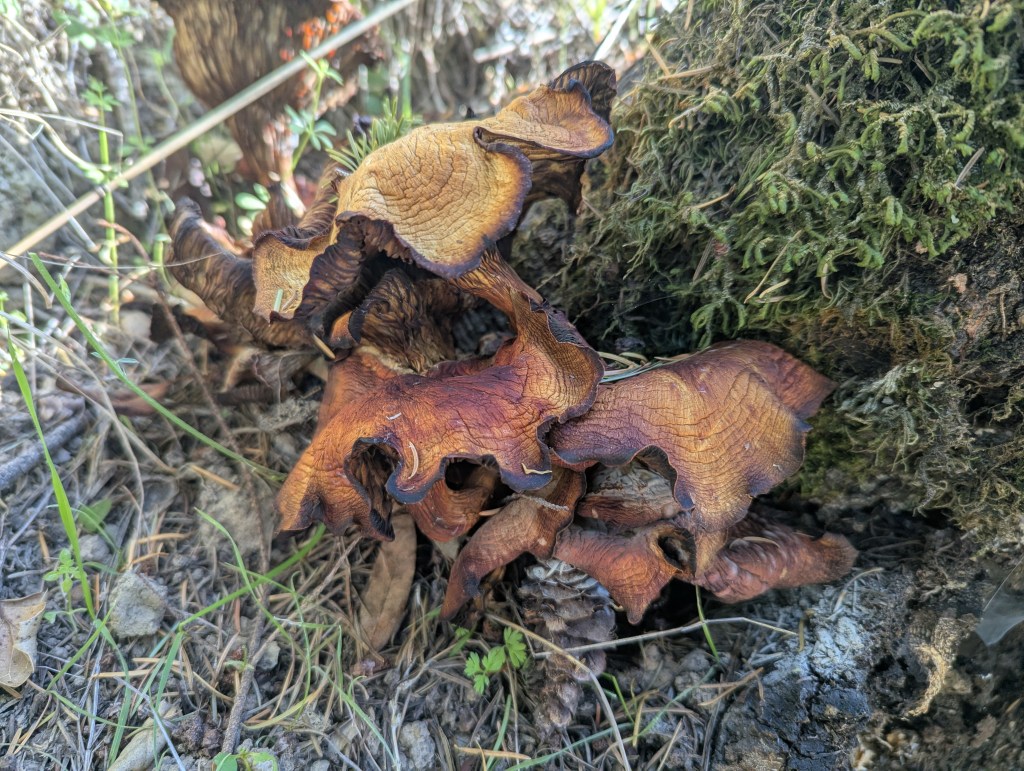
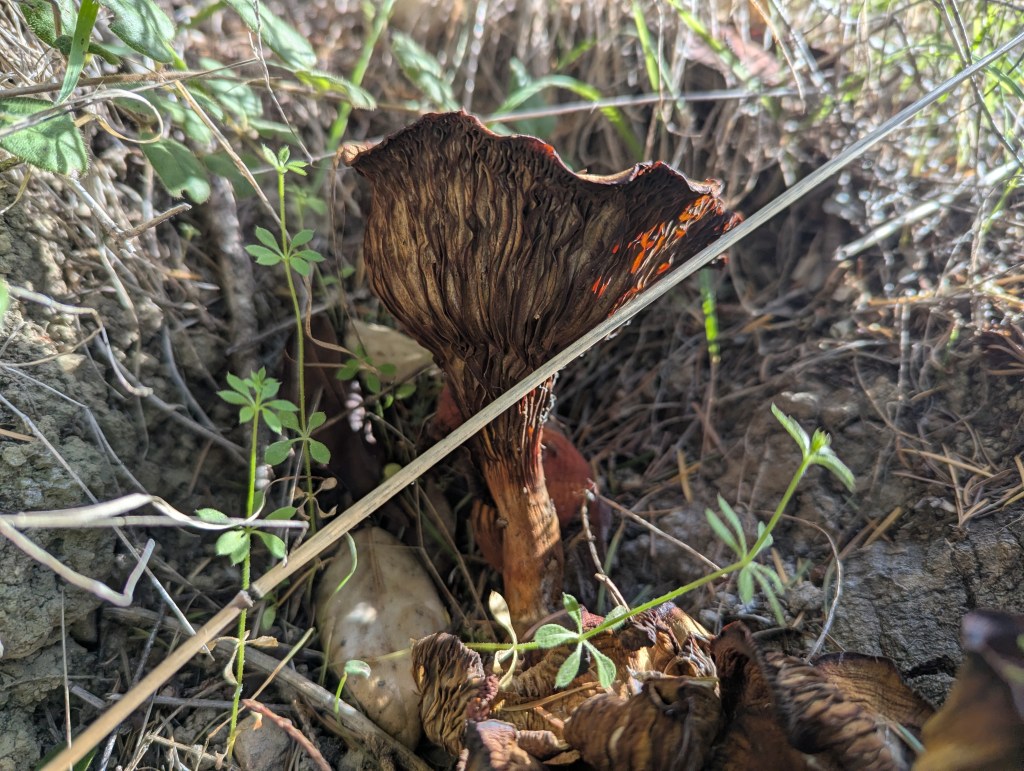
Are these chanterelles? I found them at the base of a dead and rotting coast live oak on the Upper East Side. I took their picture because friends had been asking me if there are any chanterelles to collect there. Apparently, chanterelles can be sold for quite a sum to restaurants. I really should have been more observant when I took these pictures, to see how many more of the same, if any, were in the area. I will not return to the area anytime soon, unless I need to show someone else where it is. It is quite a hike to get there, with a very steep incline. It is likely too late to collect chanterelles anyway. They supposedly emerge after the first autumn rain, but finish through November, which is likely why these look so deteriorated and dried. However, locally, they can continue to appear throughout winter if weather conditions are favorable. I am certainly no expert. After all, even if these are chanterelles, this is my first experience with them. We are barely acquainted. I do not trust them enough to taste them. Nonetheless, I would be pleased if friends could collect real chanterelles for a profit.
As bloom of most other plants decelerates for late autumn and winter, the floral color of common annuals becomes more prominent in the landscapes at work.
1. Viola X wittrockiana, viola blooms with smaller but more profuse flowers than pansy. I am not certain if they are the same species. Also, most of the flowers face one direction.
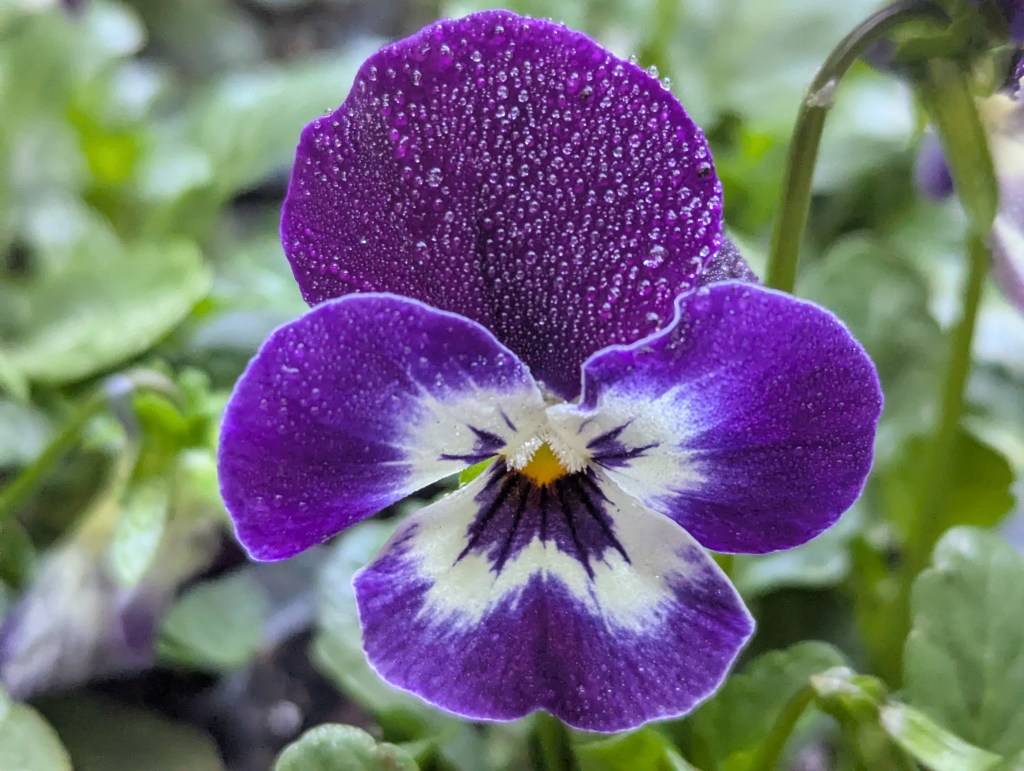
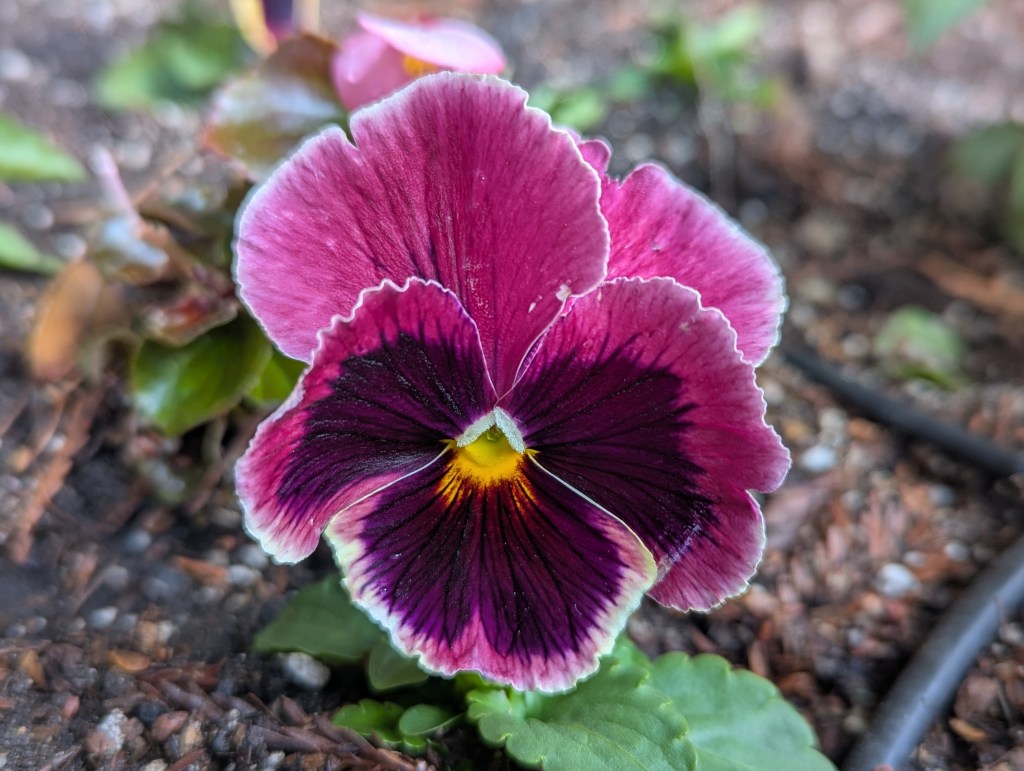
2. Viola X wittrockiana, pansy blooms with bigger but less profuse flowers which mostly face random directions. We got only two six packs to add to other flowers in a small bed.
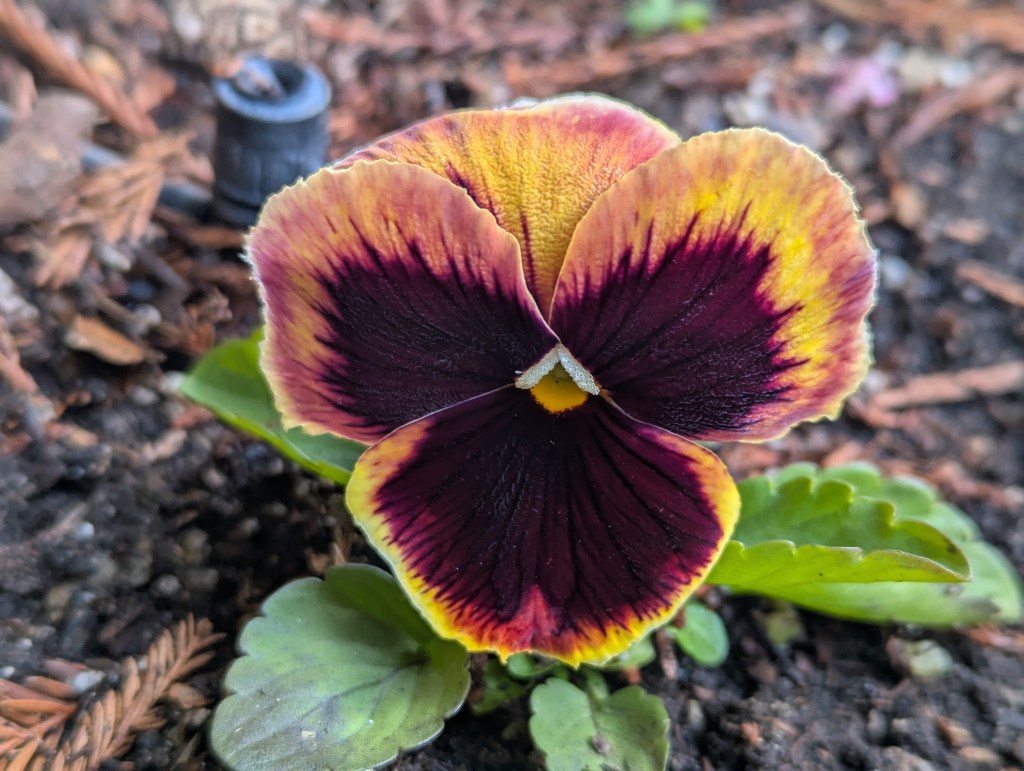
3. Viola X wittrockiana, pansy is redundant to the picture above, but is a different color. The plants are so dinky that they are scarcely visible behind their relatively wide flowers.
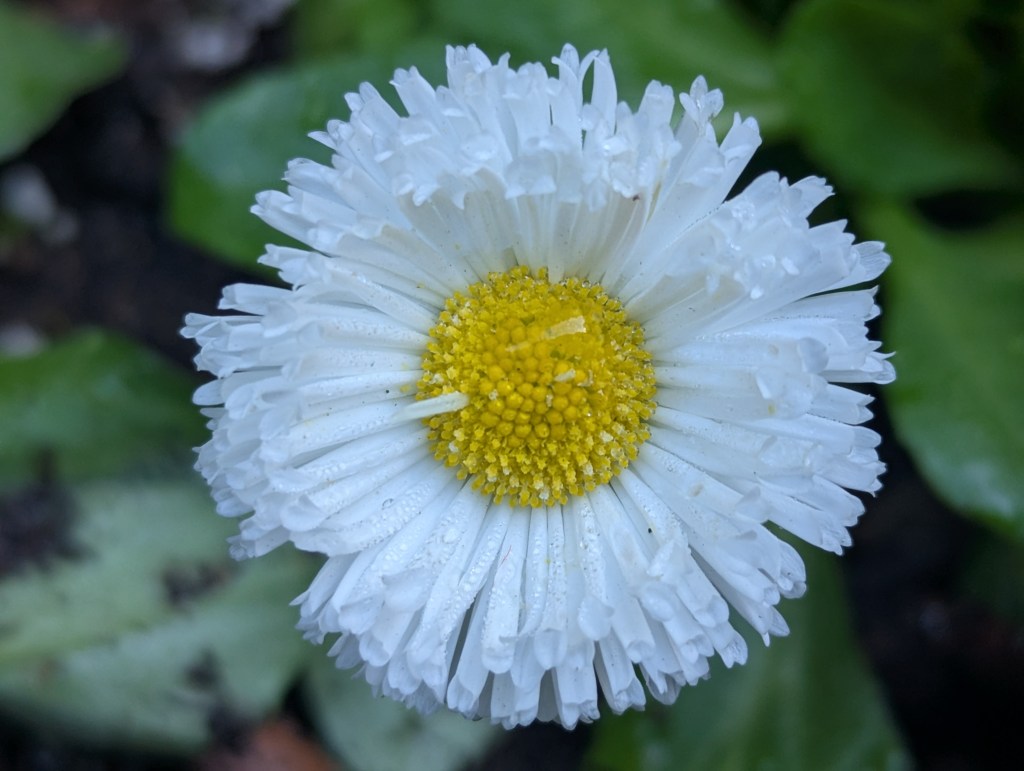
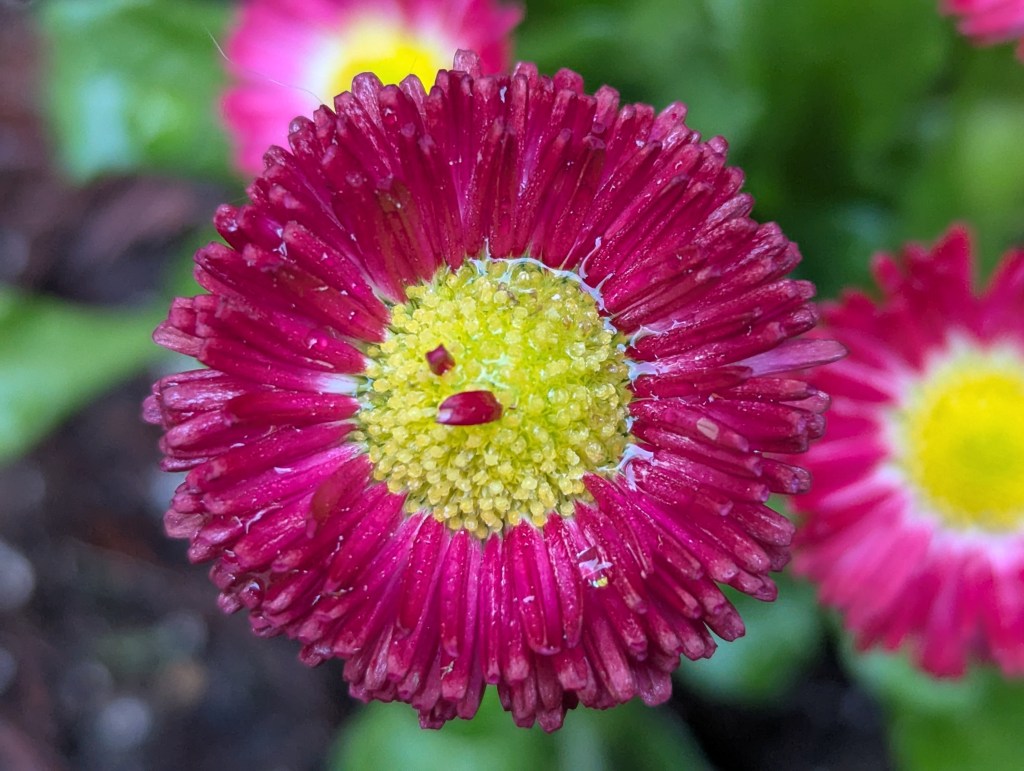
4. Bellis perennis, English daisy ranges in color from this rosy red to white like the color scheme of candy canes. I am fond of it because it is not so overly bred like other annuals.
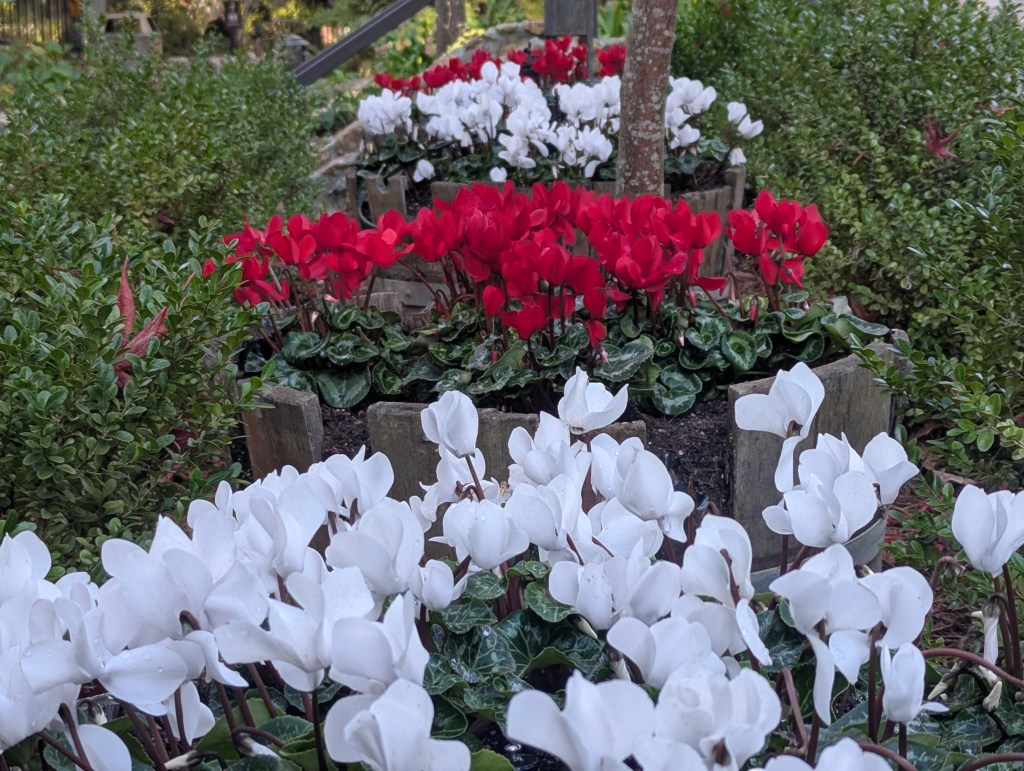
5. Cyclamen persicum, florist’s or Persian cyclamen is cheapened as an annual. I used to grow mine as cool season perennials. I also grew colors other than simple red and white.
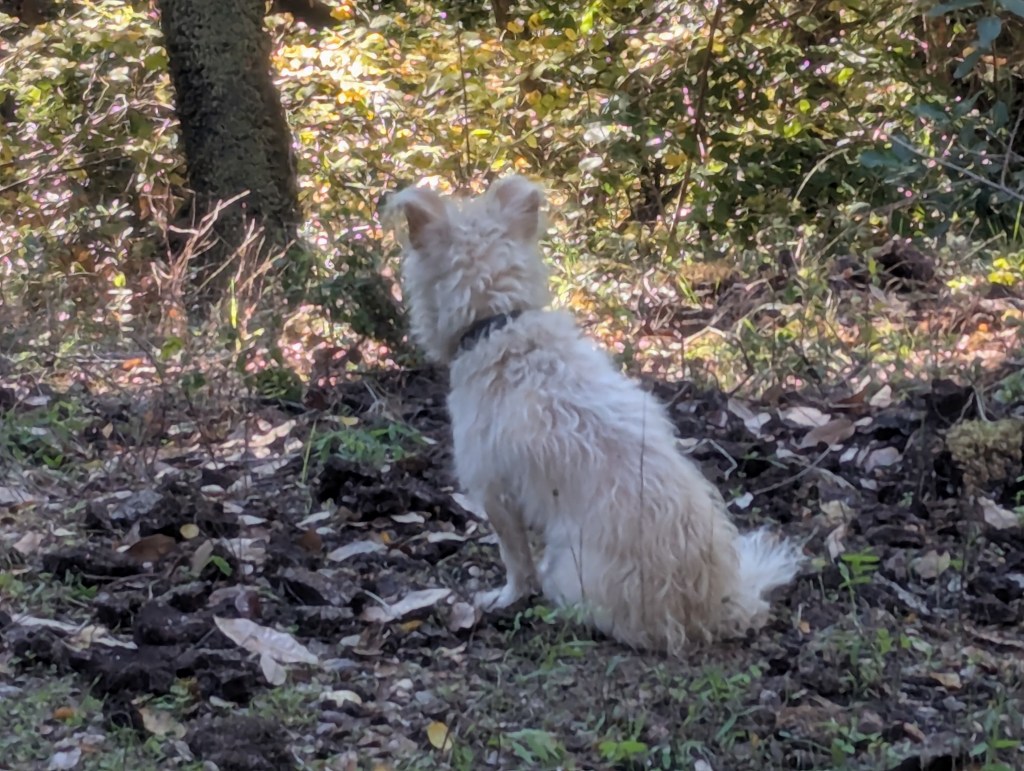
6. Rhody was unconcerned with these common annuals as he surveyed his domain early last Monday, while I burned forest green waste. He is not overly horticulturally oriented.
This is the link for Six on Saturday, for anyone else who would like to participate: https://thepropagatorblog.wordpress.com/2017/09/18/six-on-saturday-a-participant-guide/
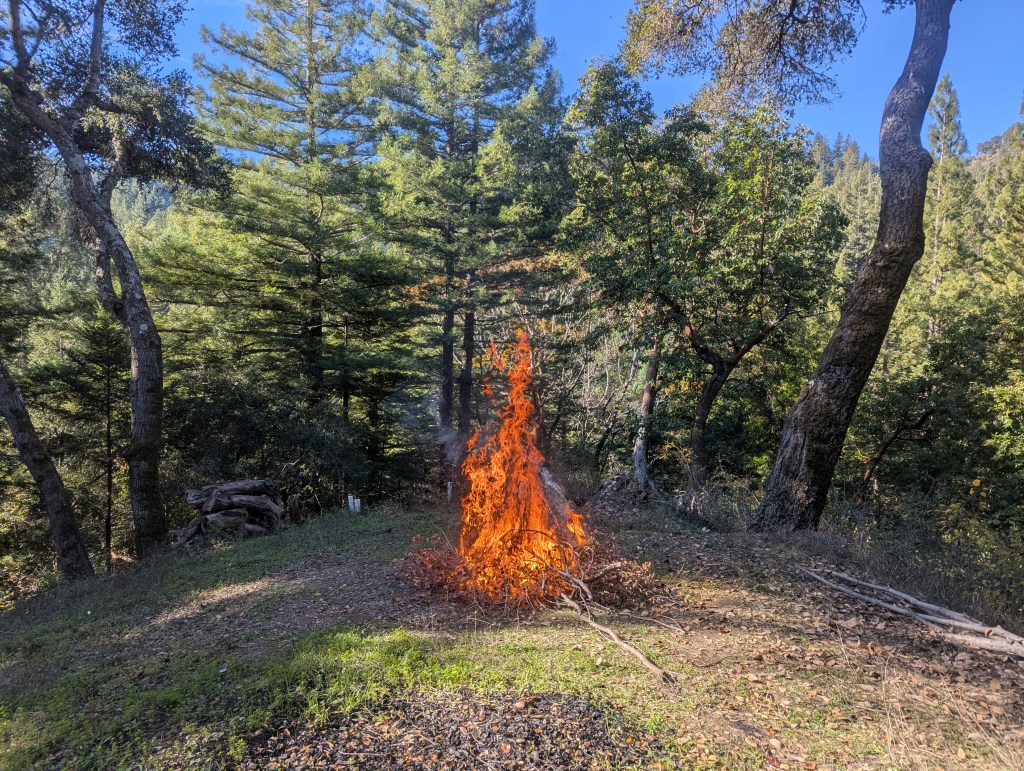
Monday was the first day of burn season, which continues from December 1 until April 30. On designated burn days within burn season, we can burn green waste that would otherwise make our properties more combustible during fire season, which is generally the opposite of burn season. The designation of burn days is determined by multiple meteorological factors, such as temperature, humidity, wind, atmospheric pressure and air quality. It is also limited by the moisture content of the forest, so can be delayed until after the first soaking rain storms. So, not only was Monday the first day of burn season, it was also the first designated burn day within burn season. I took the opportunity to burn some of the green waste that has been accumulating since the previous burn season. It was tedious but gratifying. A chipper would have been faster, but that is something that I lack here. Besides, a chipper can not go where some of the green waste remains. It is so far down steep hillsides that I may try to burn it where it is, rather than drag it up to where this primary burn pile was. There is a lot of green waste!
 Tony Tomeo