Do Not Try This At Home

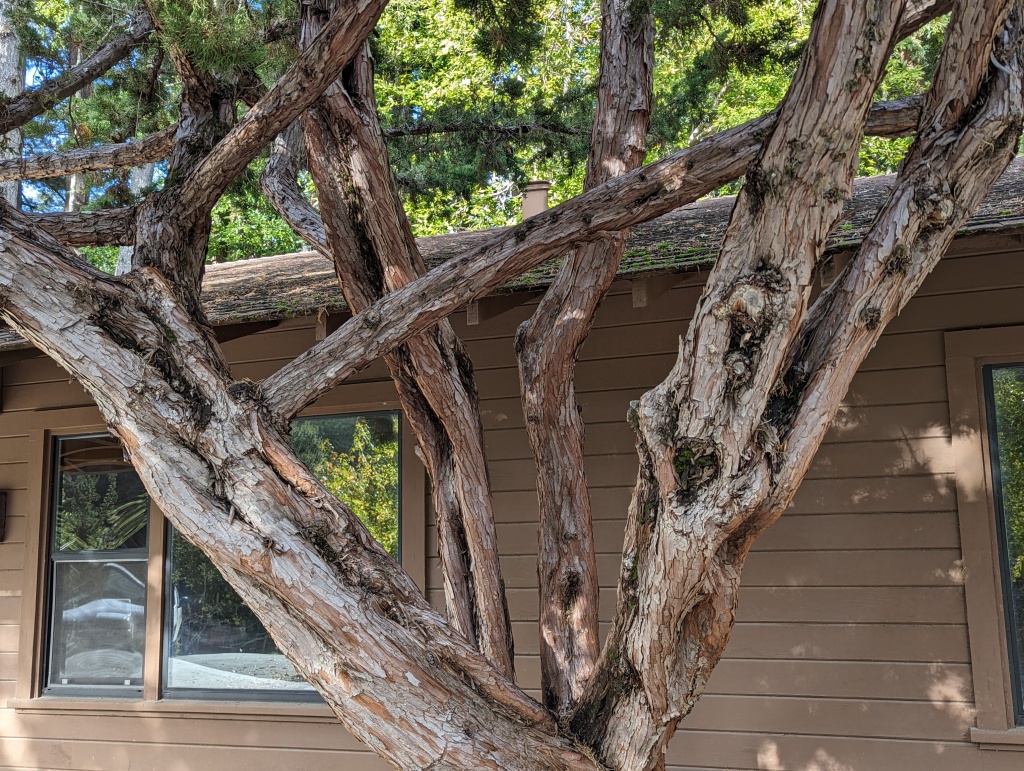
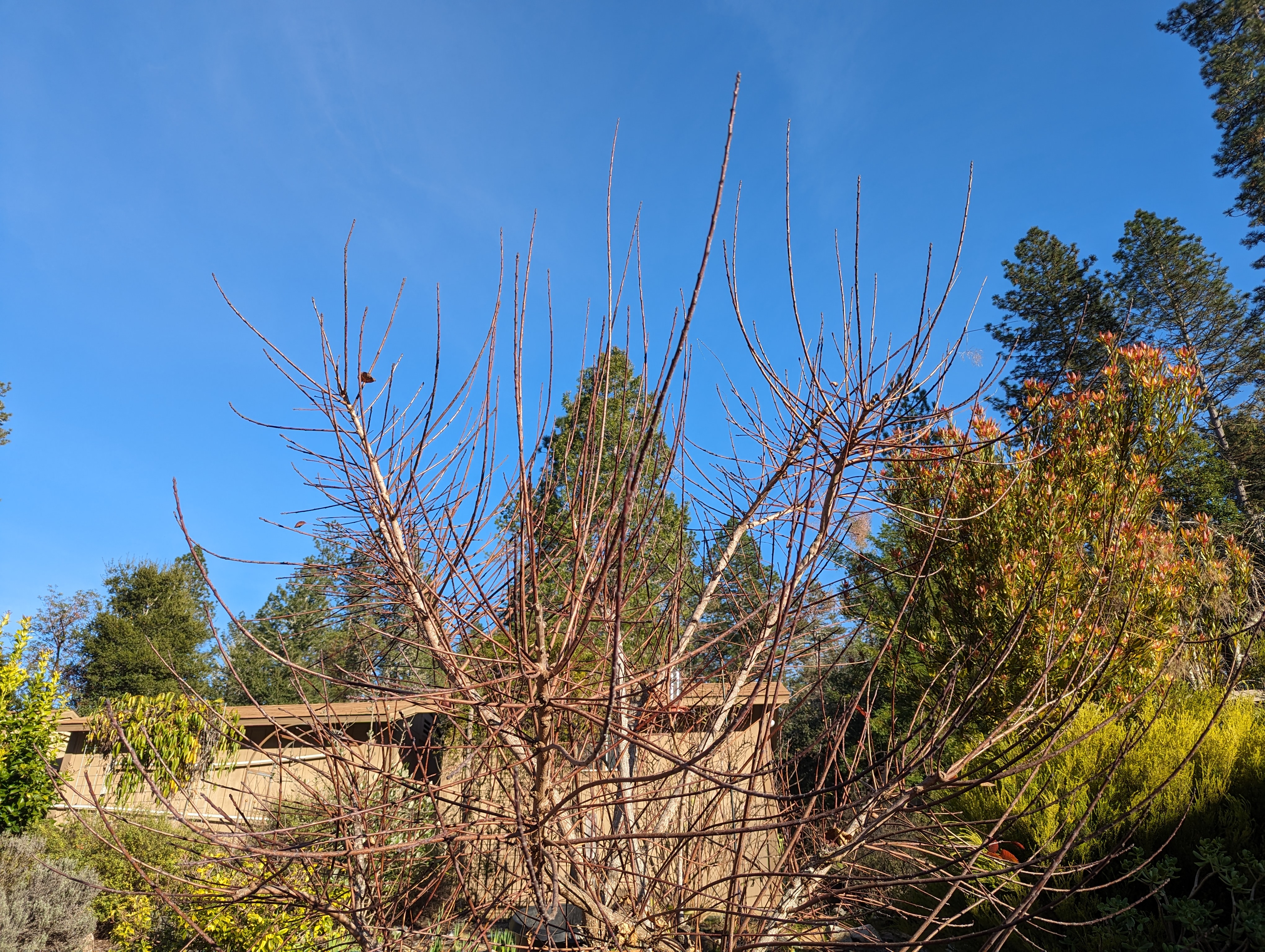
Before and After pollarding

Pollarding and coppicing are very unfortunately vilified here. I just wrote an article about these topics for the gardening column. Arborists are taught that they are comparable to topping, and that they cause irreparable disfigurement.

It is unfortunate because both procedures have very practical application. Both are still commonly practiced in other regions. If performed properly, both are quite sustainable, and can actually maintain some specimens of a few species longer than they typically live naturally. I use both techniques to a minor degree at work, and will likely do more of both within my home garden.

However, I almost never recommend either technique. Because they are so vilified, arborists do not learn about them. Consequently, it is nearly impossible to find an arborist who can perform either technique properly. Trees and shrubbery can very easily be ruined by either technique if performed improperly.

In fact, I am hesitant to allow reliance on pollarding and coppicing by trees and shrubbery at work because I am concerned that no one else will want to repeat the processes after my retirement or resignation, which could be at any time. Coppicing carpet roses should be no problem for whomever performs it in the future, but I can not be certain. Pollarding is a bit more specialized, so concerns me more.

This smoke tree was initially pollarded for renovation. It was previously distressed and weak, but is now quite vigorous. Its purple foliar color is more vibrant through summer. So is its autumn foliar color. I previously believed that it bloomed only on year old stems, so would be unable to bloom on exclusively new canes after being pollarded. Instead, it blooms better on vigorous new stems that it on distressed year old stems.

It is not forming knuckles though. New stems emerge from all over the permanent stems, so leave pruning wounds that do not compartmentalize as efficiently as they would on knuckles. Also, without terminal knuckles, some permanent stems die back an inch or two annually. Although pollarding successfully renovated this smoke tree, it is not as sustainable as I would like it to be.

So, because the procedure is not sustainable for this particular specimen for very long, and I suspect that no one will want to repeat the process annually in the future, I will likely encourage more natural form. I left a few extra new canes for this year. For next year, the twiggy interior growth may be thinned, while upper and outer growth is allowed to develop into a more permanent canopy.

Six on Saturday: Bucket List

Hyacinth Bucket of ‘Keeping Up Appearances’ might say, “It’s ‘Bouquet’.” However, this really is about the contents of two buckets, two cans, a bin, and a terracotta pot, without flowers. Most of these items must be processed prior to the end of the rainy season.

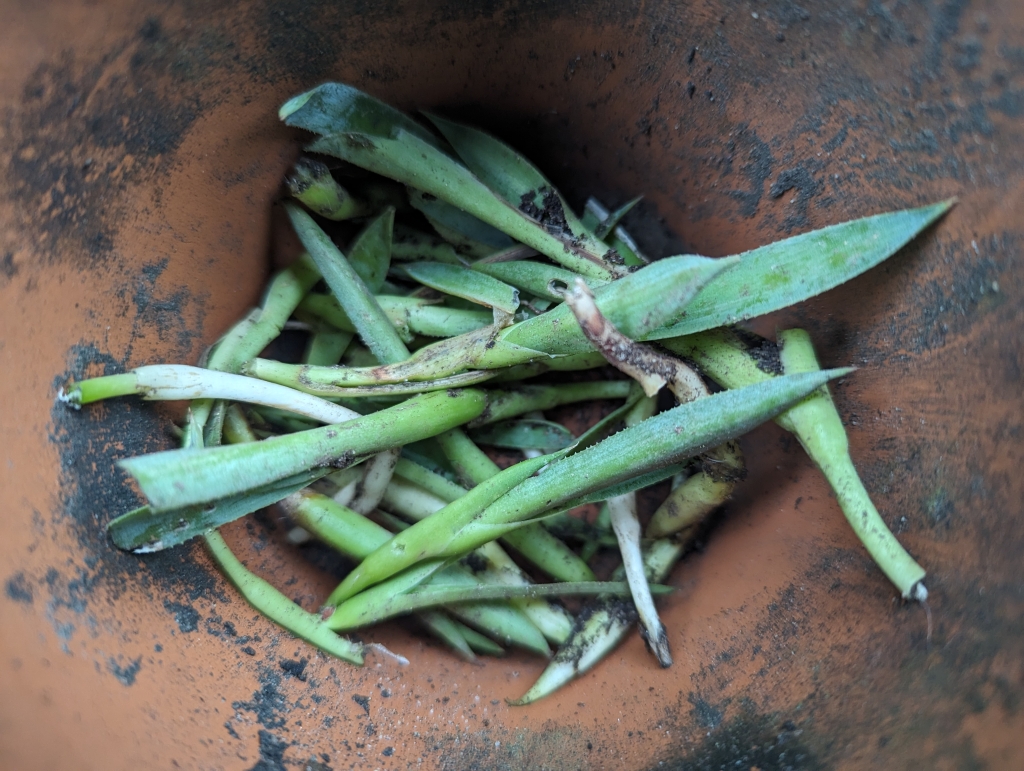
1. Agave ovatifolia, whale’s tongue agave bolted and bloomed too soon after installation. It is monocarpic, so died an ugly death while trying to replace itself with fresh new pups. I planned to later select the biggest pup to replace its original. Unfortunately, a gardener who did not know what they are pulled them all with nearby weeds. I scrounged through the debris to find these. Incidentally, I must still find homes for Agave americana pups.

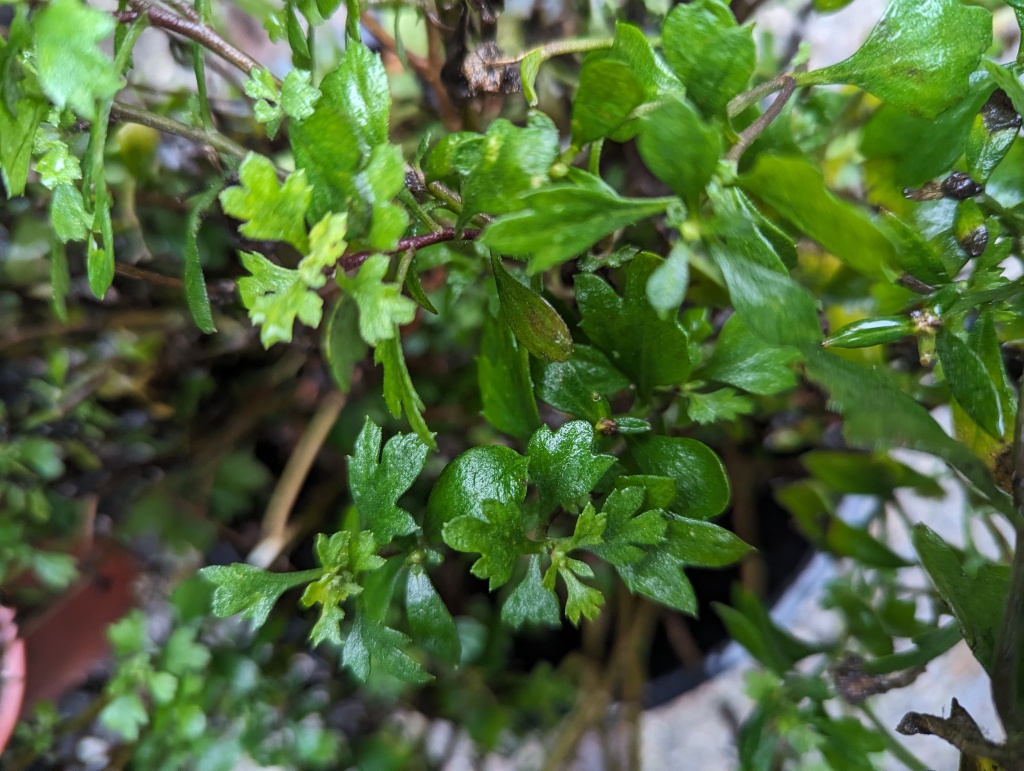
2. Chrysanthemum X morifolium, mum contrarily will not die. It was abandoned after a wedding, but then potted into a landscape as it bloomed again. Removal for replacement as it again finished bloom revealed that each of these many stems is rooted individually.

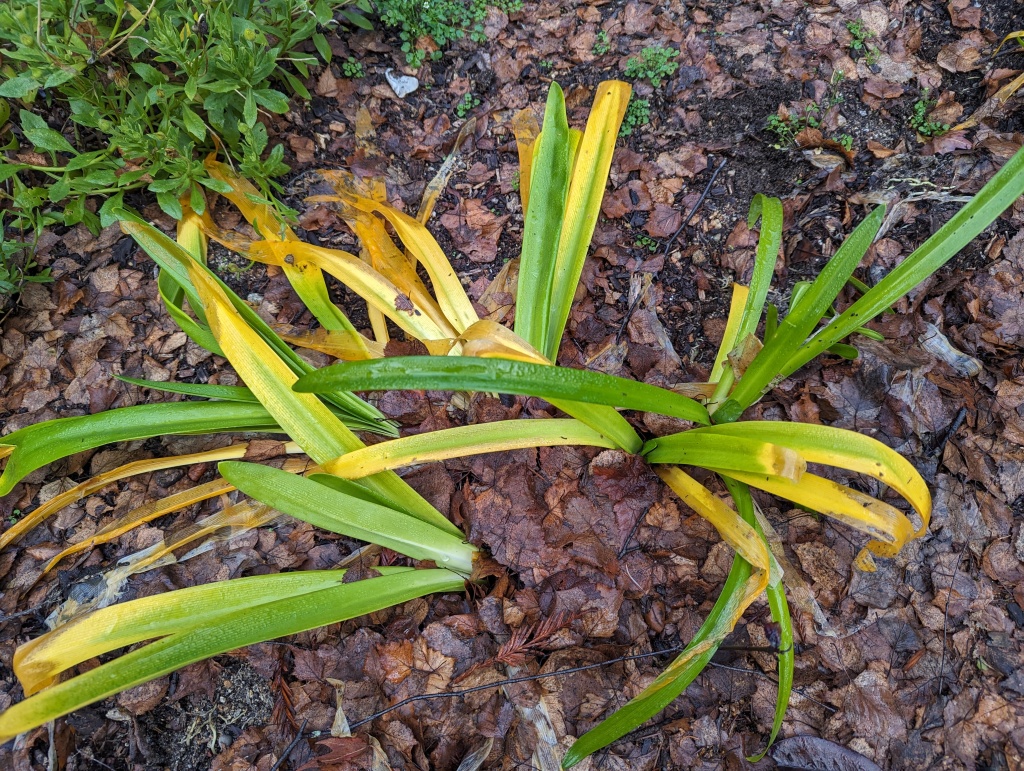
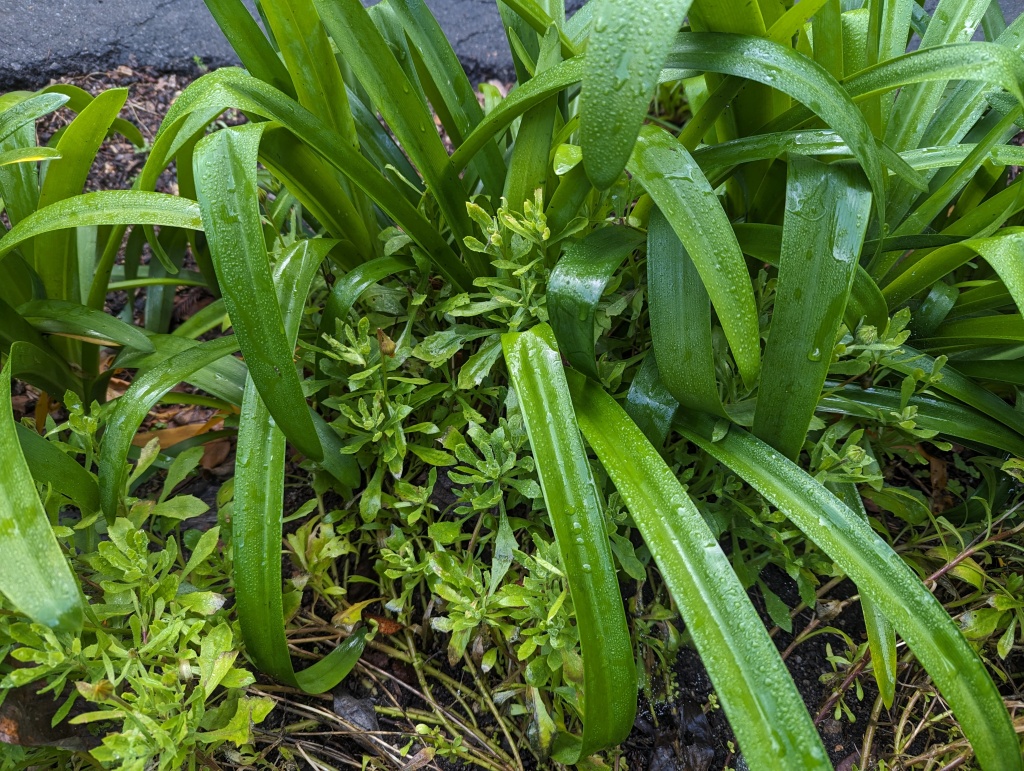
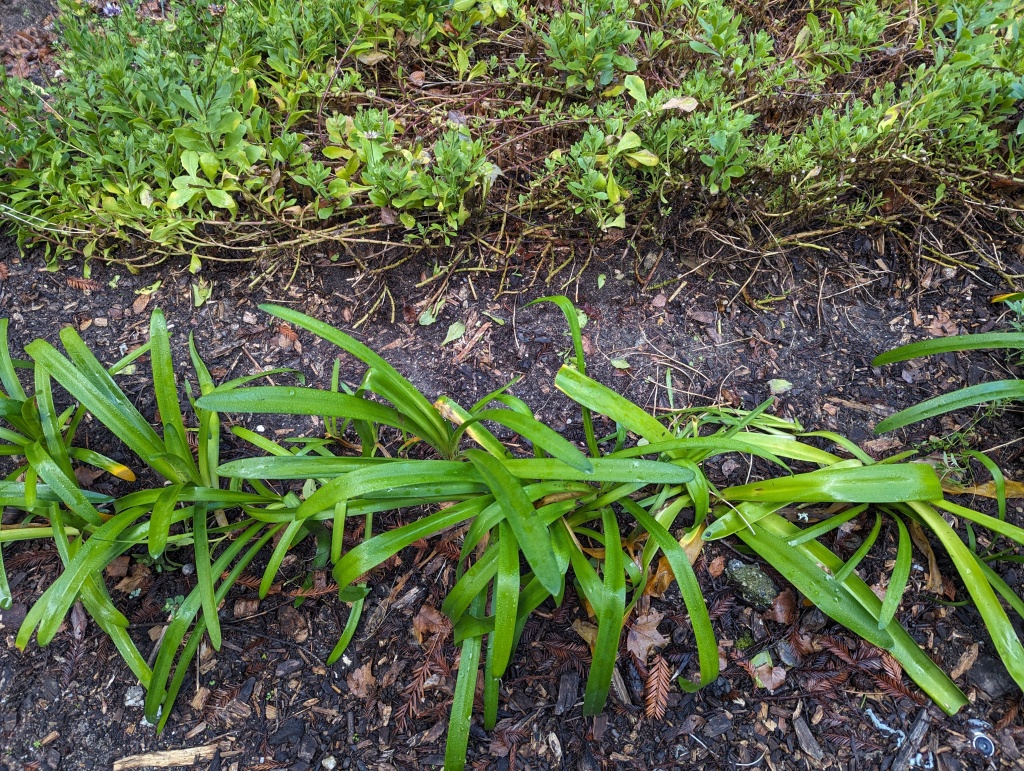
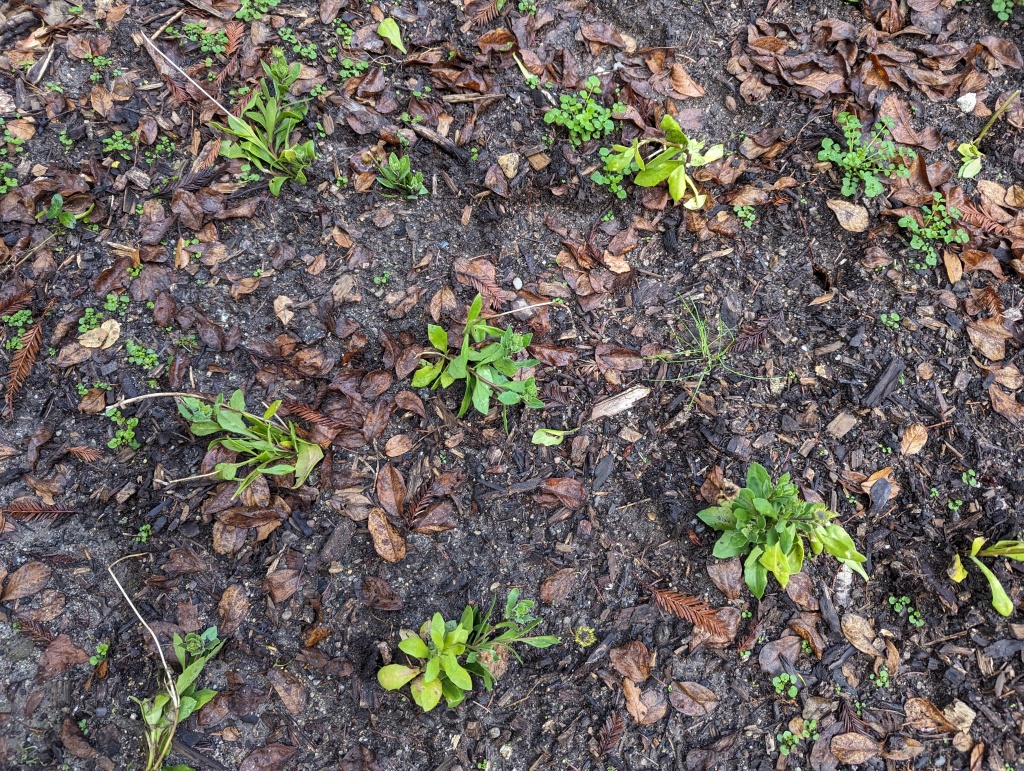
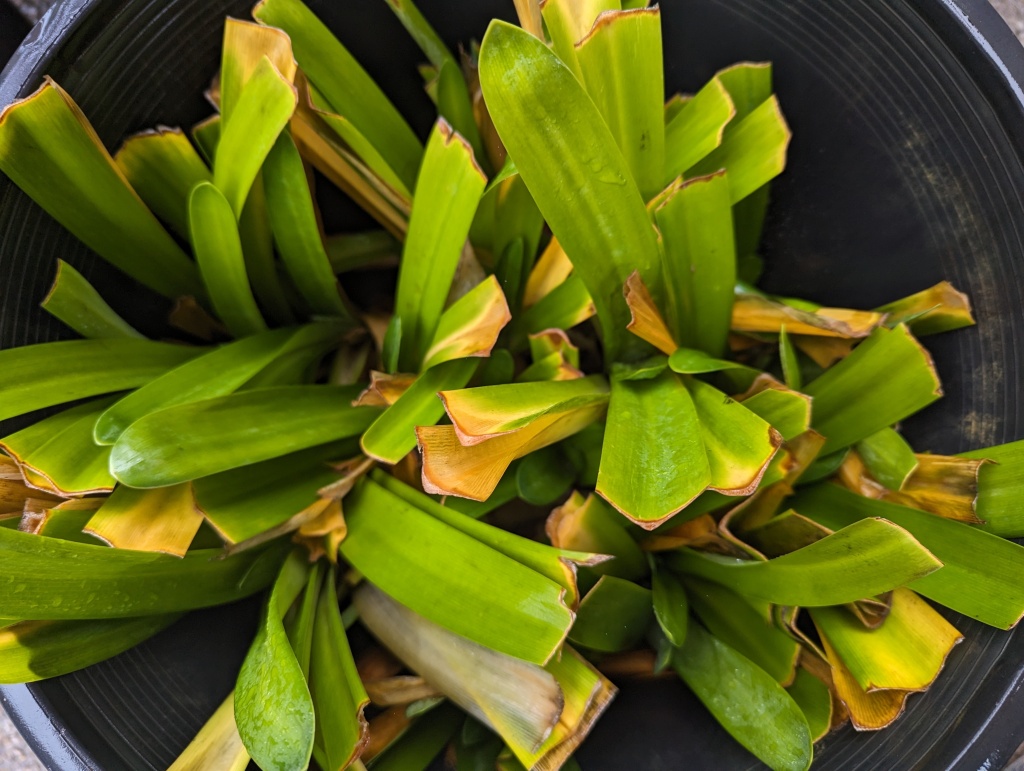
3. Agapanthus orientalis, lily of the Nile is getting to be rather tedious. These shoots are of the same batch that I featured last week, and that I processed more than a month ago. I processed too many, so must now get the leftovers into the ground before winter ends.

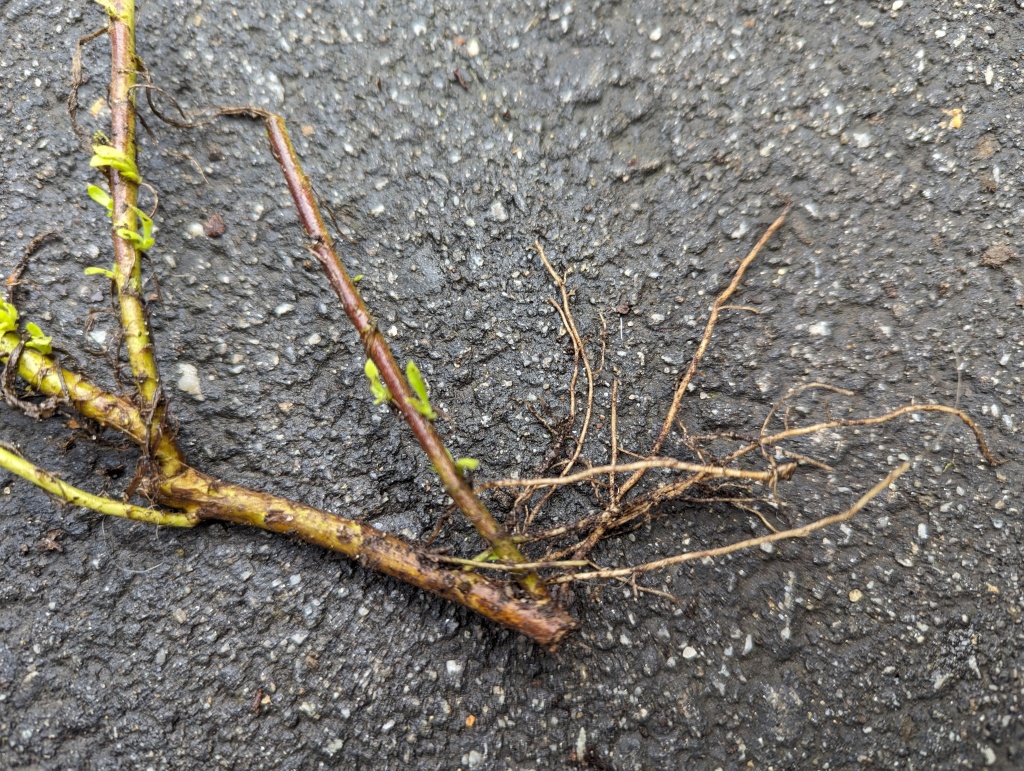
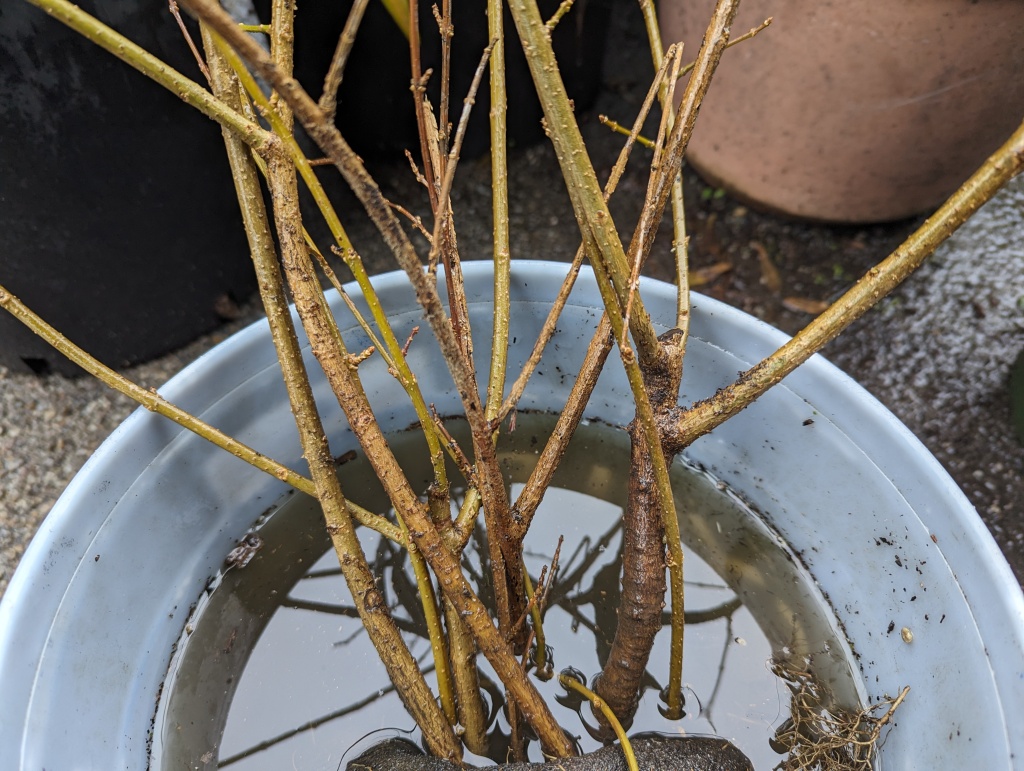
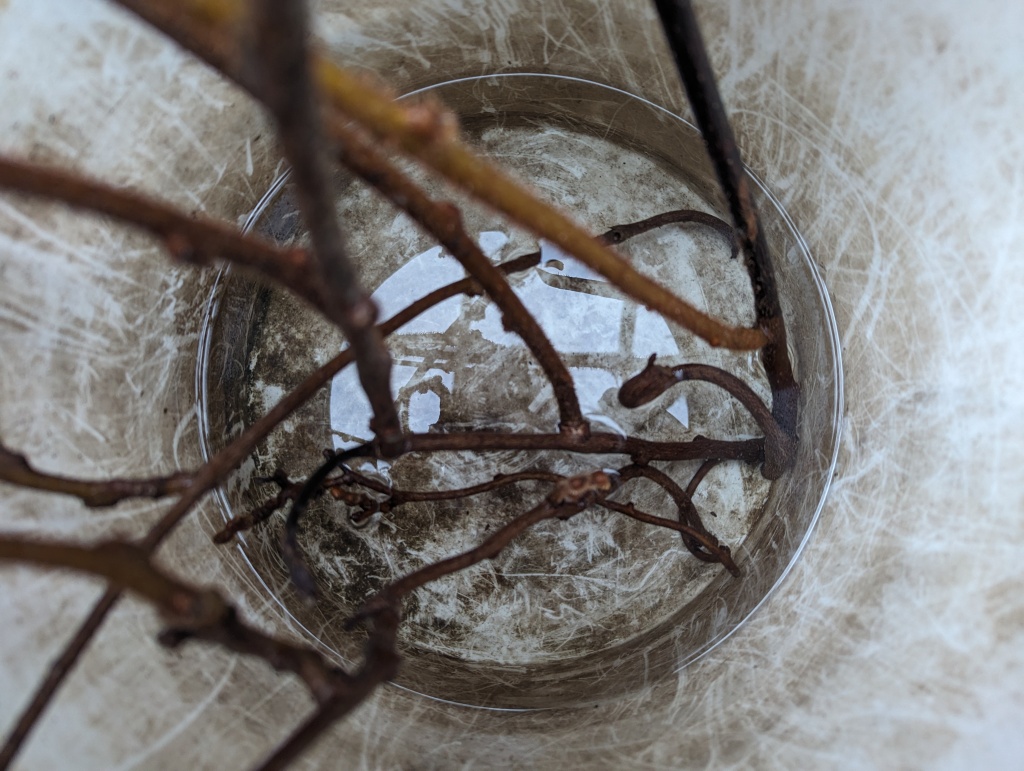
4. Forsythia X intermedia, forsythia will bloom soon, but for the moment, is dormant. I relocated an old specimen that was always in the way. These spare twigs can be forced.

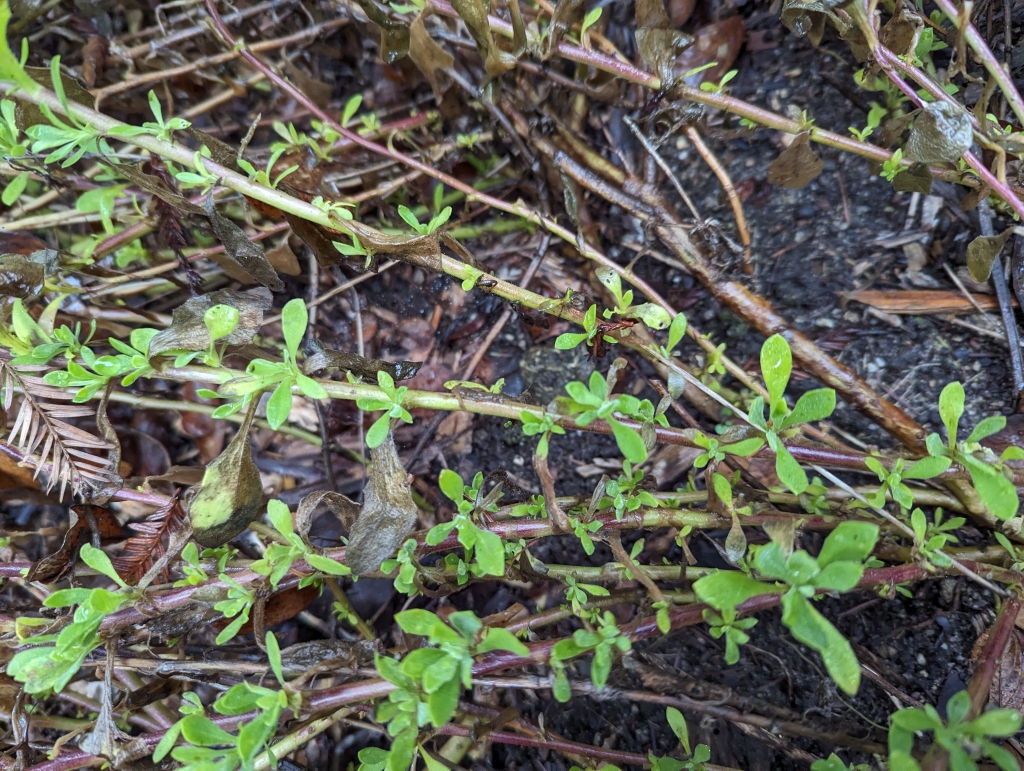
5. Actinidia deliciosa, kiwifruit vines grew easily from a broken bit that I found in a load of debris that someone left here last winter. They are female without pollinators though. These are dormant pruning scraps of its male pollinator, and should grow just as easily.

6. Rain was falling yesterday and is forecast to continue lightly through most of Monday.

This is the link for Six on Saturday, for anyone else who would like to participate: https://thepropagatorblog.wordpress.com/2017/09/18/six-on-saturday-a-participant-guide/

Horridculture – WWW

Online, bay laurel often passes for culinary bay.

Anyone can say anything online. There is no shortage of inaccurate information. Much of it is stupidly inaccurate. Much of this stupidly inaccurate information is more popular and more efficiently dispersed than conflictingly accurate information. To make matters worse, some accurate information that seems like it should be readily available is notably lacking. For example, I can not determine if the native blue elderberry requires a pollinator for fruit production. It is a simple question that seemingly lacks an answer.

Facebook shared a link to an article about the twenty worst trees to select for home gardens. The article does not say where this information is relevant. Nor does it bother to mention that trees perform differently within different climates. It is presented as universally accurate information.

Chinese flame tree is first on the list. What is a Chinese flame tree? The article does not provide that information. This is what botanical taxonomy was invented for.

Eucalyptus is next on the list. What species of Eucalyptus? The article does not say. Nor does it mention any of the many species of Eucalyptus that are quite practical small trees. That is like saying that France, Spain, Italy, Greece and Portugal are all countries of Europe, but Africa is just Africa. (That happens also within other contexts.)

Tulip poplar is apparently dangerous because it drops branches. That sounds reasonable. However, coast live oak, blue gum eucalyptus, California sycamore and red willow are much more likely to do so here.

Black walnut is toxic. Although true, and some naturalized black walnuts remain from understock of the now extinct English walnut orchards, black walnuts are not commonly planted, and are not even available from nurseries.

Mulberry is messy. However, the only mulberry that is commonly planted is the fruitless mulberry. Fruiting cultivars are very rare, and mostly planted by those who actually want the fruit, and maintain them so that they do not get too big and messy.

Eastern cottonwood drops limbs. However, as the name suggests, it is Eastern, so is nowhere near here. Western cottonwood is a variety of the same species, and behaves similarly, but like black walnut, is neither planted intentionally nor is commonly available from nurseries.

The list goes on to include many trees that are not available here or that are simply not problematic. After describing all of the diverse species of Eucalyptus as one, it mentions a few species of similar cottonwoods as if they are more distinct from each other than they actually are. It shows a picture of common Mediterranean olive for Russian olive, which is not even remotely related. It says nothing about palms, which are good trees within appropriate situations, but require expensive maintenance by arborists who can climb them.

The internet is a useful tool, but is not perfect.

No Bad Habit

Washingtonia robusta, Mexican fan palm

Technically, this one is different. I did not get it from a situation that it needed to be removed from at work, and then can it because I did not want it to be discarded. I did not grow it from seed or cutting that I ‘borrowed’ from a landscape somewhere else. I did not ‘borrow’ it from Brent’s gardens at the Jungalow. I did not find it for free on Craigslist.

I found it for free on the Marketplace of Facebook, which is NOT Craigslist or any other familiar source. Therefore, technically, it is not a bad habit.

It is a Mexican fan palm, Washingtonia robusta. It was too appealing to ignore. I noticed its post several days ago, but did not respond immediately. I thought that someone else would claim it if I ignored it long enough. No one claimed it; so it is here now. Actually though, I am very pleased with it.

It came from the Willow Glen neighborhood of San Jose, so is accustomed to excellent soil and climate. Its species is remarkably adaptable though. It will be as satisfied with the slightly cooler climate and sandier soil here. I will need to provide it with plenty of water while it disperses its new roots. It is only canned now because the situation that it will be installed into is not yet ready for it. A few deteriorating black locusts and box elders will need to be pruned or removed first.

As it recovers from transplant, the presently healthy leaves will likely desiccate and need to be pruned away. I will leave them until they do so because they may not, and they help to sustain new root growth and dispersion. The process is actually less stressful through the cool and rainy season of winter.

‘Yuletide’

Camellia sasanqua ‘Yuletide’

‘Yuletide’ Camellia sasanqua should bloom for Christmas, as the name implies. It typically does. However, it sometimes blooms early or late. It might be slightly late this year, but has been blooming for quite a while, and was beginning to bloom by Christmas.

It certainly is a delightful red. It seems to me that it can be slightly more reddish, with less of a pink influence, in some situations. Perhaps the bright yellow of the staminate centers cause it to appear as such within certain weather conditions or sunlight exposures. This particular flower may seem to be slightly pinkish as a result of distress. The hedge that it bloomed on had been infested with red spider mite earlier.

This particular cultivar of Camellia sasanqua develops distinctly upright and perhaps ovoid form, and can get quite tall. Most other cultivars develop more irregular or sprawling form, with long and limber stems, and relatively short stature.

I am impressed that this bloom is so resilient to wintry weather. Although much of the foliage is under a wide eave, most of the bloom is not under the eave, so has been exposed to both rain and frost. Apparently, Camellia sasanqua bloom is resilient to frost that is colder than it gets here. Camellia flower blight is common regionally, but mysteriously does not damage many flowers within the landscapes here. White and light pink Camellia japonica flowers are more vulnerable, but even they bloom quite nicely here, with only a few flowers succumbing before they finish bloom, and generally as their cumulative bloom cycle is finishing anyway.

Deer eat any cultivar of any species of Camellia, but avoid camellias here more mysteriously than camellia flower blight. I do not remember ever encountering damage that was caused by deer; and there are many camellias here.

Six on Saturday: Old School

Bauhinia punctata, Tupidanthus calyptratus, Olmediella betschleriana and Oreopanax capitatus are a few species that Brent and I studied in school during the late 1980s, then encountered only very rarely afterward. Actually, neither of us have encountered a single specimen of Oreopanax capitatus since 1990. Brent managed to procure a Tupidanthus calyptratus for his driveway. I may eventually procure a Bauhinia punctata. Nowadays, I work with Cocculus laurifolius and Pittosporum crassifolium, which, previously, I had not seen since school. Agapanthus orientalis and Juniperus chinensis ‘Kaizuka’ could be just as old fashioned, but never really got scarce. Perhaps I should post more pictures of species here that are actually rare instead.

1. Agapanthus orientalis, lily of the Nile has been very popular and even common longer than anyone can remember, and still is. This picture of these divided and plugged shoots is here because I neglected to post it as I discussed them in Six on Saturday a month ago

2. Juniperus chinensis ‘Kaizuka’, Hollywood juniper was passe prior to when Brent and I were in school, but older specimens remain. They are like sculptural small cypress trees.

3. Cocculus laurifolius, laurel leaved snailseed is a species that we studied in school, but have seen in only a few situations since then. I happen to be acquainted with a few now.

4. Pittosporum crassifolium, karo is very similar in that regard. It might have been more popular a long time ago, but lost popularity as more interesting species were introduced.

5. Pittosporum crassifolium, karo produces annoyingly abundant and annoyingly sticky seeds. ‘Pittosporum’ translates to ‘pitchy seed’. If they germinate, they do not do it here.

6. Rhody’s Roady got its new license plate with the colors of 1969. ‘O’ is for ‘Occidentale’, which is Rhody’s last name. It is irrelevant to an Isuzu or a downtown shopping district.

This is the link for Six on Saturday, for anyone else who would like to participate: https://thepropagatorblog.wordpress.com/2017/09/18/six-on-saturday-a-participant-guide/

‘Rosalie Figge’?

Bearded iris should bloom for early spring, not winter.

Each of the several bearded iris that I grow have history. Their origins are more significant than their performance. None were merely purchased. I obtained my first, which is actually Dalmatian iris rather than bearded iris, from the garden of my maternal maternal great grandmother when I was about five years old, before I was in kindergarten.

Some of the seventeen or so that inhabit my garden may be added to a designated iris garden at work as they multiply. Some of the eight or so that inhabit the designated iris garden at work may be added to my garden as they multiply. I will likely procure at least two additional cultivars when I return to the Pacific Northwest later in winter, as well as Louisiana iris from another source.

The most abundant of the bearded iris within the designated iris garden at work were recycled from where they had become too abundant in a home garden in Santa Cruz. They are unidentified. I suspected that they might be a simpler species, rather than a hybrid bearded iris, because they resemble my simple Dalmatian iris. Their floral stems are similarly slender. The leaves are similarly somewhat narrow. The fragrance is similar. The main differences are that the floral stems are a bit shorter, the flowers are rich purple rather than lavender blue, and instead of blooming promptly and thoroughly only for early spring, they bloom sporadically throughout spring, and again about now.

After posting a picture of them last winter, I was informed that they could be ‘Rosalie Figge’. They conform to the description of the cultivar, although they bloom for winter rather than autumn. They were blooming a month ago, and are still blooming now. Although I do not care what they are, it would be nice to know.

It was blooming a month ago.

Analysis

There is so much more to this picture than the kitty.

As Brent mentioned when he sent me this picture, which was included with my ‘Six on Saturday’ post earlier this morning, “There’s a lot going on in the picture.”

Slightly above the exact center of the picture, to the left of the tip of the kitty’s right ear, a Mexican fan palm peeks through a small void in the vegetation. It is at the curb of a home on the west side of the next street to the east. It is what Brent would have taken a picture of if he had zoomed in as intended. It leans to the right and south, as tall Mexican fan palms do there in response the the Santa Ana Winds.

The foliage of the queen palm above and to the left demonstrates that the Santa Ana Winds were blowing when the picture was taken.

The trunk that extends upward through another smaller void in the vegetation below the queen palm foliage is of another Mexican fan palm at the curb in front of Brent’s Jungalow. It is in alignment with the other Mexican fan palm to the east. Its canopy is obscured by that of the queen palm.

The foliage above and to the right of the primary Mexican fan palm, but below and to the right of the queen palm, is pink trumpet tree, which blooms spectacularly bright pink for spring.

The defoliated thicket of stems below and to the left of the primary Mexican fan palm is a large plumeria, which Brent, while very young, acquired from an elderly neighbor. He got it at about the same age that I was when I acquired my Dalmatian iris and rhubarb. More than a dozen other plumeria grow and bloom in a row that extends parallel to the walkway, in front of and behind the large specimen that is visible.

The somewhat yellowish foliage below and to the left of the plumeria is an impressively large Mexican lime that is somehow productive within all that shade.

The strange foliage that hangs outwardly from a dark central mass above and to the left of the Mexican lime, and left of the queen palm is a large colony of staghorn fern that is much closer to the window. Some sort of weird begonia foliage is below and to the left of it. California sycamore foliage is above it.

The top of a tall Indian laurel hedge is visible to the upper right of the picture. Some sort of odd dracaena and odd fern are visible to the lower left corner. Much but not all of the remaining vegetation is a mixture of understory palms, including various bamboo palms, Raphis palms and kentia palms. The spiral stairs lead to an upper deck, which has a splendid view of the rest of the garden that extends to the left, beyond the view of this picture. Finally, on the spiral stairs, is this kitty.

Six on Saturday: Bad Botany II

Botany is bad this week for a different reason than it was last week. It is lacking. I mean, there is none. Only common names are mentioned. The first picture, which is not mine, includes too many different species to cite. Even if I wanted to, I could not identify all of them from this picture, and I can not remember what all of them are. The other pictures conversely show only a few common species that need no introduction.

1. Brent sent this picture of a view from his primary landscape design studio west of Los Angeles. The Jungalow is obscured by overgrown vegetation on the left. More species of flora inhabit this compact garden than all the combined acreage that I work and live on.

2. Scenery from my work is very different. Redwoods are the primary species. The bland foliage to the left is tanoak. Only a few species of trees grow wild here. The scenery from my writing studio is embarrassingly less interesting, but that is a topic for another time.

3. Banana trees live at work because I like a few species that, to me, seem to be the sort of vegetation that is more common in the Los Angeles region. They got frosted at home.

4. Roses, which are in the background of the banana tree, are more popular here than in the Los Angeles region, and are actually dormant for winter. This one does not generate new canes from its base though, which is why it is now so gnarly after dormant pruning.

5. European white birch are also dormant during the slightly cooler wintry weather here. I can easily relocate feral specimens like bare root stock. Cooler weather has advantages.

6. Bay and box elder obscure this local sunset that looks like it should be in Los Angeles.

This is the link for Six on Saturday, for anyone else who would like to participate: https://thepropagatorblog.wordpress.com/2017/09/18/six-on-saturday-a-participant-guide/

Horridculture – Pseudo-Sustainability

This would not survive for long in the wild.

Sustainability is a good idea gone bad. Theoretically, it is commendable. Horticulturally, it involves growing species and cultivars that require minimal intervention or resources that they can not obtain naturally from their environment. In more extreme application, it can involve growing only native species, but not their cultivars that would not be naturally occurring, in order to limit interference with natural and endemic ecosystems.

Capitalism is a good idea too. Unfortunately though, it too often compromises other good ideas. It is how sustainability became a cheap fad, which now involves all sorts of artificial but marketable products and interventions that are contrary to its original intention. Regardless of their sources, water, fertilizers and amendments that are not provided by nature are unnatural. Container gardening infrastructure, irrigation systems, artificial illumination and really anything that is made of unnatural material are violations of sustainability that should be more obvious than they are.

‘Sustainability’ has become a buzzword for marketing.

There is certainly nothing wrong with appealing exotic vegetation with the garden or home. Almost all of the best and most popular vegetation is not native, and most of it relies on unnatural intervention and resources to perform as desired. However, it should be recognized for what it is, and not marketed as ‘sustainable’ if it is not.

This unusual cultivar of Aglaonema was unnaturally selected or developed from species that are native to tropical or subtropical climates of southeastern Asia. it grows primarily as a houseplant here because it is vulnerable to even very mild frost. It grew in artificial potting medium, within a plastic pot. It will always be reliant on artificial irrigation, and will perform better with unnatural application of fertilizer. It will always be less vigorous than greener cultivars because it lacks chlorophyll. Yet, it is marketed as ‘sustainable’.