Six on Saturday: You Get What You Pay For

It all started when I succumbed to the temptation of cheap but out of season bulbs. They were actually canna rhizomes that did not work out so well. The supplier gave me credit, which I used to purchase cheap but out of season dahlia tubers. I suppose that I can not blame the supplier twice. I should have known better from the beginning than to violate my most basic rule against purchasing plant material, even if I try to justify doing so for work. Contrary to the title of these Six, ginger, elderberry and a dinky lime tree that cost nothing are working out quite nicely.

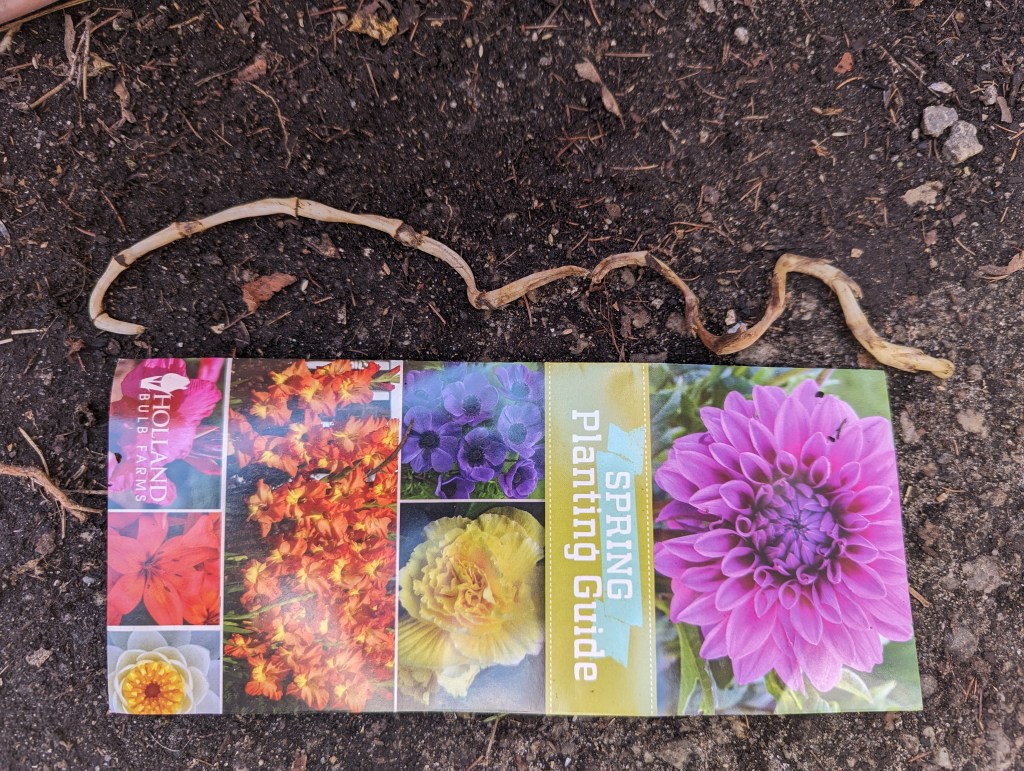
1. Dahlia X pinnata, mixed dinnerplate dahlias were purchased with the credit that I got for the ‘Red King Humbert’ Canna that were both virused and not ‘Red King Humbert’. I again fail to be impressed. I canned any that were not completely desiccated, but do not expect any survivors. I should have requested a total refund after the primary purchase.

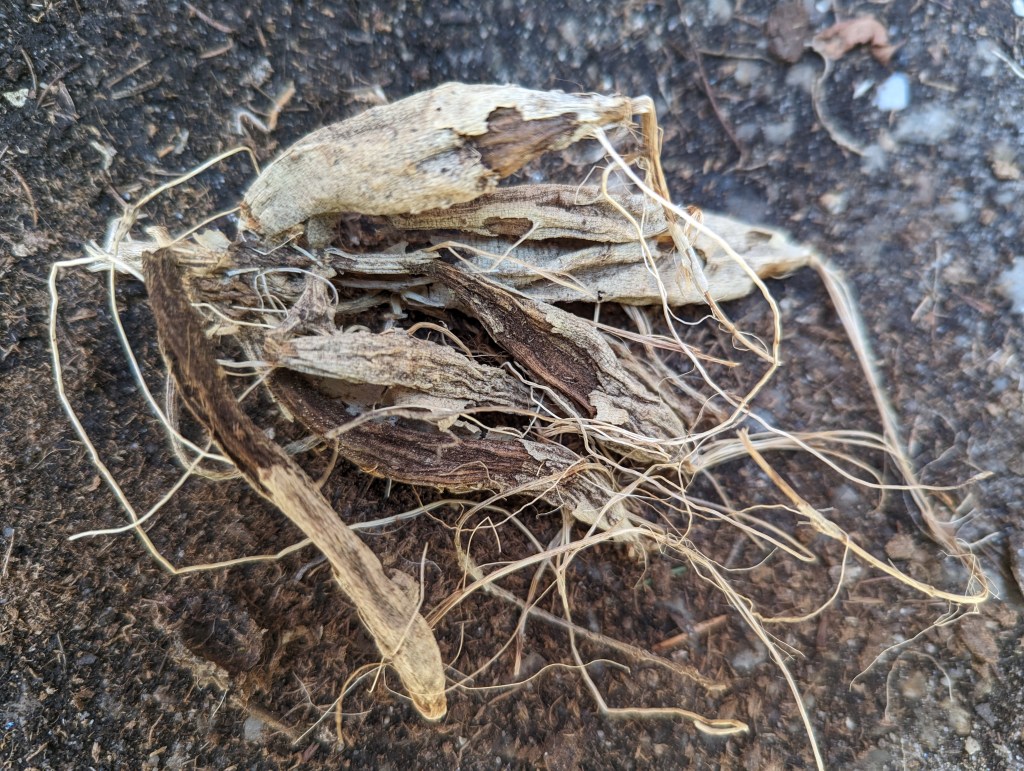
2. Dahlia X pinnata, mixed dinnerplate dahlias grow through spring for summer bloom. I figured that, even without enough time to bloom, they could grow enough to replenish their resources before winter dormancy, and then grow and bloom next year. I assumed that tubers that are available this late had been refrigerated to maintain their dormancy. Instead, a few diligently tried to grow earlier, but could not escape from their packaging.

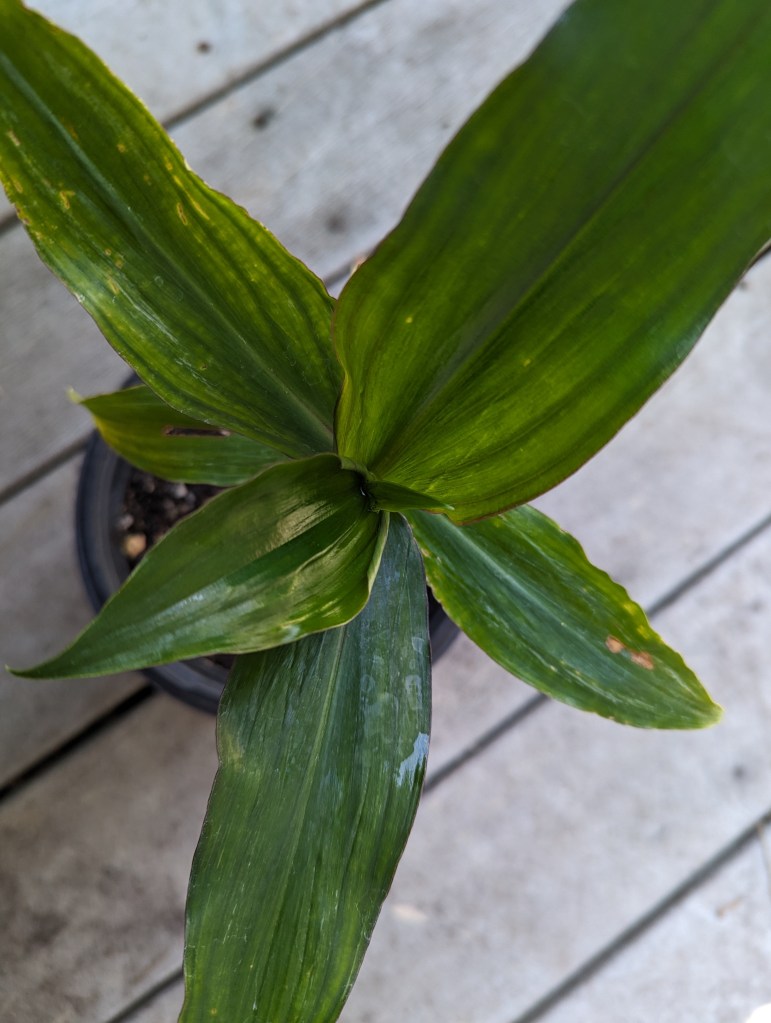
3. Zingiber officinale, ginger is not so limited by seasons. It grows whenever it wants to.

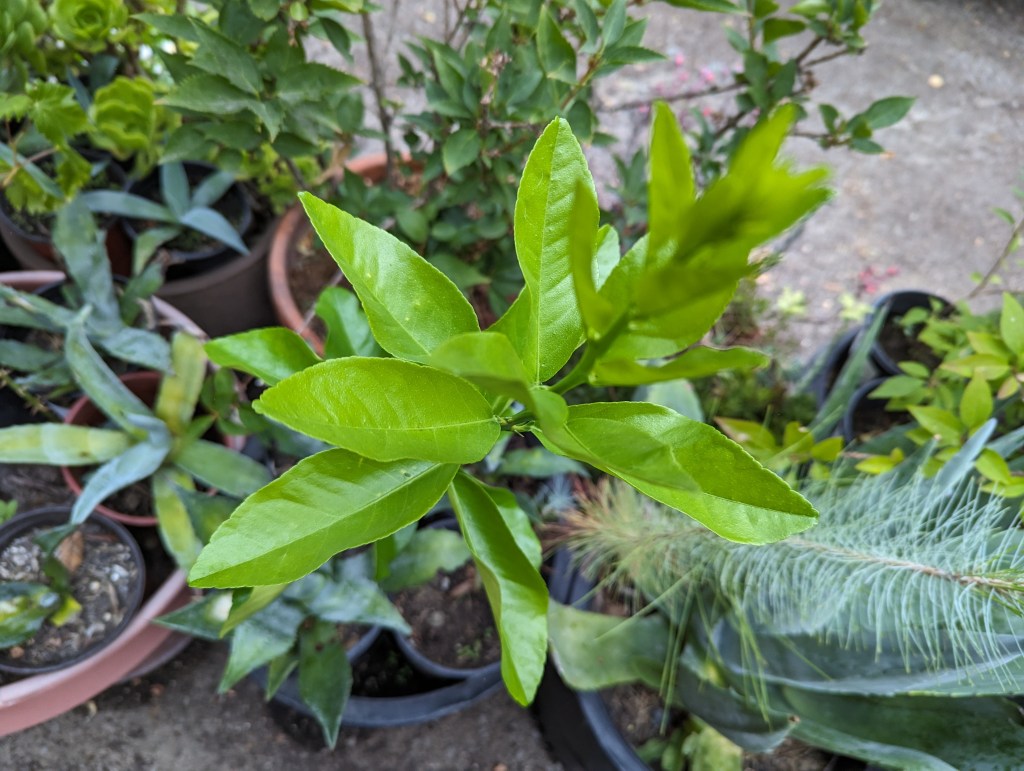
4. Citrus X latifolia ‘Bearss’, Persian lime grew from the stump of a tree that I pulled out of a neighbor’s yard. It cost nothing, but will eventually be worth more than I paid for it.

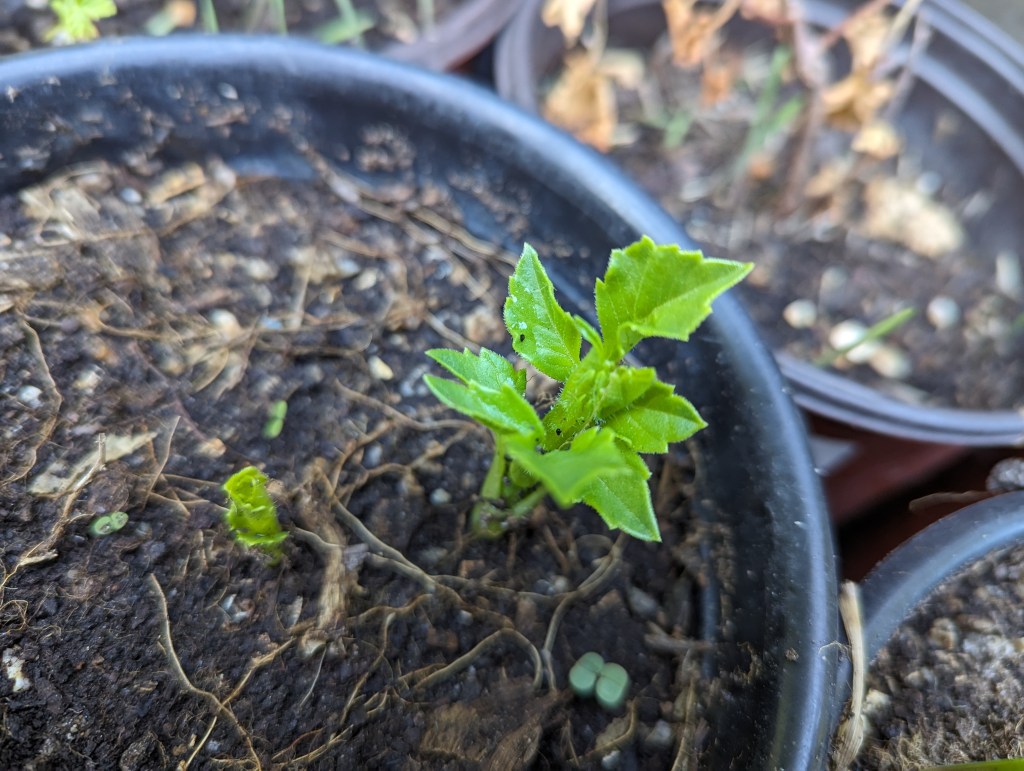
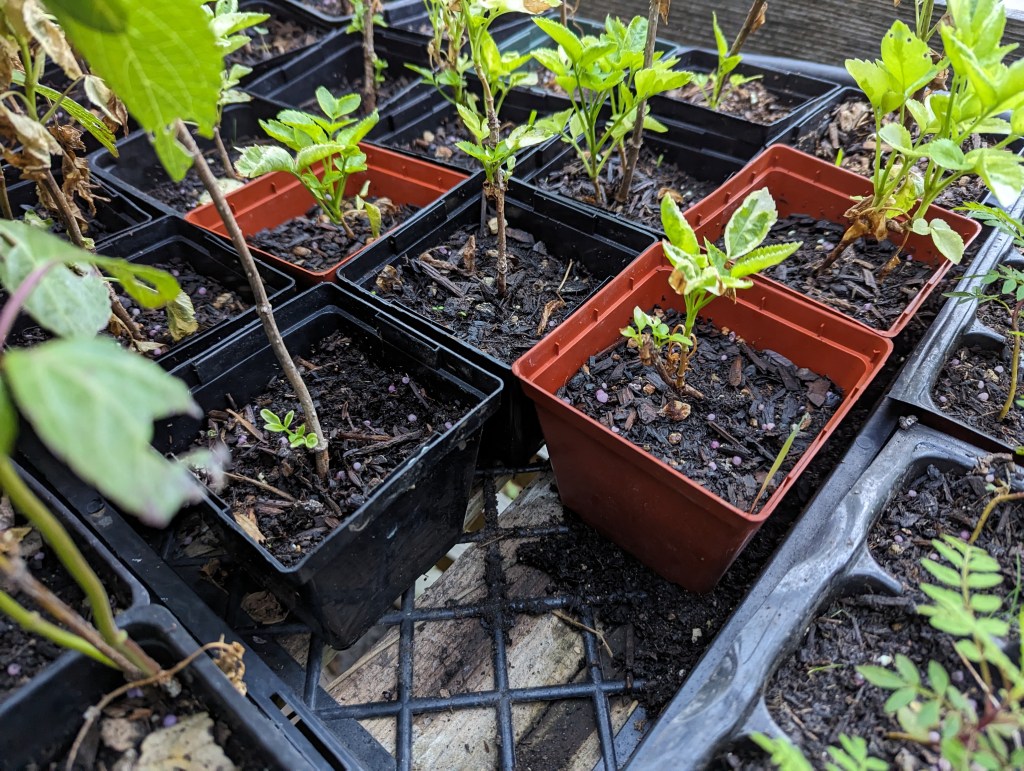
5. Sambucus nigra ‘Madonna’, European black elderberry likewise cost nothing, and for a while, it looked as such. It provided sixteen copies though, and the first found a home.

6. Rhody is irrelevant to the previous five of these six, but everyone wants to see Rhody.

This is the link for Six on Saturday, for anyone else who would like to participate: https://thepropagatorblog.wordpress.com/2017/09/18/six-on-saturday-a-participant-guide/

Horridculture – Nice Trellis

Heard but not seen it through the grapevine.

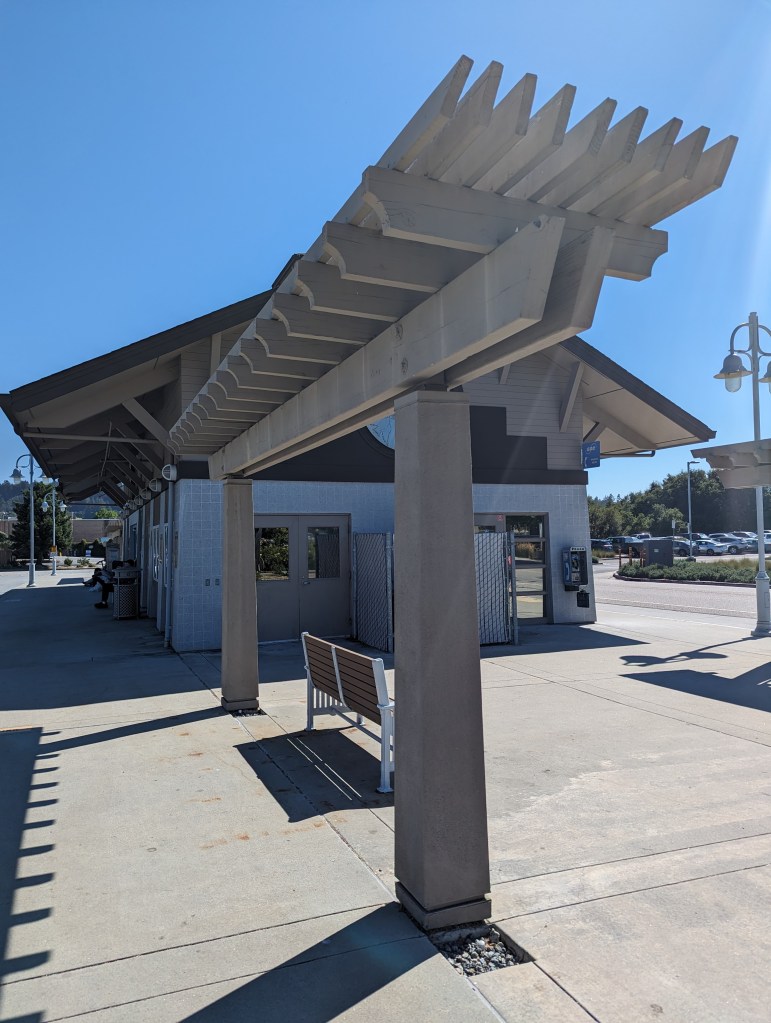
This is such a visually appealing trellis at the Cavallaro Transit Center in Scotts Valley. It is so very visually appealing that no one wanted to obscure its visual appeal with the two vines that it was intended to support. It is very well designed also. Neat holes were left in the concrete pavement for the two vines that were not planted. Capped terminuses of the irrigation system that was intended to provide the absent vines with water are ready for installation of emitters. The otherwise exposed ground was covered neatly with gravel. It is all well executed.

All that is missing is the vines.

Realistically though, who notices? It really is a visually appealing trellis. Vines would be visually appealing also, but would also clutter the landscape more. Besides, they would require more maintenance, and the surrounding landscape already lacks adequate maintenance. The empty trellis actually seems to be an asset to the otherwise bland landscape. I only notice the absence of vines because I am a horticulturist.

I will say that I am not so keen on such structures in other landscapes. Most are overbuilt. Many such as this are within situations that trees would be more practical.

I have encountered several similar structures, but with single pillars, in downtown Livermore. Grapevines climbed them to form inadequately and improperly pruned grape trees to flank the main streets. Honeylocusts that flanked the same streets would have been more than adequate alone. The grapevines were intended to commemorate the formerly vast regional vineyard that were replaced by equally vast tracts of home, but their shabbiness was too insulting.

Landscape designers and architects should realize that vines require significant specialized maintenance. Architects rely on landscape designers to select vines for their trellises. Landscape designers rely on gardeners to maintain their vines.

What a splendid hole in the concrete!

White Perennial Pea

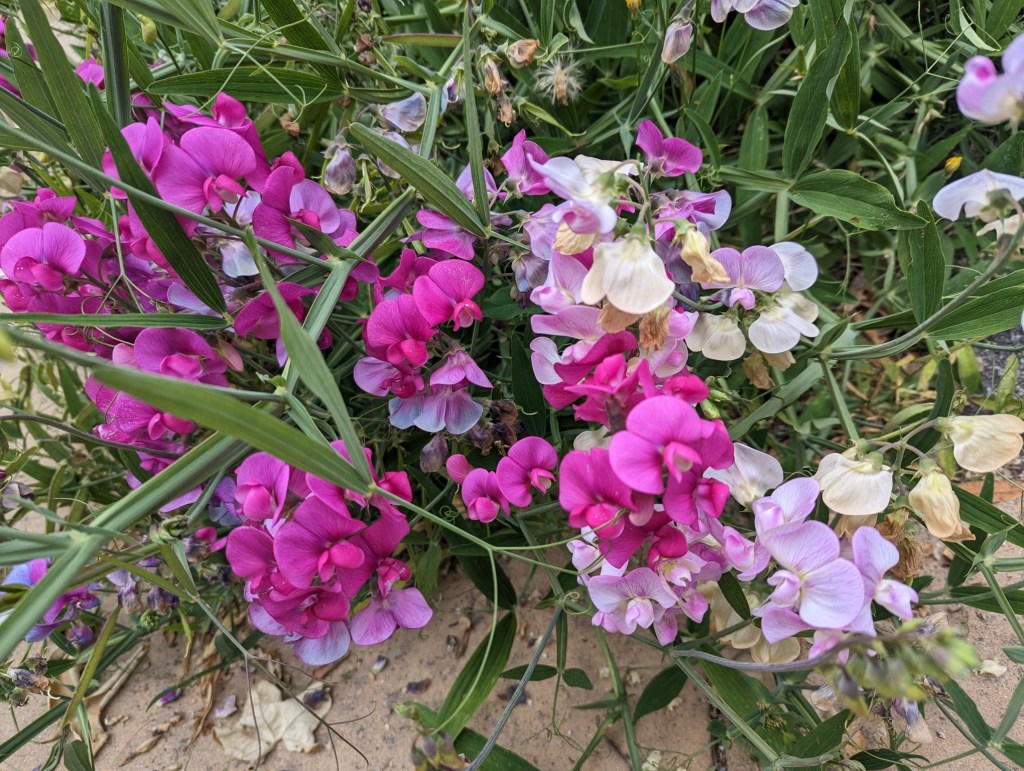
Bright pink, light pink, but no white here.

Perennial pea is a somewhat naturalized exotic species here. It may not be aggressively invasive enough to be classified as a weed though. However, I would classify some of it that I can not exterminate from at least one of our landscapes as weeds. Once it gets established, it is very persistent.

It seems to prefer to grow on roadsides or fences. It is not so common in flat open spaces. It rarely gets big enough to overwhelm or otherwise damage other vegetation. It dies back when the weather gets too inhospitable for it. It regenerates when the weather is more comfortable.

Perennial pea certainly is pretty. Almost all of it blooms with typical bright purplish pink flowers. A few uncommon specimens bloom with variations of lighter pink. White is even more rare. Only red is more rare than white. I have never seen it growing wild. Although seed for red perennial pea is available, I know of no one who has actually grown it.

Therefore, until someone can prove that red actually exists amongst naturalized perennial pea, white is the rarest color. It might also be my favorite. I can not decide. White is my favorite color. Also, perennial pea happens to look great in white. Yet, the familiar obnoxiously bright pink is so typical of the species. It is the color that everyone expects to see growing wild on local roadsides.

I was fortunate to find a specimen at work that blooms white. I grew a few copies of it, but kept them canned. I shared some with colleagues in other regions until only two remained here. I was not too alarmed when these last two were overwhelmed by other vegetation and died, since I thought I could grow more copies from the original specimen. That was until I found that the original was destroyed by excavation to mitigate erosion from last winter!

I believe that another specimen that blooms white lives nearby. Its particular colony has already finished bloom for the season. I must therefore wait for it to resume bloom, or look for errant bloom through winter. After getting so involved with it, perhaps it really will be my favorite.

Muskogee?

This is not a color I had expected.

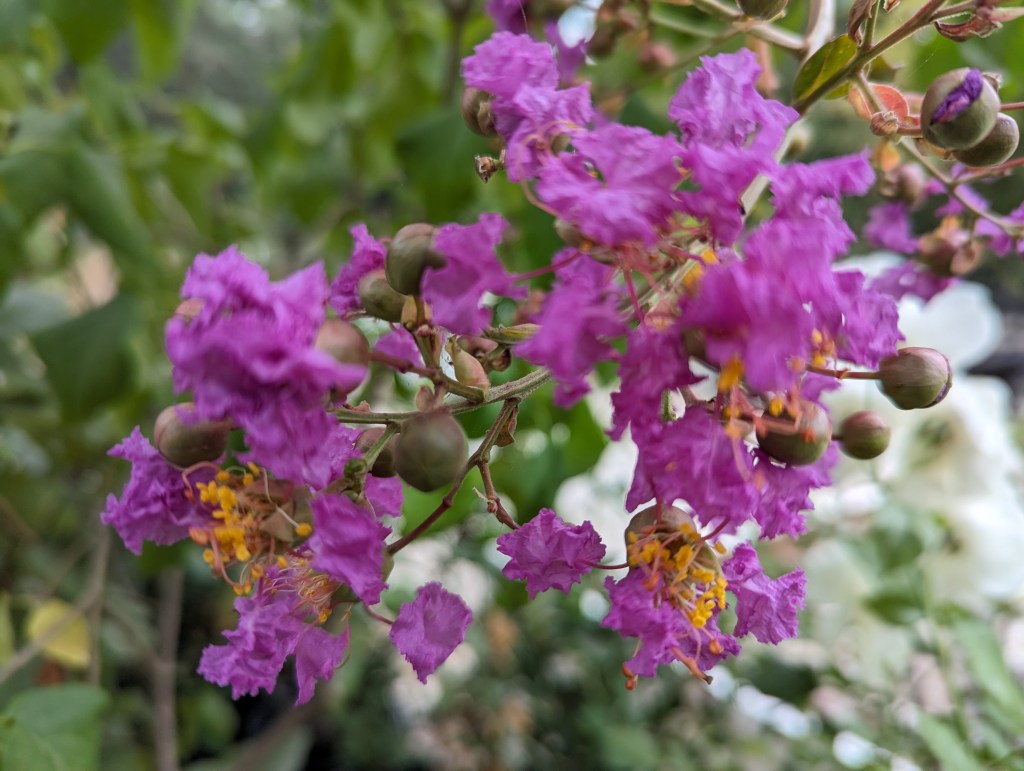
What cultivar of crape myrtle is this?! I realize that this picture is blurred, which is why it was not included within my ‘Six on Saturday’ post this morning, but it is the floral color that is important. Is it purplish pink, or just bright pink? What cultivar does it look like?

I expected this crape myrtle to be one of the old reliable cultivars because it was a gift from the Arbor Day Foundation. The primary old reliable cultivar that blooms with similar floral color is ‘Muskogee’. Yet, even with my limited ability to discern color quality, this floral color seems to be a bit too rich. I sort of expect a milder and scarcely purplish pink from ‘Muskogee’. I suppose that the Arbor Day Foundation can also grow modern cultivars like the rest of us.

Regardless of its identity, it is certainly pretty. The foliar color during autumn is comparable to that of old reliable cultivars. Because neighbors like it, I grew a few copies for them. We would like to incorporate more crape myrtles into the landscapes at work. The abundance of spring color from other species there mostly finishes prior to the summer bloom of crape myrtle. Summer is the busiest season, so justifies flashy color.

Embarrassingly though, I am still none too keen on crape myrtle. If I did not typically spell ‘crape’ as ‘crepe’, I would prefer to spell it without the ‘e’ at the end. I was impressed with it when I first started to notice it through the 1980s, but then realized that it was becoming too common through the 1990s. That was long after Brent told me that it had become too common throughout the Los Angeles region significantly earlier. Decades later, it is still too much of a good thing.

Six on Saturday: ?

So much of the vegetation that we work with is unidentified. I know most of the species, but not all. Cultivars and varieties are more difficult to distinguish. There are too many! I am completely unfamiliar with some of the most modern of them. Of my Six this week, only the second might be a cultivar. The others are likely straight species. I am uncertain of their identities though, because I am unfamiliar with them. Actually, the third is not as labeled! That is because I thought it was something else until it foliated last spring. This Six on Saturday is about six questions of identity. I hope that someone might identify #1 for me.

1. Opuntia littoralis, prickly pear came from the Bat Cave in Los Angeles County, where a few other species of this genus are also native. I do not know if I identified it correctly.

2. Eucalyptus gunnii, cider gum looks just like this while young, but so does the juvenile foliage of a few other species. Adult foliage and associated bloom is easier to distinguish.

3. Vitus californica, California grape looks nothing like this. I brought this here from the roadside while it was defoliated for winter. I hoped that it would be the California grape.

4. Ulmus parvifolia, Chinese elm was common when I was a kid. Only modern cultivars and hybrids are available nowadays. If this is common Chinese elm, it is now quite rare.

5. Populus alba, silver poplar is what I believe this might be. I grew it from cutting from a tree that I met in San Jose a few years ago. I am unfamiliar with this particular species.

6. Acer circinatum, vine maple should be a gratifying alternative for another ubiquitous Japanese maple. I could be disappointed if this is merely another passe Japanese maple.

This is the link for Six on Saturday, for anyone else who would like to participate: https://thepropagatorblog.wordpress.com/2017/09/18/six-on-saturday-a-participant-guide

Hurricane Hillary

Rain is expected to start about six or seven in the morning in Brent’s neighborhood.

California is so big that, from here, it extends about four hundred miles to the north and four hundred and fifty miles to the south. That is where San Diego County is, in the southwestern corner of California. It is so far away that the weather there can be very different from here, as it is now that Hurricane Hillary is coming up from the coast of Baja California. While a tropical storm warning is in effect there, typical summer weather is expected here.

Typical summer weather here is dry. Not much rain happens after early spring. Not much happens prior to late autumn. Every few years, a single odd and brief thunderstorm goes through in the middle of summer, leaving no evidence of its downpours two days later. If it were to happen this year, it should happen about now, like it is in Southern California.

Forecasts for the weather in Southern California are quite unpleasant. A friend in Palm Springs was filling sandbags today. Floods and mudslides are expected through a huge area. This is the first tropical storm in California since 1939, and the first ever tropical storm warning. Yet, we will miss it completely here.

I try to remind myself that the historically torrential rain of last winter was no fun. Flooding was a mess, and caused significant damage even in this neighborhood. Nonetheless, even native Californians can start to miss rain late in summer.

Brent will likely telephone at about seven in the morning. It might be raining by that time. It should finish by noon on Monday. Realistically, it will not rain for long. The problem is that rain will be torrential, especially at high elevations out in the deserts, which do not absorb much water. It will be interesting to see what transpires.

Is Phlox A Weed?

Phlox seems to be right at home here now.

When it first appeared within one of the landscapes at work four years or so ago, I was not sure of its identity. I guessed that it was some sort of phlox only because it resembled phlox that I had seen in mail order catalogs many years earlier. No one knows where it came from or how it got there. Some sort of Campanula arrived within the same garden only a year or so earlier, and worked out nicely. Therefore, we decided to give what we thought was phlox the same chance to perform.

It performed splendidly! It matured rather quickly, and happened to fill a prominently bare spot. Its bloom is pure white and delightfully fragrant. After getting cut back for winter, it regenerated for spring.

Then, we started noticing that it had seeded while no one noticed. A few seedlings were appearing nearby. At first, we were pleased, but also concerned that it could become invasive. I pulled a few seedlings up from where I did not want them to grow, and was able to relocate them to better situations, but was not sure if I should have done so.

Fortunately, like the campanula, this new plox seemed to want to cooperate. After getting established, it did not seem to be invasive.

Now, it is one of my two favorite perennials within its particular landscape, along with Gladiolus papilio. I am confident that we can allow it to bloom fully without dispersing too many seed afterward. I am very fond of the strikingly bright white bloom and its rich fragrance. It would be great if more feral species developed as assets to their gardens instead of as weeds. I am pleased that we gave this phlox its chance to perform, and will likely relocate more to other landscapes.

Six on Saturday: A Series Of Unfortunate Events

Horticulture can be so challenging. Some challenges are very frustrating. Some are quite infuriating. Some of the worst would be likewise if they were not so weirdly silly. Really, plants naturally present certain innate challenges. So do their pathogens. People though, are special. Their behavior is not completely innate. They should know better than to do so much of what they do. So many of their mistakes are so creatively inane. Yet, some of the most egregiously silly are not even mistakes according to their personal perceptions. Goodness, merely attempting to explain these unfortunate events becomes challenging! Realistically, it is not as bad as it seems. I swatted lily of the Nile buds when I was a kid. The neighbor with the ‘machine’ is unaware of the naked ladies, and will remain as such.

1. Lagerstroemia indica, crepe myrtle is susceptible to powdery mildew. These new specimens of a modern cultivar are more resistant than most but apparently not enough.

2. Hydrangea macrophylla, bigleaf hydrangea changes floral color according to soil pH. However, white is always white. We relocated this white specimen to the White Garden.

3. Canna ‘Cleopatra’ is the strangest Canna here, with mixed red and yellow bloom, and mixed green and bronze foliage. Unfortunately, it shared its virus with the other Canna.

4. Agapanthus orientalis, lily of the Nile is a reliably resilient and neat perennial for the edges of walkways, where kids unfortunately enjoy swatting their floral buds with sticks.

5. Agave americana, century plant is so prolific with pups that they are sneaking out the drainage holes! We can them to give them away, but no one wants them. They are nasty!

6. Amaryllis belladonna, naked lady was about to bloom as profusely as it does annually when this was maneuvered into position, back and forth, back and forth, back and forth.

This is the link for Six on Saturday, for anyone else who would like to participate: https://thepropagatorblog.wordpress.com/2017/09/18/six-on-saturday-a-participant-guide/

Horridculture – Too Busy To Write

The little windmill palm is not so little anymore, and deserves a space in the garden.

It will be a while before I resume blogging as I formerly did, if I resume. I may just continue to share my gardening column here. The situation is too complicated to explain, and too irrelevant to bother with.

So, if I do resume, I hope to write more about my own home garden. I have been negligent in that regard for a few reasons. Firstly, my home garden is not very interesting. I am a nurseryman, so am in the habit of giving away anything in the garden as it becomes appealing. Secondly, my uninteresting home garden has been neglected for too long. I have been too busy with several other obligations that I still can not keep up with. Thirdly, the landscapes where I work part time are far more interesting than what I would grow in my own uninteresting and neglected home garden if it were not so uninteresting and neglected.

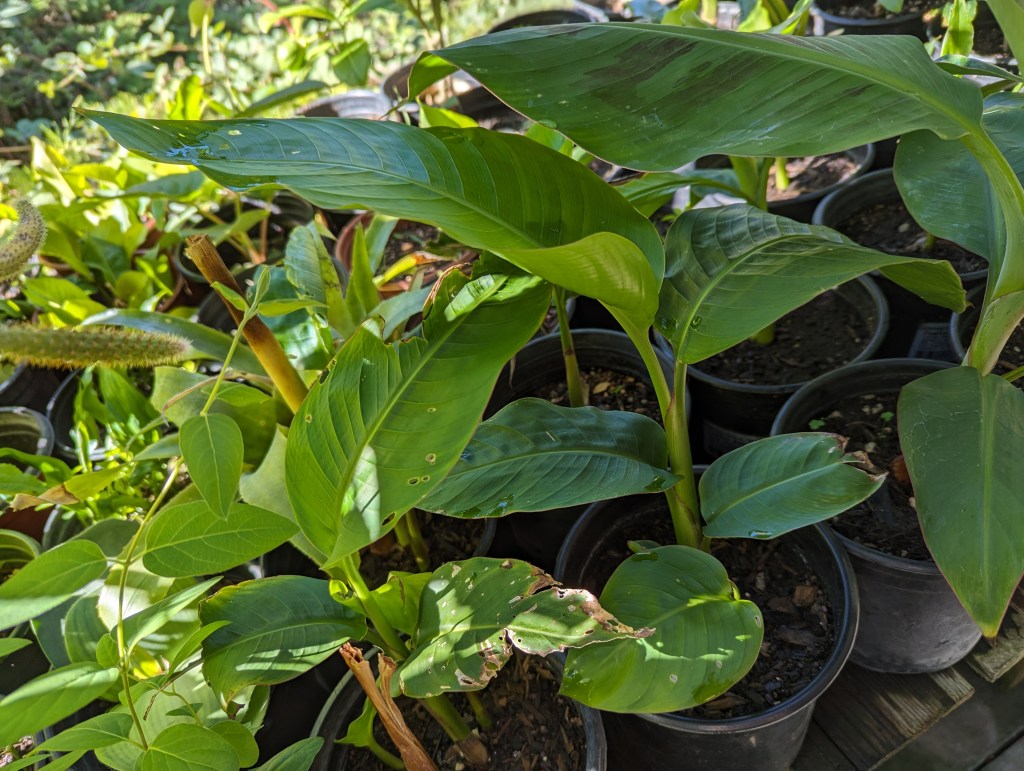
In the future, I hope to renovate my home garden and make it more interesting. Seriously, all those interesting species that I bring back but do not give away from Southern California, the Pacific Northwest and even the Phoenix region deserve a comfortable garden in which they can perform as they should. Seven cultivars of banana grow fast! It would be unhealthy for them to remain canned much longer.

Because I know nothing about landscape design, I do not know how to renovate my home garden, but can figure it out as I proceed, even if most of it is as simple and utilitarian as it had formerly been. Palms do not conform to a simply utilitarian garden, so do not leave me much choice about incorporating them as aesthetic elements. It should be fun. At least that is what I continually try to remind myself.

Oem

This picture is from my Six on Saturday post for this morning.

Its name is so minimalistic and blunt in the language of the indigenous people who are most familiar with it. Others might know it as the giant highland banana. It seems to me that most of us who find it to be of interest know it by its botanical name of Musa ingens.

Oem, or giant highland banana, or Musa ingens, is native to the tropical montane forests of New Guinea. Because it is endemic to high elevations, it does not perform so well in the sort of continually hot and humid tropical climates that most other species of banana enjoy. It actually prefers the weather to get somewhat cool at night. Therefore, it is more likely to be happier here than in Southern Florida, Hawaii or coastal San Diego County.

Not many horticultural enthusiasts grow it anyway. Actually, I do not know of anyone else who grows it. I have seen only a few comments online regarding germination of the very rare and expensive seed. Furthermore, no one seems to be successful with germination. This particular species does not generate pups as readily as other species of the genus, and even if it did, there are no established specimens from which to procure such pups.

However, its lack of popularity is less likely a result of its rarity and difficulty to propagate, but more likely because of its massive scale. In the wild, oem can grow to a hundred feet tall! It may be limited to about half as tall within cultivation, and without competition from other tall trees, but that is nonetheless a potential to get fifty feet tall! That may not seem like much relative to other trees, particularly the redwoods that are more than a hundred feet tall, with potential to get three times as tall. The concern is that banana trees are not actually trees. They are merely humongous perennials. Their pseudostems do not grow for very long before they begin to deteriorate and collapse. Pseudostems of smaller sorts may complete the process within two years, but are easily removed afterwards. Fifty foot tall pseudostems take significantly more time to mature and then deteriorate, but are not so easily removed from refined landscapes. Arborists can not climb them to cut them into sections. They require space to fall harmlessly. They are full of water, so are very heavy.

Now, oem lives here. It is merely a single dinky pup, but grows very efficiently. I have no idea of what to do with it. It can likely stay canned through this year, but may need to go into the ground next year. Not only does it need plenty of space, but it does not conform to the styles of any of the landscapes here. Consequently, it might eventually inhabit my home garden, regardless of its awkward appearance. This will likely get very interesting.