Six on Saturday: the Wrath of Grapes

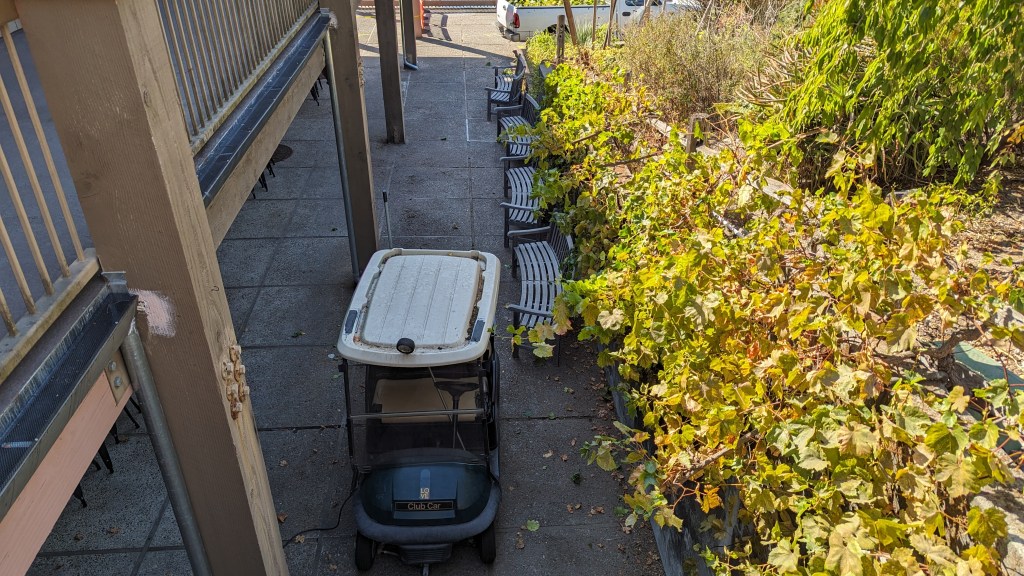
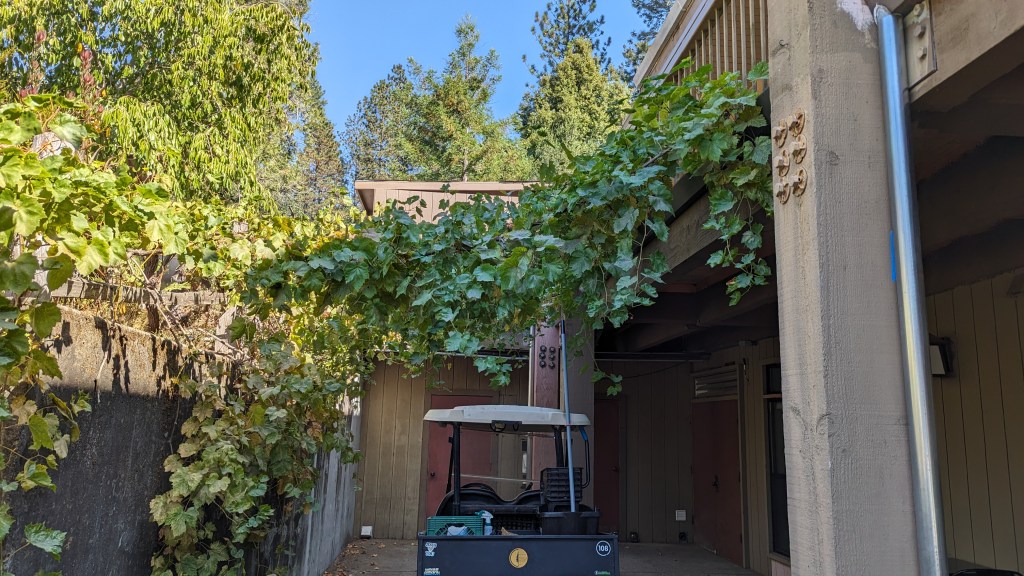
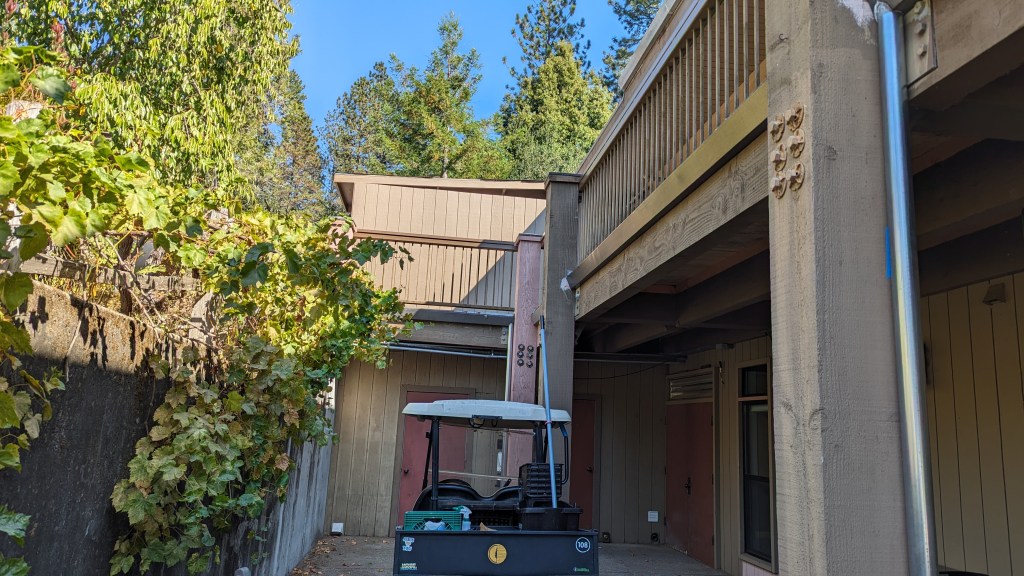
This was no easy project. I started pruning and maintaining this formerly neglected and very overgrown grapevine several years ago. It had been installed a few years earlier, but had never been pruned. Its first pruning may have generated two pickup loads of debris, as well as a dozen or so layers, which were shared with neighbors. I then trained its new growth to span horizontally over a lower deck, from a rail fence that it originally grew on to a parallel banister about twelve feet away. It was like a pergola without a pergola. The problem is that the banister needs to be painted. After training the grapevines for years, I needed to remove them.

1. It looks simpler than it was. Vines needed to grow long enough to reach from the fence to the banister. They then needed to be pulled across with a cord and tied onto balusters.

2. Between the fence and the banister, the vines required no support. They were pruned annually while dormant for winter, and groomed for summer, so did not get very heavy.

3. The vines sagged somewhat, but had plenty of space downstairs to do so. The banister to the left is horizontal. The fence to the right slopes downward away from this vantage.

4. From the same vantage without the spanning vines, the scenery is now very different. Old vines will get pruned for neater confinement to the fence while dormant this winter.

5. The vines formerly shaded the pavement downstairs nicely. This area gets quite warm without shade during summer. That was partly why we wanted these vines to span here.

6. As severe as this pruning was, it will be a bit more severe while the vines are dormant this winter. Vines will not extend so far outward, and may not cascade downward either.

This is the link for Six on Saturday, for anyone else who would like to participate: https://thepropagatorblog.wordpress.com/2017/09/18/six-on-saturday-a-participant-guide/

Palm Reading

This is painful to look at.

Not everyone is interested in horticulture. Most enjoy other interests, such as sports, arts or cooking. They may know no more about horticulture than a garden enthusiast knows about the Seattle SeaMonkeys. Unfortunately though, some are not as aware of their lack of horticultural expertise as garden enthusiasts are aware of their lack of proficiency with other interests.

For example, I can grow just about any fruit or vegetable or perhaps grain that can grow here, but if I can not eat some of them fresh, I am aware that I do not know how to cook them. I must rely on someone who does know how. Yet, someone who is proficient with cooking is likely to believe that it is practical to grow fresh vegetables on a kitchen windowsill because it seems so easy on television gardening shows.

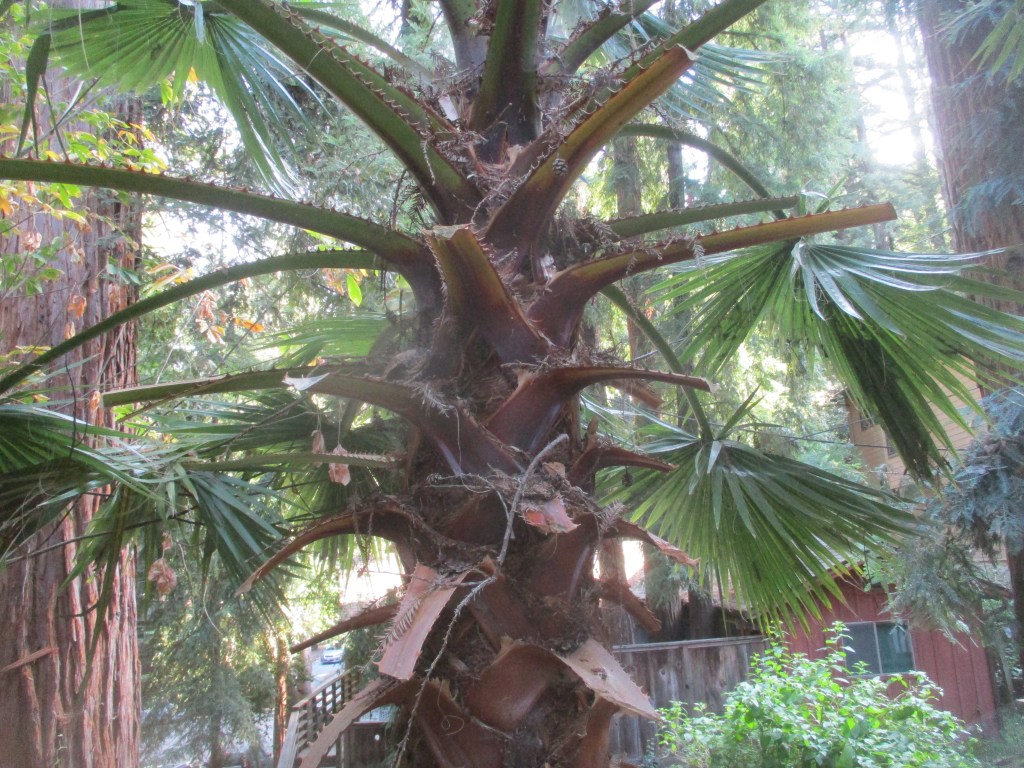
Someone I work with found this young Mexican fan palm to be bothersomely obtrusive to a confined situation within which he was working. He is, incidentally, a sports enthusiast. Naturally, as a sports enthusiast, he believed that he was qualified to groom the obtrusive fronds from the trunk of the Mexican fan palm. This was the result.

The necrotic but nonetheless harmless and relatively pliable foliage was removed to expose the wickedly sharp teeth of its rigid petioles, which extended outwardly in all directions from the trunk. This could have been quite dangerous for anyone who might have been so unfortunate as to bump into it. The thorns curve inward, to maximize damage to victims who pull back, which is, of course, the natural response to an encounter with such thorns. It was painful to merely look at! It seriously reminded me that I am no expert on sports or cooking. I pruned the petioles cleanly back to the main trunk.

2 / 3

This is the wimpiest of the sixteen survivors.

Sixteen of the twenty-four mixed dinnerplate dahlias that I did not expect favorable performance from have survived! Only eight have failed to exhibit any indication of viability. Two thirds are growing. Only one third is not.

I am impressed. I expected less than half to survive. They arrived in embarrassingly shabby condition. I canned all of them regardless, including several that were obviously completely necrotic. I wanted to give all a chance to survive before discarding any. Those that were obviously completely necrotic are among those that have not exhibited any indication of viability. However, I am not ready to discard any yet. Although I still believe that some are completely necrotic, a few others may not be. As I dump any that do not at least try to grow prior to winter, I will inspect their tubers for any indication of viability, no matter how minor.

The survivors will be pampered. I want them to generate as much vegetative growth prior to frost as possible. That should sustain the regeneration of their wimpy tubers so that they will be ready to grow next spring. I am aware that even the healthiest may not survive winter if their tubers are inadequate.

Those that survive through winter are likely to grow and bloom as if they were always healthy. In a few years, they could be ready for division. Perhaps after a few more years, I will regret the procurement of so many.

In this mild climate, it is not necessary to dig dahlia tubers for winter. We only do so because it has become a habit, and perhaps to relocate the dahlias.

Dinnerplate dahlias are certainly not my favorite type, but they are more appropriate to the landscapes that they will inhabit than they types that I would prefer.

This is the most vigorous of the sixteen survivors.

Six on Saturday: Naked or White or Dead

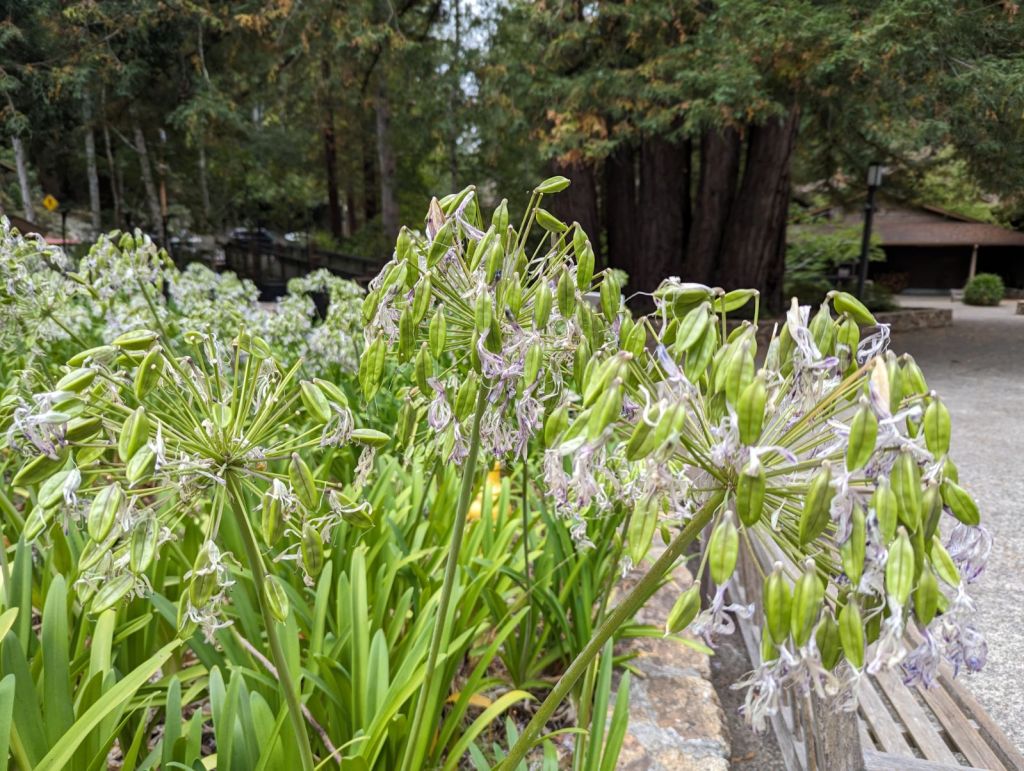
Three of these six are naked ladies, Amaryllis belladonna. Two of these six bloom white. Three of these six need deadheading. Three qualify as two categories. Two qualify as one category. One qualifies as none. None qualify as three. Alternatively, three are lily of the Nile, Agapanthus orientalis, two bloom blue, two bloom pink, and three do not yet need deadheading.

1. 1 – dead but neither naked nor white. Lily of the Nile, with few exceptions, is in need of deadheading at this time of year. All but one cloned colony here are mixed blue varieties.

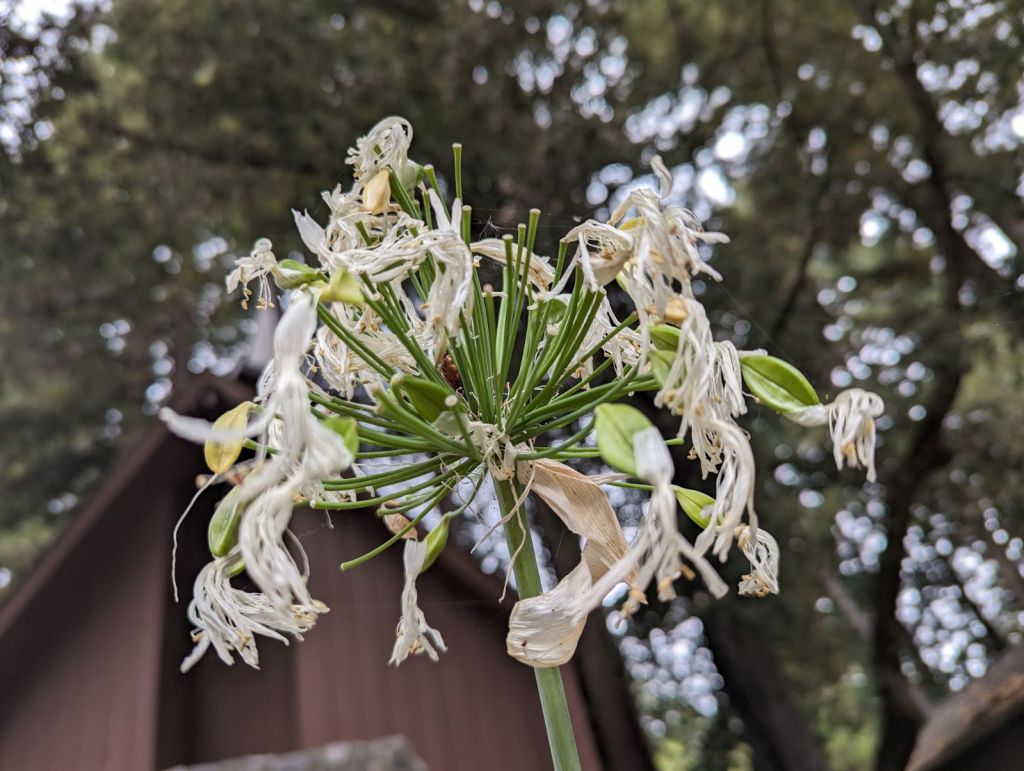
2. 2 – white and dead but not naked. This deteriorating floral truss is one of merely three that bloomed within the one cloned colony of white lily of the Nile. This colony is young.

3. 0 – not naked, white or dead. This is the lowest score because bloom deteriorates a bit slower in the shade. Blue lily of the Nile could score no more than a single point anyway.

4. 2 – naked and dead but not white. This is the common naturalized naked lady here. It bloomed annoyingly bright pink, but is not the brightest pink. It should be deadheaded.

5. 1 – naked but neither white nor dead. This is a brighter pink naked lady that is not yet in need of deadheading because it blooms a bit later. It has slightly stouter brown stems.

6. 2 – naked and white but not dead. This is merely one of three highest scores, but is my favorite! I had wanted a white version for a long time. It seems to bloom late like #5, but blooms on a green stalk like #4. Its primary bulb already generated four pups, so will be relocated to a more prominent location to develop as a colony. It will not bloom much if split annually, but will multiply most efficiently by such technique. I want more of them!

This is the link for Six on Saturday, for anyone else who would like to participate: https://thepropagatorblog.wordpress.com/2017/09/18/six-on-saturday-a-participant-guide/

Early Rain

This could be a sequel to ‘Late Summer’ from yesterday. It happened shortly afterward. It certainly adds another interesting component to this already odd year of weather. Although not impossible, rain at this time of year is rare. Almost all of the rain here occurs between late autumn and early spring.

Weirdly, if rain does occur during summer, it typically does so around the fifteenth of August. Seriously, it is very prompt about that schedule. It typically either begins or ends on that same date.

The first flash of lightning of the storm that started the CZU Fire occurred at 11:59 p.m. on the night of the fifteenth of August of 2020, less than a minute prior to midnight. So, although the storm occurred during the early morning of the sixteenth, it technically began on the night of the fifteenth.

This brief rain shower was minimal, but by local standards, it was surprising. I sort of wanted it to continue long enough to dampen and contain the dust of summer. It might have done so briefly, but could not prevent the dust from becoming dusty again shortly afterward. The aroma of damp asphalt dissipated even before that happened. It was fun while it lasted.

Perhaps this rain shower will be the last of this unusually autumnish weather. Warm and dry summery weather typically resumes immediately after brief rain showers that happen during the middle of August. Technically, for a summer rain shower, it is only half a month late. So far, the forecast does not suggest that pattern, but it has been wrong before, even here. I doubt that there will be any more rain prior to autumn, even if cool autumnish weather resumes until then. But of course, I have been wrong more often than weather forecasts.

Late Summer

Such weather is early this year.

The change of seasons can be boring here. It might seem as if this climate experiences only two seasons. Summer is the primary season, which seems to extend through most of the year, with what seems to be merely a few days of another brief secondary season which is not summer. Perhaps this brief secondary season is autumn, winter and spring, but that is too many letters and big words for such a small season.

That is how those who are familiar with more distinct seasons might perceive seasons of this innately mild climate. Those of us who are familiar with this climate perceive it quite differently. We are aware of the four seasons, regardless of how mundane the transitions between them seem to be. In fact, some might contend that, if autumn seems to be minimal here, it is merely because this climate experiences a fifth season between summer and autumn, which is known as Indian summer.

Indian summer is an extension of summery weather into autumn, and sometimes occurs after summer seems to have begun to succumb to autumn. It does not happen annually, and does not seem to be happening this year, but certainly could. It is sneaky that way.

For now though, autumn seems to be sneaking into the last two weeks of summer, much like Indian summer sometimes sneaks into autumn. Nights have been interestingly cool. Low clouds have been lingering a bit longer after sunrise than they typically do.

However, vegetation that enjoys warmth does not seem to be decelerating for cooler weather. Perhaps such vegetation knows more than the rest of us do about what to expect. Perhaps it is merely more responsive to photoperiod than weather. Regardless, I get the impression that this is how late summer typically is within other climates.

Six on Saturday: Frosty Forecast

Frost is not a problem here. The several species here that are not resilient to frost are the problem. The first of my Six actually has no problem with frost, but does have a problem with starting too late to finish prior to frost next winter. The second also has no problem with frost, but does not want to bloom as weather cools into autumn. The other four are from a frostless region of Los Angeles. I neglected to protect them from the earliest frost last winter because I did not expect it. Their recovery was slow through mild spring and summer weather. They are now growing vigorously rather than decelerating for autumn. This increases their vulnerability to frost next winter.

1. Dahlia X pinnata, mixed dinnerplate dahlias are starting to grow, with only a third of their season left. I described the delay last week. Only three of two dozen survived so far.

2. Gardenia jasminoides, gardenia seems to be healthy, and generated a typical number of floral buds, but is now shedding such floral buds, likely in response to cooling nights.

3. Solandra maxima, cup of gold vine was new here when it got frosted last winter, then grew slowly through atypically cool weather last spring, and is now growing like a weed!

4. Platycerium bifurcatum, staghorn fern also waited a bit too long to start growing like this. It could eventually enjoy rain and humidity through winter, but not even mild frost.

5. Heliconia psittacorum, parakeet flower has done well since last winter. I brought nine rhizomes from Los Angeles. They are still a bit too small to survive average frost though.

6. Dichorisandra thyrsiflora, blue ginger is likely even more vulnerable to frost. Most of its cuttings did not survive last winter. I am impressed and pleased with the six that did.

This is the link for Six on Saturday, for anyone else who would like to participate: https://thepropagatorblog.wordpress.com/2017/09/18/six-on-saturday-a-participant-guide/

Horridculture – Nature

Nature is dysfunctional.

Horticulture is unnatural. It involves unnatural manipulation of exotic species that were unnaturally imported from all over the World. It provides unnatural irrigation and unnatural chemical fertilizers and amendments. It involves unnatural containment of many plants within unnatural synthetic media within unnatural plastic cans or other containers. It strives to eliminate much of what is natural, such as pathogens and competition. It is ironic that so many believe that a simple but totally unnatural houseplant brings a bit of nature into their particular environment.

Nature, although quite natural, is dysfunctional. It is messy. It is dirty. It is tragic. It is potentially dangerous. It is overrated. Realistically, it is a hot mess of problems. Somehow though, it seems to be appealing.

That is why so many of us strive to incorporate more nature into our respective lifestyles by very unnatural means. We crave a sort of idealized version of what we believe nature should be. It would likely be easier and more efficient to accept such attempts as unnatural, and exclude what nature might try to contribute.

Some are quite happy to live and work in high rise homes and offices with minimal natural influence. They still breathe natural air, and appreciate natural sunlight and the stabilizing effects of natural gravity, but shelter themselves from what is most bothersome about nature outside, such as weather, wildlife and most insects.

This unfortunate old coast live oak is an exemplary victim of nature. It grew here naturally for two centuries or so. It obtained all that it needed from the natural soil, air and weather. It survived natural insect infestations, and long ago, may have survived natural forest fires. Ultimately though, perhaps in conjunction with a bit of natural wind and natural fungal organisms associated with decay, it succumbed to natural gravity.

This old oak finally succumbed to the same nature that it exploited for centuries.

Jungle Update

New foliage is already beginning to replace older foliage.

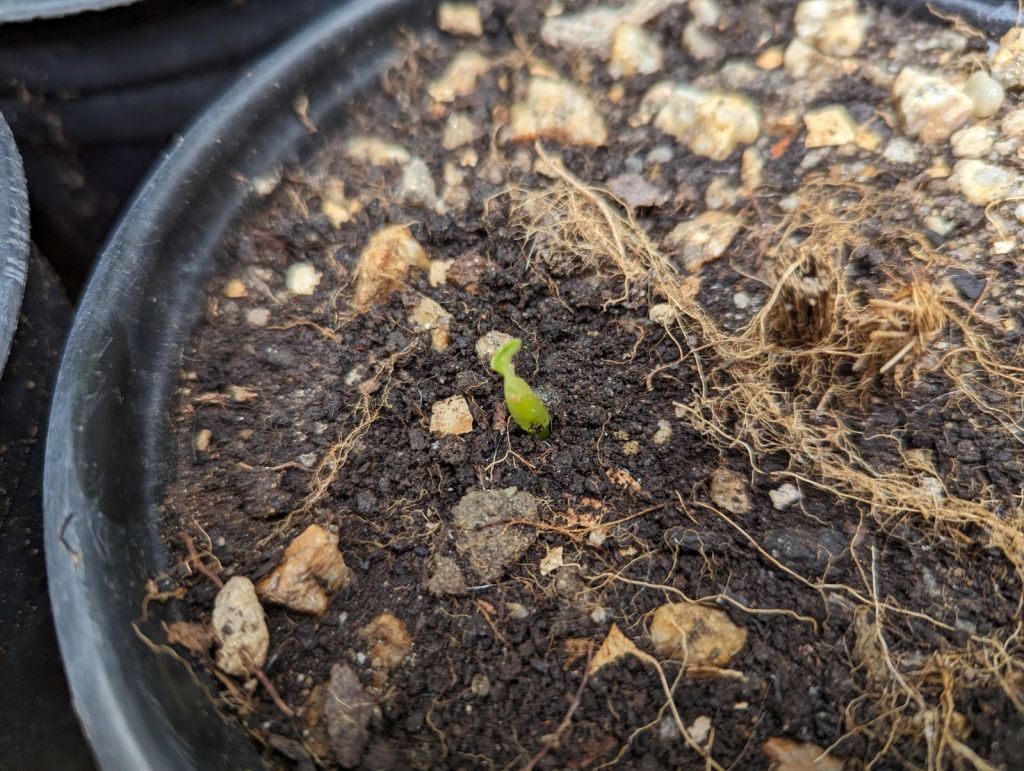
Strelitzia nicolai, giant bird of Paradise is growing! It is not much growth, but it is more than expected. The specimens were heeled in about a month ago to begin the slow process of recovery from division and relocation. Within the damp soil of their temporary situation, they should begin to develop rudimentary roots without actually dispersing them too remotely prior to another relocation to their more permanent landscape after the beginning of the rainy season of autumn. In other words, the roots should begin to grow, but not grow too much.

They can grow more when they get settled within their permanent situation. This is done in two separate processes because the specimens are easier to monitor and irrigate prior to rain within the confined space where they are heeled in. Besides, they would not be very appealing within their permanent landscapes until they begin to recover. Once they begin to recover, they should grow faster, so will not be too unappealing for too long, and even if they are, it will be through winter, when fewer people are here to notice.

Anyway, while they begin the process of recovery and development of rudimentary roots, foliar growth is expected to be minimal. It was expected to stagnate for at least a month or so, and then to slowly resume as the minimal foliage that was retained deteriorates. Like root growth, foliar growth should accelerate after final relocation.

Instead, foliar growth is already accelerating, perhaps as a response to removal of so much of the original foliage while foliage is necessary to sustain rudimentary root growth. Perhaps these specimens actually are as healthy and as vigorous as they seem to be. Although this fresh new foliar growth will be more vulnerable to frost through winter, it is nonetheless gratifyingly encouraging.

Proud Land

Proud Land

‘La France’, in 1867, was the first hybrid tea rose to be hybridized. ‘Peace’, in 1945, was the first hybrid tea rose to be classified as a hybrid tea rose. Yes, it took quite a while.

Afterward, hybrid tea roses became very popular both for the cut flower industry and home gardens from the 1950s through the 1980s. Because of their single bold flowers that bloom on tall and sturdy stems from spring until autumn, they are still very popular as florist flowers. However, more florific floribunda roses became more popular for home gardens through the 1990s. Since the turn of the Century, all sorts of simpler shrubby roses, such as carpet roses, became more popular than all of the other types of roses. Hybrid tea roses and other types that produce comparably exemplary cut flowers require more specialized maintenance than most people want to commit to. Sadly, hybrid tea roses are now passe.

‘Proud Land’ was the first of the hybrid tea roses that I installed into my mother’s new rose garden in 1984. It came from Jackson & Perkins while Jackson & Perkins was still based out of Medford in Oregon. Unfortunately, it suckered so profusely during its first season that I wrote a letter to Jackson & Perkins about it. Jackson & Perkins generously replaced it for the following season. Also, my mother, who was unaware of the replacement, purchased another replacement. As if that were not enough, I managed to abscise all sucker and burl growth from the original while it was dormant for the following winter. So, three individual specimens of ‘Proud Land’ bloomed at the center of the small rose garden for 1985, which was the year that I graduated high school.

Technically, hybrid tea roses are at their best after about five years, but should probably be replaced before about ten years. ‘Proud Land’ continued to perform though, with no indication of deterioration, until I finally removed them in 2020. They live here now. I grew a few ungrafted copies from their pruning scraps. I should properly graft a few copies also. Realistically, there is no need to retire the originals.

Some consider hybrid tea roses to be passe. I consider them to be historical.