Horridculture – Artificial Turf

P00212
Artificial seems to be no worse than the real deal.

There is no right answer. For lawns that is. Horticulturists who actually enjoy horticulture . . . and are not specialists of turf . . . loath them. (Yes, there are horticulturists who are specialists of turf.) We merely tolerate them because they are so useful for so many applications, and they do happen to be very visually appealing within or in the foreground of interesting landscapes.

After all, lawns are the vegetative green carpeting that covers otherwise bare ground without interfering with the flow of pedestrian traffic. For parks and other public paces, it is better than other types of ground cover, mulch, pavement or lowly mown naturalized weeds that would grow if nothing else were there to occupy the space. For athletic fields, there are no alternatives.

They are just so unnatural. Most plants in our garden are selected for their natural attributes, and because they appreciate our respective climates and soils. Lawns must be mown regularly because they would otherwise get too deep and sloppy. They must be irrigated very regularly and generously because they can not survive on seasonal rainfall or even moderate irrigation.

In fact, lawns are so unnatural that, to many horticulturists, they are no worse than artificial turf. All the plasticky infrastructure of elaborate irrigation systems, all the chemical pesticides and fertilizers, all the fuel consumed by mowers, all the water, and all the labor that goes into the maintenance of lawns is no closer to nature than artificial turf is. Strange but strangely true.

Artificial turf is no fun either. The plasticky texture is so blatant and unavoidable. Although it needs only minimal maintenance and last for many years, it does not last forever, and slowly deteriorates like carpet. Once replaced with more of the same sort of plasticky artificial turf, it must be disposed of like so much other used up plastic that the World should be using less of.

Scrub Palm

P00209
104 seeds for the price of 10!

Of all the strange seed I brought back from Oklahoma, none were from the scrub palm, Sabal minor, that is endemic to McCurtain County in the very southeaster corner of Oklahoma. I did not get to that region.

Sabal minor is nothing special to those who are acquainted with it. However, a variety that was selected from those in McCurtain County, which is known simply as Sabal minor ‘McCurtain’, is becoming increasingly popular in climates where winter weather is too cold for other palms. It is sufficiently resilient to frost to survive in New England and Canada.

I just wanted it because it is from Oklahoma.

Since I did not collect any wild seed, I had considered purchasing a seedling of the ‘McCurtain’ variety online. It would have been rather expensive for a single seedling. I was pleased to find seed of the same variety that were significantly less expensive for several seed. I know they grow slowly, but I am in no hurry. I gain bragging rights as soon as the seed germinate.

Unexpectedly, I was even more pleased to find seed on eBay that were collected from trees that were collected from the wild in McCurtain County, but were not of the ‘McCurtain’ variety! I know that seems trivial, and maybe even less desirable to those who want a garden variety, but for me, such seed are more closely related to those I would have collected if I had been there.

For $6.00, I expected delivery of a packet of ten seed of Sabal minor from McCurtain County. I could not pass on a deal like that. Instead, I got the 104 seed in the picture above! That is ten times what I was expecting. They will grow into more scrub palms than my garden can accommodate. RAD!

Water Feature


Brent Green, my colleague down south, is a renowned landscape designer of the Los Angeles region. His landscapes are spectacular. You might not know it by all the mean things I say about Brent and his work, but his clients know otherwise. He makes the outdoor spaces around their urban homes seem like they are in serene and thickly forested jungles hundreds of miles away.

Well, . . . generally. That is what the landscapes look like to me. Some clients prefer simpler or sunnier gardens. What I often perceive as superfluous vegetation is there to obscure adjacent residences or other undesirable scenery. It is not as if neighboring residences are unsightly. They are obscured merely to provide privacy and a sense of solitude in a very crowded region.

While designing a landscape that is appealing to the senses, it is helpful to eliminate or at least obscure some of what is unappealing. This applies to more than visual aspects. In some urban areas, ambient noise is a constant reminder of all the hectic chaos just outside of a landscape. Dense vegetation that obscures undesirable scenery muffles some or even most, but not all of it.

That is why Brent incorporates what he refers to as ‘water features’ into many of his landscapes. The noise of the splashing water partly obscures ambient noise. Because Brent’s home is just a block from the Santa Monica Freeway, there are four small ‘water features’ in the gardens! That is excessive of course, and more than what larger landscapes in quieter neighborhoods get.

These water features seem silly to me. I find the mostly monotonous noise of the Santa Monica Freeway to be no more annoying than the sound of the splashing water. I might appreciate water features more if they did my laundry. However, there are a few water features where I work, even though ambient noise from the outside is rather minimal. There are no freeways.

Fern Dell Creek in the video above flows into the confluence where Bean Creek flows into Zayante Creek. Zayante Creek Flows into the San Lorenzo River just a short distance away. Two Redwood Springs Creeks, which are comparable to Fern Dell Creek, flow into Bean Creek just a short distance upstream from the confluence with Zayante Creek. All this water can get noisy.

Fern Dell Creek and the two Redwood Springs Creeks are short streams that flow from springs, so their minimal flow does not fluctuate much at all, even after heavy rain. Bean Creek and Zayante Creek have more substantial watersheds and carry significantly more water, especially after heavy or prolonged rain. Unlike Brent’s water features, we can not turn any of them off.

Six on Saturday: Perks


It has been two year since I started my ‘part-time temporary’ job. I work here only three days weekly, and only if I can. That is what makes it ‘part-time’. After two years, I am not sure if it still qualifies as ‘temporary’. I do intend to eventually return to my normal work. However, this part-time temporary job will not be easy to leave. It is so excellent in so many ways! Besides, there are so many incredible perks!

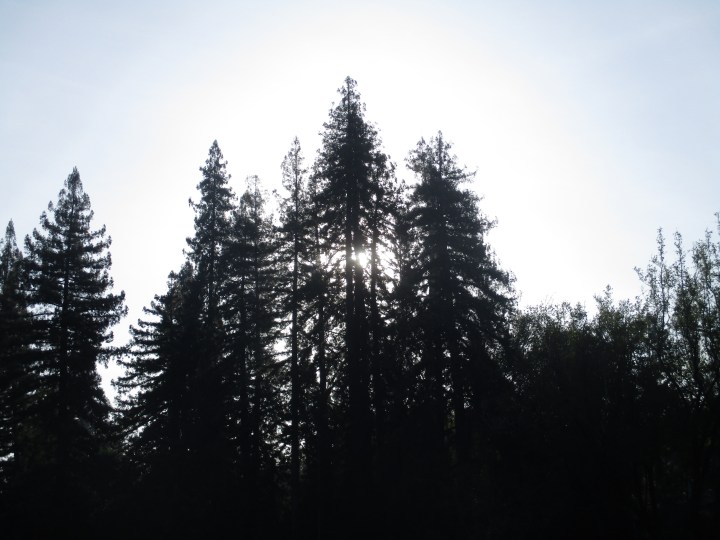
1. Scenery is incredible. The redwoods in the background to the left are on the other side of a deep ravine where Bean Creek flows through. All the scenery here could not fit into one picture.P00208-1

2. Native flora in the forest is incredible. Most of what is in the landscapes is native flora too, or garden varieties of native flora. There is no transition between the forests and the landscapes.P00208-2

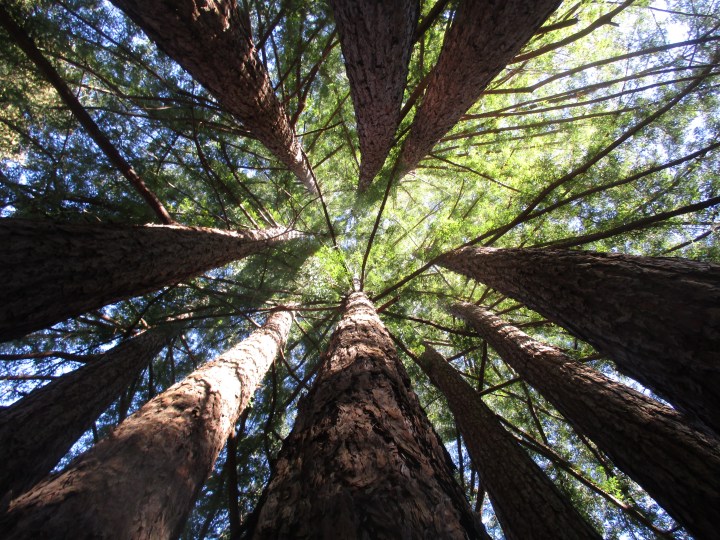
3. Redwoods are incredible. What is not obvious in the picture is that these grand wild redwoods with wild bay laurels to the right, are just beyond the landscaped perimeter of a vast lawn.P00208-3

4. Exotic flora is incredible too, but compatible with native flora. The simple landscapes are both horticulturally correct and environmentally sensible. Daffodil naturalize but are not invasive.P00208-4

5. Redwoods are incredible. Did I mention that yet? They really are grand. That is why they are the Official State Tree of California. They never get old, but they live for thousands of years.P00208-5

6. The crew that I work with is the most incredible perk. I should write an article about them. Oh, I already did. I have no picture of them. There are too many for Six on Saturday anyway.P81010

This is the link for Six on Saturday, for anyone else who would like to participate:

https://thepropagatorblog.wordpress.com/2017/09/18/six-on-saturday-a-participant-guide/


Horridculture – Skipping Ahead

January 17 is as far as I have gotten with the backlog of articles from blogs that I follow. I am now two and a half weeks behind schedule. Articles are old news by the time I see them. I have been trying to catch up for weeks or maybe months, but have instead been getting farther behind. The video above is from the article I posted back then. There has been no rain since then.

The video also looks like what I feel I am doing to that backlog of article while I skip ahead to current articles beginning with February 5. Flushing them like this seems so negligent. I feel so obligated to read the articles of blogs that I follow. That is why I follow them. However, if I do not flush the backlog, articles that are current now will also be old news by the time I get them.

I have been reading some of these blogs so regularly that those who write them sometimes include notes to me within the contexts of their articles. Sometimes they comment on something that they think I would be particularly interested in. Sometimes they ask questions that they think I might know the answers to, or just ask for a bit of advice. Flushing all that is just wrong.

I have no choice. I have no time for it all. I write my brief gardening articles for more small newspapers than I can keep track of. I still work at a part-time and temporary job that involves maintenance of landscapes and small scale arboriculture because I can not bear to leave! I intend to eventually return to work at nursery production, but have been too overworked to do so.

Meanwhile, former clients and clients of former clients continue to contact me in need of services that I can no longer provide. I can find no one to refer them to for comparable services. All of the best arborists and horticulturists are retired, deceased or too busy (compensating for the lack of those of us who are retired or deceased) to accommodate more work. It is saddening.

On top of all that, I am supposed to be canning cedar trees and plugging sycamore cuttings for street trees in Los Angeles a few years from now . . . and maybe working in the garden?!?!

SODS?

P00202
Flagging (sudden necrosis of distal foliage) used to indicate the beginning of a sudden end.

Phytophthora ramorum is the pathogen that initiates Sudden Oak Death Syndrome, which is known simply as SODS. Monarthrum scutellare, which are known as ambrosia beetles, and are the secondary pathogen associated with the syndrome, infest and kill tanoak and coast live oak that are infested with Phytophthora ramorum, about as quickly as symptoms are observable.

Hypoxylon thouarsianum is a tertiary but merely opportunistic pathogen associated with the syndrome. By the time it gets established within galleries excavated by the ambrosia beetles, the affected trees are almost completely necrotic. That first ‘S’ in SODS is there for a reason. It is an efficient process. Death occurs too suddenly for affected trees to drop any of their leaves!

Each of these three pathogens causes distinct symptoms. Phytophthora ramorum causes trees to bleed black tar-like fluid, and causes tanoak to exhibit foliar flagging as seen in the picture above. Monarthrum scutellare expels finely textured frass from the galleries it excavates into infected trees. Hypoxylon thouarsianum produces distinct small and black fruiting structures.

In the past several years though, Sudden Oak Death Syndrome has often been a bit less than sudden. There are a few tanoaks here that have exhibited foliar flagging for a few consecutive years, without any bleeding from the trunk or infestation by ambrosia beetle. Some coast live oaks have exhibited minor bleeding, but likewise have not become infested by ambrosia beetle.

It is as if the ambrosia beetle is no longer proliferating as it had been. It actually seems to be rather scarce. Trees that were expected to succumb suddenly to ambrosia beetle infestation are succumbing slower to infestation of only Phytophthora ramorum. The process is variable, so might have potential to kill some trees rather suddenly, but may take a few years to kill others.

Could some possibly survive?

Vegetation Exploitation

P00201K
If a tree falls in a forest, . . . it might get recycled.

Exploitation of the vegetation here involves so much more than collecting seed from old bloom, dividing overgrown perennials, or processing cuttings from pruning scraps. It goes beyond the reassignment of lauristinus, canna, African iris, deodar cedar and perhaps others that I wrote about earlier. Flowers, fruits, vegetables and herbs are mundanely obvious assets.

The landscapes and forests here do so much more than beautify and provide shade. When a tree falls in a forest (and makes a sound even if no one is there to hear it), it might get processed into firewood or lumber. Some of the foliage that falls in landscaped areas goes to the compost piles. Even debris that gets removed from here gets recycled as greenwaste somewhere else.

Of course, we can not recycle, reuse, repurpose or otherwise make use of everything that falls out of the forests and landscapes. There is simply too much of it. That is how the ecosystems of the forests recycle naturally. Exotic plants in the landscapes do not know that they are exotic, and try to behave as they would within their respective ecosystems. Nature is innately messy.

Trees that fall across hiking trails merely get cleared from the trails, and left to decompose out in the forests. Even potentially useful firs, pines and redwoods can not be extracted feasibly. Their big trunks might remain where they fell, with only a section cut out where a trail goes through. The forests do not mind. Their ecosystems know how to make use of such biomass too.

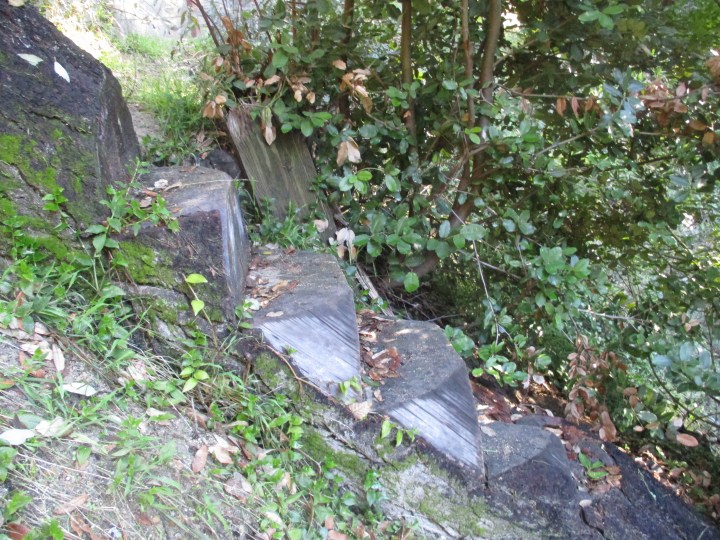
This fallen fir tree happened to land squarely on top of a few steps in a trail that is cut into a steep hillside. As you can see, it was not exactly cleared completely from the trail, but instead replaced the steps that it destroyed.

Six on Saturday: Sow The Seed Of Doubt


There is serious doubt about the practicality of collecting seed that there is no use for. We have no time to sow any of it properly. Some gets tossed unceremoniously where it would be nice if just a bit of it grows and blooms next year. Such folly is better than the guilt of simply discarding all that seed, even if we get more of something we do not want.

1. Echinacea purpurea – coneflower – Deadheading left me with all these dead heads of seed. I have no use for all this seed; but a neighbor is happy to scatter it where some might grow.P91228-1

2. Lychnis coronaria – campion – This is all the seed I got, in a small pill can. Most was left in the landscapes to disperse where already established. This bit of seed goes to new territory.P91228-2

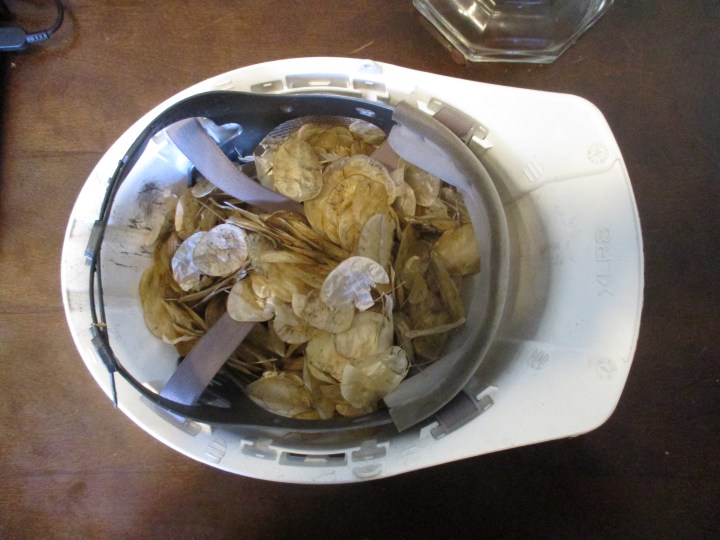
3. Lunaria annua – honesty – This is just one of several hard hat fulls. Seed already sifted down, leaving empty frass on top. I lack an article to link to, so linked to someone else’s article.P91228-3

4. Aesculus californica – California buckeye – This is what is starting to grow from four big seeds that I could not bear to discard earlier. Now there will be four baby trees without a plan.P91228-4

5. Pelargonium X hortorum – zonal geranium – Not all of this folly is from seed. Scrap from pruning geraniums got processed into more cuttings than we will plug. These are the last few.P91228-5

6. Rhus lanceolata? – prairie sumac? – There is even more folly in canning feral seedlings of this unidentified sumac. It is about as sensible as canning the four sweetgum to the upper right.P91228-6

This is the link for Six on Saturday, for anyone else who would like to participate:

https://thepropagatorblog.wordpress.com/2017/09/18/six-on-saturday-a-participant-guide/

Horridculture – Memorials

P00129
Where are the cedars?

Memorial trees should be remembered . . . right? I mean, they are planted to remind us of . . . something, or . . . someone. They are typically trees that will be around for a long time, because that is how important memories should be. Redwoods and oaks work nicely. Most get outfitted with plaques to remind everyone what the trees are there to remind us of.

The old original Sunnyvale City Hall was landscaped with several memorial trees. The most prominent were redwoods and cedars that were mostly planted as memorials for local veterans of various wars. They accumulated over several decades and a few wars. City Hall seemed like a good place for them, where they could live for a long time without bother.

However, City Hall was demolished in the late 1970s, and replaced with a big mall. The larger redwood and cedar memorial trees were salvaged as the mall was build around them. Most survived in a courtyard within the mall until the mall was partly demolished less than a quarter of a century later.

All the cedar memorial trees died in captivity within the courtyard. One redwood that was not a memorial was added to the group where one of the cedars had been.

Prior to the demolition of the courtyard, I needed to inspect the surviving redwood to prescribe procedures for safe removal of surface pavement, and subsequent protection of exposed roots. The surviving trees were in remarkably good health. I was not very worried about them. What bothered me though, was the complete disregard for their historical significance.

The plaques associated with these memorial trees were a mess. It was as if they all had been collected from their respective trees, mixed up, and replaced randomly. Plaques from the absent cedars were assigned to some of the surviving redwoods. The oldest and grandest memorial redwood was labeled as the redwood that was added last, after the mall was built, and therefore of no historical significance. The smallest and youngest redwood that really was added after the mall was built was labeled as one of the more historically significant memorial trees.

I believe that all the trees that were there during my inspection are still quite healthy within a small park space that was built around them. I have no idea if they are outfitted with plaques. If they are, I can not help but doubt the accuracy of those plaques.

How To Train Your Dragon

P00126
Oh, the SHAME!

Dragon fruit became a fad on the West Coast of California several years ago. They were probably always around, but had previously been rare. When they inexplicably became more popular and common, they did so down south first. Their popularity migrated to the Santa Clara Valley a few years later. It probably will not go much farther though, since they are sensitive to frost.

It is not a bad fad, at least relative to most others. Dragon fruit, which is also known as pitaya, happens to be very easy to grow and propagate from cuttings. Locally, it needs protection from frost, but no more than other popular tropical plants. It recovers from minor frost damage quite efficiently. Pruning scraps can be rooted and grown as more plants for friends and neighbors.

Of course, I dislike fads. I am not impressed by the fruit, which might lack flavor here where the weather does not stay very warm for very long through summer. The coarsely textured and floppy plants get big and awkward. They are typically trained up onto posts from which their many long stems hang downward. An exemplary specimen looks like Sigmund the Sea Monster.

This is a fad that I dislike enough to try. I want to see what all the fuss is about. These are my first two cuttings. The upper cutting produces red fruit. The lower cutting that is marked with a line to show how deeply it should be stuck into rooting medium produces white fruit. I will know where to release them into the landscape by the time they develop roots and start to grow.

This is so shameful that I probably should not be writing about it. Oh well. Perhaps in a few months, I will write about how these cuttings will be progressing.