Self Grafted Redwoods

P91019K

Redwoods are some of the most stable trees in the World. That is partly why they can survive for thousands of years. In my entire career, I have seen very few fall, and only inspected two.

Of those two, one fell because it had co-dominant leaders (double trunks) that fell away from each other, which is more of a structural deficiency than instability. The other, which I suspect was demonically possessed, was a small tree less than thirty feet tall, that literally jumped up out of the ground and onto an Astro van more than ten feet away. A rare ‘updraft’ was blamed.

Almost all of the redwoods here regenerated from the stumps and roots of much older trees that were clear cut harvested a century or so ago. Most of those that grew back with structurally deficient co-dominant leaders are very effectively sheltered from wind by their collective groves. Roots systems are very extensive, very resilient, and too intermeshed to be compromised.

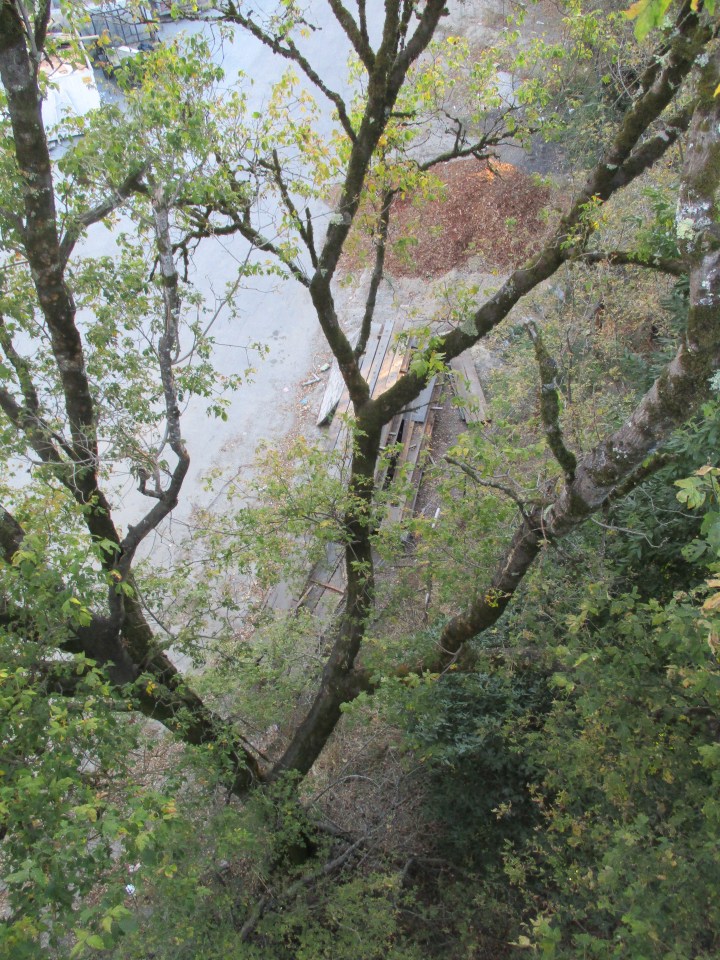
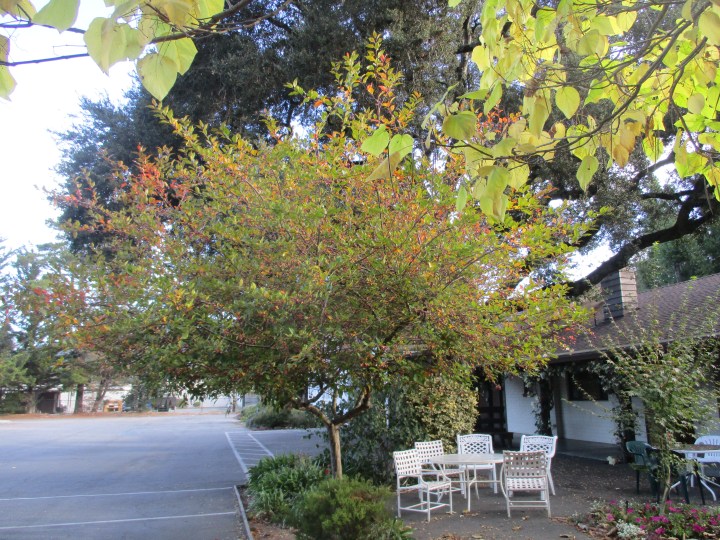
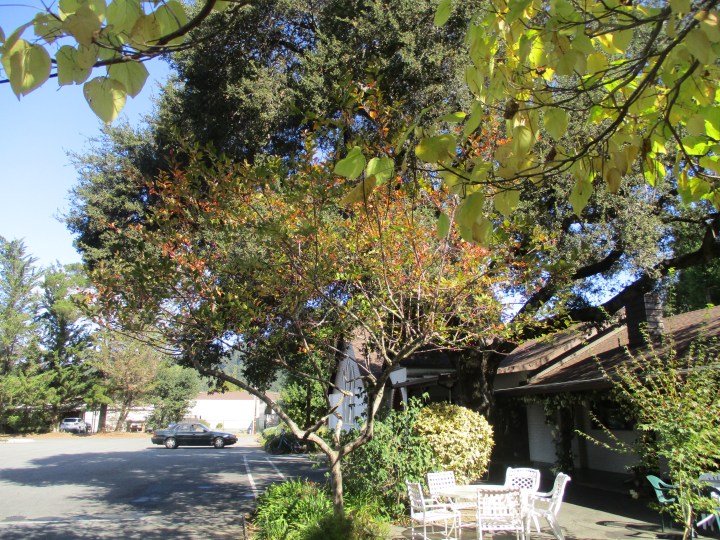
The trunks in the picture above are part of a group of several trunks that grew from roots of the same tree that has been gone for a very long time. All are genetically identical and very close together. They happen to be a focal point of a big patio at a conference center. Although the structural integrity of the limbs within their canopy is a concern, the stability of the trunks is not.

Regardless, I am impressed by their attempt to improve stability. The limb that extends horizontally across the middle of this picture from the trunk to the left grafted to the trunk to the right! It is not uncommon for crossing limbs and trunks to rub through their bark to expose the cambium, but how do they stay still long enough to graft together?!

Six on Saturday: Moss Rose

Moss rose has something in common with fern pine and cabbage palm. ‘It is neither this nor that’. Fern pine is neither a fern nor a pine. Cabbage palm is neither a cabbage nor a palm. Well, moss rose is neither a moss nor a rose. It is Portulaca grandiflora. It is a somewhat uncommon warm season annual that blooms until frost, with potential to toss a few seed for next year.

Ours were planted a bit late, after English daisies that were where they are now succumbed unexpectedly to rust. Because they are in three small planter boxes, where annuals get replaced regularly, they will not be able to naturalize. I suppose I could collect some of the seed to toss about nearby, or in a sunnier place where they would be happier. It really is that time of year.

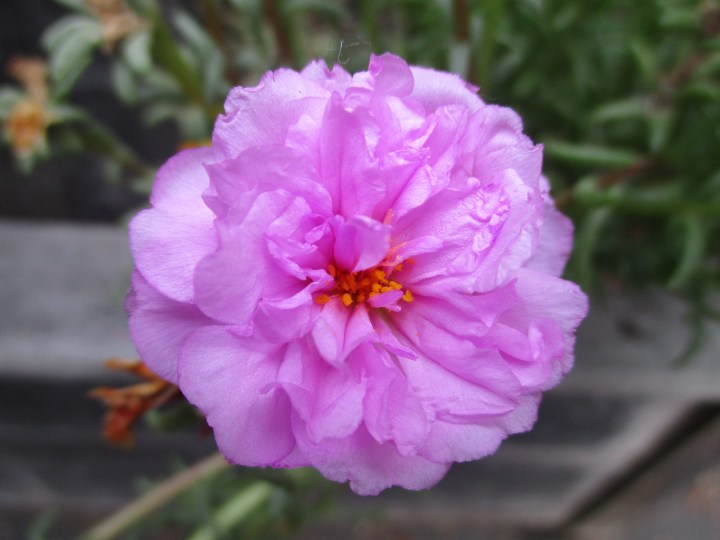
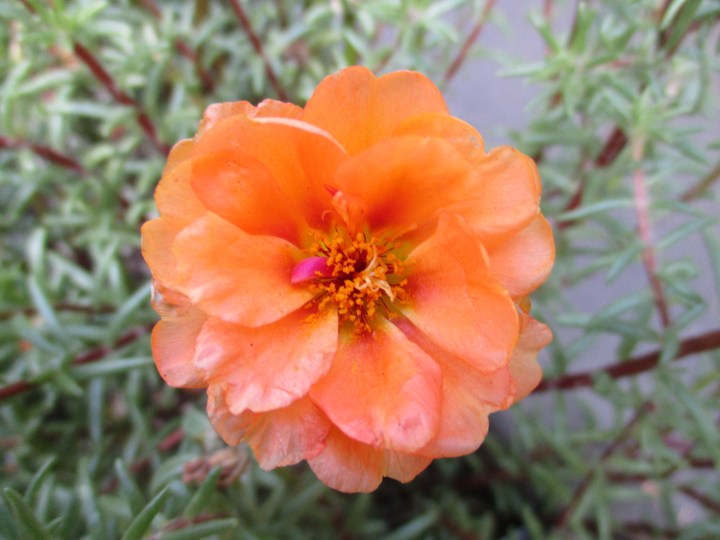
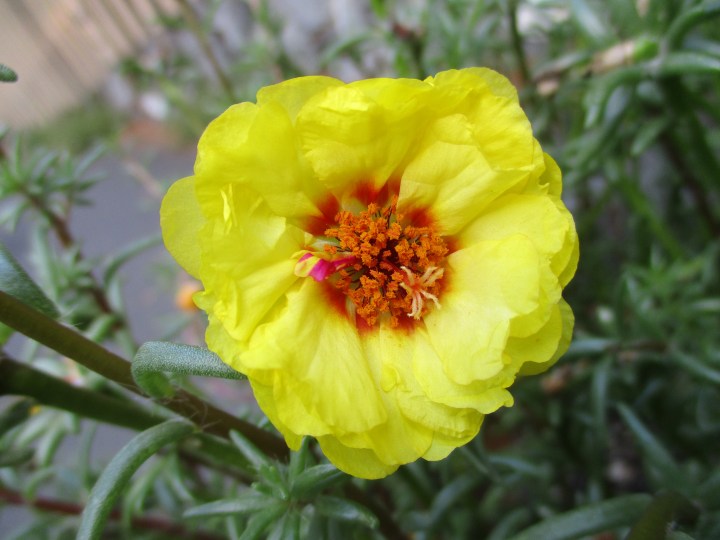
These six picture show six of the colors of our moss rose. There might have been a seventh color that was very pale pink. It was omitted because it was so similar to the white that I am still not certain that it was not white. Peach #3 is more distinct from orange #4 than it seems to be in these pictures. Red, which is common among moss rose, is strangely lacking from our mix.

Flowers are somewhat variable. Pink #1 seems to be a bit fluffier than the others. Yellow #5 has a bit of red around the center. Rose #2 seems to have a very slight bit of white at the center. I only guessed on the names of the colors ‘rose’ for #2 and ‘peach’ for #3.

1. pinkP91019

2. roseP91019+

3. peachP91019++

4. orangeP91019+++

5. yellowP91019++++

6. whiteP91019+++++

This is the link for Six on Saturday, for anyone else who would like to participate:

https://thepropagatorblog.wordpress.com/2017/09/18/six-on-saturday-a-participant-guide/

Horridculture – Sign Up

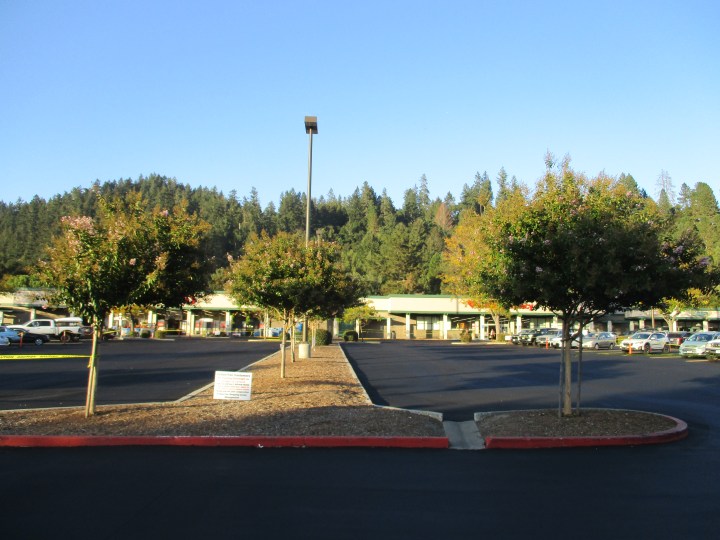
P91016Perhaps the signs should be down instead. They are obscured by the crape myrtles where they are now. They would be more visible if they were either higher or lower, but not in line with all these trees. The trees were planted only a few years ago, but have done very well. Lodgepoles need to be removed. The specimen to the left is recovering well from earlier disfigurement.

Selection of trees for parking lots is not easy. Such trees must disperse complaisant roots that are not likely to displace pavement or curbs. They should should be reasonably high branched and conducive to pruning for clearance above parked cars, and where necessary, for delivery trucks. Excessive floral or foliar mess would be a problem. So would fruit that attracts wildlife.

Unfortunately, not many trees conform to all limitations. Those with the most complaisant roots do not get big enough to be pruned up high enough for adequate clearance, or even provide significant shade over the often hot black pavement below. Since shade is the primary function of such trees, an abundance of diminutive trees often compensate for fewer substantial trees.

This presents another range of problems. The smaller trees can be pruned for minimal clearance above pedestrians and parked cars, but not delivery trucks. What is worse is that they can not be pruned above lighting and shop signs either. Pruning them lower than the signs instead would only work if the signs were to be viewed horizontally, from the same height as the signs.

Nonetheless, that is what is most commonly done. This is the result. All those flashy and expensive signs on the buildings in the distance are mostly obscured from this vantage. Fortunately, the honey locusts closer to the signs can be pruned up higher for adequate clearance.

First Color Of Autumn

P91013Okay; so this is neither the first, nor real autumn foliar color. It just happened to be convenient for me to get a picture of. Someone left this unfortunate Japanese maple right outside on the driveway a few years ago. It colors early from uncomfortable exposure to late summer warmth. The picture below is even more colorful, and was from even earlier in the year, last August.

Foliage that is starting to color here is nothing to brag about. Some of the older dogwoods leaves just shrivel and turn brown. I can only hope that enough newer foliage lingers to color as well as it did last year. Cottonwoods start to drop foliage while it is still green, but should eventually color to a subdued yellow before the last foliage falls. Sycamores are bland no matter how late.

There are only a few trees that reliably develop vibrant foliar color in such mild autumn weather, and only a few of such trees happen to be in our landscapes here. We lack Chinese pistache, flowering pear and ginkgo. The few sweetgum that are scattered about provide most of the foliar color here in autumn. It is still too early for them to color though. They need a bit more chill.

Flowering cherry and dogwood, which are uncommon just a short distance farther inland, happen do do quite well for us, and mostly color remarkably well in autumn. They only need a bit more time and chill. Birches are not as colorful, but are bigger and bolder, and eventually cover the ground below with delightfully yellow foliage. Boston ivy was added only earlier this year.

Native flora does not contribute much color. Bigleaf maple turns only a soft yellow. Poison oak turns rich deep red, but there is not much of it.P80819

Electrical Outage

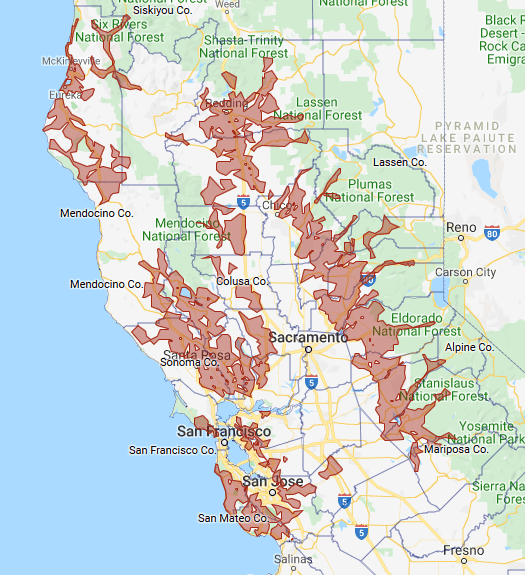
P91012KWarnings were broadcast in local news for a few days prior. Because of the extreme potential for catastrophic forest fires, electrical service was to be disabled to our region, and large areas of California. Weather was predicted to be warm, windy and dry (with minimal humidity). Such conditions are exactly what cause fires to spread so explosively through the overgrown forests.

The potential for sparks from electrical cables, especially as debris gets blown onto to them, was why the electricity needed to be disabled. Supposedly, it is more likely for fires to be started by sparks from utility cables than by sparks from the many generators and barbecues that compensate for a lack of electricity. These considerations are taken very seriously in this region.

There are many reasons why the local forests are more combustible than they would naturally be. The less combustible redwood forests were clear cut harvested about a century ago, which stimulated a proliferation of more combustible vegetation. Containment of fires since then has allowed an accumulation of combustible vegetation, but inhibited growth of fresher vegetation.

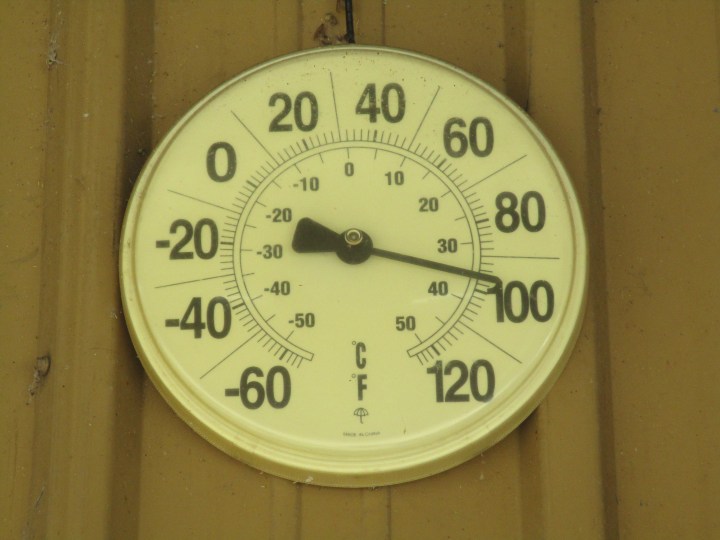
Regardless, many of us had our doubts about the necessity of the outages, which were actually delayed as the forecast weather was slow to develop. Tuesday happened to be one of the most humid days of summer, and might have been the most humid. It was not particularly warm, and was actually relatively cool. Wind was strangely lacking. The weather was really quite bland.

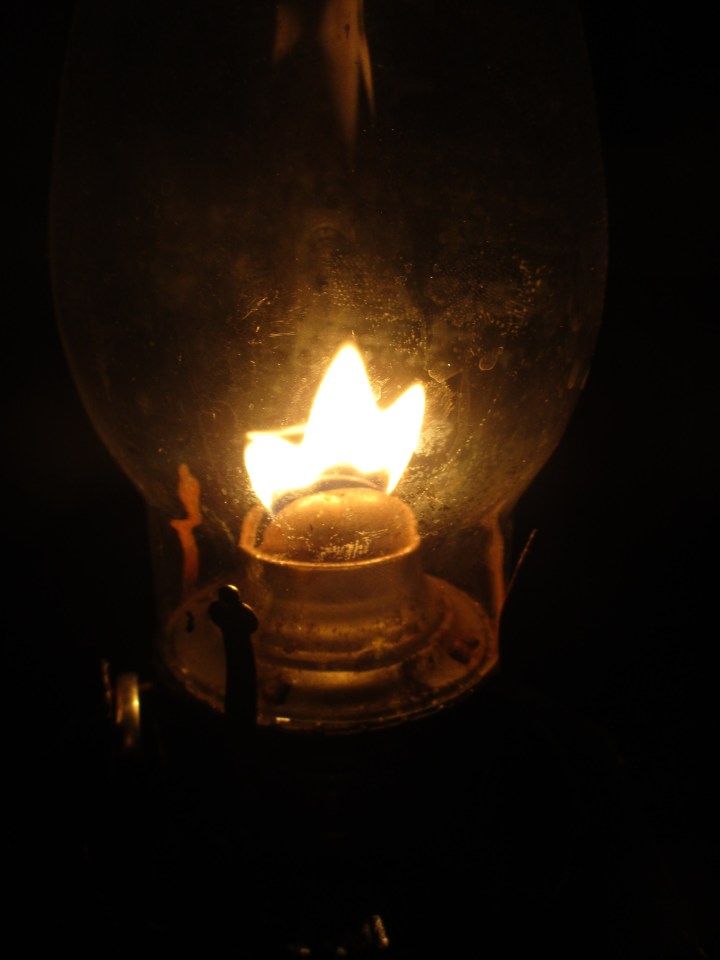
When this picture was taken early Wednesday morning, the street lamp was still on. Dew condensed on the parked car below as the weather cooled overnight. There was no breeze to dry it. The planned outage was delayed for a while, but eventually happened at about 10:30 that night, and stayed out for most of Thursday. It got a bit warmer and drier, but not like predicted.

Most of us accepted it as part of living in such a forested region. A few were annoyed by the associated inconveniences, particularly since it all seemed to be unnecessary. However, what few of us at lower elevations and in town were aware of was that there really were somewhat powerful winds at higher elevations near the summit, and that humidity had dropped significantly.

After electrical service was restored, we could see news coverage of the Saddleridge Fire in Los Angeles County. Unfortunately, fire is a part of nature here. The forests and ecosystems are designed for it. This was the first planned electrical outage here, but will not likely be the last. Those who appreciate living here, and know how the ecosystem works, will be willing to adapt.

Six on Saturday: Souvenirs From Oklahoma


Oklahoma is a place that I mention often in my writing. It was one of those very few places outside of California that I had always wanted to go to. After actually going there seven years ago, I want to go back to see what another season besides autumn is like. The flora there was so fascinating and unfamiliar. In the short time I was there, I collected seed of several species. Amazingly, most seed were viable a few years after collection.

1. Seed ~ was collected in these old pill bottles. These seed are not really from Oklahoma. They are mostly from canna, and were collected more recently. Collecting seed can be a bad habit.P91012

2. Yucca glauca ~ seed was collected at a truck stop in New Mexico on the way to Oklahoma, where it is also native. I found a shoot of Yucca arkansana in Oklahoma, but it did not survive.P91012+

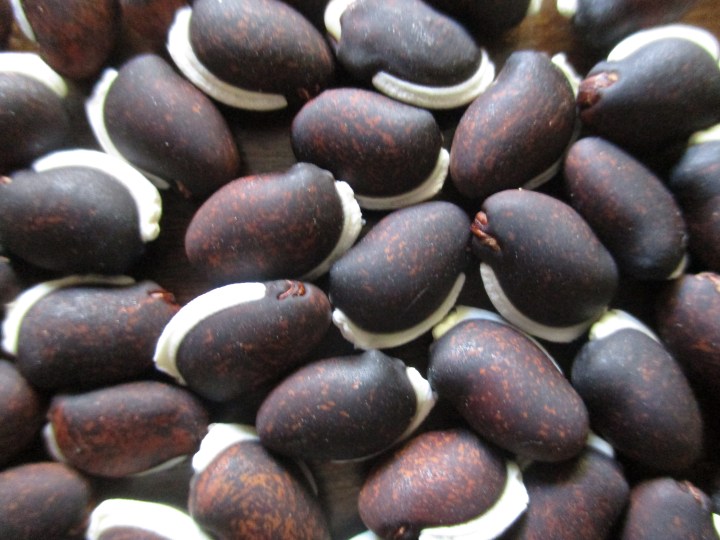
3. Sapindus saponaria ~ seed was found hanging over a fence from a backyard into an alley in Norman. The ‘seedling’ on the left grew from a root that broke from the seedling on the right.P91012++

4. Diospyros virginiana ~ happened to be in season while we were there in November and December. The small persimmons are very different from Japanese sorts, and loaded with seeds.P91012+++

5. Cercis canadensis ~ is the state tree of Oklahoma. Supposedly, the variety that grows wild there is ‘Texensis’. Several native plants are named for places where they were first identified.P91012++++

6. Juniperus virginiana ~ was not grown from seed, but gathered as wild seedlings. It is unpopular among those more familiar with it, and for good reason. I, however, am unfamiliar with it.P91012+++++

This is the link for Six on Saturday, for anyone else who would like to participate:

https://thepropagatorblog.wordpress.com/2017/09/18/six-on-saturday-a-participant-guide/

Horridculture – Halloween

P91009Halloween is a topic that I could rant about for days. Seriously. I loathe it. I dislike any formerly respectable holiday that has been ruined by excessive commercialization. We all know what happened to Christmas. For me, Halloween, in some regards, is even worse. Christmas is at least pretty. Halloween is intended to be morbid and grotesque and creepy and . . . just plain bad.

This should be about gardening though. Yes, there is always that guy who gets too drunk at the Halloween party down the road, but manages to stagger just far enough to vomit on my lawn. Then, I need to figure out how to get all the toilet paper out of the redwoods. The nasturtiums that get trampled by hasty brats who are too old for trick-or-treating will eventually recover.

The worst, though, are the Halloween ‘decorations’ in the front yard! We put too much work into maintaining our gardens in good condition to make them look so bad. I do not care if it is just for one day out of the year. Seriously, it is just wrong, on so many levels. Why on Earth should I want my garden to look as cheap and trashy as young ladies dressed up as naughty nurses?!

Pumpkins and even Jack-O’-lanterns are tolerable, and even appealing in a traditional sort of way, but spiderwebs make me think that the witches could put their brooms to better use than frequent flier miles. All those angry black cats should more efficiently control all the spiders and bats. Tombstones?! – Corpses in various degrees of decay?! – There goes the neighborhood!!P91009+

What about the effigies concealed by white sheets, and the other effigies hanging from trees and porches? Whoever thought those were good ideas?! Perhaps Brent can share some insight.

P90330+++++

The Wrath Of Grapes

P91006Jocular reference was made to ‘The Grapes Of Wrath’ on our our backward version on the way to Oklahoma several years ago. We happened to drive through Salinas, where author John Steinbeck was from, and Bakersfield near Weedpatch, where the migration from Oklahoma in the story ended. From there, we literally drove the same route from Oklahoma, but in reverse.

I never read ‘The Grapes Of Wrath’.

I do enjoy growing the sort of grape vines that some of us grow in our home gardens for fruit that can be eaten fresh. (I loath wine grapes and vineyards, but that is another topic for later.) There happens to be a nice big unidentified grapevine at work that needed major pruning last winter. It was a sloppy and formerly unpruned mess, with rampant long canes strewn about.

Some of these canes developed roots where they had been laying on the ground long enough to do so. The process is simply and conveniently known as ‘layering’. It is actually a technique for propagation that is sometimes done intentionally to plants that are not doing it naturally, (Again, that is another topic for later.) After giving a few rooted canes away, there were a few extra.

Since last winter, seven copies of the original grapevine are still here! I really do not know what to do with them. I could give them to neighbors before the end of this winter, but would then worry about them not getting the annual pruning they need, and overwhelming the landscapes they inhabit, just like the original vine did. Even in their cans, they are already a sloppy mess.

Many surplus plants are accumulating here. Many will go into landscapes as rainy weather starts. However, there are a few that will not be so easy to accommodate.

Herbaceous Trees

P91005KPalms are like ‘Red Delicious’ apples. It seems that most people dislike them; but they also seem to be very popular. Seriously, if only a few people like ‘Red Delicious’ apples, why are they so common in supermarkets? If most of us dislike palms, why are they so common in the San Jose Skyline?

I suspect that palms really are as unpopular as they seem to be, but that they are also very conspicuous within their situations. Not only are they focal points of the landscapes in which they live, but most types eventually stand as tall as the tallest trees in the neighborhood, and some get significantly taller. They are innately the most prominent trees within their neighborhoods.

Palm are not like other trees though. Arborists may classify them as ‘herbaceous trees’. They are foliar plants while young, producing increasingly large leaves from terrestrial rosettes. They only ‘launch’ and start to develop their trunks after the formerly terrestrial rosettes have grown wide enough to do so.

Not only are their trunks no wider than their associated foliar rosettes, but they get no wider as they grow taller. The base of a trunk of a palm is as wide when the tree is only a few feet tall as it will be when the tree grows to forty feet tall. Mexican fan palms are only wider at their bases because they start out like that.

Palms with slender trunks can launch much sooner than those with wider trunks. It does not take long for their rosettes to get as wide as their trunks. Canary Island date palms have rather plump trunks, so may need to mature for many years before they launch.

Yuccas and dracaenas are not really palms. Their trunks expand and develop branches as they grow and mature.

Six on Saturday: Souvenirs


My first rhubarb was given to my by my paternal-paternal great grandfather before I was in kindergarten. My Iris pallida also goes back four generations. I got one of my two favorite zonal geraniums from a compost pile in Montara, and snuck it back on the train when I was in the seventh grade. Some of the plants I grow have been with me for a remarkably long time.

Well, I did not get pictures of my rhubarb, Iris pallida or zonal geranium for today. Instead, these are five plants with whom I became acquainted more recently, and my first yucca whom I met three decades ago. They all have their respective stories that are more interesting than what I mentioned here. None are directly from nurseries, although #2 and #4 are from cultivars.

I sort of suspect that these plants and others of such significance to me will be with me for a very long time. I know that blue gum is nearly impossible to tame, and that windmill palm can’t be pruned down like the others. I will not force them to comply. The others can give me more cuttings to replace themselves indefinitely. The place names designate where I acquired them.

1. Holmby Hills ~ Los Angeles – Yucca elephantipes – This was my very first Yucca. My colleague, Brent Green, removed it from a project he was working on back in about 1988. It lived as a houseplant next to my desk for many years, and produced a few pups.P91095

2. Mid City ~ Los Angeles – Brugmansia suaveolens – Brent got me cuttings for this angels’ trumpet from another of his landscapes a few years ago because I really wanted a single white to add to the four more complicated cultivars that I already accumulated.P91095+

3. Reno ~ Nevada – Salix laevigata – I know that there is nothing special about the all too common red willow. I like this one anyway, because it grew from a broken twig I happened to grab on the Truckee Riverwalk through Reno. I should be more discriminating.P91095++

4. Murphys – Ficus carica – A few of these little fig trees were grown from pruning scraps. A friend wanted copies of the original tree before selling the home where the tree lived. We do not now what cultivar it is, but we sort of suspect it is the common ‘Mission’.P91095+++

5. Santa Cruz – Eucalyptus globulus – While waiting for a friend who needed a ride, and pacing outside, I started plucking a few tiny weeds from planter. One of the weeds happened to be a tiny blue gum seedling. Against my better judgment, I did not discard it.P91095++++

6. West San Jose – Trachycarpus fortunei – An old friend’s mother grew flowery annuals and perennials in pots on the porch. This windmill palm grew from seed in one of the pots, and was happy there for a few years, but eventually got too big. It lives here now.P91095+++++

This is the link for Six on Saturday, for anyone else who would like to participate:

https://thepropagatorblog.wordpress.com/2017/09/18/six-on-saturday-a-participant-guide/