Horridculture – Sealant

P90810++++Grafting compound is a thick sealant applied to a fresh graft union to limit desiccation while the graft knits. A bit more typically gets applied to the cut distal end of the scion. There are various formulations of grafting compound, ranging from something resembling roof patch to a something with the consistency of thick paint.
The stuff, as sloppy and icky as it is, really is helpful. I can not imagine how big orchards were grafted before it was invented.

It is also useful for keeping cane borers out of the cut ends of freshly pruned roses. For those of us who remember how to prune roses properly, leaving only a few thick canes, grafting compound really is practical. I just don’t use it on roses because cane borers are not a problem here.

Since I do not use grafting compound on roses, and the plants that I graft do not need grafting compound, I presently have no use for it. I suppose I could use it on apple and pear trees, but it really is not necessary. When I get around to grafting apricots and peaches, it will only be for a few trees in my own garden, so I will just use candle wax.

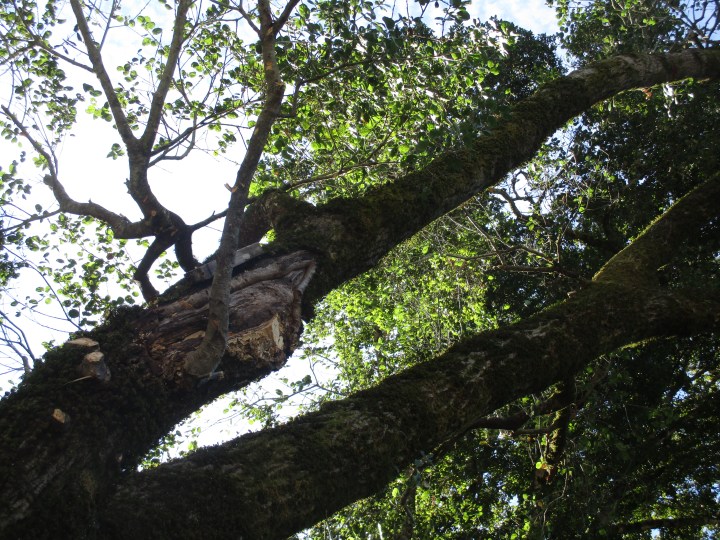
This surprises people. At work, I am often asked about ‘painting’ pruning wounds and shiners as trees get pruned, presumably with sealant. Decades ago, it was actually commonly done. Even when I did my internship in arboriculture in 1988, some arborists were applying sealant because it was easier than arguing with their clients about it not being necessary.

The problem with applying sealant to large wounds is that is actually seals moisture within the otherwise exposed wood, and promotes rot. It is best to do nothing, and allow the affected trees to compartmentalize their wounds as they would do naturally if limbs were broken off by the weather. Trees know more about their processes than we do.

The Bad Seed Redemption

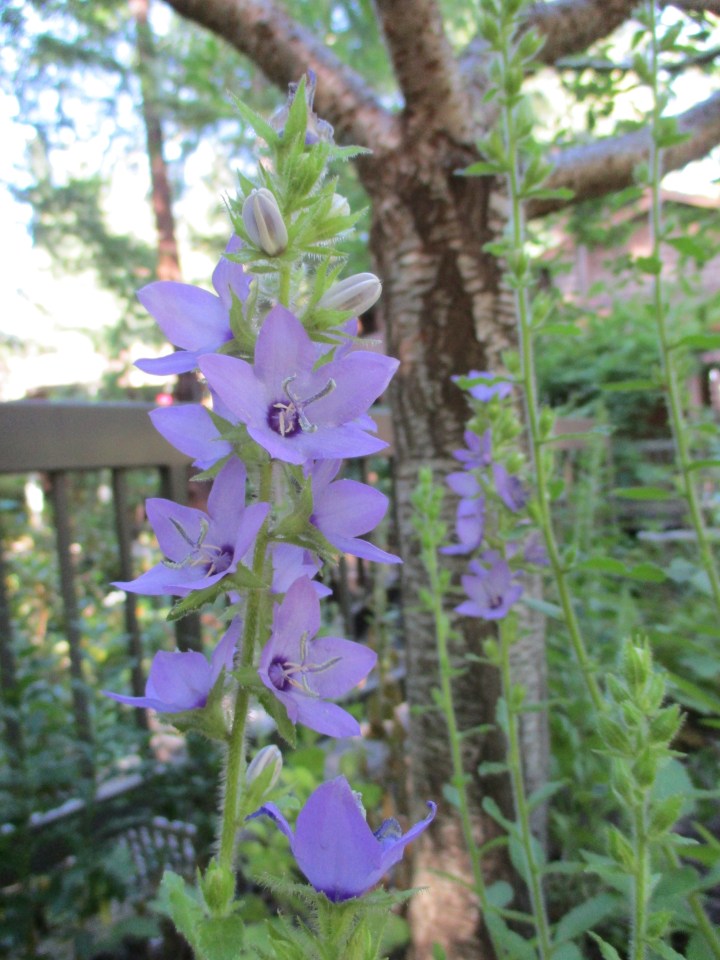
P91103The seed is not really bad. At least I do not think that it is. It is merely misunderstood. Perhaps it would be more accurate to say that it is simply unidentified. I really do not know what it is. I do not say that very often, especially about seed that I bother to collect to sow elsewhere. I believe that it is of American bellflower, Campanula americana. If not, it is very closely related.
It appeared in part of one of the landscapes at work. Because it looked like some sort of campanula, we left it to see what it would do. It got quite tall, but never started to look like something we did not want to take a chance on. We were rewarded for taking the risk when it bloomed with these elegant spikes of small sky blue flowers. That was a little more than a year or so ago.

No one bothered to deadhead it immediately after bloom. It was only a few plants on the back edge of rather relaxed landscape, so was easy to ignore. By the time the dried floral stalks were noticed and removed, the seed had already been tossed. Consequently, there were many more of them through this last season, both in the same area, and in adjacent parts of the landscape.

In fact, there were too many to ignore when their floral spikes had finished blooming. I deadheaded them myself so that I could collect the dried floral carcasses in a small bucket. Some seed had already been tossed for next year. Nonetheless, there is enough dust-like seed in the bottom of the bucket to share with other landscapes. I intend to sow it just prior to winter storms.

So, this unidentified seed should be an asset to the landscapes.

X Marks The Spot

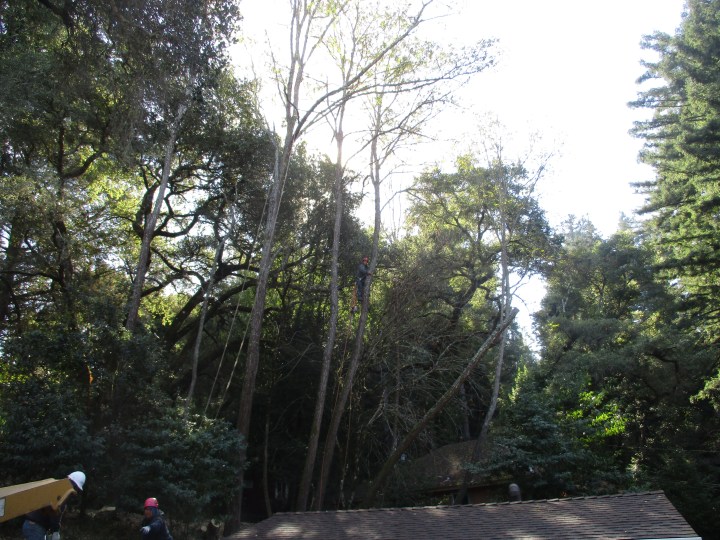
P91102KHorticulture is not all about growing things. If everyone was out planting trees, the World would eventually be overwhelmed with forest. It is sometimes necessary to cut trees down. There are several at work that we have been wanting to cut down for quite a while. Some are structurally deficient enough to eventually become hazardous, which is unacceptable in public spaces.

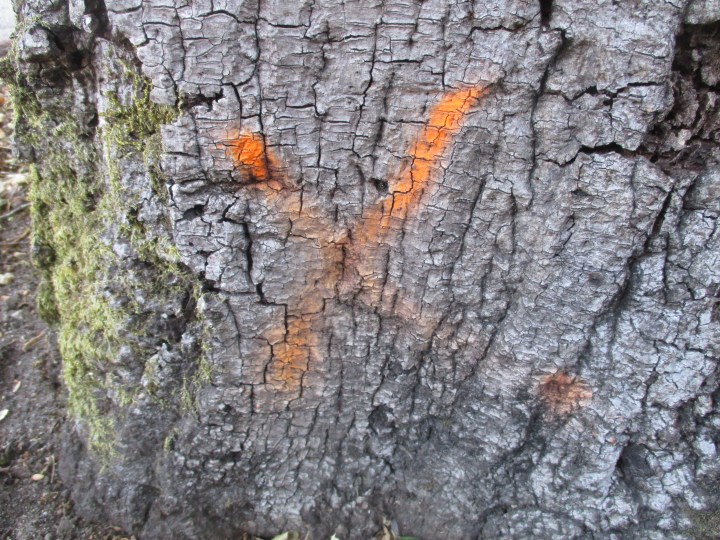
Even here among some of the oldest trees in the World, nothing last forever. Coast live oak, like that in the picture above, has potential to survive for centuries, but eventually succumbs to decay and disease. If fact, this particular specimen is doing it right now. If not cut down soon, it will eventually fall onto an adjacent building and a parking lot below. Its days are numbered.

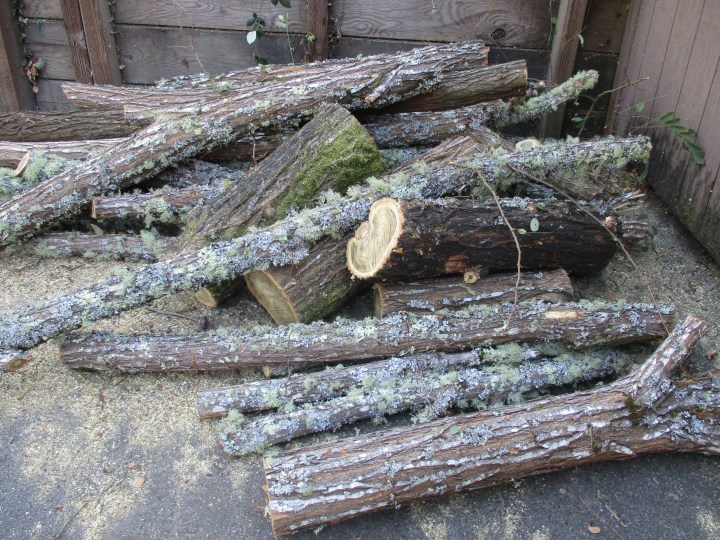
Literally, it will be cut down on Monday morning, along with a few other coast live oaks and bay laurels in the neighborhood. The orange ‘X’ on the trunk is so faded from the delay of getting this done, that is it barely discernible. (Actually, the can of spray paint was empty.) The trunk and even the main limbs are so rotten that there will not be much firewood left to cut and split.

Cutting this tree down may seem to be unnatural, but so was pruning it for decades so that it would not fall down. It is impossible to say what situation this tree would be in now without past or present intervention. I am more concerned with how it and other trees interact with their surroundings, and the safety of everyone involved. We can not always let nature do as it pleases.

Forest fires are very natural components to our local ecosystems, but because so many of us live here, significant effort and resources are expended on containment!

Six on Saturday: Light Duty Autumn


Autumn is mild here. There has been no rain yet. None is in the forecast. Nights are only beginning to get cool. A thermometer outside claims that it has been cool enough for frost, although none has yet been observed. As pleasant as such mild weather is, it can be boring in the garden. The few deciduous trees that develop good color are only beginning to do so, and in no rush. Some chores that rely on chill or rain get delayed.

1. 32 degrees! Does this qualify as frost? This is the same thermometer that said it was 96 degrees last week. I do not believe everything it says, although cold is not as easy to fake as heat.P92202

2. Krispy Kritter had a bad day. It is not from frost though. This formerly exemplary Heavenly bamboo succumbed to warmth and aridity, . . . . and unintended disconnection of irrigation.P92202+

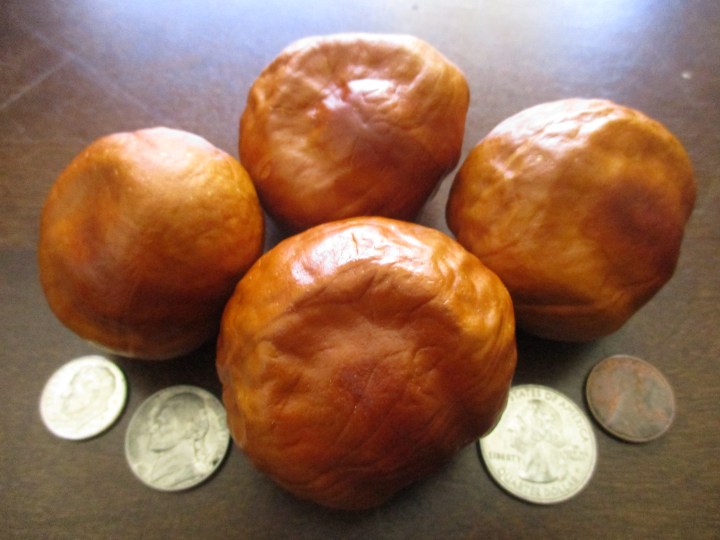
3. California buckeye defoliated through the warmth of summer, and should foliate for early winter, only to defoliate as winter gets cooler. I knock these big seeds out because they look silly.P92202++

4. African iris, Morea bicolor, got split early where it crowded a walkway. We did not want to plug it until the rain starts, so soaked it in a bucket of water, where the roots started growing!P92202+++

5. Mrs. Pollock zonal geranium, Pelargonium hortorum ‘Mrs. Pollock’, likewise needed to be pruned back prematurely. I was able to process cuttings from the scraps, and plug them directly.P92202++++

6. Such intricate variegation is genetically unstable. Mrs. Pollock zonal geranium often gets less variegated mutant growth that must be plucked. Well, . . . . I sort of plugged some as cuttings.P92202+++++

This is the link for Six on Saturday, for anyone else who would like to participate:

https://thepropagatorblog.wordpress.com/2017/09/18/six-on-saturday-a-participant-guide/

Horridculture – Soaking Seeds

P91030Hooey! It’s a bunch of hooey! Sweet pea seed that gets sown this time of year for next spring does NOT need to be soaked before sowing. In fact, unless there is some strange species of plant that has become that dependent on human intervention, NO seed need to be soaked prior to sowing. Not only is the technique completely unnecessary, but it is completely unnatural as well.

Think of it. In the wild, plants grow, bloom and produce seed. This seed does what it can to disperse and get into or onto the soil to germinate and grow into new plants to repeat the process. Some seed appeal to squirrels for burial. Some prefer to be partly digested by animals who eat their tasty fruit. Heck, some are reluctant to germinate until heated by a cleansing forest fire.

Plants employ quite a range of techniques to disperse their seed and promote germination. As strange as some of these techniques seem to us, they are all justified. They all exploit processes of the respective ecosystems they naturally inhabit. For example, seed that crave heat know that the fire that provides such heat also incinerates competing plants, leaving them vacant soil.

Regardless, there are NO plants that produce seed with an expectation that anyone will collect and soak them. Dry seed that need to rehydrate can and actually prefer to collect the moisture they need from the moist soil in which they grow. If the soil is too dry for them to rehydrate, they do not waste effort trying. They merely assume that they should wait for rainier weather.

Furthermore, seed that are needlessly soaked prior to sowing must be sown shortly after rehydrating. Unlike dry seed, rehydrated seed can not be returned to their original packet and stored for later.

Midnight Oil

P91027The electricity is still on here at 8:20 p.m.. I just turned the lights off to get the cool picture above. The outages in this region were scheduled to begin twenty minutes ago, so the electricity could be disconnected here at any moment. I may not finish writing and scheduling this to post later at midnight before that happens. So, if you are not reading this presently, you know why.

Before you waste another second thinking about that, I will tell you now that it makes no sense.

Scheduled electrical outages are now one of the consequences of living in this excellent place. We live with trees. Some of these trees are the biggest in the World. Some are very combustible. Regardless of the diligence of those who prune trees to maintain clearance from utility cables, big trees are likely to drop limbs onto cables, causing sparks that can ignite combustible trees.

The electricity just went out at 8:40 p.m..

As I was saying, we also live with weather. It happens to be excellent weather. It is pleasantly warm through summer, with minimal humidity and an almost constant cooling breeze. When the weather gets a bit too warm, it compensates with lower humidity and increased breeze. Unfortunately, this combination of weather is precisely what accelerates the worst of forest fires.

Scheduled electrical outages are intended to coincide with forecasts of weather conditions that are dangerously conducive to the initiation and perpetuation of forest fires. As inconvenient as they are, such outages are a sensible precaution.

The smoke that made such a colorful sunset earlier is from a fire in nearby forests, on the southern coast of San Mateo County.

Now, I will go to town to see if I can find someplace to get online to schedule this for midnight.

Arborists’ View

P91026KArborists see trees very differently from how most of us see them. They know their trees very intimately, and by botanical name. Arborists know how big particular trees get, both tall and wide, and if they are likely to develop structural deficiency or aggressive roots. They can tell us which are deciduous, which are evergreen, and which are messy with foliage, bloom or fruit.

Some arborists are happy to divulge a bit of history of some trees, whether exotic or native. They might tell us where the exotic trees came from, and why they were imported. Some trees were brought for timber. Some were brought for fuel. Some were imported just because they were pretty. Some naturalized, and now impose on the natural ecosystem. Natives try to adapt.

Since they know the innate characteristics of trees, arborists know what their cultural preferences are. They know that some are understory trees that prefer the company of other bigger trees. Many others are those bigger trees, that want to dominate their respective landscapes. Some want plenty of water. Many of the natives do not want much more than annual rainfall.

An arborist might provide you with way more information than you ever thought you wanted about your seemingly innocuous trees.

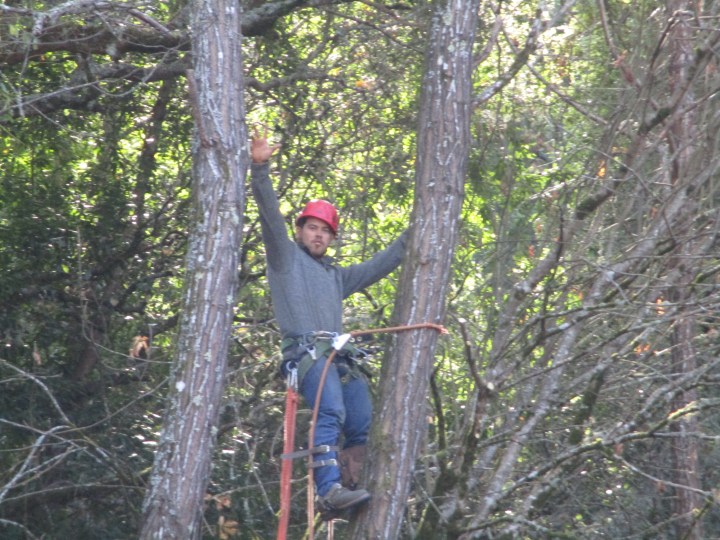
Besides all that, arborists are a weird breed that really enjoy their work. Arborists like me simply enjoy diagnosing problems with trees, and prescribing corrective arboricultural procedures. Those who climb trees to execute such procedures are much more involved! Their work is as demanding as extreme sports, and they take it very seriously. They must. It is their profession.

This view of a big box elder, Acer negundo, from above, which I got from the edge of a bridge, might be that of just another day at the office for other arborists.

Six on Saturday: More Outages


Electricity is expected to be turned off again tomorrow. The weather is predicted to be too warm, windy and arid (with minimal humidity) to leave it on. Otherwise, sparks from electrical cables out in forested areas could potentially start catastrophic fires. Although unlikely, it is more likely during such weather.

Hopefully, fires will not be started by candles, oil lamps, barbecues, or any of what will compensate for the lack of electricity. One of the worst fires in history here was incidentally started by sparks from a generator.

Trees are regularly and efficiently pruned for clearance from electrical cables. That does not fix everything though. Utility cables can spark even without trees blowing into them. Many trees in many areas are much higher than the utility cables, so can drop limbs onto them.

1. These are the regions of Northern California where electricity will be turned off.

P91026

2. This is a close up of our region, between San Jose and Santa Cruz. At the moment, I am near the first ‘t’ in Scott’s Valley.

P91026+

3. I am not as concerned about the garden in this weather as I am about this freezer without electricity. I would not use a freezer, but this one if for Felton League. I would not normally freeze bread either, but there happened to be space at the time, and it was better than discarding it.P91026++

4. Although this thermometer supposedly got to a hundred today after I got this picture, it was really not much more than ninety degrees. This thermometer is just in a hot spot. According to the weather forecast, it should be only in the mid seventies tomorrow. Obviously, the predicted fire risk is determined by a combination of heat, humidity and wind.P91026+++

5. There was a bit of horticulture to mention too. These are seeds of naked lady amaryllis. They certainly are weird, like mutant salmon eggs, or pink pomegranate seeds. They are supposed to be sown while still pink and fleshy like this, rather than dried. It just seems wrong.P91026++++

6. There were a few amaryllis bulbs in a group that made these unusually big seed capsules. I should have put something else in the picture to show scale. The largest is about as big as a ping pong ball. I suspect that they are the same as the others, but I will sow them separately anyway. Although unlikely, neighborhood crinum could have gotten in the mix.P91026+++++

This is the link for Six on Saturday, for anyone else who would like to participate:

https://thepropagatorblog.wordpress.com/2017/09/18/six-on-saturday-a-participant-guide/

Horridculture – Home Greenhouses

P91023Why do we all think we need a greenhouse? Some of us may rely on them for sheltering plants through cold winters. Some of us grow seedling late in winter, for an early start in spring. For some of us, greenhouses are where we grow plants that would not be as happy out in the natural climate. There is a multitude of uses for a greenhouse; but really, how many of us need one?

When I grew citrus trees, I needed a greenhouse. It was where the freshly grafted cuttings were rooted. (Citrus are grafted and rooted simultaneously, literally by grafting the scions to the unrooted understock, and ‘sticking’ the combination as a cutting into rooting media.) The greenhouse contained humidity to prevent desiccation, and warmth to stimulate root development.

From there, freshly rooted citrus trees were canned and moved out of the greenhouse and into a partly sheltered location to harden off. Once well rooted, they graduated from #1 cans to #5 cans, and were moved out to the field where they were completely exposed to the weather. All those acres of citrus tree production used only a few hundred square feet of greenhouse space.

Most of us are not rooting freshly grafted citrus cuttings, or many other cuttings that can not be rooted out in the real weather. Really, in this particularly mild climate, not many of us have any practical use for a greenhouse. It is just something that we believe a well outfitted garden should include, even if we need to procure a few rare and needfully tropical plants to prove it.

Contrary to what anyone says, plants in greenhouses need more work than those of comparable substance outside. They need to be watered even during rainy weather. They need the vents opened during warm weather. Most pathogens proliferate much more aggressively inside a greenhouse than outside. Greenhouses can create almost as much extra work as they eliminate.

The saran house in the picture above works nicely for a few plants that want a bit of shelter. Some plants are recovering from removal from landscapes, and will eventually get planted back into other landscapes. We grew a few of these plants from cuttings. They all get a bit of shelter from hot direct sunlight in summer, and frost in winter. We grow many more plants outside.

Shade trees, even the nearby deciduous box elders, could provide as much shelter as the saran house provides. Nothing fancy is necessary. Plants that need any more shelter than what they could get here or under a shade tree are useless in our landscapes. After all, our landscapes, by nature, are all outside. The plants that go into them must therefore be able to survive outside.

Work Day Renovation Of A Flowering Crabapple

P91020P91020+It is amazing what just a few parishioners and friends can accomplish in just a few hours from about nine to noon on Saturday morning. It is only happens a few times through the year, so we make the most of it to catch up on all sorts of maintenance and projects at Felton Presbyterian Church. (My parish should do this sort of thing.) I was there to work in the minimal landscape.

I started working with this ‘Prairie Fire’ flowering crabapple several years ago. As I pruned for clearance above the adjacent parking spaces and patio, I retained lower growth in the space in between. The tree bloomed too nicely to unnecessarily remove all that was right where it was most visible. Besides, from the patio, it was more visually appealing than a view of parked cars.

Then, I missed a work day. There were plenty of volunteers. There were plenty of power tools. There was plenty of enthusiasm. There was no horticultural expertise. Someone decided that my once exemplary flowering crabapple was in need of pruning, so executed the task with power hedge shears. The damage is irreparable. Lower growth is gone. Upper growth is mutilated.

It was very discouraging. It was done out of season, so I could do nothing to start to repair the damage at the time. There was not much left to repair anyway. I could only let the tree grow through a season so that there would be something to work with later.

Well, this was later. I would have preferred to wait for complete defoliation, but the tree is starting to go dormant now, which is technically good enough. I also would have preferred to prune less away; but really wanted to remove as much of the disfigured growth as possible.

I am less than pleased with the results. With all the disfigured lower growth removed, only the new upper canopy remains. The tree got what my colleagues might refer to as an ‘Ethiopia cut’, which is what much taller trees in Ethiopia get when their lower growth gets eaten by giraffes. It will be a long recovery.

The upper picture is the ‘before’ picture. The bright sunlight at noon does not look so good in the lower ‘after’ picture. I mentioned the Work Day and an update in my other blog, Felton League.