Which Mesquite?

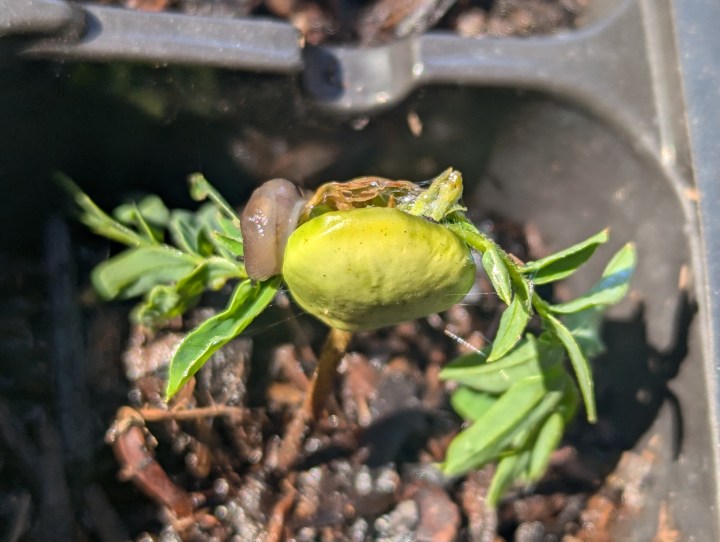
Is this velvet mesquite, Prosopis velutina, or honey mesquite, Prosopis glandulosa? It is still too young to identify. I suspect that it is velvet mesquite because I found its seed in a landscape in Surprise, Arizona, and velvet mesquite is the most common species within landscapes there. Also, the foliage of the trees that provided the seed resembled that of velvet mesquite more than that of honey mesquite, with relatively smaller leaflets. The bark was medium brown, so was not quite as dark brown as I would expect for velvet mesquite, but more brown than tan, as I would expect for honey mesquite. This little seedling may not look like much now, but it is the only survivor of the many seed that I collected. Only a few germinated, and slugs ate them before they extended their first leave beyond their cotyledons. This seedling germinated last, and was promptly canned in a four inch pot that I brought inside at night for protection. I hope that, before the end of summer, it grows large enough to survive winter. It should. Regardless of its identity, I hope to eventually use its stems for smoking and, if it grows large enough, barbecuing.

Six on Saturday: Pestilence

Molluscs, rodents, insects, virus, fungal pathogens and an identified disease that causes gummosis; we have it all. I know that it is nothing to brag about, but it makes a good six.

1. Tamarindus indica, tamarind seedlings are popular with slugs. Not much else here is. Weirdly, slugs do not seem to consume the foliage. They only coat it with slime that does not rinse off. The foliage eventually deteriorates. What is the point of this odd behavior?

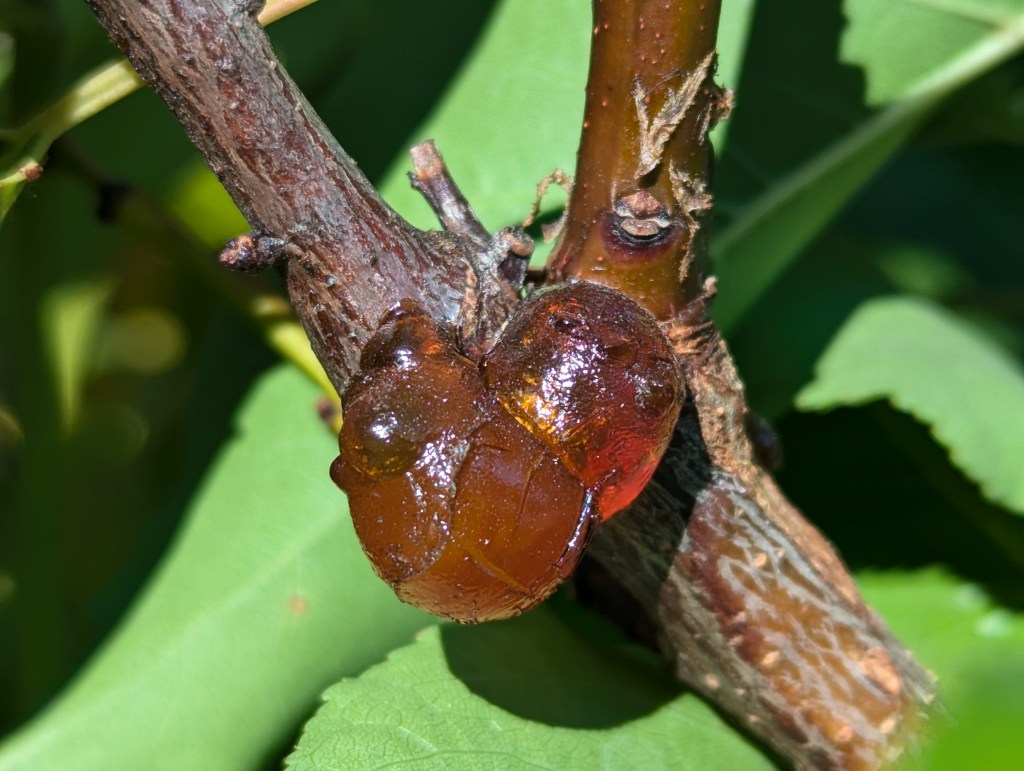
2. Prunus armeniaca, apricot trees sometimes exude gummosis as a symptom of disease or boring insect infestation. I can not see what caused this, and do not care to. I will just prune it out. I know that it will not be the last time. Gummosis is common with apricots.

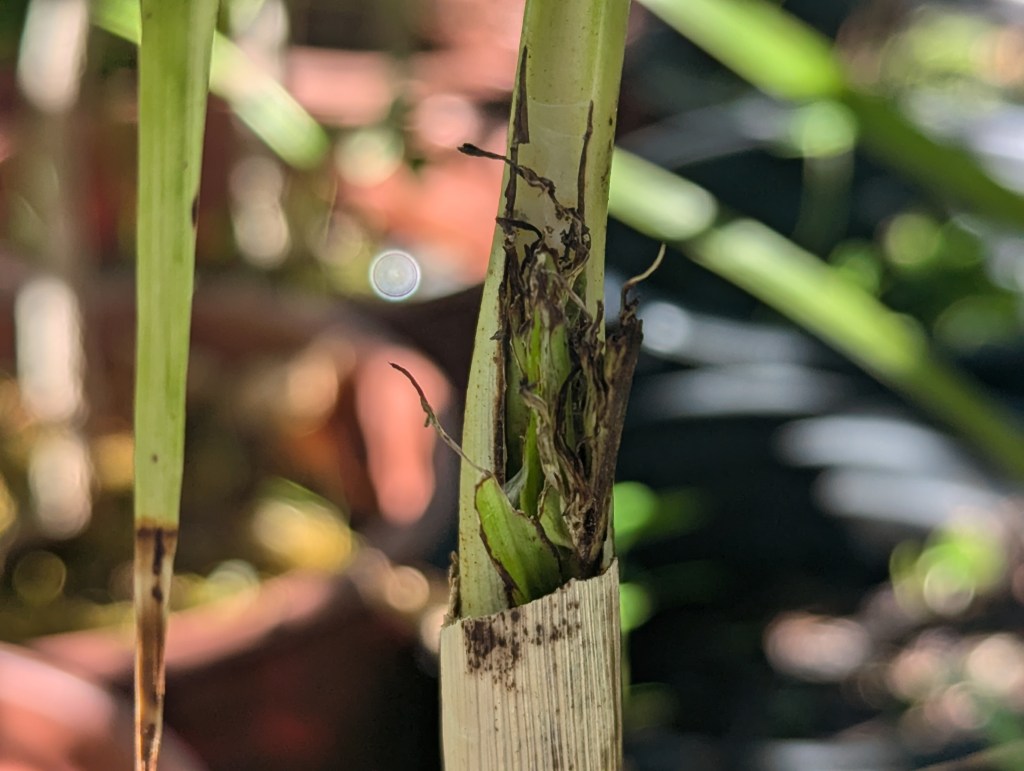
3. Chamaedorea plumosa, baby queen palm was chewed so badly by some sort of rodent that it will not likely survive. I suspect that a squirrel did this. I have not seen any rats or their damage since Heather arrived. This is one of only two rare baby queen palms here.

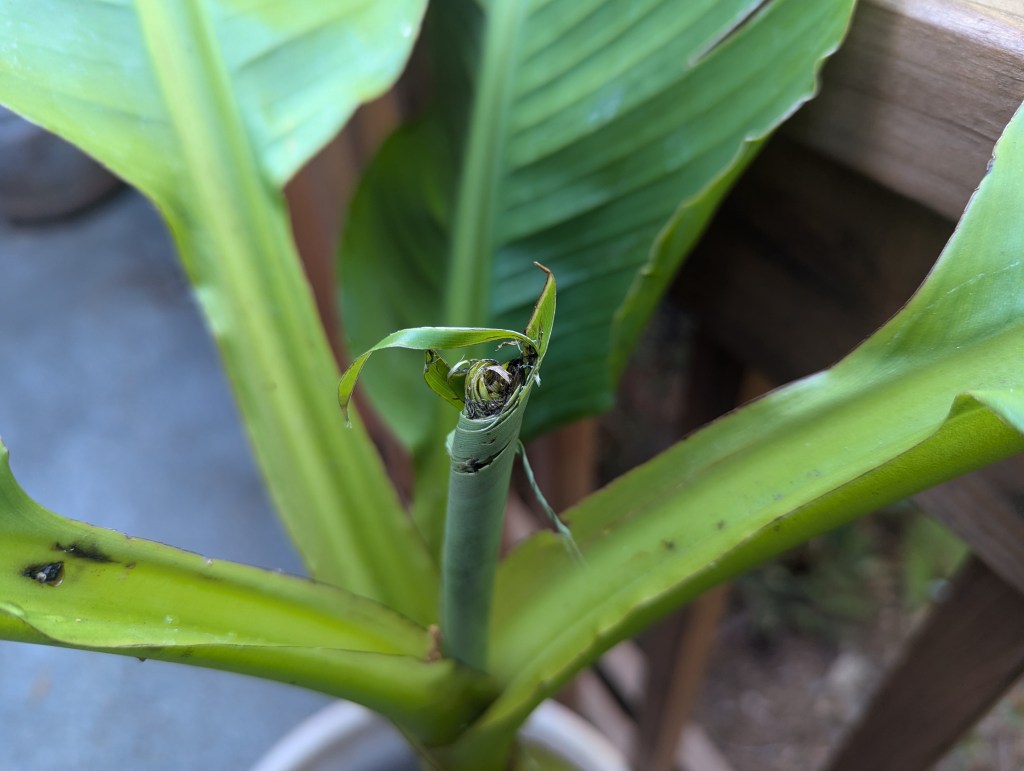
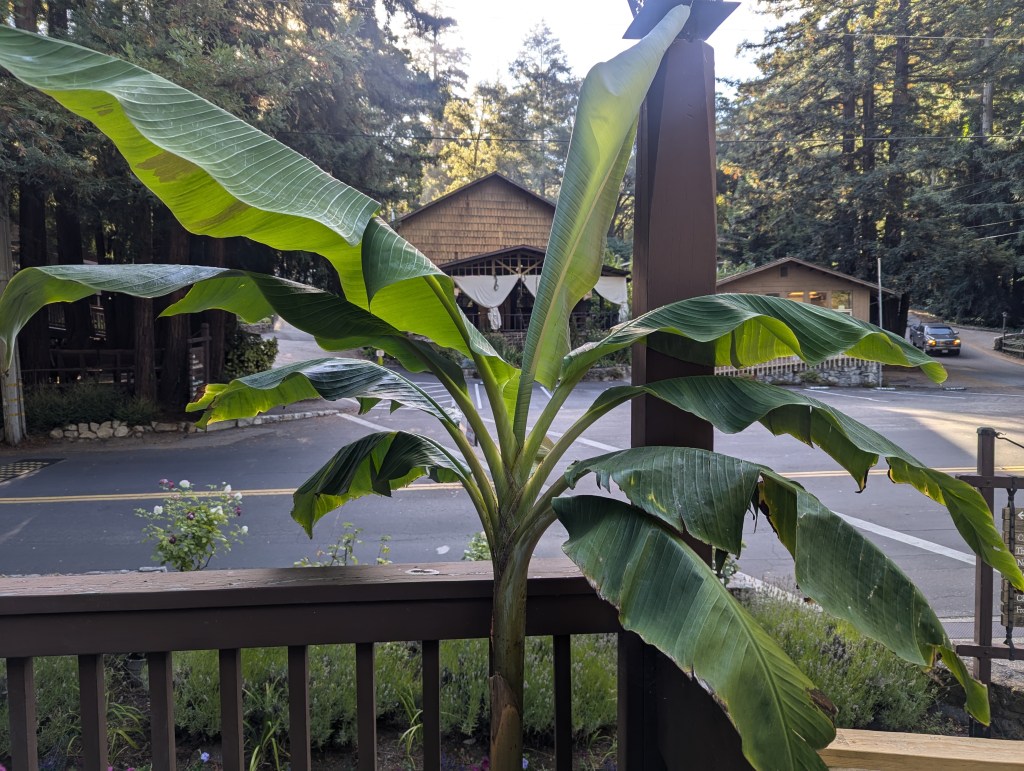
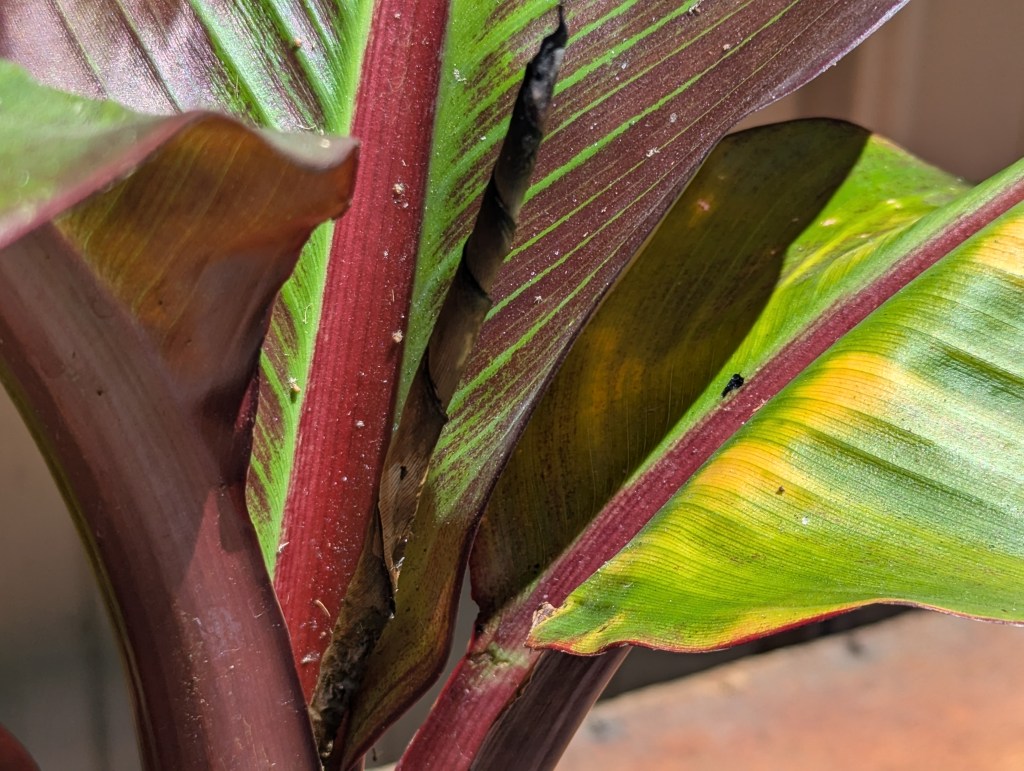
4. Ensete ventricosum ‘Maurelii’ red Abyssinian banana was initially infested with aphid and associated mold. The aphid disappeared, as it typically does, but the mold remained and ruined the currently emerging leaf. I hope that the primary bud within does not rot.

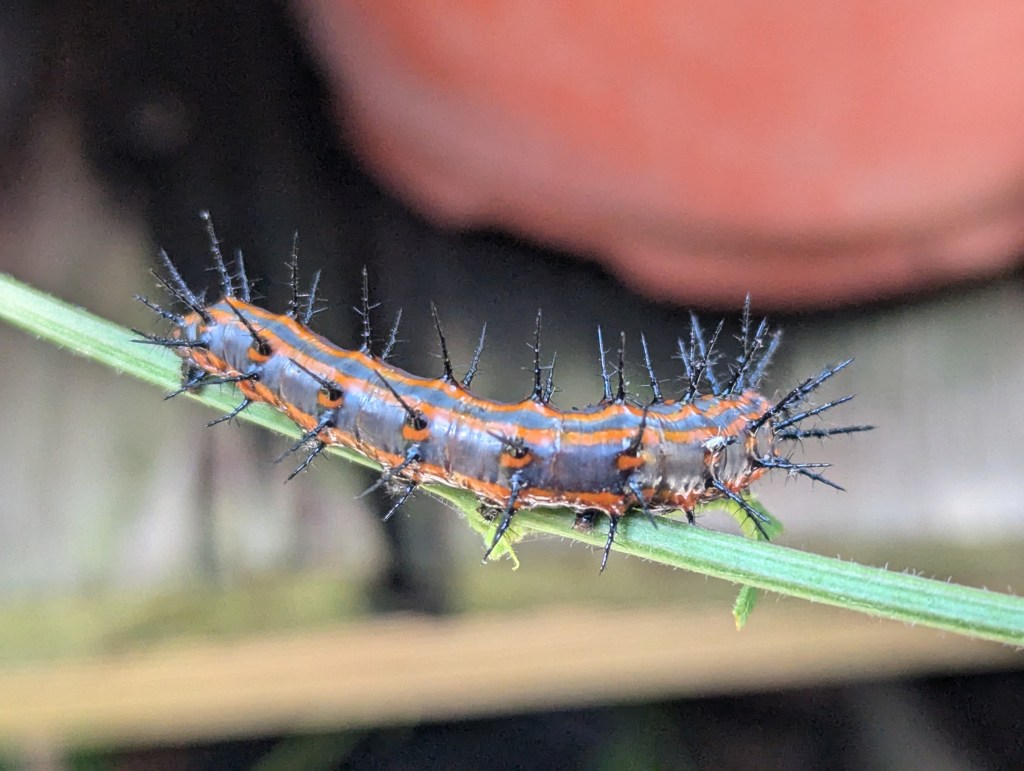
5. Passiflora racemosa, red passion flower vine has been defoliated a few times just this year by a few of these unidentified caterpillars. The caterpillars leave after they consume all foliage, but then return shortly after the foliage regenerates, while I am not watching.

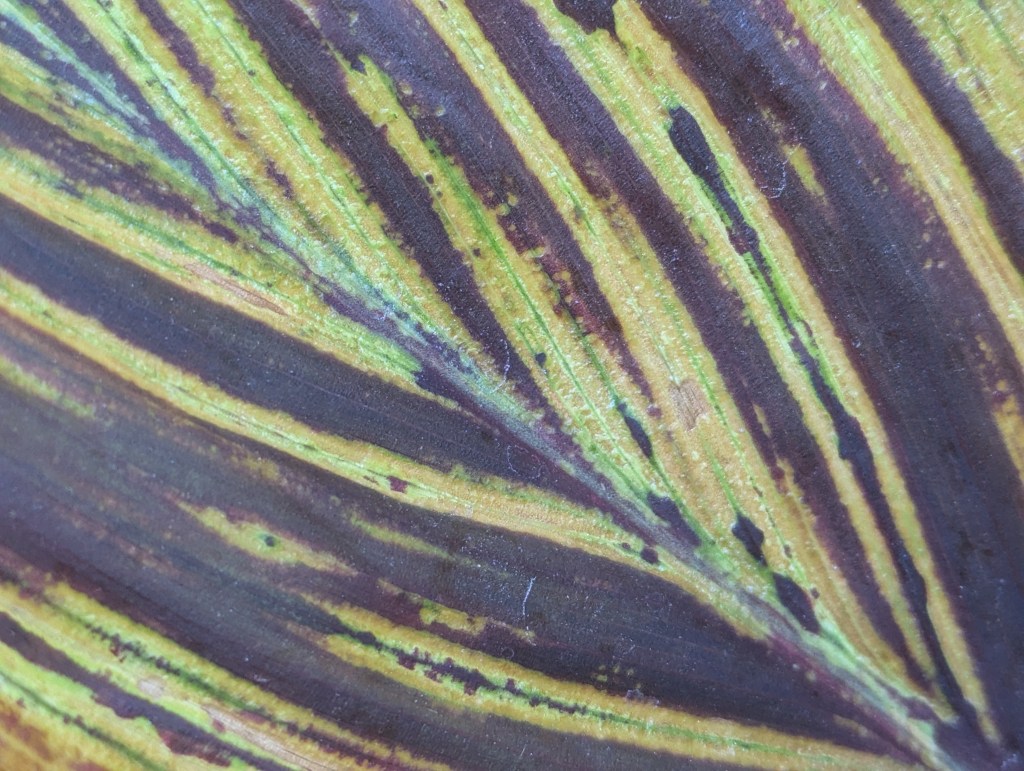
6. Canna indica ‘Australia’ canna is infected with canna mosaic virus. Several others are also, although they do not express symptoms as colorfully as ‘Australia’ does. Most other cannas are isolated from this virus within their landscapes. I am infuriated nonetheless.

This is the link for Six on Saturday, for anyone else who would like to participate: https://thepropagatorblog.wordpress.com/2017/09/18/six-on-saturday-a-participant-guide/

Archaeology

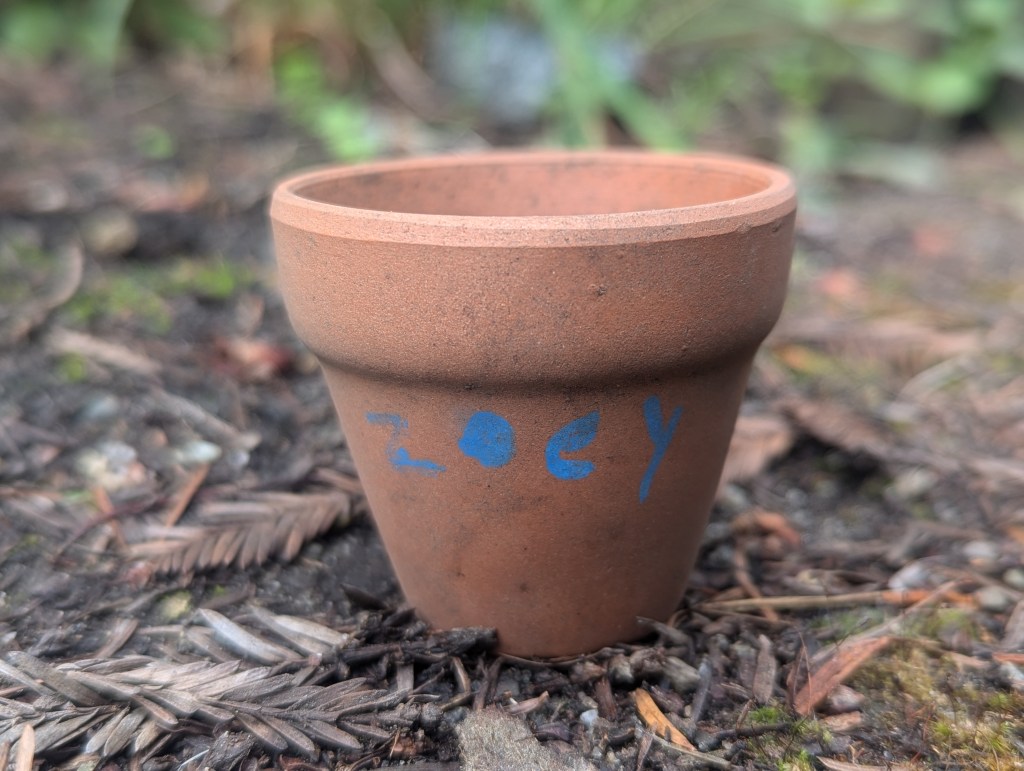
Working within landscapes is obviously very different from working on the farm. Actually, there are too many differences to mention. One difference is people. There are only a few on the farm, spread out over many acres. Conversely, the landscapes that I work in are designed for use and enjoyment by countless people who attend events there. I can rarely get away from all of them. Although it can be fun, it can also be challenging, and often interesting. On rare occasion, I find artifacts that make me wonder about whomever left them. This tiny terracotta pot with “Zoey” painted on it, for example, was found in a small landscape outside of a bookstore, quite a distance from the facility a which young children typically engage in such crafts. I hate to think that Zoey misplaced it there. I sort of hope that it was intentionally left there, perhaps containing a tiny plant that Zoey hoped a gardener would find and add to the landscapes. If so, I found it too late and empty. Zoey does not need to know that. Hopefully, if she returns, she finds something that she believes to be her plant growing happily in our landscapes.

Six on Saturday: 4:00

Four o’clock has been unusually pretty in bloom. It self sows almost enough to become a weed, but I am fond of it.

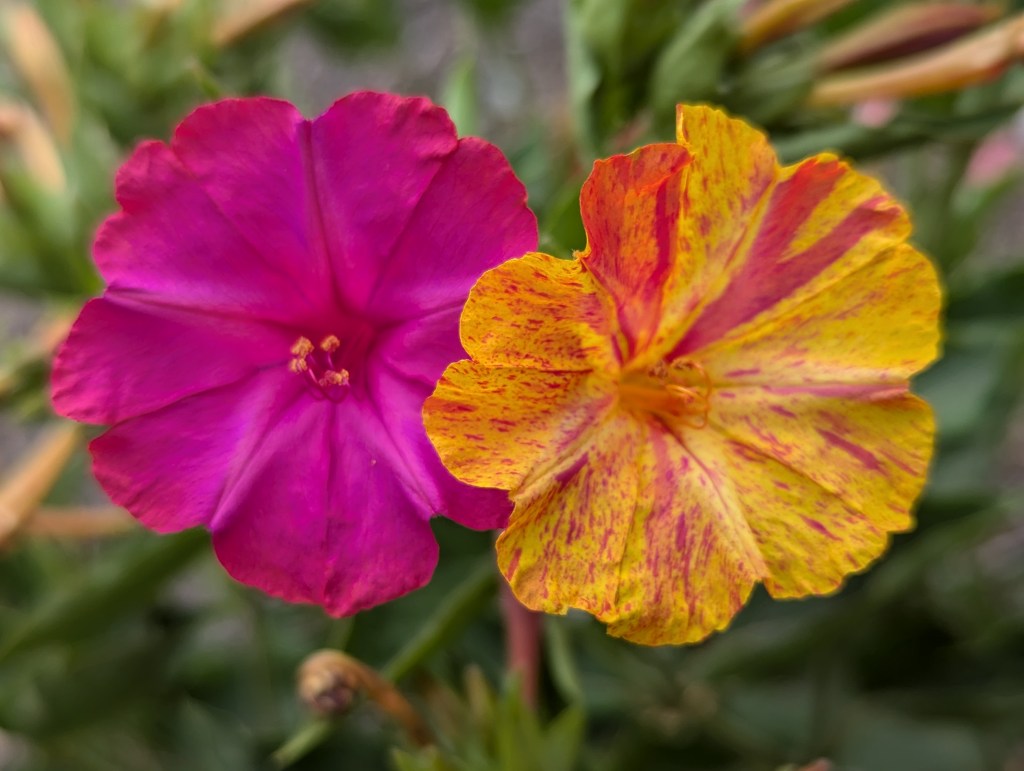
1. Mirabilis jalapa, four o’clock blooms in various shades of pink, including one that can be fragrant about 4:00 and into evening. It alternatively can bloom white, red, magenta, yellow, or with striped combinations of colors. Different colors may bloom on one plant.

2. Mirabilis jalapa, four o’clock does not exhibit very much variation of floral color here, though. This yellow bloom is one of only three variations. I thought that I noticed simple red bloom through previous summers, but can find none now. I would like to find white.

3. Mirabilis jalapa, four o’clock demonstrates what can occur when the two other colors here combine. It is the third of only three variations that I am aware of. From a distance, it seems to be peachy orange. Some of its flowers are just like the first two pictures here.

4. Nerium oleander, oleander that blooms pink mingles with the oleander which blooms white that I posted a picture of three weeks ago. Oleander is so cheap and common here that, even with oleander scorch, it is still the primary shrubbery for freeway landscapes.

5. Fuchsia magellanica, fuchsia is easy to miss where it is wedged between healthier and prettier hydrangea and canna. I should grow copies of it elsewhere. It would probably be bigger with fuller foliage where it gets more water than the four o’clock and oleander get.

6. Rosa spp., rose is in a rose garden that is nowhere near the four o’clock, oleander and fuchsia, but is too pretty to omit. I believe that it is ‘Double Delight’. It is nicely fragrant. Flowers bloom white with red edges, but fade to mostly pinkish red, just as they should.

This is the link for Six on Saturday, for anyone else who would like to participate: https://thepropagatorblog.wordpress.com/2017/09/18/six-on-saturday-a-participant-guide/

Runt

What a pathetic tropical hibiscus flower! It is only about two inches wide. It should be bright red instead of this faded terracotta pink. It even lacks foliage in the background. So, why did I take a picture of it? I was impressed by this flower because it bloomed on a cutting that is still in the process of rooting. I should have removed the bud when it appeared, to conserve resources for root growth. Instead, I let it bloom to see what would happen. This is the result. Knowing all that I know about it, I am somewhat impressed. Of course, I plucked the flower off after taking its picture. After all, I am a nurseryman, not a gardener. I want the cuttings to root as efficiently as possible. Actually, more of them than I expected seem to be rooting, so there may be a surplus of these particular hibiscus in the future. Cuttings of another cultivar that blooms yellow did not perform so well. Only three survived so far, and they are rather wimpy. I may need to go back to collect more cuttings for that one. I also would like cuttings from a cultivar that blooms orange.

Six on Saturday: Abandoned

These are a few plants that survived where my former home was abandoned, and where the new home is to be built. Some of them had been here since 2006 nineteen years ago.

1. Cereus peruvianus, night blooming cereus is from Brent’s former Miracle Mile garden balcony. I do not know why it is so spiny now. Maybe it is angry about being abandoned. Aeonium arboreum, common houseleek is from another friend’s garden near Monterey.

2. Crassula arborescens spp. undulatifolia, ripple jade, as well as the pinwheel aeonium below, remain unidentified. These names that I present here are merely guesses of their identities. Anyway, I procured this from a jobsite that I worked at in Hayward years ago.

3. Aeonium haworthii, pinwheel aeonium came from the same garden that the common houseleek came from near Monterey. The slope that it is attached to is actually too steep to stand on. Yucca recurvifolia, curve leaf yucca is from an old jobsite in Boulder Creek.

4. Aloe arborescens, candelabra aloe came from the home garden of an old friend in the East Hills of San Jose. It is higher on the same steep slope as the pinwheel aeonium and curve leaf yucca. It should grow better and produce pups for dividing with a bit of water.

5. Pelargonium graveolens, rose geranium impresses me most because it survived for so long, like the other perennials, but is supposedly not as resilient as they are. I found this in an old home garden in San Francisco, although I believe that it is common elsewhere.

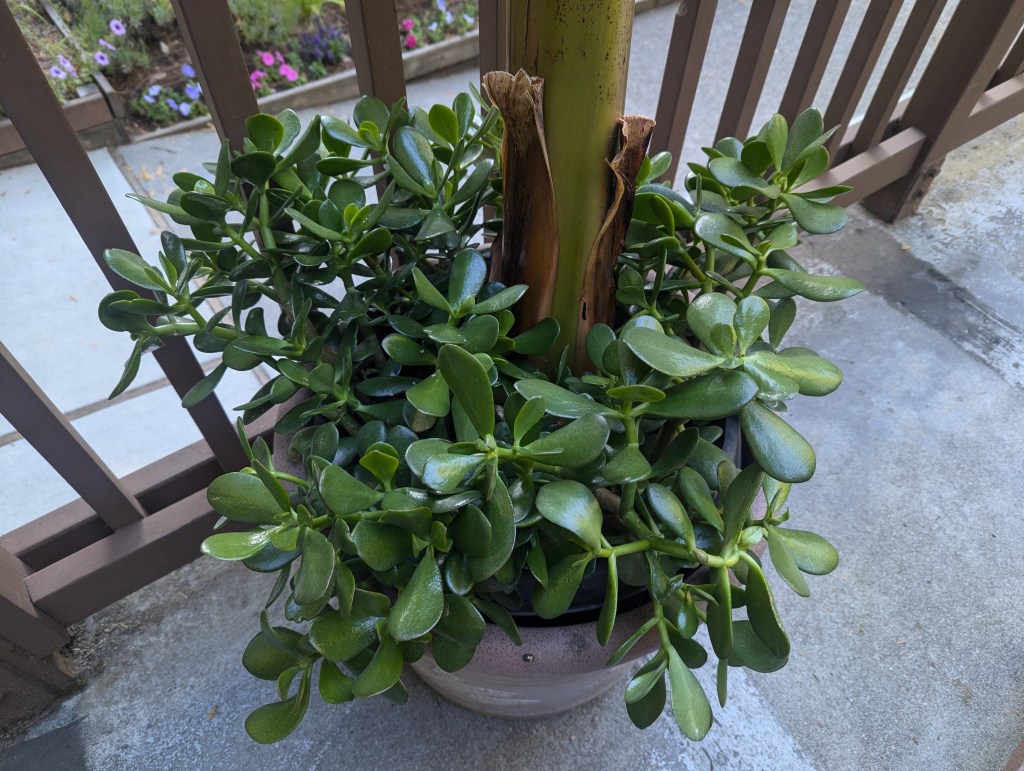
6. Iris pallida, Dalmatian iris is important because it is from the garden of my maternal maternal great grandmother in Oklahoma. I acquired it when I was about four. Crassula ovata, jade plant was from my former home in town, where I lived after the earthquake.

This is the link for Six on Saturday, for anyone else who would like to participate: https://thepropagatorblog.wordpress.com/2017/09/18/six-on-saturday-a-participant-guide/

Oregon Grape

Oregon grape, Mahonia aquifolium, is the Official State Flower of Oregon. Fruit such as this develops after its bright yellow bloom. It is nothing like grapes, though. It is edible, but unimpressive alone and fresh. Locally, it is not abundant enough to bother with collecting for culinary application, such as jelly. Wild plants are both rare and scarcely productive. Landscape plants are not much better. That justifies growing it in a garden where fruit production can be promoted. Perhaps it requires specialized pruning, like other species that are grown for fruit. Perhaps, like cane berries, it would be more productive if its old canes get pruned out annually. I really do not know, and am therefore receptive to suggestion. I already intend to grow it, although it will take a few years to get enough fruit to do anything with. Not so long ago, I was similarly intrigued by the native but ignored blue elderberry, which I found to be as useful as black elderberry of the East. My blue elderberry jelly won more ribbons than I can remember at the annual Jelly Competition of the Boulder Creek Harvest Festival. A blue ribbon for Oregon grape jelly would be excellent!