 Bearded iris can bloom in almost any color. It is expected of them. There is not much they can do to surprise us.
Dahlias exhibit a remarkable range of both color and floral form. Only a few colors are beyond their range.
Roses, gladiolus, freesias, tulips, hyacinths, petunias, pansies, primroses and several of the most prolific bloomers are expected to provide many choices of color.
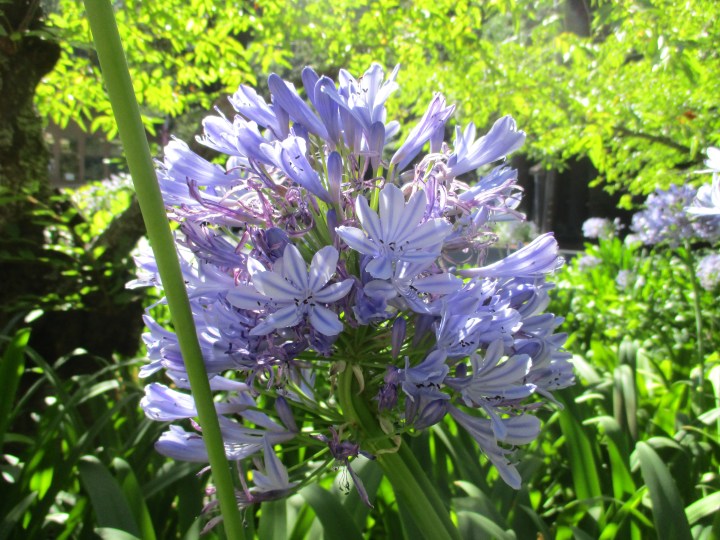
Other flowers are not so diverse. Forsythia blooms only in bright yellow, or perhaps a lighter hue of yellow. Mock orange blooms only in white, either single or double. Until recently, before purple was invented, the common species of lily-of-the-Nile were either blue or white. We tend to appreciate such flowers for their simplicity, and do not expect anything more from them.
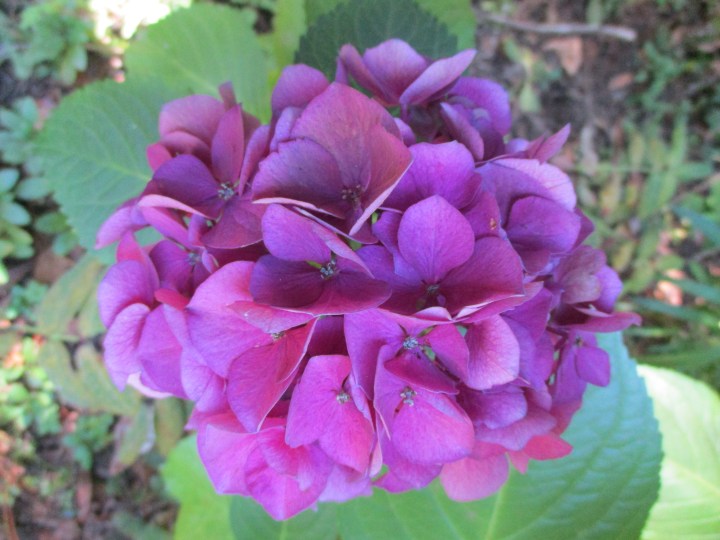
Decades ago, hydrangeas were either white or pink or blue. I say ‘either’ because what seems to be three choices is actually only two. White hydrangeas were always white. Pink or blue hydrangeas were the same, but were pink in alkaline soil, or blue in acidic soil. Blue hydrangeas planted into alkaline soil turned pink. Conversely, pink hydrangeas turned blue in acidic soil.
In the slightly alkaline soil of the Santa Clara Valley, pink hydrangeas were common. Blue hydrangeas were fertilized regularly with aluminum sulfate or some sort of acidifying fertilizer.
In the more acidic soil of the West Coast of Washington, pink hydrangeas would have been blue without lime.
Some more recently bred cultivars of hydrangea excel at either pink or blue. It does not take much to convince them to exhibit their preferred color in less than conducive conditions. These cultivars made it easier to grow blue hydrangeas in the Santa Clara Valley, or pink hydrangeas on the West Coast of Washington.
Then breeding got ridiculous. Hydrangeas were bred to bloom reliably in rich shades of purple, red, or dark blue, with minimal sensitivity to the pH of the soil. They are appealing to those who like these unnaturally rich colors; but to those of us who expect hydrangeas to bloom in white or traditionally soft hues of pink or blue, they are just too weird.
 Big trees get big problems. Part of our job is to tend to these problems before they become dangerous. Many of these problems are somewhat easy to identify. A deteriorating ponderosa pine with browning foliage it difficult to ignore if it is tall enough to be seen above the rest of the forest more than a mile away.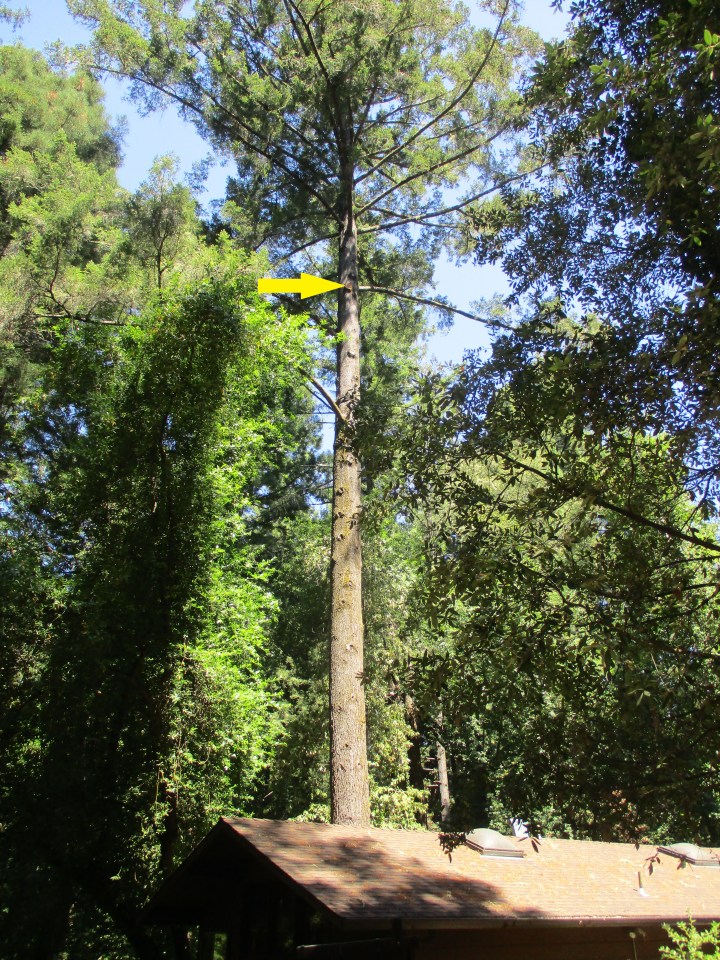




 Among pines, firs, redwoods and most excurrent trees (with central leader trunks), stubs or stumps of limbs that were shed are common and more apparent than they are among decurrent trees (which branch into many main limbs). The older lower stubs slowly but eventually decay and fall away as the trunks compartmentalize (heal over) where they were formerly attached.
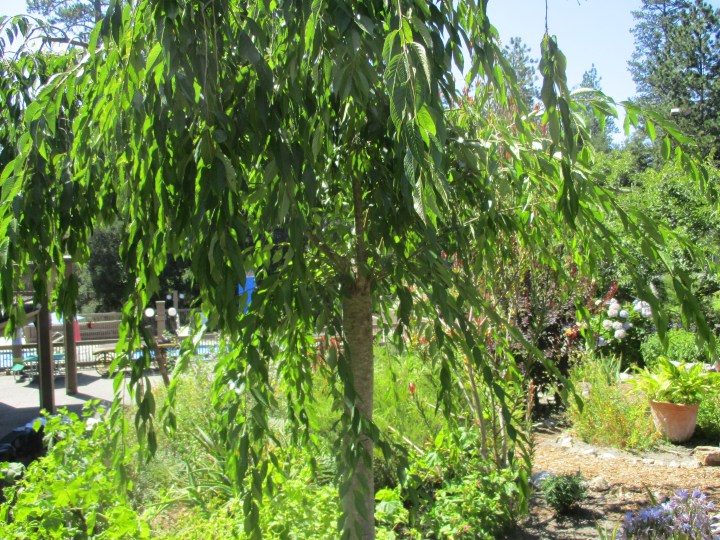 Weeping flowering cherry is another type of tree that almost never gets appreciated like it should. Like so many Japanese maples, they get planted into situation where so-called ‘gardeners’ shear them into nondescript globs of worthless foliage that only get in the way. Some get shorn so regularly that they are deprived of bloom. Their form and bloom are their two main assets.
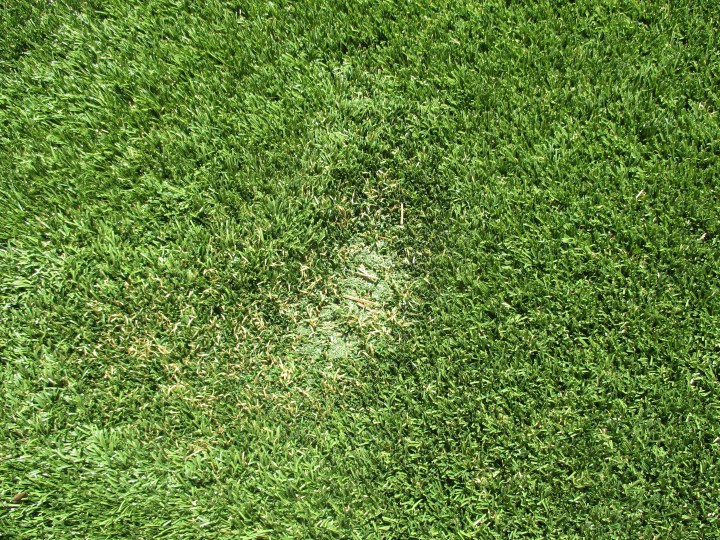 The lawn around the three small but gnarly oaks that were featured this morning in ‘


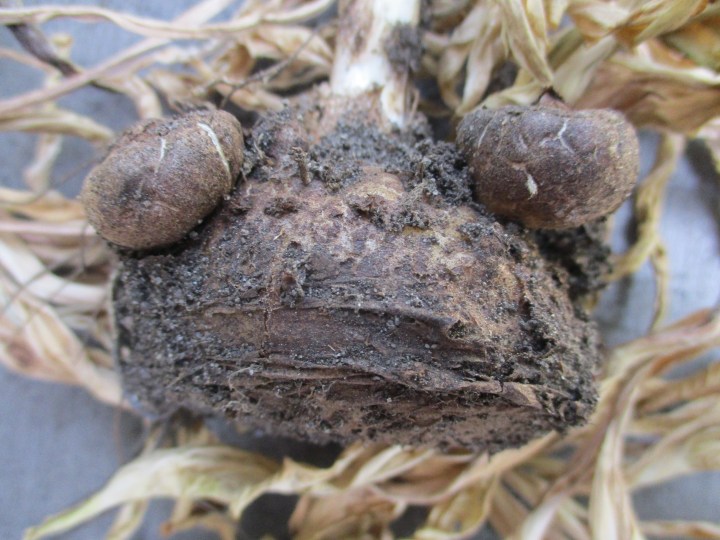 Wednesday is my day to rant. However, I neglected to get out to find a picture or even a topic to rant about. Instead, I found this ugly little . . . what I believe to be a dormant rhizome. It looks more like a tuber or a tuberous root, and very well could be. Someone at work brought it from his home garden, where countless more naturalized and became aggressively invasive.
 This grand sycamore has likely been here since the third day of Genesis. A few of the top branches got broken off when Noah’s Ark floated over. When I was a little kid, it was on the edge of a vacant field where road debris was dumped, and older kids rode their dirt bikes. Now it is on the western edge of the parking lot of Felton Covered Bridge Park. I write about it sometimes.
