Blue Atlas Cedar

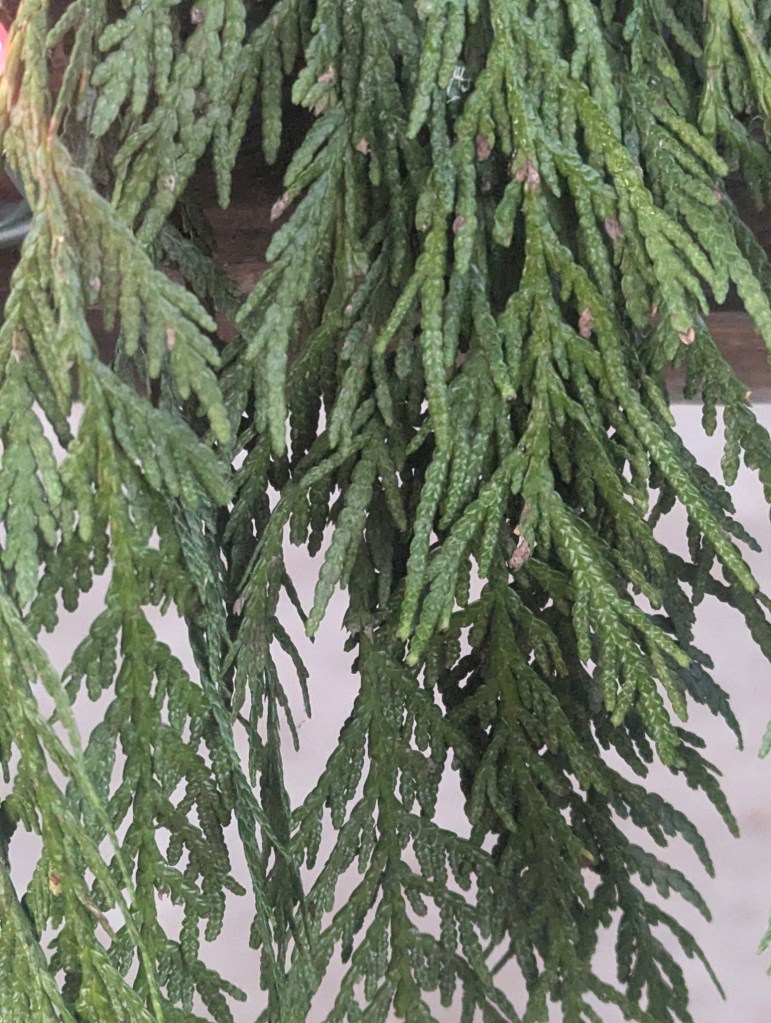
Blue Atlas cedar creates distinctive silhouettes.

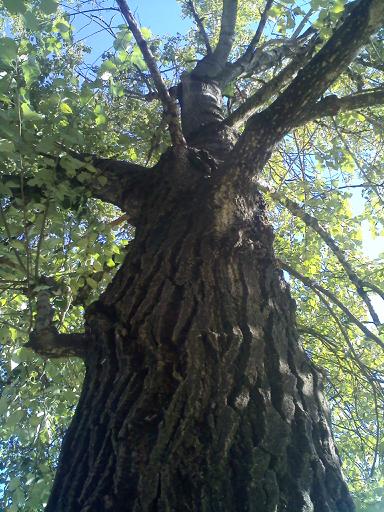
No other coniferous tree develops such distinctively irregular form. Very few exhibit such distinctively steely grayish blue foliar color. Blue Atlas cedar, Cedrus atlantica ‘Glauca’ is no simple shade tree. It is a striking trophy tree that is worthy of prominent display within grand landscapes. It is ideal for traffic circles, without other trees to obscure its boldness.

Blue Atlas cedar is also sufficiently resilient for traffic circles and other difficult situations. Arid warmth, even if enhanced by pavement, roofs or walls, should be no problem. Once established, blue Atlas cedar does not crave much irrigation. It should be able to survive with none. Excessively frequent or copious irrigation is more likely to become a problem.

Blue Atlas cedar can grow a hundred feet tall in the wild within its native range. It should not grow much more than half as tall with good exposure within landscapes. Trunks may slowly grow to almost six feet wide. Canopies can eventually grow wider than thirty feet. ‘Glauca Pendula’ is weeping blue Atlas cedar, which is smaller but even more exquisite. ‘Aurea’ with gold tips, is very rare.

Zinnia

Zinnia look like small dahlia, but are annual.

The longer and cooler nights of autumn will soon finish the season for zinnias. (Most, but not all of the common zinnias are of the species Zinnia elegans.) They are really at their best while the weather is warm through summer and the beginning of autumn. As the garden warms up at the end of next spring, new seedlings can be planted, or zinnia seed can be sown. They like rich soil and regular watering, but are susceptible to mildew in humid spots. Sunny areas with good air circulation are best.

Like related chrysanthemums, zinnias are quite variable. Although the simpler forms remain more popular; double, cactus flowered and crested forms are also available.  Flowers can be less than an inch wide to more than five inches wide. Their color range includes white, yellow, orange, salmon, pink, red, rose, purple, lavender and even green. The narrowly oval leaves can get to about four inches long. Compact types stay about a foot tall and wide. Large types get twice as wide and more than three times as tall. 

Vine Maple

Vine maple works like Japanese maple.

Japanese maples became so popular for their novelty that they are no longer novel. The diversity of their many cultivars is their primary appeal now. Vine maple, Acer circinatum, lacks such diversity, but is actually more novel. It is native from Mendocino County to the southwestern corner of British Columbia. Yet, it is very rarely available at nurseries here.

Vine maple has not been in cultivation for nearly as long as Japanese maple has. This is why its diversity is limited to not much more than a dozen cultivars. Its cultivars are even rarer than the simple species. Only a few ever become available, and almost exclusively by online purchase. Consequently, with very few exceptions, they are initially very small.

Vine maple grows somewhat like Japanese maple, typically with a few sculptural trunks. With regular pruning, it can stay as short as ten feet. It rarely grows more than twenty feet tall. The lobes of its palmate leaves are wider than those of Japanese maple. Leaves are only about three inches long and wide. Foliage develops bright orange color for autumn.

Periwinkle

Periwinkle is both pretty and a weed.

Conflict would likely erupt from any discourse between the city mouse and the country mouse regarding the topic of periwinkle, Vinca major. In rural areas, periwinkle can aggressively invade any area that stays even slightly damp through summer; and it is nearly impossible to eradicate. In urban areas, periwinkle can be a useful and appealing ground cover for difficult situations. It clings to steep embankments, and ventures into shade that is too dark for other ground covers.

Periwinkle can mound up to more than a foot and a half deep with wiry stems and rich green leaves about two and a half inches long. It looks neater and stays lower if shorn or mown down just before new growth develops at the end of winter. Two inch wide sky blue periwinkle flowers bloom mostly as new growth develops through spring, and can bloom sporadically through the end of autumn. ‘Variegata’, with wide white leaf margins, brightens up urns or planters of mixed ferns, and also looks good cascading from planters of mixed annuals or perennials. 

Ranunculus

Ranunculus blooms several months from now.

The shriveled and dried tuberous roots of Ranunculus are not much to brag about. They look more like dehydrated mini calamari than dormant and viable spring bulbs. Yet, they somehow bloom as soon as the weather warms enough after winter. Although they need no vernalization, they need time to grow. Bulbs should be into their garden by December.

Alternatively, small budding plants will be available from nurseries after winter. They are too big for cell packs, so are mostly in four inch pots. Larger one gallon plants often have shabby foliage. Although popular as annuals, Ranunculus can be reliably perennial like other bulbs. They are less susceptible to rot if dug and stored while dormant for summer.

Ranunculus bloom is white, yellow, orange, red, pink or purple. The plump flowers have many papery and densely set petals, like small peonies. They typically stand less than a foot high, and may be only half a foot high. Their finely textured basal foliage stays even lower. It resembles parsley, but is a bit more substantial. It shrivels during warm weather.

English ivy

A few cultivars of English ivy are variegated.

During the 1990’s, English ivy, Hedera helix, evolved beyond small scale ground cover and became popular for pseudo-‘topiary’. It is now commonly trained onto wire frames formed into spheres, cones and all sorts of shapes. English ivy is also a nice greenery to fill in between flowering annuals and perennials in mixed urns and planters, especially where it can cascade downward.

There are all sorts of cultivars (cultivated varieties) for all sorts of applications. ‘Hahn’s Self Branching’ English ivy is probably the most practical for ground cover, since it fills in so reliably and is somewhat tolerant of partial shade. ‘Needlepoint’ had darker and more finely textured foliage; but since it does not cover larger areas so efficiently, it is instead more commonly used as greenery with mixed annuals and perennials, or for pseudo-‘topiary’. All sorts of variegated English ivy, whether alone or as a component to mixed plantings, brightens slightly shaded spots. Variegation ranges from greenish white to yellow. Leaves can be lobed, ruffled, elongated, cleft or even nearly compound; but are generally two to three inches wide. Most have three to five ‘corners’.

Coastal Redwood

Coastal redwoods need room to grow.

Not every garden can accommodate coastal redwood, Sequoia sempervirens. Wild trees can grow hundreds of feet tall, with trunks as wide as thirty feet! None are so big in home gardens, but only because they are still young. They can live for more than two thousand years. By that time, those in urban landscapes are very likely to become major concerns.

Realistically though, urban trees are generally more compact than wild trees. There is no need for extreme height without competition from other similarly tall trees. Besides, lower trees are less vulnerable to wind. Warm and dry wind can desiccate foliage. Strong wind can dislodge branches. Limbs that fall from very high canopies are extremely hazardous.

Almost all modern coastal redwoods from nurseries are of the cultivar ‘Soquel’. They are strictly conical and symmetrical in form, with uniform foliation. ‘Aptos Blue’ exhibits more relaxed form and very slightly bluish foliage. ‘Santa Cruz’ should be more available than it is since it is more resilient to arid warmth. Old seed grow trees are genetically variable. For old formal gardens, they are less formal than younger trees.

Ghost Ivy

Adult ghost ivy growth is shrubby rather than vining. Also, it blooms and produces seed.

Ghost ivy is actually just a fancy name for variegated Algerian ivy, Hedera canarienses ‘Variegata’. Their glossy six inch wide leaves with three or five ‘corners’, are irregularly blotched with dark green, very pale green and white. Like all ivies, ghost ivy can grow as a ground cover, climb like a vine, and eventually develops self supporting branches that bloom and set seed. It may be somewhat less aggressive than unvariegated Algerian ivy, but can still overwhelm perennials, small shrubs, and even small trees.  

Ivy can be allowed to climb tree trunks only if it is not allowed to wrap around and graft onto itself. Otherwise, tree trunks will become constricted as they grow and expand within their ivy wrappers. Because they climb by aerial roots, the various ivies should not be allowed to climb painted or wooden surfaces that can be damaged or succumb to rot. However, some people like the look of ivy cascading down from hefty arbors and porches enough to not mind replacing rotten parts occasionally.  

Contrary to the deep green of Algerian ivy, which adds a cooling effect to sunny landscapes, ghost ivy lightens up dark areas. Ghost ivy is only rarely available in ground cover ‘mud’ flats, or in #1 (1 gallon) cans. Larger plants are not practical, since they take too much time to recover from transplant. New plants are very easy to propagate from cuttings made from pruning debris. Cuttings from shrubby adult growth become shrubby plants.

‘Karpooravalli’ Banana

‘Karpooravalli’ is a relatively undemanding cultivar.

‘Cavendish’ and its variants have always been the most familiar types of banana locally. They are the most popular that are available from produce markets. From nurseries, they remain the most commonly available cultivars. A few other options are only beginning to become available. A few of these could be more reliably productive within local climates.

‘Karpooravalli’ has been available here for quite a while, but remains uncommon. Those who are familiar with it often describe it as wanting ‘only sunshine and water.’ It tolerates soil of inferior quality better than other cultivars, and craves less fertilizer. Within rich soil, it may crave none. It should likely stay away from fences that its pups could sneak under.

‘Karpooravalli’ is supposedly the sweetest of the Indian bananas. Although its fruit is a bit shorter than more familiar bananas, it is often a bit plumper. Ripe fruit is yellow with pale green blush, and delightfully aromatic. Foliage is more resilient to wind than that of most other cultivars. It can stand more than fifteen feet tall on its very vigorous pseudostems.

Dwarf Alberta Spruce

Dwarf Alberta spruce is more like a strictly conical shrub than a small tree.

Unlike other related white spruce, which get more than fifty feet tall, dwarf Alberta spruce, Picea glauca albertiana ‘Conica’, stays smaller than its Latin name, rarely getting more than seven feet tall. It is so dense and conical that it should never need to be pruned. Shearing only damages its short light green to grayish green needles. Dwarf Alberta spruce is compact enough to live in large tubs or urns, as long as its sensitive roots are well insulated. (Concrete or wooden planters are well insulated, so do not transfer too much heat to the roots within. Ivy or ground cover cascading over and shading planters also helps.) Foliage should be sheltered from harsh exposure, since it can be desiccated by warm breezes or reflected glare, like from large windows or light colored south facing walls.