Bigleaf Maple

00729
A maple with unusually big leaves.

Its natural coastal range extends from the extreme southern corner of Alaska to the southwestern corner of California. Another inland range occupies foothills of the Sierra Nevada. Bigleaf maple, Acer macrophyllum, is the most common and prominent native maple here. However, it prefers the seclusion of forested riparian situations at higher elevations locally. It is rare in urban gardens.

Bigleaf maple is best in the wild anyway. It dislikes the aridity of most of the urban and suburban areas of California. (San Jose is in a chaparral climate. Los Angeles is in a desert climate.) Roots of bigleaf maple are potentially aggressive, especially if irrigated generously. They easily displace pavement. Nonetheless, where climate and circumstances allow, bigleaf maple is a grand tree.

Wild trees grow as tall as a hundred fifty feet within forests where they compete for sunlight. Well exposed suburban trees should stay lower than forty feet, while extending their canopies broader than tall. The big and palmately lobed leaves are mostly more than six inches wide. Foliage turns yellow in autumn, and is abundant as it falls. Self sown seedlings often grow under mature trees.

Water Lily

50715+
Water lily bloom emerges from the depths.

The fragrant flowers of water lily are unreal! They either float on the surface of the water, or hover just above. Abundant pointed petals radiate outward from central tufts of pronounced stamens. Most flowers are soft hues of yellow, pink, blue, lavender, peachy orange or white. Some are brighter yellow or pink, or richer shades of red or purple. Some open in the morning. Others open in the evening.

The rubbery leaves that float on the surface of the water are nearly circular. Some are symmetrically cleft to the center, like Pac-Man or a pizza with a slice taken out. The thick rhizomes that the foliage and flowers emerge from stay buried in pots or mud under the ponds that they live in. Rhizomes can be divided to propagate, but take a year or so to recover and bloom.

Shiny Xylosma

00722
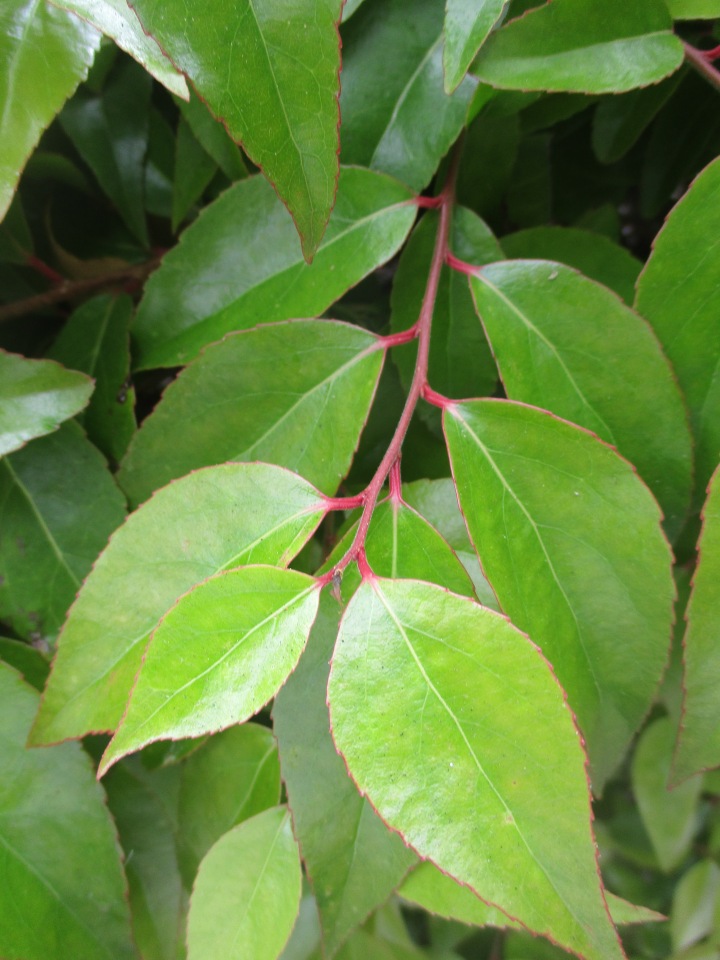
Shiny xylosma should get more respect.

As a backdrop for more interesting plants, shiny xylosma, Xylosma congestum, may not get the respect that it deserves. If it seems to be a bit too common in some big landscapes, it is probably because it is so practical. It can function like the strictly shorn hedges that were popular decades earlier, but is a bit more adaptable to modern landscape styles. It can be formal or quite informal.

Formal hedges of shiny xylosma are typically no taller than eight feet, and a bit more plump than old fashioned privet hedges. They can get a bit sparse if kept too lean. Informal hedges are mostly lower and plumper, with casually irregular surfaces and no corners. Old shiny xylosma can grow as a small tree more than eight feet tall. Younger specimens are of the shorter cultivar, ‘Compacta’.

Established shiny xylosma is surprisingly resilient. Roots disperse impressive distances to reach moisture so that old specimens can survive without direct irrigation. Although, they prefer regular watering. Overgrown specimens can eventually regenerate nicely from coppicing or pollarding. The main disadvantage is that vigorous new growth will likely develop concealed but sharp thorns.

Million Bells

50708-c
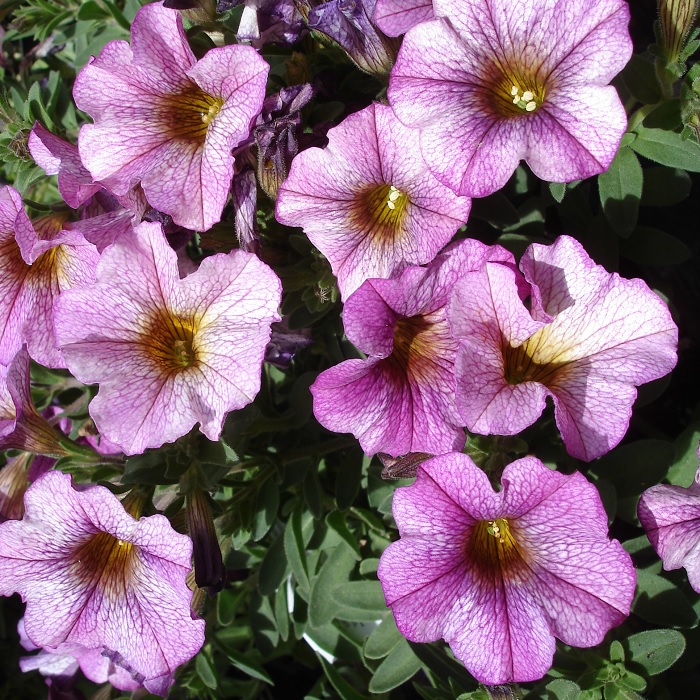
Million Bells look like small petunias.

Its name may be something of an exaggeration, but million bells, or Calibrachoa, certainly is profuse. However, although it is potentially perennial, it is usually grown as a warm season annual, so it  only has a few months from spring to autumn in which to bloom with a million flowers. Many plants combined might be up to the task.

The tiny flowers resemble petunias more than bells. Actually, the entire plant grows something like very compact petunias, which they are obviously closely related to. The stems are too limber to stand half a foot tall as they spread to about a foot wide. The small and unremarkably hazy green leaves are adequate backdrop for bloom.

The bloom is the remarkable part, displaying all sorts of shades and hues of red, yellow, blue, purple, orange, pink and white. There are not many colors left out. Just like petunia, million bells cascades nicely from pots. Unlike petunia, it does not benefit from deadheading (removal of deteriorating flowers). What is good for petunia is generally good for million bells, although a slight bit of shade is somewhat more tolerable. They want rich soil, regular watering and regular application of fertilizer. (Monthly application of common slow release fertilizer is probably as good as anything fancy.)

California Bay

00715
California bay is not Grecian bay.

Because of the common name, California bay, Umbellularia californica, sometimes substitutes for Grecian bay. The two are actually very different. Grecian bay is a culinary herb that grows as a compact tree. California bay has a distinctively pungent flavor that is objectionably strong for most culinary applications. It grows fast to thirty feet tall, and gets a hundred feet tall in shady forests.

Because it gets so big and messy, California bay is not so popular for planting into home gardens. However, because it is native, it sometimes self sows into landscapes. Some mature trees live within gardens that developed around them. California bay can work well in spacious landscapes, with plants that do not mind its shade and leaf litter. Annuals and seedlings dislike the leaf litter.

Old forest trees make the impression than California bay typically develops an awkward and lanky form. That is only because they do what they must to compete for sunlight. Well exposed trees, although lofty as they mature, are more densely structured. Some have a few big trunks, with checked gray bark. Old trees are likely to develop distended basal burl growth known as a lignotuber.

Periwinkle

50701-c
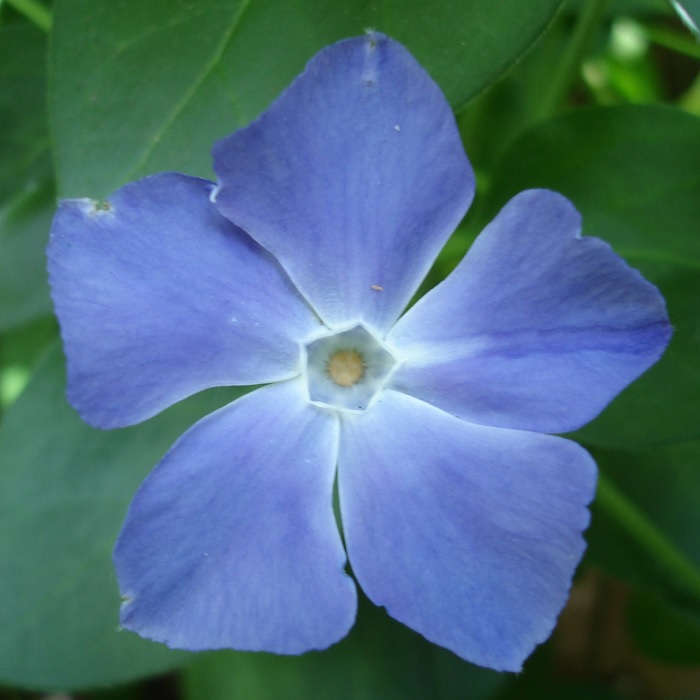
Bloom is sporadic, but the delightful purplish blue color is worth it.

If the Latin name of dwarf periwinkle is Vinca minor, it is logical that large periwinkle should be Vinca major. Large periwinkle is more commonly known simply as periwinkle or common periwinkle, although it is not as common as dwarf periwinkle is, at least in landscapes. In some regions, it has naturalized as an invasive weed.

Some might accurately say that periwinkle is shabbier than the relatively neat and dense dwarf periwinkle. Others might say that it is just rustic or informal. The wiry stems stand less than a foot tall before they bend over from their own weight. Fallen stems can root where they touch the ground, and grow into new plants over winter.

The evergreen foliage is rich green, and a bit darker than the top of a billiard table. The simple paired leaves are about an inch and a half to two inches long. The slightly purplish blue flowers are about an inch and a half wide, with five petals each. Bloom is sporadic, but almost continuous, except for a lapse through winter.

Cherry Laurel

00708
Cherry laurel makes a delightful hedge.

Victorian landscapes made good use of cherry laurel, Prunus laurocerasus. It works well as a large formal hedge. For more relaxed modern landscapes, it makes delightful informal screen. The main reason that it is now less popular than other hedging shrubbery is that it gets rather broad if not shorn back regularly. If allowed to grow as a low rounded tree, it can get twenty-five feet high!

Regularly shearing is not necessarily frequent. It should be efficient though. Confinement for such broad shrubbery is important. If shorn back farther than where the outer surface is desired late in winter, fresh new foliage can fluff out nicely within allowable space through spring. Subsequent aggressive shearing to maintain confinement may only be necessary once or twice during summer.

The big leaves are about three inches long, and luxuriantly glossy. If hedges get shorn less aggressively, but more frequently than two or three times annually, such big leaves can be rather shabby much of the time. If shorn less frequently, small trusses of creamy white flowers may get a chance to bloom. Cultivars are more compact than the species. One cultivar is variegated with pale gold.

Butterfly Bush

50624c
Garden varieties are less likely to naturalize than the straight species is.

Many plants are so easy to grow that they become invasive weeds. Butterfly bush, Buddleja davidii, has done exactly that in some regions, and is only controlled here by the arid climate. Yet, once established, it does not need much water at all, and can survive on rainfall in some spots. They only want good sun exposure.

Mature plants can get more than 15-feet tall and half as broad, with long arching limbs. Most garden varieties stay smaller, and some do not get much more than six feet tall. The evergreen foliage is sage green, grayish green or chartreuse. The paired leaves are about the size and shape of willow or eucalyptus leaves.

Conical trusses of densely packed tiny flowers that bloom in mid-summer can be various shades of blue, purple, red and pink, as well as dusty white. Some new varieties bloom soft orange or yellowish orange. The more compact and colorful modern varieties are not as fragrant as old classics are.

Zucchini

00701
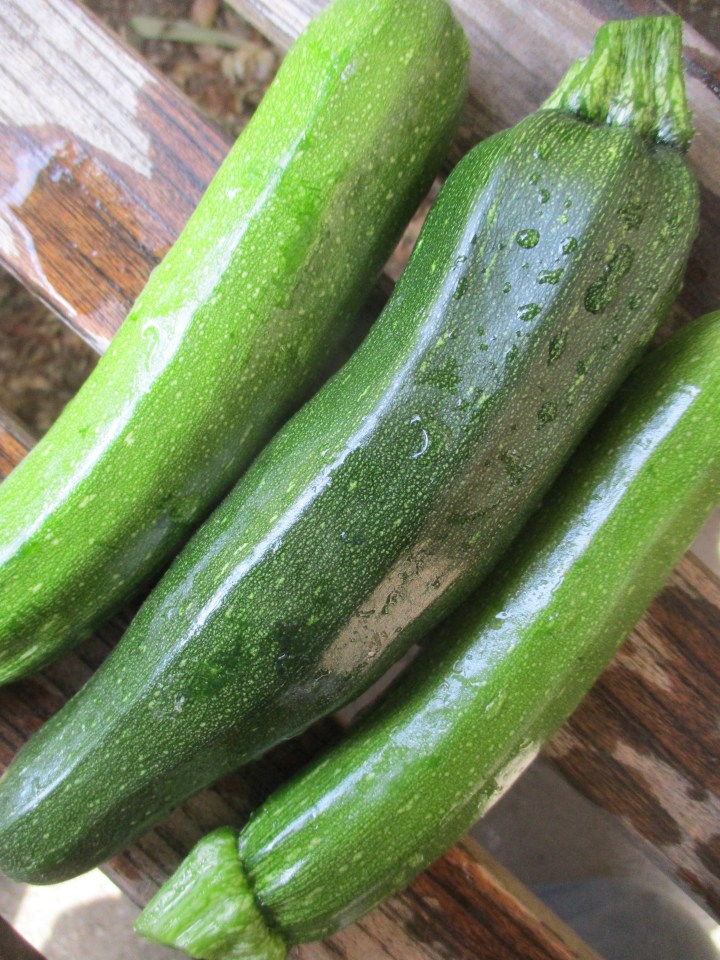
Zucchini is the exemplary summer squash.

Zucchini, Cucurbita pepo, is the epitome of summer squash. Because it is so easy to grow, it is the primary choice for gardens that can accommodate only one set of summer squash plants. The fruits can be yellow, dark green or dark green with a lacy gray pattern, Yet, the common medium green variety is still the most popular. It is likely the most vigorous and most productive of them all.

Like all summer squash, zucchini wants good warm exposure, rich soil and regular watering. Powdery mildew can be a problem if the foliage gets wet from watering late in the day. Foliage that is ruined by powdery mildew should be removed. Plants are easiest to grow from seed sown directly where they are desired, after the last frost. Two or three plants should grow together in each set.

Fruits are best before they get longer than eight inches or so, although they are edible at any stage. They can eventually grow as big as baseball bats. However, plants that produce such big fruits produce almost nothing else. Regular harvest promotes prolific production. Male flowers are more abundant than females flowers that produce the fruits. All flowers are edible before they shrivel.

Agave filifera

50617c
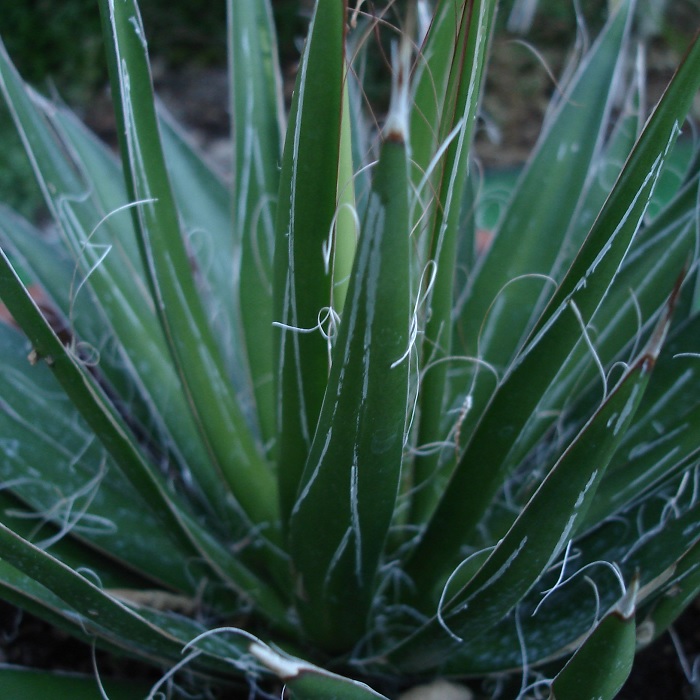
Foliage is better than bloom, and lasts longer.

For a tough perennial that is is grown for striking foliage, the small Agave filifera has a remarkably striking bloom as well. The one and a half inch long flowers are impressive pale green, and mixed with faded flowers. What makes them so compelling is that they are displayed on sculptural floral spikes that stand nearly six feet tall.

Unfortunately, each dense rosette of foliage is monocarpic, which means that it dies after bloom. Pups (sideshoots) sometimes develop as a main rosette deteriorates. If multiple pups develop and get crowded, they can be divided. Each rosette takes a few years to bloom, so should be around for quite a while.

The stiff evergreen leaves get about a foot or a foot and a half long, with unpleasantly sharp tips. Vigorous plants have white filaments that peel from the edges of the leaves. Like all agaves, Agave filifera, does not need much water once established. Unlike other agaves, it can tolerate a slight bit of shade.