 Whether it is grown intentionally, or considered to be a common roadside weed, there is no denying that perennial pea, Lathyrus latifolius, knows how to brighten some of the wilder parts of the garden with brilliant purplish pink bloom. Some garden varieties bloom either pale pink or white, just like a few random feral plants do. Bloom resembles that of sweet pea, but without fragrance.
By their second year, the potentially six foot long vines might be a bit too rampant for more refined situations. They happen to work nicely to climb over wood piles and otherwise unsightly chain link fences though, even if only temporarily until they die back to their fat subterranean taproots by the end of summer. They will be gone before the firewood they conceal becomes useful again.
New bluish green growth regenerates vigorously at the end of winter, but does not bloom until early summer. The compound leaves are comprised of only a single pair of narrowly oblong leaflets with a branched tendril in between. Each leaflet is about two inches long and less than half as wide. Stems and petioles are winged. Once established, perennial pea can be difficult to eradicate.
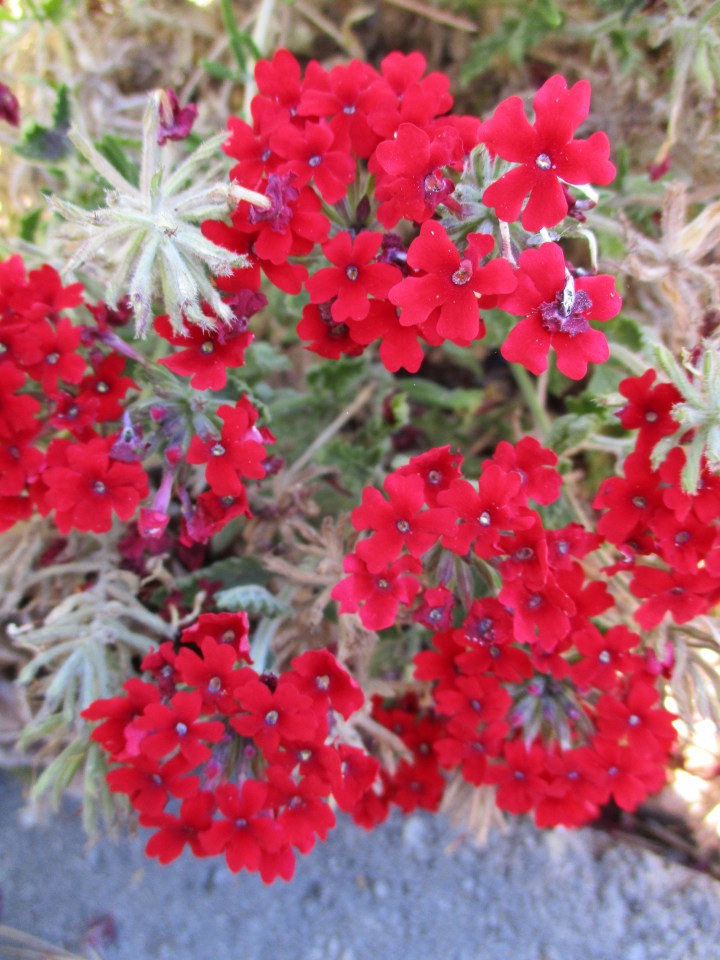 It is fair to say that garden verbena, Verbena X hybrida, is a reliable warm season annual. It gets planted in spring to spread out and bloom through summer with bright pink, red, purple or almost blue, or softer pastel pink or pale white. It is commonly replaced with cool season annuals by late autumn. However, garden verbena is actually a short term perennial that can survive winter to bloom for a few years.
 If California poppy had not been designated as the California state flower, Matilija poppy, Romneya coulteri, might have been. It was nominated, but was less popular at the time, partly because it was familiar only to those near its native range in Southern California. Some of us know it as ‘fried egg flower’, because the big and floppy white flowers with yellow centers look like fried eggs.
 It is impossible to say who the parents were. So many specie were hybridized to develop the many cultivars of flowering maple that the Latin name of the collective group is simply Abutilon X hybridum, which means exactly what it looks like. They are hybrids of various and rarely documented species of Abutilon. The ‘X’ dispels any doubt. ‘Chinese lantern’ is another common name.
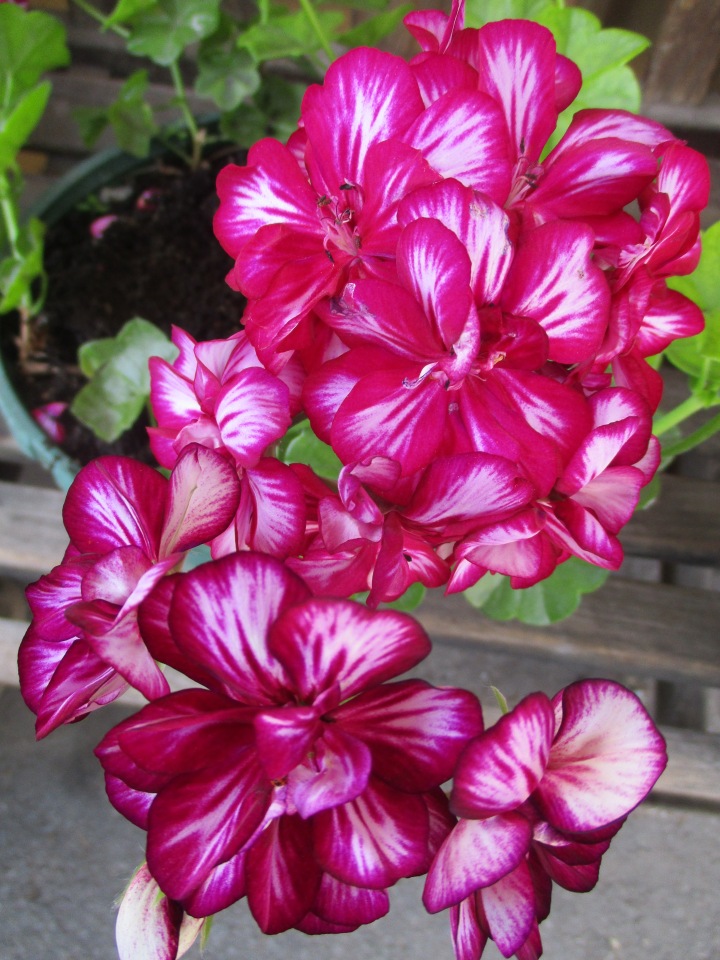 This is one of the more traditional perennials for old fashioned window boxes, not only because it cascades downward to avoid obstructing associated windows, but also because, back before window screens were commonly available, the aromatic foliage was purported to repel mosquitoes. Ivy geranium, Pelargonium peltatum, is splendid for hanging pots and retaining walls as well.
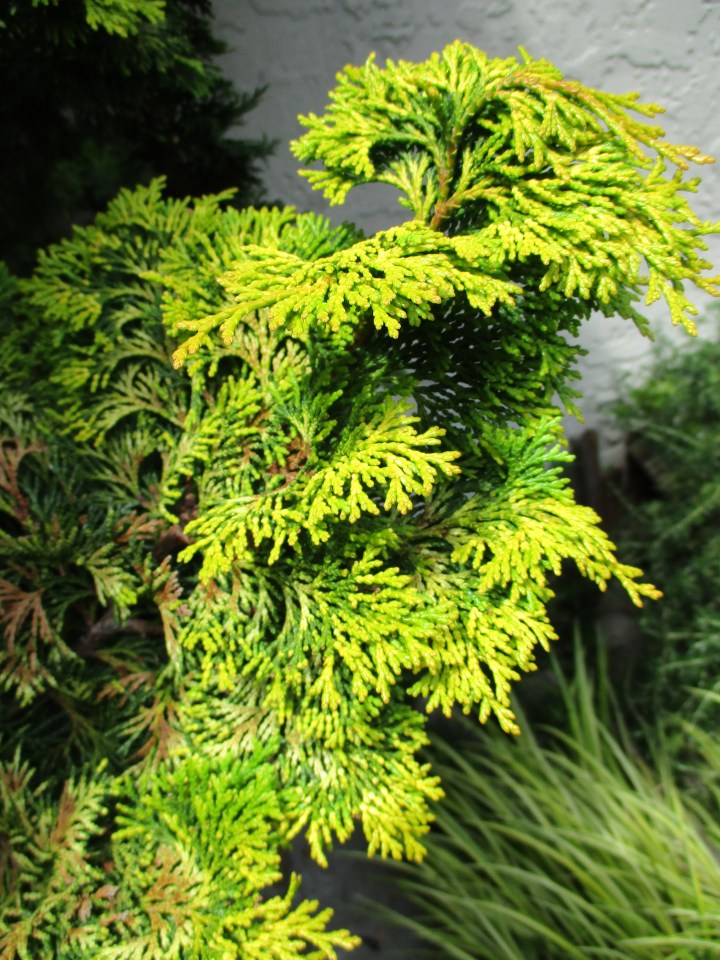 In California, it is hard to imagine that hinoki cypress, Chamaecyparis obtusa, gets big enough to be harvested for lumber in Japan. Almost all of the local garden varieties stay quite short. The largest rarely get up to second story eaves. The most compact types that are grown for bonsai, do not get much more than a few inches tall. Most are somewhere in between, to about ten feet tall.
 There is some debate about the origin of the common name of Confederate jasmine. Some attribute it to its popularity in the former Confederate States of America. Others believe it originated in the Malay Confederacy, much closer to its native range. That is irrelevant here, where we know this popular vine with very fragrant flowers simply as star jasmine, Trachelospermum jasminoides.
 ‘Shrubbery’ sounds so unflattering for a pine; but mugo pine, Pinus mugo, is not really much of a tree. The tallest trees do not reach eaves. Most old trees are only a few feet tall and about twice as broad, with strictly rounded form, and dense forest green foliage. The stout paired needles are only about one or two inches long. The plump cones, which are rarely seen, are not much longer.
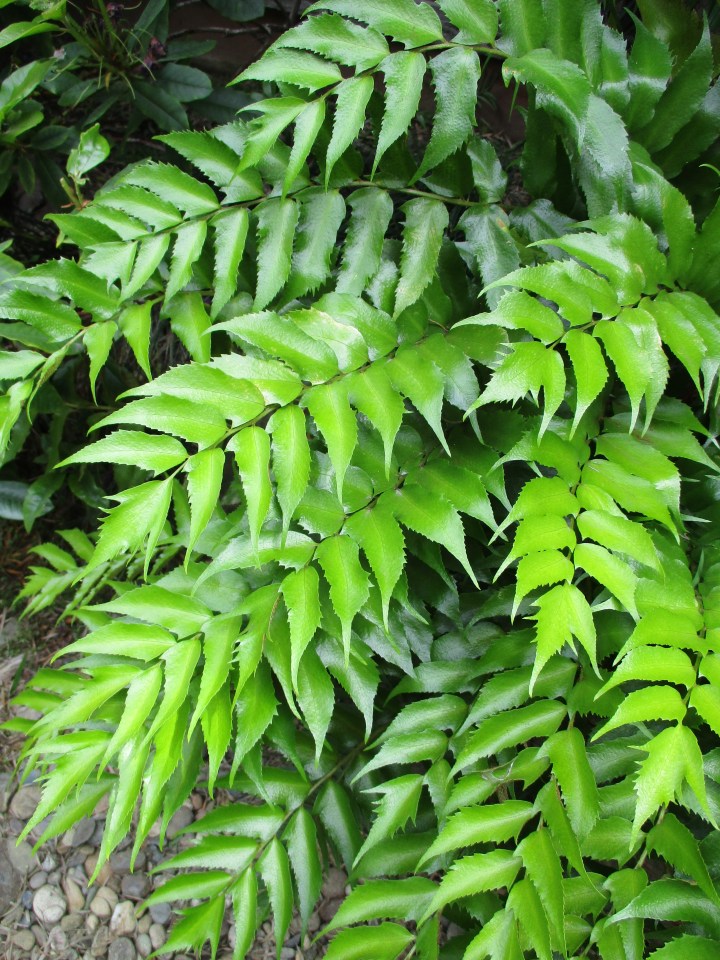 This is one of those perennials that has mixed reviews. Although relatively tough once established, holly fern, Cyrtomium falcatum, is susceptible to rot and fungal leaf-spot. It likes to be watered somewhat regularly, but rots if the soil is constantly saturated. Leaf-spot is not as dangerous as it looks, but can be unsightly. Too much fertilizer (to correct the damage) can burn the foliage too.
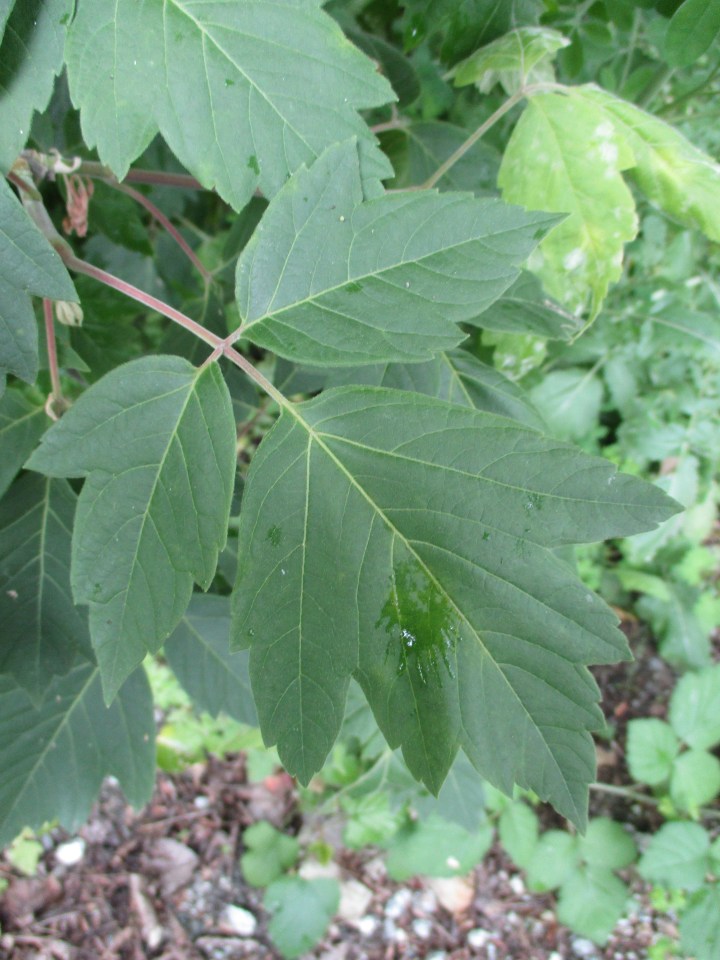 This ain’t no ordinary maple. Although there are other maples with trifoliate leaves (divided into three distinct palmately arranged leaflets), box elder, Acer negundo, is the only maple with pinnately compound leaves (divided into three or more distinct leaflets that are arranged pinnately on a central rachis). Leaflets might be solitary too. Almost all other maples have palmately lobed leaves.
