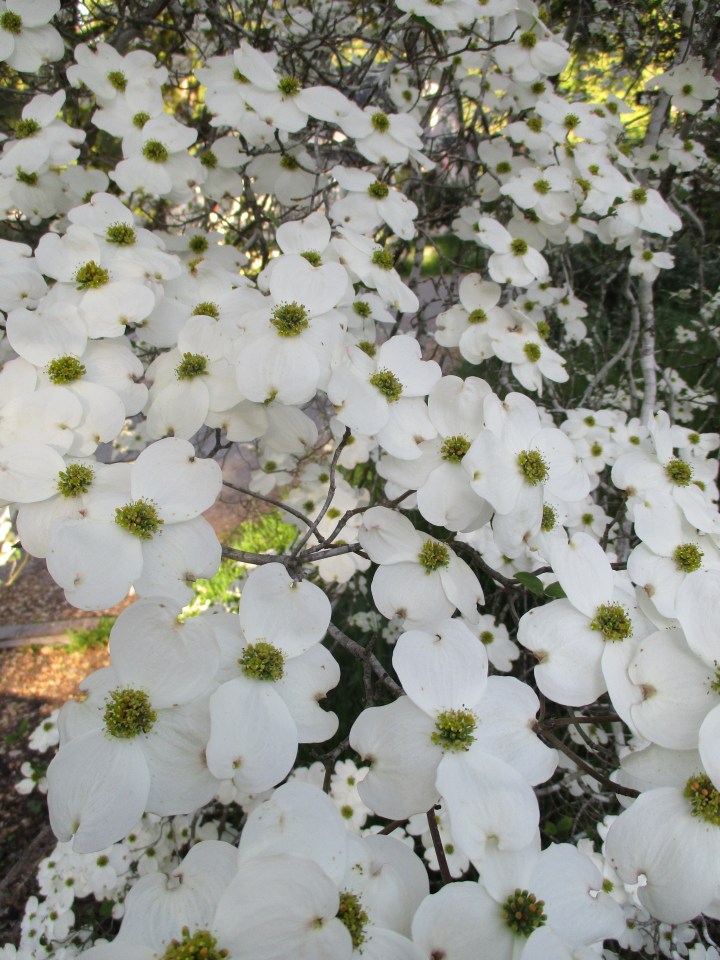
 Flowering dogwood, Cornus florida, seems like it should be more popular here than it is. It blooms spectacularly in April. The foliage can color nicely in autumn. Mature trees are proportionate to medium sized or smaller suburban gardens. However, the limiting factor to their popularity in the local climate is that they are understory trees that prefer to be in the partial shade of larger trees.
They certainly do not need to be shaded all day. Nearby trees or tall buildings that shelter them during the hottest part of the afternoon might be sufficient. Foliage that is too exposed gets roasted by hot sunshine or drying breezes while the weather is warm, especially if exposure is enhanced by glare from nearby walls or pavement. Otherwise, flowering dogwood is not overly demanding.
The abundant white, pink or rarely brick red bloom is actually comprised of modified colorful leaves known as bracts. Each cluster of tiny green flowers is surrounded by four upward facing bracts. Simple paired deciduous leaves develop after bloom. The leaves of some cultivars are variegated with white or yellow. Mature trees can reach upstairs eaves but typically stay lower and broader.
 Once it gets into a lawn, English daisy, Bellis perennis, can be very difficult to get rid of without leaving bald spots. The thin but tough rhizomes creep along the ground, producing rounded leaves that get no longer than two inches. Mowers barely scratch the surface. English daisy seems to prefer partly shaded areas to drier sunny spots. Although invasive, it can be pretty in informal lawns.
 Although a relatively small agave, the Queen Victoria agave, Agave victoriae-reginae, is also one of the most striking. Mature plants form dense foliar rosettes that are between only a foot, and a foot and a half tall and wide. What is so striking about them is the abundance of stout succulent leaves that can be so densely set that some older plants look like big, round and green pine cones.
 What an unappealing name! That is probably why so many of us know it simply as ‘wild onion’ or ‘allium’. Few of us bother to get sufficiently acquainted with it to know it by the species name of Allium triquetrum, which is actually not much more appealing than ‘onion weed’. It is not really wild, but has naturalized as an invasive exotic, or in other words, ‘weed’. At least it is a pretty weed.
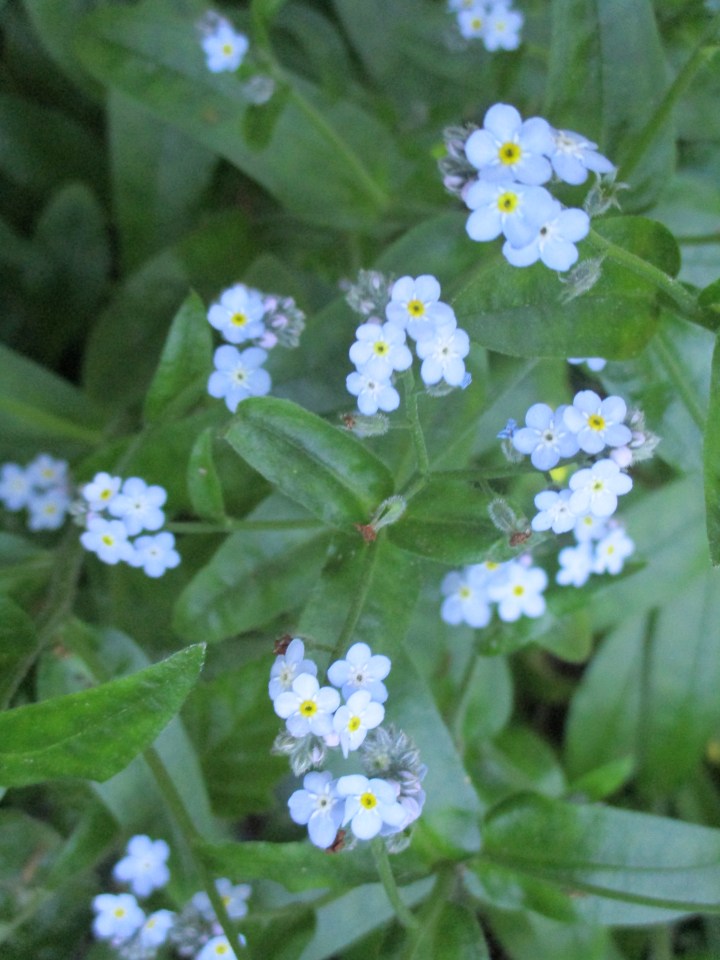 It is not easy to forget annual forget-me-not, Myosotis sylvatica. Even if it dies back early in the heat of summer, it will probably throw plenty of seed to regenerate through next winter, and bloom again by next spring. It can easily naturalize in damp or riparian areas, and might be considered to be a weed; but like nasturtium and foxglove, it is a polite weed that is not aggressively invasive.
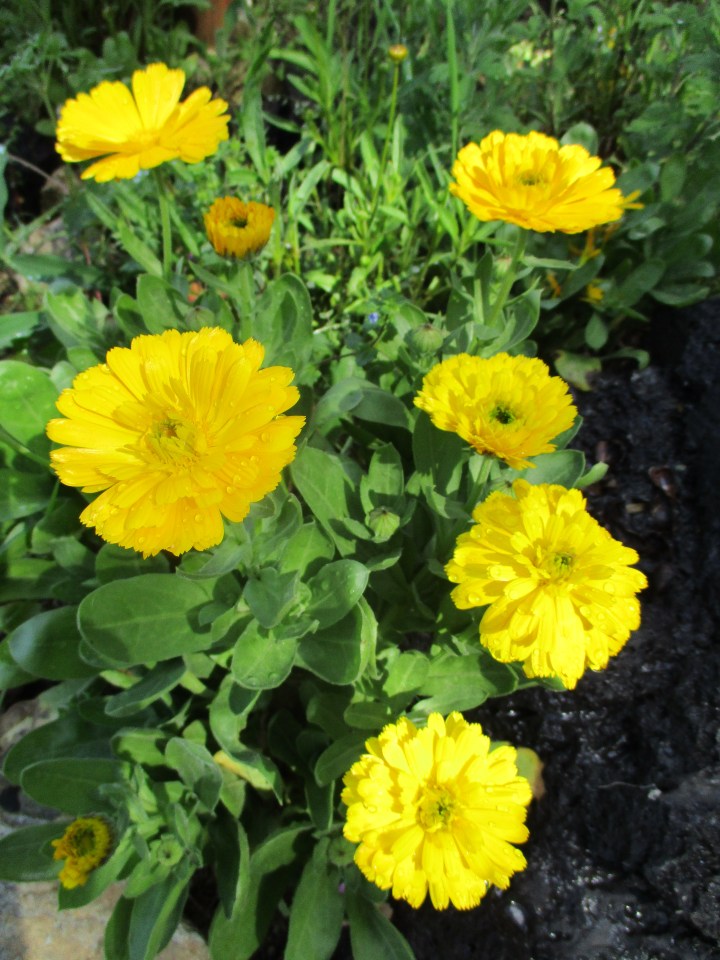 Just before the weather gets warm enough for real marigolds, and after the weather starts to get too cool and rainy for them, pot marigold, Calendula officinalis, is at its best. It can bloom at any time of year, depending on when it gets planted, but prefers cool and humid spring and autumn weather. It is not so keen on frost in winter, or the arid warmth of summer that real marigolds enjoy.
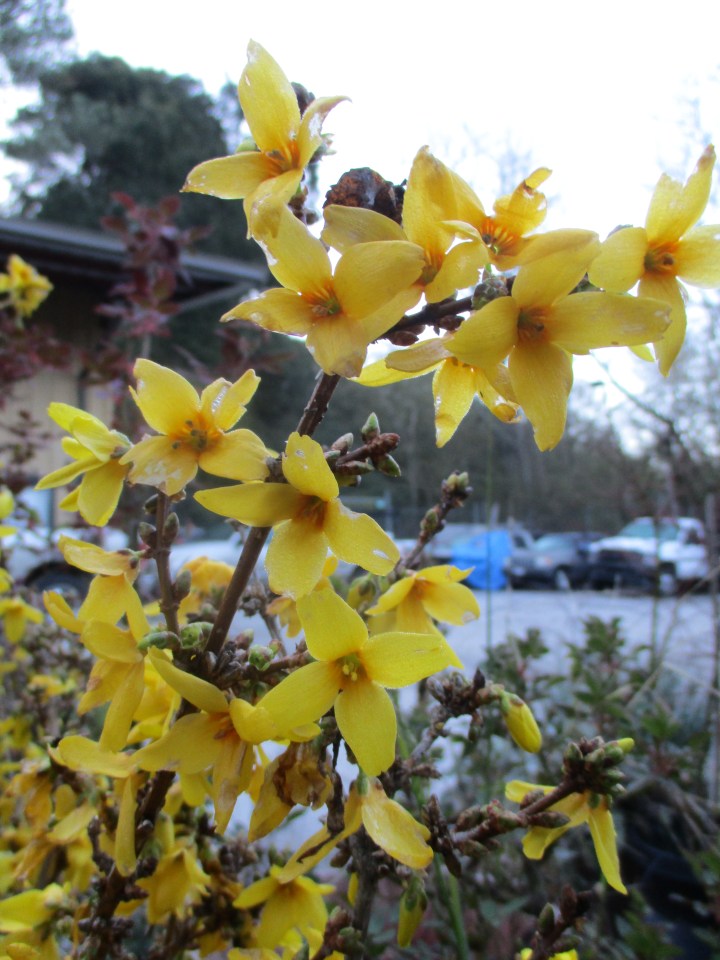 It is a shame that forsythia is not more popular here. Years ago, there was a commonly perpetuated myth that winters were not cool enough for it, as well as lilac. We now know that both lilac and forsythia are happy to bloom here. Now, some might insist that there are so many evergreen shrubs that bloom nicely right through winter, that there is no need for deciduous blooming shrubbery.
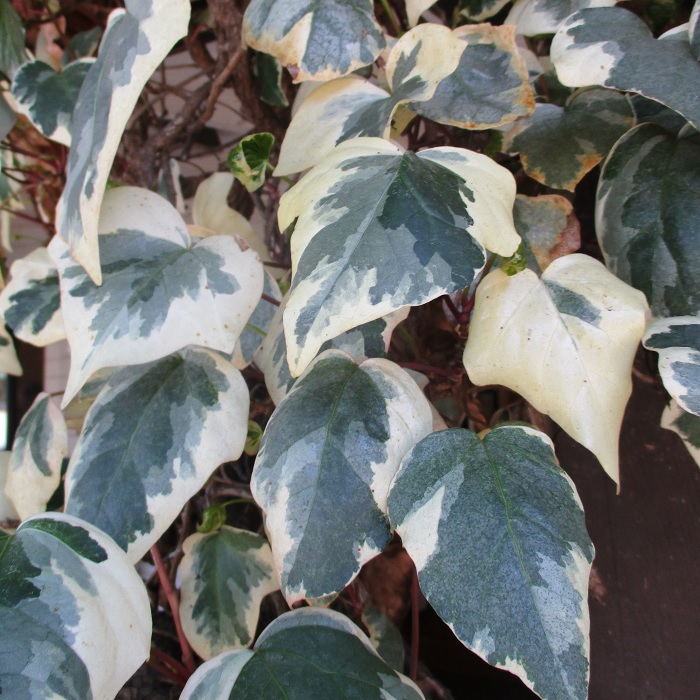 This is one of those plants that many of us have strong feelings about. Many of us who remember it from when it was more popular in the 1970s might consider Algerian ivy, Hedera canariensis, to be an aggressively invasive weed. Those of us who are less familiar with it might appreciate it as a vigorous and resilient groundcover that gets dense enough to exclude most other weeds.
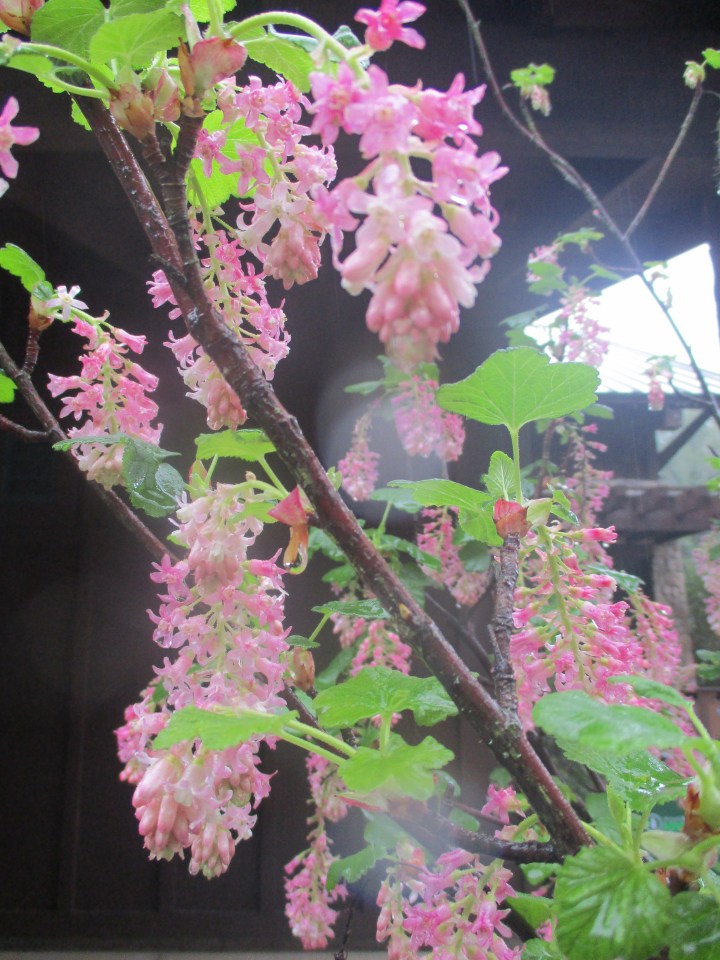 We tend to think of currants as being from Europe, Russia or Eastern North America. The pink flowering currant, Ribes sanguineum glutinosum, is actually endemic to canyons and riparian sites of the coastal ranges of California. Because it is an understory species that lives in the partial shade of large trees, it is quite tolerant of shade, and even prefers a bit of shade rather than full sun.
 What ever happened to Point Reyes ceanothus? It is such a nice low growing shrub, with small holly-like leaves, and cheery blue flowers in very early spring. It was quite popular when it initially became available, but now seems to be rare. Maritime ceanothus, Ceanothus maritimus, from San Luis Obispo County, is a similar species that presently seems to be getting more attention.
 Tony Tomeo