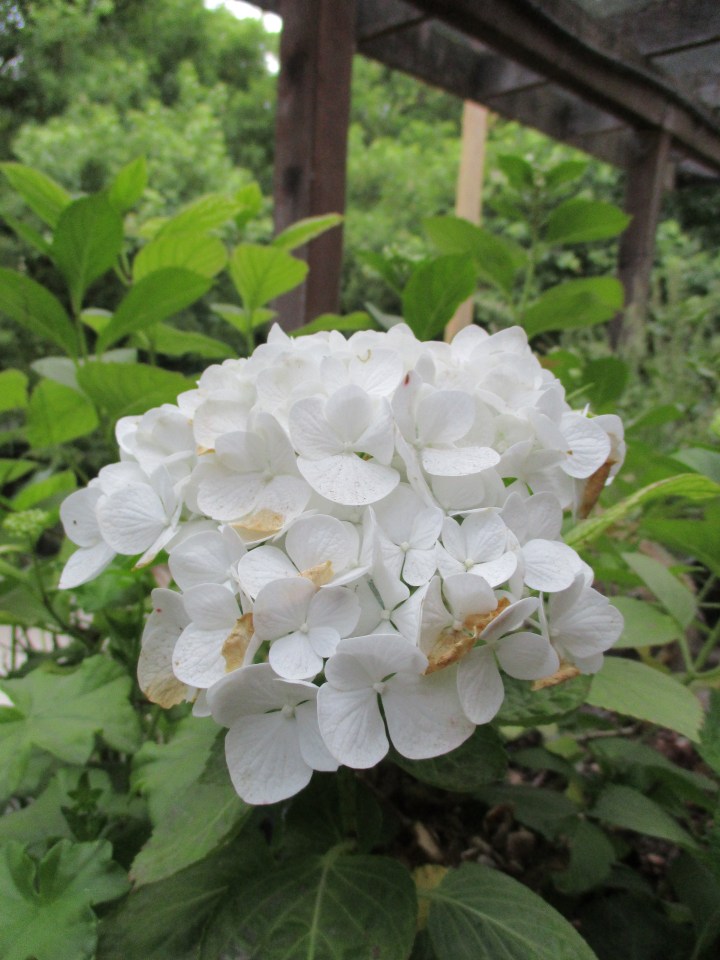
 There are so many more of the fancier cultivars of hydrangea, Hydrangea macrophylla, than there were as recently as the 1990s. Many of the pink and blue hydrangeas were interchangeable years ago. They would bloom blue if the soil was acidic. They would bloom pink if the soil was alkaline. Their color changed accordingly when planted from potting media into soil of another pH.
Most of the modern cultivars nowadays are better at one color or the other. Those that want to be rich pink or almost red might turn lavender or purple in acidic soil. Those that want to be rich blue might do the same in alkaline soil. That makes for many hues of pink, blue, lavender and purple. Most of those that bloom white always bloom white, and their foliage might be a little lighter green.
There is also much more variety in floral form than ever before, although all bloom in summer or autumn with big rounded or nearly spherical trusses of many small flowers. The deciduous leaves are about six inches long, and pleasantly lush and glossy. Modern compact cultivars stay low and dense. Larger cultivars get about six feet high and wide, with somewhat open branch structure.
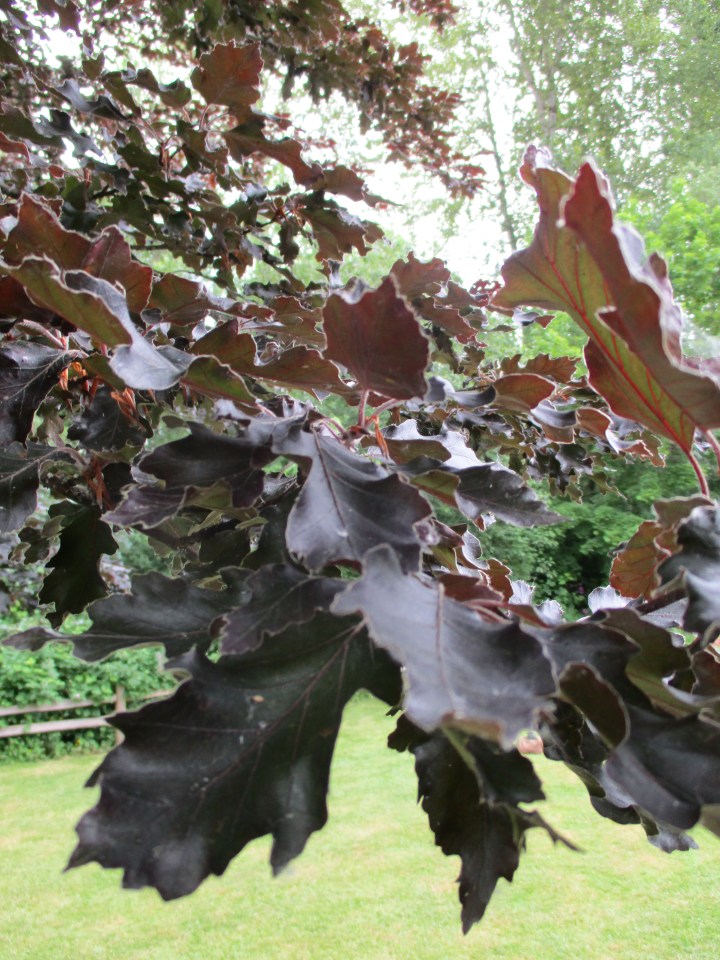 Compared to crape myrtle, sycamore (London plane) and many other more popular trees, the beech, Fagus sylvatica, is much less problematic, and really deserves more respect. Although it can eventually get almost as big as sycamore, it has remarkably complaisant roots. It is neatly deciduous, defoliating only in autumn, without noticeable floral mess. Disease and pests are rare.
 The native American coneflower, Echinacea purpurea, of the Midwestern prairies has been popular within its native range longer than anyone can remember, and has become more popular in the West as extracts of echinacea became a fad in herbal medicine several years ago. Modern garden varieties and cultivars have been bred and hybridized for larger and more colorful flowers.
 Pink, red or white are the only choices. There happens to be a darker shade of red. Yellow throats are more conspicuous in white flowers. Otherwise, there is not much variation of color amongst the various mandevillas. The flowers are very similar in both color and form to those of related oleander, but are larger. Some are as wide as three inches. Small flowers can have pointed petals.
 It is considered to be an Italian herb, but since it was popularized in America in the late 1940s, oregano, Origanum vulgare, has become more popular in Italian-American cuisine than it is in Italy. It is now the traditional ‘pizza herb’ for American style pizza. Oregano happens to be one of the few herbs that is preferred dried rather than fresh. Only foliage is used, either before or after bloom.
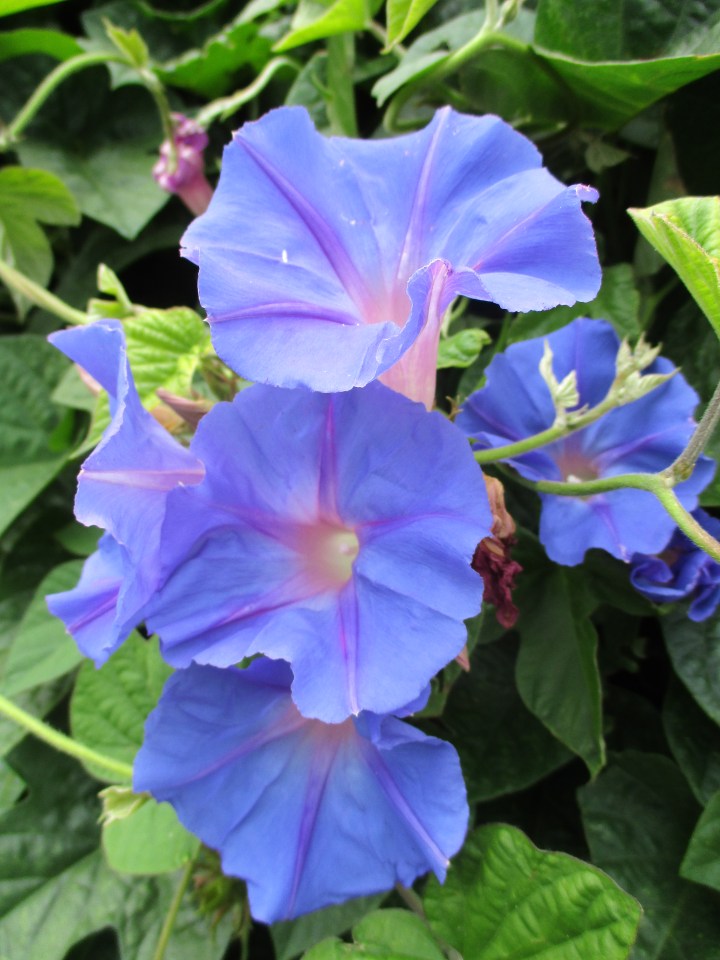 Even within its native range, blue dawn flower, Ipomoea indica, can be a problem. There are not many other plants in some coastal regions of Peru that can avoid getting overwhelmed by the aggressive wiry vines. These vines grow roots where they touch soil, so can spread indefinitely over the ground. Vines that succumb to frost over winter regenerate as if nothing ever happened.
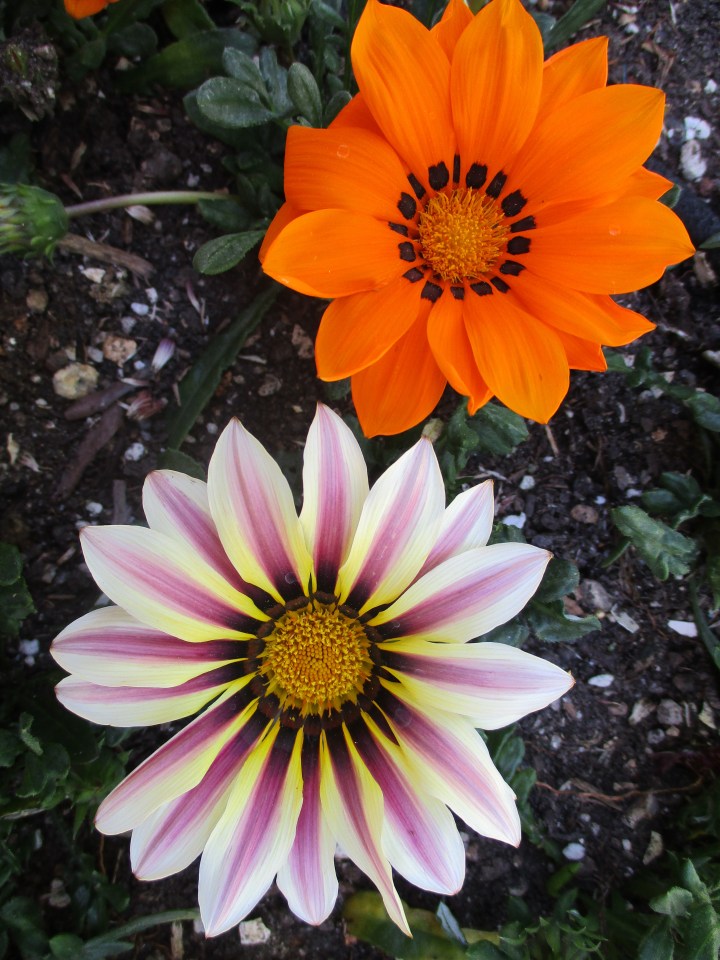 Why would anyone want to grow annual gazania when perennial gazania that is popularly grown as ground cover lasts for several years? Well, as long as the weather stays warm, annual gazania blooms with an impressive abundance of bigger and more brightly colored flowers. Perennial gazania blooms less profusely and only in midsummer, with simpler and somewhat smaller flowers.
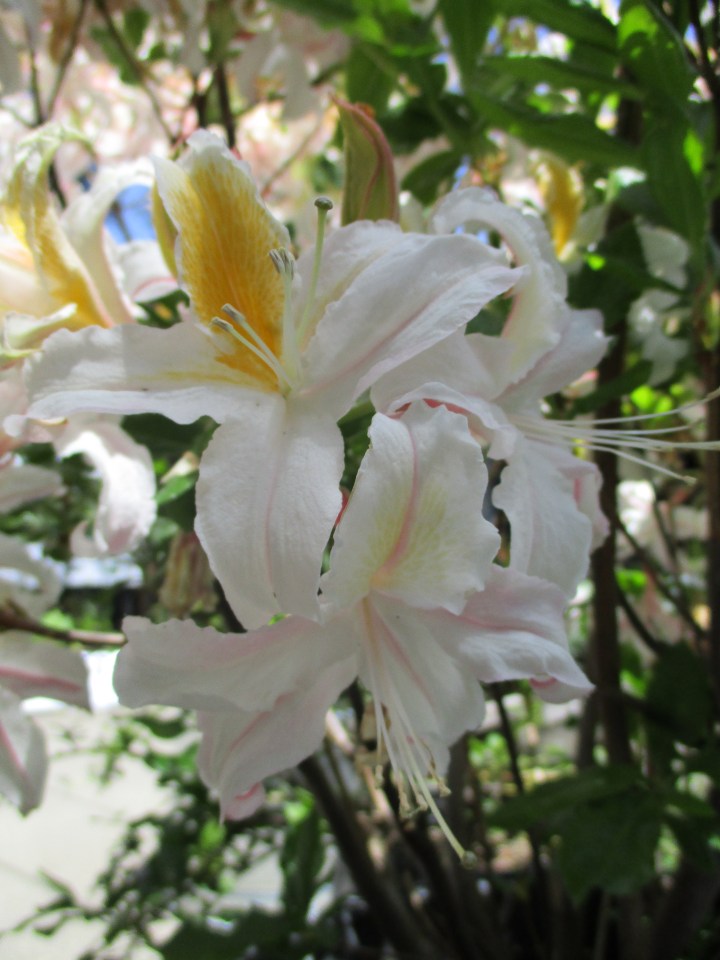 We think of rhododendrons and azaleas as being from cooler and moister climates. After all, that is where they do best. Yet, there does happen to be a native western azalea, Rhododendron occidentale, that lives in the Sierra Nevada and coastal ranges from San Diego County to just southwest of Portland, Oregon. (Azalea and Rhododendron are varied specie of the same genus.)
 This is one of those warm season annuals that we do not hear much about. Verbena looks something like lantana, but rather than maturing into a nice shallow ground cover or low mounding shrub with a bit of staying power, verbena lasts only until frost next autumn. The blooms are a bit larger. The leaves are a bit greener. They stay lower than a foot, and get only a few inches wider than tall.
 Like Ginger and MaryAnn, choosing between the flashier hybrids of clematis and the anemone clematis, Clematis montana, might not be so easy. The fancier hybrids have the bigger, bolder and richly colored flowers that the genus is known for. Anemone clematis has smaller and more subdued flowers in soft pastel hues, but is more prolific, more vigorous, and blooms for nearly a month.
