Blow Out

As torrential as the rain was curing the bomb cyclone (whatever that was), the wind was not as bad as this.

tonytomeo's avatarTony Tomeo

P00216 Wind is messy!

While strong Santa Anna Winds were blowing through Los Angeles four hundred miles to the south, and Storm Ciara was arriving in Scotland and Norway, we were getting some remarkably strong winds of our own. They were not nearly as strong as winds that were causing so much damage in Europe, and involved no flooding rain, but they were dangerously messy nonetheless.

We live and work among dense forests of coastal redwood, the tallest tree species in the World. Beyond the upper edge of the redwood forests are more forests of huge Ponderosa pine. Huge Douglas fir are mixed throughout. Their understory includes trees that would be considered to be massive anywhere else, such as coast live oak, tanoak, Shreve oak, bay laurel and madrone.

Such big trees drop big limb, and in abundance. Furthermore, limbs that fall from such great heights are significantly more dangerous than…

View original post 247 more words
Daphne

A few later, they are still performing very well.

tonytomeo's avatarTony Tomeo

P00215K Bloom worthy of a Scooby Snack

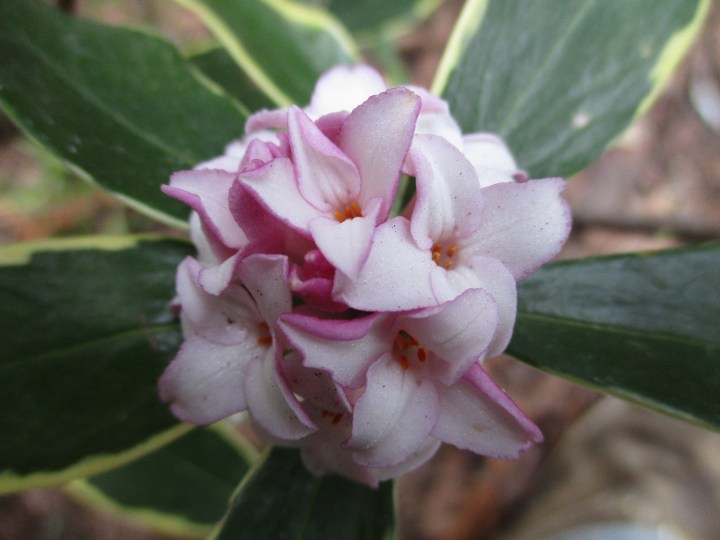
Jeepers!! As Daphne Blake’s colleague, Fred Jones, might say, “Looks like we’ve got another mystery on our hands.” What got into this Daphne odora ‘Aureomarginata’?! It rarely performs so well here, particularly so soon after being planted into a new landscape. This particular specimen, and about three others nearby, were planted as they finished bloom less than a year ago.

Since their season began, I have been commenting to those who share pictures of theirs, that such healthy and prolifically blooming daphne is enviable to those of us who do not live within a climate that is favorable to such performance. I know that this diminutive floral truss is not exactly exemplary compared to those of other regions, but for this region, it is almost spectacular.

The aroma is exquisite! It is everything that the rest of us grow daphne for, and is enhanced…

View original post 156 more words

Horridculture – ?!

Oh GADS! I should have forgotten about this one instead of reblogging it.

tonytomeo's avatarTony Tomeo

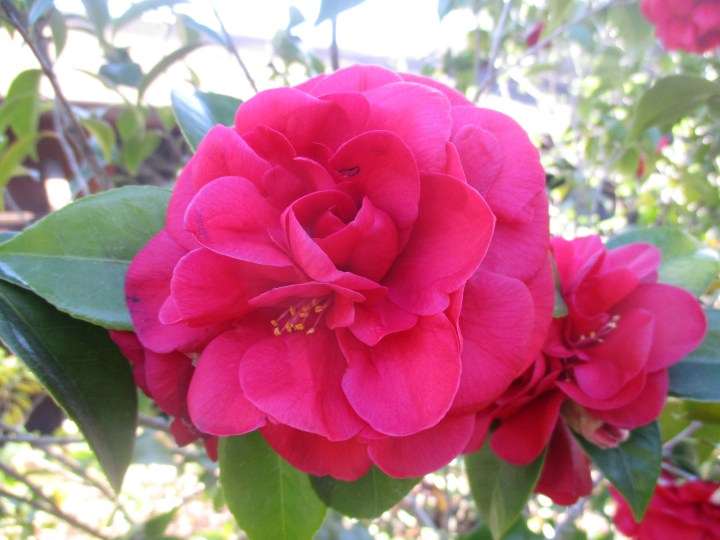
P00304-1 This is how appreciated camellias bloom.

I seriously can not think of a title for this one. All that comes to mind is too objectionable. Writing about it will not be much easier.

It began with a few mature camellias that were in need of grooming a few months ago. They were sufficiently shabby that I did not mind pruning them at the wrong time. Ultimately, almost all of what was groomed out was necrotic anyway, so did not compromise bloom significantly. I was pleased that the eventual bloom would be better presented against a neater background.

Then, I was informed that several of the same camellias would need to be removed to facilitate the installation of a new sidewalk. That would have been useful information before I put such meticulous effort into grooming them. It was briefly annoying; but I did not fret long. I planned to recycle the…

View original post 614 more words

Scrub Palm

Apparently, these really do need warmth to germinate. (It is a long story for another time.)

tonytomeo's avatarTony Tomeo

P00209 104 seeds for the price of 10!

Of all the strange seed I brought back from Oklahoma, none were from the scrub palm, Sabal minor, that is endemic to McCurtain County in the very southeaster corner of Oklahoma. I did not get to that region.

Sabal minor is nothing special to those who are acquainted with it. However, a variety that was selected from those in McCurtain County, which is known simply as Sabal minor ‘McCurtain’, is becoming increasingly popular in climates where winter weather is too cold for other palms. It is sufficiently resilient to frost to survive in New England and Canada.

I just wanted it because it is from Oklahoma.

Since I did not collect any wild seed, I had considered purchasing a seedling of the ‘McCurtain’ variety online. It would have been rather expensive for a single seedling. I was pleased to find seed…

View original post 159 more words

Water Feature

The New Year’s flooding out back sort of . . . ‘modified’ my appreciation for silly water features.

tonytomeo's avatarTony Tomeo

Brent Green, my colleague down south, is a renowned landscape designer of the Los Angeles region. His landscapes are spectacular. You might not know it by all the mean things I say about Brent and his work, but his clients know otherwise. He makes the outdoor spaces around their urban homes seem like they are in serene and thickly forested jungles hundreds of miles away.

Well, . . . generally. That is what the landscapes look like to me. Some clients prefer simpler or sunnier gardens. What I often perceive as superfluous vegetation is there to obscure adjacent residences or other undesirable scenery. It is not as if neighboring residences are unsightly. They are obscured merely to provide privacy and a sense of solitude in a very crowded region.

While designing a landscape that is appealing to the senses, it is helpful to eliminate or at least obscure some of…

View original post 299 more words

Horridculture – Turf & Surf

Goodness! The . . . unpleasant memories!

tonytomeo's avatarTony Tomeo

P00219 Surfing should be done in the ocean.

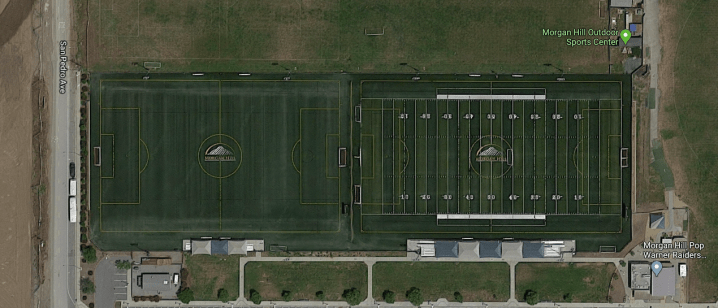
No, that is not backward. It refers to a legendarily disastrous incident with artificial turf at the Morgan Hill Outdoor Sports Center. Prior to about 2010, while I was the only horticulturist on a big staff of a big so-called ‘landscape’ company that expressed almost no interest in horticulture, I was summoned to the site to investigate an ‘issue’. I was told nothing about artificial turf.

Upon arrival, it became immediately obvious that this was no horticultural issue. Wind was generating waves in the recently installed artificial turf that were taller than the unfortunate guy who was scurrying about in an futile attempt to nail the turf surf to the ground. I was dismayed. I know nothing about artificial turf. Why was a so-called ‘landscape’ company even involved?

I suppose I should not have been too surprised. It was not as if many…

View original post 261 more words

SODS?

Since this recycled article posted three years ago, the tanoaks that provided its illustration have succumbed to SODS.

tonytomeo's avatarTony Tomeo

P00202 Flagging (sudden necrosis of distal foliage) used to indicate the beginning of a sudden end.

Phytophthora ramorum is the pathogen that initiates Sudden Oak Death Syndrome, which is known simply as SODS. Monarthrum scutellare, which are known as ambrosia beetles, and are the secondary pathogen associated with the syndrome, infest and kill tanoak and coast live oak that are infested with Phytophthora ramorum, about as quickly as symptoms are observable.

Hypoxylon thouarsianum is a tertiary but merely opportunistic pathogen associated with the syndrome. By the time it gets established within galleries excavated by the ambrosia beetles, the affected trees are almost completely necrotic. That first ‘S’ in SODS is there for a reason. It is an efficient process. Death occurs too suddenly for affected trees to drop any of their leaves!

Each of these three pathogens causes distinct symptoms. Phytophthora ramorum causes trees to bleed black tar-like fluid…

View original post 168 more words

Vegetation Exploitation

Trails here are closed because of damage incurred by the earlier torrential rain. It will be a while before the damage is repaired. I have not seen this particular portion of the trail in a long time, so I do not know what condition it is in now. I know that it was very vulnerable to erosion.

tonytomeo's avatarTony Tomeo

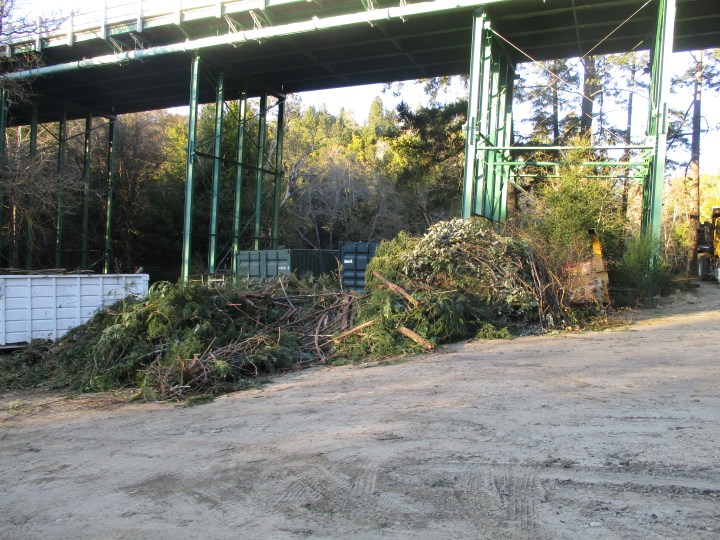
P00201K If a tree falls in a forest, . . . it might get recycled.

Exploitation of the vegetation here involves so much more than collecting seed from old bloom, dividing overgrown perennials, or processing cuttings from pruning scraps. It goes beyond the reassignment of lauristinus, canna, African iris, deodar cedar and perhaps others that I wrote about earlier. Flowers, fruits, vegetables and herbs are mundanely obvious assets.

The landscapes and forests here do so much more than beautify and provide shade. When a tree falls in a forest (and makes a sound even if no one is there to hear it), it might get processed into firewood or lumber. Some of the foliage that falls in landscaped areas goes to the compost piles. Even debris that gets removed from here gets recycled as greenwaste somewhere else.

Of course, we can not recycle, reuse, repurpose…

View original post 170 more words

Horridculture – Artificial Turf

Here in California, I should be accustomed to fakes.

tonytomeo's avatarTony Tomeo

P00212 Artificial seems to be no worse than the real deal.
There is no right answer. For lawns that is. Horticulturists who actually enjoy horticulture . . . and are not specialists of turf . . . loath them. (Yes, there are horticulturists who are specialists of turf.) We merely tolerate them because they are so useful for so many applications, and they do happen to be very visually appealing within or in the foreground of interesting landscapes.

After all, lawns are the vegetative green carpeting that covers otherwise bare ground without interfering with the flow of pedestrian traffic. For parks and other public paces, it is better than other types of ground cover, mulch, pavement or lowly mown naturalized weeds that would grow if nothing else were there to occupy the space. For athletic fields, there are no alternatives.

They are just so unnatural. Most plants in our garden are…

View original post 179 more words

How To Train Your Dragon

These and a few others that I procured after this article posted have provided me with too many cuttings. I shared most with neighbors. However, all these rooted cuttings are still quite small, after a few years.

tonytomeo's avatarTony Tomeo

P00126 Oh, the SHAME!

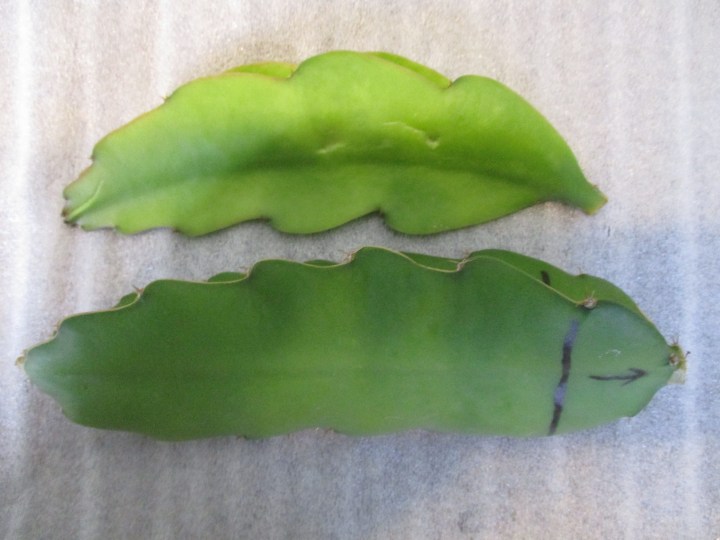
Dragon fruit became a fad on the West Coast of California several years ago. They were probably always around, but had previously been rare. When they inexplicably became more popular and common, they did so down south first. Their popularity migrated to the Santa Clara Valley a few years later. It probably will not go much farther though, since they are sensitive to frost.

It is not a bad fad, at least relative to most others. Dragon fruit, which is also known as pitaya, happens to be very easy to grow and propagate from cuttings. Locally, it needs protection from frost, but no more than other popular tropical plants. It recovers from minor frost damage quite efficiently. Pruning scraps can be rooted and grown as more plants for friends and neighbors.

Of course, I dislike fads. I am not impressed by the fruit, which might lack flavor…

View original post 153 more words