Horridculture – Artificial Turf

Here in California, I should be accustomed to fakes.

tonytomeo's avatarTony Tomeo

P00212 Artificial seems to be no worse than the real deal.

There is no right answer. For lawns that is. Horticulturists who actually enjoy horticulture . . . and are not specialists of turf . . . loath them. (Yes, there are horticulturists who are specialists of turf.) We merely tolerate them because they are so useful for so many applications, and they do happen to be very visually appealing within or in the foreground of interesting landscapes.

After all, lawns are the vegetative green carpeting that covers otherwise bare ground without interfering with the flow of pedestrian traffic. For parks and other public paces, it is better than other types of ground cover, mulch, pavement or lowly mown naturalized weeds that would grow if nothing else were there to occupy the space. For athletic fields, there are no alternatives.

They are just so unnatural. Most plants in our garden are…

View original post 179 more words
How To Train Your Dragon

These and a few others that I procured after this article posted have provided me with too many cuttings. I shared most with neighbors. However, all these rooted cuttings are still quite small, after a few years.

tonytomeo's avatarTony Tomeo

P00126 Oh, the SHAME!

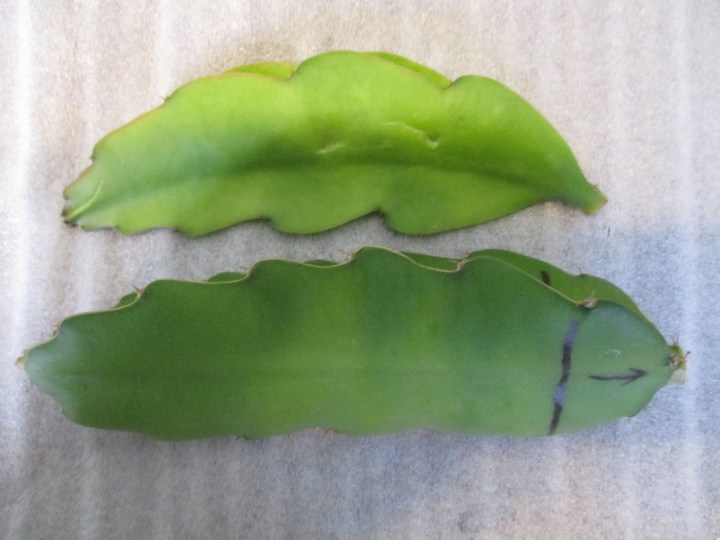
Dragon fruit became a fad on the West Coast of California several years ago. They were probably always around, but had previously been rare. When they inexplicably became more popular and common, they did so down south first. Their popularity migrated to the Santa Clara Valley a few years later. It probably will not go much farther though, since they are sensitive to frost.

It is not a bad fad, at least relative to most others. Dragon fruit, which is also known as pitaya, happens to be very easy to grow and propagate from cuttings. Locally, it needs protection from frost, but no more than other popular tropical plants. It recovers from minor frost damage quite efficiently. Pruning scraps can be rooted and grown as more plants for friends and neighbors.

Of course, I dislike fads. I am not impressed by the fruit, which might lack flavor…

View original post 153 more words

Wild Strawberry?

The roses were relocated after this article posted, and are doing reasonably well in their new landscape. The fake strawberry were left behind and not salvaged. Perhaps I should give them more consideration.

tonytomeo's avatarTony Tomeo

P00125K Wild strawberries are worth salvaging.

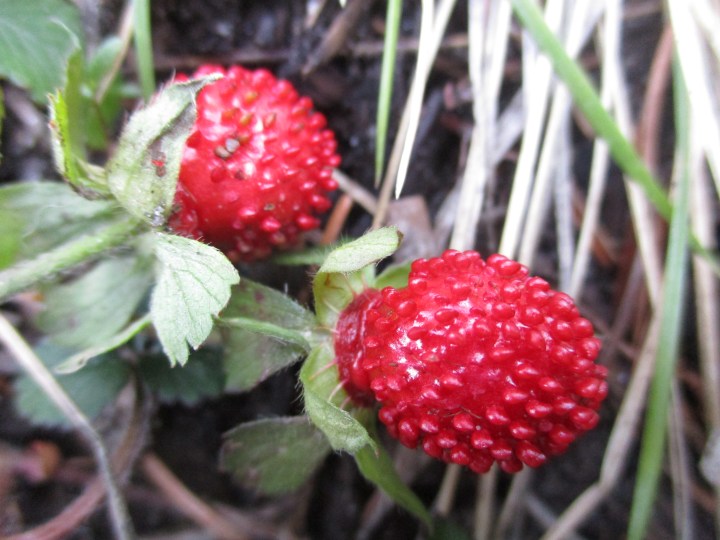
Under a bank of carpet roses that I am none too keen on, this grubby ground cover competes with more aggressive weeds. To me, it looks like common mock strawberry, Potentilla indica. I never gave it much though. It seemed to me that whoever had installed cheap and common carpet roses on that bank would have employed a comparably cheap and common ground cover.

The ground cover was more prolific in open spots that were too narrow for more of the roses, and from there, seemed to have migrated under the roses as a second layer of ground cover. It would not have been installed underneath intentionally. It did not occur to me that it may have grown from seed like so many other weeds there, or migrated in from the surrounding forest.

The white flowers did catch my attention though. I was not…

View original post 157 more words

Horridculture – Memorials

Oh, this one is especially offensive.

tonytomeo's avatarTony Tomeo

P00129 Where are the cedars?

Memorial trees should be remembered . . . right? I mean, they are planted to remind us of . . . something, or . . . someone. They are typically trees that will be around for a long time, because that is how important memories should be. Redwoods and oaks work nicely. Most get outfitted with plaques to remind everyone what the trees are there to remind us of.

The old original Sunnyvale City Hall was landscaped with several memorial trees. The most prominent were redwoods and cedars that were mostly planted as memorials for local veterans of various wars. They accumulated over several decades and a few wars. City Hall seemed like a good place for them, where they could live for a long time without bother.

However, City Hall was demolished in the late 1970s, and replaced with a big mall. The larger redwood…

View original post 263 more words

Corm-ucopia

Since posting this recycled article, I actually procured a few copies of my first Montbretia that I found growing wild in Montara in the early 1980s, and did so ‘intentionally’. Furthermore, I canned a few copies of the Montbretia that grows in the downtown planter box, just in case I want to put them somewhere else.

tonytomeo's avatarTony Tomeo

P00119 Is this part of the secret to their success?

Montbretia showed up here several years ago. Of course, it did not take long for it to get very established. It is too shady for bloom, but not shady enough to inhibit vegetative proliferation. Those nasty stolons get everywhere, and grow into corms. They are so aggressive that they exclude English ivy! Seriously, they are the only species we know that can crowd out English ivy!

Some consider Montbretia to be the the genus name. Some consider it to be a common name for the genus of Crocosmia, or for a particular intergeneric hybrid. What is now so aggressively naturalized here might be Crocosmia paniculata. I really do not know. The few rare and sporadic blooms look like what I am familiar with in other landscapes, with branched inflorescences.

Now, I am aware of how aggressive their stolons are…

View original post 161 more words

Six on Saturday: Calm Before The Storm

Perhaps this old article will compensate for the lack of flowery pictures here while the weather is so wild.

tonytomeo's avatarTony Tomeo

‘Six on Saturday‘ is a meme that I participate in on Saturday morning. The link below explains that participants post pictures from our gardens, landscapes, greenhouses, or wherever we find subjects of horticultural interest. You might post six of your own.

I posted this second set of six this afternoon both because these six pictures will be outdated by next Saturday, and because they are more relevant to horticulture than the six that I posted this morning.

1. Rose – Unless there is a rose out there somewhere that I neglected to prune, this is the last rose bloom of last year. It got pruned after I got this picture. Even here, roses get to hibernate.P00118K-1

2. Wallflower – Does it look like it cares that it is the middle of winter? Actually, from a distance, it is more obvious that sporadic bloom is somewhat subdued. It just…

View original post 153 more words

Horridculture – Dried Plums?

Do not get me started on the difference between almond and almond! It is a long story.

tonytomeo's avatarTony Tomeo

00115 Dried prunes are experiencing something of an identity crisis.
Nomenclature used to be more predictably standardized than it is now. When I write about how it works, I compare it to the names of cars. For example, ‘General Motors’ is just a family. ‘Buick’ is a genus. ‘Electra’ is a species. ‘Limited’ is a variety. Well, my Sebring was labeled as a Chyrsler but made by Mercedes Benz. Modern horticultural nomenclature is no more accurate.

With all the promiscuity going on nowadays, it is impossible to know who the parent of some of our favorite plants are. Many are interspecific hybrids. Some are intergeneric hybrids. Some are so complicated that their species names are merely omitted; and no one seems to notice! That is like driving a Mercury LS without knowing or caring if it is a Grand Marquis or a Lynx.

So, now we can grow such aberrations of…

View original post 446 more words

Unidentified Cyclamen

After all this fuss three years ago, I did not bother growing these. I should go back to get some, regardless of their identity.

tonytomeo's avatarTony Tomeo

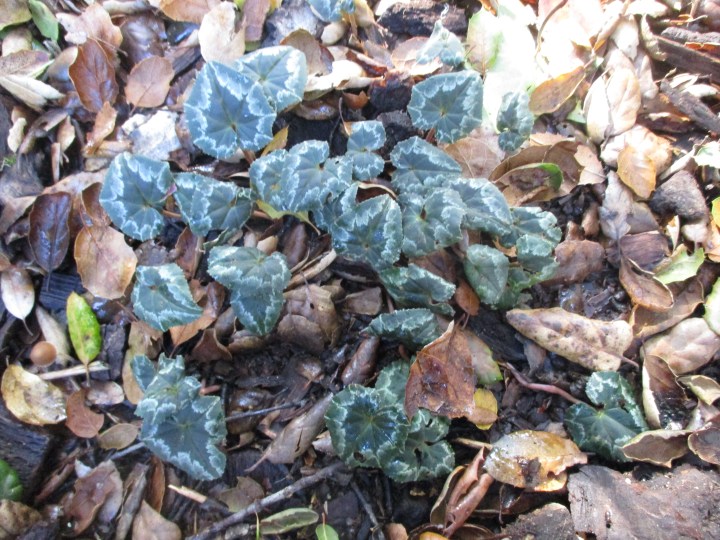
P00112 What species is this naturalized Cyclamen? hederifolium – coum – feral persicum – or something else?
Could this be Cyclamen hederifolium? Perhaps it is some sort of Cyclamen coum, or possibly feral Cyclamen persicum. I really do not know. Common florists’ cyclamen is the only cyclamen that I have any experience with. I grew it as a perennial when I was in high school, but never saw any feral colonies growing from self sown seed. I have never met the other species before.

Several colonies of this naturalized species of Cyclamen grow wild in the garden of a colleague. No one knows how they got there. I noticed them while procuring specimens of what might be other species that I have been wanting to grow, even though I am not certain of their identities either. I suspect that one could be Sorbus americana, and that…

View original post 172 more words

They Don’t Know When To Quit

Pruning was right on schedule this year, and only a few days prior to the date on which this posted three years ago. Hydrangeas finished were a bit more ready for it they year though.

tonytomeo's avatarTony Tomeo

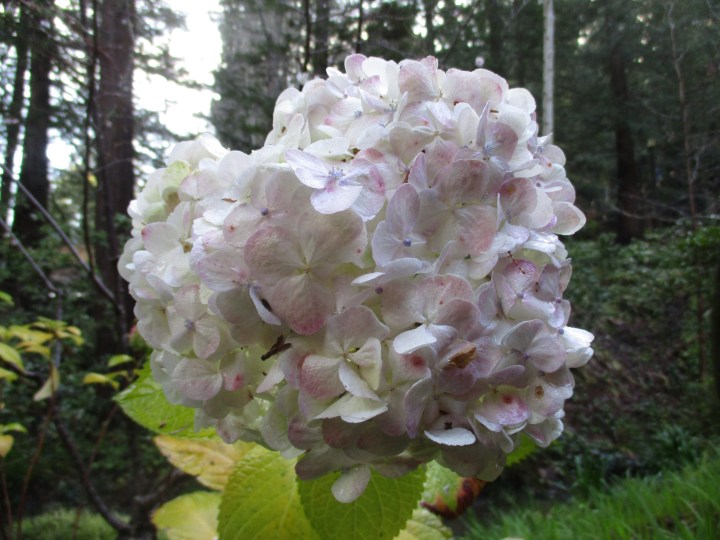
P00111-6 The good news is that these billowy white blooms were not wasted.

The main difficulty with such a mild climate is that many plants do not get sufficient chill in winter. Several types of apples do not perform well here without it. Only a few are productive in Beverly Hills (in the Los Angeles region), where I sometimes need to modify my gardening column accordingly. A few of my neighbors here somehow grow peonies; but I do not even bother.

Even plant that require more chill than they get here seem to be aware that it is cooler at this time of year. Their deciduous foliage turns color and eventually falls to the ground. They just want the weather to get a bit cooler and to stay cooler for a bit longer before they are convinced that it is really winter. Otherwise, they think that autumn simply merges directly into…

View original post 352 more words

Deodar Cedar Migration – Update

Perhaps it is inappropriate to reblog an update, since it is now outdated. After three years, some of these trees are doing quite well, and a few more were added to replace some that were killed by weed whacking. Perhaps a real update is in order.

tonytomeo's avatarTony Tomeo

P00105-1 Reassigned deodar cedars have adapted to their new landscape.

Reassignment is in season right now. The brief article about it that posted yesterday links to three other related articles. We have done quite a bit of it here, and intend to do a bit more for useful plants that happen to be in the wrong situations. It should be done before winter ends, to take advantage of both natural dormancy and cool winter rain that settles transplanted roots.

Most plants that get reassigned get dug from situations where they can not stay, and transplanted directly to where they will likely become assets to their respective landscapes. Those that do not get transplanted directly into other landscapes get canned and housed temporarily in the nursery. Some need to recover. Some must wait for landscapes that can accommodate them.

Some reassigned plants are feral descendants of exotic (non-native) species, that grew from…

View original post 314 more words