What is worse than how this Boston ivy was growing three years ago is that . . . someone actually grew more from cuttings, and added one to each of another pair of concrete pillars of the same bridge. They are surprisingly complaisant so far.

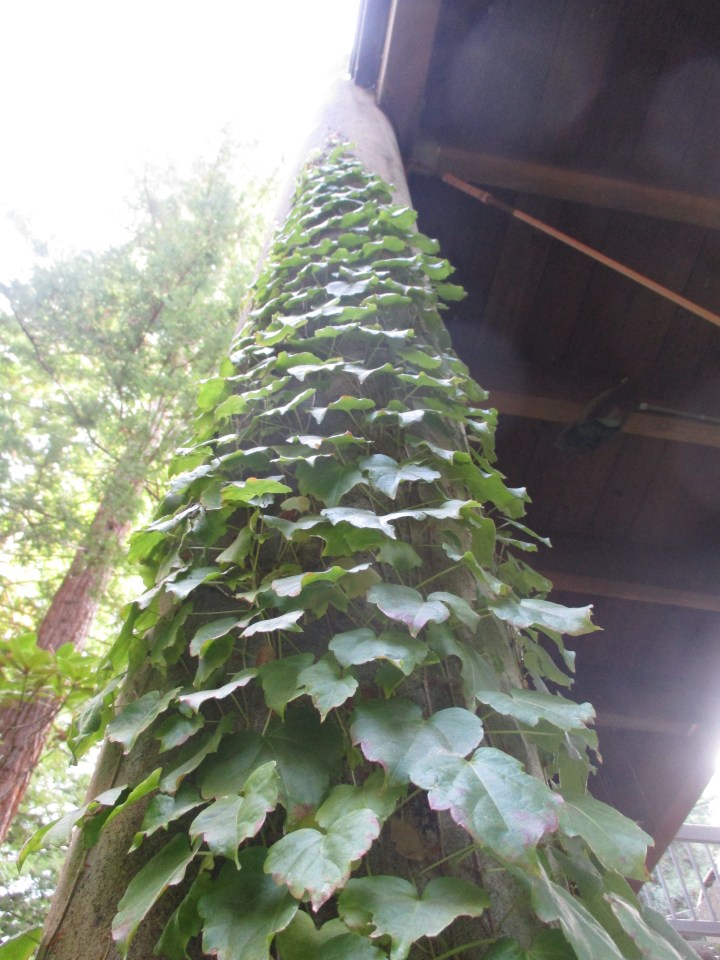 Ivy often climbs into trees, buildings and all sorts of other situations where it becomes problematic. It might have been planted intentionally. It might have grown from seed left by birds. When it gets into trouble, we can easily blame it on the ivy. Even that which was planted was intended to be mere ground cover. It only climbs out of control because that is what ivy does.
BAD IVY!!!
This Boston ivy that . . . ‘someone’ planted almost a year ago was actually expected to climb. That is what Boston ivy does. Even if it would be willing to grow as a ground cover, it would not work well as such because it is deciduous. As a climber, it covers freeway sound walls and any associated graffiti with vibrant green foliage that turns fiery orange and red this time of year.
The problem with it is that there…
View original post 215 more words
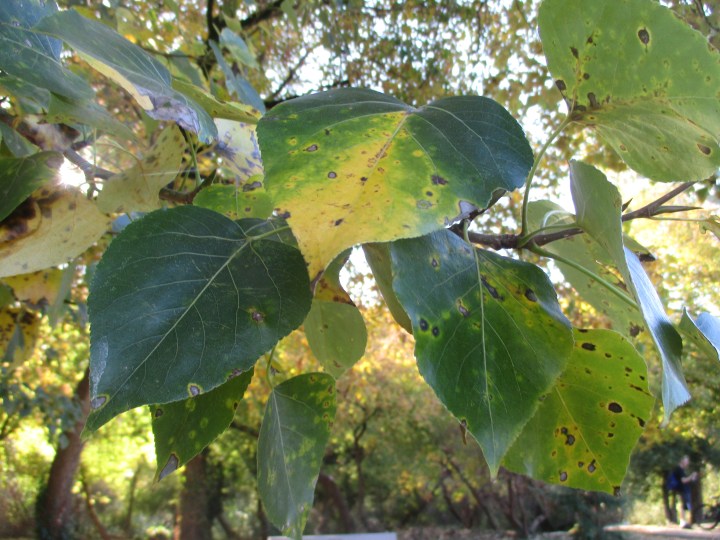 Autumn is not much to brag about here. It supposedly got just cool enough at night for the minimal requirement of frost, at 32 degrees, but no one noticed. It has been getting to the low 80s during the day. There has been no rain yet, and none is in the forecast. As bland as such weather seems, it is not at all out of the ordinary. Autumn often arrives later than it does elsewhere.
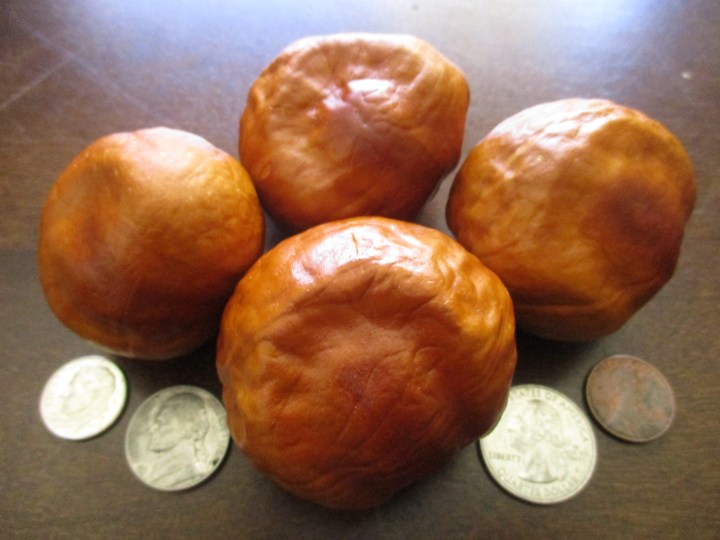 California flora is remarkable. It all does what it must to live comfortably in every ecosystem, climate and geographical region here.
 Grafting compound is a thick sealant applied to a fresh graft union to limit desiccation while the graft knits. A bit more typically gets applied to the cut distal end of the scion. There are various formulations of grafting compound, ranging from something resembling roof patch to a something with the consistency of thick paint.
 The seed is not really bad. At least I do not think that it is. It is merely misunderstood. Perhaps it would be more accurate to say that it is simply unidentified. I really do not know what it is. I do not say that very often, especially about seed that I bother to collect to sow elsewhere. I believe that it is of American bellflower, Campanula americana. If not, it is very closely related.
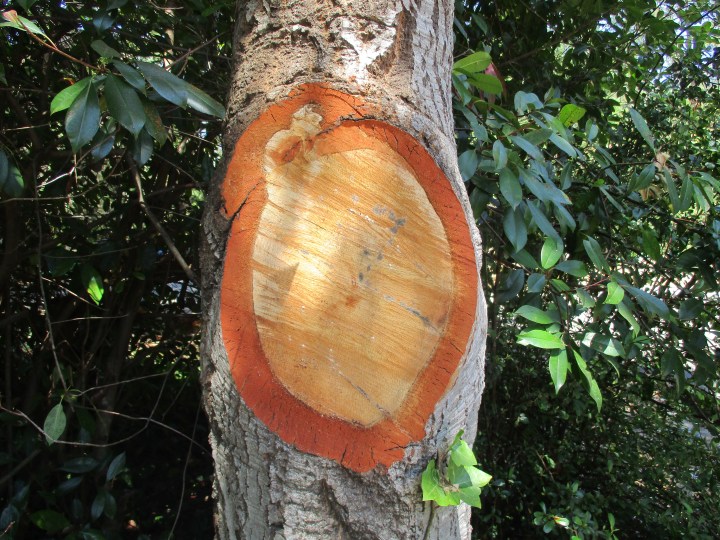
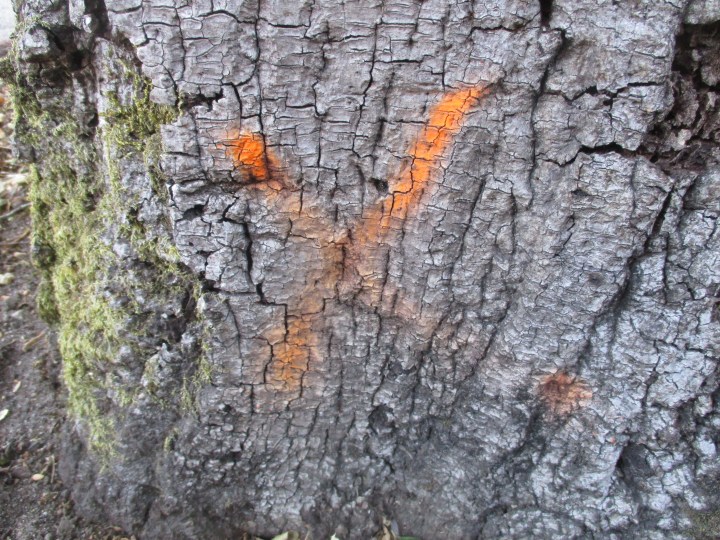 Horticulture is not all about growing things. If everyone was out planting trees, the World would eventually be overwhelmed with forest. It is sometimes necessary to cut trees down. There are several at work that we have been wanting to cut down for quite a while. Some are structurally deficient enough to eventually become hazardous, which is unacceptable in public spaces.
 Hooey! It’s a bunch of hooey! Sweet pea seed that gets sown this time of year for next spring does NOT need to be soaked before sowing. In fact, unless there is some strange species of plant that has become that dependent on human intervention, NO seed need to be soaked prior to sowing. Not only is the technique completely unnecessary, but it is completely unnatural as well.
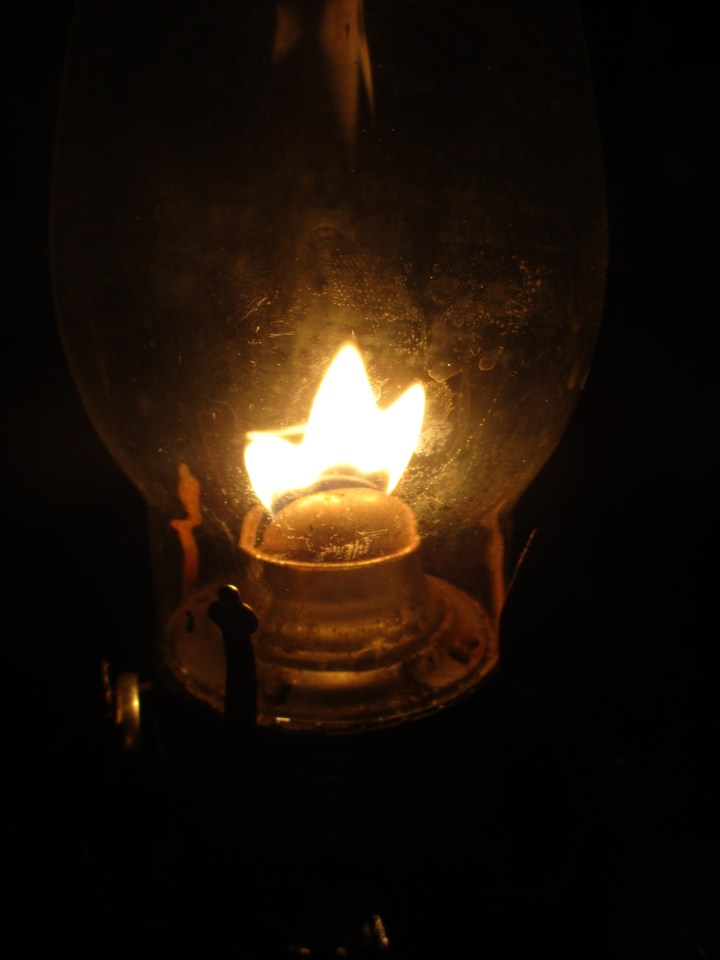 The electricity is still on here at 8:20 p.m.. I just turned the lights off to get the cool picture above. The
  Arborists see trees very differently from how most of us see them. They know their trees very intimately, and by botanical name. Arborists know how big particular trees get, both tall and wide, and if they are likely to develop structural deficiency or aggressive roots. They can tell us which are deciduous, which are evergreen, and which are messy with foliage, bloom or fruit.
 Why do we all think we need a greenhouse? Some of us may rely on them for sheltering plants through cold winters. Some of us grow seedling late in winter, for an early start in spring. For some of us, greenhouses are where we grow plants that would not be as happy out in the natural climate. There is a multitude of uses for a greenhouse; but really, how many of us need one?
 Tony Tomeo