Due to an inability to locate some of my old articles from nine years ago, I will recycle articles such as this, which already posted to this blog four years ago, through June and at least part of July.

 Compared to crape myrtle, sycamore (London plane) and many other more popular trees, the beech, Fagus sylvatica, is much less problematic, and really deserves more respect. Although it can eventually get almost as big as sycamore, it has remarkably complaisant roots. It is neatly deciduous, defoliating only in autumn, without noticeable floral mess. Disease and pests are rare.
Beech is probably unpopular with landscapers because new trees are a bit more demanding than other tree specie are. (Landscapers prefer easier trees.) Until they disperse their roots, they are more likely to desiccate if they do not get watered regularly enough, and more likely to rot if watered too much. They grow somewhat slowly, so need to be pruned more carefully for a high canopy.
Those of us who tend our own gardens do not mind the extra effort for such a distinctive tree. The handsome foliage can be rich…
View original post 41 more words
 When a tree falls in the forest, and there is no one around to hear it, does it make a sound? Of course it does! There is just no one to hear it. Why should that be such a profound question? A falling tree makes a mess too. Anyone who does not see or hear it in action can witness it afterward. Sometimes, roots that were inadequate to support the fallen tree become exposed as well.
 There are mixed emotions about tree removal permits that so many municipalities need to issue in order for a ‘heritage’ tree to be cut down legally. Most of us want to believe that in America, we have certain rights to do what we want to on the properties that we own. Obviously, that makes the most sense. However, if it were that simple, many more prominent trees that are collective assets to the larger communities would be removed.


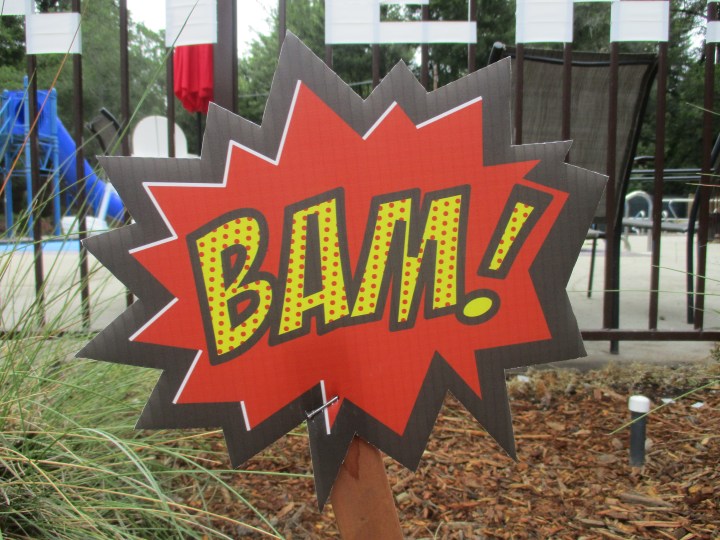
 Batman and Robin were here!
 Incandescent light bulbs were the standard form of electric lighting for more than a century after their invention. It took a while for fluorescent and halogen lamps to become popular; and by the time they did, high intensity discharge (HID) lamps had already become available. Nowadays, light emitting diode (LED) lamps seem to be replacing all sorts of electric lighting.
 Pink, red or white are the only choices. There happens to be a darker shade of red. Yellow throats are more conspicuous in white flowers. Otherwise, there is not much variation of color amongst the various mandevillas. The flowers are very similar in both color and form to those of related oleander, but are larger. Some are as wide as three inches. Small flowers can have pointed petals.
 The temptation is unbearable. The catalog of Adelman Peony Gardens, either in print or at
  The easier name is ‘dawn redwood’. I just used the big and fancy Latin name because that is how landscape designers with something to prove say it. If the big name does not impress clients, an explanation of how rare it is, and that it is one of only a few deciduous conifers, will likely do the job. Even back when it was still a fad, I got the impression that was its main function; to impress clients.
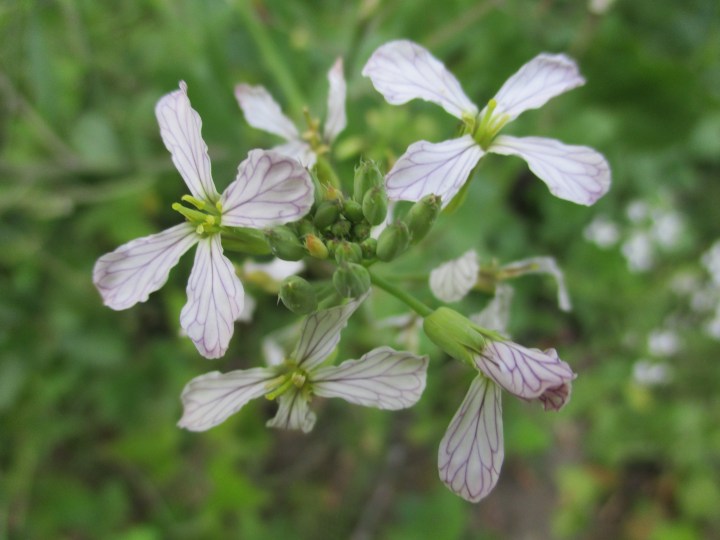 This is why I do not bother growing greens in the garden just yet. Wild radish grows here wild; and there is way too much of it. Most but not all of it gets mown in meadows or cut down with weed whackers on the edges of roadways. There is no need to cut down that which is out of the way. Besides, we could not cut it all even if we wanted to. There is wild turnip and mustard too. All are prolifically naturalized and invasive exotic species.
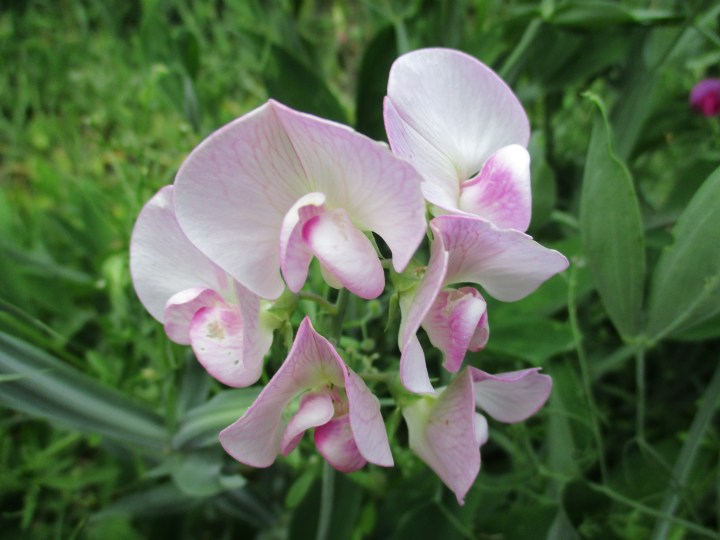 Generally, that is how they are. Almost all perennial pea flowers bloom with the same bright purplish pink color of the bloom in the picture below. That is, of course, before their pods develop, but you get the point. We sort of know what to expect from them.
 Tony Tomeo