Physics of Exposure

Pavement reflects glare and enhances harsh exposure, which can roast small plants.

How can so many colorful annuals and perennials be so surprisingly happy in the many large pots on the sidewalks in front of downtown shops? Downtown does not seem like it should be so comfortable to them, with all the concrete, glass, stucco and all sorts of other reflective surfaces to enhance the harsh exposure. Yet, the buildings and street trees instead provide a bit of shade to soften exposure and hold in a bit of ambient humidity. Some areas are even too dark for many plants.

Exposure is as important to selection of appropriate plants as climate and soil (or potting media) are. Plants that need full sun exposure will not perform like they should in partial shade. Those that want partial shade may get roasted by too much sunlight.

Walls, fences, and windows to the north can enhance the harshness of exposure by reflecting glare. To the south, they can conversely limit exposure with shade. Such structures to the west increase morning warmth but provide shelter from afternoon heat. To the east, these features are not so advantageous, since they shade morning sun, but enhance afternoon heat. Pavement adds to glare without providing any shade.

As if this is not confusing enough, there are  many more factors to consider. Coarsely textured or darkly colored surfaces do not reflect glare as severely as smooth or lightly colored surfaces do. Broad eaves, like those that adorn classic ranch style architecture, not only add more shade, but also limit reflected glare from walls below. Taller buildings, like two story Victorian houses, create more shade than single story Spanish colonial houses with flat roofs. Even shade trees are variable, ranging from the dark evergreen shade of Southern magnolia, to the light deciduous (absent through winter) shade of silk tree.

Most plants do well within a significant range of exposure, between full sun and partial shade. A few, like agaves, yuccas, oleanders and most eucalyptus, are resilient to harsh exposure, but would not survive significant shade, and would look tired in even partial shade. Even fewer, like ferns, fuchsias, impatiens and Japanese aralia, tolerate darker shade (although none survive in complete shade), but would get roasted if too exposed. Shade, reflected glare, and anything that might affect exposure must be considered in the selection of appropriate plants for each particular application.

Horridculture – Stinky Flowers

Three years later, this particular dragon lily is right outside, and continues to bloom annually. It remains canned until I find an appropriate situation for it, and even then, it will likely remain potted for containment. I do not want it to naturalize.

tonytomeo's avatarTony Tomeo

P00527-1 Rhody was not impressed, and he is an expert on fragrance.
Dracunculus vulgaris – dragon lily. It was featured in the gardening column for next week, both as an illustration for the main topic, and as the ‘highlight’ species. It is as unappealing as the name and the pictures suggest, but it sure is interesting. It has several more equally unappealing common names. We know it as ‘death arum’ because that is the first name we came up with.

Besides, it smells like death. Yes, it stinks. It does so to attract flies for pollination. Actually, it attracts quite a few annoying insects. I can not explain why, but insects who congregate around stinky flowers are as unappealing as the fragrance that draws them. They are certainly very different from the appealing bees and butterflies who pollinate flowers with appealing fragrance.

The first of these death arums mysteriously appeared in…

View original post 179 more words

Buckeye

I am very fortunate to be able to grow many species at work that I would not grow within my own garden. Also, I am very fortunate to be able to grow many species in my own garden that I would not grow at work, such as this. It is not much to look at while defoliated through the warmest part of summer, but I do like it for various reasons.

tonytomeo's avatarTony Tomeo

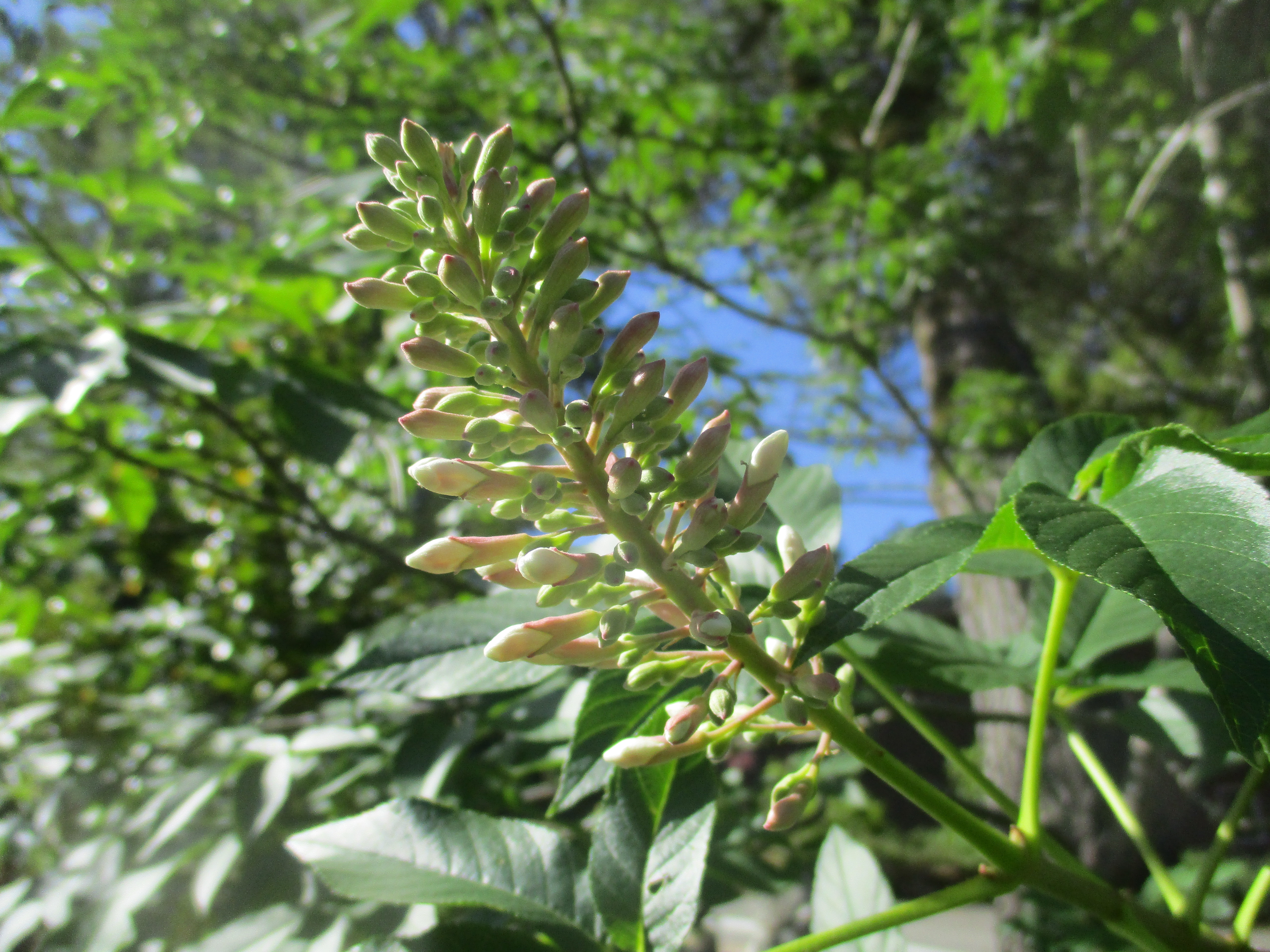
P00524-1 Buckeye starts to bloom like lilac, or upside down wisteria.
Ohio is the Buckeye State. The Ohio buckeye that is native there must be very special. Perhaps all other trees that are native to Ohio are just not very uninteresting. Whatever the situation, I sort of believe that the Ohio buckeye is more appealing in some regards than the California buckeye that is native here. However, the California buckeye might be more weirdly interesting.

The main reason that California buckeye is not popularly used in landscapes is that it is ‘twice deciduous’. That means exactly what it sounds like. Just like other deciduous trees, it defoliates in response to cooling autumn weather, and refoliates in response to warming spring weather. Unlike other deciduous trees, it repeats the process through the warmest weather of summer.

When summer weather gets too warm and arid, the foliage of California buckeye shrivels and sort…

View original post 169 more words

Horridculture – Green Is The New Black

Well, . . . I do not remember why I posted a Horridculture article on a Saturday rather than a Wednesday three years ago, but it is what I have to recycle now for today.

tonytomeo's avatarTony Tomeo

P00523K-1 Foliage does not get any blacker than this.
This is not another of my many racial slurs for the renowned Southern Californian landscape designer, Brent Green. Believe or not, I endure many more of such slurs from him; so will not even bother putting something else out there that compels his retaliation. This is about Japanese laurel, Aucuba japonica, which is incidentally rather yellowish with rich golden variegation.

Japanese laurel, which is known as gold dust plant locally, is happy in partial shade, and will tolerate rather significant shade. That is a distinct advantage in landscapes that are dominated by so many big redwoods. Even without significant bloom, the bright yellowish foliage is an asset in visually dark parts of the landscapes. There probably should be more of it here than there is.

It is not one of my favorites though. It does not cooperate with pruning, and…

View original post 176 more words

Horridculture – Dust Bowl

After so historically abundant rain last winter, dust should be extinct. It will eventually be back though.

tonytomeo's avatarTony Tomeo

P00520 Cimarron County in 1940 or the road out back last Wednesday?
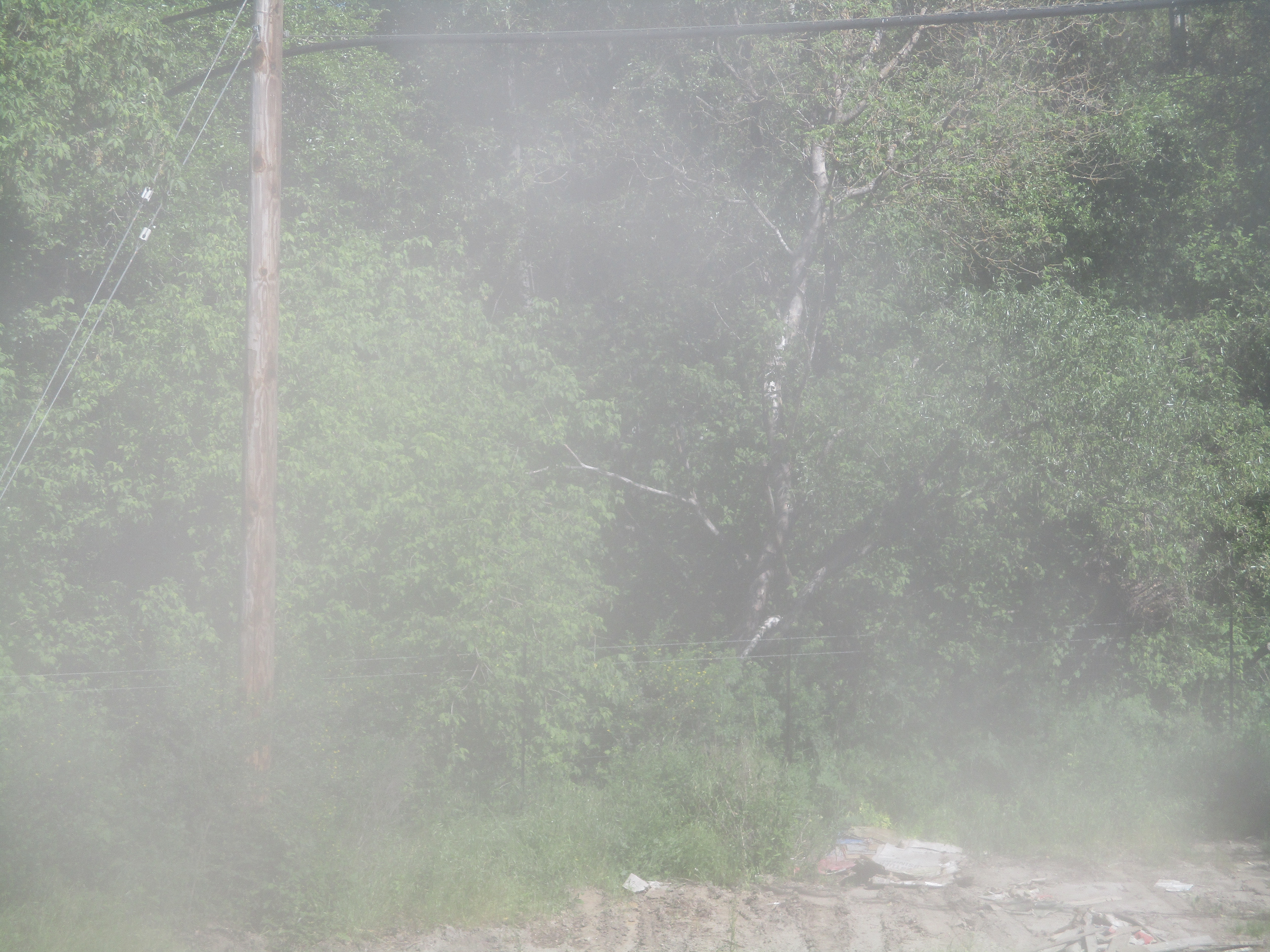
In a commotion that an Okie would flee from, the road out back got blown last week. What a mess! Dust was everywhere, and I mean, except for the road from which it was blown, it went ‘everywhere’. The engines of the two blowers at full throttle echoed loudly against pavement, the cinder block and metallic walls of the industrial buildings, and under the broad eaves above.

Fortunately, no one else was here to be bothered by it. Actually, no one would have been as bothered by it as we were by the crud that was on the road prior to getting blown. We know that blowing is sometimes necessary. There are only a few windows on the industrial buildings, and they were all closed. The few vehicles that happened to be parked nearby were already dirty.

Where I…

View original post 326 more words

Too Much Oregano

Perhaps I should not have put so much effort into eradicating this oregano. Now, there is not enough.

tonytomeo's avatarTony Tomeo

P00517 Herbs should do so well in an herb garden.
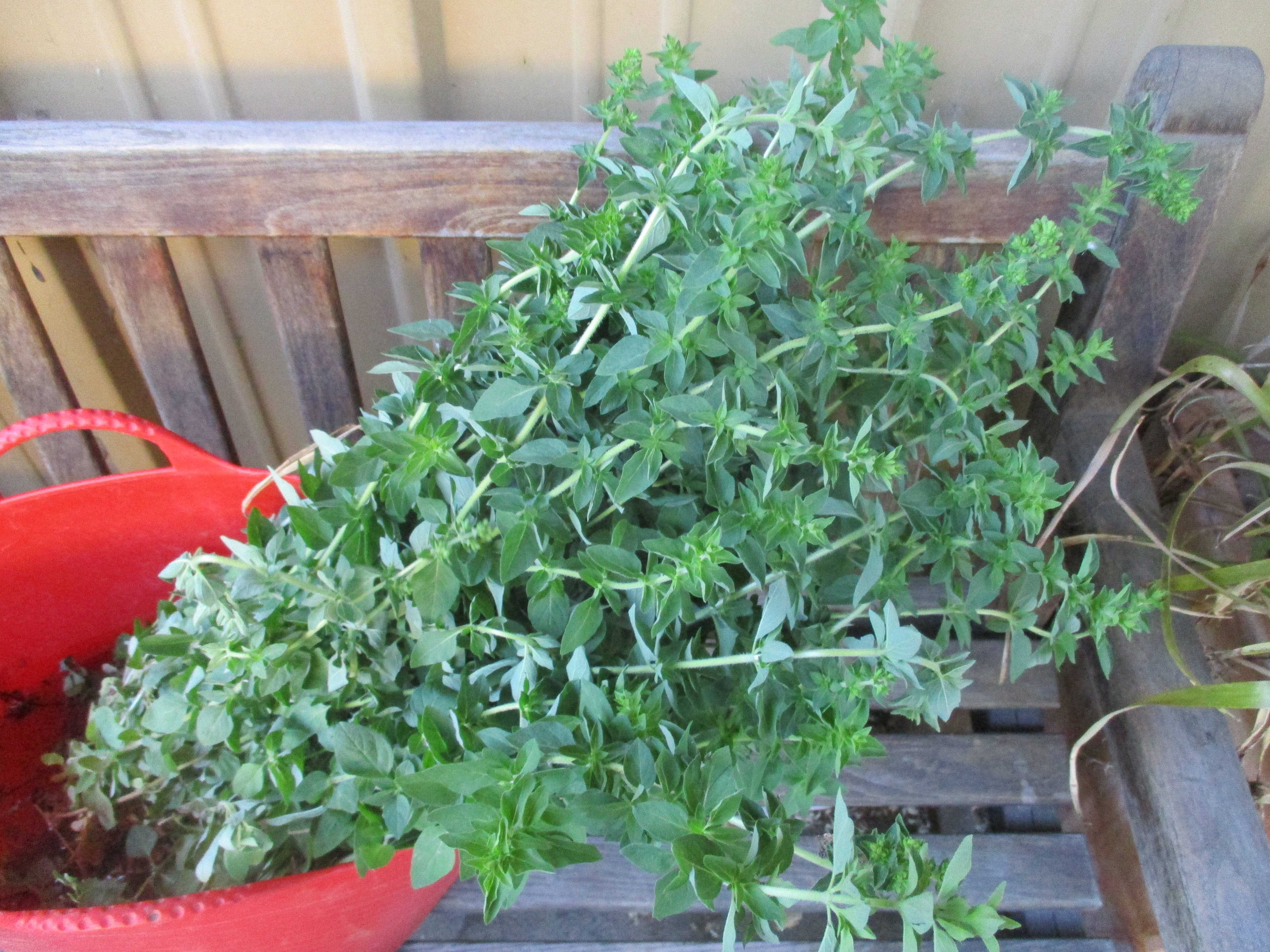
Vegetation management after several weeks of neglect has been . . . interesting. While we were unable to work, and during their most active growth of the year, weeds proliferated more than they had ever gotten away with before. As most get cut down by weed whackers, I pull those that mingled with desirable plants that weed whackers must avoid. It is a tedious process.

One of the more tedious of these projects, and perhaps the most tedious so far, required the removal of abundant weeds from a dense row of carpet roses. Fortunately, it was not as bad as I expected it to be. They young man who weeded this area during winter had done a remarkably thorough job, and eradicated most of the dreaded oxalis and tougher perennial grassy weeds.

The weeds that I pulled were big and impressive…

View original post 159 more words

While You Were Out

When this posted three years ago, many of us were unemployed by the COVID situation.

tonytomeo's avatarTony Tomeo

P00516K It’s a jungle out there!

Our work is the sort that could potentially continue as essential. Distancing is not a problem for us, since we generally work individually, and there are no guests here. However, work needed to be discontinued due to lack of revenue. A conference center can not generate revenue without big groups of guests. Even when groups can return, many potential guests can not afford to.

The chronology of this situation should have been documented more efficiently. We had been unable to work here for several weeks. I do not remember how long it had been. Work resumed two weeks ago, and can continue for six more weeks, for a total to two months. We will start no new projects during this time, but will primarily try to catch up on what was neglected earlier.

Salvage and preparation for resumption of neglect are presently the priorities. This…

View original post 155 more words

Horridculture – Plastic Is Forever

Unfortunately or fortunately, environmentalism is part of my work.

tonytomeo's avatarTony Tomeo

P00513 Ah, the memories.

Horticulturists are environmentalists by definition. Whether we grow horticultural commodities, install such commodities into landscape, maintain such landscapes and associated trees, or design such landscapes, the vegetation that we work with affects the environment. Many of us should take our innately significant environmental responsibilities more seriously than we do.

We should also be realistic about our environmentalism. For example, there is no problem with designing a landscape that attracts butterflies for a client who enjoys butterflies in the garden. However, we should not promote butterfly gardening as something that benefits the environment and ecosystem by distracting insects from native flowers that rely on them for pollination.

I have never been one of ‘those’ extreme environmentalists. I do not want to save all vegetation. Some trees are too hazardous to those in the landscape below. Some exotic species are too aggressively invasive within a natural ecosystem, and therefore…

View original post 153 more words

Timber!

As bad as this was three years ago, it is not as extreme as what came down this last winter.

tonytomeo's avatarTony Tomeo

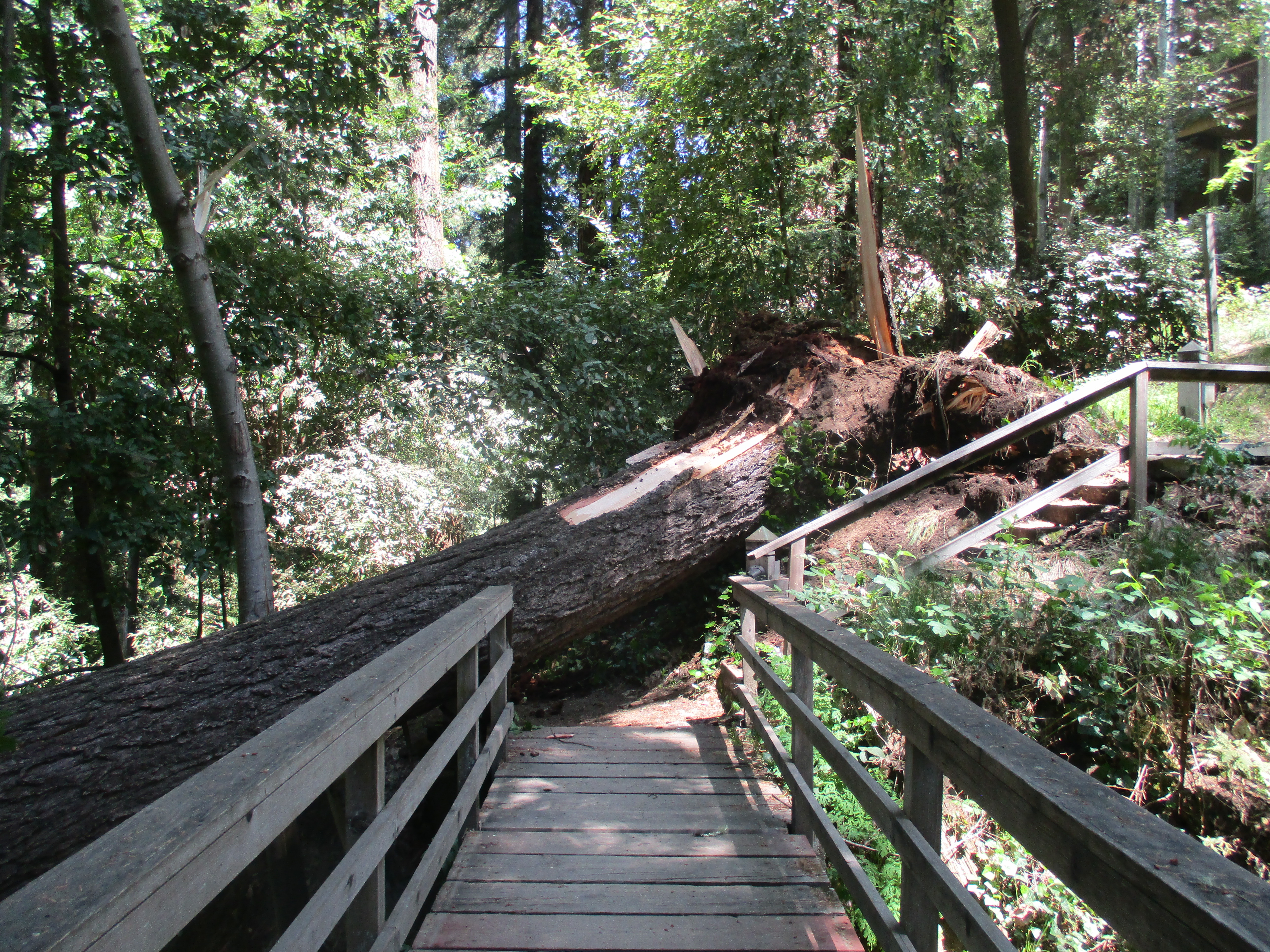
P00510-1 This is a bit more than just slightly inconvenient. The trail continues forward from here, with another trail up the stairs to the right.
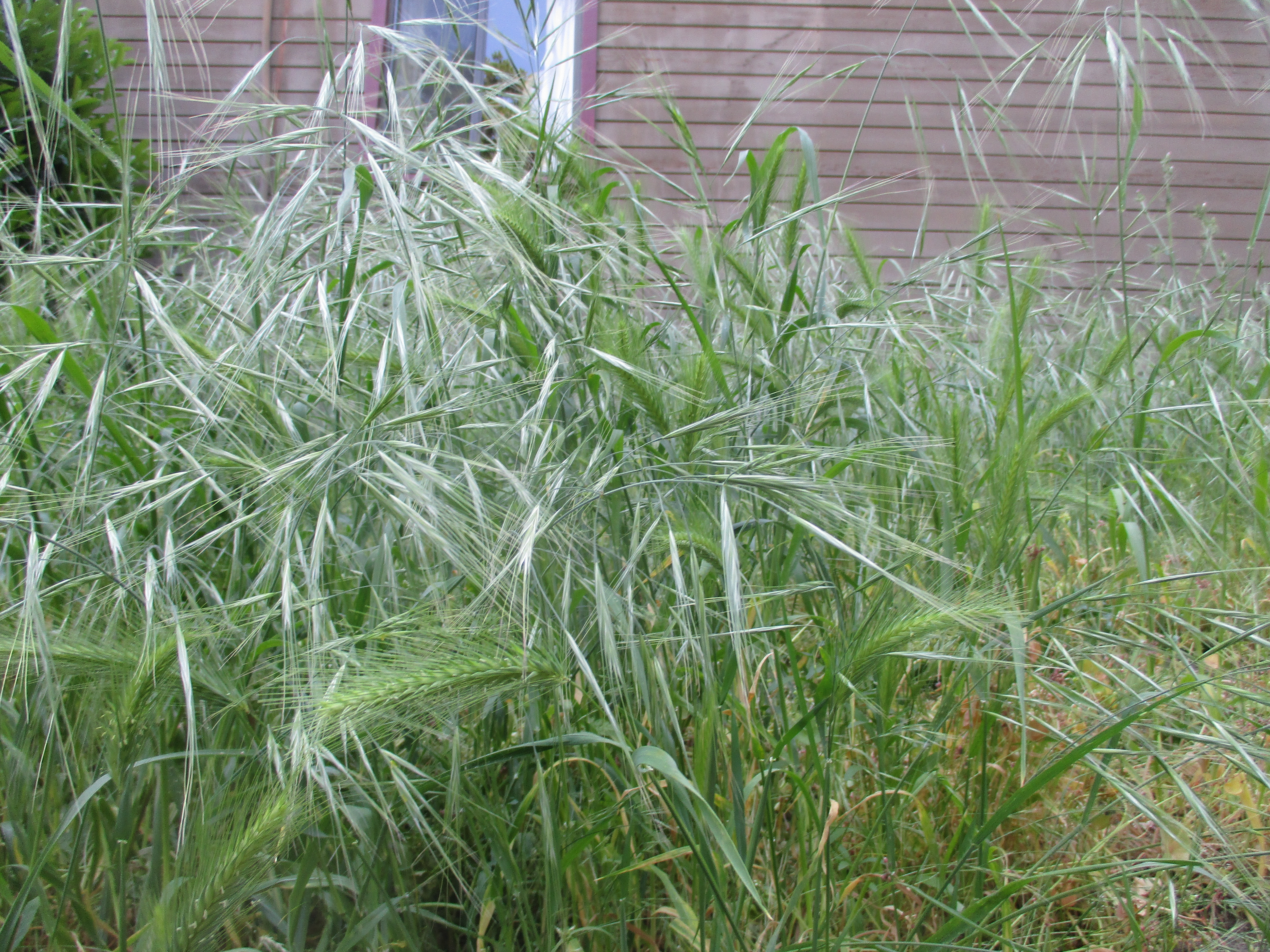
It is that time of year. Warming weather accelerates vascular activity, which makes foliage heavier. If evapotranspiration is inhibited by humidity and a lack of wind, the foliage can get too heavy to be supported by the trees that produce it. All that increasing weight can bring down big limbs or entire trees at the most unexpected times. The process is spontaneous limb failure.

By ‘unexpected’, I mean that it happens when there is no wind. It is startling because broken limbs and fallen trees are typically associated with wind rather than a lack of it. Gentle wind actually accelerates evapotranspiration, which relives affected vegetation of some of its weight and susceptibility to spontaneous limb failure. Aridity helps too, by absorbing more moisture.

Of course, even…

View original post 253 more words

Between A Rock And A Hard Place

Well, . . . I have not seen any since this posted three years ago. It was good while it lasted. It could still be out there somewhere, and if it were to reappear, it would be more likely to become noticeable after this last unusually wintry winter.

tonytomeo's avatarTony Tomeo

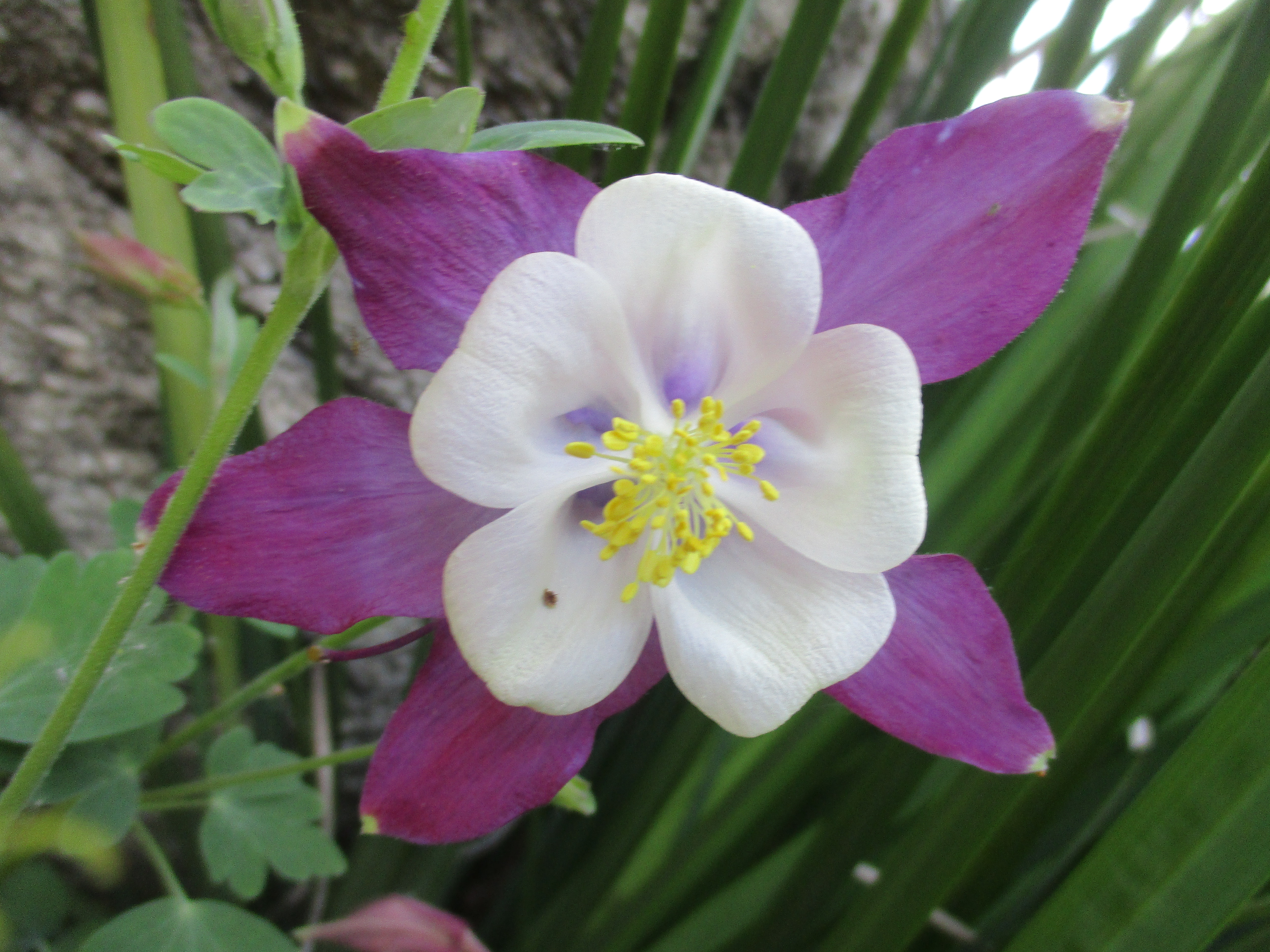
P00509K Where does this delightful columbine think it is?!

Columbine does not do well here. I do no know why. It does well enough in Colorado to be the Official State Flower there. Yet, the mildest of climates is Colorado are harsher than the climate here. It does not get too terribly warm in summer here. Humidity is minimal, but not as minimal as in much of Colorado. Nor does it exceed that of other regions where columbine does well.

We have certainly tried to grow columbine. It just does not work. Some of it succumbs to powdery mildew. Some succumbs to rust. The last batch just succumbed. Because it was expected, I did not bother to investigate. I got the impression that it was taken out by both powdery mildew and rust. Flowers that bloomed so delightfully when planted went to seed on their way out.

That should have been…

View original post 158 more words