New York Times

(This article is copied from my other discontinued blog at Felton League. It is not about horticulture, but links to another article about hedges, and features Brent’s garden.)
This is why I have never stayed at Hotel del Flores.

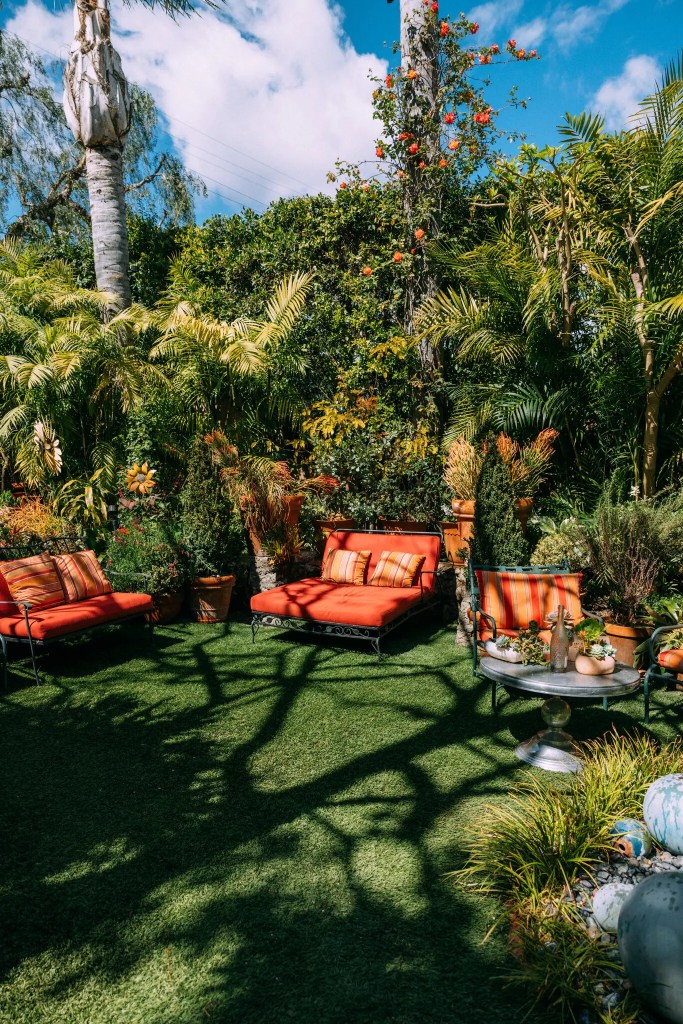
The New York Times featured a picture of my homeless camp! It is the third illustration of this article about landscape hedges. It shows where I camp while in Southern California, including the orange garden daybed where I sleep, and, as the primary topic suggests, a portion of the surrounding hedges.

This illustration should demonstrate why I enjoy being homeless in Southern California. It is quite luxurious. The weather is exemplary for camping. I wake amongst lush tropical foliage and palms, to the gentle sounds of small fountains and wild parrots. It is about as excellent as camping within one of my gardens, but very different, and special because I do it for less than three cumulative weeks annually. For many years, I have been wanting to stay at the famously eccentric Hotel del Flores nearby, but will not do so without inhospitable weather to dissuade homelessness.

Seeing this particular illustration reminds me of why this Felton League blog has been discontinued. For quite a while, there has not been much to write about that would not be intrusive to those involved. Societal difficulties as well as personal difficulties within society certainly remain, but are not as prominent as they had been. My own experience with faux homelessness, albeit within another Community, is strangely appropriate as an illustration for an unrelated article within the New York Times.

Most of those who experienced unemployment, poverty, homelessness or related difficulties here in the past are now enjoying major improvements to their personal situations. Many of those who are not yet benefiting from such improvements appreciate support from this graciously compassionate and generous Community. This has always been a good place to be in a bad situation. Perhaps, now that I no longer blog here, I should write a book about my experiences.
Six on Saturday: Welcome to the Jungle

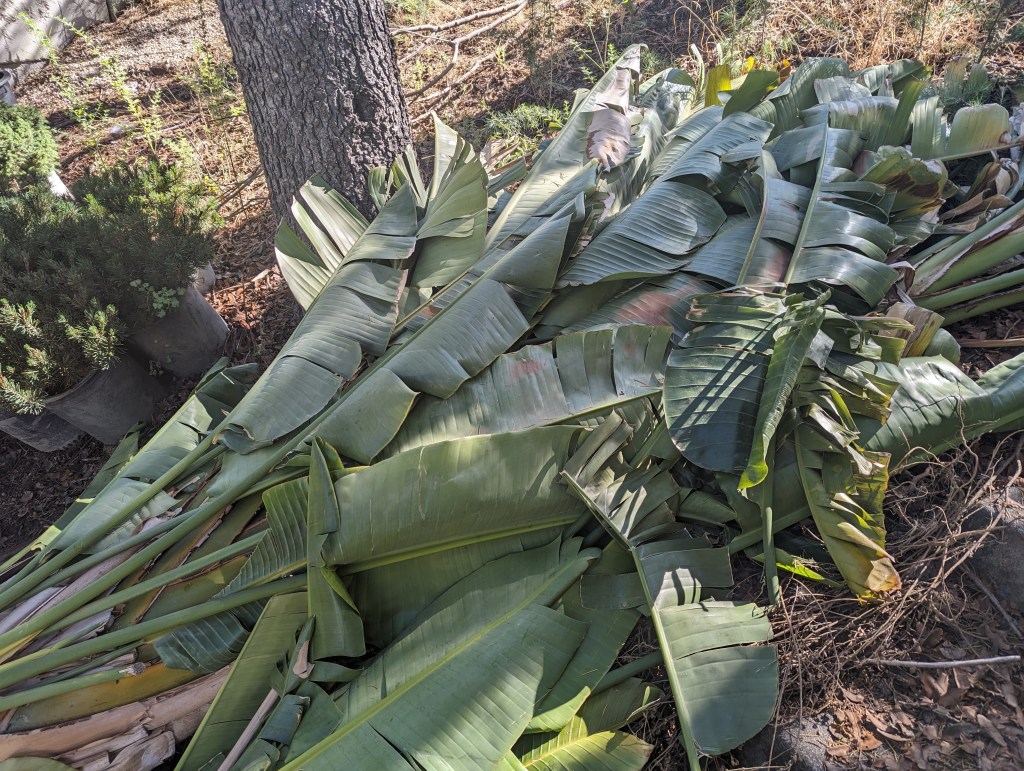
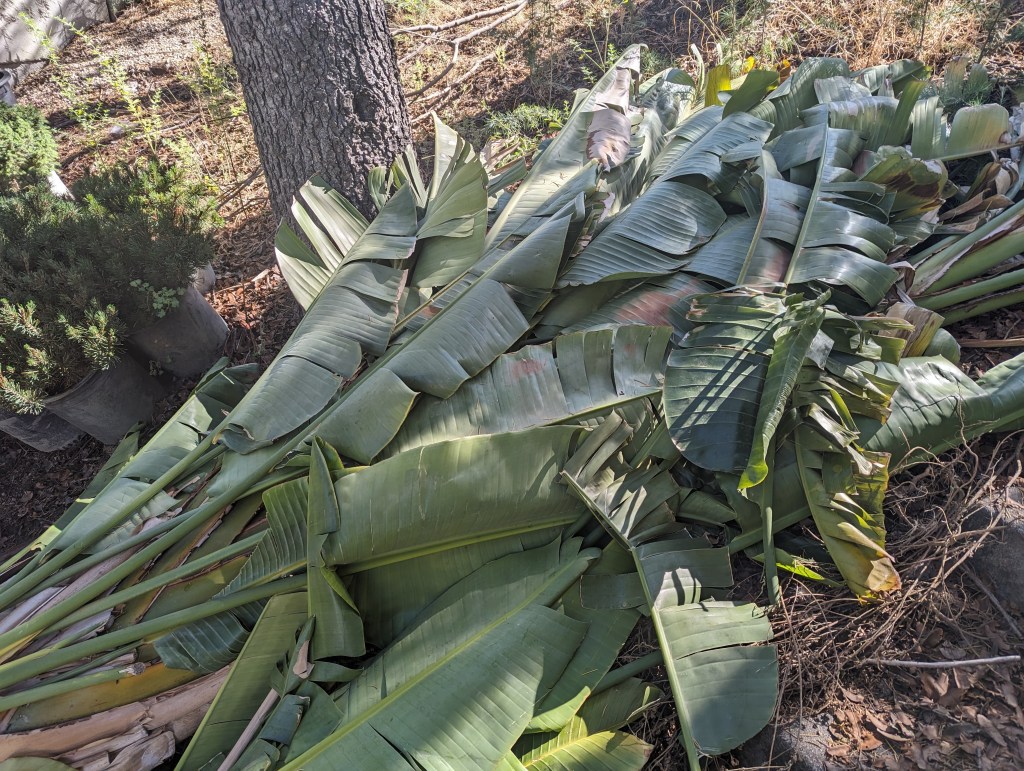
Giant bird of Paradise, Strelitzia nicolai, is a grand perennial. It develops several trunks like those of palms, with lush leaves like those of bananas, and bold white flowers. Their bloom can be messy with its sticky and viscous nectar though. Brent and I refer to them as drooling seagulls. For this reason, these giant bird of Paradise needed to be removed. I was pleased to recycle them. They look pathetic now that most of their foliage has been pruned away to minimize evapotranspiration during their recovery. Most should begin to regenerate roots through summer, and then resume growth for next spring and summer.

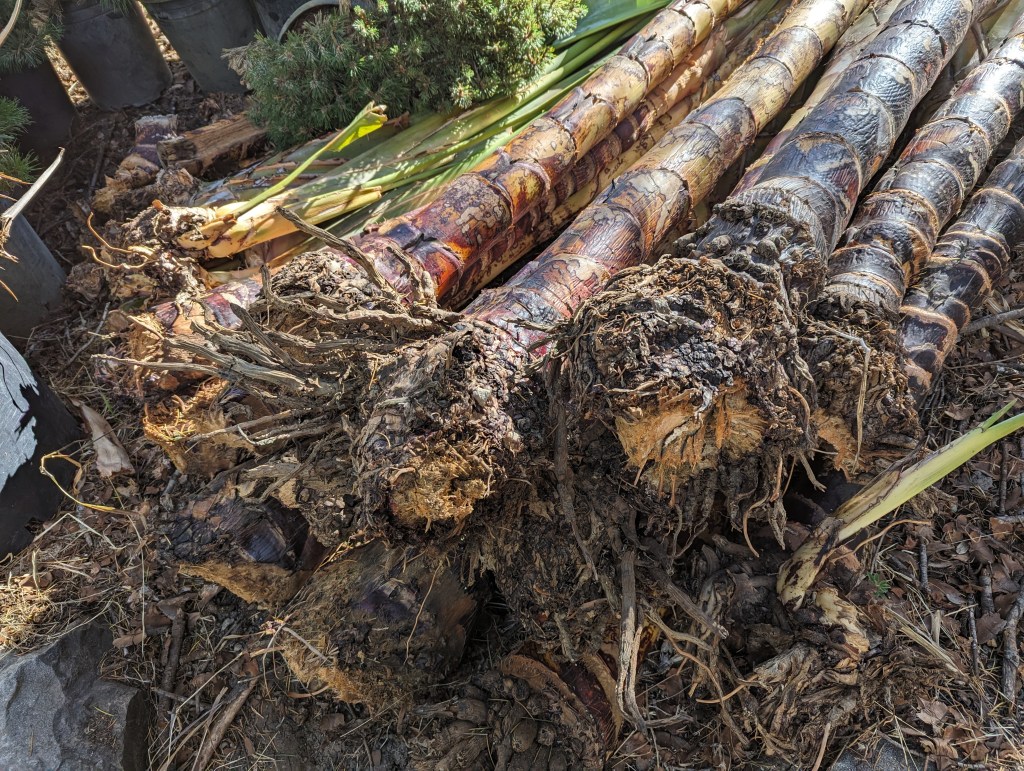
1. Giant bird of Paradise does not look so impressive laying on the ground. This is one of two piles of well foliated trunks that must be processed and heeled in until next autumn.

2. ‘A Flock of Seagulls’ demonstrates how abundantly these mature specimens bloomed. They are not just any seagulls, but are dead drooling seagulls. I will glean them for seed.

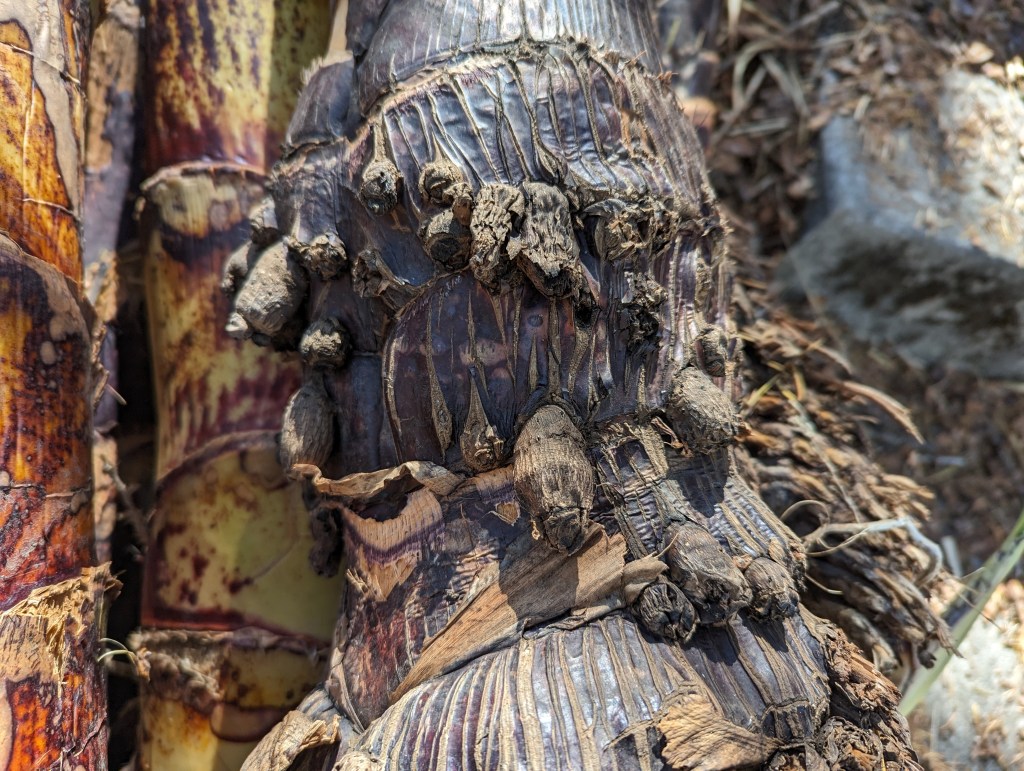
3. Husks make the trunks seem to be bigger than they are. They are the bases of petioles of leaves that were pruned off over the years. Trunks are leaner and tidier without them.

4. Severed roots are unimportant. They merely indicate that a portion of a subterranean rhizome remains attached to the base of a trunk. Trunks are neater without their husks.

5. Adventitious roots grow from portions of rhizome that remain attached to the bases of the trunks, and from the bases of trunks near the rhizomes. These roots are now buried.

6. Lineup shows that there are about a dozen significant trunks, a dozen shorter trunks, and half a dozen pups. They are heeled in here to begin rooting with frequent irrigation. They will be relocated to their permanent landscape after the rain starts during autumn.

This is the link for Six on Saturday, for anyone else who would like to participate: https://thepropagatorblog.wordpress.com/2017/09/18/six-on-saturday-a-participant-guide/

Quince

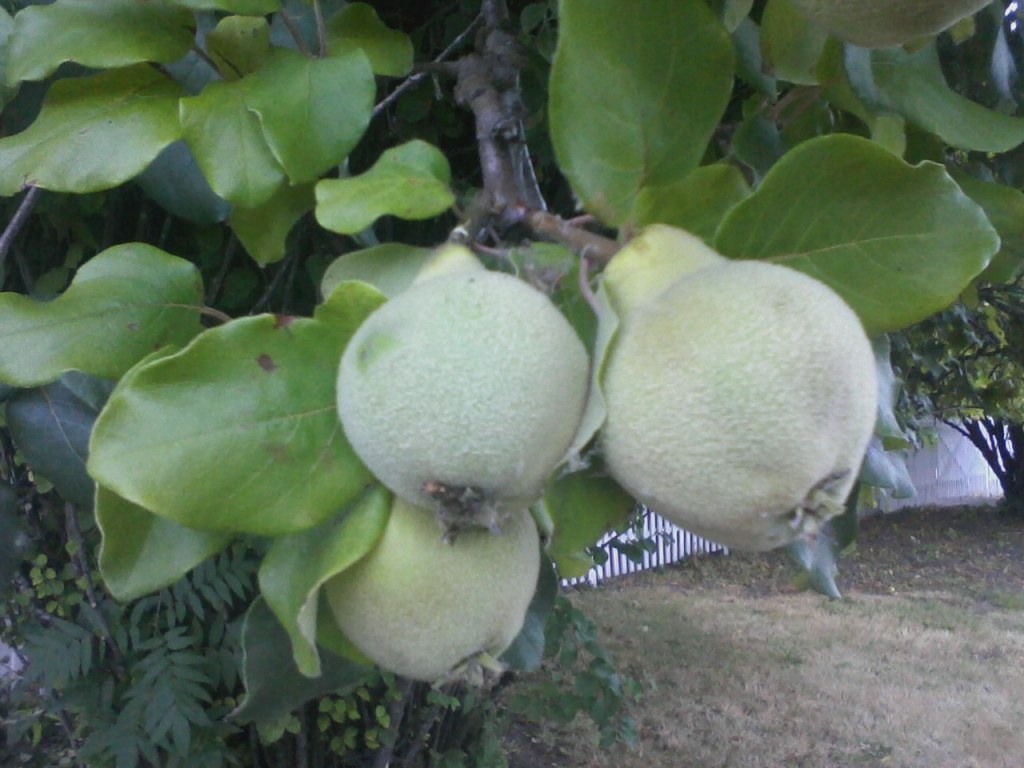
Quince has become a rare fruit.

With the many slender arching trunks, quince, Cydonia oblonga, is more like a large deciduous shrub than a fruit tree. Even old trees are not much more than twenty feet tall and broad. Most of the rare trees that can be found are old, because quince is such an old fashioned fruit. The fruit is still immature and covered with white pubescence (fuzz). By late autumn, it will be remarkably aromatic and resemble golden pears, about four inches long and nearly as wide, and so hard that it should be cooked.

Tree Stumps May Put Up A Fight

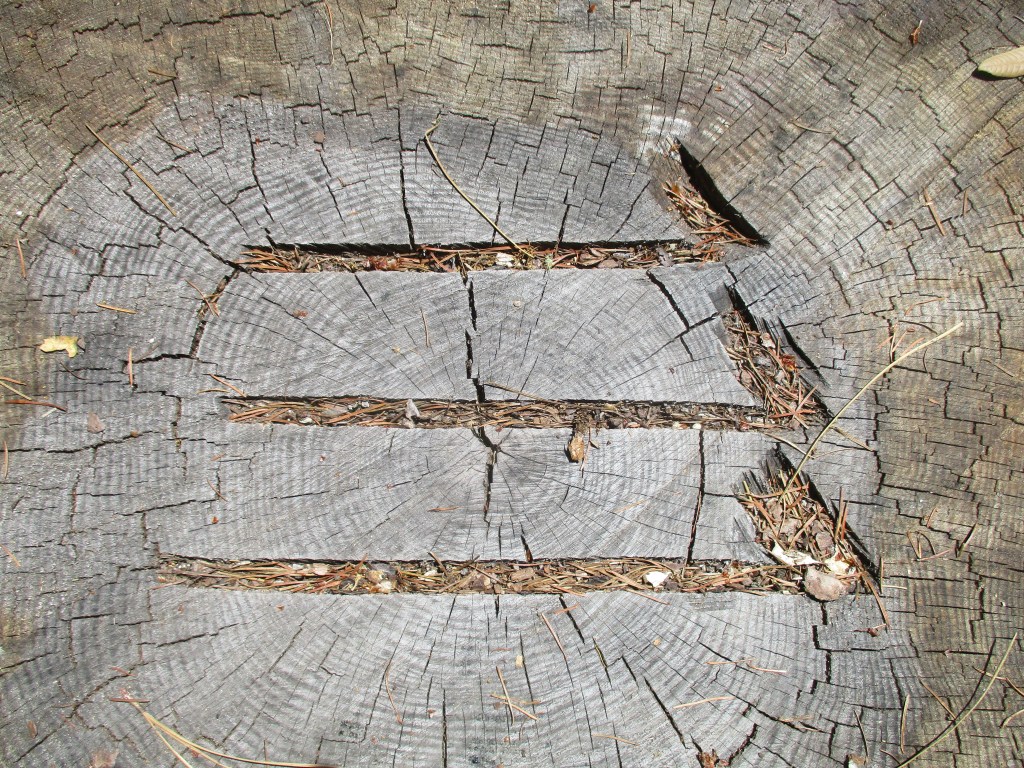
Some stumps die immediately. Some do not.

Trees of all sorts are among the most important features of most gardens, and are also the most substantial. Yet, in the end, whether they get too big, too crowded, too hazardous or simply succumb to old age, they eventually need to be removed.

Getting rid of the brush (foliage and smaller limbs) of smaller trees is generally not much of a problem, especially where greenwaste can be left at the curb for recycling. Larger limbs and trunks can be cut and split into firewood. The brush and wood of trees that are so large that they need to be removed by professionals typically gets taken away be the same professionals. The most difficult parts to remove though, are the stumps.

Professional tree services typically offer the option of stump grinding. This works well for the most obtrusive stumps that are accessible. Other stumps get left either because they are inaccessible, or because of the expense of grinding.

Stumps that are within ground cover or shrubbery often get obscured by the surrounding vegetation, and are never seen again. Others are not so easy to hide. Many refuse to die for several years, and may even try to grow back as new trees.

Coastal redwoods (but not giant redwoods), poplars, willows, privets, sycamores and camphors are notoriously difficult to kill. Their stumps can continue to sprout for years. Shoots that emerge away from the stump can certainly be left to grow into new trees if they happen to be where they will not soon become problematic. (Shoots that emerge directly from cut stumps will likely lack structural integrity.)

To kill stubborn stumps, shoots must be removed as they appear. Eventually, the stumps and roots below the ground exhaust all resources and die. Of course this sounds simple, but may take years to kill redwood stumps. Leaving shoots to grow prolongs the process by allowing replenishment of resources. A stump from a camphor tree that I cut down in about 1988 but did not regularly remove the shoots from lingered for about twenty years before finally succumbing in about 2008!

Once stumps die, they rot faster if buried or at least covered with other plant material. Less stubborn stumps that are not likely to sprout again, like those of pines, cypresses, cedars, birches and (solitary trunked) palms, can be buried or concealed immediately. Stumps that are not cut low to the ground are not so easy to conceal, but should still rot faster if covered with ivy. I prefer to plant either freshly divided lily-of-the-Nile shoots or geranium cuttings around the bases of stumps, because they obscure the stumps and also promote rot as they get watered and disperse roots into the decaying wood. They can be removed, if desired, as the stumps deteriorate.

Horridculture – Post Office

Posted!

The Post Office in town is where I go to post or collect mail. For the past few years, this small coast live oak has been getting so low that I must duck under it to get onto the sidewalk from the parking spaces, or even to get past it on the sidewalk. It is particularly annoying because it is in such a prominent location where many other people park and enter the Post Office. I have sometimes considered bringing my pole saw and other pruning tools to prune it for clearance, but because I have not driven the pickup into town for a very long time, and do not intend to do so anytime soon, I would have no means with which to dispose of the debris.

Well, someone else pruned it. Well, sort of pruned it. Well, let us just say that I no longer need to duck under it. What a hot mess of stubs, or should I say, ‘posts’. This is after all, the Post Office. How could anyone think that this was acceptable?! How difficult would it have been to cut these lower limbs properly, without leaving these horrid posts?! Even someone who is not at all concerned about the tree or proper arboriculture can see how hideous this is. Seriously, this goes beyond negligence. Someone put considerable effort into doing this so extremely improperly!

I brought my pole saw the following week to remove these posts without doing any more pruning. I figured that without all the foliage, I could fit them into the trunk of the Roadmaster. However, by the time I go there, someone, likely from the Department of Public Works, had already repaired the damage. The tree could be pruned a bit more, but at least it is not so mutilated.

Mexican Fan Palm

Palms are familiar within Californian landscapes.

California fan palm is the only palm that is actually native to remote regions of California. However, Mexican fan palm, Washingtonia robusta, is much more common. Technically, its native range is not far away. It had been the most popular of palms prior to the 1990s. It is more adaptable to more populous climates. Also, it naturalizes within some regions.

Mexican fan palms grow vigorously while young. Growth decelerates with maturity. Very old trees can grow very slowly without completely stagnating. Wild specimens may have potential to survive for a few centuries with such slow growth. Cultivation and irrigation of home gardens may limit this potential. Few local specimens are more than a century old.

Mexican fan palms are taller and slimmer than California fan palms. Their trunks lean as prevailing wind blows them. They easily grow fifty feet tall, and eventually get a hundred feet tall. Such tall and leaning trunks can suspend their canopies over adjacent gardens. Their pleated and palmate leaves are about three feet wide, on petioles with nasty teeth.

Palm Trees Are Specialized Trees

Many palms have palmate leaf form.

A tree is a woody perennial plant with a single tall trunk and branches. Banana trees and tree ferns lack both branches and wood. Arboriform yuccas develop branches but are not woody. Palm trees are no better. Some develop a few trunks but without branches. Doum palms that develop branches are extremely rare in California. No palm is actually woody.

Palms are trees only because of their size and form. In other words, most are big and tall. The most compact of palms are no smaller than Japanese maples, which are also trees. Realistically though, palms are merely large to very large perennials. They are monocots like grass, bamboo or cordyline. Some horticulturists classify them as herbaceous trees.

Only California fan palm is native to California, and only to remote desert oases. All other palms are exotic. Spanish Missionaries imported date palms to produce dates within arid regions. Only a few other palms were similarly utilitarian. The majority are desirable only for their distinctive form, texture and evergreen foliage. They are genuinely ornamentals.

All palms are evergreen. Fan palms produce rounded palmate leaves on sturdy petioles. Feather palms produce elongated pinnately compound leaves on sturdy rachises. Many fan palms also produce wicked teeth on their petioles. Many feather palms also produce dangerously sharp spines on the bases of their rachises. Even lush palms can be mean.

Not many palms get big enough to provide much shade. Many types are shady in groups though. Without branches, palms are not conducive to containment or redirection. Some eventually grow tall enough to shade neighboring gardens instead. Unfortunately, palms that encroach too closely to high voltage cables require removal. They do not go around.

Palm trunks do not widen as their canopies grow higher above. Palms with plump trunks grow at ground level for several years before they can launch. Their single terminal buds must first grow as wide as their mature trunks will ever get. Their foliar canopies likewise grow no broader than they were when they launched. They only grow higher. Most large palms develop distended basal adventitious roots that can get quite wide, though.

Giant Bird Of Paradise Migration

A Flock Of Seagulls

Giant bird of Paradise is not actually from Paradise, and if it were, it would not be the Paradise in Butte County that burned five years ago. This particular species, Strelitzia nicolai, is from South Africa, Mozambique, Botswana and Zimbabwe. These particular specimens are from none of these places though. They came from Morgan Hill. Nor are they actually birds, although they seem to be migratory like so many species of birds that migrate about the southwestern portion of Africa, and apparently Morgan Hill, but not Paradise. Oh, this is getting confusing.

Giant bird of Paradise, which is unrelated to Big Bird of Sesame Street, is a grand perennial that can get twenty feet tall. It resembles the more common bird of Paradise, but with tall trunks that resemble those of small palm trees. Also unlike the common bird of Paradise, their appeal is more foliar than floral. In other words, their primary attribute is their lush foliage, rather than their bloom. Actually, their bloom can be undesirable within some situations.

In fact, that is why these particular specimens needed to be removed. Their bloom was drooling messy nectar onto the pavement below. In horticultural slang, they are known as ‘drooling seagulls’ because of this habit, and also because their bulky white flowers look like seagulls peeking from the lush foliage, and of course, drooling while they do so.

Morgan, the old F250 who coincidentally is named after Morgan Hill, and I brought these giant bird of Paradise here, where they await processing. They are supposed to be left out of the ground for about two weeks anyway, so that they will be less susceptible to rot when planted and irrigated. After their processing, they will get heeled in here so that I can monitor them more directly as they begin their recovery. The best of them will migrate again to their permanent landscape after the rainy season starts. I should get better pictures of them and their processing for Six on Saturday.

No More Reblogs

My blogging discontinued quite a while ago. Articles from my gardening column still post in two parts on Mondays and Tuesdays, with the primary topics on Mondays, and the featured species on Tuesdays. Older articles still post in the same format on Thursdays and Fridays. These articles are not actually blog posts though. They are gardening column articles.

Originally, my only blogging had been on Saturdays, Sundays and Wednesdays. ‘Horridculture’ topics posted on Wednesdays. ‘Six on Saturday’ contributions posted on Saturday mornings. Random topics posted at noon on Saturdays and on Sunday mornings. Then, with the exception of ‘Six on Saturday’ contributions, all of these blog posts were recycled from earlier posts, so no longer qualified as actual blogging.

Now, as was inevitable, there are no more blog posts to recycle. Articles from my gardening column will continue to post on Mondays and Tuesdays. Older articles from the same column will continue to post on Thursdays and Fridays. I will likely continue to participate in the ‘Six on Saturday’ tradition on Saturday mornings. Otherwise, except for occasional random posts, regularly scheduled but recycled posts for Saturday afternoons, Sundays and Wednesdays will not continue.

In the future, recycled gardening articles may also be omitted, and new gardening articles may not be divided into two sections. If so, intact articles from my gardening column may post only weekly here. After all, the original purpose of this blog was to be another minor venue for the gardening column, . . . and obviously, pictures of Rhody.

Six on Saturday: Better Late Than Never

As I explained earlier, unusual weather has interfered with the growth and bloom cycles of many species. Winter weather was exceptionally wintry. Spring and summer weather was exceptionally mild until only recently. Many flowers bloom precisely on schedule, as if oblivious to the unusual weather. Many flowers bloom significantly later than normal. Lily of the Nile seems to be about a month late. So does garden phlox, although I do not remember if it bloomed simultaneously with lily of the Nile last year. Nor do I remember when butterfly gladiolus bloomed. Hybrid gladiolus seemed to bloom right on schedule, so are finished.

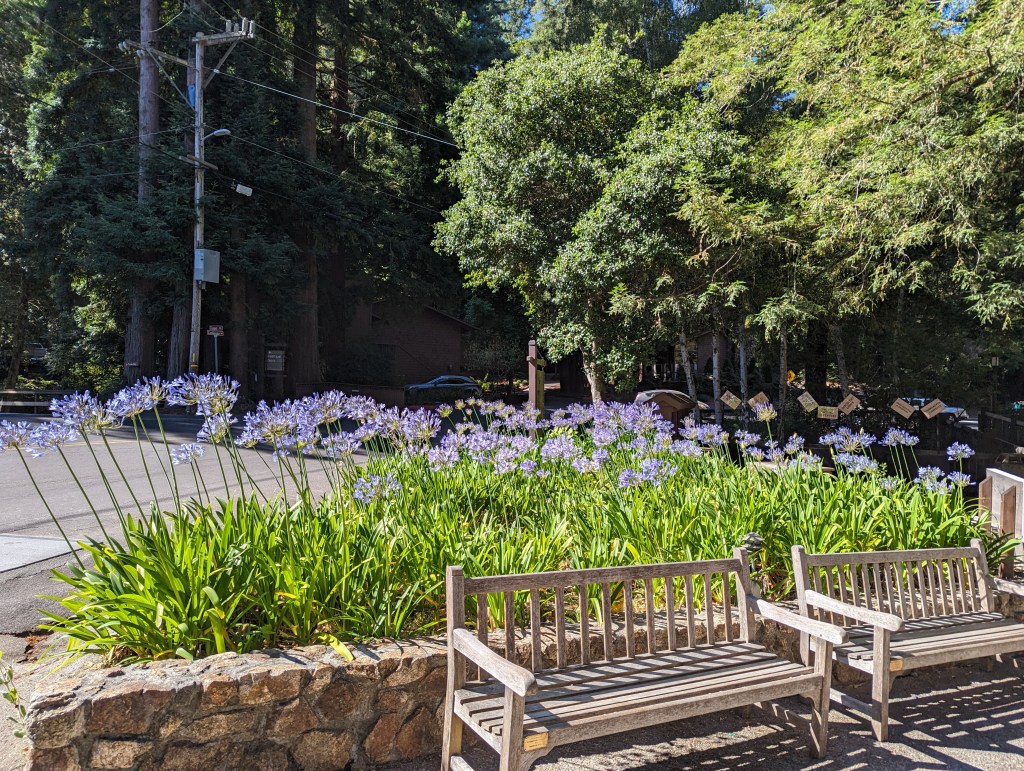
1. Agapanthus orientalis, lily of the Nile should have been blooming like this more than a month ago, and at least for Independence Day. Some buds are only beginning to open.

2. Agapanthus orientalis, lily of the Nile does not bloom abundantly in the shade, but it blooms grandly. This picture can not show that this one floral truss is about a foot wide.

3. Agapanthus orientalis, lily of the Nile, although genetically variable, had always been exclusively blue within all of the landscapes here. This is the first of three white blooms! I grew the originals in the early 1990s, but needed to relocate their herd a few years ago.

4. Phlox paniculata, garden phlox seems to be even more delayed than lily of the Nile is. I can not be certain though, since I got acquainted with its seasons only a few years ago.

5. Gladiolus X hortulanus, hybrid gladiolus was not so delayed, so bloomed precisely on schedule, and now needs deadheading. I am pleased by how many are reliably perennial.

6. Gladiolus papilio, butterfly gladiolus is Skooter approved, and is from Tangly Cottage Gardening! I do not know if it was delayed, because I am still getting acquainted with it.

This is the link for Six on Saturday, for anyone else who would like to participate: https://thepropagatorblog.wordpress.com/2017/09/18/six-on-saturday-a-participant-guide/