After deprivation of my rant three years ago, I notice that this particular landscape has reverted to its former dysfunction, although not quite as badly as several years ago.
A bit of Boston ivy adds a bit of texture and color to the stone wall.
My rant for this week is that I was deprived of my rant. I went to a nearby landscape that had been trashed by the so-called ‘gardeners’ for many years, only to find some unexpected and major improvements. I do not know what happened. Although it will take some time for the landscape to recover from the prior damage, it is already starting to function as intended.
It is obvious that the landscape was very well designed. Although I know very little about design, I know what is horticulturally correct. The designer selected species that are very appropriate for every application, even though none were particularly trendy at the time. Those who were hired to maintain the landscape only interfered with its intended development.
I noticed several improvements, but got pictures of only two…
Unusually wintry weather did not seem to delay star magnolia, Magnolia stellata, bloom. Such bloom can begin immediately prior to March, or finish immediately afterward. Yet, it typically occurs at about the same time annually within any particular situation. Few here were notably later than they were last year. Bloom lasts only for about two weeks though.
Nonetheless, bright white bloom is spectacular prior to foliation of otherwise bare stems. Formerly rare cultivars with blushed or pastel pink bloom are becoming popular. Delicate floral fragrance is proportionate to profusion of bloom. Individual flowers are about three inches wide with many narrow tepals. Deciduous foliage appears as bloom deteriorates.
Star magnolia may be more comparable to large shrubbery than small trees. Most do not grow much taller than six feet. Some of the largest may be twice as tall and broad, with a few trunks. Old trunks and branches can be somewhat sculptural. Bark is pallid, like that of fig trees. As their plump floral buds begin to burst, bare stems are conducive to forcing.
Winter was epic! Snow was more abundant than since 1976. Rain was more continuous than since 1982. Frost was colder than since 1990. All of this happened within this same winter! Californians generally appreciate rain and snow, and tolerate typically minor chill. Chaparral and desert climates here rarely get much. However, this weather is excessive!
Furthermore, such excessively cold or wet weather was unconducive to gardening. Most of us wanted to stay inside. Home gardens consequently endured neglect in conjunction with extreme weather. Regardless of the current weather conditions, winter is technically done. Now that it is spring, gardens should begin their systematic processes of recovery.
This may entail more effort for those who enjoy gardening than for the associated plants. Most plants are resilient to harsher winter weather than they endured here recently. That is how they survive other less temperate climates. Some may respond favorably to more thorough than typical grooming. Some might prefer later grooming while they regenerate.
Chill can actually enhance performance of some plants that prefer cooler winter weather. For example, some cultivars of apple are barely satisfied with the more typical local chill. They may perform better this year, after a cooler chill. Flowering cherry, purple leaf plum, lilac, wisteria, and many others may do the same. Stone fruits might be more productive.
Several plants do succumb to frost though. Some that typically die back but then recover may not recover this year. For some, the unusually cold frost was lethal. Others rotted as a result of lingering cool dampness. Kaffir lily that is blooming well now may succumb to rot later. Canna that grew early only to succumb to later frost should recover well though.
Some plants that endured frost and saturation last winter might delay their spring bloom. Roses could bloom better but also later, both as a result of cooler than typical chill. Some early spring bulbs that bloomed when they should suffered for it. Rain and wind knocked them into the mud. Later bulbs might avoid a similar fate by delaying their bloom slightly. Fewer conform to a comparably strict schedule.
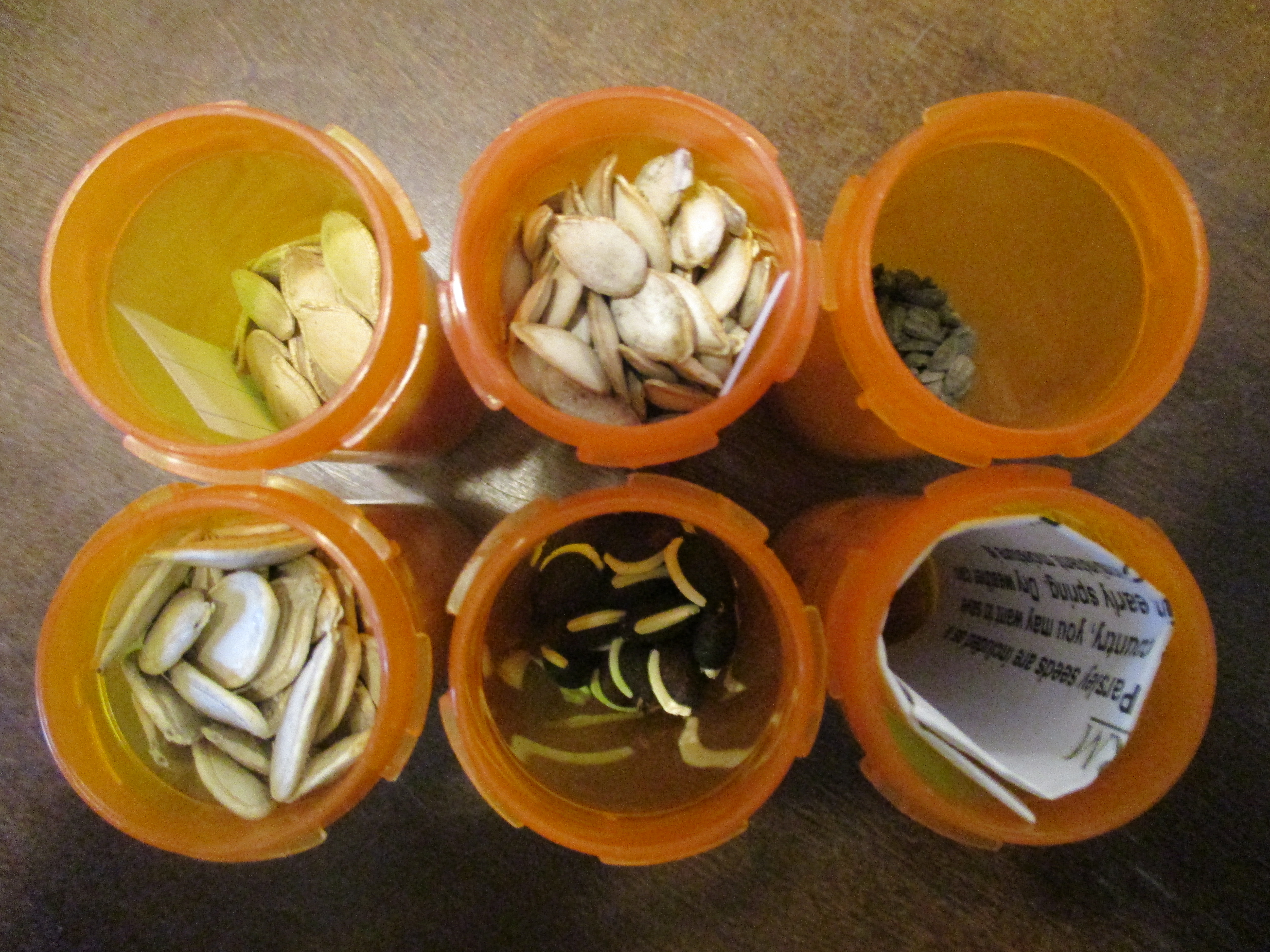
This is another recycled article that should have gotten an update. Of these seed, only the hyacinth bean and blue dawn flower did not grow. They hyacinth bean likely grew, but then got pulled up as weeds.
31,800 years or so ago, busy arctic squirrels of northeastern Siberia stored more campion seed than they could consume. Of a store of more than 600,000 such seed, which were found deep below permafrost, three immature seed contained viable embryos. These three embryos were extracted and grown into plants that bloomed and produced new seed as they would have 31,800 years ago.
A 2,000 year old date palm seed, which was found in the palace of Herod the Great on Masada in Israel, is the oldest known intact and mature seed to germinate. It was approximately 29,800 years younger than the miraculously viable embryos of the Siberian squirrel stashed campion seed, but is ridiculously older than the oldest of the old seed in my partly neglected collection. There is hope.
Some of the seed that I saved is not dated because, at the time, I…
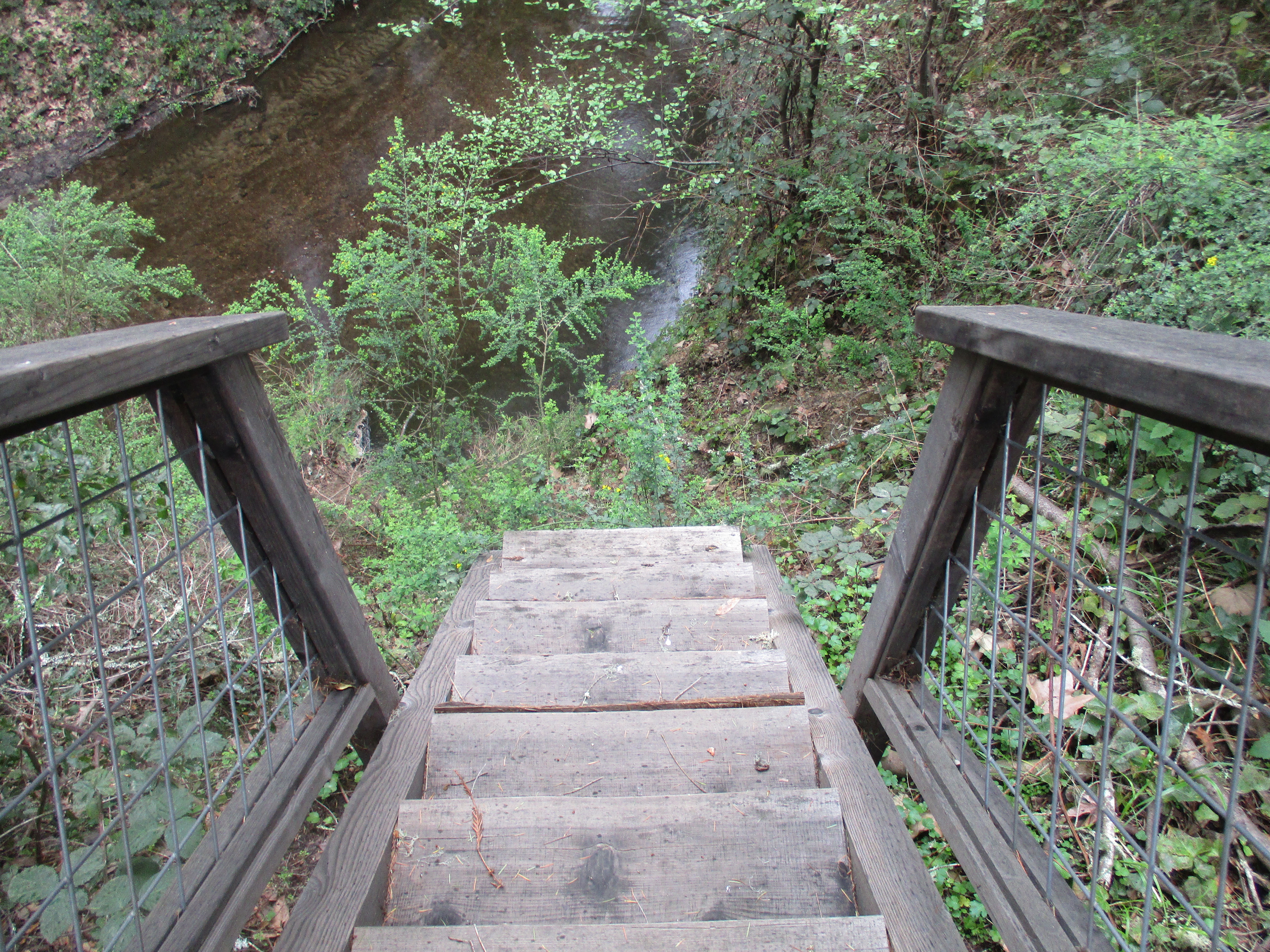
Watch your step . . . while there is one to watch!
This is . . . odd. It is like something of the Winchester House. It seems that these steps in the picture above should go down to a lower deck, but there is no indication that there had ever been such a deck down there. The steps are well maintained and swept mostly clean of forest debris, so whatever happened to whatever should be down there must have happened recently.
Actually, these steps are for what is above rather than what is not below. The picture below shows that there is a deck associated with these steps, but that it is a considerable distance away, and that the only way to get there is by the cable that extends to it from the upper right corner of the picture, over Zayante Creek. The deck is rather sloped to…
Modern technology annoys me. Firstly, the electronics industries are what destroyed the idyllic culture of the Santa Clara Valley. Secondly, it complicates things. If I try to rely on it as the rest of society does, it does not function. It is a long story, so to be brief, I could not download pictures that I sent from the telephone. These six are random, but became available
1. Monstera deliciosa, Swiss cheese plant is in Brent’s garden, four hundred miles away. He wanted to get it into the Canyon News, but sent me this uselessly shabby image of it.
2. Billbergia nutans, queen’s tears was blooming well enough for ‘Six on Saturday’ three weeks ago and is blooming a bit more now. Perhaps I should have taken a better picture.
3. Olea europaea ‘Arbequina’, olive trees were gifts for participants at a conference here. This is one of several surplus that we acquired. It is a little but exemplary rooted cutting.
4. Viola tricolor, Johnny jump up demonstrates that some plants that enjoy more wintry weather than they typically experience here perform well after the atypically wild winter.
5. Tulipa X gesneriana, tulip is not reliably perennial here. I therefore would not bother to grow it. This one came with my iris from the old garden, and got planted only because I could not bear to discard it while it was still alive. It somehow survived and bloomed! As if that were not impressive enough, It bloomed again this year! I will take better care of it now, and I hope that it establishes. I have no idea what it is, or where it came from.
6. Crazy weather finally relinquished spring to more appropriate weather this last week. This was the last hail. I can not remember so much incessant rain within a single season.
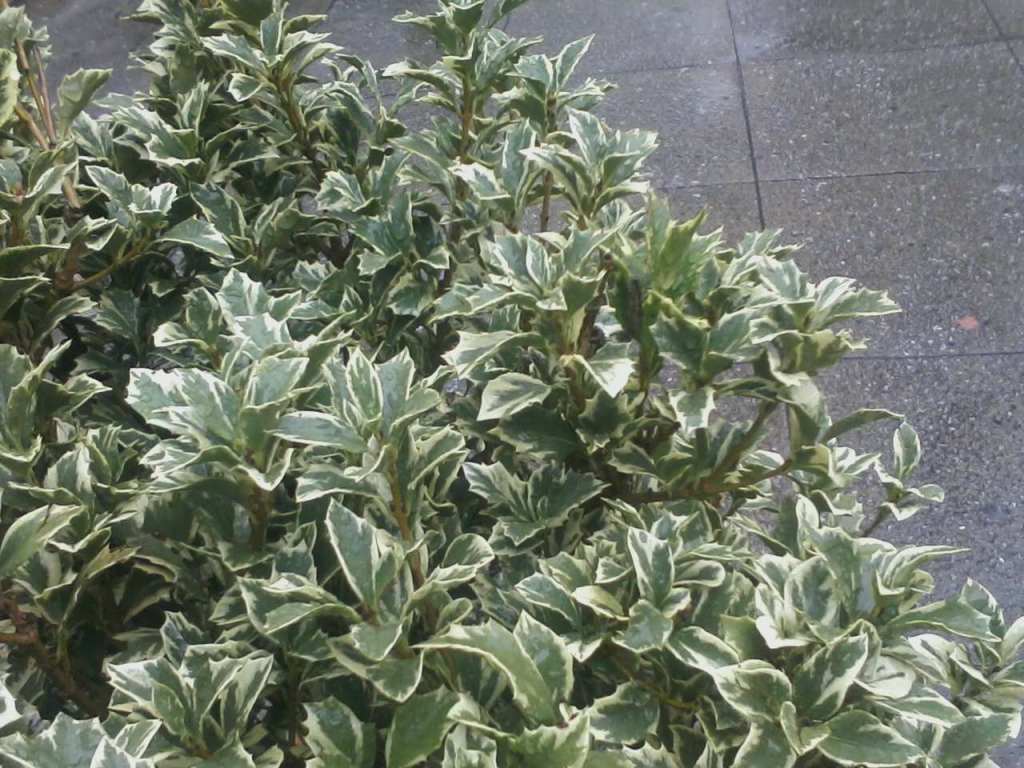
If the foliar spines (teeth on the margins of the leaves) of English holly are too nasty, holly olive, Osmanthus heterophyllus, might be a more docile option. It lacks the occasional bright red berries and the very glossy finish on the leaves, but is much easier to handle than real holly is, since the spines are not nearly as sharp. If you look closely, you can see that the one to two and a half inch long leaves have opposite arrangement (are in opposing pairs along the stems) instead of alternate arrangement (are single along the stems) like those of holly.
The more popular varieties of holly olive have some sort of variegation of white or gold. Variegation can be spots, blotches or more refined margins. Most of the modern variegated varieties prefer to stay less than six feet tall. The old fashioned unvariegated holly olive can get more than twenty feet tall when very old, but the upper foliage lacks the distinctive foliar spines of lower foliage. The tiny and mostly unnoticed flowers are pleasantly fragrant.
Variegation can be neatly symmetrical, or strikingly irregular like this.
With spider plant, croton, pothos, dracaena and the various ficus, variegated foliage seems to be very popular among house plants. Remember the wildly colorful variegations of coleus when it was a popular houseplant in the 1970’s? Variegation is most commonly white or some sort of yellow; yet can be just about any color.
In the landscape, variegated shade tolerant plants brighten shady spots even without bloom. Variegated acanthus, Japanese aralia, andromeda, hydrangea, aucuba and angels’ trumpet show up nicely, especially when they can contrast with the darker green of other plants; although andromeda and hydrangea do not bloom as well in darker shade. Variegated periwinkle and English ivy are nice ground covers, (but potentially invasive).
Variegated trees, like tulip tree and certain maples, stay smaller than their unvariegated relatives, so can be proportionate to large atriums that could use their brighter foliage. Some of the variegated pittosporums likewise function like the unvariegated forms used for informal hedges, but work better in tighter spots.
Even if there is no need to brighten areas that are already sunny, variegated holly, lily-of-the-Nile, bougainvillea, pampas grass and silverberry add nice contrast where there is an abundance of rich green foliage. (However, some people who grow variegated pampas grass are not too impressed by it.) New Zealand flax presently happens to be one of the most popular variegated perennials, with many different personalities of color to choose from. Variegated varieties of several specie of agave and yucca are striking big perennials for the sunniest and even inhospitably hot spots, as long as they are kept at a safe distance. (Many have dangerous spines and teeth!)
Some variegated plants, particularly New Zealand flax, andromeda, Pittosporum tobira and the various maples, try to produce unvariegated mutant growth that grows faster and bigger, and overwhelms the desirable variegated parts. It is therefore important to watch for and prune out unvariegated growth as it appears. For New Zealand flax, this involves diligent digging and splitting to removed unvariegated shoots from the variegated parent plants.
Okay, so I felt slightly guilty about not posting anything of any horticultural interest today. Okay, perhaps a bit more than slightly. Okay, perhaps guilty enough to post a few pretty flowery pictures . . . and the last one, which some might find objectionable.
‘Coral Bells’ is not one of my favorite azaleas, but is reliable and profuse.
I will not put much effort into this. I did not even take these pictures for any particular article. I am only sharing them here and now because I have no use for them, but did not want to just file them away unseen forever. Hey, these flowers work hard to bloom!
I have no idea what this azalea is, but I am impressed.
Actually though, except for the last picture, all are about a month old. The last picture is half as…
This recycled article is from a time when Rhody’s crew was unable to come to work back in 2020. It is a major deviation from my Horridculture rants on Wednesday, but I know that no one will mind. After all, it is about Rhody.
Wednesday has been my day for ranting about aberrations of horticulture. I certainly have plenty to rant about. However, there is plenty of other ranting going on nowadays without my help. Therefore, for this Wednesday only, I will forego the ranting. Furthermore, I will forego the horticulture too. I can not remember ever doing that before. This could be something totally new for me.
After Rhody photo bombed one of my pictures that was featured on Saturday, others suggested that I feature more pictures of Rhody. Everyone loves Rhody.
Most of these pictures are devoid of vegetation. The minimal vegetation that is visible in the other pictures is mostly unrecognizable in the background. There are a few redwoods, a few firs, some English ivy and all that riparian mess around Zayante Creek behind the abandoned ball field. They are unimportant in this post.

 A bit of Boston ivy adds a bit of texture and color to the stone wall.

 Oldies but not likely goodies.
  Watch your step . . . while there is one to watch!




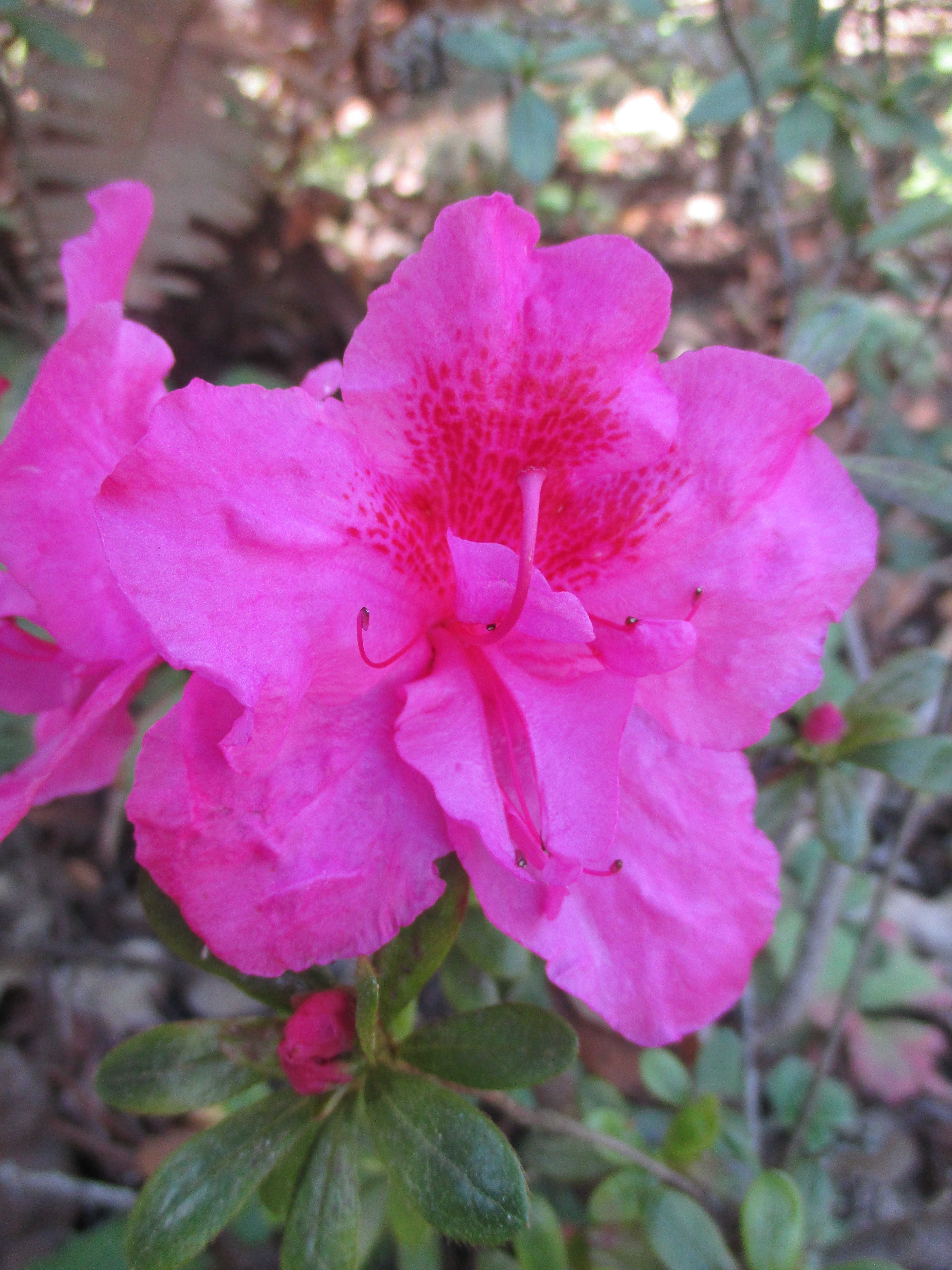 I believe that this azalea is ‘Phoenicia’.
 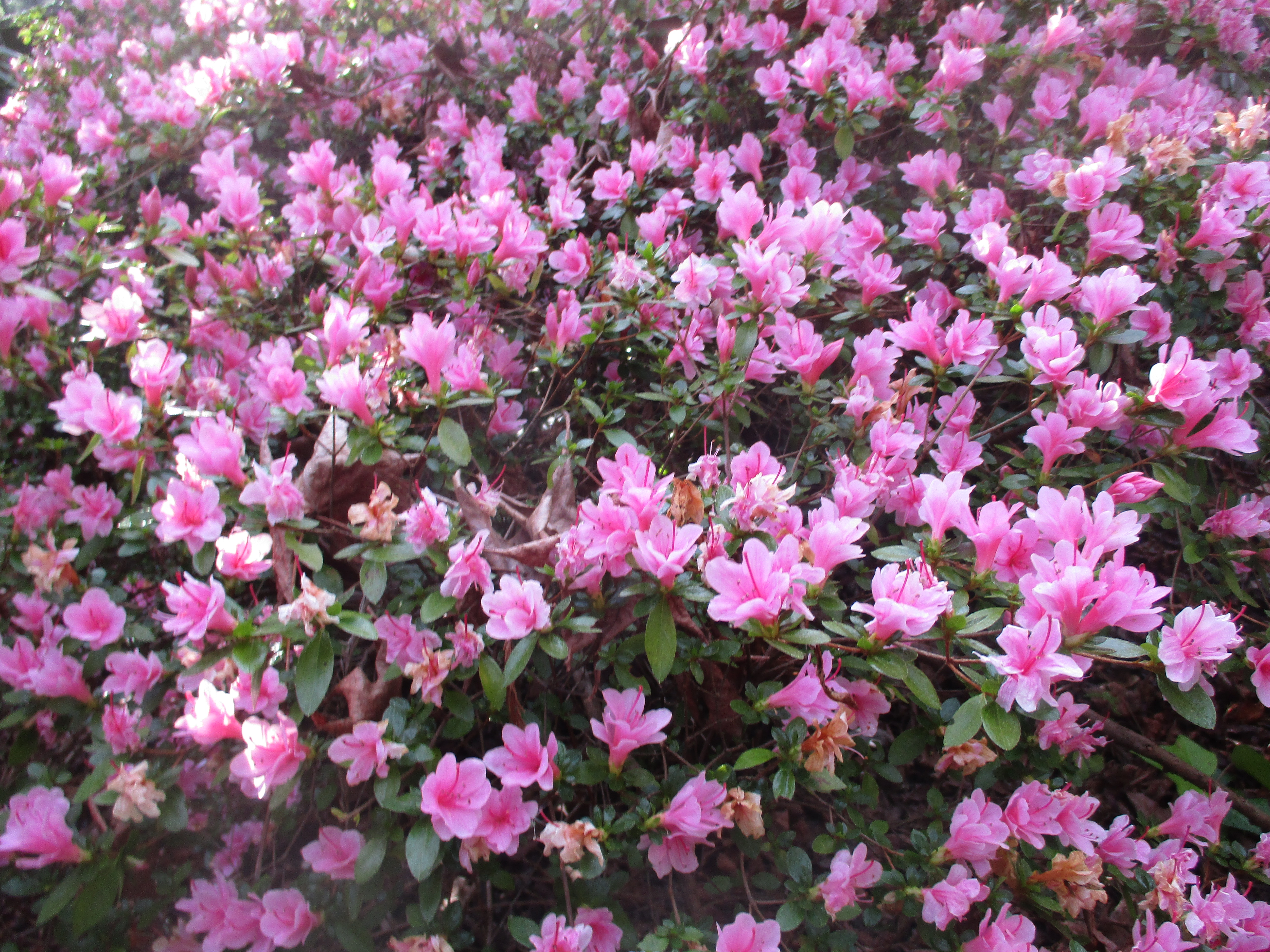 ‘Coral Bells’ is not one of my favorite azaleas, but is reliable and profuse.
 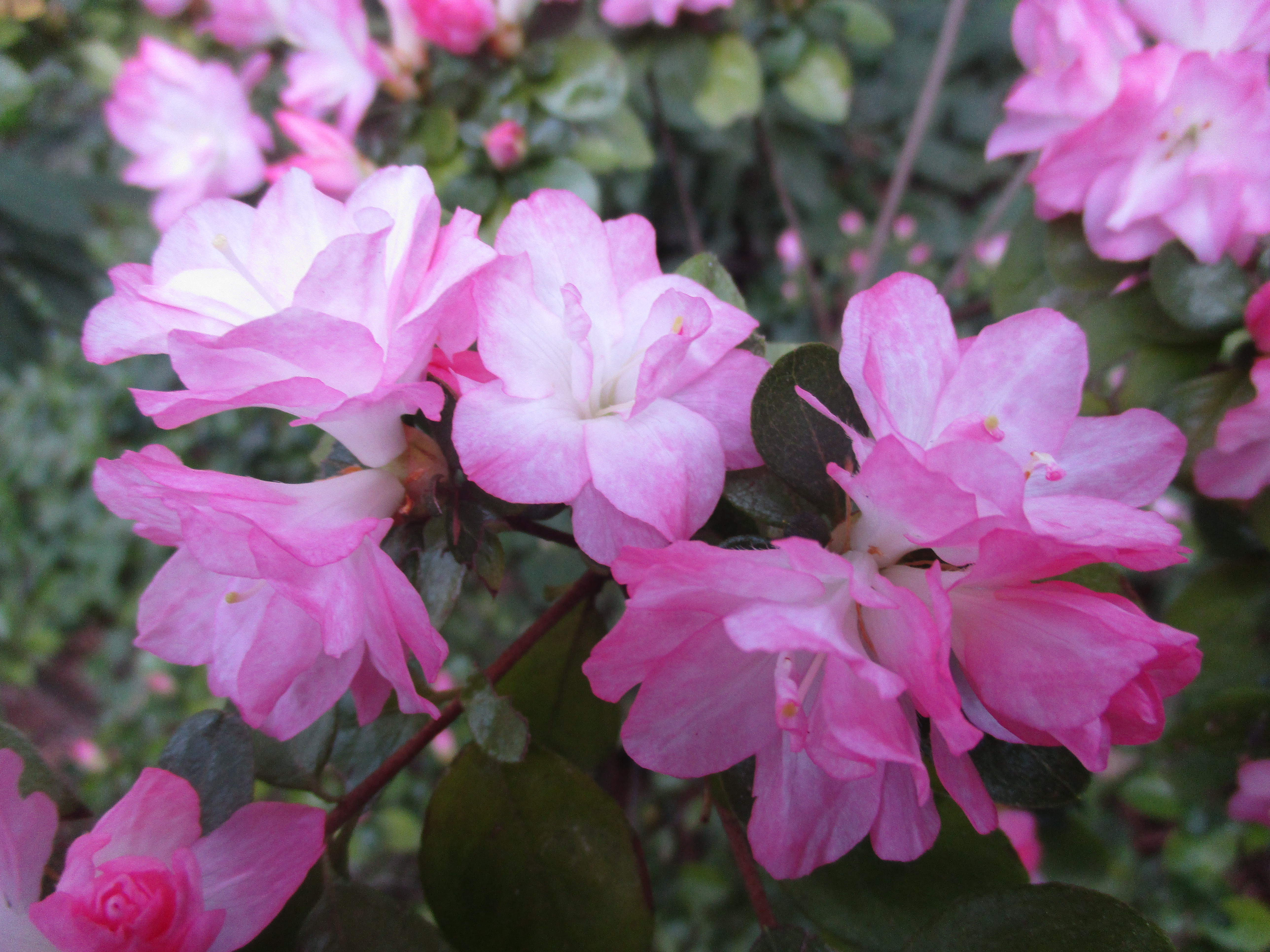 I have no idea what this azalea is, but I am impressed.
  Tony Tomeo