Six on Saturday: Canna From Heaven

The weather was major news here again. After the only snow for most regions here since 1976, and the most flooding since 1982, torrential rain and more flooding was predicted for yesterday. Fortunately, the rain was not torrential enough to cause flooding. Prior to the rain, I was trying to plant what needed planting so that it would get soaked in well. I split and planted some overgrown Kaffir lily, and split and canned way too many canna. Flowering quince and queen’s tears provide a bit of floral color for this ‘Six on Saturday’.

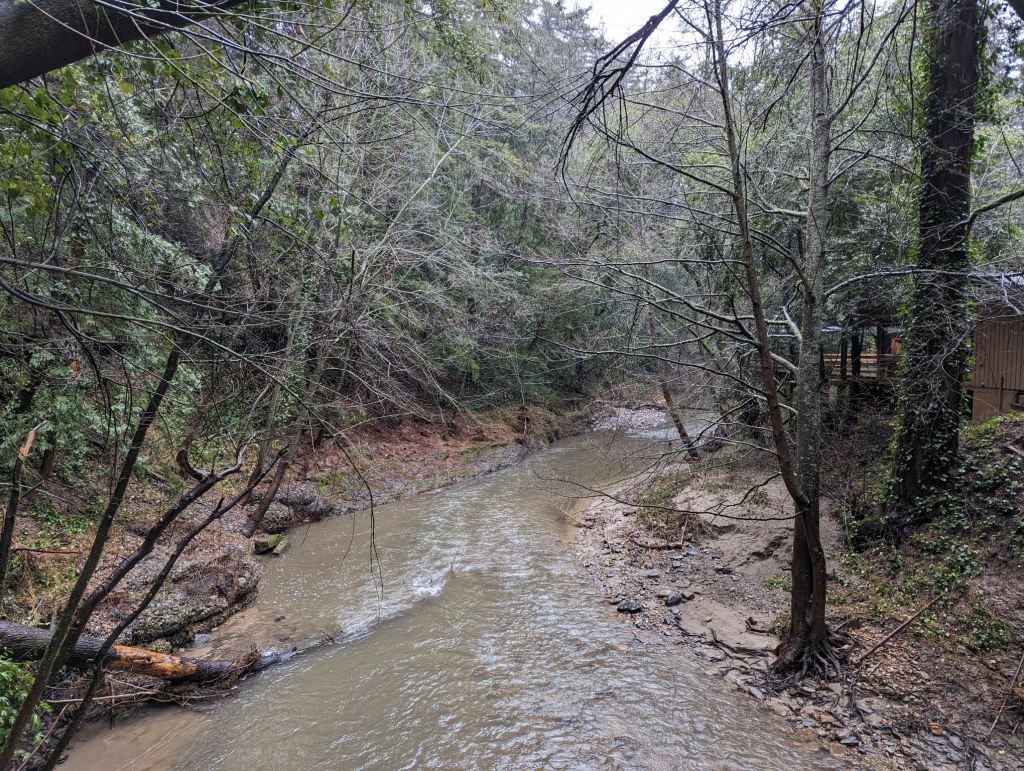
1. Zayante Creek flowed under the deck to the right of this picture as 2022 became 2023. This was Thursday, a few hours before another flood was predicted, but did not happen.
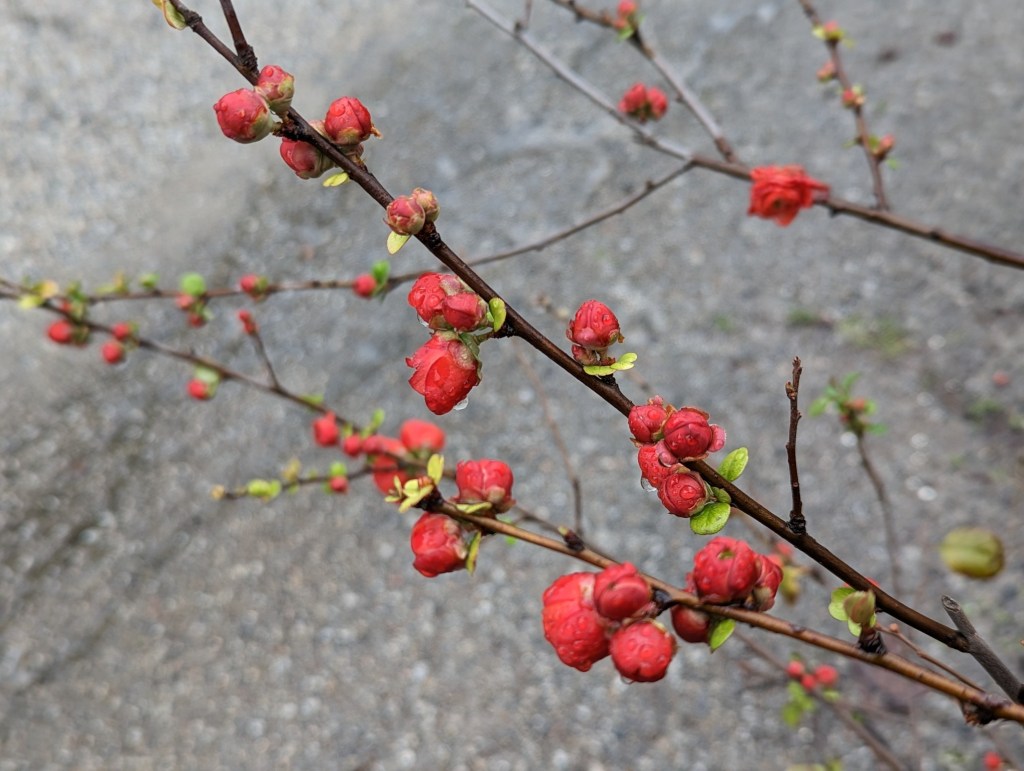
2. Chaenomeles speciosa ‘Double Take Orange’, flowering quince, like many early spring and late winter flowers, got delayed by the very unusually cool and rainy wintry weather.
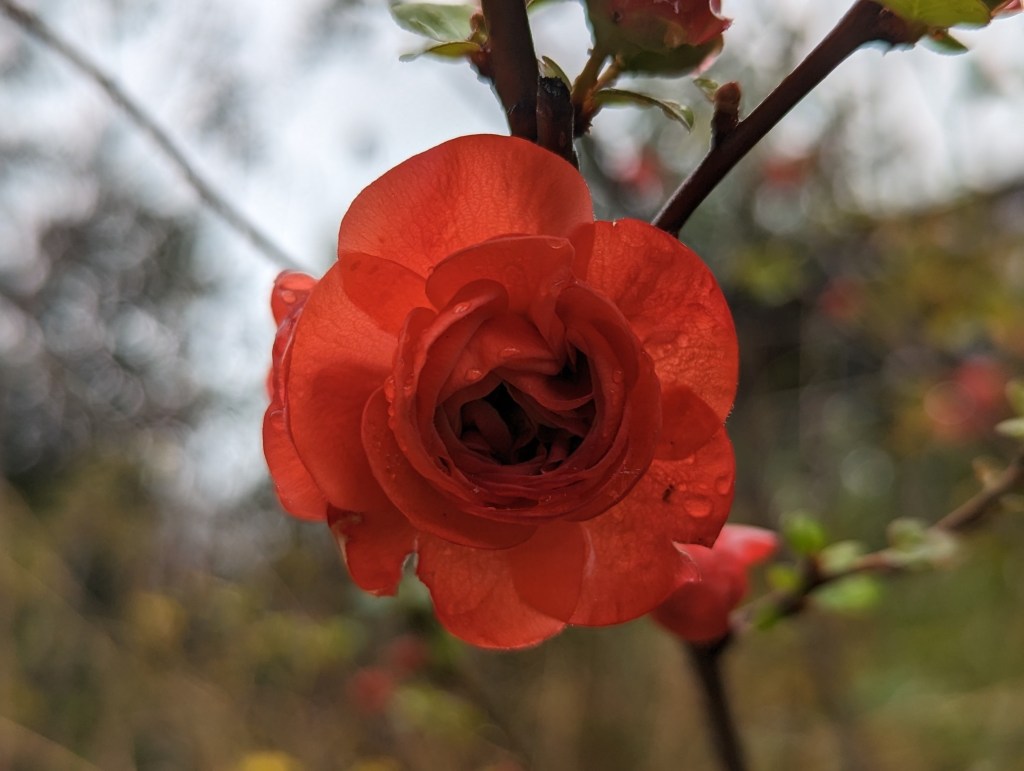
3. Chaenomeles speciosa ‘Double Take Orange’, flowering quince is a modern cultivar of a traditional flower. I am none too keen on modern cultivars, but I am fond of tradition.
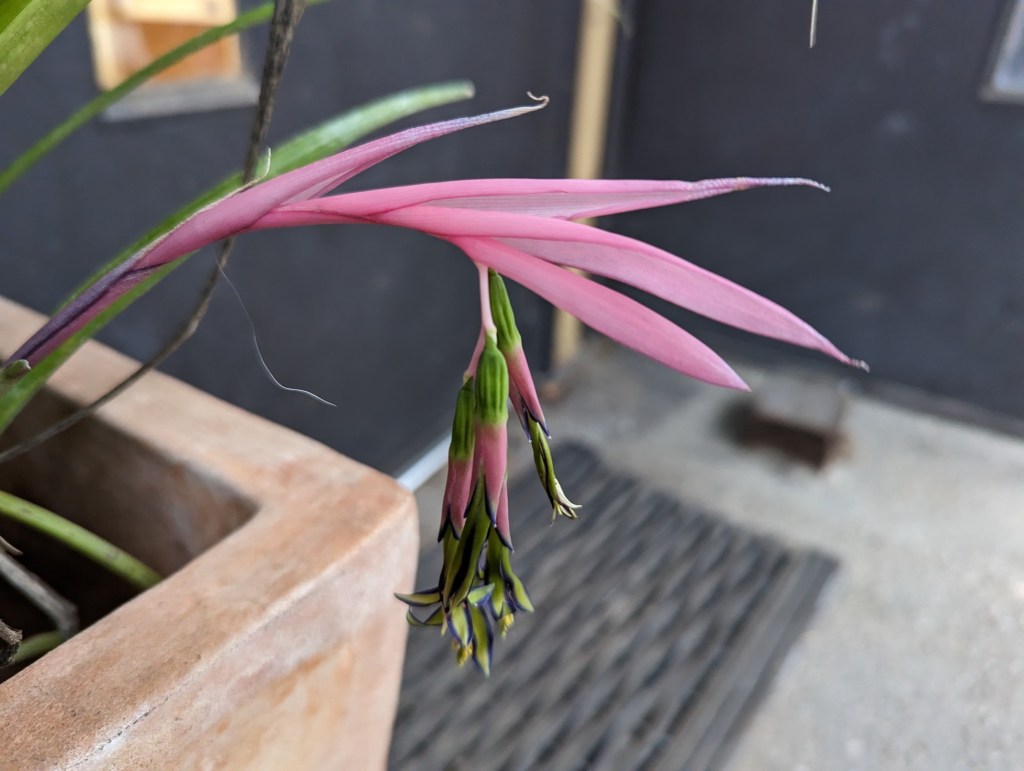
4. Billbergia nutans, queen’s tears is an unimpressively palid and grassy bromeliad that blooms with these sillily pendulous flowers. Actually though, these silly flowers are cool.
5. Clivia miniata, Kaffir lily was recycled from another landscape, rather than Craigslist. It was crowded within a planter box, so now has more room to grow and be happy here.

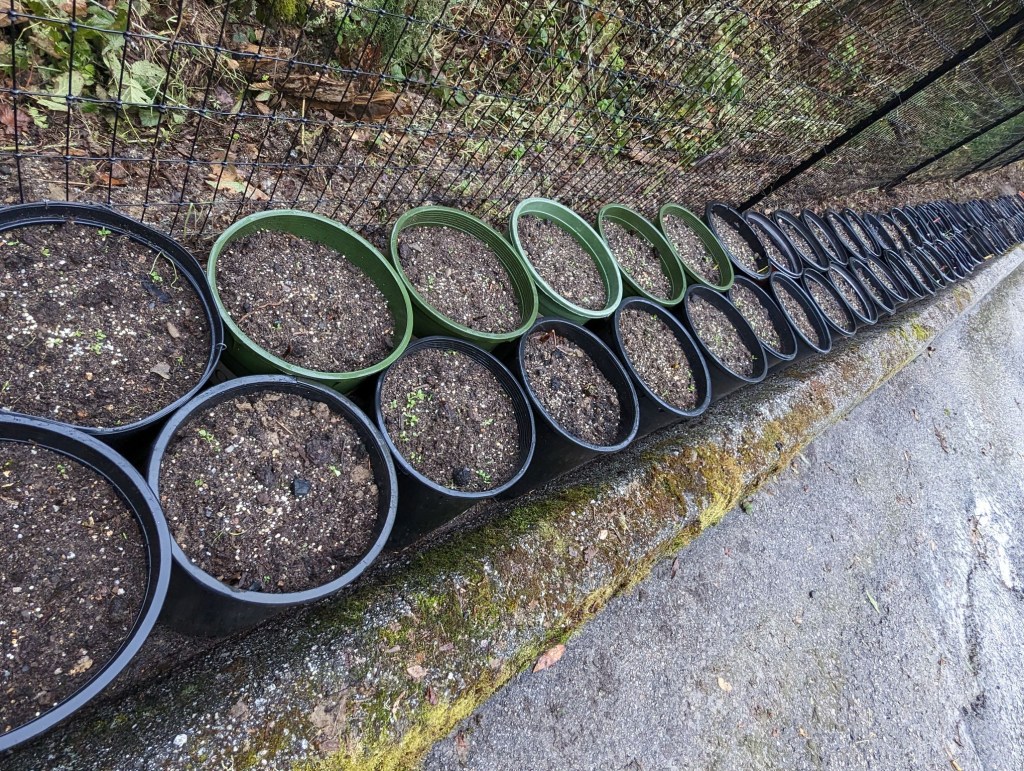
6. Canna of various cultivars has become excessive! There are eighty-eight #5 cans of it! At least a dozen more are expected later! Most cans contain enough rhizomes for at least two cans; merely because there were not enough empty cans when I split and canned the dormant rhizomes. I should field grow them somewhere else. At least they will be pretty for this summer.
This is the link for Six on Saturday, for anyone else who would like to participate: https://thepropagatorblog.wordpress.com/2017/09/18/six-on-saturday-a-participant-guide/
Carolina Jessamine

It is the Official State Flower of North Carolina!

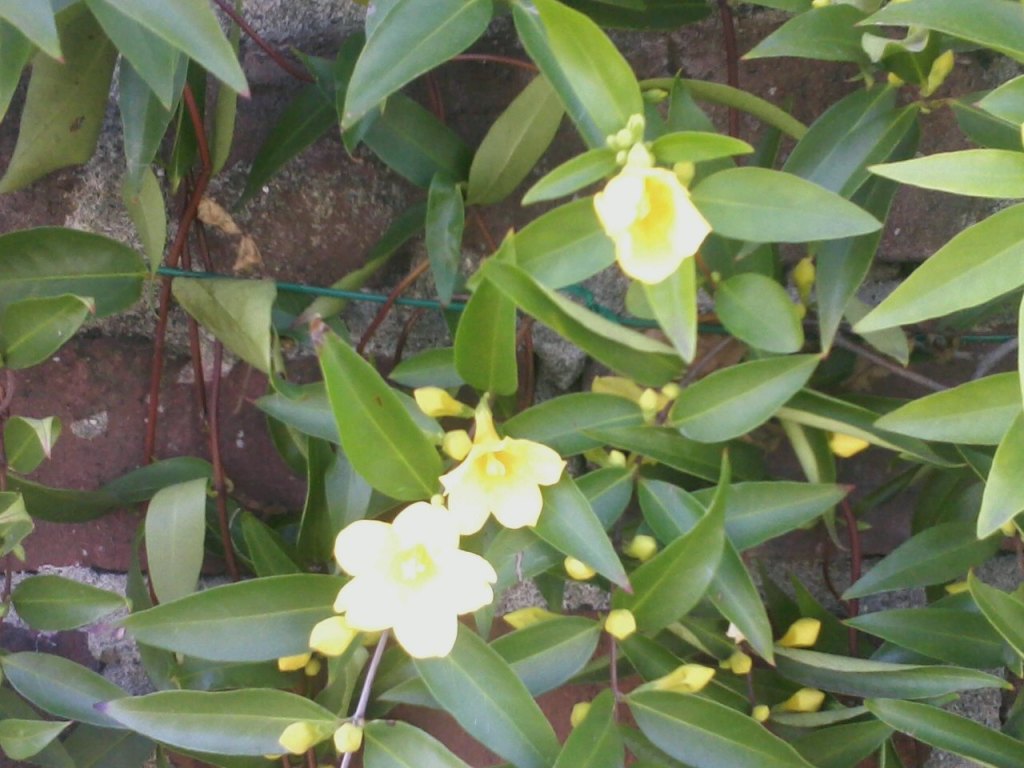
Along with lilac vine (Hardenbergia), daffodil and some acacia trees, Carolina jessamine, Gelsemium sempervirens, is one of the first flowers to bloom late in winter. The small, loose clusters of  inch long and wide tubular flowers are as bright yellow as those of the various acacia and daffodil, though not nearly as abundant, and actually barely abundant enough for their pleasant fragrance to get noticed. They provide nice contrast for the deep purple of lilac vine, particularly since both are complaisant vines that are often grown together. These twining vines can be kept below first floor eaves, but barely reach second floor eaves if allowed to grow wild. Leaves are about half an inch wide and two or maybe three inch long. Because Carolina jessamine is toxic, it should not be grown where children or inquisitive puppies might eat it. Incidentally, Carolina jessamine is the state flower of South Carolina.

Rain Can Ruin Bloom And Developing Fruit

Bloom is not really early. Frost and unusually torrential rain just happen to be late.

Again this year, the excellent weather that makes gardening so much fun even through winter has the potential to become a problem. Winters are innately mild here, and like this year, are sometimes mild and warm enough to prompt many plants to bloom much too early. Many of the fruit trees and their ‘flowering’ (non-fruiting) counterparts are already finishing bloom as if it is the middle of spring, even though the equinox is about two weeks away. This should not be a problem for the flowering cherries, plums, pears and apples (flowering crabapples), but is risky for the many trees that should produce fruit.

The problem is that, despite the weather, it really is winter and early spring, so could potentially rain while fruit trees are blooming. The rain can batter the blooms, or cause them to rot before they set fruit, compromising or even eliminating the fruit production for the following summer. Trees that are not blooming, or just barely showing ‘color’ of the first few blossoms, should be safe. Also, the trees that bloomed earliest and have already set fruit should likewise be safe, as long as the weather does not stay rainy too long, which it almost never does here. Trees that are in full bloom when it rains are the most sensitive to damage.

It is impractical to cover mature trees with plastic sheeting to protect them from rain. Even if it is possible to get the sheeting over the trees, it knocks much of the bloom or developing fruit off anyway. Also, if the sheeting is not removed when the rain stops, it can trap humidity, which can rot the blooms that were so carefully protected from the rain. (Although, high trees hold the plastic high enough from the ground to allow for good air circulation.)

Small trees are easier to cover, but do not produce enough fruit to worry about. In other words, it would be easier to buy fruit at a market, or to get it from friends and neighbors with different varieties (that bloom at different times) than to put too much effort into protecting trees from the rain. In most situations, it is best to just accept that fruit trees will sometimes have ‘off’ years when they either do not produce, or produce only minimal quantities of fruit. The good news is that trees that lose some but not all of their fruit often produce best.

Plum bloom is not resilient to late frost or rain.

Horridculture – High & Mighty

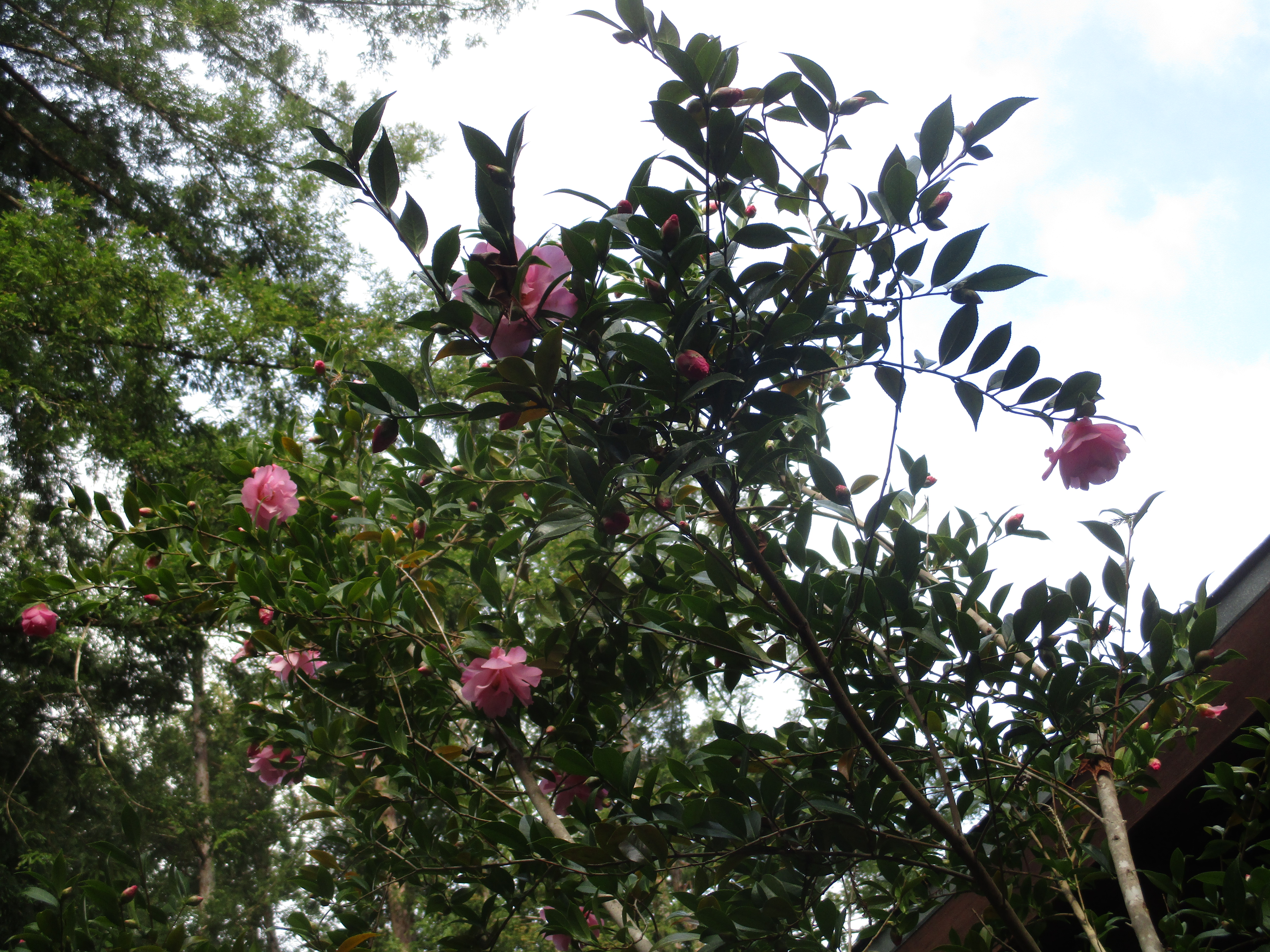
This overgrown camellia responded well to renovative pruning, and is actually ready for another phase.

tonytomeo's avatarTony Tomeo

P00226-1 Camellias are pretty this time of year, but . . .

Camellias have been blooming for a while now. I typically get rather good pictures of them. The pictures are nothing too artistic, of course, and are intended to merely exhibit the floral color and form. A bit of the glossy foliage in the background is nice.

The picture above is not so useful for exhibiting much of the floral characteristics. Even the pink color is muted by the sloppy background and gray sky above. Zooming in would not have corrected the positioning of the flowers. I simply could not get close enough to do any better.

That eave in the lower right corner of the picture is above a two story building. That is where all the blooms of this particular camellia shrub are located. With so much of the lower growth shaded out and gone, this shrub is…

View original post 170 more words

Sweet Corn

Corn takes space, water and diligence.

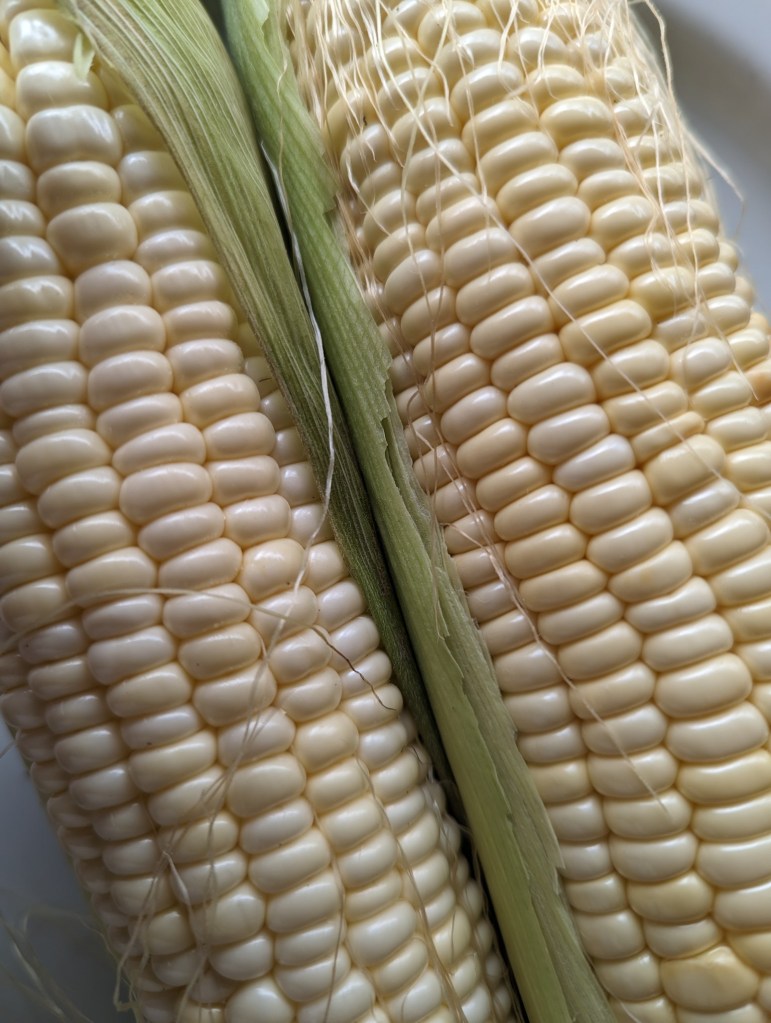
Almost all corn that grows in home gardens is sweet corn (Zea mays convar. saccharata var. rugosa). It is among the most popular of the warm season vegetable plants. Popcorn remains uncommon for home gardening. Other types of corn are mostly grains and other agricultural commodities that are rare within home gardens. Some corn becomes biofuel.

Corn stalks can grow as high as twelve feet! Most popular varieties grow only about half as high. Each stalk should produce one or perhaps two ears of corn. Each ear produces many kernels of corn in very neat formation on a central cob, all within a tight foliar husk. Male blooms protrude from the tops of stalks like antennae. Foliage is coarse but grassy. Stalks resemble giant reed, except smaller.

Of the various warm season vegetable plants, corn is one of the more consumptive sorts. It occupies significant area. It requires methodical and generous irrigation. Also, it craves rich soil, but depletes nutrients. Corn grows best from seed sown directly into the garden. Squared orientation, rather than typical rows, improves pollination and ear development.

Warm Season Vegetable Plants Begin

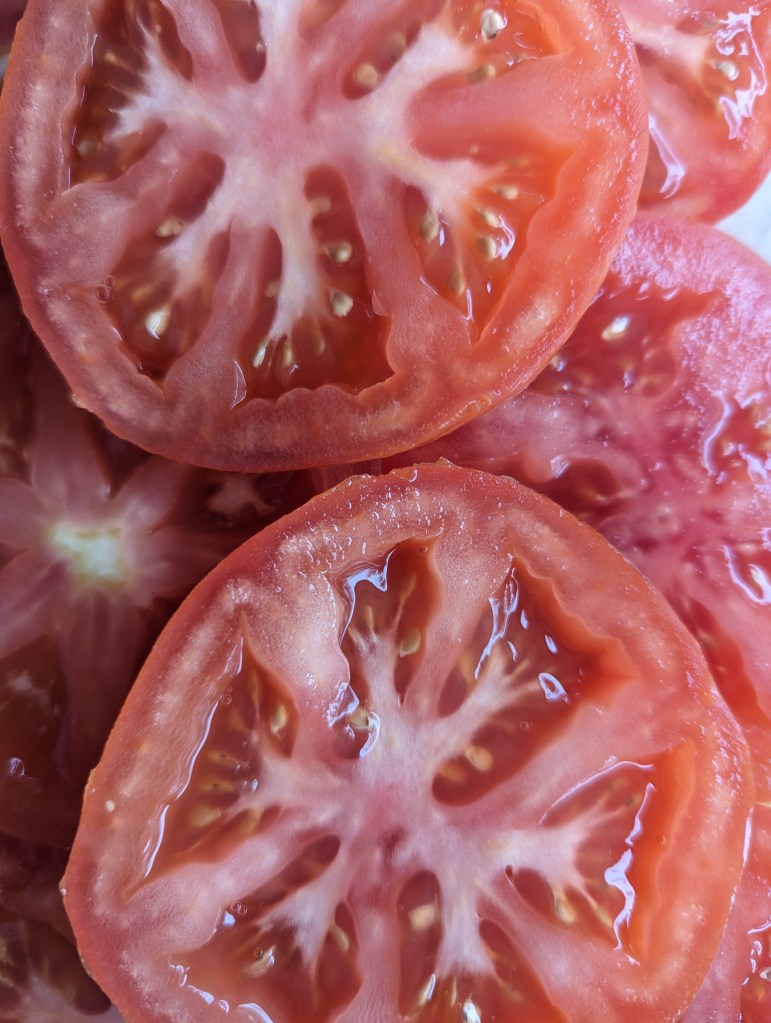
Tomato seed should already be sown.

Warm season vegetables, or summer vegetables, can occupy a garden systematically. A few lingering cool season vegetables may continue production for a while. Warm season vegetable plants can replace them as they finish. Several warm season vegetable plants should start as early as possible. Others grow in a few later phases through their season.

For example, indeterminate tomato plants are productive throughout their entire season. They can start as soon as convenient. However, determinate tomato plants produce only for two weeks or so. After their initial phase of a single plant or a few, subsequent phases can start about every two weeks. Each phase continues production after its predecessor.

Bush bean and several varieties of eggplant and pepper also produce for brief seasons. Okra and cucumber might produce for most of summer. Secondary phases may increase their production as well though. Of all warm season vegetable plants, corn benefits most from phasing. Each phase tends to mature so uniformly that it finishes within a few days.

Pole bean, squash, some cucumber and Indeterminate tomatoes need no phasing. Such warm season vegetable plants perform from spring planting until frost. Winter squash are warm season vegetable plants, but their fruit finishes for autumn. Indeterminate tomatoes are less profuse than determinate types. Cumulatively though, they are more productive.

It will soon be time to sow seed for corn, beans, root vegetables and most greens directly into garden soil. Seedlings for these warm season vegetable plants are not conducive to transplant. Besides, too many are needed. Cucumber and squash grow either from seed or small nursery seedlings. Only a few plants are needed, and they transplant efficiently.

For the same reasons, tomato, pepper and eggplant can grow from seedlings rather than seed. Moreover, since they are so vulnerable as they germinate and begin to grow, seed is less practical than seedlings. Varieties that are unavailable at nurseries can grow from seed in flats inside or in a greenhouse. Ideally, they should have started early enough for transplant into a garden during appropriate weather.

Feral Plum

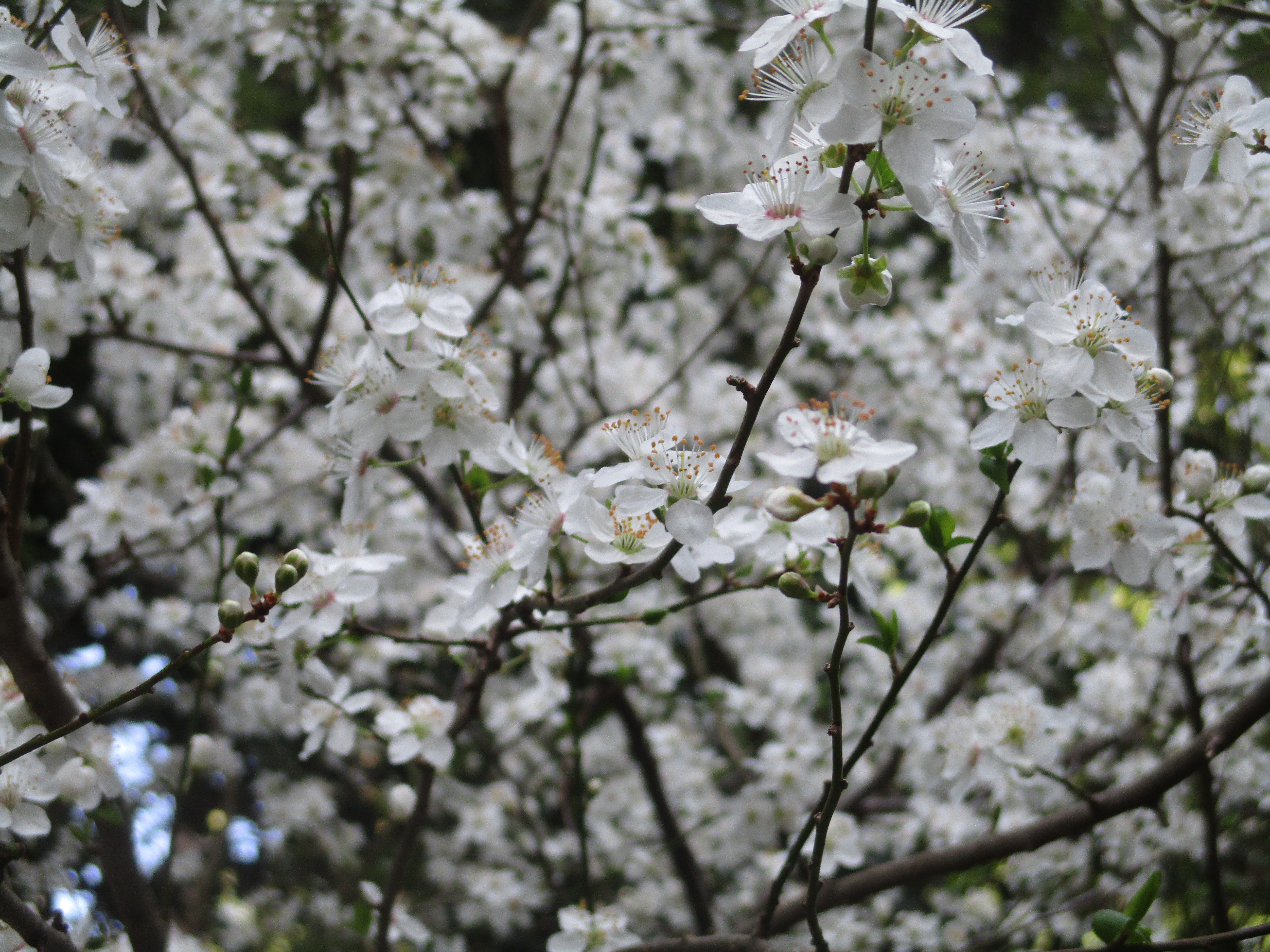
The tree that bloomed for these pictures may get removed after bloom this year. It is pretty in bloom, but is a bit redundant to its landscape. That is a problem with such healthy growth and maturation of trees.

tonytomeo's avatarTony Tomeo

P00301-1 Feral plum naturalized from understock cultivars.

Springtime in the Santa Clara Valley was famously spectacular decades ago, when vast orchards occupied what is now only urban sprawl. Tourists came to see it like some still go to see foliar color of autumn in New England. Most of the orchards were for stone fruits. Only a few in cooler spots were for apples and pears. Only orchards of English walnuts did not bloom colorfully.

Cherry and almond trees typically bloomed first. Prune trees bloomed immediately afterward. Apricot trees were only a few days later. Of course, the schedule of bloom was variable. Prune trees often bloomed just after apricot trees. Various cultivars of cherry started to bloom at slightly different times, even though those that needed to pollinate each other managed to do so.

After the main bloom of all the stone fruits, and after the tourists were gone, the few…

View original post 166 more words

Not So Annual

Wow; these were old when I took their pictures three years ago, and they are even older now.

tonytomeo's avatarTony Tomeo

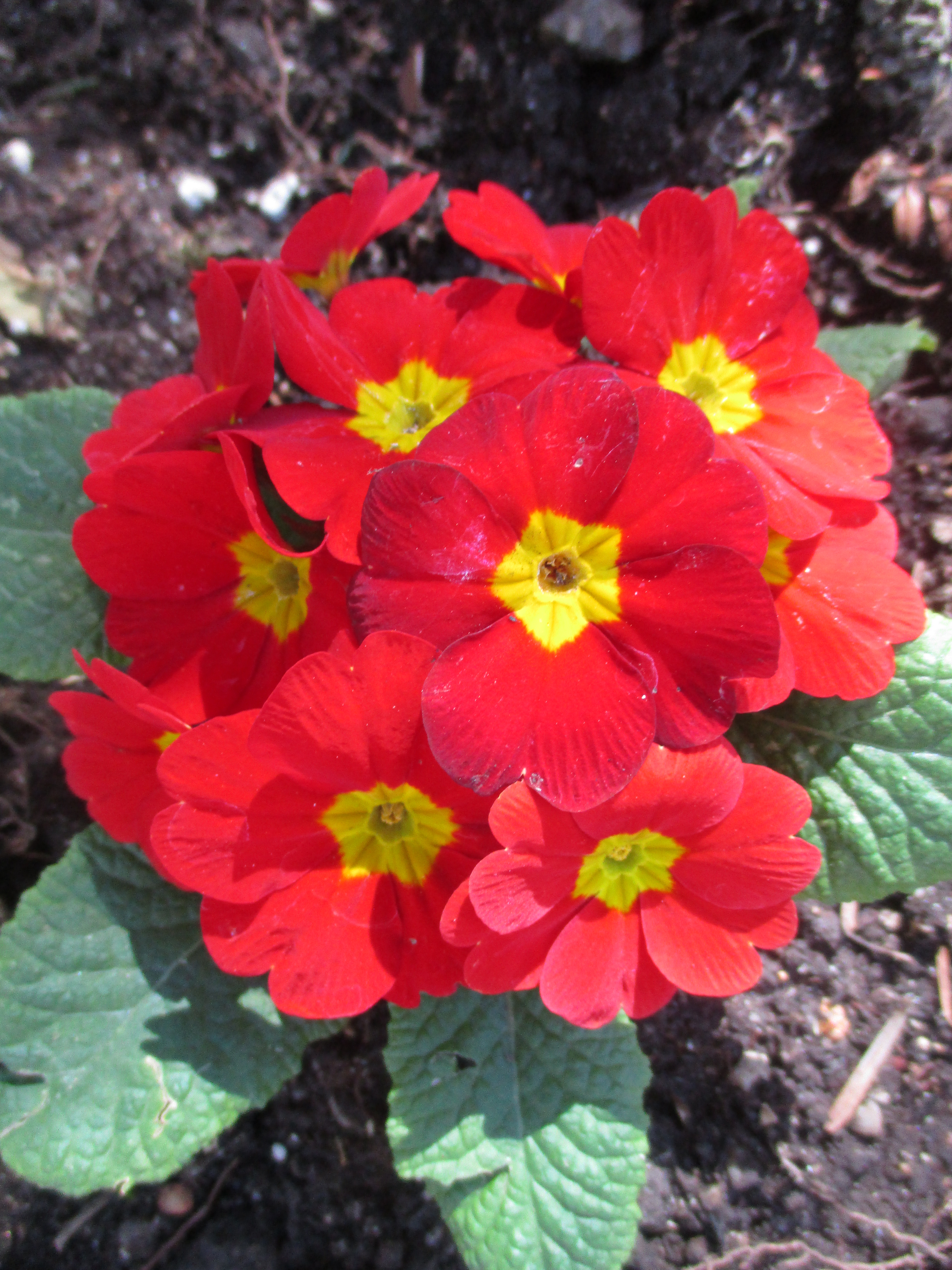
P00229K-1 These primrose look as good as they did last year.

Among cattle, a cow is a female who has calved. Prior to that, she was a heifer. A bull is an adult male. A bullock is a juvenile male or castrated bull. Most cattle are males who were castrated while young, and are known as steers. Yet, cattle are commonly known collectively as ‘cows’.

Similarly, bedding plants are commonly known collectively as ‘annuals’. Many really are annuals. However, some are biennials; an even more are, to some degree, perennials.

Replacing annuals annually make sense. They grow, bloom and die within one year. Some sow seed to regenerate if and when they get the chance. In the prominent spots of our gardens, not many are likely to get such a chance before they are replaced by other annuals for more immediate gratification within the next season.

The same applies to bedding…

View original post 167 more words

Six on Saturday: Aspen

Aspen are not native here like they are around Aspen in Colorado. Common cottonwood is. While bare, it almost resembles aspen, and really seems to be a species from a climate with colder winters. Actually, all of my Six this week seem to be from colder climates. All but #1 and #2 are native however.

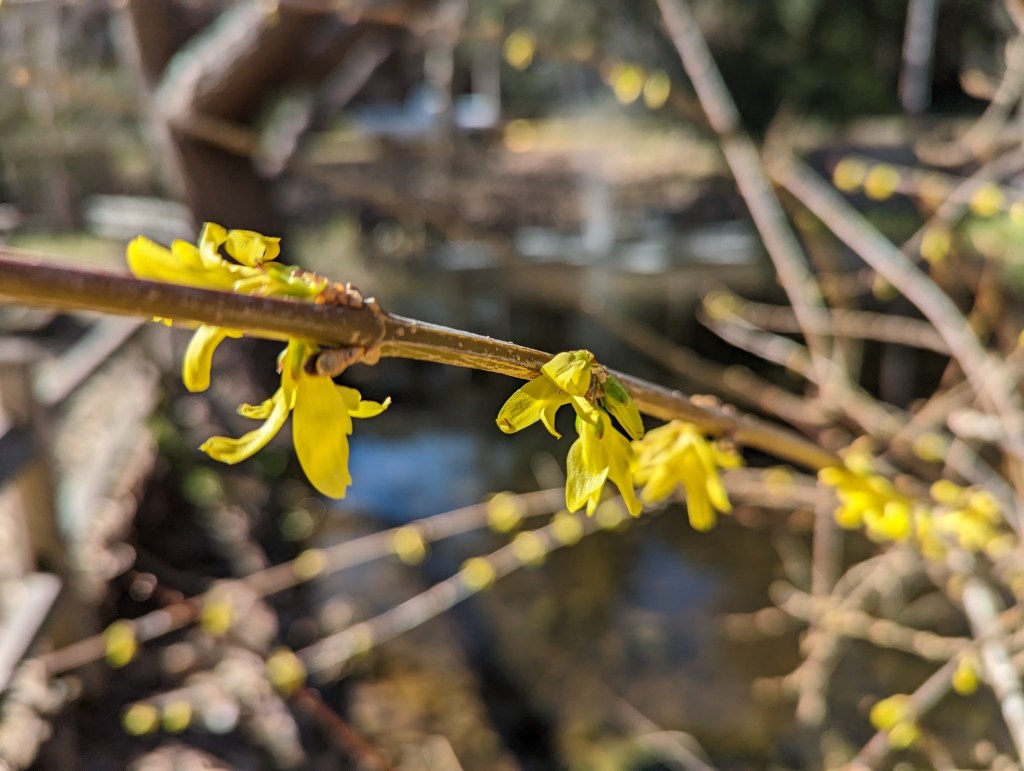
1. Forsythia X intermedia, forsythia looks like it belongs in a colder climate where it can bloom as the snow melts. Only a few inhabit our landscapes, and they are blooming late.

2. Leucojum aestivum, summer snowflake blooms whenever it wants to here. I had been wanting some for here when a few mysteriously appeared near a ditch of the main road.

3. Corylus californica, beaked hazelnut is native, but also looks like it should bloom like this as the snow melts in a colder climate. The nuts are rare and tiny, but richly flavored.

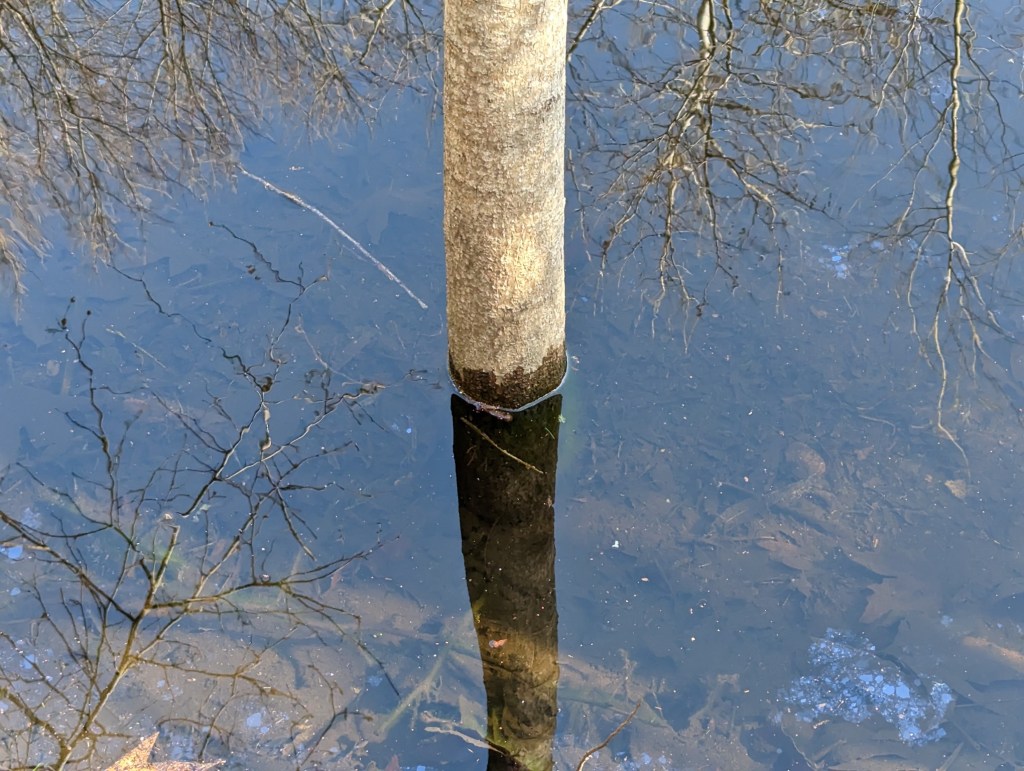
4. Populus deltoides, cottonwood grew as a small colony from roots of a tree that got cut down. This colony got thinned. This stump is under water that reflects a remaining tree.

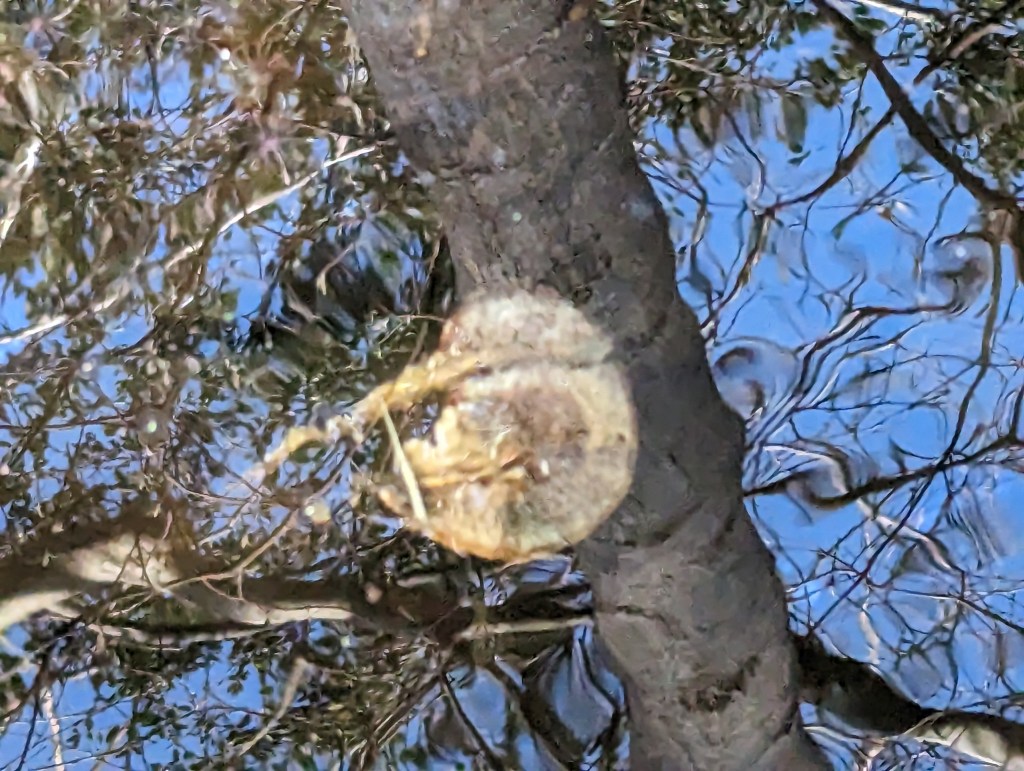
5. This is that reflected tree, which is the only one of seven remaining trees that is out in the water. Its colony grew before the formerly drained pond filled more than a year ago. Platanus racemosa, California sycamore is reflected to the lower left and the upper right and, I believe, Salix lasiandra, red willow or shining willow is reflected to the upper left.

6. These are the other six cottonwood trees. The seventh is beyond the right edge of this picture, where more twigs of California sycamore are visible. Myrica californica, Pacific wax myrtle is in most of the background to the left, with a lodge building farther behind. Such elegantly straight trunks of common cottonwood seem to resemble those of aspen.

This is the link for Six on Saturday, for anyone else who would like to participate: https://thepropagatorblog.wordpress.com/2017/09/18/six-on-saturday-a-participant-guide/

Mexican Orange

Mexican orange does not actually produce any fruit.

Remember when gardening took advantage of the great climate and soil of the Santa Clara Valley? Single story suburban homes with low suburban fences had generous sunny garden space. Now, multiple-storied homes on smaller parcels surrounded by big fences leave only minimal space for shady gardening. Rhododendrons, azaleas, hydrangeas and all sorts of ferns are more popular than the many fruit trees that were so much more common only a few decades ago.

‘Washington’, ‘Robertson’, ‘Valencia’ and ‘Sanguinelli’ oranges that have quite a history in local home gardens are now not much more common than the previously rare Mexican orange, Choisya ternata, which, although related, provides only mildly fragrant flowers without edible fruit. The modest white flowers are only about an inch to an inch and a half wide on loosely arranged trusses, but show up nicely against the rich glossy green foliage. They can bloom anytime, and happen to be blooming now because of the pleasant weather. Otherwise, they prefer to wait until late spring and early summer.

The trifoliate leaves (which are palmately compound with three smaller leaflets in a palmate arrangement) are about two or three inches long and wide. The individual leaflets are about one and a half to three inches long and nearly an inch wide. Foliage can get sparse on big old plants, as they eventually reach lower floor eaves. Occasional pruning of lanky stems can improve foliar density and keep plants as low as three feet. Mexican orange does not actually resemble real orange trees much, but provides nice glossy foliage that is occasionally enhanced by simple softly fragrant flowers.