Just a short distance from the corn dog orchard, I found this candy corn dog growing wild. I really had no idea that candy corn grew in a corn dog form like this. These particular candy corn seem to have turned from green to yellow to orange as they ripened. It will be interesting to see if the outer ends eventually ripen to yellow like conventional candy corn, or if they are a fancier cultivar. They sort of look like tiny persimmons.
Perhaps it is ‘Cupid Corn’, which is red at the outer end and pink in the middle, for Saint Valentine’s Day. If so, it will be quite stale long before next February.
Even if it is ‘Reindeer Corn’, which is red at the outer end and green in the middle, for Christmas, it will not likely be fresh by late December.
It is a long story, but a Eucalyptus tree that I planted with the expectation that it was the same species as this Eucalyptus is completely different, with shaggy and furrowed bark that does not shed. (One is Eucalyptus cinerea and the other is Eucalyptus pulverulenta, but the names seem to be interchangeable.)
Because redwoods live for centuries, their bark gets very thick. They do not shed their bark as they grow. Old giant redwoods in the Sierra Nevada have bark that is a few feet thick and thousands of years old. Their bark is thicker than the trunks of what most of us consider to be large trees! Even much younger coastal redwoods that have regenerated here since clear cut harvesting about a century ago have bark that is a few inches thick. They like their bark thick. It is the insulation that protects them from forest fires that incinerate other vegetation. Unlike most species here that are designed to burn and then regenerate more vigorously after fire, redwoods prefer to survive fire by being less combustible. As they mature, and their bark gets thicker, they become more resilient to fire. There are only a few species here that survive fire mostly…
The BIG NEWS for this ‘Six on Saturday’ was only discovered yesterday morning. It does not look like much yet. I suppose that anyone who witnessed my exuberant reaction to it likely wondered what all the fuss was about. I suppose that I should be embarrassed. Oh well, I am not. I know how totally awesomely excellent it is! Furthermore, it is approved by both Skooter and Rhody! (That is ‘the’ famous Skooter of Tangly Cottage Gardening.) The fifth of these Six is also important news, although the first four are rather mundane.
1. Four O’ clock with a five O’ clock shadow is not big news. It is actually rather mundane folly that is included here merely because I like bragging about shabby but pretty weeds.
2. Lily of the Nile fasciation does not classify as big news either, although it is intriguing. This entire colony blooms like this or worse, and after all the other lily of the Nile finish.
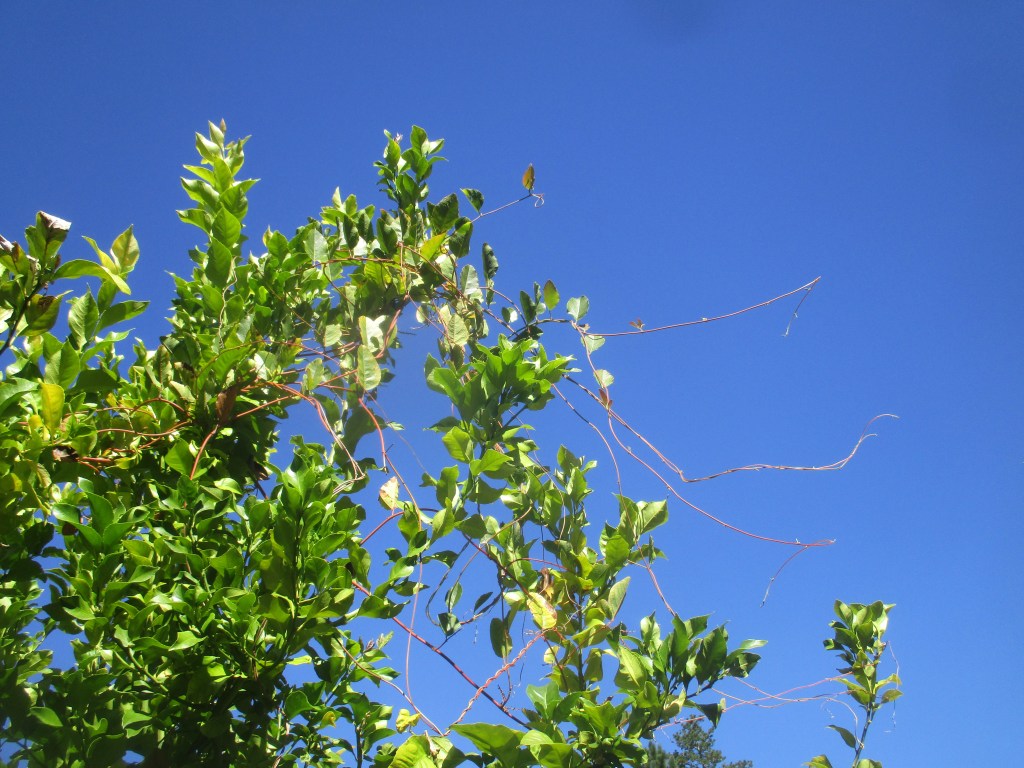
3. Black coral pea climbing over the Eureka lemon tree is more of an annoyance than big news. I should have known this would happen while I was not looking. Vines are sneaky.
4. Grapevines, although sneaky, are at least productive. These are suspended more than ten feet above the courtyard below. Unfortunately, opossums typically get the fruit first.
5. Koi are rather big news, but are not the big news. Seven moved into the drainage pond last Saturday just after Six on Saturday. Cheeto is below the middle. Shiro is to the right.
6. Gladiolus papilio from Tangly Cottage Gardening is finally THE BIG NEWS this week! It has been here for a few years, but bloomed only once last year, after major tribulation. I noticed this floral stalk today. I do not know how long it will take to mature and bloom.
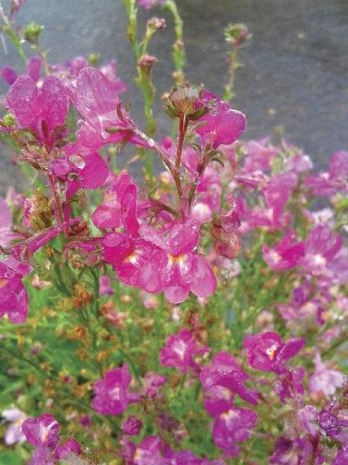
Toadflax really does look like baby snapdragon, which is its other common name. The tiny, half inch wide flowers are similarly bisymmetrical, and arranged in small trusses, although the diminutive leaves are distinctively narrow.
Common toadflax, Linaria maroccana, which is actually less common than the name implies, gets about one and a half to two feet tall and about half a foot wide. Two toned flowers bloom in summer in shades of pink, purplish pink, purple, blue, very pale yellow or red with yellow. ‘Northern Lights’ adds shades and bicolor combinations of yellow, orange and red to the mix. The more common ‘Fantasy Hybrids’ get only about half as tall and perhaps slightly wider, with earlier and slightly larger flowers in shades of yellow, blue, pink and bright pink, as well as white, mostly with slightly yellow throats.
Toadflax is a summer annual, but does not like to be too exposed to roasting heat and glare. If grown from seed, it should be sown as soon as possible after the last frost to get an early start.
Good old fashioned suburbia will never bee the same. Bigger modern homes on smaller modern parcels leave little space for gardening and trees. What is not shaded by the taller homes is shaded by the taller fences, which are ‘needed’ for privacy since the homes are closer together. Building codes in most municipalities limit the height of fences, but lattice screens are often added on top for extra height.
Because lumber is not of the quality that it was when shorter light duty redwood fences were built decades ago, relatively expensive modern fences do not last nearly as long. They might last longer if they would get repaired instead of replaced when only the posts rot. Green technology seemed to work better before it became trendy.
Ironically, no one wants these bigger and bolder fences that are closer to home to be so prominent in the landscape. We try to obscure them with vines that can tear them apart, or shrubbery that can push them over. Watering these vines and shrubs accelerates rot in the posts.
Shrubbery intended to obscure a fence should not be so voracious that it wants to displace the same fence that it is intended to obscure. Some types of pittosporum work nicely because they support themselves without leaning against other features in their surroundings too much, even if they eventually get quite large. However, they do get quite thick, and can obscure a fence so well that no one would miss the fence if it were to get pushed over! A good hedge without a fence is sometimes a better option.
Many types of vines can be kept much closer to a fence than shrubbery can, but most tend to be more destructive. Star jasmine works nicely if allowed to climb a trellis directly in front of the fence, but should not be allowed to get between planks in the fence, or to get too intertwined in lattice. If it gets too fluffy, it can be shorn back like a light hedge.
Clinging vines like creeping fig can be very appealing on fences, and can be shorn like hedges, but will eventually necessitate the replacement of the fences that they climb. For those who appreciate such a tailored appearance, replacement of the affected fences every few years is a fair compromise.
Many municipalities enforce tree preservation ordinances. Whether we agree with them or not, these ordinances are designed to preserve significant trees that are assets to the community. For the greater good, local governments have made it their business to limit what we can do with our own trees on our own properties. There are many advantages. There are many disadvantages. We arborists see it all.
Street trees, by general definition, are those that are close enough to a curb to shade a roadway and parked cars. In suburban and urban neighborhoods, many street trees are within parkstrips, which are the narrow spaces between curbs and sidewalks. Neighborhoods of tract homes are typically outfitted with uniform trees of only one or two cultivars, that were all installed at the same time, as the homes were completed. Some neighborhoods of homes that were built individually are also outfitted with conforming street trees…
The Nile River Valley is a region of extremes. It floods at times, but is hot and dry at other times. Lily of the Nile, Agapanthus orientalis, naturally survives it all. It can easily survive here. However, it survives arid heat by shedding a bit of foliage. Therefore, it is generally healthier here with at least occasional watering through the warmest weather of summer.
The almost spherical floral umbels of lily of the Nile explode into bloom like blue or white fireworks, just in time for Independence Day. They are about six to eight inches wide, on elegantly bare and slightly leaning stalks that stand about four feet tall. Individual flowers are only about an inch or two long. Flowers bloom only once annually, but last for weeks.
With or without bloom, the dense and evergreen foliage of lily of Nile is always lush. The soft and strap shaped leaves are about a foot and a half long, and flare outward from low basal rosettes. New foliage obscures deteriorated old foliage. Fleshy roots firmly secure plump rhizomes. Division relieves crowded rhizomes, and contains their slow migration.
Many popular annual bedding plants have potential to be perennial if they get a chance. Cyclamen commonly perform as a cool season annual, only until replacement with warm season annuals. However, after summer dormancy, their tubers can generate foliage and bloom again for several following winters. Replacement is just easier than maintenance.
Real annuals complete their entire life cycles, from germination to dispersal of seed and finally death, within a single year. Biennials generate vegetative growth through their first year, and then disperse seed and die during their second year. Perennials perform for at least two years, whether or not they get any opportunities to do so within home gardens.
Home garden culture complicates this classification though. Those who enjoy gardening expect perennial plants to reliably perform for many years or indefinitely. Many perennial plants do so with only minimal intervention. Some are self-sustaining, and might seem to naturalize. That may be why so many smaller or less vigorous types classify as annuals.
Another qualification of perennial plants is that they lack woody stems and roots. In other words, they are herbaceous. Palms and species of Yucca that develop trunks classify as perennial plants also, but for simplicity, the larger types are herbaceous trees. Generally, perennials are terrestrial. A few are epiphytic (live in trees) or lithophytic (live on stones).
Although several perennial plants can survive indefinitely here without intervention, most perform better with some degree of attention. Most ferns are neater if groomed to remove deteriorated fronds. Many grasses benefit from severe shearing during winter. African iris blooms better in response to regular deadheading to remove developing seed capsules.
Perennial plants are very diverse. It is impossible to generalize about their maintenance. One commonality among many is that they multiply. Lily of the Nile can produce so many individual shoots that it can eventually become too congested to bloom. Division of such shoots every several years or so promotes bloom, as well as propagates more plants for elsewhere in the landscape.
This article posted three years ago. The compost pile has been relocated since then. Not so much produce grows in it. However, I was informed this past week that tomatillos are growing in it right now. I have no idea how they got there.
We don’t put much effort into our compost piles. In the first pile, we dump horse manure, green waste from two cafeteria type kitchens, and a bit of the finer textured green waste from the landscapes. It eventually gets turned over into the second pile. By the time the second pile gets turned over into the third pile, it is almost ready for use. The third pile really does not last long. Neighbors take it as fast as we can.
We turn the piles when it is convenient for us and the tractor. There is no schedule. We incorporate the material as it becomes available. There is no recipe. Somehow, we get remarkably good compost from the process. Besides the usual weeds that grow around the compost piles, there are all sort of vegetable plants that grow in the compost, from vegetable scraps and seed that were in the green…
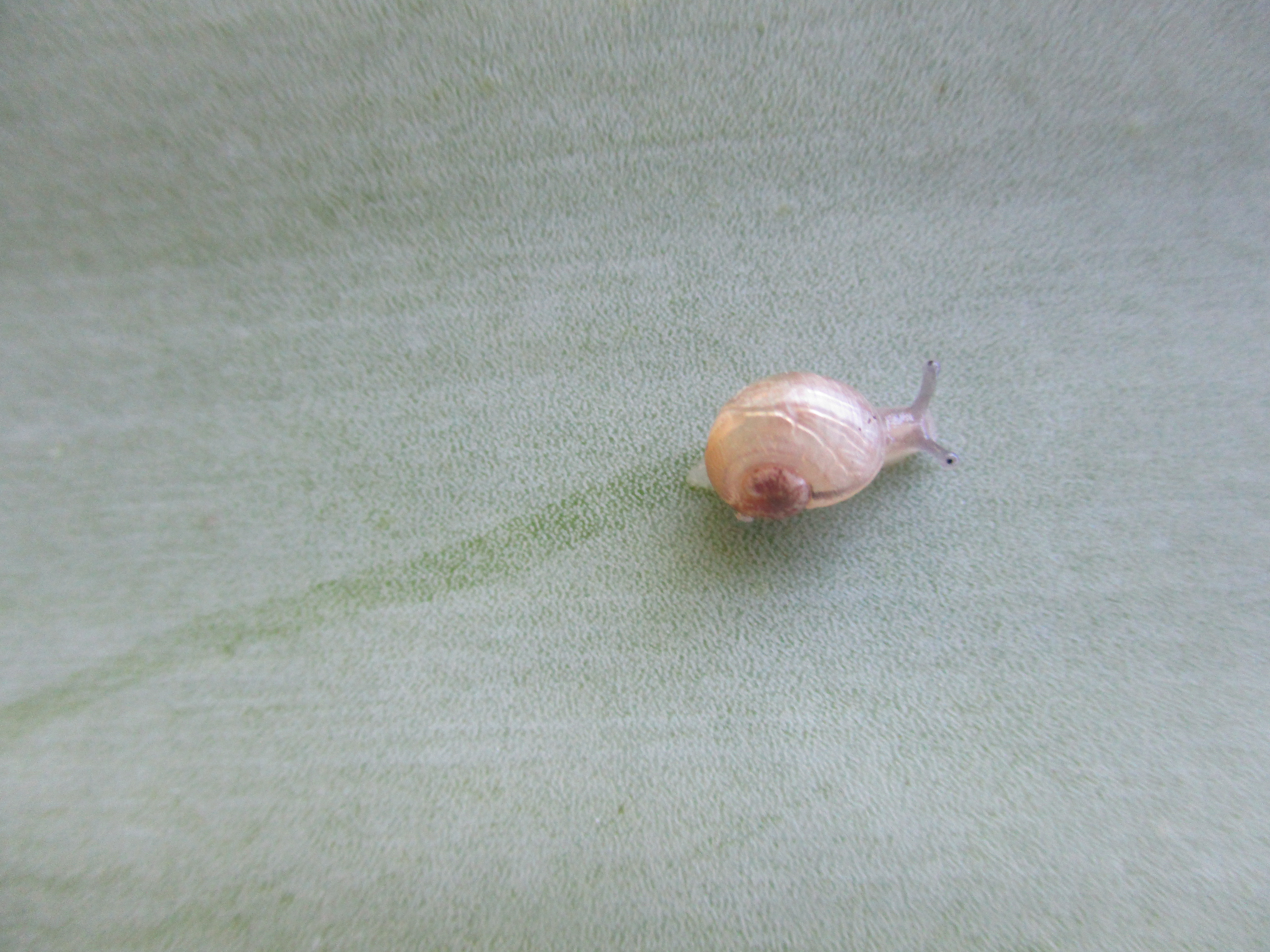
These are two pictures that did not make the grade for my ‘Six on Saturday‘ post this morning. That post featured bronze and gold foliage. Actually, of the six, only two were bronze, and only one was truly gold. One that I passed off as bronze was more purplish. Two that I thought were gold were just variegated with yellowish green and white.
I am none too keen on bronze or gold foliage anyway. The only exception that I can think of is the old fashioned bronzed ‘Schwedleri’ Norway maple. It was planted as a street trees on a few streets in the Santa Clara Valley in the 1950s.
Bronzed cultivars are less vigorous than their greener counterpart.
Gold cultivars are even less vigorous, and susceptible to scorch.
The best quality about bronze and gold is that they make silver look so good.

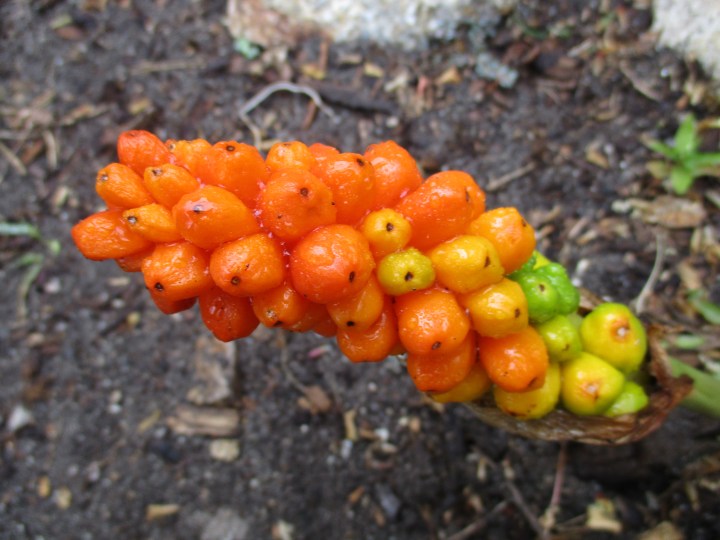 Just a short distance from the corn dog orchard, I found this candy corn dog growing wild. I really had no idea that candy corn grew in a corn dog form like this. These particular candy corn seem to have turned from green to yellow to orange as they ripened. It will be interesting to see if the outer ends eventually ripen to yellow like conventional candy corn, or if they are a fancier cultivar. They sort of look like tiny persimmons.
 Because redwoods live for centuries, their bark gets very thick. They do not shed their bark as they grow. Old giant redwoods in the Sierra Nevada have bark that is a few feet thick and thousands of years old. Their bark is thicker than the trunks of what most of us consider to be large trees! Even much younger coastal redwoods that have regenerated here since clear cut harvesting about a century ago have bark that is a few inches thick.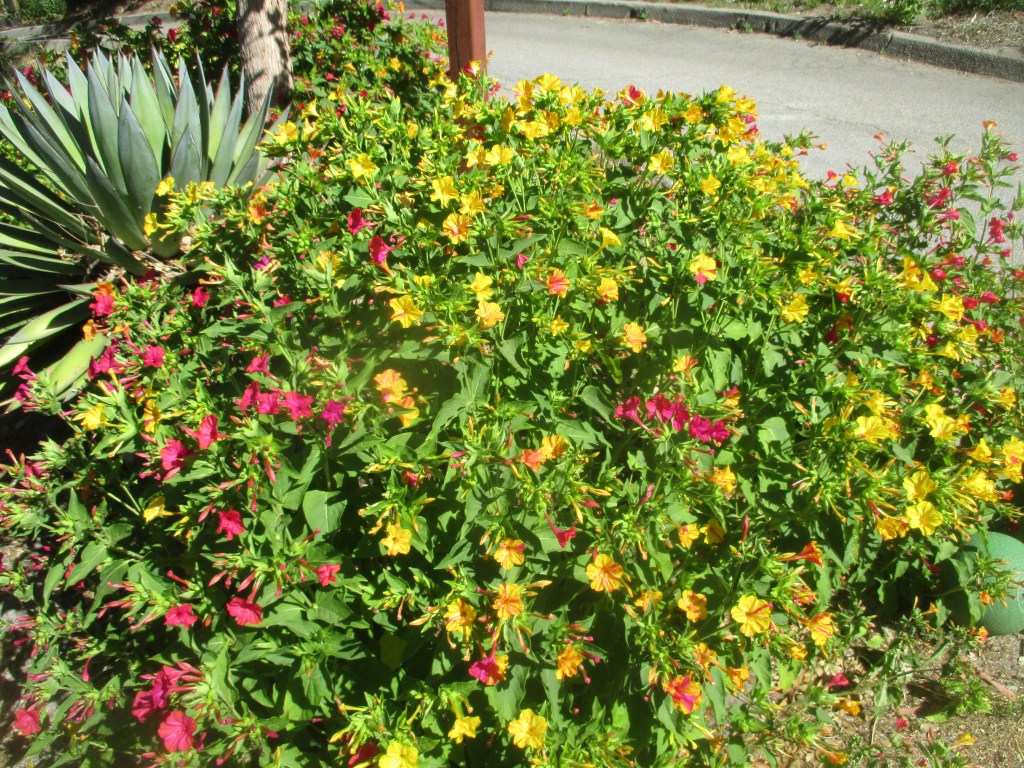




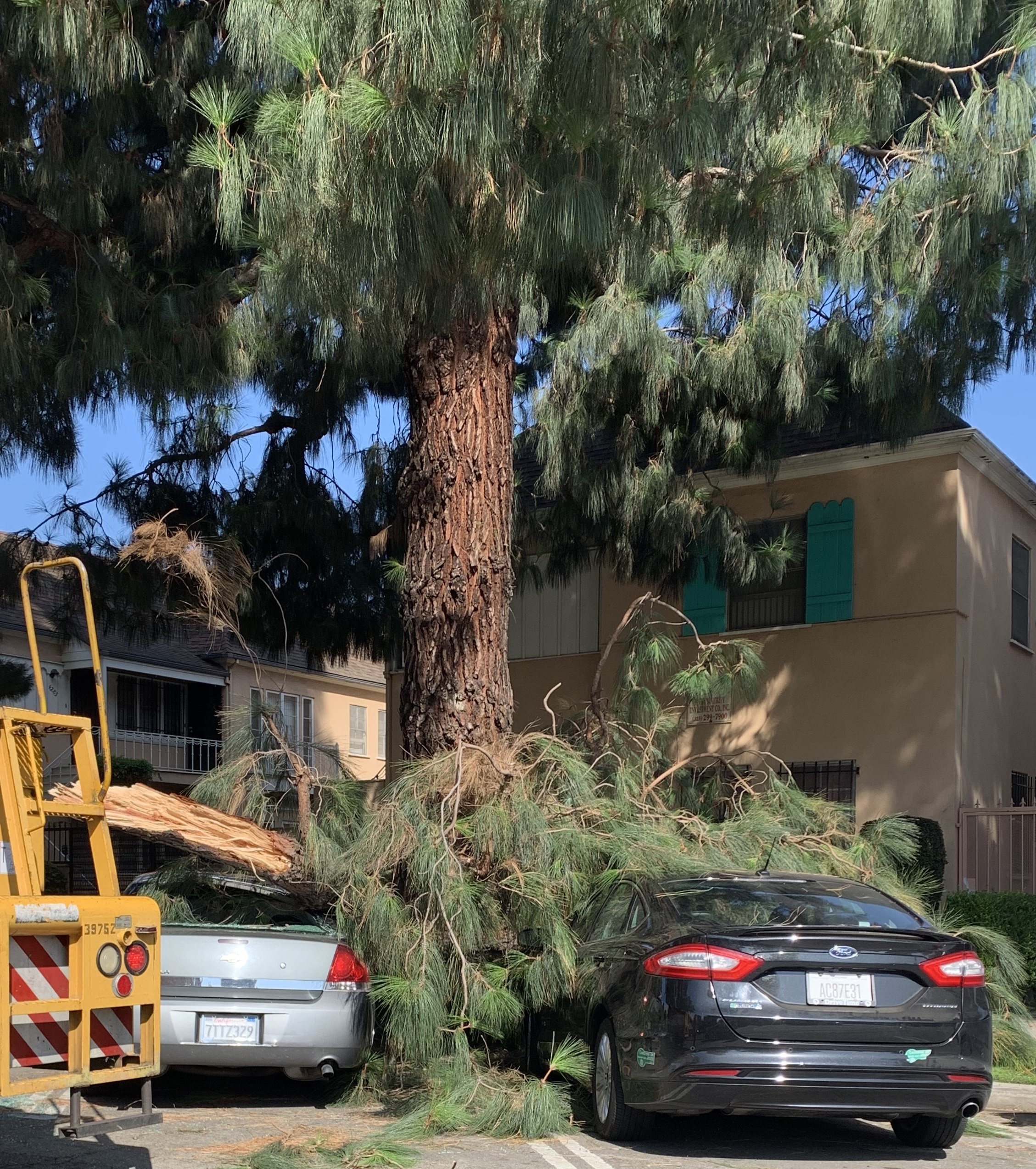 Many municipalities enforce tree preservation ordinances. Whether we agree with them or not, these ordinances are designed to preserve significant trees that are assets to the community. For the greater good, local governments have made it their business to limit what we can do with our own trees on our own properties. There are many advantages. There are many disadvantages. We arborists see it all.
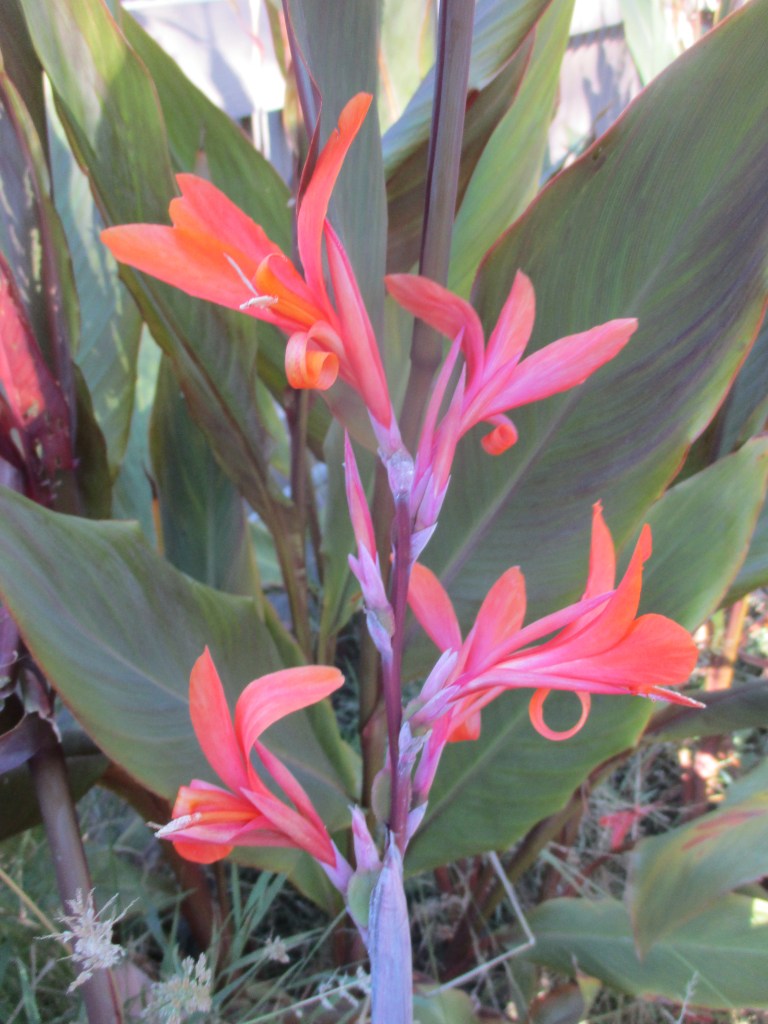
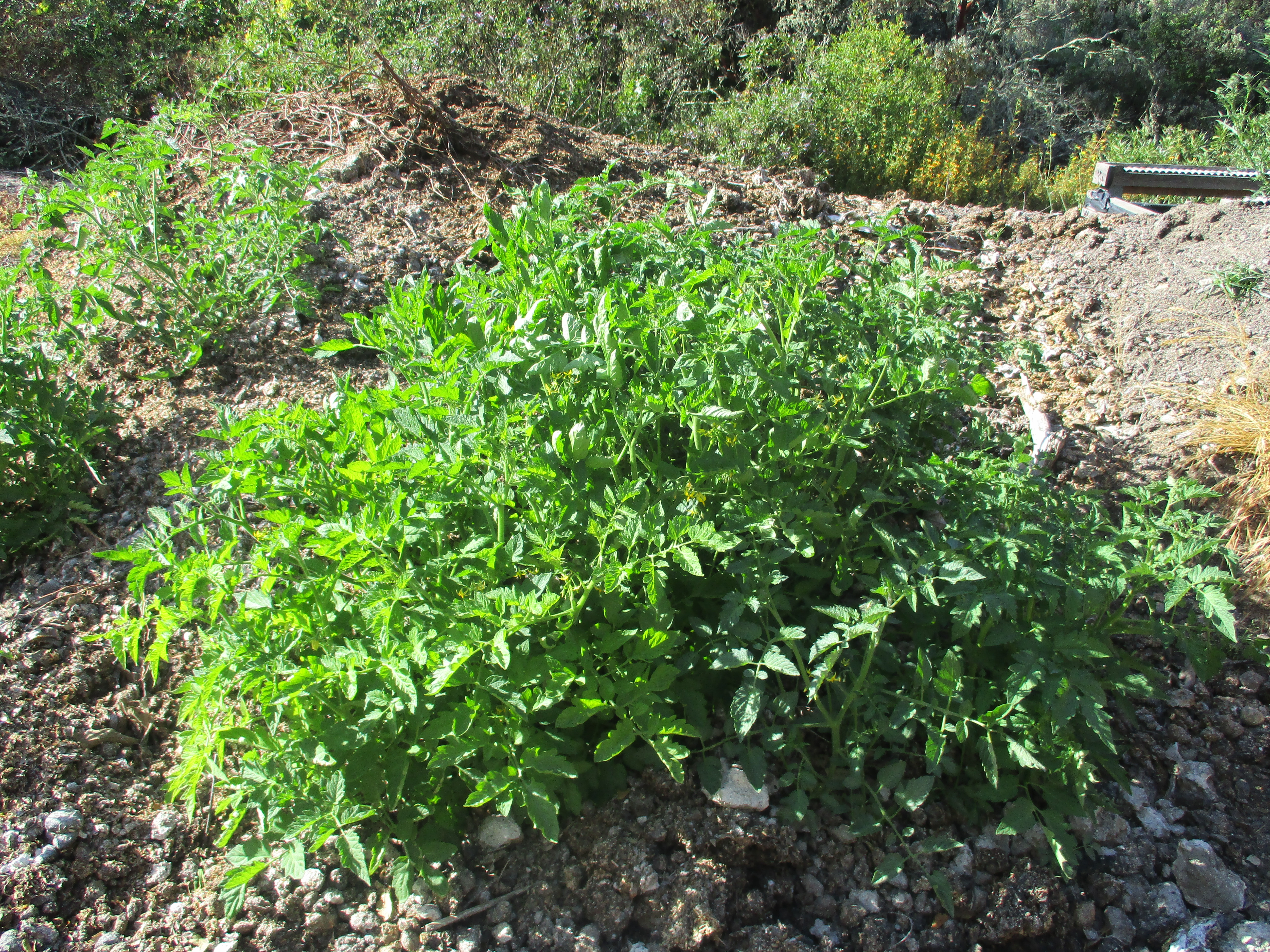 We don’t put much effort into our compost piles. In the first pile, we dump horse manure, green waste from two cafeteria type kitchens, and a bit of the finer textured green waste from the landscapes. It eventually gets turned over into the second pile. By the time the second pile gets turned over into the third pile, it is almost ready for use. The third pile really does not last long. Neighbors take it as fast as we can.
 These are two pictures that did not make the grade for my ‘
