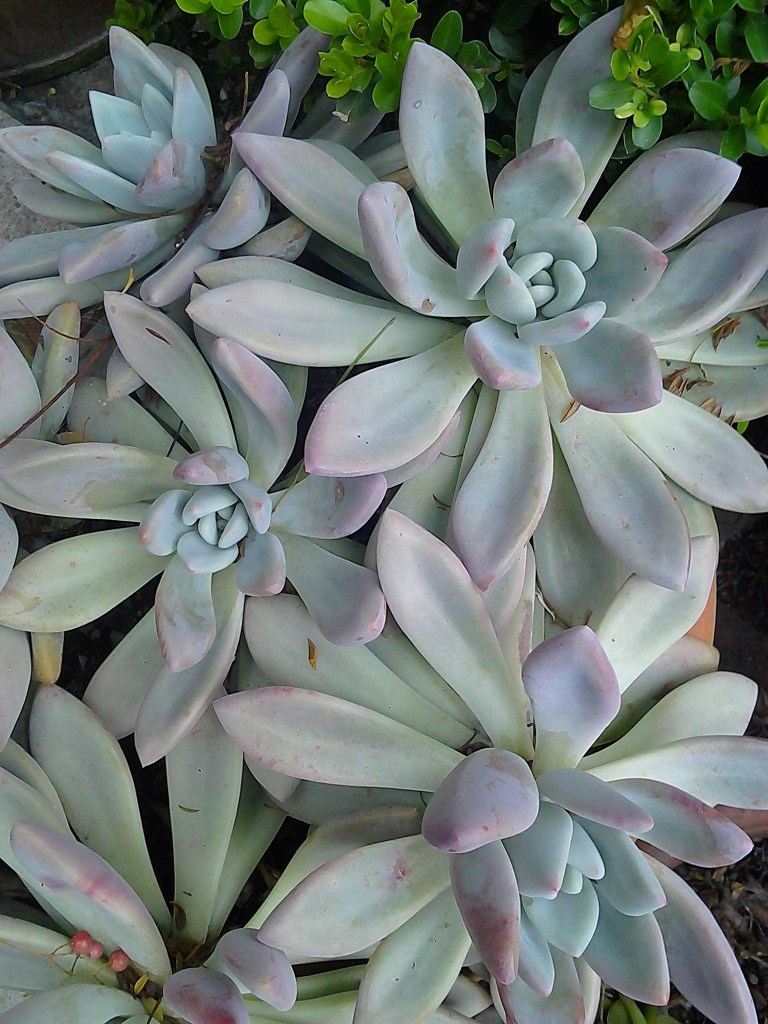
There are so many different personalities of Echeveria! This one only slightly resembles the more familiar ‘hen and chicks’ types.
Some but not all of of the many succulent plants known as ‘hen and chicks’ are varieties of Echeveria. Likewise, some but certainly not all Echeveria are known as ‘hen and chicks’. Echeveria are so variable that many do not seem to be related, although all have dense rosettes of succulent leaves. Some have very narrow leaves like miniature yuccas. Others have warty broad leaves. Foliage can be simple green, yellowish, bluish, gray, bronze, bronzy purple or variegated. The edges and tips of leaves of many varieties are blushed with red or purple that is more colorful in winter, or with complete sun exposure. Most Echeveria will tolerate light shade. Propagation is very easy from division of pups, stem cuttings and even leaf cuttings.
It is difficult to believe that this stout trunk outfitted with sharp spines is a euphorb, related to leafier poinsettias.
Cacti have thick, fleshy stems outfitted with nasty spines instead of leaves. Agaves and related aloes have stout, fibrous stems that are mostly obscured by thick, fleshy leaves. (Only a few somewhat rare aloes develop bare trunks and stems.) What they have in common is that they all are succulent plants, collectively known as succulents.
There are all sorts of other succulents. Humongous saguaro cactus have hefty trunks and limbs. Diminutive impatiens (like busy Lizzie) are grown as annuals for their colorful and very abundant flowers. Many succulents have succulent stems. Many have succulent leaves. Some, like the common jade plant, have both succulent leaves and stems. Trailing ice plants, leafy begonias, and sculptural euphorbs (related to poinsettias) are all succulents.
Many succulents store water in their succulent parts because they live in dry climates. Because moisture is such a commodity where they live, cacti protect their succulent stems with sharp spines. Agave protect their leaves with sharp teeth. Euphorbs are equipped with caustic sap, and many also have spines like cactus have. Fortunately, most succulents are not so unfriendly.
Almost all succulents are remarkably easy to propagate from cuttings or by division. In the wild, pieces of prickly pear cactus that fall onto the ground will begin to develop roots through the rainy weather of autumn and winter, and be ready to grow into new plants by spring. In the home garden, cactus cuttings should be left out for a week or more so that the cut ends will ‘cauterize’ (Actually, they just dry out a bit.) and be less susceptible to rot once they get plugged into the ground or pots to grow roots. Alternatively, clumping cactus that develop multiple main stems from the base can be divided, although the spines make handling them difficult.
Most aloes and some agaves produce basal shoots known as pups, that can be split from the main plants to grow into new separate plants. Agaves that do not produce pups while young typically start to produce pups after a few (or many) years, as they mature enough to bloom. Many of the larger types produce an abundance of pups after bloom, since the main shoot dies as flowers deteriorate. If desired, one or more of the pups can be left in place or planted back to replace the parent plant.
Most other succulents are even easier to propagate. Small cuttings can be plugged wherever new plants are desired. Some can even be grown from leaf cuttings!
This sort of bad placement is unbelievably common, and was even more common about ten years ago, while agaves were a fad. It happens with yuccas and other thorny plants too.
In this situation, the point is that all those pointed tips of the leaves of this awkwardly floppy century plant, Agave americana, are extremely sharp, extremely rigid and EXTREMELY dangerous. Those shorter teeth on the margins of the leaves are just as sharp and rigid, and are curved inward to maximize injury to anyone trying to get away from an initial jab. With tips that impale, and marginal teeth that slash, this is one very hateful perennial!
Another point is that this big and awkwardly obtrusive century plant is on a patio at a Mexican restaurant. Yes, it is in a public place where people get dangerously close to it. On Friday and Saturday nights, this restaurant can get quite crowded. Some within such crowds are inebriated, so are more likely to stumble about and bump into things that are best avoided. Those concrete slabs to the left are…
If their strange tubers got into the garden last autumn, ranunculus should be blooming by now. Although their schedule suggests that they crave winter chill like other spring bulbs, they merely want to disperse their roots early. Then, they can bloom as winter ends, and continue until spring weather gets too warm for them. They mostly finish prior to summer.
If tubers did not get into the garden earlier last autumn, young ranunculus plants become available from nurseries late in winter. Although generally a spring annual, tubers, which go dormant by summer, have potential to regenerate perennially for subsequent springs. Digging and storing tubers through most of their dormancy might improve their potential.
Ranunculus bloom can be pink, red, orange, yellow, purple, cream or white. Flowers are plump and neatly dense with many papery petals, like little peony flowers. They stand on sturdy stems about half a foot to a foot high. Their finely textured basal foliage resembles parsley, but with a lighter color. Dormant tubers are tufts of short, plump and woody roots.
Wildlife belongs in the wild. Many of us appreciate it there, and get pictures of it to share with others as if it is rare and unusual. Deer, raccoons, skunks, squirrels, gophers and so many other residents of the wild are not so appealing in home gardens. They all need to eat. None are tactful about it. Some eat foliage. Some eat fruits. Moles eat larval insects.
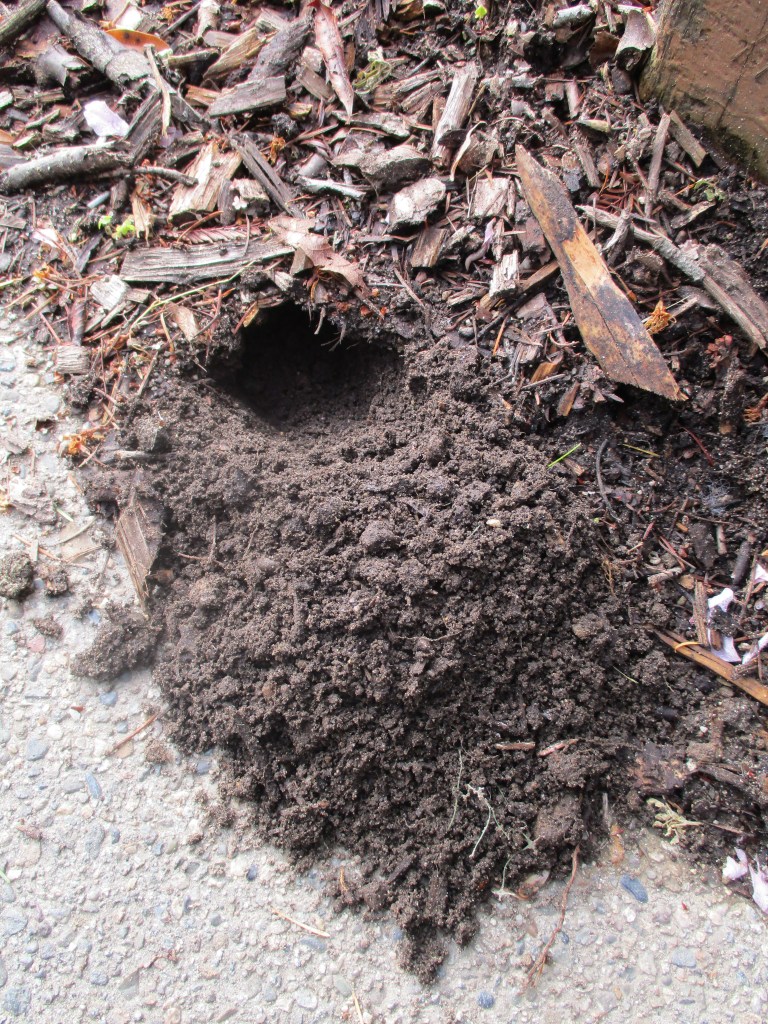
That seems like it would be beneficial to the garden. In some situations, it is. Not only do moles inhibit the proliferation of grubs that damage roots, but they also aerate dense soil. The problem is that they heave soil as they excavate just below the surface. This activity damages lawns and shallow ground cover. Uninhibited grubs might cause less damage.
Gophers often take the blame for damage that moles cause. However, gophers are much more destructive. They excavate more substantially, and generate larger mounds. While moles consume mostly detrimental grubs, gophers devour roots and any other plant part within the soil. Gophers do not hesitate to kill the most important plants in the landscape.
Like gophers and other rodents, moles can not take much time off for hibernation through winter. The weather is just too mild. Although they are less active during cool weather, or while there is less to hunt, they never stop excavating. They merely become more active now because, as the weather warms, they can plan for a family, and find plenty of grubs.
Mole excavation generates distinctive small ‘berms’ of displaced soil within lawns. Such berms extend randomly in no particular direction, but are impressively consistent in form. Mounds of expelled soil are small and sporadic, or may not be evident. Moles often push their way below the surface of firmly rooted turf, without expelling any soil to the surface.
Unfortunately, moles can be about as difficult to dissuade as gophers. The most practical means of repellent is to eliminate the grubs that they crave, which can be difficult without insecticide. Blood meal and bone meal are fertilizers that can supposedly repel moles by their objectionable aroma, but require frequent application. Traps also require diligence, as well as precision.
After decades of spectacular spring bloom, this pair of flowering cherry trees in the picture above must be removed. They have been deteriorating for a very long time. Below the limber blooming branches of the tree on the right, there is not much more than a bulky rotten trunk, one rotting limb, and a short stub of a limb that was cut back to a bit of viable twiggy growth last year. The tree to the left has only a few more viable but rotten limbs. Through this last winter, it was finally decided that we would allow them to bloom one last time, and then replace them with a new pair of trees of the same cultivar. I will cut them down myself. I do not want anyone else to perform this unpleasant task. Nor do I want such dignified and admired trees to be cut down by anyone…
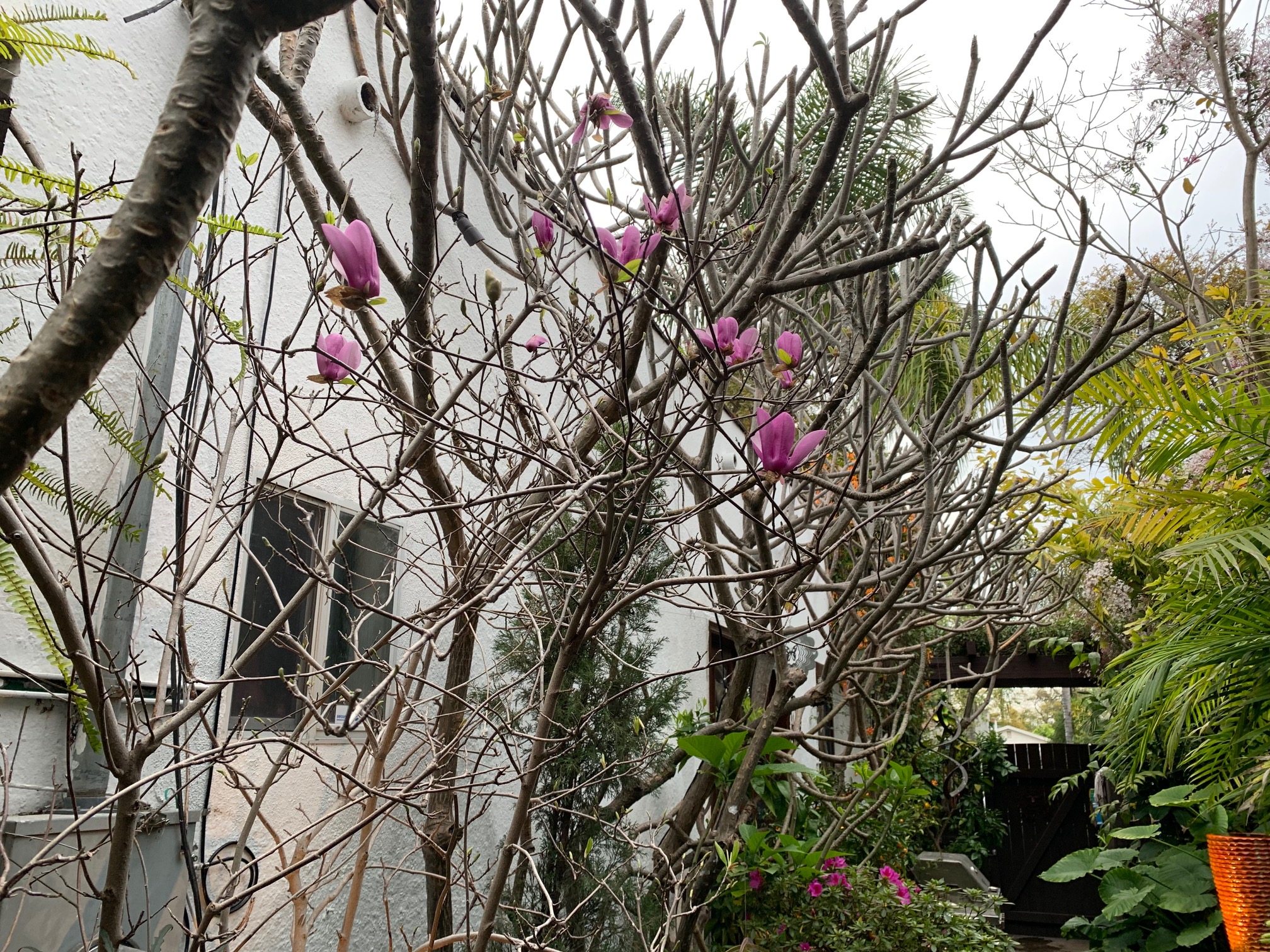
Hey! I just recently featured a bunch of Brent’s bad pictures in two ‘Six on Saturday’ posts. It took two weeks to use up just a dozen of all the countless bad pictures that Brent clogs my telephone with. I made the mistake of telling him to not send so many; so must now contend with the resulting proliferation.
This is why one should not ask someone else who is very vain to take a picture of something important. The vain only take good selfies. Others subjects are too unimportant to them to bother getting a good picture of.
Fortunately, I did not ask for this picture. Brent, my colleague in Southern California, sent it to me with all those other pictures that I shared this morning, and the rest of the pictures that I intend to share next Saturday. I think he wanted to show off his magnolia. I do not remember what cultivar it is, or even what species. I though there was a Magnolia soulangeana in this spot, but these flowers do not look right for that.
I think this picture shows off the plumerias better. Brent probably did not think of that because he does not understand how impressive these specimens are to those of…
Rhody’s Roady is a topic that I wanted to brag about a while ago, but postponed because of Brent’s pointless pictures. Now, there are other more interesting subjects. Well, it was not exactly a horticultural topic anyway. Rhody’s Roady is merely his Buick Roadmaster. It is not actually described within the context of this Six on Saturday, and is only slightly visible in the first picture. However, it did take us on a road trip to the Pacific Northwest where we finally got to Tangly Cottage Gardening. I was supposed to deliver some canna there months ago! Half of these pictures show gifts that I received while there, including two very important items taken directly from their landscapes in town!
1. Cedar Lodge, surrounded by various cedars, pines, firs and oaks, is where Rhody and I stayed initially. Rhody is to the lower left of this picture. His Roady is to the lower right.
2. Western white pine and incense cedar seedlings were too compelling to ignore. These eventually would have needed to be grubbed out from a roadside berm, so came with us.
3. Ilwaco, in Washington, was our next destination. Tangly Cottage Gardening presented me with this potted ‘Coral and Hardy’ Watsonia, and the bagged red and orange cultivar.
4. Allium christophii and schubertii, which were grown for plant sales, were gifts as well! These are my first Alliums! I had postponed trying any for too long, so this is fortuitous!
5. White grape hyacinth may look like the dinkiest component of these gifts from Tangly Cottage Gardening, but happen to be something that I had been wanting for a long time!
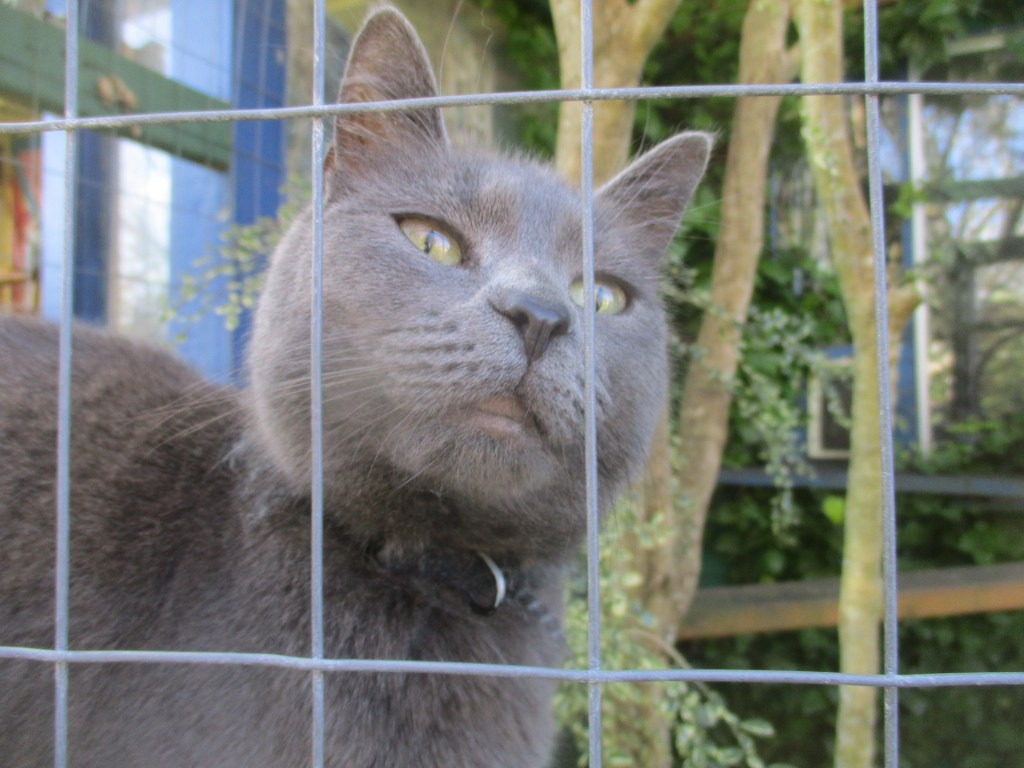
6. Nickel the kitty reminded me that I should have taken more pictures. I met both Fairy and Skooter but somehow neglected to get pictures! More can be seen at Tangly Cottage.
The elegant queen palm has a slender trunk and a billowy canopy. Grouped trees lean gracefully away from each other.
While Mexican fan palms and Canary Island date palms dominated the palm fad in California during the Victorian period, the queen palm, Syagrus romanzoffiana, was still relatively uncommon. Since then, selective breeding has improved their foliar color and density. They are now the most popular of palms.
Modern queen palms grow a bit faster than their Victorian ancestors to about thirty feet tall, and then grow somewhat slower for another ten to even twenty feet. Their long and arching feather (pinnately compound) leaves are quite billowy. The elegant trunks are generally slender, but often develop constrictions or bulges from fluctuations of irrigation or nutrient availability. The abundant fruit can be messy.
Every species of palm has a distinct personality. All have attributes; but many also have the potential for considerable problems.
California has no more native palms than Oklahoma has with the diminutive dwarf palmetto. The stately California fan palm, which is also known as the desert fan palm, inhabits warm desert regions in southern California. It is what put the ‘Palm’ in ‘Palm Springs’. However, because it likes heat and minimal humidity, it is not so happy away from deserts. The very tall and lean Mexican fan palm is closely related to the comparably stout California fan palm, but is so happy in local climates that it naturalizes and can be invasive.
The queen palm has a leaner trunk, and a broader and more billowy canopy. It rarely self sows, but is so overly popular that it very often gets planted in bad situation where it does not have room to grow. Unlike fan palms that have rounded palmate leaves that radiate outward from the ends of bare petioles (leaf stalks), the queen palm is a ‘feather’ palm, with pinnately compound leaves comprised of narrow leaflets arranged along stiff midribs.
The massive Canary Island date palm is another feather palm, with a broad canopy and bulky trunk. Like Mexican fan palm, it often self sows, so gets into some weird situations. The foliage is so thick that is commonly becomes infested with rats and pigeons. Female trees produce messy fruit that keeps rats and pigeons well fed.
Whether they get planted intentionally or simply appear in the landscape, the main problem with all these and other large palms, is the expense of maintenance, since they can only be maintained by professional arborists who know how to climb such large branchless trees. Without regular grooming, fan palms that are so often allowed to retain long beards of old leaves become fire hazards, and have the potential to drop dangerously heavy sections of their beards without warning. Removal of old deteriorating leaves from the huge canopies of Canary Island date palms is quite an chore!
There are few small palms, like windmill palm and Mediterranean fan palm, that are more proportionate to compact gardens. Windmill palm has a strikingly shaggy trunk and a compact canopy that is easy to groom before it grows beyond reach. Mediterranean fan palm has multiple trunks that grow so slowly that it takes many decades for them to grow beyond reach. Nasty sharp thorns on their petioles make pruning difficult but not impossible.
Selection of a palm that is appropriate to a particular situation is just as important to limiting serious long term problems as the selection of any other tree is.


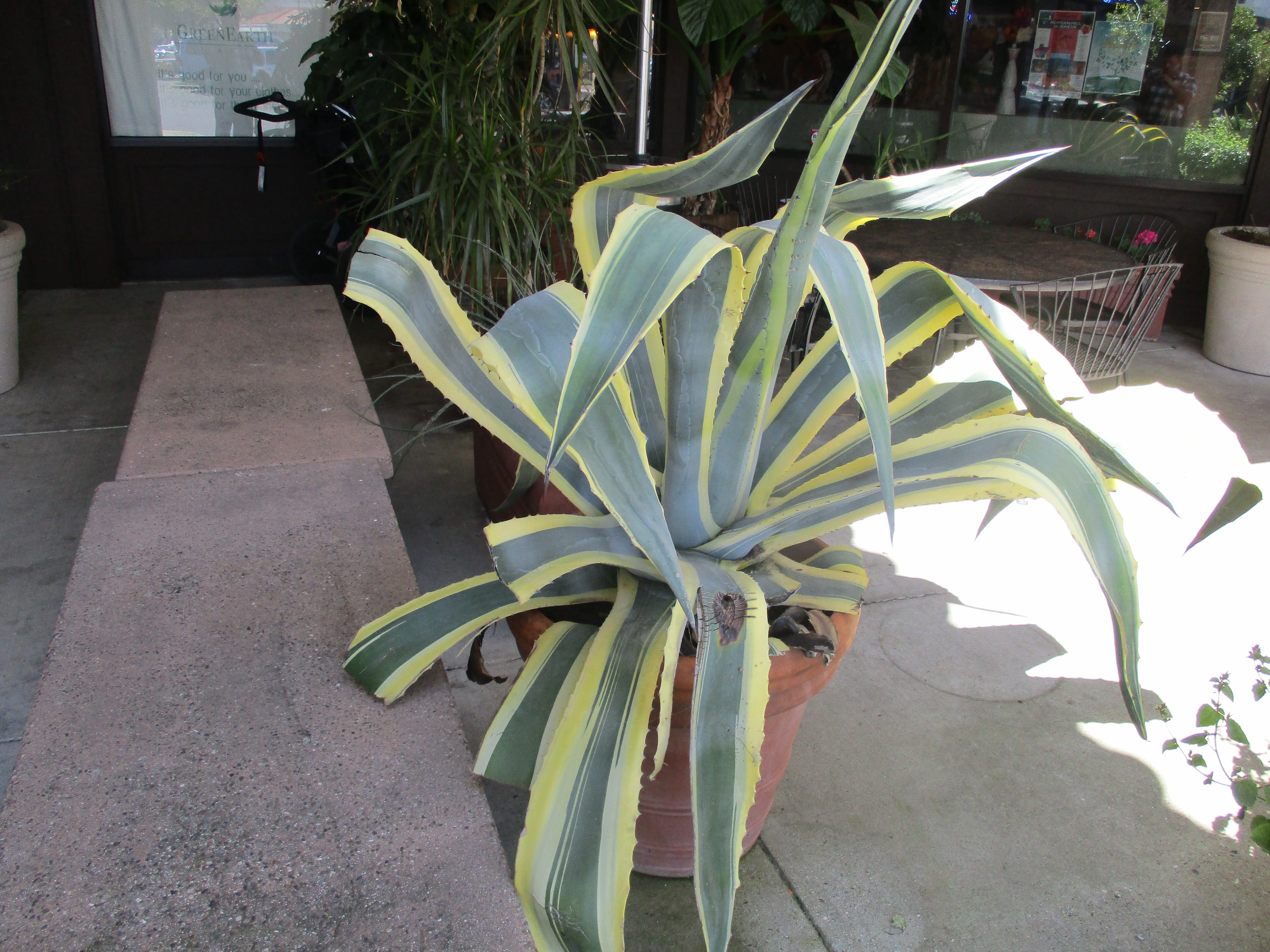 In this situation, the point is that all those pointed tips of the leaves of this awkwardly floppy century plant, Agave americana, are extremely sharp, extremely rigid and EXTREMELY dangerous. Those shorter teeth on the margins of the leaves are just as sharp and rigid, and are curved inward to maximize injury to anyone trying to get away from an initial jab. With tips that impale, and marginal teeth that slash, this is one very hateful perennial!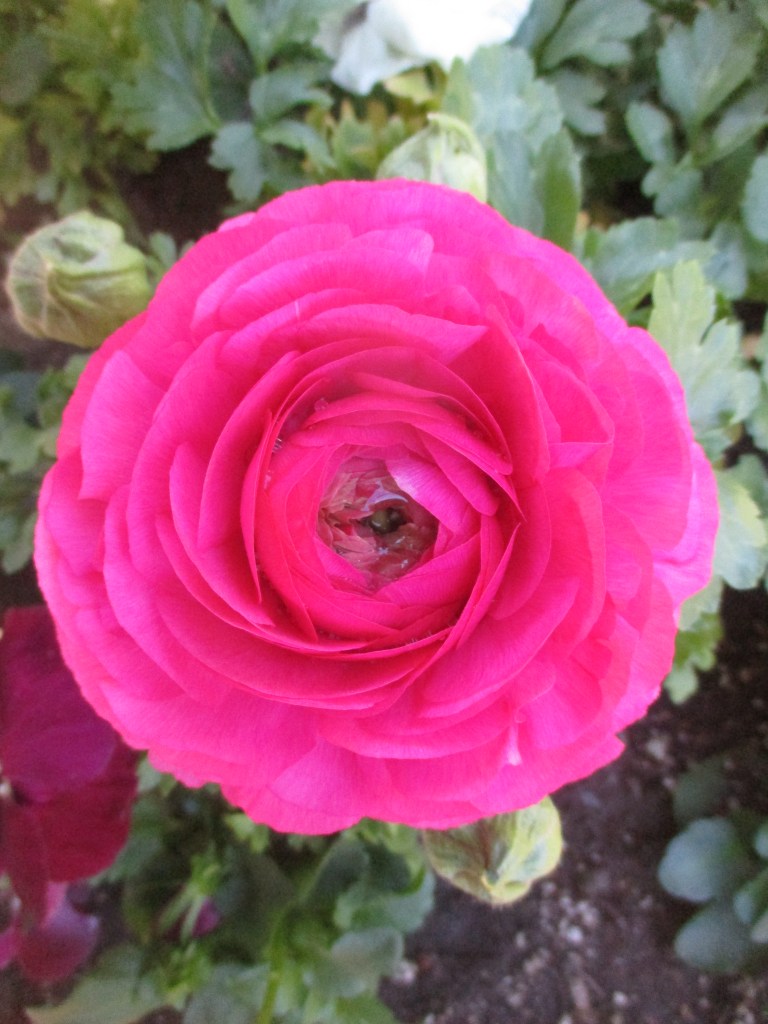
 After decades of spectacular spring bloom, this pair of flowering cherry trees in the picture above must be removed. They have been deteriorating for a very long time. Below the limber blooming branches of the tree on the right, there is not much more than a bulky rotten trunk, one rotting limb, and a short stub of a limb that was cut back to a bit of viable twiggy growth last year. The tree to the left has only a few more viable but rotten limbs.
 This is why one should not ask someone else who is very vain to take a picture of something important. The vain only take good selfies. Others subjects are too unimportant to them to bother getting a good picture of.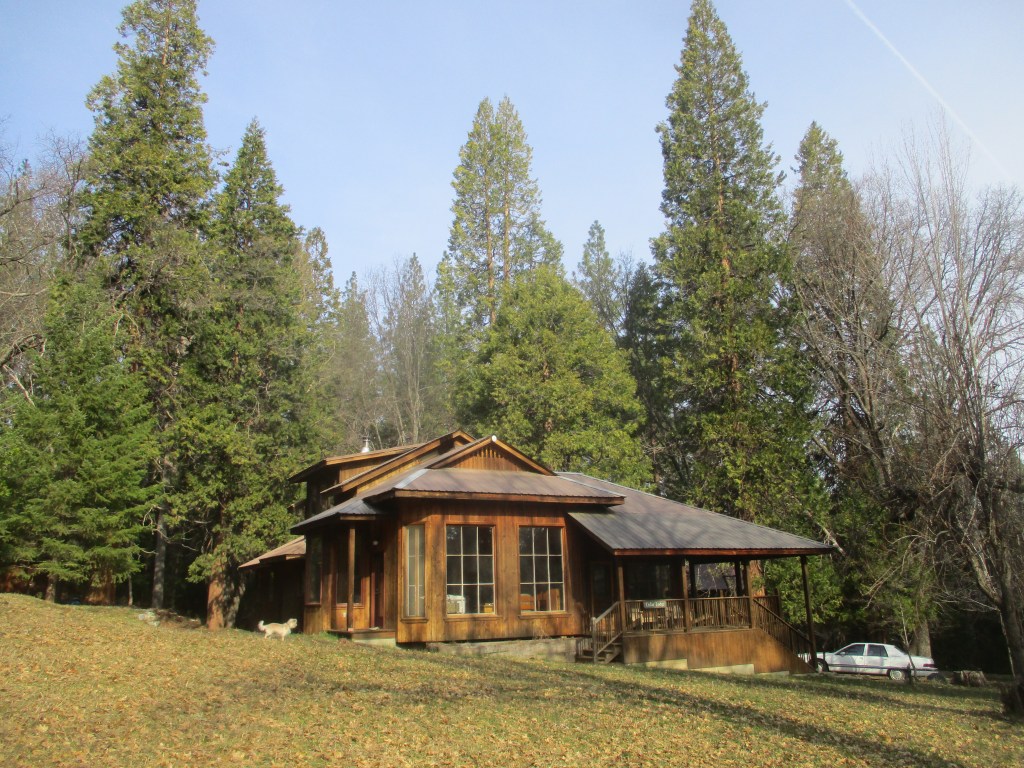




 Tony Tomeo