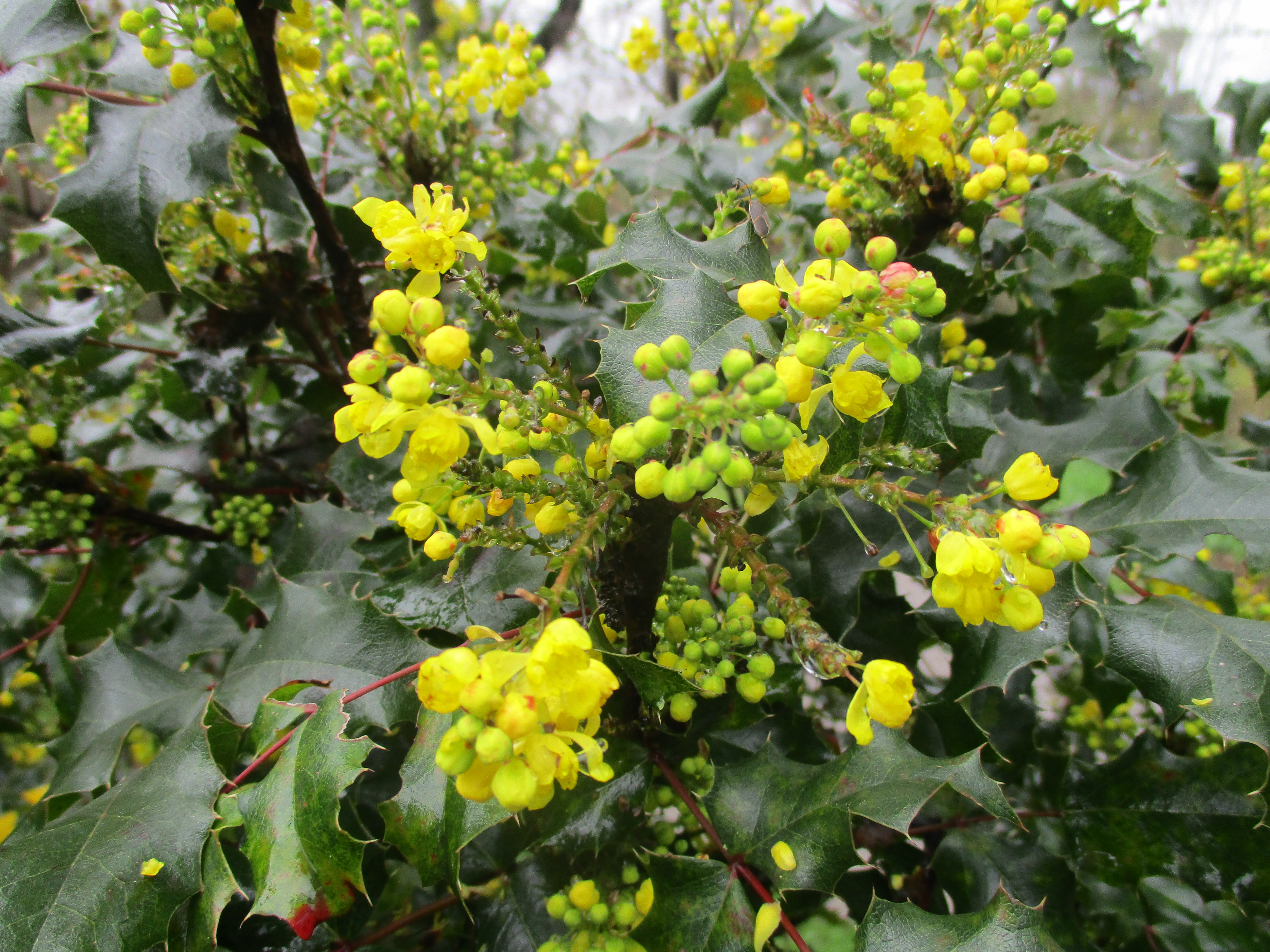
This is why I do not grow hellebores in my own garden. The specimen in the pictures above and below are about as good as they get here. Most are quite a bit worse. Some put out only one or two flowers. Some do not survive their first year in the garden.
No one seems to know why they don’t do well here. It might be the lack of chill in winter, although they do better in even milder climates. It might be the minimal humidity, although they generally do no better in the damp redwood forests where the specimen in these pictures lives. Those that might get too much sunlight do no better or worse than those that get too much shade. They are simply not happy here. My solution to this ‘problem’ is to not grow them in my own garden. I do not particularly like them anyway…
A few species of mustard came to naturalize in California, and for a few distinct reasons. Some likely grew first as greens in the gardens of the original Spanish Missions. At least one species also provided culinary and medicinal mustard seed. The more prolific types became cover crops and fodder for livestock. Later in history, mustard seed provided oil.
According to legend, Spanish Missionaries established the route of El Camino Real with mustard. After sporadically dropping seed as they traveled between Missions, they could follow the bright yellow bloom by the next winter, and find greens to eat. El Camino Real became worn enough to navigate before the mustard dispersed too extensively to assist.
Most but not all species of mustard that are naturalized locally are of the genus Brassica. Wild turnip and wild radish provide similar greens, but are generally more likely to bloom pale pink or pale white, rather than bright yellow. Garden varieties of mustard, which are available as seed or in cell packs, provide delightfully tender new leaves with mild flavor.
Vegetable plants are mostly unnaturally productive. Extensive breeding compels them to yield fruits and vegetative parts that are bigger, better and more abundant that what their ancestors produced. Increased production increases their reliance on resources. Without crop rotation, some sorts of vegetable plants noticeably deplete some of what they need.
Rotation, which is the same as crop rotation or garden rotation, is a technique of growing vegetables where different types of vegetables grew previously. In other words, one type of vegetable does not grow in any one place for too long. Some vegetables may produce well in some types of soil for a few years. More consumptive types prefer annual rotation.
This technique disrupts the depletion of particular nutrients that particular types of plants crave. It also allows for replenishment of depleted nutrients in the absences of plants that cause such depletion. Furthermore, some soil borne pathogens find this active cycling to be disruptive. Eventually, plants that cycled out can cycle back into a particular situation.
Tomato plants are particularly consumptive, so appreciate rotation in many types of soils. Eggplant and pepper are related to tomato, so crave many of the same resources, even if they are less consumptive. Therefore, they should not cycle directly into soil relinquished by tomatoes. Unrelated vegetables, such as squash, corn or bean, are more appropriate.
Warm season vegetables that are now returning to the garden might appreciate rotation. A bit of research to determine appropriate placement for them may significantly enhance production. It helps to know which vegetables are related, such as mustard, collard, kale, radish and turnip (of Cruciferae Family), or squash and melon (of Cucubitaceae Family).
Because corn is so high, it should grow to the north of a vegetable garden. Unfortunately, rotation may dictate that it grows to the east for a while, or only in portions of the northern edge that it avoided for a while. Pole beans that like to climb wire fences may sometimes need reassignment to different portions of their fence. Peas should follow their example since they are related.
If California is the most excellent state in the entire Unites States of America and surrounding Universe, and Oklahoma is the second most excellent, then Oregon might be number . . . hmmm . . . fourteen or fifteen . . . or maybe like twenty or something. However, in MY (very important) opinion, Oregon is like the third most excellent state, and almost ties with Oklahoma! That makes it even slightly more excellent than Pennsylvania, Vermont and Arizona! Yes, it is THAT excellent!
Even the state tree of Oregon is excellent. It is the Douglas fir, pseudotsuga menziesii. That is like the second most excellent of the state trees, right after the coastal redwood of California. If California did not claim the coastal redwood as the state tree, Oregon is the only other state that can claim it as a native, since the native range of coastal redwood…
There are a few consequences to all this excellent rain. Gutters are flooding. Trees are falling. Mud is sliding. As much as we should be grateful for what we are getting while we are getting it, it is getting rather old. Clear and sunny weather that is forecast after today will be a welcome relief from all this muddy sogginess.
Almost all of the flowering cherries have somehow postponed bloom. It has not been unusually cold. It is as if the trees somehow know better than to bloom while so much unusually heavy rain is falling. Otherwise, they might have bloomed only briefly before the blossoms got knocked off. The buds are so fat that I expect they will begin to bloom by the middle of the week. Only one flowering cherry that always blooms significantly earlier than the others bloomed on time, and is already finished. Considering how heavy…
There are thousands of them, these weird motionless caterpillar like ‘things’, in big herds under all the cottonwood trees. They make a squishy mess in the rain, and stain concrete. They may not look like much from a distance, and are merely ignored as a minor nuisance that must be swept from pavement, but on closer inspection, they really look unworldly, like something from another planet, or a bad Japanese science fiction movie. They are just male catkins of the native cottonwoods. At least I believe they are. If there are female flowers mixed in, I would not know it. Nor would I know if they really are from another planet. I know that the cottonwoods will later make quite a mess with their cottony fluff that carries their seed away on the wind, so they must do what it takes to generate seed, which generally involves flowers of both…
Esperanza and poinciana seed sent to me by Crazy Green Thumbs at the end of last year were finally sown! Actually, they were sown two weeks ago, but I somehow deleted their pictures before sharing them here. Consequently, there is not much to see now. After the failure with the esperanza seed that The Shrub Queen sent to me previously, I am intent on growing these properly. Esperanza is more popularly known as yellow bells, and may alternatively be known as yellow elder, yellow trumpetbush or Ginger Thomas. I have no idea who Ginger Thomas is, or why she is relevant. Poinciana is more correctly known as pride of Barbados, and may alternatively be known as Mexican bird of Paradise, red bird of Paradise, peacock flower, dwarf poinciana, flos pavonis, flamboyant de jardin or ‘ohai ali’i. I know it as poinciana only because I have never encountered real poinciana here.
1. Tecoma stans and Caesalpinia pulcherrima seed were sent from Texas during the last few days of last year by Crazy Green Thumbs. I finally put them out only two weeks ago.
2. Tecoma stans seed are not much to look at while under a thin layer of damp media. Of course, they look totally awesome to me. There were too many seed for separate cells.
3. Caesalpinia pulcherrima seed are about as fascinating after getting sown. Since there are not as many seed, they got separate cells, which are almost discernible in the picture.
4. Darla the kitty has mistaken seeded flats for litter boxes in the past. Boundless forests are apparently inadequate. Upside down flats should protect the freshly sown seed flats.
6. Darla hates me. I can not get close enough to get a good picture of her. This picture is zoomed in from a safe distance. She needs to keep her distance from the seeded flats.
Variegated Coprosma X kirkii has very glossy light green leaves with white margins that look great cascading over retaining walls.
Coprosmas are so innately undemanding and complaisant to all sorts of conditions, that some types self sow and thrive untended in riparian or coastal environments. If they were more aggressive, they would likely naturalize (proliferate as if native) where the soil does not get too dry through summer. With such glossy foliage that looks like plastic, they might be appealing weeds.
Coprosma X kirkii is a resilient ground cover that mostly stays less than two feet deep and five feet wide, although overgrown plants can get three feet deep. Varieties with colorful or variegated foliage probably stay too small to be reliable ground cover over large areas, but make nice edging, or can cascade nicely from raised planters or urns.
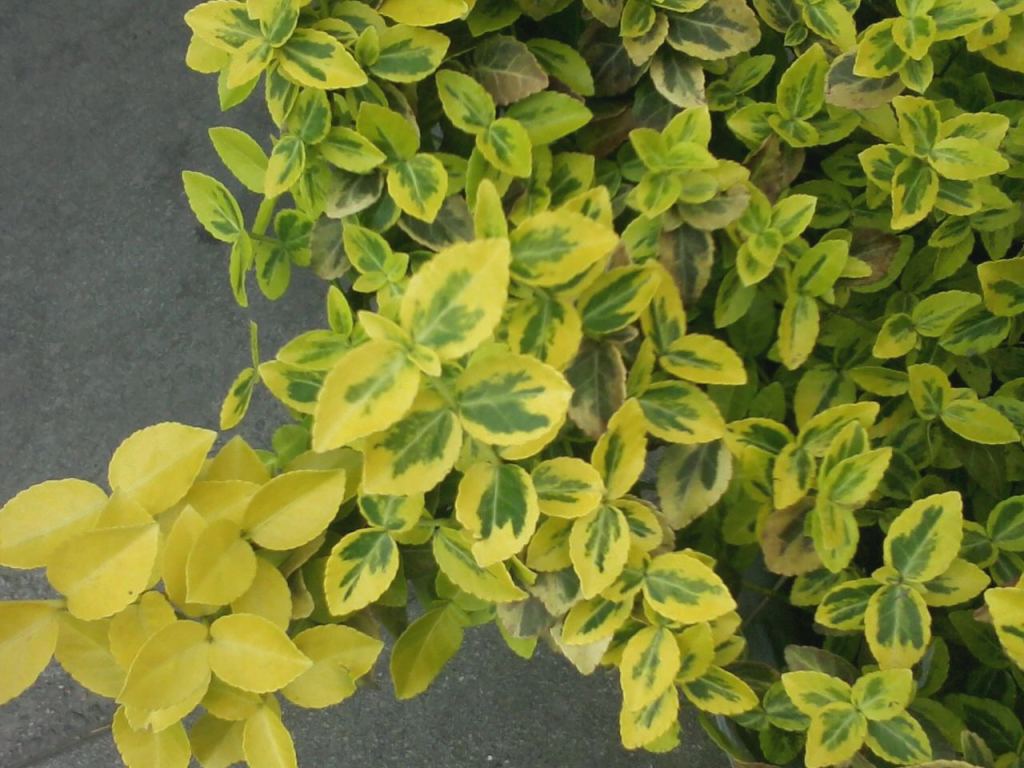
Most euonymus are upright shrubbery. This one though, stays low enough to be useful as a shallow shrubby ground cover.
Of all the functions that the many and various plants in the garden serve, ground covers have the lowliest job description. Well, maybe it is just the lowest job; covering the ground. It is an important job though. Ground covers fill in the space between other desirable plants to obscure otherwise bare soil. They also control weeds. Some ground covers help to limit erosion. Others help to insulate the soil for plants with sensitive roots.
There certainly are all sorts of ground cover. Lawns are the most familiar. Many other ground covers are perennials like gazanias, African daisies and iceplants. Some, like ivies, honeysuckles and star jasmine, are vines. Others are low growing shrubs like certain coprosmas, cotoneasters and junipers. Some lay about as flat as carpeting. Some get a few feet deep.
Many perennial ground covers as well as some of the vines and low growing shrubbery provide colorful flowers. Japanese honeysuckle and star jasmine are not as colorful, but provide delightful fragrance. Some of the cotoneasters have colorful berries in winter. Although not seen, many ground covers are appreciated more for their network or roots that help to stabilize soil that might otherwise erode. One feature that most ground cover plants have in common though, is their foliage that is dense enough to keep weeds out, as well as to obscure the soil below.
Like all other plants in the landscape, ground cover plants need maintenance. Lawns probably need more maintenance than any other ground cover, since they need to be mowed, weeded, fertilized and watered quite regularly. Vine ground covers need to be pruned so that they do not get into trees and shrubbery. Some ground covers look best if mowed annually (typically at the end of winter) or even more frequently. Some of the deeper ground cover shrubs should be pruned down to stay low. Almost all ground covers need to be edged for confinement.
Ground cover plants must be selected for their appropriateness to particular applications. For example, most low growing shrubbery needs space, so is best for larger areas. Smaller iceplants that may not be aggressive enough for big areas are great for tight spots, or for mixing with other perennials. Tough Algerian ivy that is so useful for freeway embankments may be too aggressive for home gardens. As with all plants in the garden, careful selection helps to get the best ground cover plants for each particular situation where ground covers are needed.
English ivy, Hedera helix, is probably the nastiest and most aggressively invasive exotic species that I work with. It climbs high into redwood trees and overwhelms understory plants (that live below the trees). It invades many of the landscapes, and worst of all, it climbs building where it ruins paint and causes rot. It grows faster than we can keep up with it.
English ivy is actually a nice ground cover plant for refined landscapes. I grew it at my home in town. Contrary to popular belief, it does not root into and parasitize the trees that it climbs. Actually, it rarely overwhelms and shades out large trees. It prefers to keep them alive for support, from which it disperses its seed. However, it does promote decay in the trunks that it climbs, particularly where it retains moisture at ground level. Native trees are not accustomed to that.

 This is why I do not grow hellebores in my own garden. The specimen in the pictures above and below are about as good as they get here. Most are quite a bit worse. Some put out only one or two flowers. Some do not survive their first year in the garden.

 If California is the most excellent state in the entire Unites States of America and surrounding Universe, and Oklahoma is the second most excellent, then Oregon might be number . . . hmmm . . . fourteen or fifteen . . . or maybe like twenty or something. However, in MY (very important) opinion, Oregon is like the third most excellent state, and almost ties with Oklahoma! That makes it even slightly more excellent than Pennsylvania, Vermont and Arizona! Yes, it is THAT excellent!
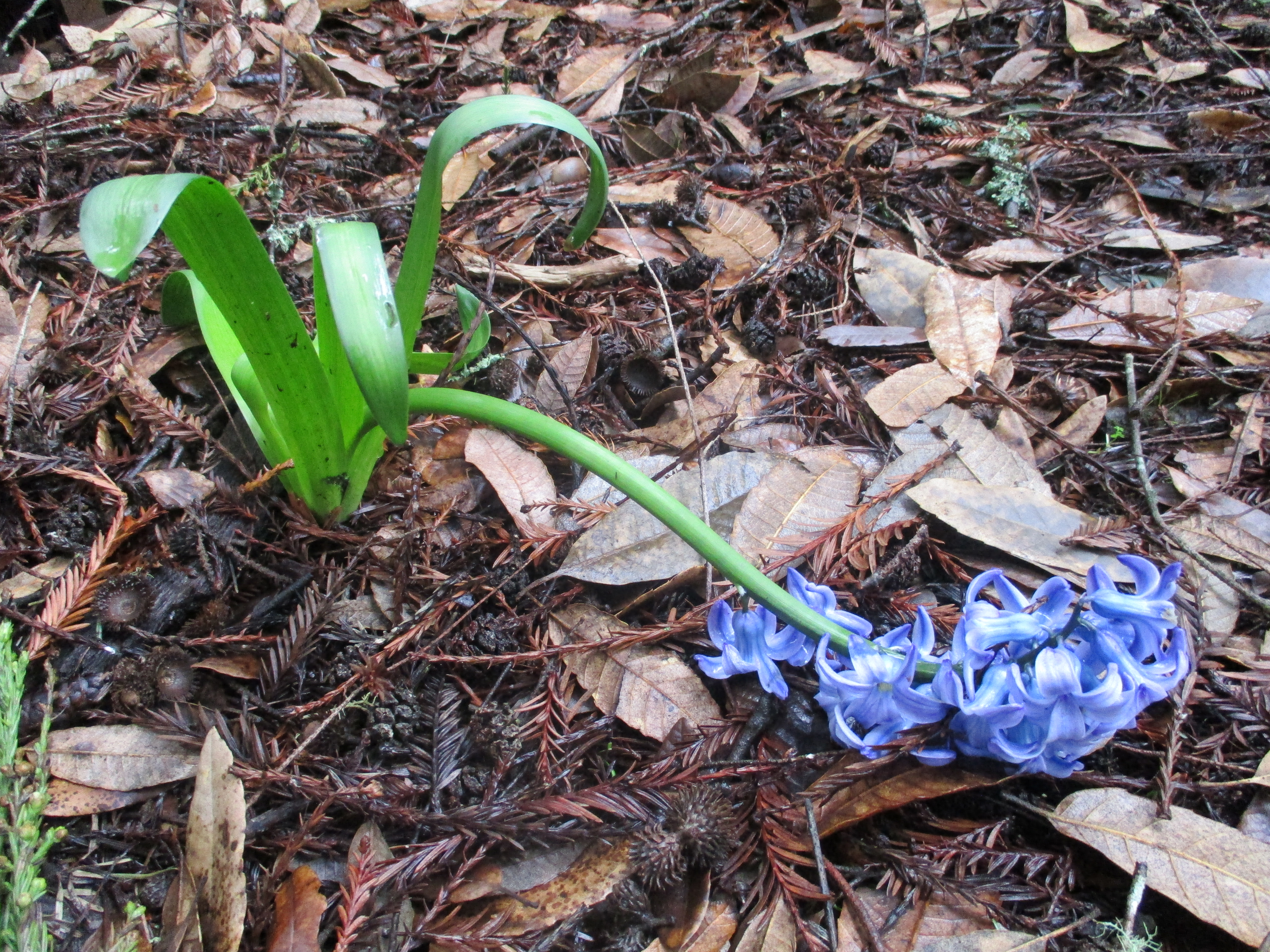 There are a few consequences to all this excellent rain. Gutters are flooding. Trees are falling. Mud is sliding. As much as we should be grateful for what we are getting while we are getting it, it is getting rather old. Clear and sunny weather that is forecast after today will be a welcome relief from all this muddy sogginess.
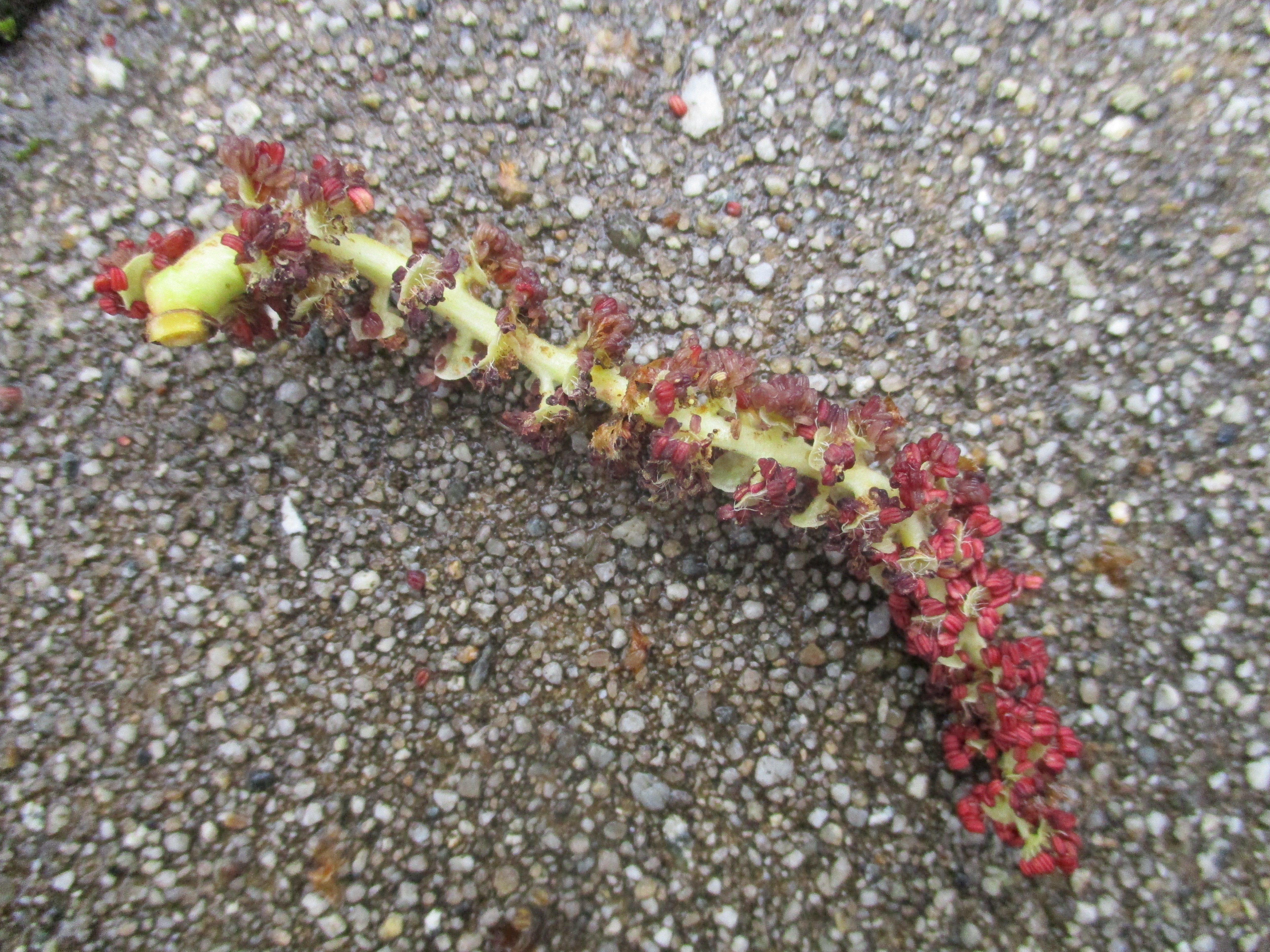 There are thousands of them, these weird motionless caterpillar like ‘things’, in big herds under all the cottonwood trees. They make a squishy mess in the rain, and stain concrete. They may not look like much from a distance, and are merely ignored as a minor nuisance that must be swept from pavement, but on closer inspection, they really look unworldly, like something from another planet, or a bad Japanese science fiction movie.



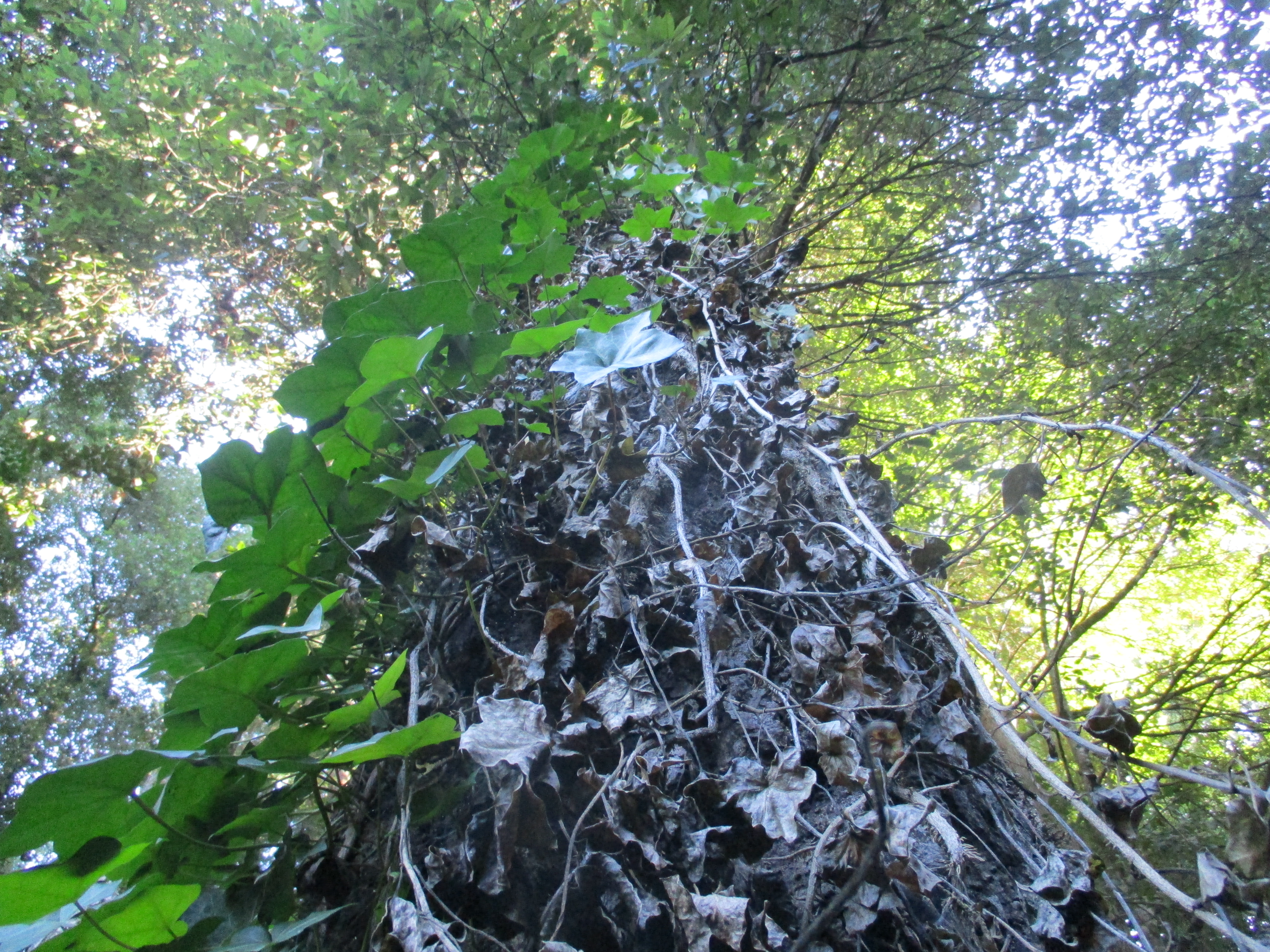 English ivy, Hedera helix, is probably the nastiest and most aggressively invasive exotic species that I work with. It climbs high into redwood trees and overwhelms understory plants (that live below the trees). It invades many of the landscapes, and worst of all, it climbs building where it ruins paint and causes rot. It grows faster than we can keep up with it.
