October 10, 2021 – Memorial Tree Update

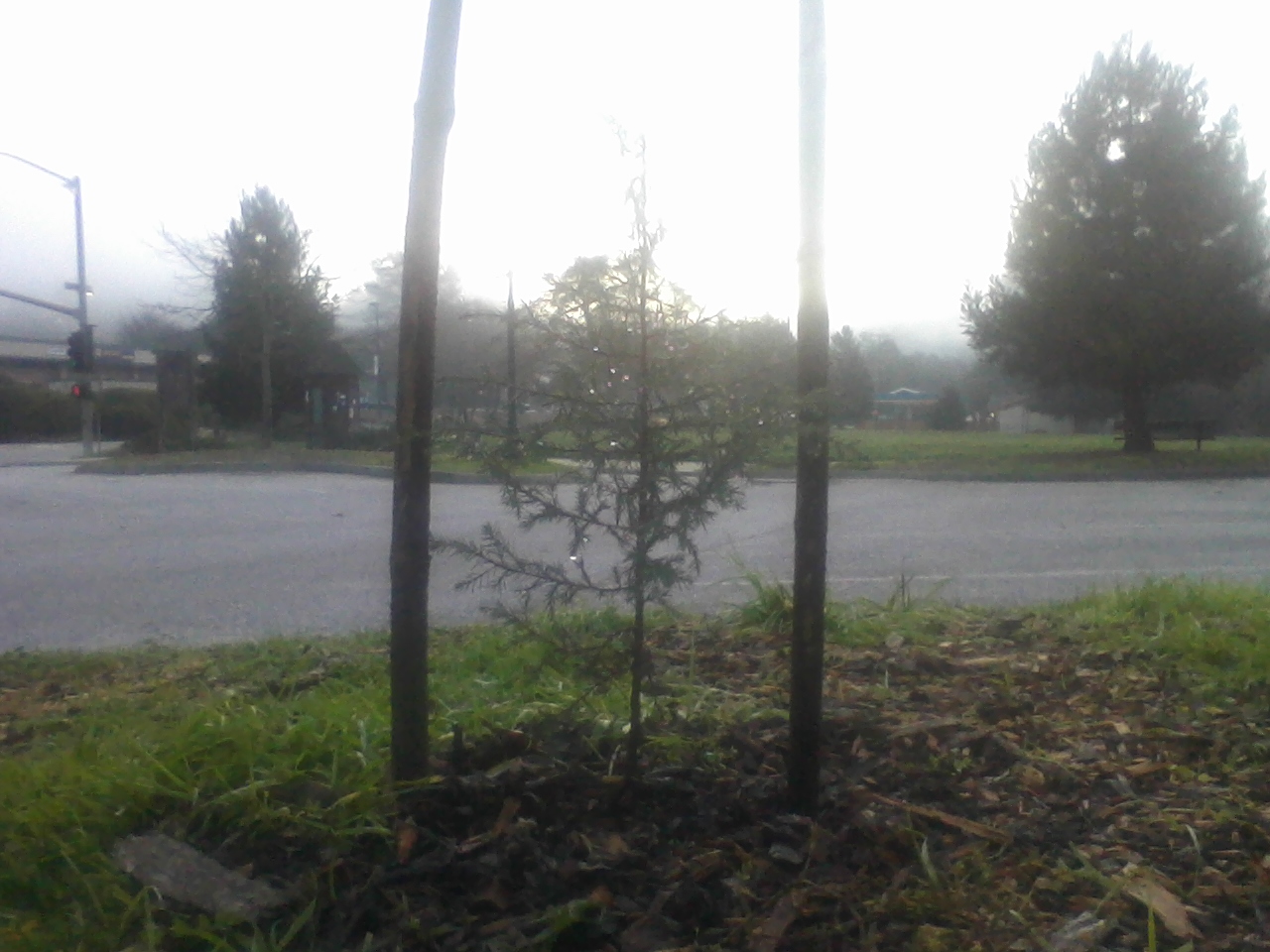
It seems appropriate to share this post from my other blog at Felton League. This little Memorial Tree has somehow become quite a celebrity. Those of us who are familiar with it are hoping for an efficient recover from recently incurred damage.

tonytomeo's avatarFelton League

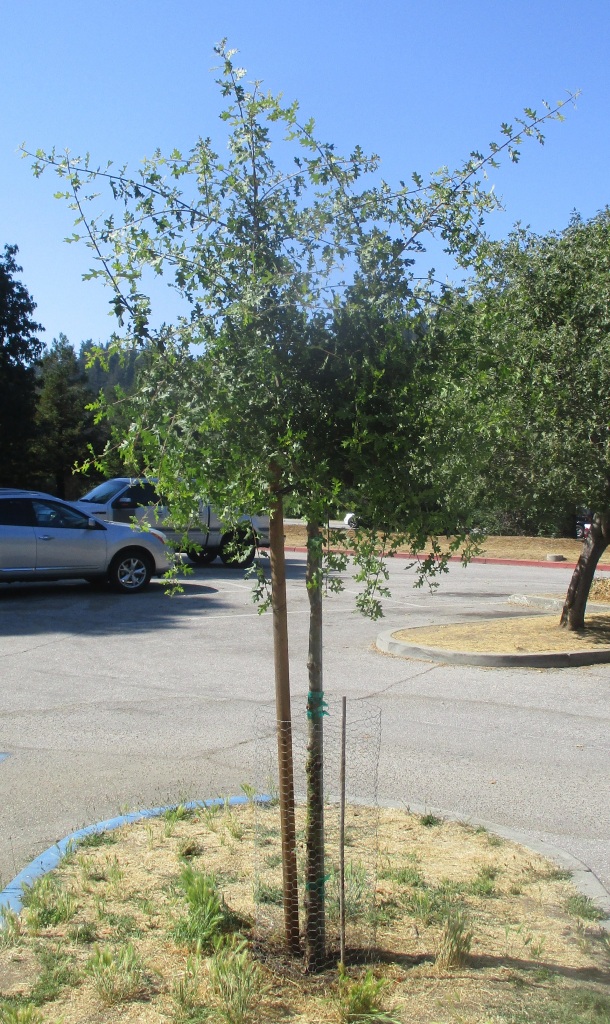
Memorial Tree – July 12, 2021

November 1, 2020, almost a year ago, was the last update for the resilient little Memorial Tree in Felton Covered Bridge Park. Since then, it began to develop a form that is more appropriate to the park parking lot that it inhabits, with a single straight trunk and a reasonably well structured canopy. (The illustration above is about three months old, from July 12, but the Tree has not grown much since then.)

Of course, the canopy will need to be pruned for continued structural development after it defoliates for winter. For now, lower growth remains somewhat obtrusive within the associated curbed parking lot island. This growth will be pruned up high enough so that no one must duck under it. As the tree matures, limbs that extend into the driveway beyond the curb must be higher than fourteen feet, so that they…

View original post 295 more words

Fall Color To Fall For

Fall color develops with seasonal changes.

Autumn is also fall here. Actually, ‘fall’ is the more popular name. It had been the popular name in England during the Sixteenth Century. The (generally) French name of ‘autumn’ became more common there during the Seventeenth Century. Yet, both names remained in use in the American Colonies. That is why autumn foliar color is more simply fall color. 

The natural fall color in New England, the Appalachian Mountains, the Rocky Mountains and the Great North Woods is famously exquisite. So many of the native deciduous trees develop remarkable fall color in response to local weather conditions. These same trees might not get sufficient chill to develop comparable fall color in milder climates of Florida. 

In most regions of California, natural fall color is limited by the ability of native species to develop such color. Bigleaf maple and the various poplars turn bright yellow with a slight chill, but are not abundant. Even when chilled, the foliage of most other native deciduous trees simply shrivels and falls without much color. Most of the native trees are evergreen. 

Therefore, most of the best local fall color is provided by exotic (nonnative) tree species. Such trees not only develop remarkable fall color, but do so in response to minimal chill. Sweetgum, flowering pear, Chinese pistache and ginkgo are four trees that most reliably develop brilliant fall color where winter weather is mild. None are native. All are popular.

Ginkgo turns brilliant yellow. The other three display various colors that range from bright yellow, to fiery orange, to rich red and burgundy. Their colorful foliage lingers longer than that of other deciduous trees. Sweetgum and flowering pear might retain fall color until it succumbs to rain in winter. Of course, these are not the only options for reliable fall color. 

No tree is perfect. Although very colorful in autumn, sweetgum is notoriously structurally deficient, and produces obnoxiously spiked fruiting structures. Flowering pear is innately susceptible to fire blight. All deciduous trees drop leaves, which need raking. Trees must conform to their situational limitations, as well as their particular landscape applications.

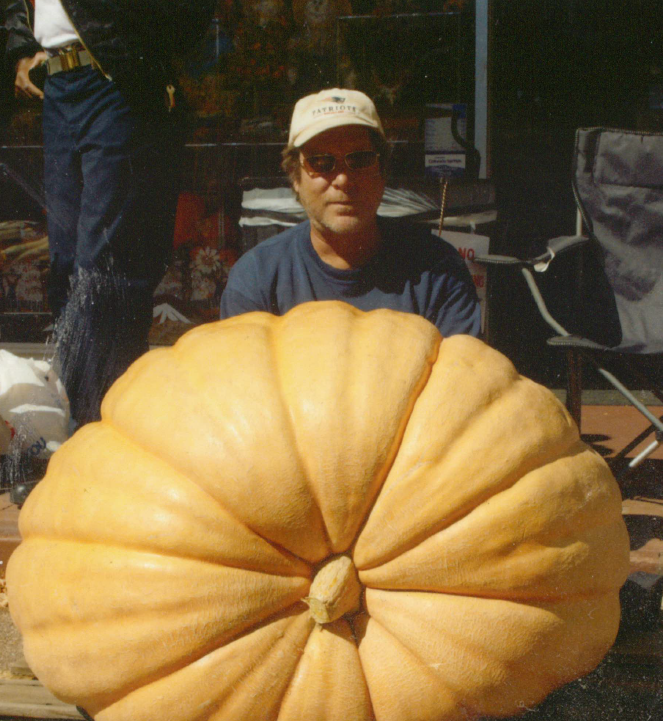
The Great Pumpkin

Like many of us who read about horticulture, I enjoy growing things, including some unusual things; but I have never grown anything like this!

tonytomeo's avatarTony Tomeo

P81007The Third Day of Creation was when it all started. Plant life was created just two days after Heaven and Earth, and Night and Day. It must have been a pretty big deal. Humans were not created until three whole days later!
After all this time since Creation, the flora of the World is still just as important as it has always been. Vegans can survive without the consumption of animal products, but no one can survive without the consumption of plants, or the consumption of animals who were sustained by plants. We breath oxygen generated by plants. We live in homes made of wood. We wear clothes made of cotton. Until relatively recent history, wood was the primary fuel for cooking and warmth through winter. Even modern fossil fuels that have replaced wood are derived partly from fossilized plants. There seems to be no end to the long list…

View original post 235 more words

Memorial Memorial

Goodness, I tend to forget about the trees that were there before. Three other Eastern redcedars of the original batch are still here and doing quite well. I still have no idea of what to do with them. I like junipers, but these junipers grow into trees!

tonytomeo's avatarTony Tomeo

P81014The little Memorial Tree in Felton Covered Bridge park that I so frequently write about is not the first to be planted there in its parking lot island. It is actually the fourth! The first was a California black oak like the other four in the other islands. They were all planted with the original landscape. It did not live there long before getting run over by a car. The island was empty for many years.

The second tree (above) was an Eastern red cedar that I brought from Oklahoma. It arrived here very early in the morning on the last day of 2012, in a bag with a few others that I pulled out of the ground the day before we left. They may be nothing special within their native range, but they are very exotic to me. At the time, I had no plans for the small trees…

View original post 400 more words

Six on Saturday: One Yucca

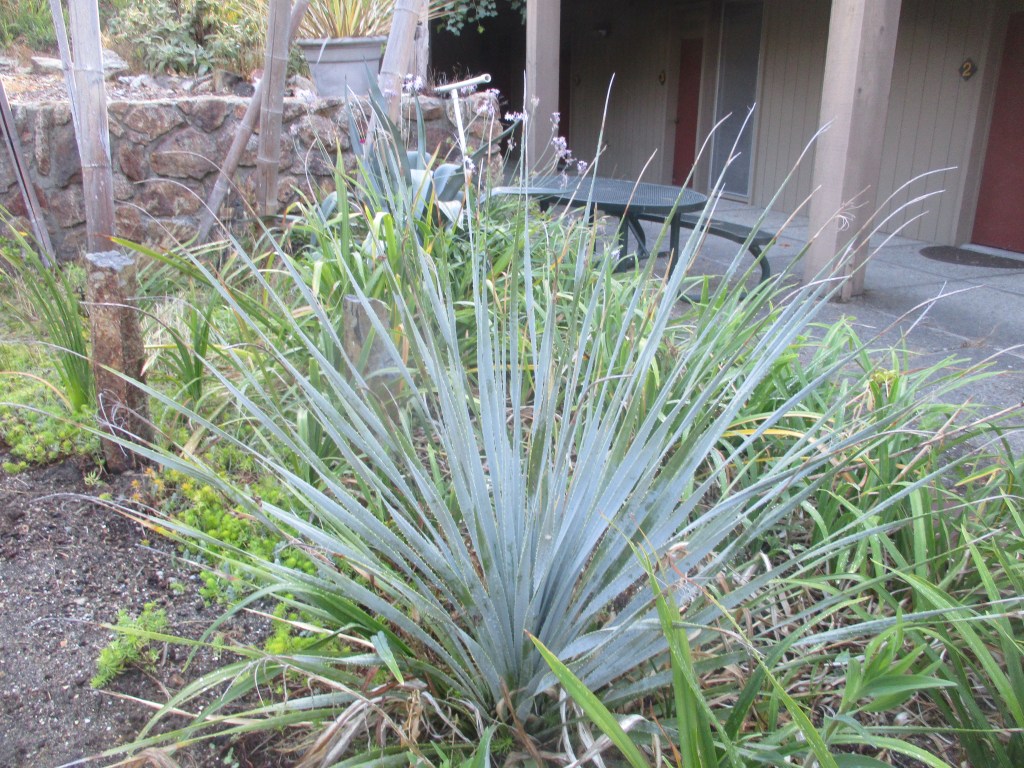
Of the fifty or so known species of Yucca, I formerly grew all but one. I still am not certain if the single species that I lacked, Yucca flexilis, is a real species or a synonym for another species. Of course, some species of Yucca might be considered to be subspecies of others. The genus is complicated. So is identification of its species. That is why I am not certain of the identity of the one Yucca that I got a picture of this week. Actually, only one of my Six, which live with the unidentified Yucca, are identified.

1. ‘Sedums, Dahlias and Hayfever’ might have something to say about this unappreciated mess. A neighbor left these for the gardens. I can identify only that ‘Angelina’ sedum. Oh, the shame!

2. Pups such as this could suggest that the associated primary rosette intends to bloom soon. If so, the pup will replace the original. I do not remember what species or cultivar of Agave this is.

3. This young pup appeared about six feet from its associated primary rosette, so is less likely to be an indication of impending bloom. I do not know the species or cultivar of this Agave either.

4. Agave attenuata is easier to identify. It has been here since December, but has not done much. I got a pup from it prior to planting. Later, another rosette was acquired from another source.

5. This might be Dasylirion wheeleri. I am rather certain of the genus, but not so certain of the species. Those little teeth on the foliar margins remind me that I do not want to weed around it.

6. Could this be Yucca whipplei? Its foliage certainly suggests that it is. However, the common sort should not develop such crowded rosettes. It could be a more densely clumping subspecies.

This is the link for Six on Saturday, for anyone else who would like to participate:

Beard Tongue

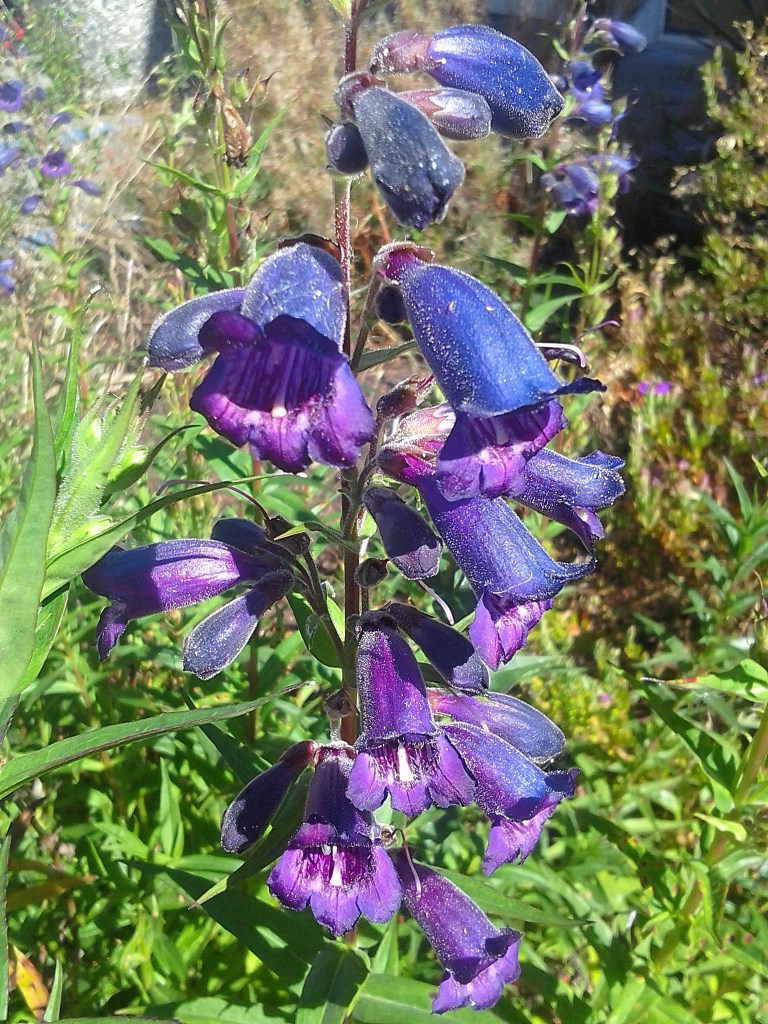
Beard Tongue does purple well.

With such a weird name, beard tongue is probably less commonly known by its common name than by the Latin name of Penstemon. Of the thousands of cultivars (cultivated varieties) that have been developed over the decades, most of those that are popular for home gardens are known as cultivars of Penstemon gloxinioides, even though their actual lineage is generally unknown. In recent years, other species have become more available.

Spikes of red, pink, purple or white flowers stand vertically above the foliage. Yellow flowers are still rather rare. Individual flowers are bisymmetrically tubular, with two conspicuous lips and a fuzzy tongue. Some beard tongue have relatively wide leaves and plump flowers, like really big snapdragons. Others have narrow leaves and thin flowers. Mature plants get only 1 to 2½ feet high and a bit wider, although some of the rare specie can get significantly larger.

Plants Know What Time It Is

Deciduous trees will eventually begin to defoliate.

Even without significant cool weather, the garden knows that it is now autumn. Most of the late summer blooming flowers are finishing their last bloom phases. Leaves of some of the deciduous trees, shrubs and vines are changing color, and some are already falling. Perennials that are dormant through winter are starting to deteriorate.

One of the several difficulties of living in a climate with so few difficulties is that autumn and winter weather is so very mild. Just as so many warm season annuals and vegetables want to continue to perform when it is time for them to relinquish their space to cool season annuals and vegetables, many other plants that should go dormant in autumn really want to stay awake as long as they can. Some semi-deciduous perennials even start to regenerate new growth before they shed their old growth.

Where winters are cooler, such plants generally shed the growth that developed in the previous year; in other words, they die back. They then stay dormant through the coolest part of winter, to break dormancy and regenerate late in winter or early in spring.

Beard tongue (Penstemon) can really look bad as the last flower spikes deteriorate, and the foliage gets spotty and grungy. It will be tempting to cut them back early. If possible, it is better to prune off only the deteriorating flower spikes, but wait until later in winter for major pruning. Premature pruning stimulates premature development of new growth that does not mature as well or as fast through winter as it would in spring. Such growth can be discolored, sparse and less vigorous until it gets obscured by later growth.

Marguerite daisy, ginger, canna, some salvias, most begonias, the various pelargoniums and all sorts of other perennials will likewise seem to be rather tired this time of year and through winter, but do not necessarily need to be pruned back just yet. Simply plucking or shearing off deteriorating flowers should be enough for now. Ginger and canna should not need to be pruned back until the foliage deteriorates enough to be almost unsightly. Begonias and pelargoniums, particularly common zonal geraniums, will be better insulated from potential frost damage through winter, and may not produce so much sensitive new growth if not pruned early.

Horridculture – Lessons From Motivational Posters

Goodness! Recycling these old articles involves some unpleasant memories, . . . but also some good ones.

tonytomeo's avatarTony Tomeo

P81010I work for the best. I do not intend to be too terribly pompous about it. I am just being honest.
This is not first time I have worked for the best. I have worked for at least three of the best arborists in the Santa Clara Valley, and two legendary horticulturists. I intend to eventually return to work for one of those legendary horticulturists back on the farm.
The main work I do now is part time and temporary. That means that I work less than four days each week, and will not be working there forever. I try to not think about leaving because it is saddening. I enjoy those whom I work for so much.
I work for only one other horticulturist, and one who is studying to be an arborist. Neither of them grow any significant quantity of nursery stock like I intend to spend the…

View original post 421 more words

Canna

Most cannas have more billowy bloom.

It grows from dormant rhizomes like a few of the popular early spring bulbs do. However, the many garden varieties of Canna are actually late or summer bulbs. They will become available after last frost, at about the time that early bulbs bloom. Also unlike early bulbs that mostly bloom prolifically once, Canna bloom sporadically from late spring until frost.

Canna foliage can be as appealing as the bloom. The big and lush leaves can be green, bronze, striped or irregularly variegated. ‘Australia’ has strikingly dark bronze foliage with red bloom. ‘Tropicana’ is striped green, yellow, bronze red and purplish pink, with orange bloom. ‘Stuttgart’ is irregularly variegated with white, with ribbony peachy orange bloom.

Of course, the bloom can be quite spectacular atop all that foliage too. Flowers might be pink, red, orange, yellow, creamy white, or a spotty combination of two such colors. Most popular cannas bloom with big and floppy flowers. Some have narrower and wispy floral parts. Bigger cannas can get taller than eight feet. All growth dies back after frost though. New growth regenerates fast in spring.

Early Bulbs Start Even Earlier

Daffodils for next spring start now.

Crocus, daffodil and narcissus are among the earliest of the popular early bulbs to bloom at the end of winter. Hyacinth, tulip, freesia, anemone, ranunculus and some types of iris bloom shortly afterward. That process should begin in February or so, about five months from now. Early bulbs are seasonable now though. This is when they go into the garden.

Early bulbs, or spring bulbs, take commitment. While dormant, they are not much to look at. There is less to look at after their internment into shallow graves, where they disperse their roots secretly through winter. They will not make an appearance until they bloom in spring. Fortunately, their performance is more than adequate compensation for the effort.

Early bulbs go into the garden now because they take time to get ready for spring bloom. While dispersing roots, they also begin to develop foliage and floral stems. Such growth remains safe and invisible below the surface of the soil until the weather is warm enough for it to emerge. Until then, chilly and rainy weather helps bulbs adhere to their schedule. 

Whether they are true ‘bulbs’, or they are corms, rhizomes, tubers or tuberous roots, early bulbs are specialized storage structures. They contain what the particular plants need to grow to maturity and bloom within their preferred season. They should resume dormancy afterward, to repeat the process as perennials. However, few modern cultivars will do so. 

Realistically, extensive breeding for the development of the more extravagant of modern early bulbs has compromised their vigor. Consequently, some are not reliably perennial. Some simpler crocus, daffodils and narcissus can naturalize as perennial in comfortable situations. Otherwise, more of the later bulbs, like canna, cala and dahlia, are perennial.

Whether they naturalize or not, most early bulbs bloom just once annually. Planting them in phases prolongs bloom. Ideally, a subsequent phase begins to bloom as its preceding phase finishes. The length of bloom determines the frequency of phases. For example, if tulips bloom for a week, phases can be weekly. Winter annuals cover nicely when done.