This foliage really is striking, particularly with black bearded iris. It does not last long once cut, but neither does bearded iris. I still want to figure out how to graft this onto a normal green tree.

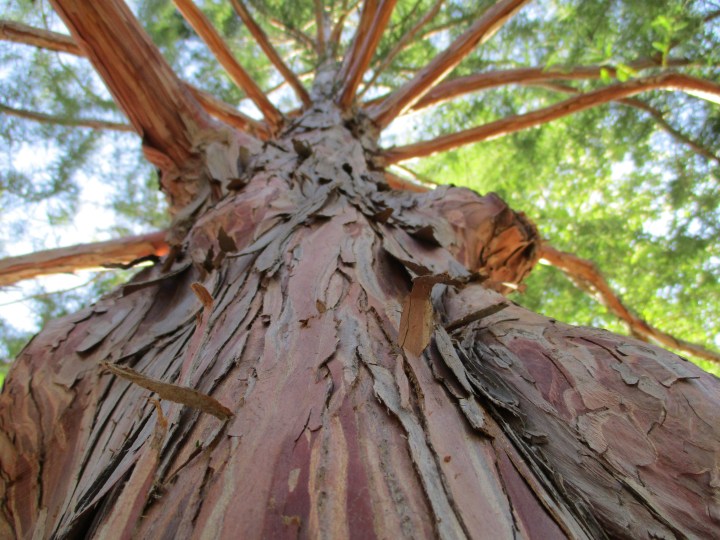
 How Italian! Red, white and green! A coastal redwood with a white albino sport (mutant growth) amongst otherwise deep green foliage. Actually, it is very Californian. Coastal redwood is endemic to California with only a a few north of the border on the extreme southern coast of Oregon.
Such sports are quite rare. Back in the late 1970s, an article in World Magazine mentioned that only five of these albino ‘trees’ where known to exist. There were actually more, even back then, but others were not documented. (They were WithOut Papers – WOP.) The specimen in the picture is at a home that is about a century old, so it was known about for a very long time, although not documented.
Albino foliage is a lethal mutation. It lacks chlorophyll, so can not sustain itself. It only survives because it originates as basal watersprouts that remain attached to the original…
View original post 149 more words
 When a plant that should be compact or shrubby gets too lanky with exposed lower stems, it is described as ‘leggy’. We do not hear much about plants that develop ‘knees’. Perhaps that is because there is only one species that does so. That one species happens to be very rare here. If there are other specie that develop knees, I do not know what they are.




 Urban sprawl replaced the formerly vast orchards of the Santa Clara Valley a long time ago. Nowadays, it is difficult to imagine that they were ever here. Apricots, prunes, cherries, almonds, walnuts and all that the region was once famous for are all now rare commodities.
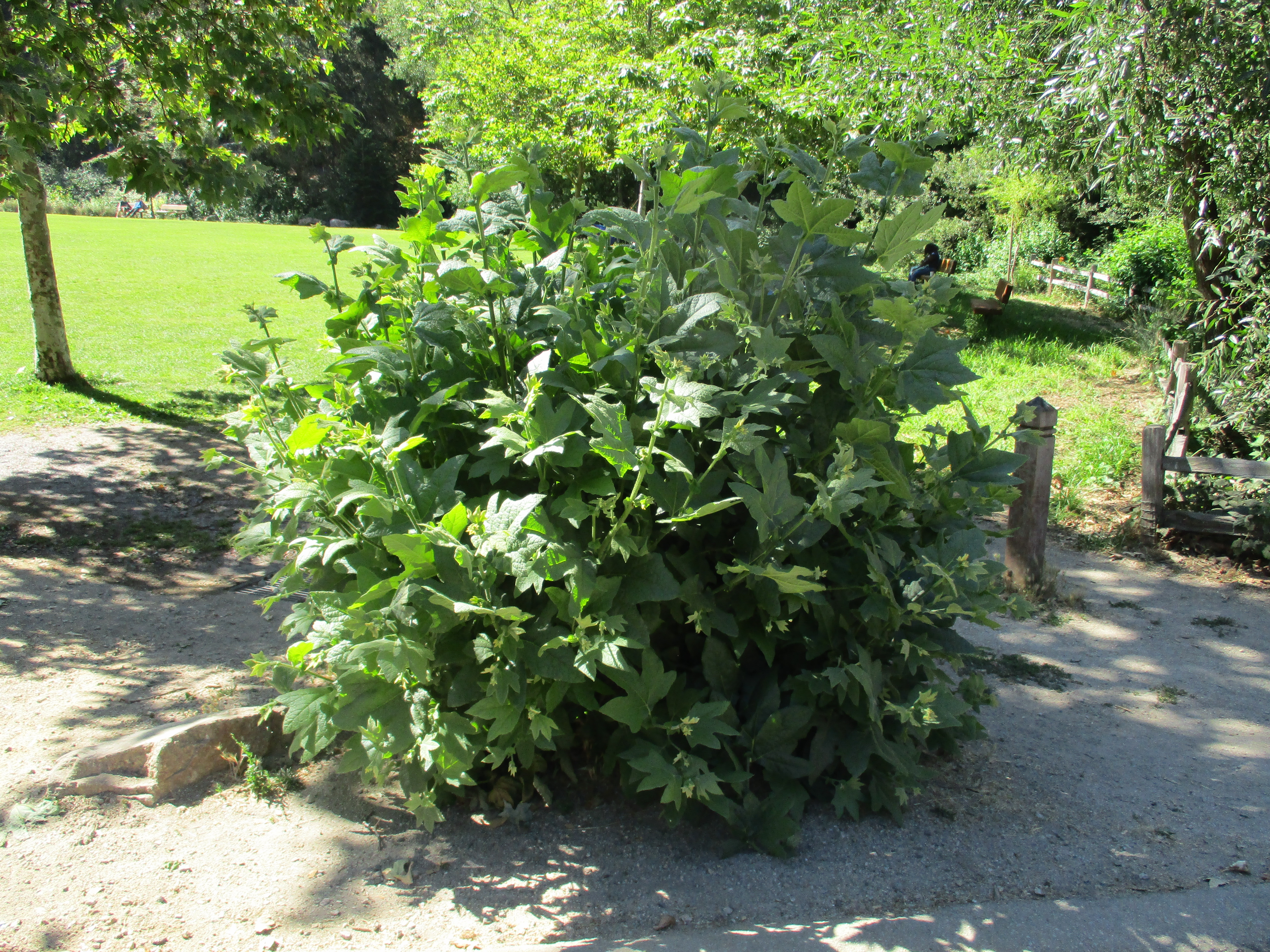 Coppiced trees and shrubs are just like pollarded trees, but without the trunk and main limbs. Instead of getting cut back to the same distended knuckles at the ends of disproportionately stout limbs, they get cut back to the same stump just above grade over winter. Some get coppiced annually. Others get coppiced only when they get too big. The coppiced California sycamore in this picture may never get coppiced again.
