Steven Michael Ralls Memorial Tree Update

Felton League, which is my other blog about the Homeless Community of Felton in California, has been severely neglected since last summer, and will unfortunately continue to be neglected for quite a while until I am able to resume writing, which should coincide with the resumption of writing new articles for this blog here. This reblogged post from Felton League is the first new post I took the time to write for a very long time. It is shared here because it is somewhat relevant to horticulture.

tonytomeo's avatarFelton League

Steven Michael Ralls Memorial Tree – May 2, 2021

The Steven Michael Ralls Memorial Tree has done well since it was installed precisely a year ago, on the second of May of 2020, which was the third anniversary of the passing of Steven Michael Ralls.

Although it was installed after the primary rainy season, it enjoyed a few late rain showers prior to requiring supplemental irrigation through summer. It was occasionally given a bit of fertilizer to help it get established. Staking was not necessary.

The young tree may not seem to be much larger now than it was a year ago, but has undoubtedly dispersed roots sufficiently to survive without supplemental irrigation. It may receive a few more doses of fertilizer in conjunction with occasional supplemental irrigation, just to accelerate growth while it is still young and vulnerable, but should not get so much that it becomes reliant on…

View original post 190 more words

Foliage Is Not Always The Answer

This old article describes how horticulture can not fix everything.

tonytomeo's avatarTony Tomeo

P80414KFoliar tapestries are impressive in the right situation. https://tonytomeo.wordpress.com/2018/02/25/foliar-tapestries/ They work as nicely on exterior walls as conventional tapestries or paintings might work on interior walls. However, they require much more maintenance!

Trendy green walls are overrated. Their only real advantage is that they are pretty. They are not a ‘real’ solution to anything. They may keep the interior of a small building a bit cooler, but no more than light colored paint or a shade structure would. They do not save water, and actually use more water than plants grown in the ground. All that water is likely to rot the walls behind, or the decking below. They do nothing for melting glaciers or saving the planet. In a few more years, when they are no longer trendy, they will be more junk in the landfills.

Most obtrusive exterior walls can be obscured or partly obscured with less demanding…

View original post 144 more words

Dingo

Since this article posted three years ago, I have been trying to grow copies of Schwedler maple from cutting, as well as grafting onto Norway maple seedlings. Supposedly, it is true to type from seed. I have known the tree since 1976, but have never seen a seedling grow from it. Nor would I trust such a seedling to be true to type.

tonytomeo's avatarTony Tomeo

P80407KDogs and humans have been in a symbiotic relationship longer than history can document. Dogs naturally became more domesticated as humans did, and have been more or less selectively bred for a few thousand years.

Dingos are different. No one knows for certain how domesticated they were when they first came to Australia. They probably had been domesticated enough to come on boats with the first humans to migrate to Australia. After arriving in Australia, they became feral, although still symbiotically migrating with humans. They are now considered a native species of Australia.

Many species of plants have lived symbiotically with humans as well. As long as humans have been living with dogs, they have been domesticating and breeding plants. As plants were more extensively bred, they became more dependent on humans for their perpetuation. Some are so overly bred that they are sterile and unable to perpetuate without human…

View original post 311 more words

Six on Saturday: Weeds +

Working inside for most of the week has certain disadvantages, especially at this time of year. There is so much blooming that I do not go out to see. I did not get many pictures of camellias or flowering cherries while they bloomed, although some camellias continue to bloom sporadically. Some azaleas are also finished blooming. Rhododendrons are blooming nicely now, but I have not started getting pictures of them. Instead, I got pictures of a few weeds and their associates from just outside of where I work inside.

1. Broom! It is one of the most aggressively invasive exotic weeds of the Santa Cruz Mountains. No one knows if it is Scotch, Spanish or French. It is probably French, but we know it as Scotch.

2. Dandelion infests most lawns. It was probably imported for greens. I will not eat greens that grow in lawns where Rhody does what he goes outside to do. I should move some to the garden.

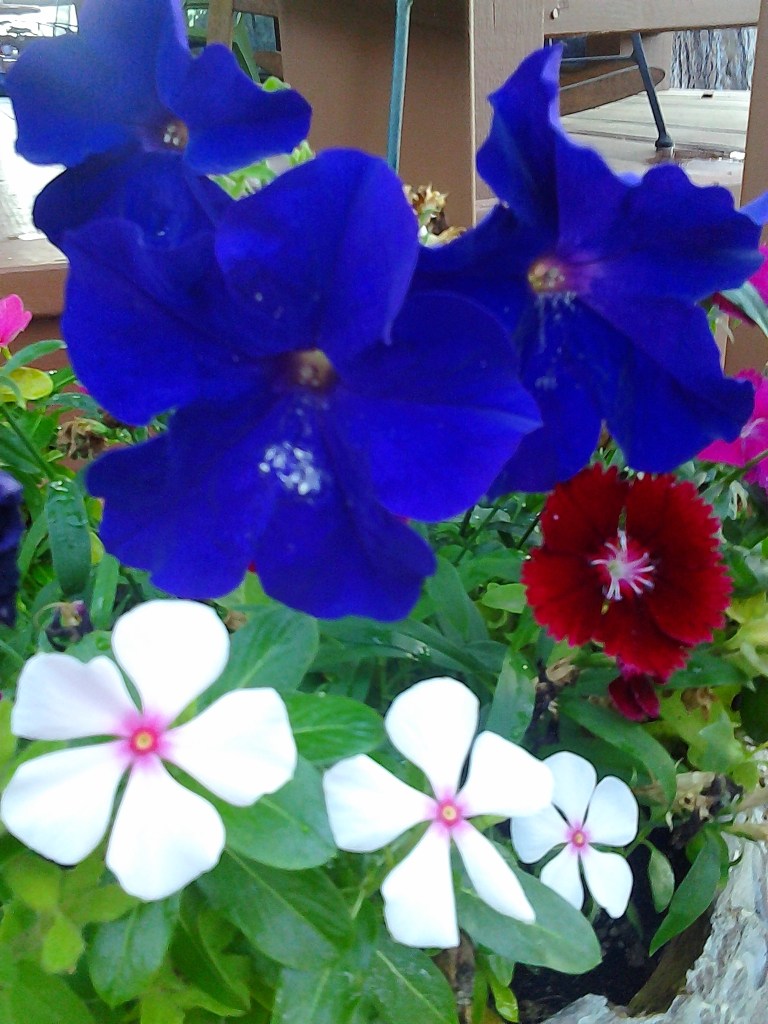
3. Periwinkle is a naturalized exotic species here, but is not so naturalized farther inland, or in urban areas where lacks space to migrate. I actually planted it where I lived while in high school.

4. Forget me not, as seen in the upper right corner of the previous picture, is naturalized in riparian situations, but is also too delightful to be perceived as a weed. How could anyone dislike it?

5. Pacific Coast iris is not actually a weed. It is not even exotic. This one is a hybrid of a few native species, and was planted intentionally. I would just prefer the ‘unimproved’ Iris douglasiana.

6. Rhody puts the ‘+’ in ‘Weeds +’, which is the title for this week. Perhaps this should have been the first of these six; but then no one would have bothered with the remaining five. Priorities.

This is the link for Six on Saturday, for anyone else who would like to participate:

https://thepropagatorblog.wordpress.com/2017/09/18/six-on-saturday-a-participant-guide/

Peony

Peonies are unusually happy this year.

The fact that peonies do not perform well in such mild climates does not dissuade some of us from growing them. After all, they can sometimes be found in local nurseries and even farmers’ markets as if they belong here. Tubers of more of the countless varieties can be purchased online or from mail order catalogs while dormant in autumn. Unfortunately, without much winter chill, few peonies perform as they should.

Peonies can be white or various shades of pink or red, with considerable variation of flower structure. Tree peonies that bloom yellow are the most likely to be wimpy without winter chill. All peonies are good cut flowers. After spring bloom, the distinctively coarse and rich green foliage stays until autumn dormancy. The more popular herbaceous peonies should not get more than three feet tall and broad. Tree peonies do not actually grow into trees, but develop woody stems that can hold flowers nearly six feet high. Larger flowers may need support.

Because plants get established so slowly, they should not be moved or disturbed. Small new plants can be divided from larger plants while dormant, but take a few years to actually bloom. Peonies like rich soil and regular watering, where they do not get crowded or shaded by other plants.

Cold Winters Have Certain Advantages

Winter frost can improve spring bloom.

Even in May, damage from the frosts of last winter is still evident among some of the more sensitive plants. Lemon trees and bougainvilleas that have not yet been pruned may still display bare stems protruding above fresher new growth. Some bougainvilleas did not survive. Those that are recovering will bloom later because replacement of foliage is their priority for now.

However, peonies, although rare, are blooming better than they have since 1991, right after one of the worst frosts in recorded history. Earlier, some lilacs, forsythias and wisterias likewise bloomed unusually well. While so many plants were succumbing to cold weather, many others were enjoying it.

The reason that peonies typically do not seem as happy locally as they are in severe climates is that they really prefer more cold weather while they are dormant through winter. Without it, they may not go completely dormant, or may not stay dormant long enough to get the rest that they need; and then wake up tired in spring. Cold winter weather promotes more adequate dormancy, which stimulates healthier growth and bloom this time of year. It all makes sense considering that peonies are naturally endemic to colder climates.

A preference for cooler winter weather is also why so many varieties of apples and pears that are grown in other regions do not perform well here. The good news is that as the fruit of local apple and pear trees matures through spring and summer, it may be of better quality that it has been for many years. Trees that typically produce sparsely may produce more abundantly this year. The weather that damaged tropical and subtropical plants was an advantage to others.

Nothing can restore cherries, apricots, peaches and any other early blooming fruit that was dislodged by late rain, but any fruit that survived may be just as unusually good as apples and pears. Not only is the best place for gardening, but minor weather problems can have certain advantages.

Location – Location -Location!

Yup; this recycled article, unlike others of the past few weeks, actually does conform to the ‘horriduclture’ meme for Wednesday, even if just accidentally. Since this article posted three years ago, the subject palm has grown almost above the adjacent sign. The trunk, although obtrusive, remains.

tonytomeo's avatarTony Tomeo

P80422Speaking of which, this is not the right location!

This unhappy Mexican fan palm may have grown here from seed, as they often do. They are notorious for growing under utility cables because that is where birds drop so many of their seed. Perhaps the seed for this one was dropped by a bird perched on the sign many years ago.

Ironic, isn’t it. Birds tend to perch on utility cables and signs and in trees and everywhere that palms should not be planted. How often do they drop seeds out in the open, where whey will not encroach into something as they grow up? Why can’t they drop palm seeds in places where palm trees would actually be an asset? It happens sometimes, but not as often as palms appear where they are not wanted.

The picture below shows three larger Mexican fan palms that were intentionally planted in…

View original post 236 more words

Periwinkle

Periwinkle is pretty for a weed.

Dwarf periwinkle, which is a vigorous but manageable ground-cover here, is an invasive weed in other regions. Locally, common periwinkle, Vinca major, is the more aggressive sort. It naturalizes in riparian situations and damp parts of unrefined landscapes. Stolons can be difficult to pull completely from the soil. Seed disperses secretively but efficiently.

Periwinkle is almost never available in nurseries nowadays. It tends to infest gardens by sneaking in. Then, the foliage and bloom can be too appealing to eradicate. More plants are easy to divide from established colonies. Growth is tidier if mown at the end of winter. As it regenerates, it gets more relaxed, and finally gets floppy. It looks shabby if trampled. 

Periwinkle blooms with sporadic but delightfully clear blue bloom. Individual flowers are about an inch and a half wide. The evergreen leaves are an inch or two long. Wiry stems get a foot or two deep. Cultivars with white or purplish blue bloom were available before  

periwinkle naturalized. Periwinkle with foliar variegation still inhabits some old gardens. It is slightly more complaisant.

Wildflowers Are Flowers Gone Wild

Periwinkle is pretty for a weed.

Wildflowers have been quite a fad. Relative to most fads, they are not so impractical. For some situations, they are a good excuse to waste less effort and resources on unrefined parts of the garden. Of course, they all require some degree of effort and resources. Most are neither as wild nor as natural as their marketing suggests them to be. Few are native. 

Wildflowers that lived here centuries ago, prior to the introduction of exotic species, were relatively unimpressive. Although some bloomed spectacularly, they did so within a brief season. Winter is too cool for pollinators that wildflowers intend to attract. Summer is too dry for bloom to last long. Most bloom was limited to the transition from winter into spring. 

The same native wildflowers bloom even less now than they did centuries ago because of competition with exotic species. Most exotic species that compete with wildflowers are feral forage crops that lack colorful bloom. They grow so vigorously that they obscure the natives. Mitigation of such undesirable vegetation ruins wildflowers that mature within it.

Most of the best wildflowers here now are as exotic as feral forage crops. Those that are native might be more reliant on unnatural cultivation. California poppy, evening primrose, and native annual lupines might prolong bloom with a bit of extra water through summer, but need weeding. With the same watering, (non-native) cosmos stands up to the weeds. 

Unfortunately, vegetation management is more important than wildflowers outside of the refined garden. Overgrown weeds are combustible and can be dangerous to pets. Weed whacking too often involves wildflowers before they get their chance to bloom, as well as foliage of spring bulbs after bloom. (It sometimes damages bark of trees and shrubs too.)

Some low and dense perennial wildflowers are more reliable than annual sorts because they exclude annual weeds. Saint John’s wort and periwinkle are invasive exotic plants, but work well as ground covers. Mowing or shearing them late in winter slows their competing weeds, and also enhances their foliar density before competing weeds regenerate.

The Late Show

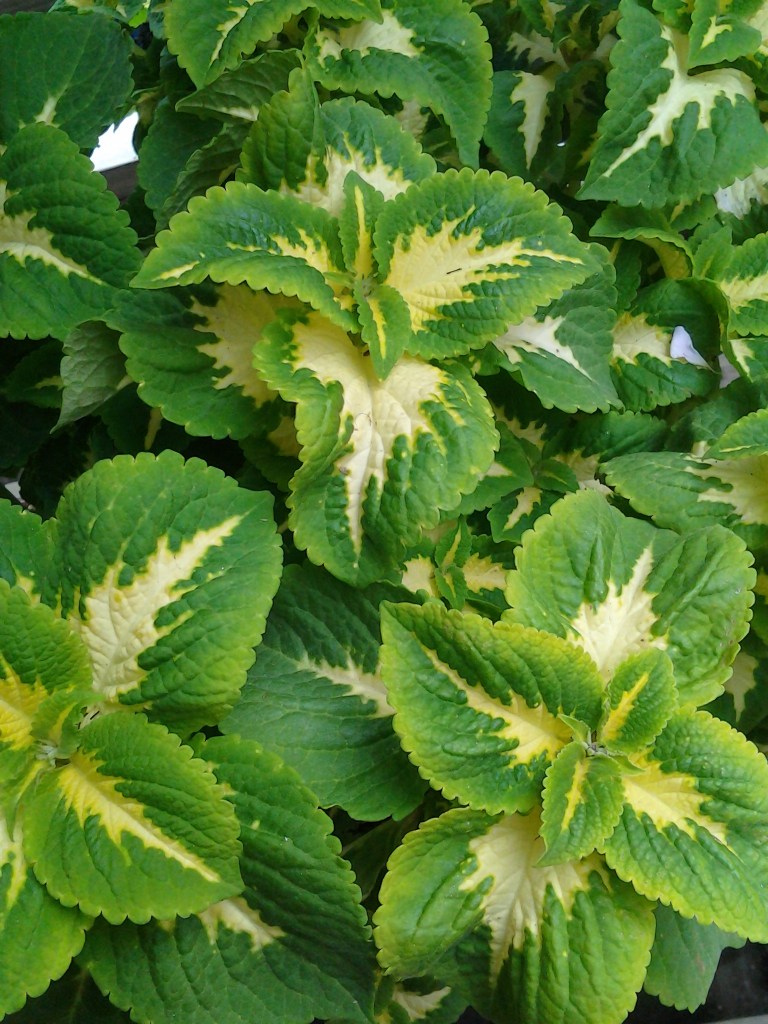
‘Golden’ foliage looks chlorotic to me; but I am no landscape designer. Sometimes is just works out well, as this three year old article explains.

tonytomeo's avatarTony Tomeo

P80425Color in the garden is nice as long as we can see it. There is not so much to see after the sun goes down. That is why some gardens that get used at night are illuminated.

Sometimes it is important to illuminate walkways, driveways and stairways for safety, even if exhibiting the landscape is not important. For such applications, the quality of the light is not as important. Sodium vapor light that works so well for street lamps can make plants look rather sickly. Mercury vapor lamps can make them seem rather pale and bland. Modern LED lamps just look creepy.

So, what happens when foliage that already looks sickly get illuminated by light that enhances the sickly appearance? Well, like many styles of contemporary art, it is a matter of taste . . . or perception . . . or some other big word that a horticulturist neither…

View original post 310 more words