Six on Saturday: Flowery Bits II

Rhody did not make the cut this week. There are too many minor flowers blooming. Only six can be shared here. Besides, flowers are more cooperative with getting their pictures taken than Rhody is. I should get six more flower pictures for next week as well, since I am trying to avoid the sort of dreary pictures I had been sharing, and the weather has not yet gotten interesting.

The botanical names of some of these flowers have changed over the years. The names I use may be outdated or updated. I can not be sure anymore. I am not certain about the identity of the hebe.

1. Hebe buxifolia, perhaps ‘Patty’s Purple’ hebe, is now beginning to succumb to cool winter weather. I am not certain if it has a definite bloom season. It seems to bloom randomly until frost.

2. Lobularia maritima, alyssum, is a warm season annual that finishes in winter, but replaces itself with seedlings that perform as cool season annuals for winter until warmer spring weather.

3. Diosma pulchrum, pink breath of Heaven, also seems to bloom whenever it wants to, although not quite as colorfully as hebe. This cultivar has lime green foliage instead of yellowish green.

4. Morea bicolor, butterfly iris, could be dug, divided, and shared with other landscapes. However, we can not adequately maintain the mature colonies that are already out in the landscapes.

5. Salvia greggii, autumn sage, is not just for autumn. Like the others, it blooms whenever it wants to. I like this one because it is only red. The flowers are too small to be both red and white.

6. Senecio X hybrida, cineraria, is leftover from when a few bedding plants were still added seasonally to a few prominent parts of the landscape. This one happens to be potted on a pedestal.

This is the link for Six on Saturday, for anyone else who would like to participate:

https://thepropagatorblog.wordpress.com/2017/09/18/six-on-saturday-a-participant-guide/

Leopard Plant

Leopard plant looks like it would be at home in the garden of Kermit the Frog.

The differences between false ligularia (Farfugium spp.) and real ligularia (Ligularia spp.) are so vague that the the names are commonly interchangeable. Leopard plant happens to be a real Ligularia japonica. The round and very glossy leaves are dark green with random spots of sunny yellow. Mature plants form rather dense foliar mounds about a foot wide and nearly as high. Prominent floral trusses that bloom in late summer or early autumn are a pleasant surprise, even though the small and sometimes feeble daisy flowers are typically only dingy gold, and often have brownish centers. Both ligularia and false ligularia are understory plants that naturally prefer the shelter of larger plants, so they prefer partial shade. They also like relatively rich soil and regular watering, although once established, they can recover efficiently if they happen to briefly get dry enough to wilt.

Winter Is For Getting Bare

Bare root plants do not look like much . . . yet.

Even before the last of the Christmas trees vacate nurseries, bare root nursery stock begins to move in, and will be available through winter. As the name implies, ‘bare root’ stock has bare roots, without media (‘potting soil’) or cans (pots) to contain the roots. Many are temporarily heeled into damp sand from which they get dug and wrapped in newspaper when purchased. Others are packaged in damp wood shavings or coarse sawdust contained in narrow plastic bags.

Bare root plants do not mind the lack of media because they get dug, shipped, sold and finally planted into their permanent locations all while naturally dormant through winter. They were in the ground when they went dormant, and will be back in the ground in their new homes by the time they wake up in spring. Because they have not already developed a densely meshed root system within a limited volume of media, they happily disperse new roots directly into the soil where they get planted.

Because they lack relatively bulky cans, bare root plants need less space in nurseries. Many more varieties of deciduous fruit trees, grapevines, roses and berries can therefore be made available. They also cost about half as much as common canned nursery stock.

If bare root plants will not be planted immediately, their roots should be heeled into damp dense mulch (not coarse chips) or soil, and watered. They can be soaked in buckets of water if planting will be delayed only for a day or two. Packaged plants need not be heeled in, and can wait in the shade for more than a week.

Planting holes do not need to be any wider or deeper than the roots. If the soil is loosened too deeply, in will likely settle and cause the new plants to sink. Graft unions must stay above the surface of the soil. (Graft unions are evident where rose plants branch, or as kinks low on tree trunks.) If backfill soil is amended at all, it should be amended only minimally. Otherwise, roots may not want to disperse very far. New plants should be soaked twice in order to settle soil around the roots, but if it rains soon enough, they may not need to be watered again until they start to grow in spring.

Once planted, most bare root plants need some sort of pruning. Fruit trees typically have more stems than they need to maximize the options for their first structure pruning.

Very Bad Houseplants

Compliance with the ‘Horridculture’ meme for Wednesday is a bit of s stretch with this old article. At least it amusing.

tonytomeo's avatarTony Tomeo

P71230Just because it ‘can’ be grown as a houseplant does not meant that it ‘should’ be. That is a lesson that Brent and I never learned in college. He and I were roommates in the dorms at Cal Poly in San Luis Obispo, which, as you can imagine, was a problem. Our room on the top floor of Fremont Hall was known as the Jungle Room. It was so stuffed full of weird houseplants, as well as a few plants that had no business inside. We had a blue gum eucalyptus bent up against the ceiling, an espaliered Southern magnolia, a Monterey cypress, and a herd of camellias that we rescued from a compost pile on campus.

After college, our own homes were no better. Because my dining room was rather small, Brent gave me tall weeping figs that had unobtrusively bare trunks down low, and plenty of fluffy foliage…

View original post 521 more words

Canary Island Pine

Canary Island pine displays fluffy foliage.

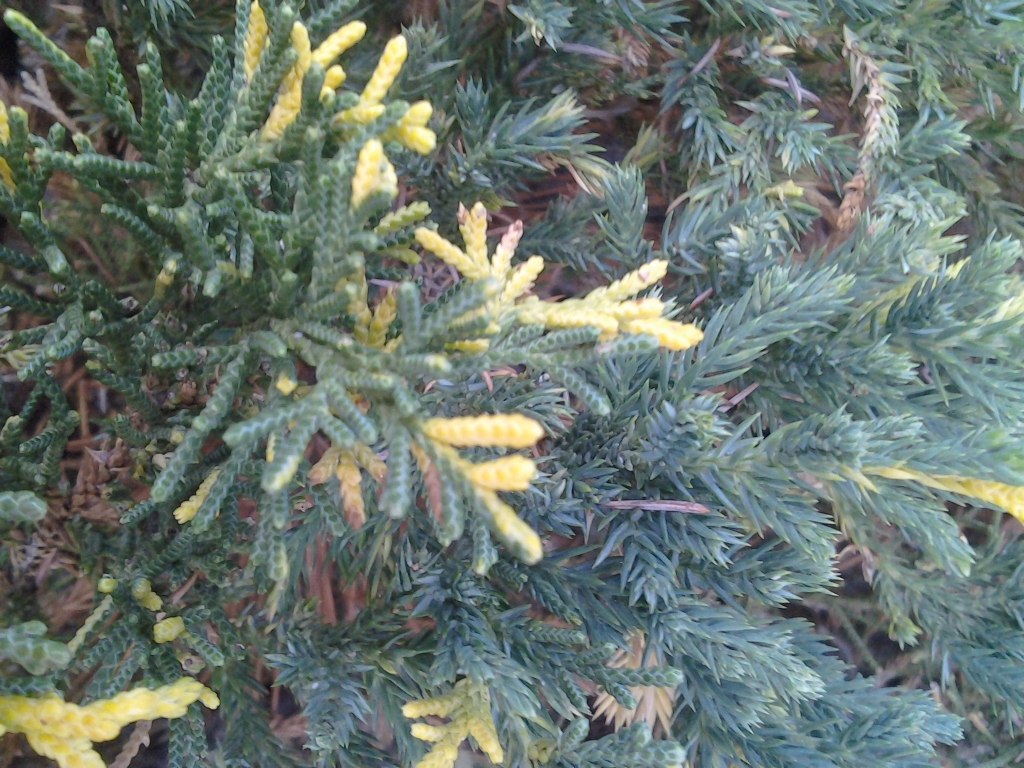
For spacious landscapes, Canary Island pine, Pinus canariensis, became more common than Monterey pine through the 1970s. New trees became less popular as old trees demonstrated how big they get! However, as seemingly docile live Christmas trees, they still often sneak into gardens that are not big enough for them. Their short blue juvenile needles suggest that they stay small.

They instead get quite tall. Old trees can get more than a hundred feet tall, even if their canopy gets no wider than twenty feet. Their rich brown bark is distinctively and coarsely textured. Their thin and long needles are somewhat pendulous, with a rather fluffy appearance. They are in bundles of three. Although individual trees are not very broad, their shade can get too dark for other plants.

Canary Island pine is a stately tree, but is not easy to accommodate. It produces copious foliar debris that can shade out lawn and ground cover, and accumulate on shrubbery. In unrefined areas, without other plants, foliar debris suppresses weeds. However, too much can be combustible. Such grand and resilient trees suit parks, and are ideal for freeway embankments and interchanges.

Christmas Trees Are Major Cut Foliage

Few Christmas trees are naturally compact.

Cut foliage is a common ingredient of ready-made mixed bouquets. Bundles and individual stems of cut foliage are available with cut flowers from florists. Cut foliage is the primary component of most wreaths and garlands that are now so popular for Christmas décor. It is another horticultural commodity like cut flowers, bulbs or nursery stock. Cut foliage is like vegetables that no one eats.

Cut Christmas trees are extreme cut foliage. They just happen to be much larger than stems of cut foliage that become wreathes and garlands. They grow on plantations like other crops. Contrary to a rather popular belief, Christmas trees are a renewable resource. Furthermore, cut Christmas tree production is less detrimental to the environment than the production of live Christmas trees.

Time and space are the only advantages of live Christmas tree production. As they grow, they occupy less space for less time. Obviously, cut Christmas trees need more space and time to grow. However, they do not consume proportionate quantities of water and fertilizers. Nor do they necessitate the consumption of the various plastics and synthetic potting media that potted trees need.

Regardless of the best intentions, few live Christmas trees come home for Christmas after their first. They often get too shabby through warm and dry summer weather to bring back in. The small and inexpensive sort with attached decorations rarely survive potted for more than a few months. If live Christmas trees were less perishable, their consumptive production could be more justified.

Whether they retire after a single Christmas or several, live Christmas trees must recover from previous shearing. Only dwarf Alberta spruce are naturally densely conical. Pruning other species to strict conical form is unnatural and disfiguring. As they recover, live Christmas trees need space to grow. Many, such as Italian stone pine and Canary Island pine, get far too big for urban gardens.

Experienced arborists concur that many problematic trees were originally small and seemingly innocent live Christmas trees.

Rainy Season

This article is from my other blog at Felton League, but is relevant here. Locally, it is now the beginning of the rainy season.

tonytomeo's avatarFelton League

Steven Michael Ralls Memorial Tree appreciates rain.

December 13 is the birthday of our dearly departed friend Steven Ralls. His ‘Steven Michael Ralls Memorial Tree‘ that was planted on May 2, for the third anniversary of his passing, is doing well, and likely appreciates what transpired overnight. Now that it got the opportunity to disperse roots through its first season in the ground, it will receive no more supplemental irrigation.

Such irrigation will no longer be necessary. The tree is a native Monterey cypress, which survives on annual rainfall, within a locally limited season. It was only occasionally irrigated through its first season, while it was busy dispersing roots. It should do well without any such intervention next year. Now that the rainy season started, the soil will not get dry until late next spring.

Yes, it is now the beginning of the rainy season here. The second…

View original post 205 more words

Birthday

Ginkgos colored remarkably well this year. None live nearby, but there are a few in town. This article is three years old now.

tonytomeo's avatarTony Tomeo

P71213This single yellow ginkgo leaf says a lot. It was found among the abundant cottonwood leaves on the broad walkway in Felton Covered Bridge Park (https://tonytomeo.wordpress.com/2017/12/02/felton-covered-bridge/). There are no ginkgo trees in the neighborhood that I am aware of. It must have come a long way to arrive here on the morning of December 13.

It really did not need to go through all the effort to get here. I need no help to remember the date. It is the birthday of a good friend who passed away last May.

Steven Michael Ralls is one of two friends I went to Oklahoma with late in 2012 (https://tonytomeo.wordpress.com/2017/11/19/oklahoma/). In the picture attached to my article about going to Oklahoma, there is a handsome gentleman to the left. That is me. The bronze guy in the middle was just standin’ on the corner in Winslow, Arizona. Steven is…

View original post 164 more words

Poppies

Tomorrow, this reblogged article will be three years old. It originally posted on December 13 in 2017, after the article that will post for tomorrow. That bit of trivia is unimportant, but explains why the final comment makes no sense. Actually, very few understood the significance of the comment, even three years ago.

tonytomeo's avatarTony Tomeo

P71213+K1Not just any poppies; California poppies, the state flower of California.

So why the picture of an old cinder block wall on the edge of an unkempt and weathered parking lot behind the old County Bank Building? Well, right there in the middle of the picture, where the lowest course of block meets the edge of the pavement are a few weeds, and some of these weeds are poppies showing how resilient they can be.

California poppies are opportunistic. They grow fast and bloom when they can. For most, that means that they bloom as the weather starts to warm up at the end of winter. For others in irrigated gardens, they can bloom in phases through summer. Some do their thing quickly as soon as they get a bit of moisture from the first autumn rains or even dew. They know what time of year it is, and that…

View original post 149 more words

Six on Saturday: Flowery Bits

After so many pictures of fallen leaves, firewood and frost, I should probably share a few floral pictures like everyone else does. All those pictures of ash from the fire did not help much. I can expound a bit excessively on autumn and winter topics because they are not as mundane as they are in other climates. For example, I would not notice frost so much if it were common here.

Some flowers continue to bloom later than they would in other climates. Some bloom too early here. Some can not decide when they should bloom. The fifth picture is not even a bloom at all.

1. Callistemon viminalis ‘Little John’ is a bottlebrush for those who dislike bottlebrush . . . or just lack the space. I hate to say it, but I sort of prefer the formerly common Callistemon citrinus.

2. Eucalyptus pulverulenta foliage is prettier without bloom. Nonetheless, for those who get close enough to see them, these small white flowers are pretty too. Bees appreciate them as well.

3. Lonicera periclymenum ‘Peaches and Cream’ has yet to bloom profusely here. Summer bloom is adequate at best. Bigger trusses of buds develop too late into autumn to bloom completely.

4. Narcissus does not wait for spring to bloom. I do not know what cultivar it is, or if it is a cultivar. Some might know it simply as ‘paperwhite’. Daffodils will bloom later, but are not fragrant.

5. Pseudoflora seem to bloom annually here prior to Christmas. Afterward, they will return to the barn for storage for almost another year. Some people believe that they are real poinsettia.

6. Rhody simply will not cooperate for a picture if he knows I am taking one. I included this picture anyway because, no matter what, or how bad his picture is, everyone always loves Rhody.

This is the link for Six on Saturday, for anyone else who would like to participate:

https://thepropagatorblog.wordpress.com/2017/09/18/six-on-saturday-a-participant-guide/