Six on Saturday: (Two is Enough)

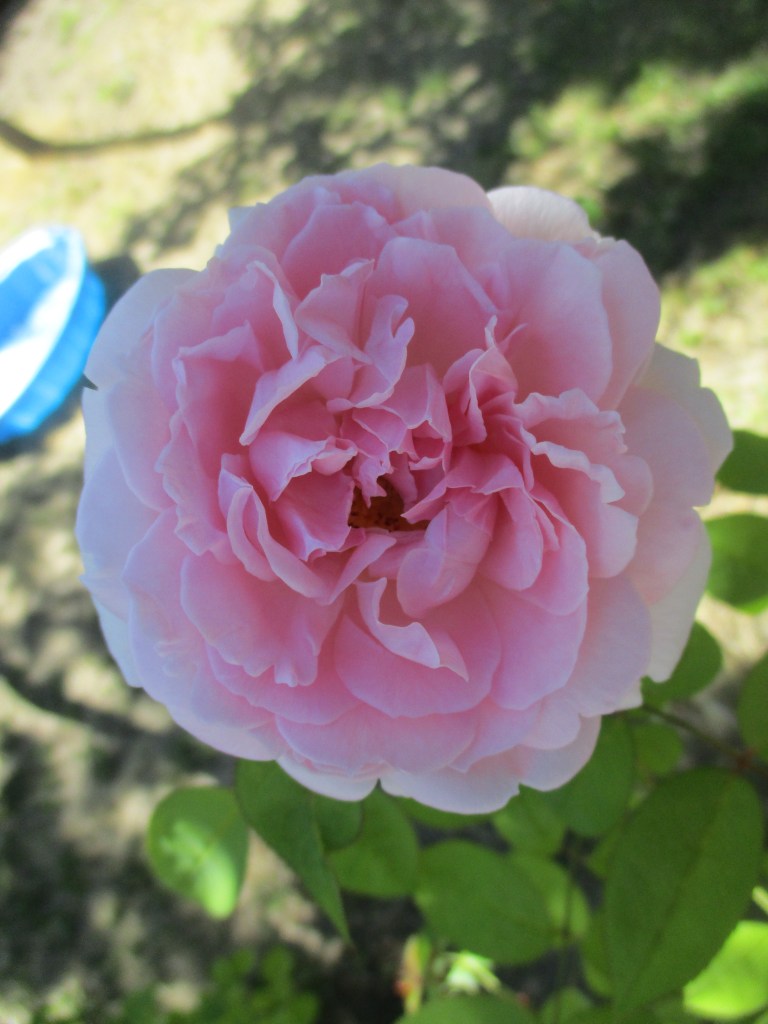
Six on Saturday is about gardening. It should therefore feature flowery pictures. I do sometimes try to comply, but often neglect to include flowery pictures. I included one for this week, and two more horticulturally oriented pictures. Of course, the most important picture is of Rhody; because everyone loves Rhody. The other two pictures are neither horticulturally oriented, nor relevant to Rhody. I just found them appealing.

1. Rhody is who you came here for. I did not even bother saving the best for last this time. Do you really need to see the other five? I am sorry that he does not cooperate for better pictures.

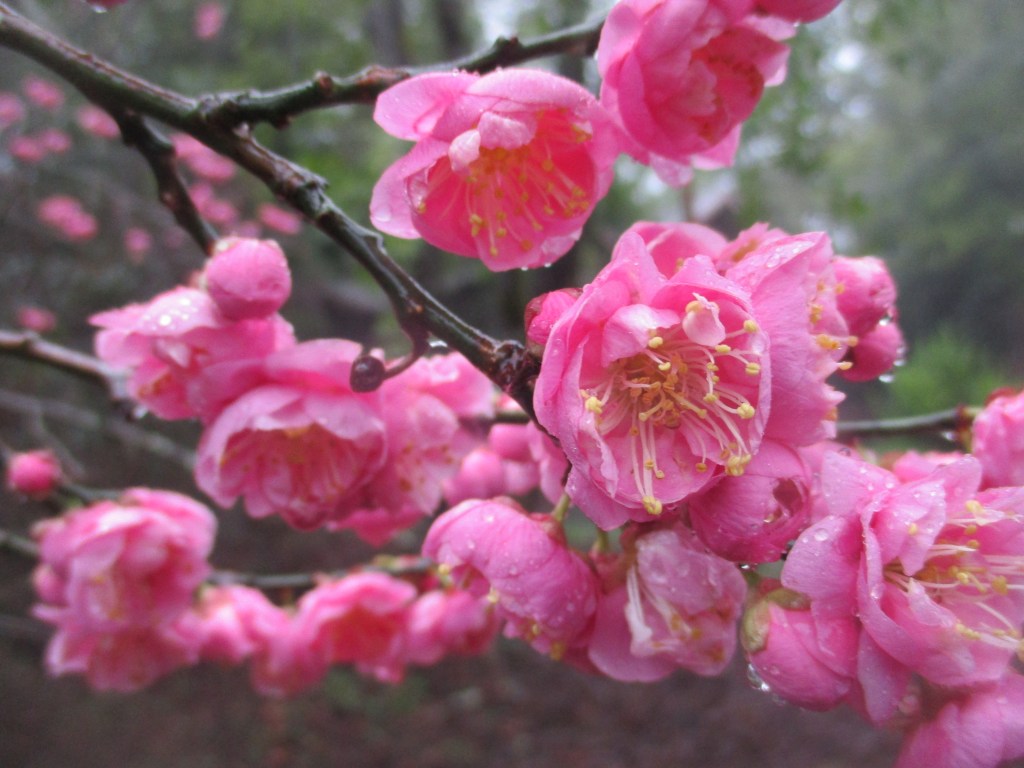
2. Prunus bloom provides a flowery picture. This and the picture of Rhody are all my Six on Saturday needs. I do not know what species this is. It was understock of a tree that got cut down.
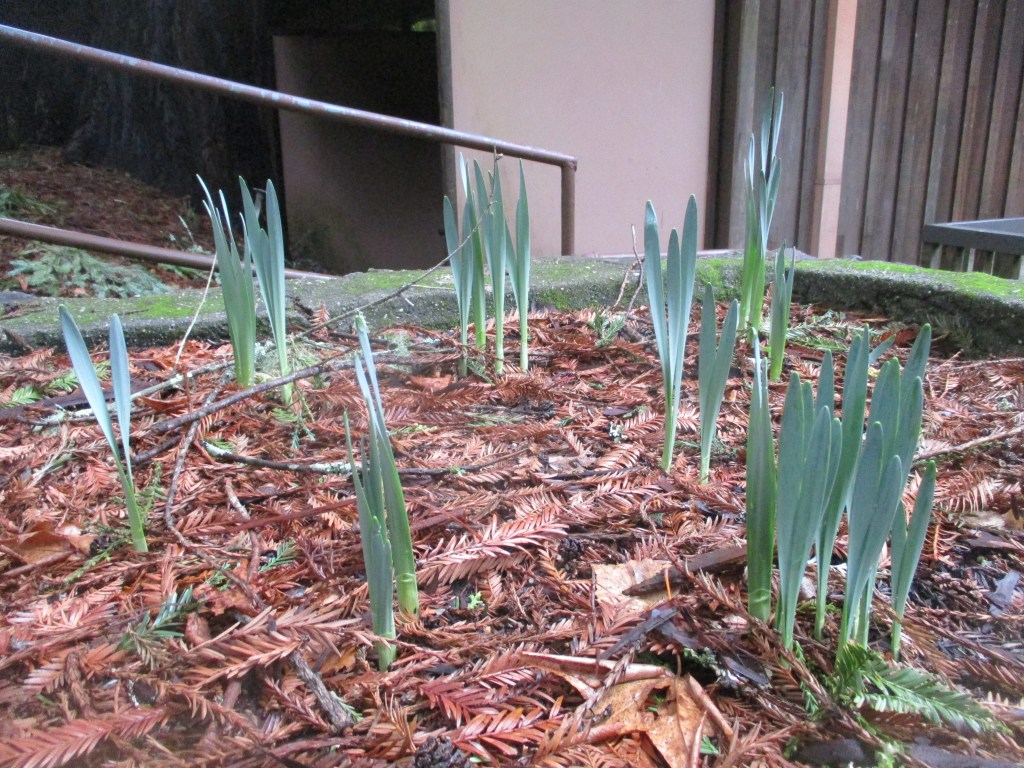
3. Daffodil bloom after other narcissus, so typically get thrashed less by wintry weather. Each year is unique though. Paperwhite narcissus bloomed before stormy weather started this year.
4. Palms do not dominate all of the landscapes of California. Although they are common near the Coast of Southern California, they are uncommon, and look weird, here among the redwoods.

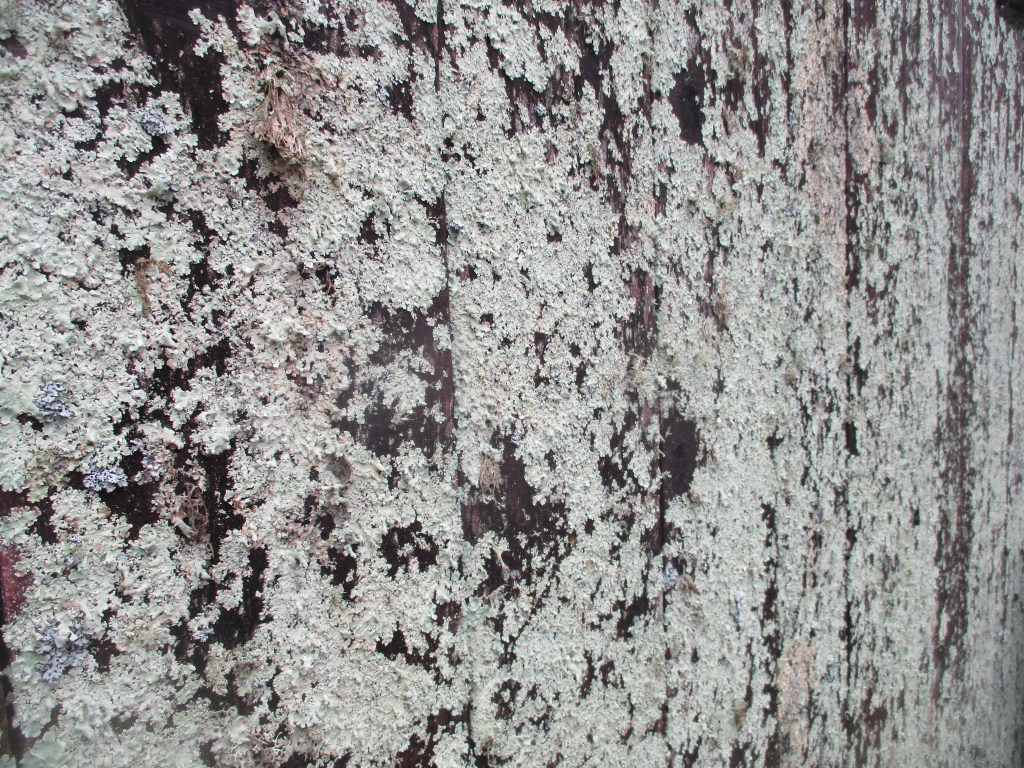
5. Lichens are not exactly relevant to horticulture. I just happened to notice how uniformly these lichens cover this fence. If they were greener, they might resemble a squarely shorn hedge.
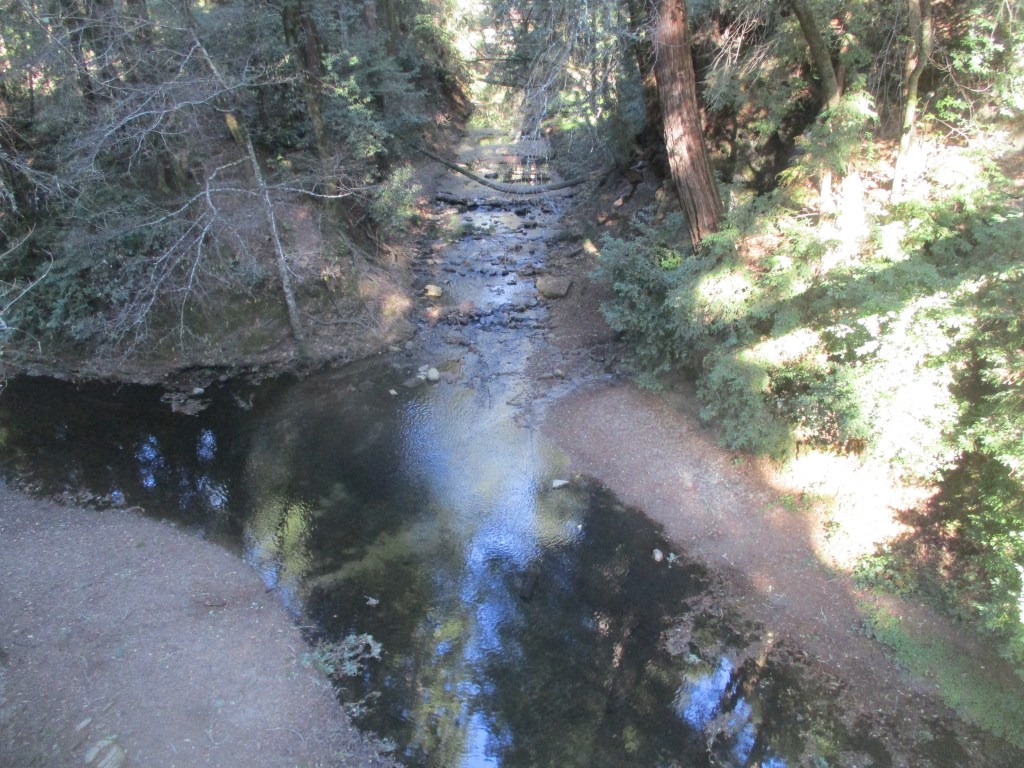
6. Bean Creek flowing from the top of the picture into Zayante Creek is irrelevant to horticulture as well. I just happened to like this picture of this bit of the forest. Bean Creek flows through the Farm just a few miles away. Ferndell Creek is barely visible where it flows into the middle of this picture from an unseen waterfall to the right. Miley Cyrus was filmed there for ‘Malibu’.
This is the link for Six on Saturday, for anyone else who would like to participate:

https://thepropagatorblog.wordpress.com/2017/09/18/six-on-saturday-a-participant-guide/
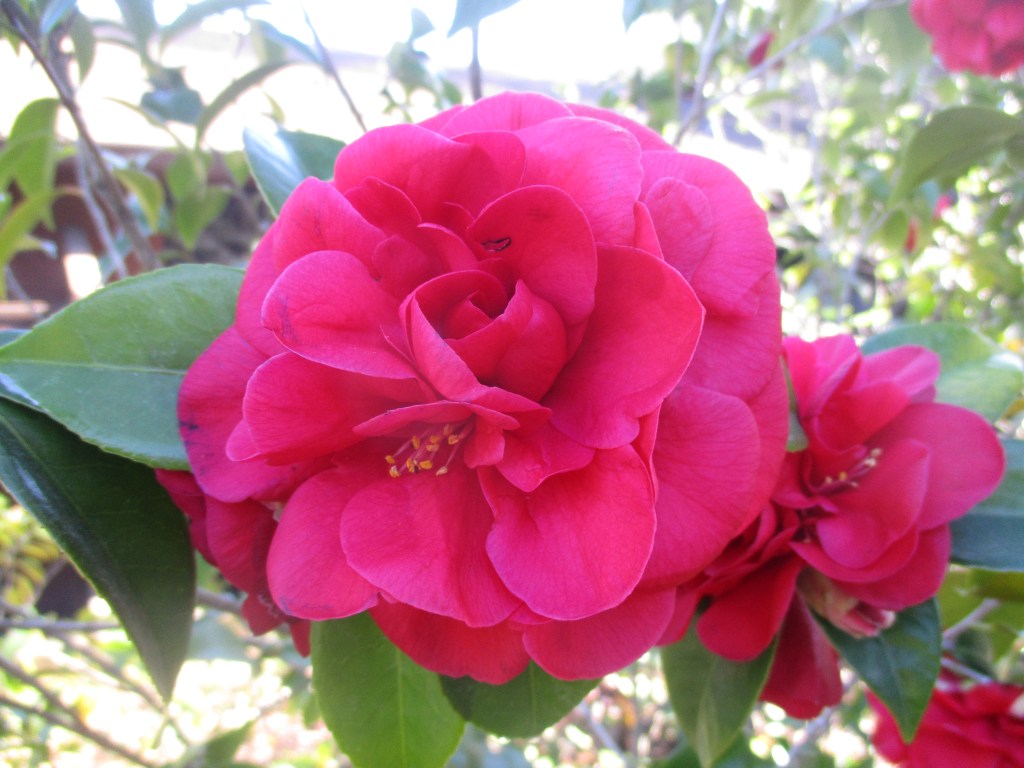
Camellia japonica

Camellia bloom before the flowers or early spring.

After centuries of breeding, there are more than two thousand cultivars of Camellia japonica! Additionally, there are more than a thousand cultivars of both Camellia sasanqua, with smaller but more profuse flowers, and comparably rare Camellia reticulata, with fewer but garishly big flowers. This does not even include the more than a hundred other specie of camellia found in the wild throughout East Asia.

It is obviously difficult to generalize about so many different personalities. Actually though, the glossy and slightly serrate leaves of almost all Camellia japonica are surprisingly similar. Also, most grow into rounded shrubs that are happy to stay below first floor eaves. Only a few grow into small trees, and only after many years. All prefer rich soil and regular watering.

The flowers that bloom late in winter are the most distinguishing characteristics of the many cultivars. The largest can get more than four inches wide. Flower form is remarkably variable (and can be described as single, semi-double, double, formal double, paeony, anemone or rose). Many have prominent yellow stamens. Color ranges from pure white to red, with every shade of pink in between. Picoteed, striped and blotched flowers are not uncommon.

Knowing When To Prune What

Flowering plum trees can be pruned later, after bloom.

Maybe the weather took the surprise out of camellias this year. It has been so warm and pleasant that such big and colorful flowers are almost expected. Even if crocuses and narcissus did not bloom much too early, they are likely finishing a bit early because of the warmth and minimal humidity. Daffodils are not far behind. Hopefully, lilies and tulips will not be too confused. Pansies, primroses, stock, Icelandpoppies, ornamental cabbages and kales actually seem to enjoy the odd weather.

It was such a rush to prune everything that needs to be pruned in winter! Roses are already being outfitted with new foliage. Plum trees are already blooming, and will be followed by apricots, cherries, peaches and the rest. It was actually easy to get carried away, and prune things that should not yet be pruned.

Many of the flowering trees that are related to fruiting trees seem like they should be pruned. However, the rules are different, since they do not need to support the weight of fruit. Pruning only compromises bloom. Flowering cherries, flowering (purple leaf) plums and shrubby flowering quinces should instead be pruned after bloom finishes, and only if necessary. As flowering crabapples finish bloom, minor pruning probably will be necessary.

Lilacs, forsythias and spireas should be pruned by ‘alternating canes’, which means that older canes get cut to the ground as they get replaced by new canes. If done just after bloom, new canes develop through the following summer, and will be ready to bloom the following spring.

Quite a few trees, shrubs and vines likewise want specialized treatment. Fat flower buds of deciduous magnolias make it obvious that pruning should be delayed. Azaleas should probably make their intentions to bloom more obvious. Hydrangeas can be groomed of deteriorated flowers and dead stems, but plump canes from last year will bloom this year. Maples, birches and elms will continue to bleed if pruned now, so should wait for summer.

Dreamscape at the Jungalow

There is no faking it with this recycled article. It simply does not conform to the ‘Horridculture’ meme for Wednesday.

tonytomeo's avatarTony Tomeo

B80128The Jungalow is my colleague Brent’s bungalow home, surrounded by a jungle of a landscape, just about a block off of the Santa Monica Freeway in Mid City Los Angles.

This picture very effectively illustrates that Brent has no business taking pictures . . . and that he should have had a V-8.

The landscape really is spectacular though. You might have seen bits and pieces of it in Sunset Magazine or other horticultural magazines. Pictures of specific flowers and plants were used to illustrate the Sunset – Western Garden Book.

Brent likes his garden to be spectacular. He uses it to trial a few plants before using them at the homes of clients, and to demonstrate how effectively his home garden functions as a lush jungle oasis in the middle of the city. The dense hedging obscures views of neighboring homes, and muffles the sound of the Santa Monica…

View original post 268 more words

Cecile Brunner Rose

Cecile Brunner rose is elegantly simple.

Few modern rose cultivars are as tolerant of neglect as Cecile Brunner rose. Furthermore, few recover as efficiently from renovation after many years of neglect. Old overgrown thicket growth that might be unsightly while bare through winter can be spectacular in bloom. Alternatively, it does not mind aggressive pruning, even if only stumps remain. It easily regenerates with fresh new canes.

Bloom is nicely profuse early in summer. The individual fluffy pink flowers are not much more than two inches wide, but are rarely alone. They develop in big and possibly billowy clusters. The faint fragrance is easy to ignore, but appealing to some. After primary bloom, subsequent bloom is sporadic. Green stems are less prickly than stems of most other roses. Foliage is rather light green.

Shrubs are vigorous but compact. They may not get much taller than two feet. Most stay less than four feet tall. However, there are actually a few cultivars that are known as ‘Cecile Brunner’. Those that are most familiar are climbing types that can easily get higher than twenty feet. Their bloom is sparse after profuse early summer bloom. Some might bloom rather profusely again for autumn.

Pruning Roses During Winter Dormancy

Pruning now promotes better bloom later.

Contrary to what the pleasant weather suggests, it is still winter. Most plants are resisting the temptation to break dormancy prematurely. They must know that the days are still short, regardless of the weather. Most plants are surprisingly proficient with scheduling. Nonetheless, dormant pruning should happen sooner than later. This includes pruning roses. They have been ready for a while.

Technically, roses are ready for pruning as soon as they begin to defoliate. Also technically, rose pruning can be as late as the buds of the bare stems remain dormant. Later pruning is preferable in some regions where pruning wounds are susceptible to pathogens. Such delay is riskier here where mild weather can disrupt dormancy prematurely. Wounds are less vulnerable to pathogens.

Pruning roses is about as important as pruning deciduous fruit trees. Without adequate pruning, rose plants become too overgrown to perform properly. Crowded stems are unable to elongate as they should. Diseases and insects proliferate in congested foliage, and damage bloom. Specialized pruning concentrates resources into fewer but significantly more vigorous stems and flowers.

Although the technique may seem to be drastic, pruning roses is not very complicated. Hybrid tea, grandiflora and floribunda roses should retain only three to six of their most vigorous canes. The canes should be only about two feet tall, and cut just above a healthy bud. If possible, they should be canes that grew during the previous year, from bottom to top. Older canes should be removed.

Pruning roses of other classifications may be slightly different. Some types may retain more canes. Climbing types likely retain old canes for several years before replacement. Carpet roses and other ungrafted roses can be cut nearly to the ground, leaving no canes at all. Tree roses are like bush types, but on top of short trunks. New canes grow from their graft unions on top of the trunks.

Of course, potentially vigorous sucker growth that develops from below the graft union of any grafted rose must go.

Okie Mowers

Blogging was still new to me when I wrote this recycled article. That is why the links are . . . . well, you will see.

tonytomeo's avatarTony Tomeo

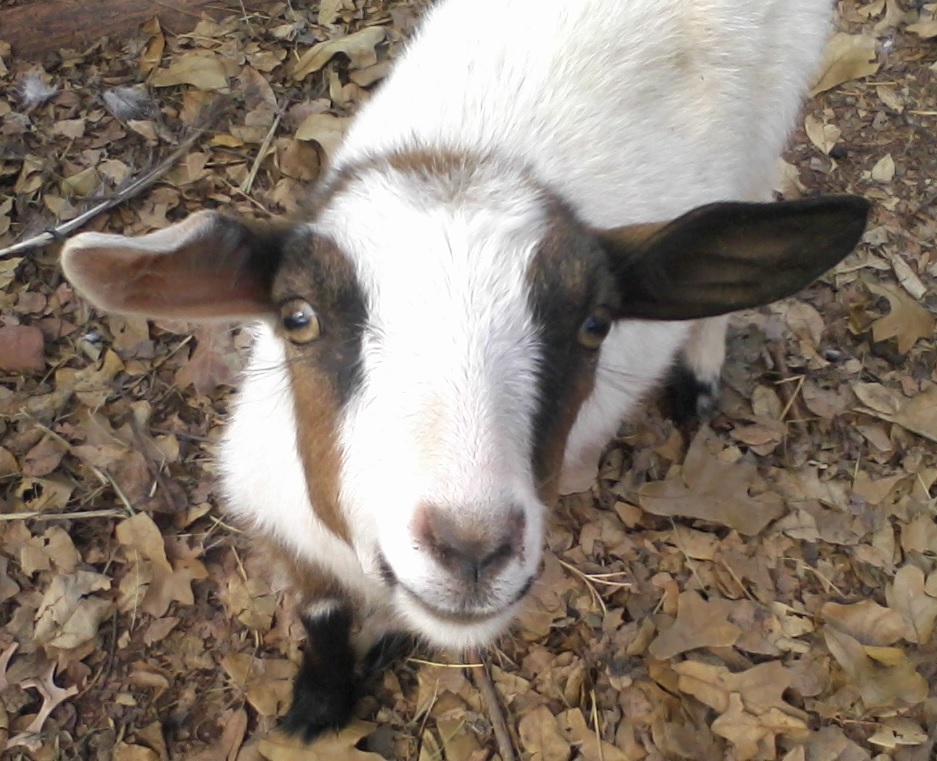
P80120They are excellent at weeding and vegetation management too, particularly where brambles are too thick to get through. They also convert unwanted vegetation into useful fertilizer. Goats are remarkably versatile and useful machines around the garden.

The goat in this picture is no ordinary goat. She is a pygmy fainting goat. Her kind were bred to faint when startled, in order to keep a predator occupied instead of eating other more desirable livestock in their herd. What a strange job description! When we went to Oklahoma a few years ago, we stayed on a farm with quite a herd of these small and pleasantly mannered goats.

It was winter while we were there, so there was not much to do in regard to vegetation management or gardening. There were a few blackjack oaks near the homes that I pruned up for clearance and just to neaten them up a bit…

View original post 386 more words

Kitty City

Horticultural trivia is not always relevant to horticulture, as this recycled article demonstrates.

tonytomeo's avatarTony Tomeo

P80124Los Gatos is named after bobcats. More specifically, it is named after an interchange that was named after bobcats; La Rinconada De Los Gatos. There are a few theories about how and why it was named after bobcats. The most popularly accepted theory involved the remarkably violent demise of everyone involved, leaving no one to document it as accurately is it has been repeated for generations. Don’t question it if you ever hear it. It is quite entertaining. I prefer to think that we do not need an elaborate excuse for naming our town after native wildlife. The bobcats were here. People noticed them. BINGO – La Rinconada De Los Gatos.

Regardless and contrary to what my colleague Brent would tell you, ‘Los Gatos’ does not mean ‘The Ghettos’ in Spanish.

Other towns in California have horticultural names. Some are named for horticultural commodities that were grown there. Others are…

View original post 295 more words

Six on Saturday: Ill Wind

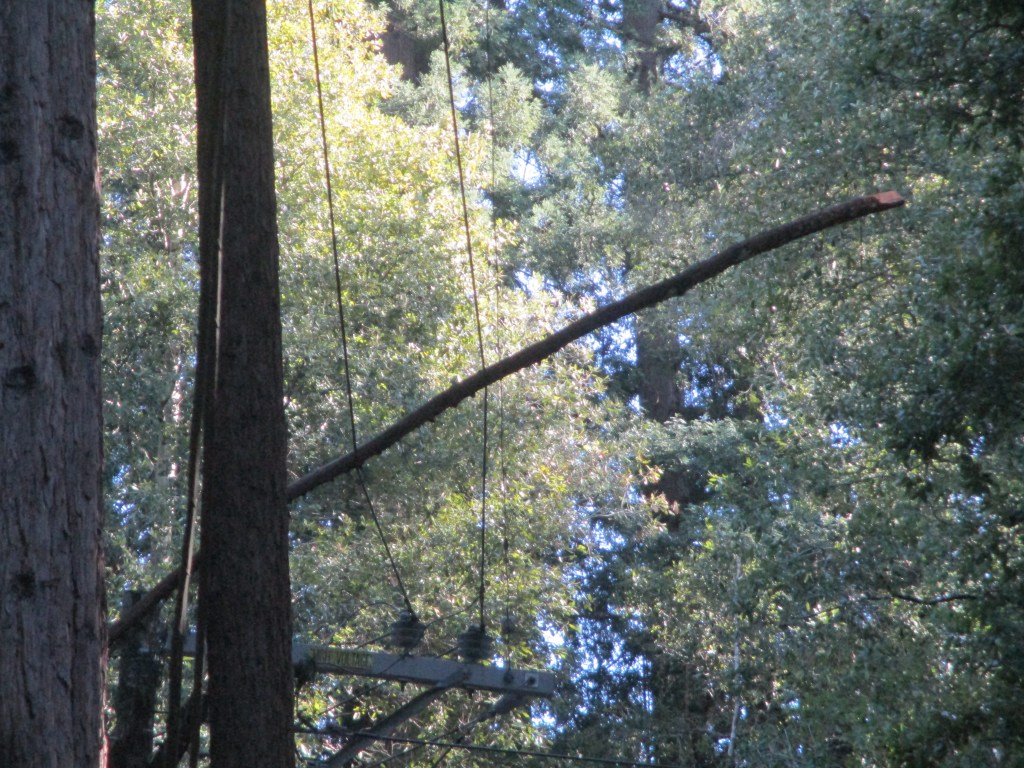
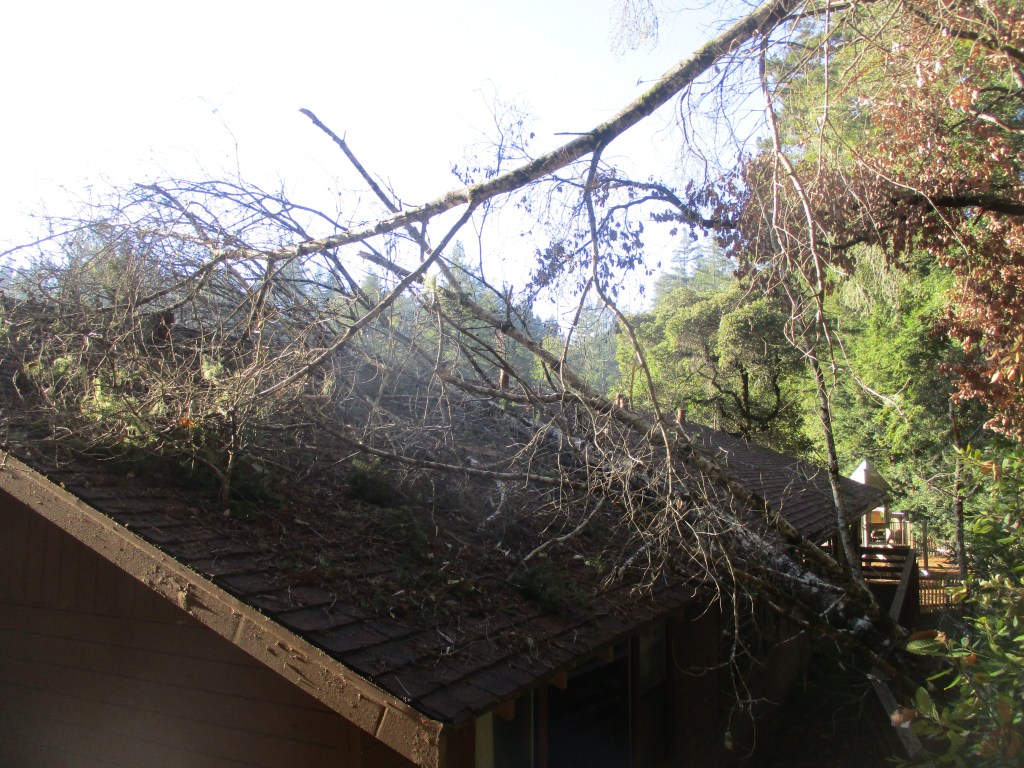
There are no flowery pictures here this week. Nor is there a picture of Rhody. I know that everyone loves Rhody. Also, I had been trying to include something flowery as everyone else does. Instead, I got only pictures of damage that was caused by very strong wind that blew through here on Monday night and Tuesday. I missed it while at my other work, but now have a major mess to contend with. Redwoods are very big and very messy, even without wind. With wind, they are very dangerous too. No one can remember stronger wind here.

1. Electricity sometimes gets disabled prior to strong wind. This wind storm disabled the electricity first. Debris such as this needed to be removed before the electrical service was restored.

2. Decayed dead trees blow down easily, even without much drag. They are not as heavy as viable trees, but are not as flexible either. A few stubs of broken limbs perforated this lodge roof.

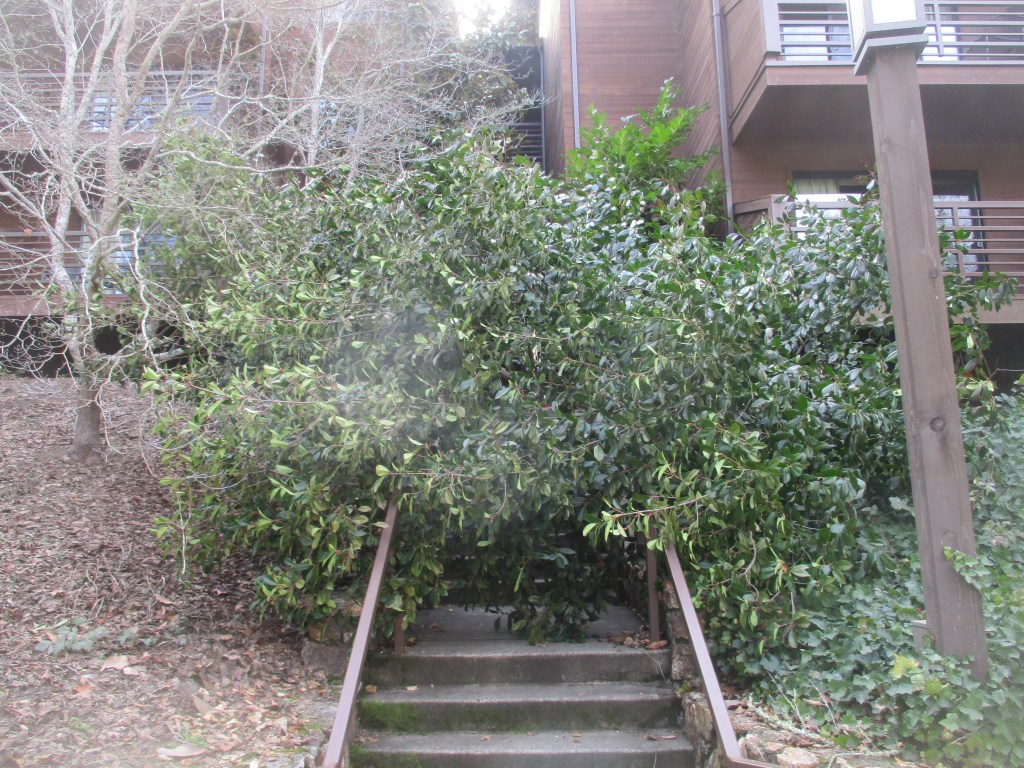
3. Stairway to photinia was too silly to not get a picture of. The photinia looks as if it had always been there. I certainly did not expect it to fall over. We took the necessary steps to remove it.

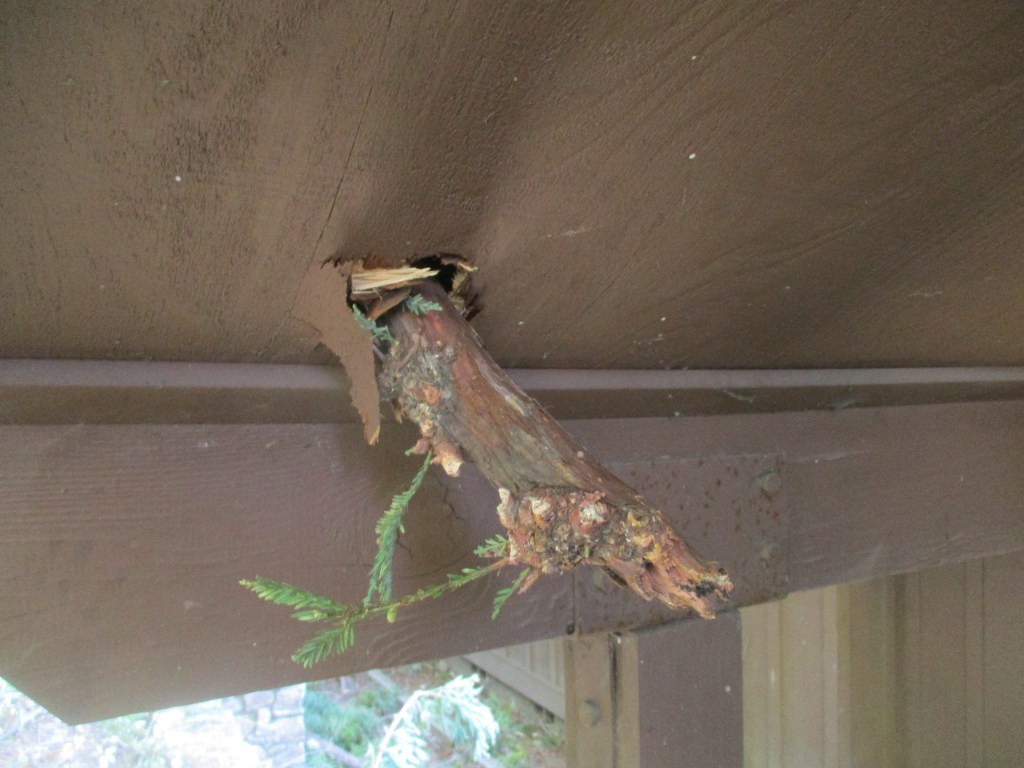
4. Redwoods are hundreds of feet tall. Even small limbs that fall from such heights come down with significant momentum. This limb punctured the roof and this plywood porch ceiling below.

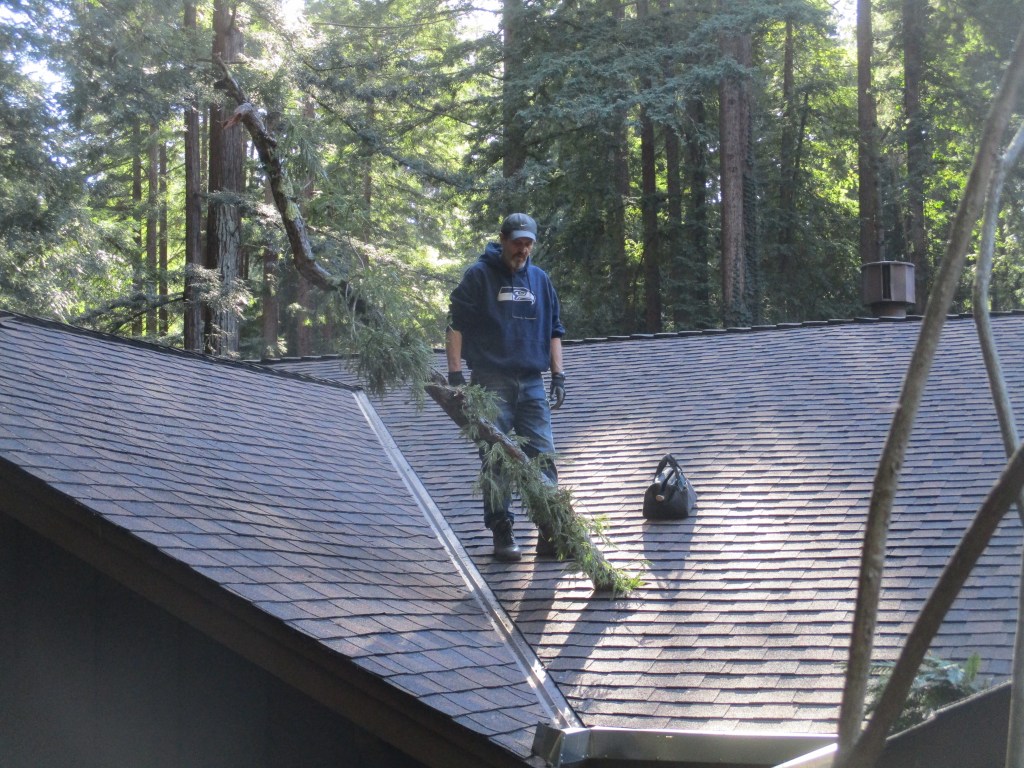
5. Several limbs such as this perforated this same roof. Abundant other debris was raked and blown off before these limbs could be removed, and the roof could be patched. Rain is expected.

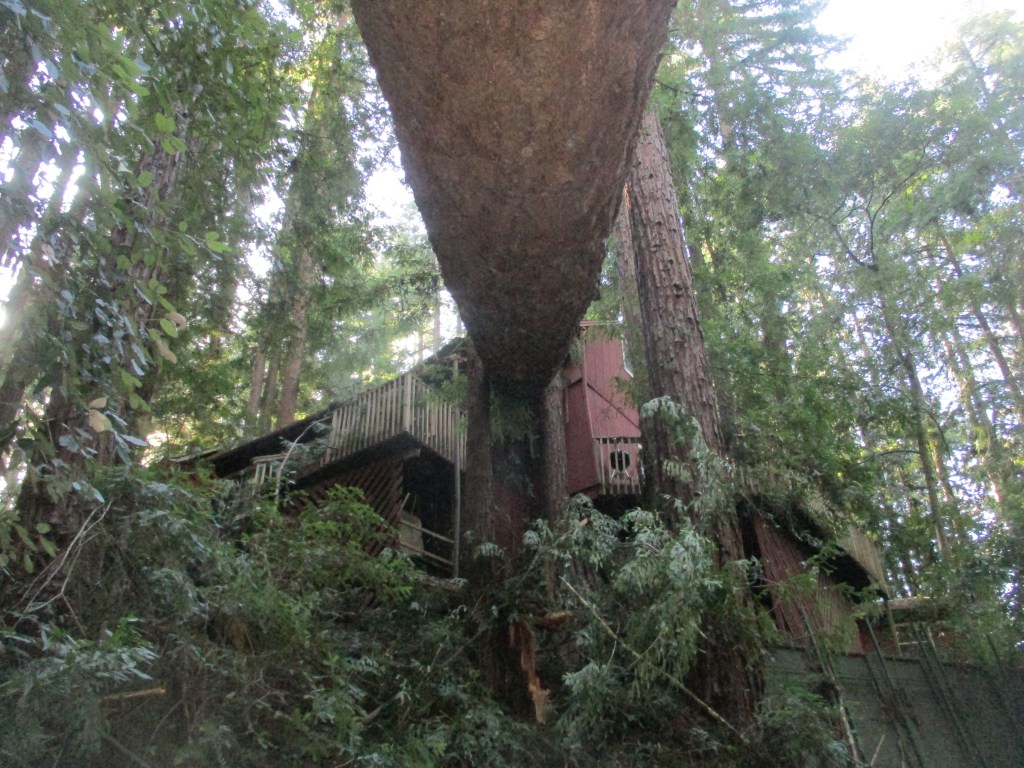
6. This roof, as well as the house below it, got the worst sort of damage when this big fir came down. Sadly, this is not the only home that was destroyed by falling trees. Several cars died too.

This is the link for Six on Saturday, for anyone else who would like to participate:

https://thepropagatorblog.wordpress.com/2017/09/18/six-on-saturday-a-participant-guide/

English Boxwood

English boxwood is a classic formal hedge.

Good old fashioned boxwood hedges really look silly if just a single missing plant get replaced with a different cultivar (cultivated variety) or specie. Most of the older boxwood hedges are the traditional, but somewhat yellowish Japanese boxwood. Most middle aged hedges are a relatively newer cultivar that is a bit greener. Modern boxwood hedges are more likely a cultivar of English boxwood, Buxus sempervirens.

English boxwood resembles Japanese boxwood, but has slightly narrower leaves that produce a slightly more objectionable aroma when shorn or otherwise disturbed. These opposite (paired) glossy leaves are only about a quarter to half an inch wide and about twice as long. The color is slightly darker with a more ‘olive’ tone. Wild English boxwood in Europe can grow as small trees. Most garden varieties are fortunately much shorter and more compact, which is why they are so popularly shorn into small formal hedges. They also do well as topiary. ‘Aureo Variegata’ is variegated with nicely contrasting cream colored leaf margins.