Zucchini

00701
Zucchini is the exemplary summer squash.

Zucchini, Cucurbita pepo, is the epitome of summer squash. Because it is so easy to grow, it is the primary choice for gardens that can accommodate only one set of summer squash plants. The fruits can be yellow, dark green or dark green with a lacy gray pattern, Yet, the common medium green variety is still the most popular. It is likely the most vigorous and most productive of them all.

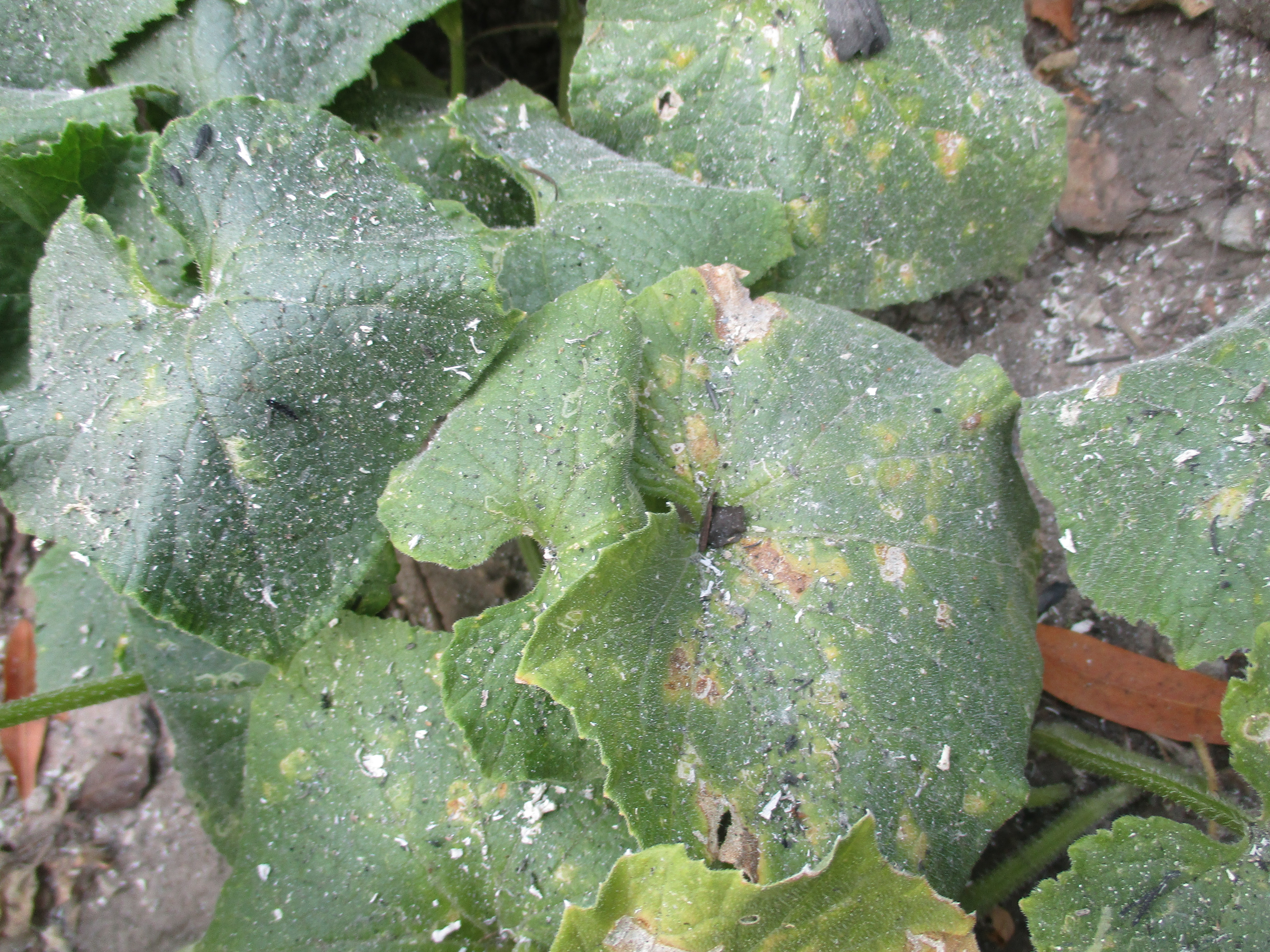
Like all summer squash, zucchini wants good warm exposure, rich soil and regular watering. Powdery mildew can be a problem if the foliage gets wet from watering late in the day. Foliage that is ruined by powdery mildew should be removed. Plants are easiest to grow from seed sown directly where they are desired, after the last frost. Two or three plants should grow together in each set.

Fruits are best before they get longer than eight inches or so, although they are edible at any stage. They can eventually grow as big as baseball bats. However, plants that produce such big fruits produce almost nothing else. Regular harvest promotes prolific production. Male flowers are more abundant than females flowers that produce the fruits. All flowers are edible before they shrivel.

Summer Squash Excel All Summer

00701thumb
Tender young summer squash are best.

Summer is for warm season vegetables like tomatoes, beans, corn, okra, and of course, summer squash. The name says it all. Summer squash are the sort of squash that develop and are ready for harvest through summertime. The season continues until the plants succumb to cooling autumn weather. The abundant squash fruits are best while young and tender, before they actually ripen.

Related winter squash grow through summer too. However, they ripen completely through the growing season before harvest in autumn. By the time they are ripe, their foliage will be succumbing to frost. They are much less perishable than summer squash are, so last for months if stored properly. Instead of producing abundant small fruits, winter squash plants produce only a few big fruits.

Summer squash plants can produce big fruits too, but at the expense of preferred tender juvenile fruits. They simply will not divert resources to new small fruits while concentrating their effort into a big fruit full of viable seed. After all, seed production is their priority. Regular harvest of juvenile fruits actually stimulates the production of more fruits. It forces the plants to redirect their resources.

There is certainly nothing wrong with summer squash fruits that have matured a bit more than they should. Stuffed zucchini is merely medium sized zucchini sliced in half lengthwise, hollowed out, stuffed and baked. Some people actually prefer to leave the last summer squash fruits of the season out in the garden to get as big as they can before frost. Such fruits are tough, but not too bad.

Common zucchini and its varieties are the most poplar of the summer squash. They are generally the most reliable and most productive. Crookneck squash are likely the second most popular of summer squash locally. They are slightly less productive, but provide variation of flavor. Pattypan squash have good flavor, and a slightly firmer texture that is an advantage for soups and freezing.

Other interesting varieties of summer squash are too numerous to list. Each exhibits its own distinct characteristics.

Sole Survivor

P00621-1
One is the loneliest number. (It is in the middle of the far edge of the flat.)

By now, I can safely assume that any of the various old seed that were sown late last February that have not yet germinated are not likely to do so. They were all so old that I knew at the time that their viability was questionable. Nonetheless, I could not discard them without confirming that they were no longer viable. Four months later, this empty flat just about confirms it.

So far, the sole survivor is a seedling of a California fan palm, Washingtonia filifera. It looks silly all alone in the otherwise empty flat. Yet, even if no other seedlings germinate, the effort will have been worth this dinky palm seedling. California fan palm happens to be my favorite palm; but I would have been just as pleased with something that is not a favorite.

This little seedling is still too young to be pulled and canned. It will therefore wait and grow in the flat for now, and perhaps until autumn. I still hope that other seed will germinate during that time. Even if they do not, the empty flat will get set aside where it will continue to be irrigated as needed until late next spring. Viable but old seed may be unusually slow to germinate.

I can not help but wonder if some of the seed did not get enough chill after they were sown late in February. Maple, ash, elm, birch and arborvitae might require more of a chill through more of winter to be convinced that the warm weather afterward really is spring. I am not quite ready to give up on them yet.

There are still many more very old seed to sow this autumn. For most, I do not expect germination to be any better than it was for this previous batch.

P00621-2
This little California fan palm seedling certainly seems determined to survive.

Ghost of Weddings Past

P00620K
Easter lilies are still my favorite of the lilies!

Weddings are normally common at the small historic chapel at work. This is normally the busiest season there. Since the chapel is presently unused, and it will likely remain unused for quite a while, we have not replaced the white pansies, that were out front through winter, with new white blooming warm season annuals for summer. The minimal landscape seems a bit emptier.

A colony of white hydrangeas to the left of the chapel happen to be blooming late this year, as if they know there is no rush. The smaller hydrangeas in the foreground of this colony were not original to the landscape, but were added as they were left behind after weddings. (Florist hydrangeas are innately more compact.) Blue and pink hydrangeas went to blue and pink colonies.

Our chrysanthemums were left behind after weddings too. They were originally fancy potted mums that provided more color than white. They are not as prolific with bloom in landscapes as they were originally, but they seem happy to adapt, and perform as short term perennials. It is better than going straightaway to the compost pile or greenwaste. They are appreciated here.

A pair of potted Easter lilies that were left behind with other potted blooming plants after a wedding last year were not installed into the landscape, so remained in the storage nursery. They were not expected to regenerate efficiently after their primary bloom. Surprisingly, they not only regenerated, but bloomed about as spectacularly as we want to believe they are capable of.

Rather than put them out into a landscape where there are few people about to see them, we left them to bloom here where at least those who work here can appreciate them for a few days. They will go to one of the gardens this autumn.

Six on Saturday: Kitchen Scraps


The first of our compost piles will not die. Some of the scraps of vegetables from the kitchens grow to produce more of the same. As this first pile of pre-compost gets turned over to the next pile, we commonly find potatoes and onions. Tomatoes, squash and sometimes cucumbers grow around and on top of the pile. Without watering, their season is limited, but just long enough.

It is actually frustrating that some of the vegetables that are not so productive where tended in the vegetable garden perform better, although likely briefly, on the random compost pile.

1. Vegetable scraps and rotten vegetables are common in the compost pile, even while the kitchens here are not presently operating. These do not seem to have been rotten when discarded.P00620-1

2. Summer squash is common here, even though scrap from the kitchens should be from juvenile squash, which should contain no viable seed. This might produce yellow crookneck squash.P00620-2

3. Cucumber is not so common, and will not likely last as long as other vegetable plants. The area is warm and dry. Cucumber prefers sunny but not so warm exposure, and regular watering.P00620-3

4. Determinate tomato looks just like what grew here last year. If so, it makes small cherry tomatoes that are shaped like ‘Roma’ tomatoes; and all the fruit will ripen at about the same time.P00620-4

5. Pumpkin vine should be sprawling more than this. It could be just another type of squash. The round fruits with stout stems resemble baby pumpkins. However, the leaves are not right.P00620-5

6. Bearded iris is no vegetable, but naturalized similarly next to the compost piles. It is perennial rather than annual. Although shabby here, it can be recycled into landscapes. Bloom is gold.P00620-6

This is the link for Six on Saturday, for anyone else who would like to participate:

https://thepropagatorblog.wordpress.com/2017/09/18/six-on-saturday-a-participant-guide/

Agave filifera

50617c
Foliage is better than bloom, and lasts longer.

For a tough perennial that is is grown for striking foliage, the small Agave filifera has a remarkably striking bloom as well. The one and a half inch long flowers are impressive pale green, and mixed with faded flowers. What makes them so compelling is that they are displayed on sculptural floral spikes that stand nearly six feet tall.

Unfortunately, each dense rosette of foliage is monocarpic, which means that it dies after bloom. Pups (sideshoots) sometimes develop as a main rosette deteriorates. If multiple pups develop and get crowded, they can be divided. Each rosette takes a few years to bloom, so should be around for quite a while.

The stiff evergreen leaves get about a foot or a foot and a half long, with unpleasantly sharp tips. Vigorous plants have white filaments that peel from the edges of the leaves. Like all agaves, Agave filifera, does not need much water once established. Unlike other agaves, it can tolerate a slight bit of shade.

Know The Time To Conserve Water

P00418K-1
Automated irrigation is certainly not perfect.

In the wild, plants take water when it comes as rain. Native plants and plants that are from similar climates might be happy to get almost all of their water through winter, and almost none through summer. However, lawns and many other plants want some degree of water through summer. This is why most landscapes are irrigated.

Obviously, irrigation is unnatural. The main disadvantage is that it uses water that must be taken unnaturally from natural sources, which are often, and are presently depleted. The advantages (even during a drought) is that irrigation can be applied where needed, as needed, and when it is most appropriate.

Irrigation systems can be designed to deliver more water to plants that need it, and less water to those that are less consumptive. Watering by hose can of course be similarly tailored to the plants. The volume of water applied can be increased through warm and dry summer weather, and decreased or discontinued through winter.

Automated irrigation can be set to operate very early in the morning when no one is likely to be out in the landscape. The water gets used when the need for water in the home is minimal, so fluctuation in water pressure should not be a problem. If it operates early enough, irrigation can finish before anyone gets out to see it.

Furthermore, early morning also happens to be the best and most efficient time to apply water. Less water evaporates while the air is cooler and more humid. Therefore, more water soaks into the soil. Evapotranspiration (evaporation from foliage) is a bit subdued, so plants cycle through their own moisture a bit slower.

Many plants can just as easily be irrigated in the evening. This would allow even more time for water to soak in before the sun comes up. However, the problem for some plants and lawn is that moisture lingering on foliage all night long can promote the proliferation of all sorts of fungal diseases, including mildew.

Drip and similar irrigation is still the most efficient, simply because water is applied directly, with minimal evaporation. Broadcast irrigation from lawn sprinklers, especially fine mist, is much more susceptible to evaporation. Water evaporates as it gets sprayed through the air, and as it lingers on any wet surfaces.

Horridculture – Bucket of Bolts

P00425-6
They started out nicely.

Radishes seemed like a good idea back when I sowed the seed in the garden. I had not grown any in many years. I thought that the particular location would be cool enough to inhibit bolting, even though it was starting to get close to the end of their season here. They are definitely a cool season vegetable here, with brief seasons in spring and autumn. Some linger through winter.

The seed germinated efficiently. The seedlings started out well. Radishes are small roots that mature in only about three weeks. Technically, they were right on schedule. I happened to get a few tiny radishes from the batch. However, after the seed were sown, but before the radish roots developed, the formerly cool spring weather warmed suddenly enough to stimulate bolting.

The elongation of floral stalks was visible within the foliar rosettes of most of the individual radishes while they were still quite dinky. Initially, I thought it would be no problem. There were a few good radish roots, which was all I needed to brag to my colleague down South about. Those that bolted would sort of be palatable as radish greens. Bitterness does not bother me much.

Now, because so few of the radishes were pulled for their roots, too many are growing as greens, and they evolved from merely bolting to blooming. The flavor evolved from normal bitter to almost icky bitter. I will not be sharing these with anyone. I can not leave them in the garden to get shabby either. Besides, I want the space for something else. I suppose I will freeze some.

After all the effort, I got only a few small radishes, some decent greens, and mostly bitter greens. Perhaps I will try radishes again in autumn. This radish trial was a ‘FAIL’.

P00617
Yes, we have no radishes.

Smokebush

00624Cliche is barely avoidable regarding smokebush, Cotinus coggygria. It provides rich foliar color from spring until autumn, with uniquely billowy bloom through summer. Then, it provides exquisite fall color until winter. Then, it provides sculptural form of bare stems until spring. Smokebush ‘has it all’. . . almost. All the spectacle distracts from a lack of floral fragrance. Will anyone ever notice?

Foliage is rich purplish bronze, bright greenish yellow or olive green through spring and summer. Formerly common old fashioned cultivars with olive green foliage are now rare. Nowadays, most are rich purplish bronze. Fall color is fiery yellow, orange and red. The round leaves are about one to three inches long. Purplish to pale pinkish plumes of smoke-like bloom are a striking contrast.

The largest of smokebush grow at a moderate rate to more than fifteen feet high and wide. Most cultivars are more compact. They get wobbly in the ground if they grow too vigorously. Aggressive pruning during winter improves stability and enhances foliar color for the next season. However, minimal pruning of stable plants promotes bloom. Smoke tree wants full sun, but is not demanding.

Bronze Is The New Green

00624thumb
Color like this needs no bloom.

Bronze foliage will never actually replace green foliage. Even if there were enough variety of plants with bronze foliage to do so, too much bronze would look dreary. Bronze is just another option for foliar color in landscapes with significant vegetation. It is distinct from simpler green, and contrasts nicely with gold, blue, gray and variegated foliage. Some bronze foliage is variegated too.

There is all sorts of bronze foliage. Some is brownish bronze. Some is reddish. The most popular bronze foliage is rather purplish. It can be evergreen or deciduous. Annuals, perennials, shrubs, vines, trees and houseplants can provide bronze foliage. Most plants that provide bronze foliage are variants of plants that also provide bloom or fruit. Some are common. Others are rather rare.

Bronze foliage is not an advantage to plants that produce it. The most efficient foliage is green. Gray or bluish foliage has the advantage of reflecting some of the harsh sunlight that could scald it in severe climates. Otherwise, foliage that is a color other than green reflects more of the useful sunlight than it should. Incidentally, dark foliage also absorbs more of the sunlight that can scald it.

This is why many bronze plants are noticeably less vigorous than their greener counterparts. Although it would not be an advantage in the wild, diminished vigor makes some bronze plants more adaptable to compact home gardens. For example, the brownish bronze ‘Summer Chocolate’ silk tree will not get half as high and wide as the common silk tree. It can fit nicely into a cozy atrium.

Cultivars of purple leaf plum, Japanese maple and Eastern redbud are more familiar complaisant bronze trees. ‘Ruby Lace’ honeylocust is still quite rare. Bronze shrubbery includes smokebush, Chinese fringe flower, elderberry, barberry and ninebark. New Zealand flax, canna, houseleek, ajuga, mondo grass and coral bells are popular bronze perennials. Cordyline is a larger perennial.

Bronze foliage adds a bit more color than typical green foliage. In the right situations, it is appealing bold.