Santa Cruz Island Ironwood

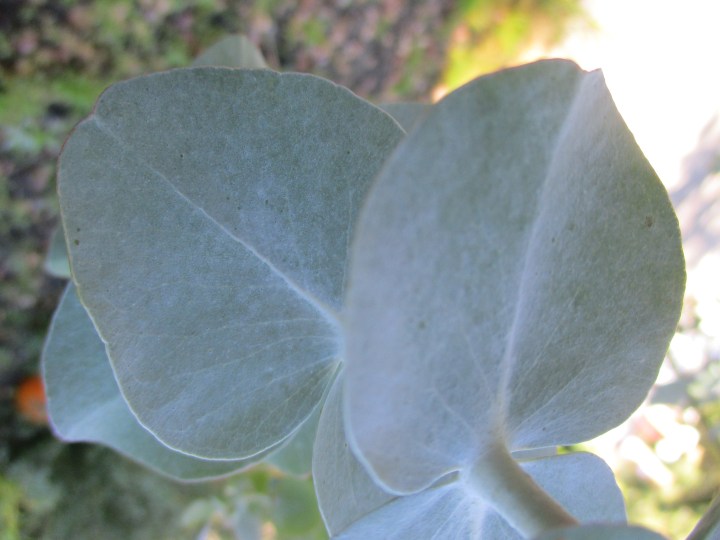
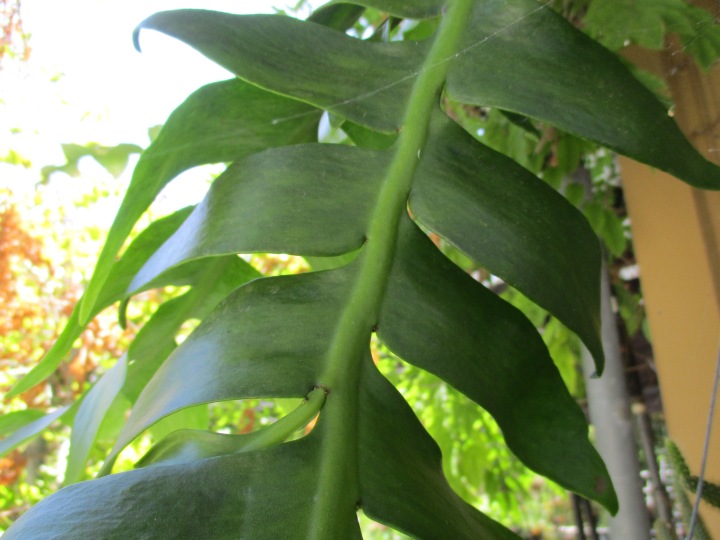
60504A few years ago, it was known as Santa Catalina Island ironwood. However, the rare subspecies native to Santa Catalina Island lacks the distinctively angular foliar lobes of the Santa Cruz Island ironwood, Lyonothamnus floribundus ‘aspleniifolius’. The evergreen compound leaves are about five inches long and four inches wide with three or five narrow leaflets, and look like chicken feet.

Young trees can grow at an impressive rate, but rarely get to thirty feet tall, which is only half as tall as they get in the wild. Most stay rather narrow, and shorter than a two story house. They work nicely in groves, but not as symmetrical groupings. Each tree has a unique personality and form, and some stay smaller than others. The finely shredding bark fades from cinnamon brown to gray.

Six inch wide trusses of tiny white flowers bloom late in spring or early in summer. These circular trusses are flattened, similar to those of toyon but larger. They fade to brown and can hang among the foliage for years. Older trees bloom more than vigorous young trees do. Deteriorating older trees can be cut to the ground and allowed to regenerate with fresh new growth from their stumps.

Some Plants Should Stay Wild

P80804+Native plants should be the most sensible options for local landscapes and home gardens. It seems natural that they would be the most sustainable, since they survive in the wild without watering, soil amendment or fertilizer. Once established in landscapes, they should be satisfied with the moisture they get from annual rainfall. Plants that are not native are considerably more demanding.

However, even native plants are not perfect. Some of the same qualities that help them survive in the wild are not so desirable around the home. To make matters worse, adapting to unnatural landscapes and home gardens can be as difficult for native plants as it would be for many of the common exotic (non-native) plants to adapt to the natural climate and endemic soils without help.

Natives obviously do not need much water. They certainly do not get much in the wild. They are resistant to drought because they disperse their roots so efficiently. The problem with this technique is that it does not work while plants are confined to cans (nursery pots). Once planted, new plants might take a bit of time to disperse their roots enough to survive without supplemental watering.

This might not seem like much of a problem for those who do not mind watering new native plants while they get established. New native plants still use less water than established exotic plants. The difficulty is that too much water can rot roots before they disperse! So, new native plants need to be watered regularly, but also need to not be overwatered! Monitoring them can be a hassle.

It might seem that larger new plants would be more resilient than smaller plants would be, but it is quite the opposite. Smaller plants (such as #1 or 1 gallon) disperse roots more efficiently, so get established sooner than larger plants (such as 5 gallon). Roots contained within small volumes of media (potting soil) are damaged less when planted than roots in larger volumes are. Roots of native plants, although efficient at dispersion, are innately sensitive.P90309+++++

Horridculture – Bad Seed

P80317+California poppies are like no other wildflower. They are so perfectly bright orange, and look almost synthetically uniform in profusion, as if painted onto coastal plains and hillsides. They may be a bit more yellowish in some regions, or a bit deeper orange in others, but they are always bright and strikingly uniform.
Genetic variation is naturally very rare. I can remember hiking with my Pa up to the (lesser known) Portola Monument in the hills behind Montara, and finding a few pale white poppies, and even fewer pale purple poppies. It was like finding four leaf clovers! Genetic variants among California poppies are not quite as rare as four leaf clovers are, but finding a few of both white and purple was really strange. I never found a pink one though.
Nowadays, poppies can bloom in all sorts of shades and hues or orange, yellow, red, pink and soft purple, as well as creamy white. Some bloom with fluffy double flowers. Of course, all this variety is not natural. California poppies were bred to do this.
The potential problem with such breeding is that California poppy is naturally very prolific with seed. Any of these weirdly bred varieties could escape into the wild and interbreed with wild poppies, causing them to be more variable, and interfere with the ecosystem.
The problem is not just with California poppies. Many plants get bred extensively enough to interfere with how they behave in the wild if they happen to escape cultivation.
Fortunately for California poppies, the weird new varieties do not really get very far in the wild. The are not true-to-type, so revert back to their original bright orange in just a few generations, even without outside influence. If pollinators do not recognize their unfamiliar color and form, they are less likely to get pollinated to continue to tamper with the ecology. In fact, wild California poppies still have the advantage in that regard.
This yellow California poppy with an orange center is a second generation seedling, and is already halfway between the original yellow variety, and the wild orange.

Clustered Bellflower

90508Do they seem to be early this year? Clustered bellflower, Campanula glomerata, typically waits until the end of spring to bloom. Once the initial and most prolific bloom phase finishes, sporadic bloom should continue almost through summer. Blue is their most popular and traditional color. White is their second most popular option. Bluish purple and purplish pink are still somewhat rare.

Vegetative growth stays relatively low and unassuming through autumn and winter, and then starts to stand up and get noticed just before spring bloom. Short varieties might bloom without getting even a foot tall, while tall varieties can get two feet tall or a bit taller in partial shade. Each blooming stem supports a dozen or so five-pointed flowers that are about thee quarters to an inch wide.

Clustered bellflower looks neater and probably blooms a bit better as the season progresses if stalks are pruned out as they finish bloom and start to deteriorate. However, a few stalks of some varieties might be retained after bloom to produce seed to scatter elsewhere. Some of the fancier or newer varieties do not produce many viable seed, and such seed may not be true to to type.

Naturalizing Within Constraint Of Cultivation

90508thumbPampas grass, blue gum eucalyptus, giant reed, broom and Acacia dealbata are some of the best examples of the worst naturalized exotic species. They were imported for a variety of reasons or by accident, and now proliferate aggressively in the wild. With few of the pathogens they contend with in their respective native homelands, they have unfair advantages over locally native flora.

Such naturalization is a serious problem for native fauna as well. Monarch butterflies that swarm to the bloom of blue gum eucalyptus are amazing to observe, but are being distracted from native flora that rely on them for pollination. Both native and exotic rodents proliferate unnaturally within the protection of thickets of naturalized English ivy, and consume too many seed from other plants.

Fortunately, there is a difference between naturalization and sustainability. Many exotic yuccas can survive quite nicely in chaparral regions without irrigation or other intervention, but are unable to disperse seed and truly naturalize without the particular species of moth that are their exclusive pollinators in their respective native homelands. Cultivars of pampas grass are ‘supposedly’ sterile.

Some plants that seem to naturalize do not proliferate or migrate enough to become aggressively invasive or truly naturalized. That is why daffodil can be planted on roadsides to bloom annually, and hopefully multiply somewhat, but does not spread far from where initially planted. In fact, it is unfortunately less likely to naturalize, and more likely to slowly diminish through several years here.

Many plants that proliferate within the cultivation of our home gardens and landscapes will not migrate far from where they they get regular watering. Even after fancier and more colorful varieties revert to their most basic feral forms, they are delightful weeds that are more often left to bloom wherever they appear. Those that appear where they are not wanted are easy enough to eradicate.

These include sweet alyssum, forget-me-not, four-o’-clock, campion, cosmos and nasturtium.

Redwoods Are So Tall . . .

P90428Redwoods are SO TALL!
How tall are they?
They are so tall that you can see for yourself if you look in this direction . . . from anywhere in North America.
They are so tall that if you need firewood, I can aim one in your direction as I cut it down.
They are so tall that while they drop foliar debris on the Ford and Chevrolet parked below, they also drop foliar debris on Mercury and Saturn in their respective orbits.
They are so tall that while other trees collect kites and Frisbees, they collect airplanes and satellites.
They are so tall that only a few of their seed survive. Most burn up in the atmosphere on their way down.
They are SO BIG too!
How big are they?
They are so big that some have tunnels cut through them so cars don’t run out of gasoline while driving around.
Okay enough of that for now.
Most of the biggest redwoods here were harvested, leaving only stumps to remind us of how big they were. The few trees that were big enough for harvest a century ago, but were not harvested when those around them were, probably exhibited some sort of defect that made their lumber undesirable.
The tree in this picture happens to be one of the few that is big enough now to suggest that it was likely big enough for harvest when those around it were harvested. The trunk is more that six feet wide. Yet, except for the severe lean, no obvious defects were observed. (The vertical edge of the doorway to the left was included in the picture for comparison with the lean of the tree.)
The tree started to lean only recently. If it had taken several years to develop this lean, the top several feet of the trunk would be curved upward, as it would have continued to grow vertically away from gravity while the trunk below it moved. If it moved suddenly but only once several years ago, there would be a kink near the top of the otherwise leaning trunk, from which, subsequent growth would be vertical.
This tree instead leans with a straight trunk from bottom to top, which means that it grew vertically, and then moved into this diagonal position too recently for new vertical growth to develop. Lateral branches are also diagonal, as they maintained their position perpendicular to the trunk. Although redwoods rarely destabilize, this one really seems as if it is about to fall.
Is this destabilization relative to some sort of deficiency that prevented the tree from getting harvested a century ago? I really should investigate.

Mellow Yellow

P90427KThis picture of a yellow Pacific Coast iris probably should have been incorporated into the Six on Saturday post earlier today. I omitted it because I was not so impressed with how the color showed up. It is really more yellow than it looks. In this picture, it looks more like a discolored version of the white Pacific Coast iris. This sort of variation, that might have been normal for old fashioned photography, is not expected of digital imagery.
It sort of reminds me of how some insects and other pollinators see flowers so differently with infrared or ultraviolet. Are infrared or ultraviolet faded in digital imagery as well? It would make sense, since there is no need for normal cameras to record colors that we can not see. Nor is there need for computer monitors to display such invisible colors. Ironically, modern technology can modify color to make that which in invisible to us visible.
Modern technology is always improving the quality of stored data, and the presentation of such stored data. Perhaps there really are ways to take pictures that record infrared and ultraviolet, although I can not imagine why there would be a use for such technology. Video is good about recording and presenting motion. Audio records and presents sound. Regardless, none of it is good enough to keep us from actually enjoying our real gardens.
Pacific Coast iris blooms in all sorts of weirdly bright colors now. Modern technology has certainly had its way with them as well. The flowers are bigger and bolder than they naturally were. The foliage is greener and fluffier. Yet, to me, the best are still those that grow wild and bloom on the coast of San Mateo County, with unassuming flowers in subdued shades of greyish blue, like faded denim.

Six on Saturday: Above And Below


Flowers are almost everywhere this time of year. Even some of the lawns are blooming with English daisy. Warm season annuals are starting to bloom nicely while a few cool season annuals that have not yet been replaced are still going. Although those that were established before this spring finished a while ago, a herd of daffodils that got planted very late last winter are just now finishing bloom. New flowers start bloom as old flowers fade.

I got these pictures of some of the more perishable blooms while I could, so some are already outdated. #1 was actually already fading before last Saturday, but I had other pictures to show at the time. #2 lasted only a few days because it is still recovering from getting relocated in the warmth of last spring, after it had already foliated. Of these only #3 and some of 4, 5 and 6 are in good bloom now, but they do happen to be quite spectacular.

Flowering cherry, star magnolia and flowering dogwood are small or mid sized trees that are above the low Pacific Coast iris below; hence ‘Above and Below’. (However, this particular star magnolia is only about four feet tall so far.) I can only identify the cultivar of the ‘Kwanzan’ flowering cherry. The rest are identified only by species.

Incidentally, there is far more above all of this that is not seen in these pictures. Almost all of the ‘biomass’ here is suspended by the grand but remarkably blandly blooming redwoods.

1. Prunus serrulata ‘Kwanzan’ – ‘Kwanzan’ flowering cherryP90427

2. Magnolia stellata – star magnoliaP90427+

3. Cornus florida – flowering dogwoodP90427++

4 + 5 + 6 Iris douglasiana – Pacific Coast irisP90427+++P90427++++P90427+++++

This is the link for Six on Saturday, for anyone else who would like to participate:

https://thepropagatorblog.wordpress.com/2017/09/18/six-on-saturday-a-participant-guide/

Agave attenuata

60427Agaves are innately tough and undemanding. The main reason that they are not more popular in home gardens is that they are outfitted with nasty foliar spines. The worst of these spines are the distal tips of the large succulent leaves. Most agaves are also armed with shorter recurved spines on the margins of their leaves. Gardening with such well armed perennials can be dangerous.

A complete lack of foliar spines is what makes Agave attenuata such a deviant. The relatively pliable foliage forms big grayish rosettes that can get as broad and tall as four feet. Groups of these rosettes can slowly cover quite a bit of area. The plump stems below may eventually become exposed as they shed old foliage, but are they usually obscured as newer rosettes develop and grow.

The cultural preferences of Agave attenuata are also somewhat unusual. Unlike other agaves, it wants occasional watering and a slight bit of shade. If too exposed, it can get frosted in winter, or roasted in summer. Agave attenuata is also known as foxtail, lion’s tail or swan’s neck agave because its fluffy yellowish flower stalks curve downward, and maybe up again, to about six feet tall.

Spectacular Bloom Can Be Lethal

70510thumbAfter providing remarkably striking foliage for many years, the biggest and boldest agaves bolt with spectacularly tall floral stalks that support horizontal pads of flowers. These stalks can bloom for months, and stand for months after bloom is finished. Then things get ugly. The foliage around each bloom folds back, desiccates and dies. There is no nice way to describe it. Bloom is death.

Plants that bloom only once and then die are ‘monocarpic’. Agaves are not truly monocarpic, since they do not really die completely. They survive by producing pups (offshoots) as their original rosettes of foliage die. Some agaves start to produce pups years prior to bloom, just to be ready. Most terrestrial yuccas (that do not form trunks) go through the same process shortly after bloom.

Pups can be so prolific that they get crowded. Because the larger agaves are so big, they can conquer a significant area with just a few pups. With all their dangerously nasty foliar spines, extra pups are not at all easy to remove. Once removed, pups can be planted elsewhere as new plants, but they will grow up into even more agaves that will eventually bloom and make more pups!

Removal of the carcasses of bloomed yuccas without getting stabbed by the sharply tipped leaves is challenging. Removal of the carcasses of big agaves is hellish! Spines of old foliage never go dull. Pups hiding below the old foliage are just as dangerous. Tall blooms must be cut down like small trees. The debris can not be recycled in green waste, so must be disposed of like trash.

Furcraeas, which are related to agaves and yuccas, produce fewer pups, or may not produce any pups at all. Of course, a bloomed plant without pups will die completely. However, the huge conical blooms (that resemble Christmas trees) produce bulbils, which are tiny new plants that can be plugged back into the garden to grow into new plants! Regardless of all the work, furcraeas, as well as yuccas and agaves (within reason), are worth growing for their dramatic foliage and impressive bloom.