 Herbs might be in our garden right now, whether we are aware of it or not. Trailing rosemary happens to be a popular and practical groundcover, and some varieties grow as low shrubbery. A few varieties of thyme also work as ground cover for small areas, or between stones. Various lavenders are popular low mounding shrubbery. Quite a few common landscape plants are also herbal.
It is important to be aware though, that some varieties of herbal plants are better for landscape applications, and others are better for herbal applications. All cultivars of rosemary can be used for culinary applications, but some happen to be grown specifically for that purpose because of superior flavor. Cultivars with the best flavor may not be as useful for groundcover or as low shrubbery.
The same goes for the lavenders. French lavender may be the best for culinary applications, but the various Spanish and English lavenders might be better options for landscape applications, cut flowers or for their aroma. California bay that grows wild as a big tree is actually a completely different genus than the shrubbier culinary Grecian bay, and can ruin a recipe if used as a substitute.
As if that were not complicated enough, once the preferred herbal plants are identified, it is important to know how to use them. Chive, cilantro, parsley, mint and most others are usually preferred fresh. Lavender and bay leaf are more often used dried. Rosemary, oregano and sage can be used fresh or dried, depending on the desired flavor. Almost any herb can be dried for convenience.
Drying herbs is convenient for those that are only available within certain seasons, even if they can be used fresh while in season too. For example, chamomile is not a foliar herb like most, but is unbloomed floral buds that must be harvested at a very specific time. They should be plump, but not completely open. Once harvested and dried, they are useful for herbal tea throughout the year.
Herbs can be flowers, seeds, bark or any part. Most are foliage of the family Lamiaceae.
 Astrology is an interesting concept. It is amazing how accurate the various zodiacs are. In fact, they are so accurate, that all twelve of the zodiacs can apply to just about anyone, regardless of their respective birthday.
 2. This sometimes happens when prying up mudstone.
 3. At the second and much larger landscape, the irrigation system and lighting needed to be installed before the rest of the landscape. There is now irrigation pipe and electrical conduit everywhere! It took some serious digging. Because so much excavation had already been done at the site for the installation of big wide walkways, much of the soil was being moved a second time. The soil is so loose and sandy that much of it needed to be dug a few more times from the ditches as the irrigation system was installed.
 4. A few big boulders were installed on the site. To avoid driving the heavy machinery on the new concrete, the boulders were installed early in the renovation process, before the new concrete was installed. Consequently, they were buried by the soil that came from all the ditches for the irrigation and lighting systems. They reappeared as the ditches were filled. I still do not understand the appeal of stone and boulders in landscapes. The mudstone that was encountered earlier in the week was not much fun.
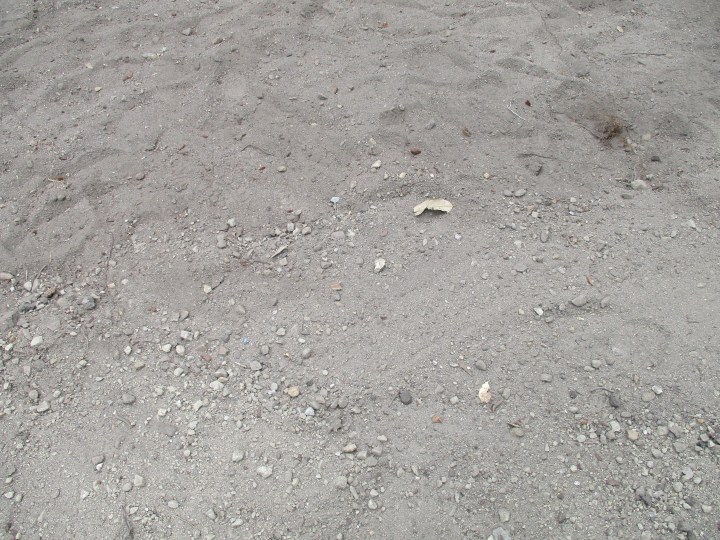
 5. Plant material has not yet been installed, so the landscape features only a few dogwood trees that were already there, and these few boulders scattered about in the dusty soil. It really is dusty! I cannot figure out why the dogwoods are so happy there. I can not figure out why the boulders are so happy either, . . . or if they are happy . . . or if they really care at all. I just do not know.
 6. One of our soil science professors at school was emphatic about soil being ‘soil’. We were not allowed to refer to soil as ‘dirt’. Well, this soil happens to be better than it looks, and it is good enough for dogwoods, but it really is very dirty soil.
 This is the link for Six on Saturday, for anyone else who would like to participate:
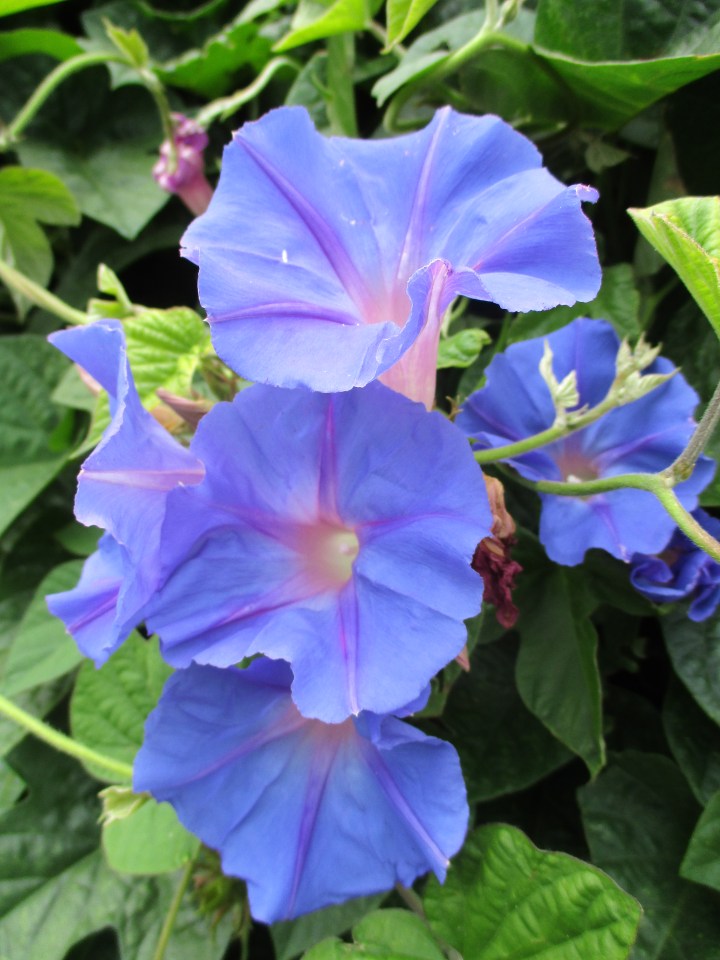 Even within its native range, blue dawn flower, Ipomoea indica, can be a problem. There are not many other plants in some coastal regions of Peru that can avoid getting overwhelmed by the aggressive wiry vines. These vines grow roots where they touch soil, so can spread indefinitely over the ground. Vines that succumb to frost over winter regenerate as if nothing ever happened.
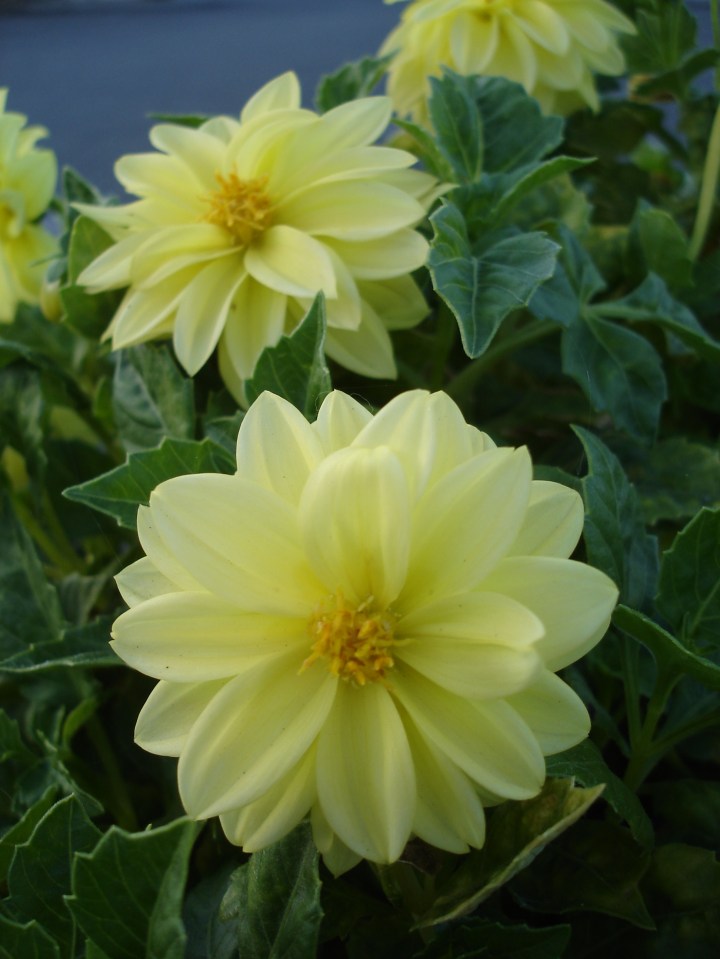 Annuals come and annuals go. There are cool season annuals for winter. There are warm season annuals for summer. Really though, there are all sorts of annuals that are not annuals at all. Most are some sort of perennial that has the potential to last longer than a single season. Only a few popular ‘annuals’ would necessarily die after blooming and producing seed, within a single year.
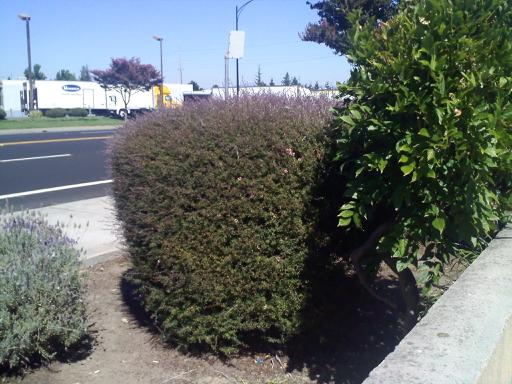
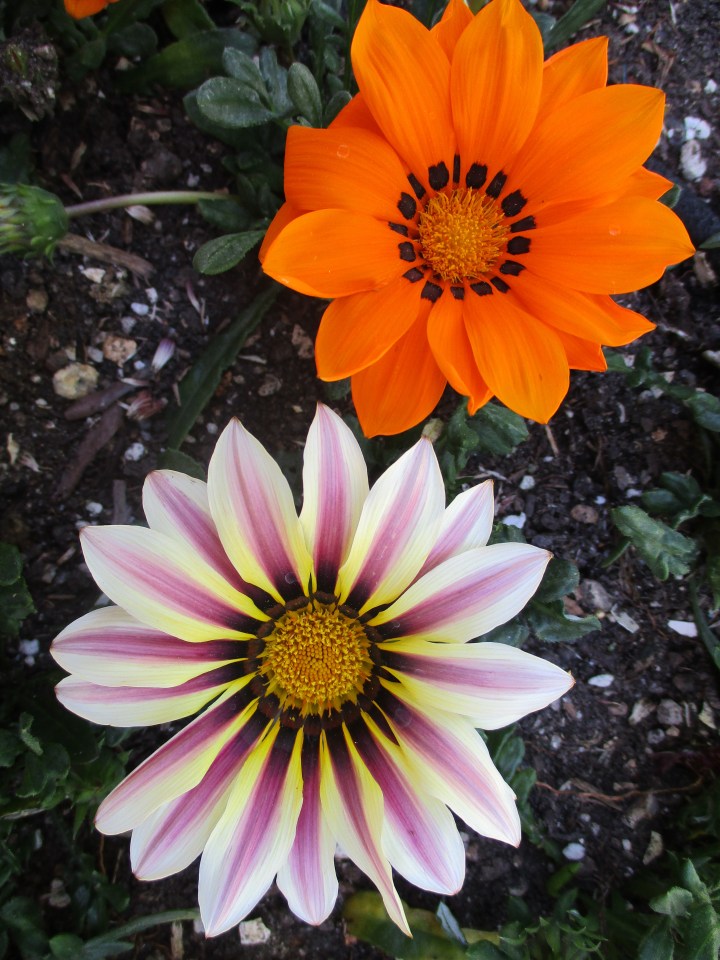 Why would anyone want to grow annual gazania when perennial gazania that is popularly grown as ground cover lasts for several years? Well, as long as the weather stays warm, annual gazania blooms with an impressive abundance of bigger and more brightly colored flowers. Perennial gazania blooms less profusely and only in midsummer, with simpler and somewhat smaller flowers.
 Concrete is one of the most common of landscape materials. There are probably more landscapes that include concrete of one form or another than there are landscapes that include lawn, and most landscapes include lawn. There are more landscapes that lack shade trees than there are without concrete. We do not notice it much because, once it is installed, we do not do much to it.
