It seems that almost all of us in the Northern Hemisphere are talking about it. Those of us who lack it can get to feeling somewhat deprived. It looks so pretty in pictures. It seems like such a natural part of winter. To many of us, it is a good excuse to take a break from gardening, stay inside, and write more compelling articles than the more technical sorts written when there is more activity in the garden.
In California, we get almost everything. Although most of the most densely populated ares lack snow, parts of the Sierra Nevada get more snow than anywhere else in the world. Californians can go to the snow to ski, hike, take pictures and do whatever people want to do in the snow; but we do not need to live with it at home like most people in other states do.
I grew up without snow. It snowed only once in 1976. It was only half an inch deep. The snow fell overnight while everyone slept, and it melted by early afternoon. Because the turf in the schoolyard was not resilient to snow, we were not allowed out there until the snow was gone. I later saw snow only when we went to where the snow was, in the Sierra Nevada. Snow only rarely fell at my home near the summit of the Santa Cruz Mountains above town, and it stayed for only a few hours.
I never had to live with snow until I went to Oklahoma at the end of 2012. Even then, it was minimal. The first snow fell only about three weeks before we left, and it never accumulated more than two inches or so. The difference from what I had experienced prior to that was that it lingered. It took a few days to melt. As minimal as it was, I could totally understand why people who live with snow dislike it so. I really can not imagine living with more accumulation of snow for months at a time.
First of all, snow is cold. It is very cold. It is, after all, frozen. That would not seem like much of a problem when the air is already cold, but snow is different. It sticks to the sides of boot and makes them cold inside. It seems to hold the cold on whatever it covers, including parked cars.
Also, snow is wet. Yes, as I already mentioned, it is is frozen, but it is frozen ‘water’, and it does not stay frozen when one is trying to get warm after being out in it. It gets clothing and everything else wet, just like a light rain. Frozen snow gets tracked in on boots and then melts just inside the doorway.
To go along with that, snow is messy. As cars drive through it, it becomes muddy, but does not necessarily melt right away. It becomes slushy mud that splatters onto otherwise clean cars.
There is actually quite a list of things to dislike about snow. It is dangerous on roadways. When it gets pushed off of roadways, it piles up around parked cars and on top of plants that happen to be in the way. I think that I prefer to see it in pictures of Switzerland, Minnesota, Ontario and Mount Hood as it looks from Portland.
Sometimes I think that it would be nice if we got a bit more of a chill here. We would be able to grow more varieties of apples, pears and other fruits. Perhaps peonies would do better, and autumn foliar color would be more spectacular. There are so many things that we can not grow or that do not perform as well as they want to in such a mild climate. However, all those frost sensitive plants that we can grow that others can not grow are nice too. Either way, I will pass on the snow.
Bill was mostly blind by the time we went to Oklahoma, but he could feel the snow on the ground well enough to determine that he did not like it either.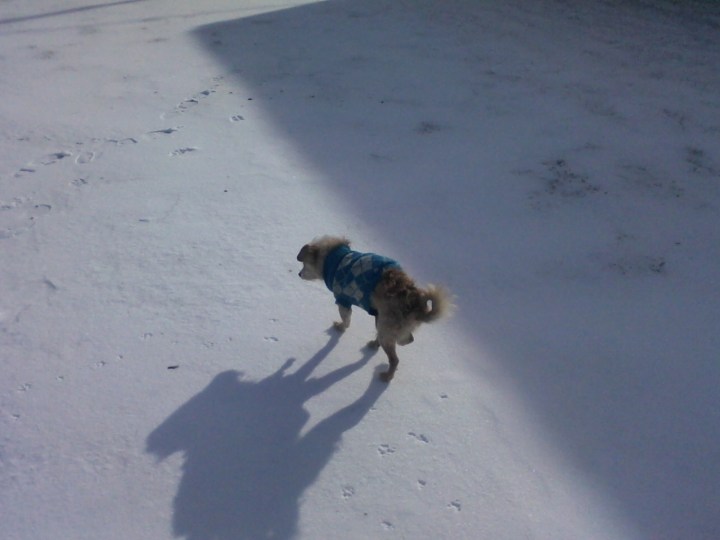
 It may not always bloom profusely, but sweet pea shrub, Polygala fruticosa, blooms sporadically through most of the year. Even when not much color is evident from a distance, a few flowers can likely be found on closer inspection. For some reason, bloom seems to be quite colorful now. Bloom phases should be more profuse in spring and summer. The pea flowers are soft purplish pink.
 Stormy winter weather always reminds some of us that our trees need some attention. Wind can break limbs. If the weather gets really nasty, trees can be destabilized by strong wind, particularly if the soil is moistened by rain. However, the truth is that arboriculture, which is the horticulture of trees, is important throughout the year. We just become more aware of it when weather threatens.
 This is no timid vine! Flame vine, Pyrostegia venusta, is related to the lavender trumpet vine and blood red trumpet vine, and is just as vigorous. Although it can not be recommended for tight spaces or small refined gardens, it excels at obscuring concrete walls. It only needs wires or stakes to be convinced to climb. If it gets too big, it can be cut back after bloom to regenerate quickly.
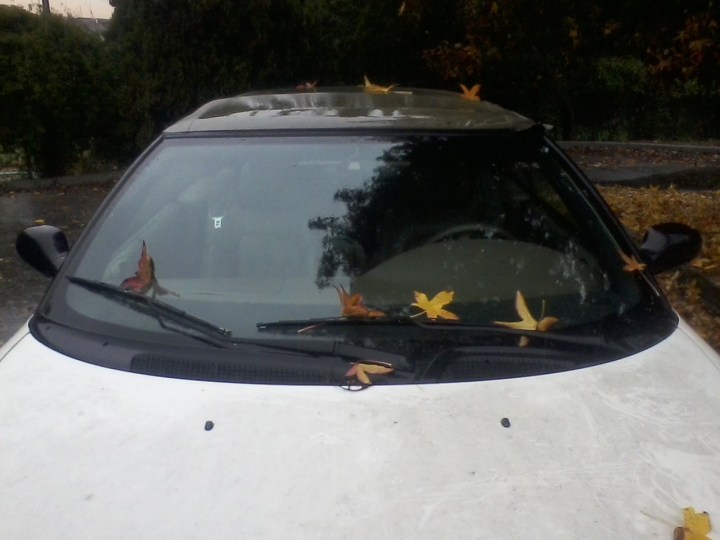 The old Chrysler looks different this time of year. Like dogs, cats, horses and deciduous plants, it adapted to the weather.
 Christmas tree lots at nurseries come and go at a good time. Cut and live Christmas trees become marketable just as retail sales of other items is declining. Although autumn is the best season to plant many things, not many of us want to be out in the garden as the weather gets cooler. As Christmas trees get sold and relinquish their space, bare root nursery stock becomes available.
 Australia, New Zealand and South Africa were the hip and trendy places to do internships in horticulture back in the late 1980s. Everyone who was anyone was doing it; which is sort of why I was not that interested in doing what everyone else was doing already, even if I could have afforded to go to any of those exotic places. I did my internship in Saratoga.


 Right next door to my downtown planter box, (