 There seems to be some discrepancy about the correct spelling of crape myrtle, Lagerstroemia indica. Many of us spell it as ‘crepe’ myrtle, thinking that crepe is the thin colorful paper that the flowers resemble. It is actually a rolled up thin French pancake. The thin paper is actually spelled as ‘crape’. Of course those of us who dislike the commonness of crape myrtle might omit the ‘e’.
There is plenty for horticultural professionals to dislike about crape myrtle. It is remarkably complaisant, and proportionate to small urban gardens. Consequently, it very often gets planted even where other trees would be more practical or proportionate. It is the most common street tree because it so rarely damages curbs or sidewalks, but does not get big enough to shade the street.
The biggest varieties do not get much more than twenty feet tall, so work well in utility easements. Trees might be on a single straight trunk where space is limited, or to display the appealingly mottled bark, they might have multiple trunks. The billowy white, pink, red or mauve blooms are spectacular in late summer. The deciduous foliage can get quite yellow, orange or red in autumn. Hard pruning in winter improves late summer bloom and autumn color.
Timing Is Everything For Pruning
 There are certain disadvantages to gardening in such a perfect climate. We can not grow things that require significant chilling in winter. Nor can we grow things that require prolonged heat in summer. Seasons change so gently that it is easy to get behind schedule. It is already late summer, whether it seems like it or not. What we do not do in the garden is as important as what we do.
Plants know what time it is. Almost all are slowing down significantly. Many natives do almost all of their growth in spring, and then spend the later half of summer just getting ready for autumn. By now, the buds of deciduous trees like sycamore, oak and willow are already getting plump, even though they will not do anything until the end of winter. Non native plants will not be too far behind.
Evergreen plants that get pruned or shorn a few times through summer might need to be pruned or shorn one last time. If not done now, it probably should not be done any later. They need a bit of time to recover and regenerate a little bit of new growth prior to autumn. Otherwise, the exposed inner growth will stay exposed, and get worn by the weather as summer progresses into autumn.
Some plants need a bit more time to for new growth to mature than others do. Privet hedges for example, are quite tough, and do not seem to mind getting shorn at any time. New growth of holly, pittosporum and photinia gets stunted and discolored if still trying to grow as the weather gets too cool for it to continue. With enough time, new growth starts, and then ‘hardens off’ before autumn.
Like pruning, fertilizer promotes new growth, so should likewise not be applied too late. One last application of fertilizer can improve the color of citrus foliage before winter. Greener lemon and lime foliage tends to be more resilient to frost. Iron is particularly helpful for foliage, and is less likely than complete fertilizers are to stimulate new growth that will be sensitive to frost later in winter.
Fernleaf Yarrow
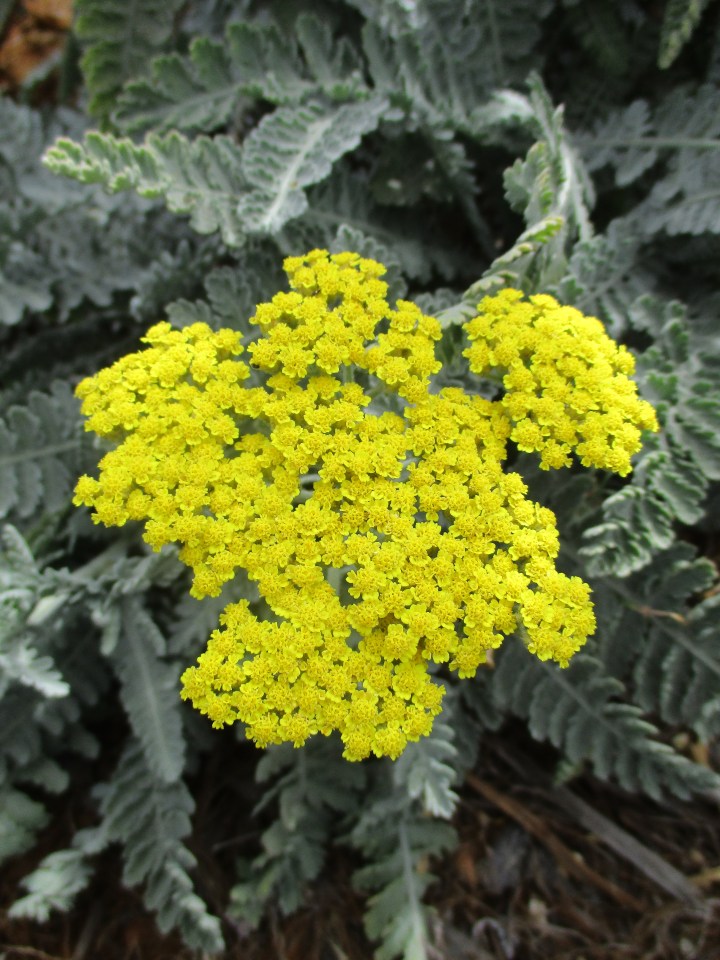 ‘Moonshine’ is probably the epitome of fernleaf yarrow, Achillea filipendulina, even though it is technically a hybrid. From the middle to the end of summer, its three inch wide corymbs (flat-topped trusses) of tiny bright yellow flowers stand as high as three feet above ferny and gray basal foliage. Bloom is best in full sun and warm exposure. Established plants do not need too much water.
Most varieties of fernleaf yarrow also bloom with bright yellow or gold flowers. Some might bloom with pale yellow, rosy pink, pale pink, reddish, white or pink and white flowers. All are good cut flowers, and can be dried. Some varieties are more compact. The most compact varieties work nicely in planters of mixed perennials. Butterflies and hummingbirds find them wherever they are.
Pruning out deteriorating blooms may promote sporadic subsequent bloom until autumn. However, some plants may bloom all at once, and then not bloom again until the following summer. Large blooms on the most vigorous plants may need to be staked. New plants can be propagated by division from mature plants. ‘Moonshine’ and many other cultivars are sterile. Others might self sow.
Flowers Might Be Getting Scarce
 It makes sense for flowers to bloom in spring. Winter is too cool, windy and damp for both flowers and the insects that pollinate many of them. By summer, successfully pollinated flowers have faded, are busy making seed to disperse in autumn. Some plants produce fruit to get birds and other animals to disperse their seed. There are certain advantages to blooming early in the spring.
Native plants that are endemic to chaparral climates are quicker with bloom, so that they finish before the air gets too arid. Desert plants might bloom for less than a week. Some tropical plants might bloom whenever they want to because they do not understand the concept of seasons, but they are not the prominent plants in our gardens. Therefore, flowers get scarce this time of year.
Besides the few perennials and annuals that bloom as long as the weather stays warm, there are not many plants that bloom reliably so late in summer. Belladonna lily, which is also known as naked lady, might be one of the flashiest, as its bright pink flowers bloom on top of bare stalks before the low basal foliage develops. It was actually dormant through the warmest part of summer.
Billowy and bold pampas grass flowers bloom this time of year, but are uncommon. The boldest type of pampas grass is too big and difficult to manage for home gardens. The smaller type has dingy tan flowers, and is so invasive and weedy that it is unavailable in nurseries. Those of us who have it in our gardens did not plant it. Other grasses with nice late flowers are not very colorful.
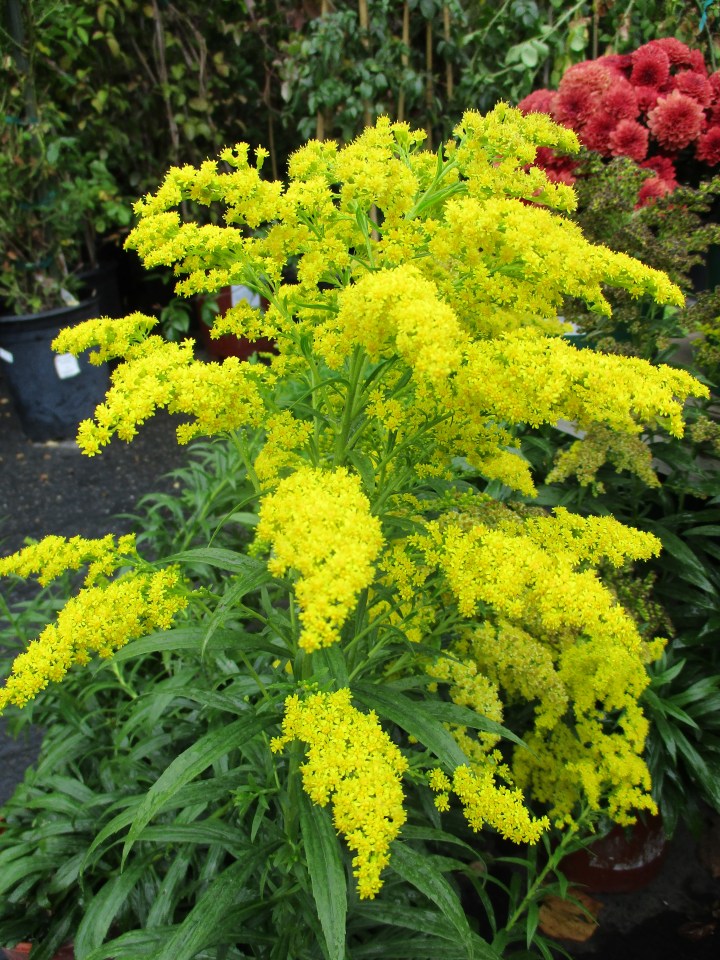
Russian sage has become one of the more popular late blooming perennials. More traditional Japanese anemone, goldenrod, lion’s tail and showy stonecrop all seem to have lost popularity over the years. Mexican blue sage should bloom best late in summer, but often finishes sooner than expected. Yarrow often blooms later than expected, until summer ends. Marigold, blanket flower and some sunflowers bloom until frost. Chrysanthemums, whether grown as annuals or perennials, are just beginning late in summer.
First blog post
Yes; ‘First blog post’. This is the title it came with, and it is quite accurate. I see no need to change it. From here on out, I will be more discriminatory about what I write about. I hope to use this blog for my weekly gardening columns. If this works out, I will add a link to the gardening columns, so that readers can come here to find copies of the same articles that they find in their local newspapers, as well as missing articles. I write my articles weekly, but the various newspapers that have access to them do not use all of them. This may also be a blog where readers can send gardening questions, instead of telephoning or emailing me. I am new to this, so it will take me a while to figure it all out. I should post my first article here in a few days.

