
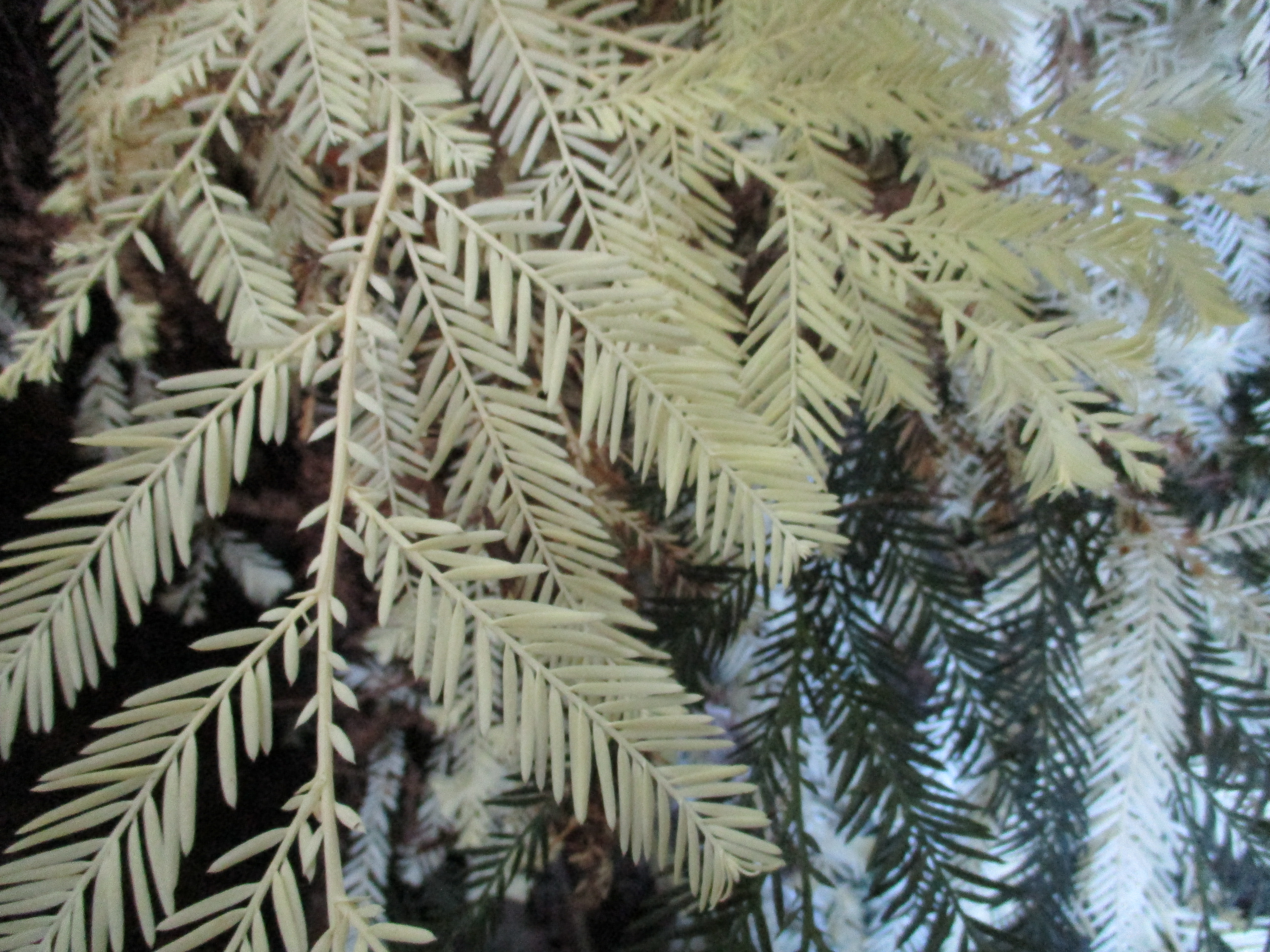
Reversion among vegetation is the loss of an aberrative genetic characteristic, such as variegation or bronze foliar color. Because most genetic aberrations that are susceptible to reversion are disadvantages, reverted growth generally performs more efficiently, and displaces remaining genetic aberrative growth. For example, because its variegated portions lack chlorophyll, variegated foliage is less vigorous than foliage that is not variegated. Therefore, if not removed, unvariegated reverted foliage is likely to grow faster and replace variegated foliage. This ‘Stuttgart’ canna leaf seems to have done the opposite of reversion, by exhibiting such extreme variegation that all green color is lacking. Fortunately, it is not as bad as it looks. This is merely very variable variegation. Just as a few leaves may be completely green without actually reverting permanently, a few leaves are extremely variegated, and on rare occasion, a few, such as this leaf, may lack any obvious green color. Leaves that developed after and above this leaf exhibited more typical variegation with both green and white. Otherwise, this particular cane would not survive for long without chlorophyll for photosynthesis. The flowers are unaffected because they derive their floral color from pigment rather than chlorophyll. White redwood foliage can survive without chlorophyll only because it can rely on resources provided by the normal growth with green foliage that it is attached to, almost parasitically. Such growth is considered to be albino, but because it merely lacks chlorophyll rather than pigment, it is technically not albino. Furthermore, it is technically not variegated, since it is so completely white, without any green chlorophyll. Oh, this is more complicated than it should be. It is probably better to simply appreciate appealing genetic aberrations such as white, variegated or other colorful foliage. ‘Stuttgart’ canna will not refresh its variegated foliage until the end of winter.

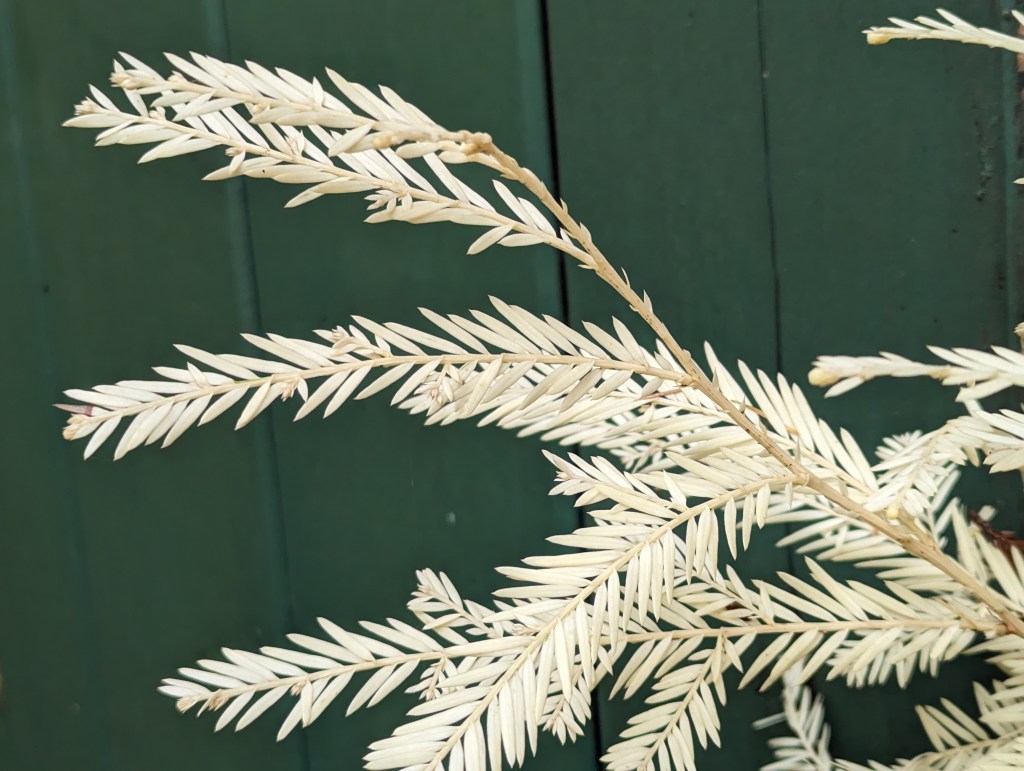
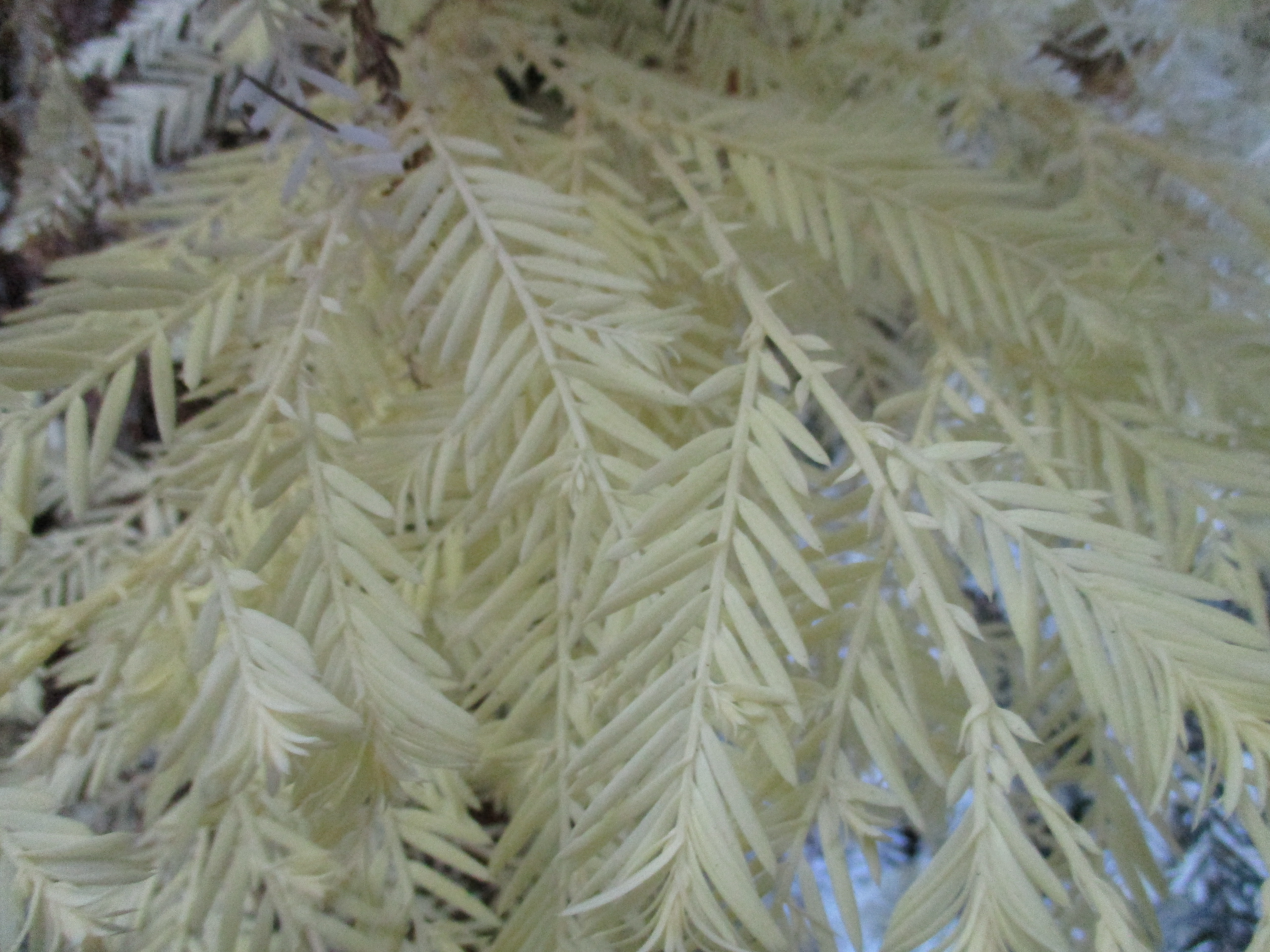 How Italian! Red, white and green! A coastal redwood with a white albino sport (mutant growth) amongst otherwise deep green foliage. Actually, it is very Californian. Coastal redwood is endemic to California with only a a few north of the border on the extreme southern coast of Oregon.


 Tony Tomeo