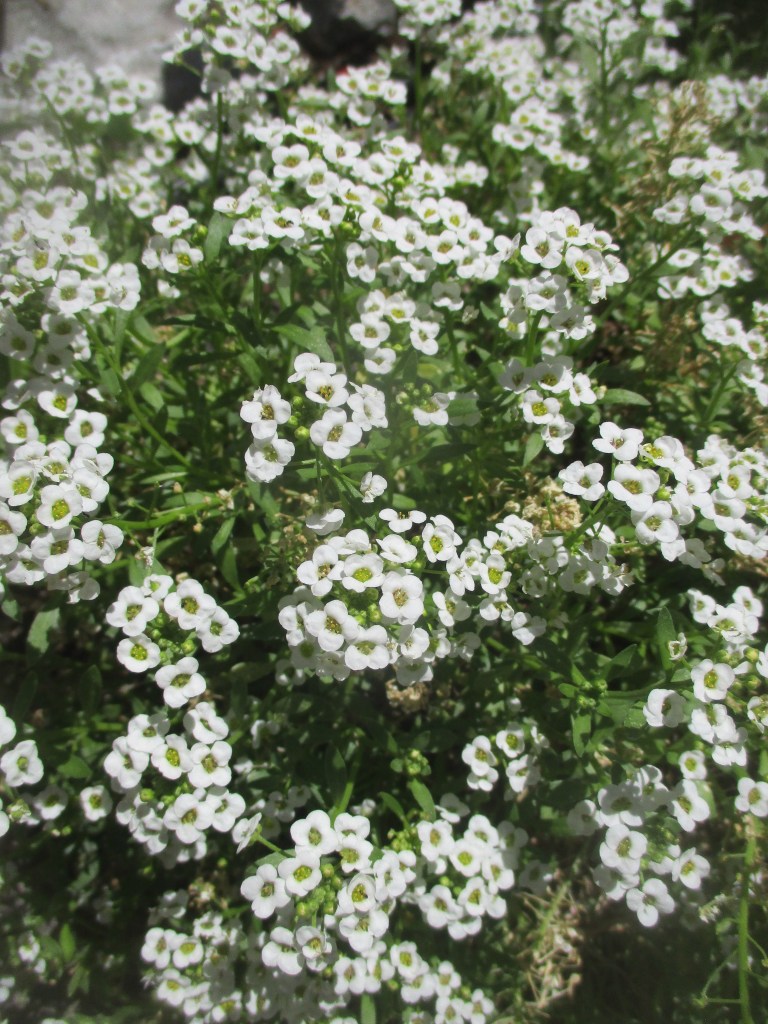
Without becoming invasive, common alyssum, Lobularia maritima, can almost naturalize in favorable situations. It disperses seed profusely, so often appears where it is an asset to the garden. Since it is so docile, it subordinates to more vigorous plants that it mingles with. It does well on loosely set stone walls. If necessary, it is easy to remove or relocate.
Common alyssum blooms with tiny but profuse white flowers. If they naturalize, varieties with pink or purple bloom eventually revert to white bloom after a few generations. Some varieties revert slower than others. Although popular as a warm season annual, alyssum can continue to bloom through next winter. Individual plants may survive for a few years.
Mature alyssum plants might get a bit higher than half a foot, but will get no higher than a foot. If they perform for more than a year, their progeny may begin to replace them before they get shabby. After removal, shabby plants, with a bit of shaking over bare spots, may share their last seed. Alyssum grows easily from seed, and is available in cell packs too.
Cool season annuals were cool just a few months ago. Now, it is getting to be about time to warm up to warm season annuals. They will become a hot commodity as winter yields to spring. Many begin to bloom with warming spring weather, and continue to bloom until autumn. Then, as the weather cools, they relinquish their space to cool season annuals.
Warm season annuals, or summer annuals (or warm season or summer bedding plants), are technically a bit early for a few regions. They should wait until after the last frost date, which might be later in the month for some climates. Even where frost is no threat, it may be too early to replace cool season annuals that continue to perform until spring weather.
Warm season annuals only seem to be seasonable now because the weather has been so pleasantly mild and even warm. Some cool season annuals are already beginning to deteriorate, which facilitates their replacement. Warm season annuals might dislike cool nights and short days, but should appreciate the opportunity to disperse their roots early.
However, some degree of risk is associated with early planting of warm season annuals. Mild frost, although unlikely, is still possible in some climates, and could necessitate frost protection for vulnerable plants. Resumption of rainy and more typically wintry weather is more likely. Heavy rain can thrash fresh bloom. Sustained dampness can cause mildew.
Like warm season vegetable plants, warm season annuals can grow from seed or small plants from cell packs or little pots. Some prefer to grow directly from seed. Others prefer transplanting. Nasturtium, for example, prefer direct sowing. Petunia, which perform well after transplant as seedlings or small plants, are likely to languish if they grow from seed.
Because seed take a bit of time to germinate, they can go into the garden slightly prior to the last frost date, and earlier than vulnerable seedlings. Similarly, they can start within a greenhouse early for later transplant. With proper scheduling, frost should no longer be a problem by the time seedlings emerge above the garden soil, or are ready for transplant. More variety is obtainable as seed.
As a companion plant, candytuft hides the less appealing lower growth of roses; or it can cascade from mixed planters.
Most roses that are grown for cut flowers are not very appealing in the landscape. They look better behind shorter perennials or shrubbery, with their taller flowering stems standing higher above. Mounding herbs like lavender, lavender cotton or rosemary, or small hedges of boxwood, dwarf hebe or Indian hawthorn obscurer their thorny undergrowth nicely. Candytuft, Iberis sempervirens, is a small perennial that gets just high enough to give a neat edge to a row of roses.
It gets gets about a foot deep, and can very slowly but eventually spread over a few square feet. The tiny, narrow and dark green leaves are less than an inch long. Inch wide trusses of minute white flowers resemble those of sweet alyssum, although lack fragrance. Sloppy plants can be restored by getting pruned almost to the ground.
This is one of those annuals that could be a short term perennial if it gets the opportunity to do so. In most climates, stock, Matthiola incana, is a popular warm season annual that relinquishes its space to cool season annuals before it gets too worn in autumn. Locally, because it does not mind mild frost, it is more popular as a cool season annual for winter.
Floral color ranges through both pale and rich pastels of purple, red, pink, yellow, cream and also pure white. Flowers may be single or double. In close proximity, bloom is richly fragrant. Foliage is light grayish green. Individual leaves are somewhat narrow. Removal of deteriorating floral stalks before they develop seed pods prolongs subsequent bloom.
Many garden varieties of stock stay relatively low and compact. Some may get no higher than a foot. Florist varieties that produce long stems for cutting might get as high as three feet. Overgrown plants get shabby after a primary season, but may regenerate from hard pruning. However, secondary growth is generally irregular and likely marginally reliable.
Statice is about as colorful dried as it is while fresh.
The papery flowers of annual statice, Limonium sinuatum, are so popular as seemingly synthetic dried flowers that many garden enthusiasts are surprised to find that they are happy to bloom naturally in home gardens. The clear shades of blue, purple, pink, orange, yellow and white seem to be dyed. The one or two foot tall flower stems are outfitted with odd papery ‘wings’ that make the stems seem wider than they actually are. Deeply lobed basal foliage forms shallow rosettes. Mature plants are about one or two feet tall, and a foot or so wide. Bloom begins late in summer, and continues into autumn. Good sun exposure and good drainage are preferred. Seed can be sown directly, or young plants can be added to the garden early in spring.
This is one of the more familiar of winter annuals. Yet, pansy, Viola X wittrockiana, is not just one species. It is a diverse group of hybrids of a few species, and includes viola and Johnny-jump-up. Generally, viola and Johnny-jump-up have smaller and simpler flowers. Pansy generates relatively larger and more colorful flowers, with more intricate patterns.
The most recognizable feature of popular pansy is the distinctive floral patterns that look like floral faces. Individual flowers may display a few distinct colors within such patterns. Alternatively, flowers may be a single color. The color range includes white, blue, purple, yellow, orange, rusty red and black. Big flowers can be as wide as two and a half inches.
Locally, pansy is a winter annual. The best bloom begins about now. If the coolest winter weather inhibits bloom, it is only temporary. Bloom is likely to resume before a lapse gets obvious. Although pansy is a summer annuals in other climates, it does not perform well in the locally arid climate during warm weather. Plants might get six inches tall and wide.
It is inevitable. It begins at about the same time that cool season vegetable plants start to replace warm season vegetable plants. Cool season vegetables are now in season, and will grow during autumn and winter. They replace warm season vegetables of spring and summer. Winter annuals, or cool season annuals, now do the same for summer annuals.
Some summer annuals, or warm season annuals, are already shabby by the end of their season. Their replacement is not so unpleasant. Those that continue to perform well into the end of summer or autumn are a bit more difficult to evict. No one likes to pull them up while they still bloom colorfully. Besides, new winter annuals may take a while to bloom.
Winter annuals, as well as summer annuals, require replacement because they live only for a single year. Some complete their respective life cycle within only a few months of a year. That is what their designation as ‘annual’ means. Several annuals have potential to survive as perennials, but are too unappealing to salvage through their dormant season.
Marigold and chrysanthemum are popular for autumn, but do not perform as well through winter. Cyclamen, which prefers a late start, is pleased to replace them by then. Although chrysanthemum and cyclamen are both perennials, few get the opportunity to perform as such. It is easier to simply remove and replace them with the next best seasonal annual.
Pansy, viola, Iceland poppy, sweet William, stock and various primrose are all in season now and through winter. Calendula and snapdragon are seasonable for autumn, and will be again for early spring. They survive and can even bloom through the middle of winter locally. Alyssum is technically a summer annual, but might bloom all through winter also.
Winter annuals are not as easy to grow from seed as summer annuals are. Because they grow during cooler weather, they grow slower. They therefore need to start growing early to be ready for planting now. It is perhaps more practical to plant most types as seedlings from cell packs. Cyclamen and ornamental cabbage commonly grow from four inch pots. These are innately more expensive than other winter annuals.
Warm season annuals are now passé. Cool season annuls, such as these violas, are in.
Now that it is time for cool season annuals, it is difficult to remove warm season annuals if they are still blooming and healthy. that is probably why so many of us prefer mixed plantings, where cool season annuals can be added as needed to replace warm season annuals as they deteriorate. Some warm season annuals that are actually perennials, like wax begonia and busy Lizzie (impatiens), can be cut back and overplanted with cool season annuals, so that some might regenerate next spring as the cool season annuals finish. Petunias may be looking overgrown and tired, but are at least easier to remove without guilt.
Pansies and smaller but closely related violas are probably the two most popular of cool season annuals. They work something like petunias, but for autumn and winter. They are commonly grown in uniform beds, but work just as well in mixed plantings. There are not many colors that can not be found in pansies, although only a few of the more popular varieties can be found at any particular nursery. Some are ‘solid’ colors. The most familiar varieties have those funny ‘faces’ that pansies are known for.
The various primroses require a bit more effort because deteriorating flowers need to be removed. They can also be a problem for the few who are allergic to them (like poison oak). Like the warm season annuals that can survive as perennials through winter, some primroses, particularly English primrose, can survive through summer as perennials. English primrose displays bright cartoon shades of almost any color. Fairy primrose are more commonly pastel shades.
Stock has an intense and distinctively rich fragrance. Taller types are excellent cut flowers, but are not so practical for uniform beds. Even shorter types are probably best in mixed plantings, or in borders with lower flowers in front. The single or double flowers can be white, pink, purple and almost red.
Ornamental cabbage and kale are grown for bold rosettes of colorful pink, white or pink and white foliage. The shades of pink range from soft light pink to rich purplish pink and almost red bright pink. Cabbage provides more color. Kale has more variety of foliar texture. Ironically, both look rather weedy, and should be removed as they begin to bloom in spring.
Chrysanthemum are strikingly colorful cool season flowers, but rarely bloom as uniformly as they do when first planted. Because they bloom so profusely, they need to be groomed frequently. If they get what they want, they can perform for several years, blooming all sorts of shades of yellow, orange, red, pink, purple and white. Chrysanthemum also displays a broad range of flower structures and sizes, from minute to jumbo.
Sweet William, Iceland poppy, calendula and alyssum are also in season. Yellow or orange calendula, with single or double flowers, is best through autumn, but may mildew by winter. Alyssum is white or subdued shades of pink or purple, and is actually good throughout the year, and can self sow indefinitely.
The flowers of the two different specie known as cockscomb do not seem to be as closely related as they are. Celosia cristata exhibits two or three inch wide, weirdly stunted and crested blooms that resemble the combs of roosters, although the most popular varieties are so densely furrowed that they look more like fuzzy little brains. Celosia plumosa, as the name implies, has plumose flowers that look more like three or four inch long pampas grass flowers than like anything associated with chickens. What they have in common is their very bright red, orange, yellow, pink or white blooms. Foliage can be bright green to rich bronze.
As short lived annuals, cockscombs blooms only for about two months from the middle of summer to autumn. As cut flowers, they can last a week or two. However, because those popularly grown as summer annuals are mostly less than a foot tall, the flower stems are rather short.
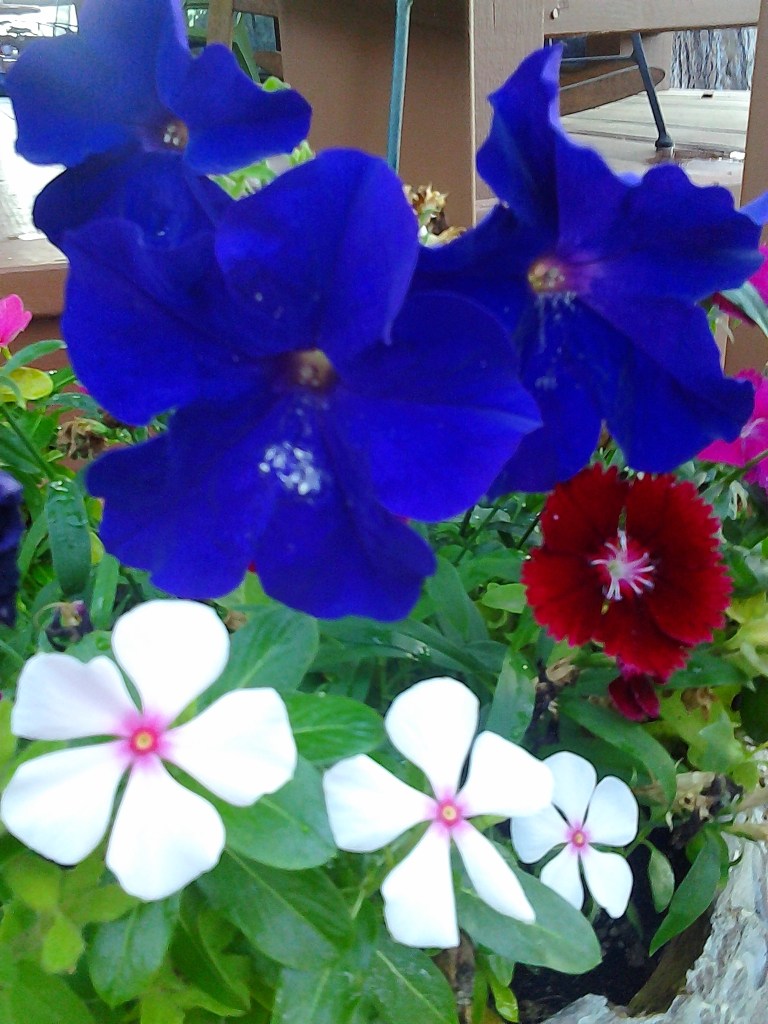
So many of the pretty warm season annuals planted last spring are now at their best. Sweet alyssum, lobelia, verbena, moss rose and busy Lizzy never stop blooming, and only get more colorful as they grow through the season until they get replaced by cool season annuals in autumn. (It is unfortunate that busy Lizzy, which had been a standard warm season annual for so many years has become less available due to disease.) However, French marigold, petunia, floss flower, cosmos, statice, pincushion flower (scabbiosa) and zinnia need a bit of attention to perform as well that long.
These few warm season annuals can get tired of blooming if not ‘deadheaded’ (groomed of deteriorating flowers). Deadheading not only keeps plants looking a bit neater, but also prevents the diversion of resources needed for continued bloom into the generation of seed. As far as these blooming plants are concerned, seeding for the next generation is their priority anyway. As long as they are not allowed to set seed, they will continue to try, by producing more flowers to replace those that fade and get removed without setting seed.
Cosmos, statice and pincushion flower can continue to perform adequately without deadheading. The main advantage of deadheading these annuals is the removal of fading flowers. (There probably will not be much left for cosmos.) Many people actually prefer to leave fading cosmos flowers to disperse their seed for the following year.
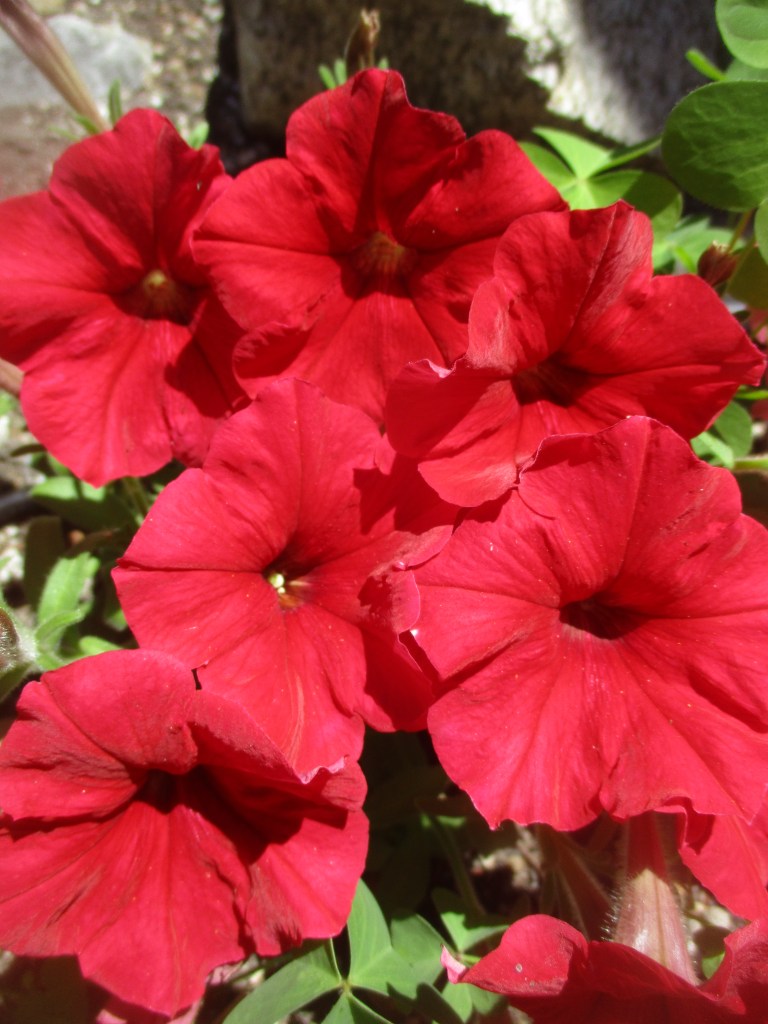
Petunia is perhaps one of the more demanding of warm season annuals. It often needs to be clipped back in the middle of the season, right when it is expected to bloom the most. The best way to avoid serious pruning at one time it to keep plants snipped back lightly but continually as they grow, so that they can not develop the awkwardly long and weirdly jointed stems that eventually stop blooming. Short stems that stay close to the roots are the healthiest and most productive.
The various types of cockscomb are odd warm season annuals that become available halfway through summer, just in time to add color if some of the annuals planted earlier in spring are not performing adequately, or are finishing early. Of course, all of the other warm season annuals will still be available in nurseries until it is time for cool season annuals next autumn.


 Tony Tomeo