Late Pruning For Early Bloomers

Deciduous magnolias get pruned after bloom.

Winter is generally the best season for pruning. Obviously, it is when a majority of plants are dormant, and therefore most complaisant to such potentially invasive procedures. Of course, there are exceptions to this generalization. A few plants are dormant during other seasons. Some simply prefer late pruning to accommodate their bloom or fruiting cycles.

Late pruning is important for some of the same reasons that dormant or winter pruning is important. It controls growth and directs resources. Removal of superfluous or unwanted growth reallocates resources that such growth would otherwise consume, to more useful or productive growth. The primary difference is that late pruning happens after dormancy. 

Flowering cherry trees are very similar to fruiting cherry trees, but generate only copious bloom without fruit. Flowering crabapple trees likewise produce only their unique bloom, but without much fruit. Technically, both would prefer dormant pruning during winter. Yet, late pruning immediately after bloom allows them to first bloom as profusely as they can.

Fortunately, flowering but fruitless counterparts of fruitful trees require pruning that is less severe than what their fruitful relatives require. Comparably severe pruning would be too stressful for them after dormancy. However, flowering peach trees can endure harsh late pruning to stub their bloomed shoots. Stubs generate more shoots for bloom next spring.

Late pruning begins as early as spring blooming trees and shrubs finish bloom. Because of warm weather this winter, many are blooming early. Stems of some types work well as cut flowers, either while in bloom or immediately prior to bloom. Once the first few flower buds begin to show color, most buds on the same stem should continue to bloom inside.

Camellias supposedly prefer pruning during their bloom cycle, since they resume growth immediately afterwards. Because such pruning would ruin some of the bloom that is their primary asset, most camellias must tolerate late pruning after bloom. Dogwood, forsythia, redbud, and flowering quince, as well as flowering cherry and flowering crabapple, are likewise tolerant of these technically untimely techniques.

Pollarding Pruning Techniques Remain Controversial

Pollarding is pruning to the extreme.

Olive orchards formerly inhabited some of the regions that became urban in California. A few orchard trees remained within urban gardens of the homes that encroached on them. Unfortunately, for those who did not utilize the abundant olives, these trees were horridly messy. Many decades ago, pollarding eliminated the mess without eliminating the trees.

Pollarding is extreme pruning that eliminates all but the main trunk and a few main limbs. It deprives olive trees of their ability to bloom, by eliminating stems of a previous season that would otherwise bloom during the next season. Fruit can not develop without bloom. For other trees that bloom only on older stems, pollarding eliminates bothersome pollen.

Pollarding has several other practical applications. It confines trees that would otherwise get too big for their respective situations. It enhances foliar color and texture for trees that display colorful foliage through summer, such as Schwedler and Princeton Gold maples. Red twig dogwood generates more colorful twigs, and more abundantly, after pollarding.

For agricultural purposes, pollarding generates lush vegetative growth of white mulberry to sustain silkworms, or other vegetation for livestock. It similarly generates long and thin willow stems for basketry. Various eucalypti rely on pollarding to produce juvenile foliage that is colorful and healthy enough for floral design, or aromatic enough for essential oils. 

Nowadays, pollarding is unfortunately passe and even vilified. Consequently, almost no arborists learn about it. Because it is technically disfiguring and potentially unsightly, it is undesirable for many situations. Annual repetition is needed to prevent bloom or fruiting. Otherwise, restorative pruning or more extreme pollarding eventually become necessary. 

For pollarding, proper technique is imperative. Such severe pruning must happen during winter dormancy. It would it be too stressful during vascular activity. Besides, bark would be very susceptible to scald if so suddenly exposed during warmer and sunnier weather. Pruning cuts must be very neat, and back to any old pollard cuts, without stubs to inhibit healing.

Only Arborists Specialize In Trees.

Big trees need real arborists. Even the best of gardeners should not be expected to perform major specialized arboricultural techniqes.

Just as most problems in landscapes are caused by maintenance gardeners hired to maintain the landscapes, many of the problems with trees are caused by those hired to fix such problems. Arboriculture, which is the horticulture of trees, really should be performed, or at least directed, by professional arborists. It is too specialized to expect it to be done properly by those lacking education and experience.

Even the few proficient gardeners who can perform most aspects of gardening well are not likely as proficient with proper arboriculture as arborists are, not only because it is so different from other gardening, but also because of the techniques and tools involved. Gardeners compare to arborists something like those who clean windows on skyscrapers. Custodians who clean windows on the highest floors from the inside probably would not want to clean the same windows from the outside like window washers do. There are just too many differences in the two related but vastly different types of work.

Arborists who are certified by the International Society of Arboriculture, or ISA certified arborists, are the most qualified to assess the health, stability and structural integrity of trees, and to then prescribe any necessary arboricultural procedures. These arborists have passed an examination of their arboricultural expertise, and maintain their certification by continued involvement with ISA educational seminars, workshops and classes.

Arborists and the tree service businesses that they are affiliated with are easy to find at the website of the ISA at www.isaarbor.com. They can be found directly by name, or regionally by city or ZIP code. The website is also an excellent resource for those wanting to learn more about trees and the importance of proper arboriculture.

Trees are the most substantial features of landscapes, and are really worthy of more respect than they commonly get. Structural problems or instability can be serious problems, not only to the affected trees, but also to anything around them that might be damaged or destroyed by falling limbs or even entire trees. Proper arboriculture helps to keep trees healthy and reasonably safe for many decades or centuries.

Six on Saturday: HAPPY NEW YEAR!

HAPPY NEW YEAR!

Happy January too! Happy Saturday! Really though, what is all the fuss about? There is nothing new about this. New years have been arriving annually for as long as anyone can remember. New days arrive daily. New hours arrive hourly. In fact, a new one just began within the last sixty minutes or so. Perhaps that justifies trying to be happy whenever we want to. I digress. My Six for this Saturday are irrelevant to this New Year, and actually, are not exactly happy. All six pictures involve just two trees, a valley oak, Quercus lobata and a coast live oak, Quercus agrifolia.

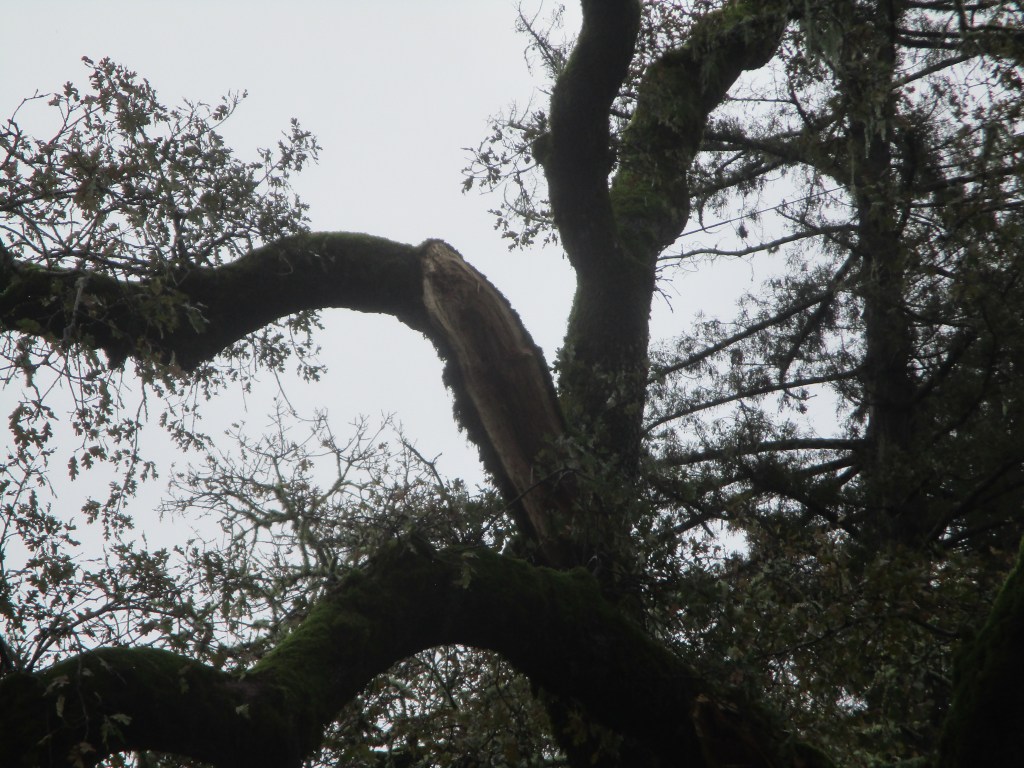
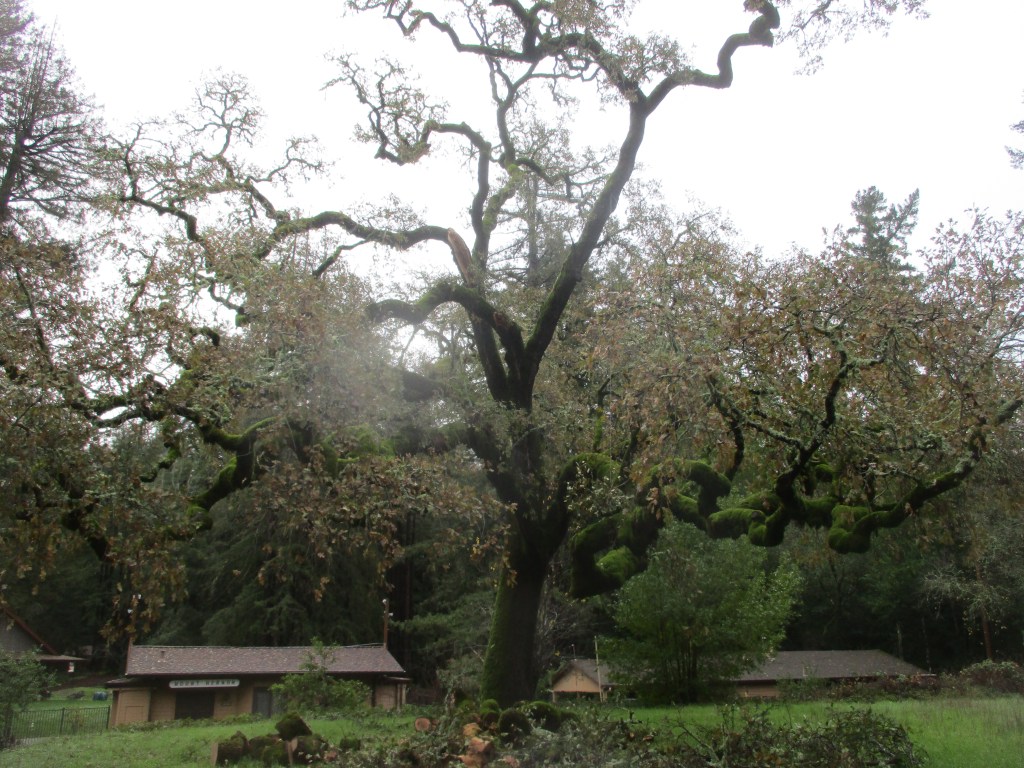
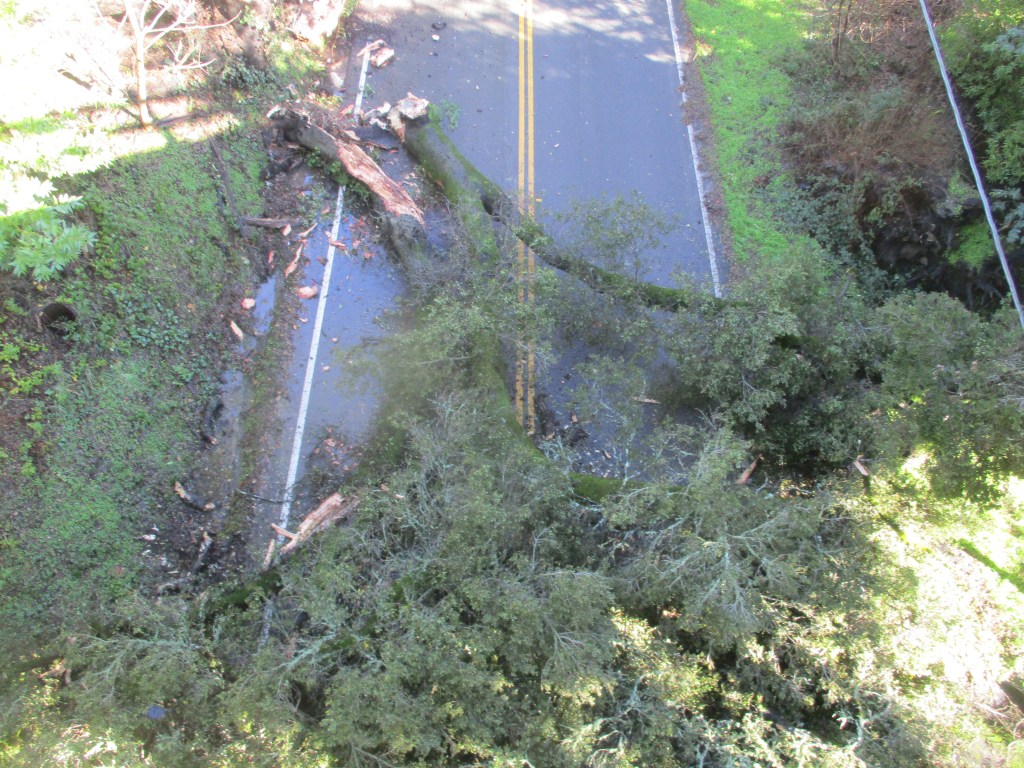
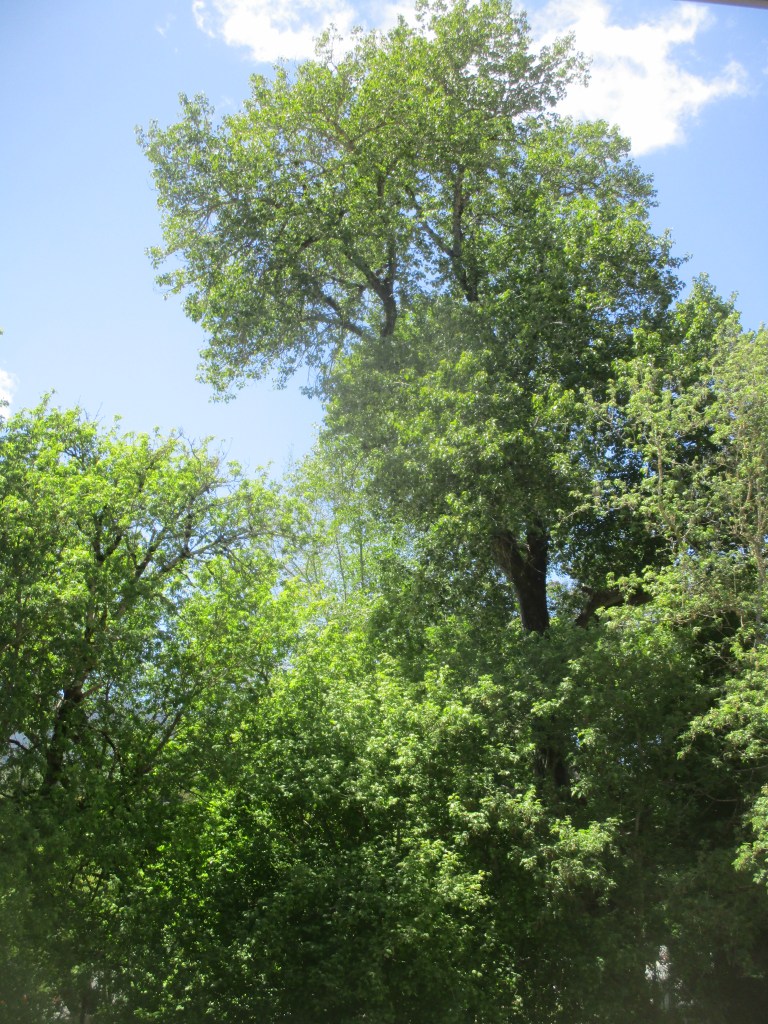
1. Thunderstorms are rare here. A real doozy arrived on Christmas morning though. The wind could have landed Rhody in Oz. This distinguished valley oak lost two major limbs. 

2. The worst of the damage is just above and slightly left of the center of this picture. The large limb that fell from there clobbered another large limb that was closer to the center.

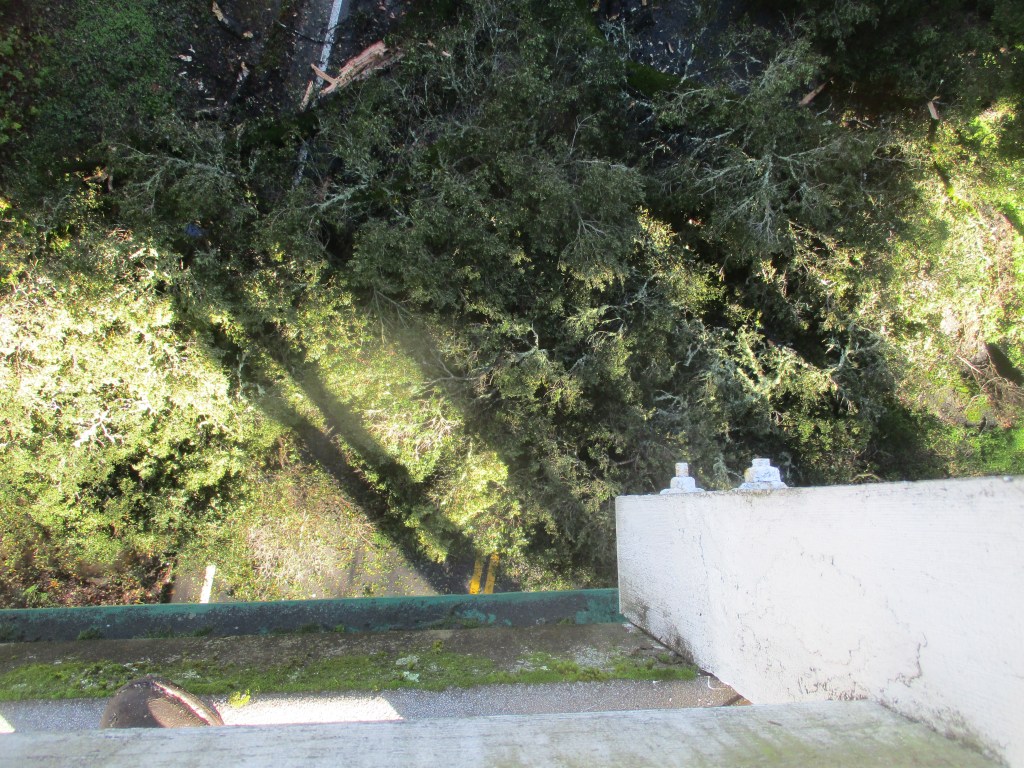
3. Can you identify what this picture shows? The pair of short yellow lines near the lower center of the picture is a clue. That is the dirty tip of my left boot in the lower left corner. 

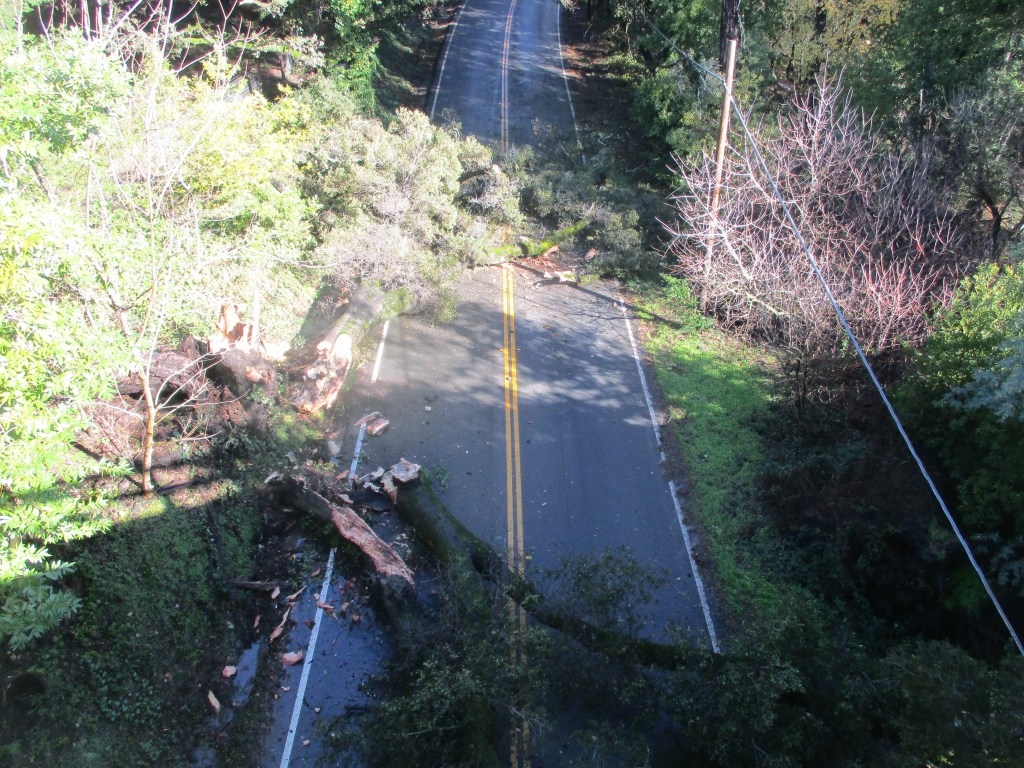
4. Tilting the camera from vertical reveals why I could not return to work after what was supposed to be a quick errand. This large coast live oak fell and totally blocked the road.

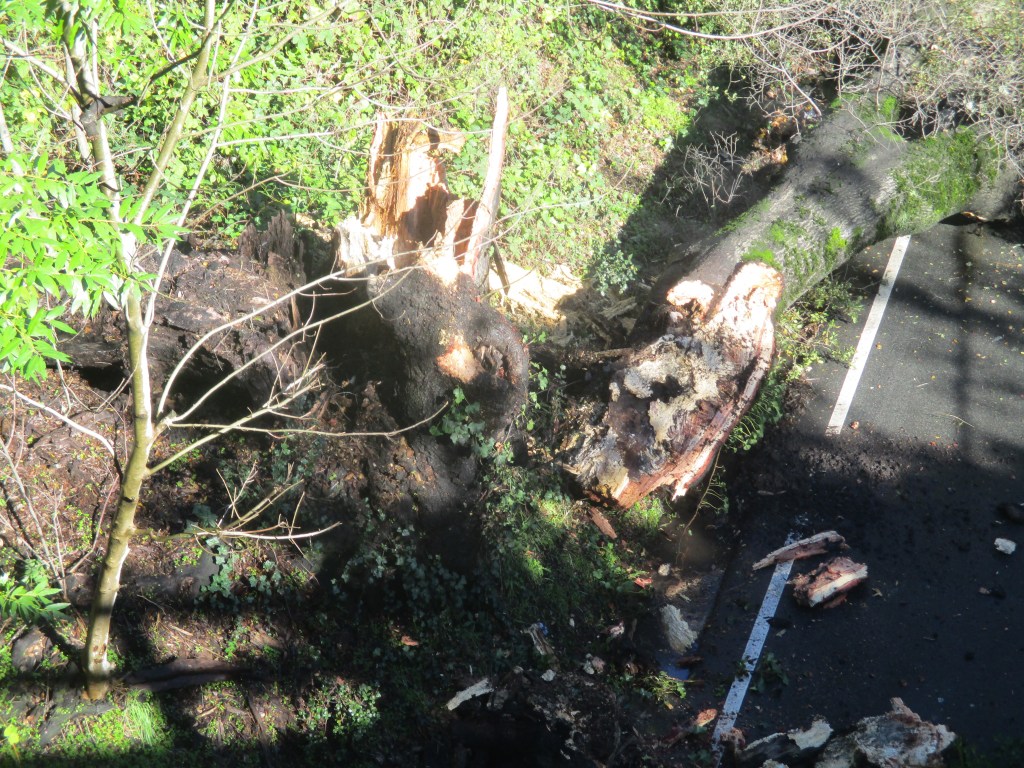
5. But wait, there’s more! This was more than we could move efficiently with the tractor. Two crews, working at both ends, took all day to clear it all. Another trunk fell to the left. 

6. The trunks had been deteriorating for decades. The moisture of the adjacent drainage ditch accelerated rot. All that evergreen foliage finally got too heavy when wet from rain. 

This is the link for Six on Saturday, for anyone else who would like to participate

ISA Certified Arborists Know Trees

Arborists work with the big trees.

Arborists are horticulturists. They just happen to be more specialized than most. Many or most other horticulturists work with flora that they engage from the ground. Arborists work exclusively with trees. Some must leave the ground to do so. The most experienced and educated arborists are those certified by the International Society of Arboriculture or ISA. 

ISA certification requires an arborist to pass an examination of arboricultural proficiency. Continued participation with ISA endorsed classes, workshops or seminars is necessary to maintain certification afterward. Arboricultural industries are demanding, with stringent professional standards. Certification with such industries is correspondingly demanding.

General information about the International Society of Arboriculture is available online at isa-arbor.com. This site, although designed for arboricultural professionals, is informative also for those who must procure the services of an arborist. The directory of ISA certified arborists can identify local arborists, as well as the tree services with which they affiliate.

Although arboriculture is pertinent throughout the year, it seems to become more so with the first storms of autumn. Some trees prefer dormant pruning during winter. Others might perform best after summer pruning. Various trees have various preferences. Regardless, the need for arboriculture becomes apparent as weather breaks limbs and uproots trees.

Trees are innately the most substantial and relatively permanent plants in home gardens and landscapes. Unlike annuals and some perennials, trees are not disposable, or easy to remove if they become too problematic. Many eventually get too big for those who are not experienced arborists to engage. That is why too many trees need professional help. 

Many municipalities require permits for the removal of significant trees. Inspection by ISA certified arborists, and associated reports, are generally prerequisites for the issuance of these removal permits. Some municipalities are more protective of trees than others. ISA certified arborists try to be familiar with the ordinances of the various municipalities in which they work.

Six on Saturday: Oops!


These Six for this Saturday are a minor collection of embarrassing but otherwise useless images that are perhaps too amusing to merely delete. Some had been accumulating for quite a while. The first may not seem like the worst, but is associated with a more embarrassing picture from another ‘Six on Saturday’ of last April. That entire procedure was just too dysfunctional to write about. The fifth picture was actually planned, and should actually work, regardless of how silly it looks here now.

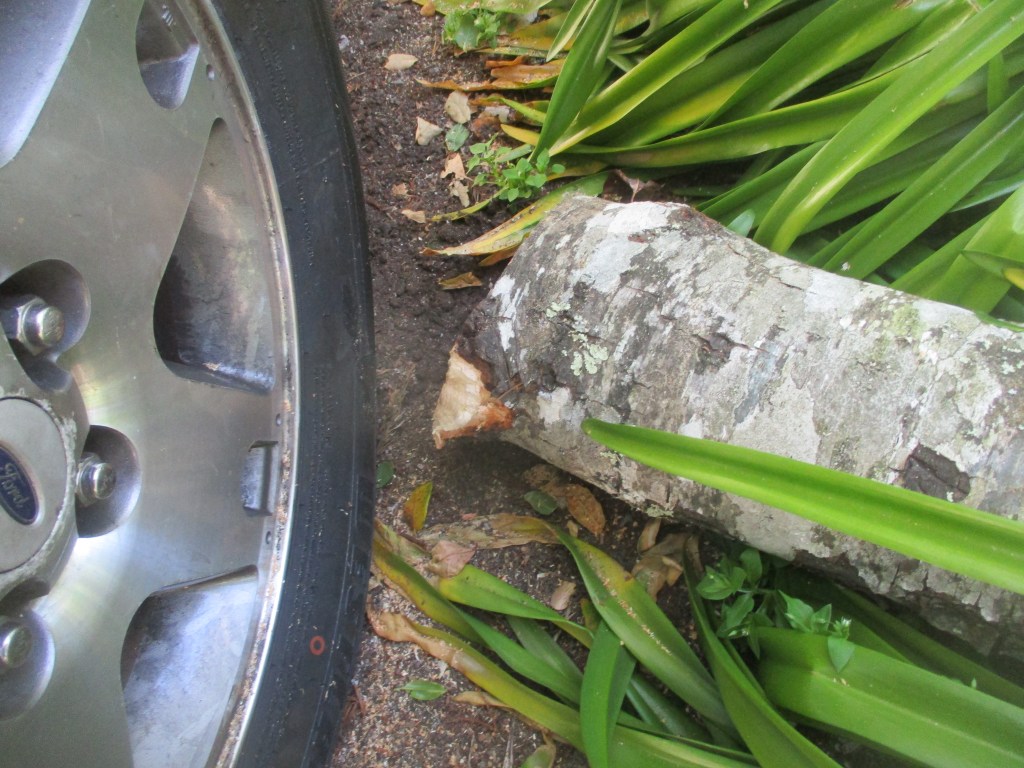
1. Black cherry is so rare here that I met only one in my entire career; and sadly, it needed to be removed. What I did not show at the time was how close this bit got to an adjacent parked car.

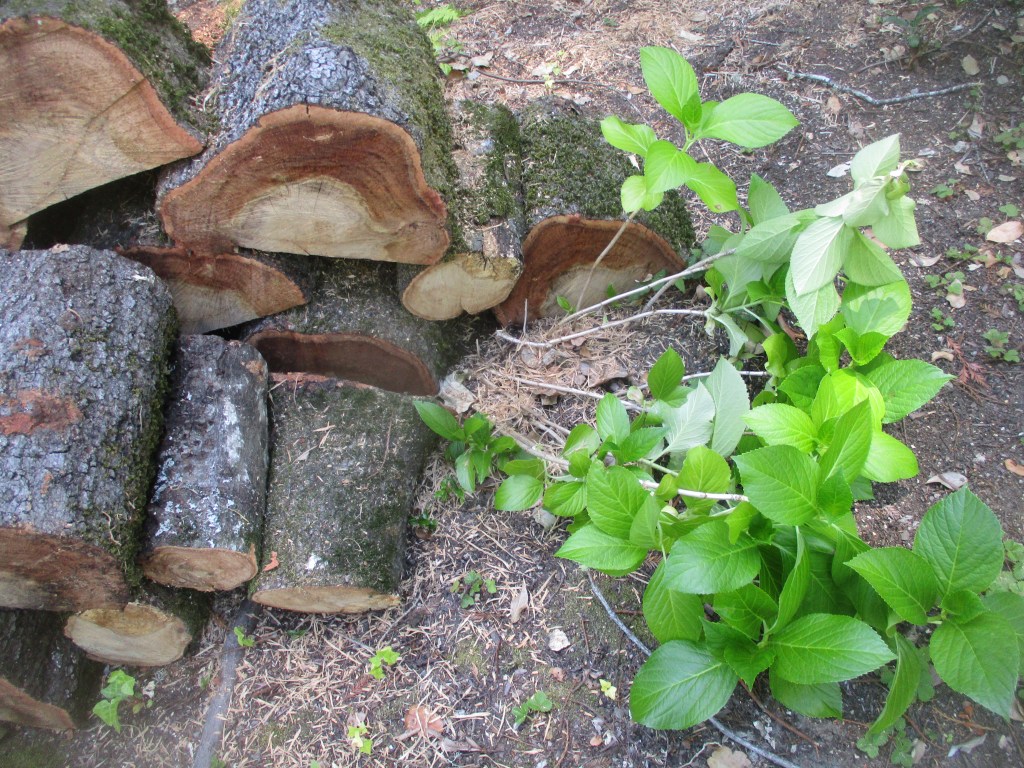
2. Arborists who cut down bigger trees for us are remarkably proficient. However, after removing this canyon live oak without any damage, they piled the firewood onto one of my hydrangeas.

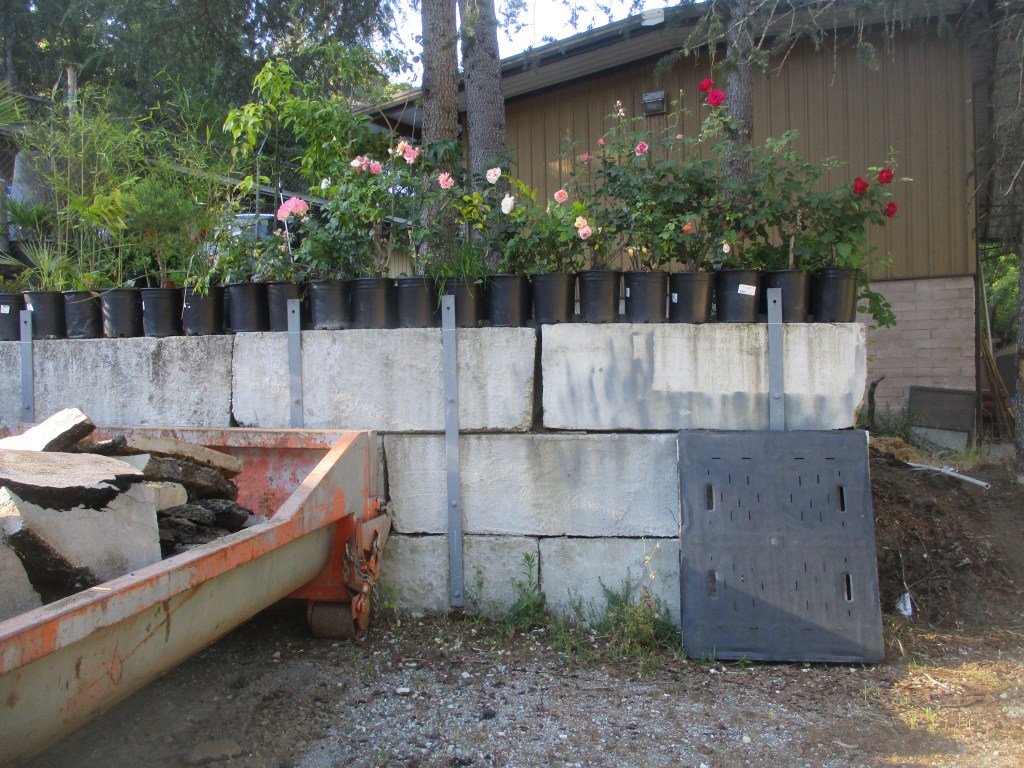
3. It made sense at the time. There are two rows of canned plants on top of this retaining wall. Roses are in the sunnier outer row. Now, they need to be deadheaded; but I can not reach them.

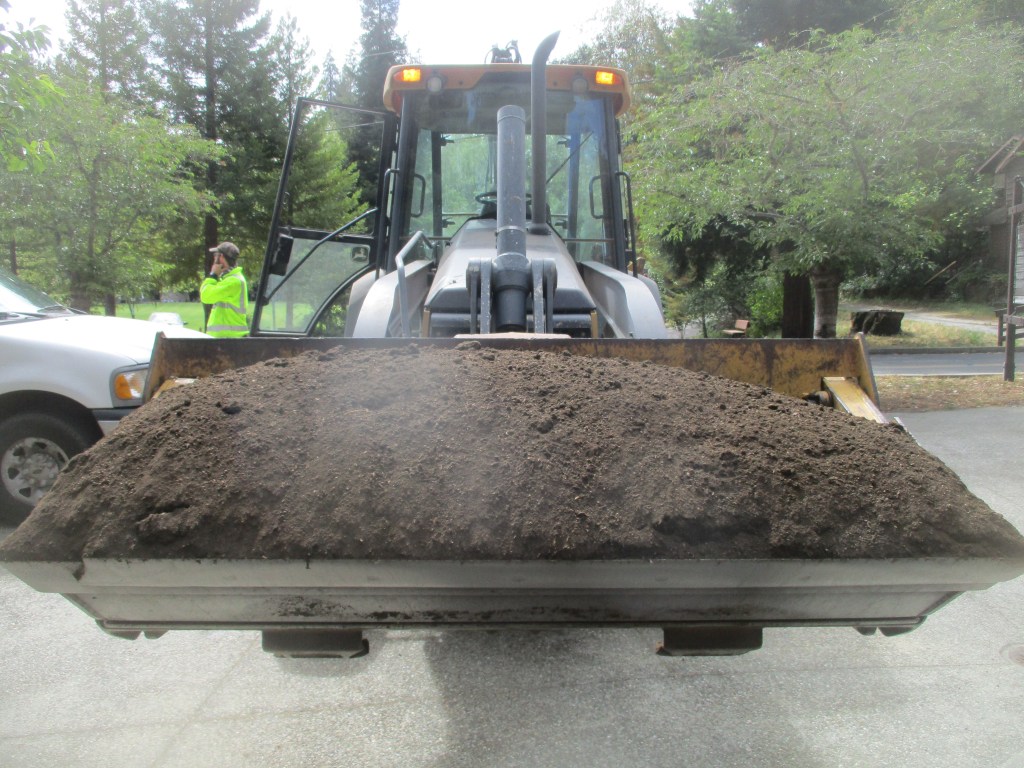
4. Land is famously expensive here. Nonetheless, we get it delivered for free whenever we want it. The quality is good, and on rare occasion, it comes with surprises such as callas or narcissus.

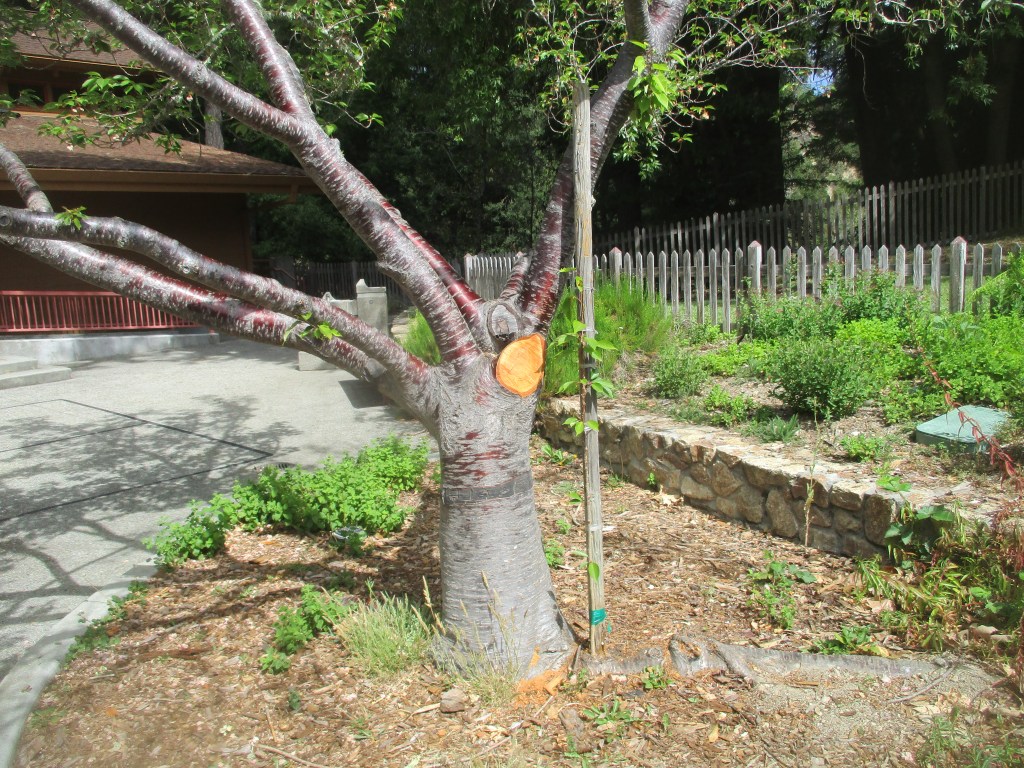
5. This ungrafted flowering cherry tree would not stop suckering. Now that it is succumbing to scald, one of its own suckers is groomed and staked to replace it. This stake is nailed to the tree.

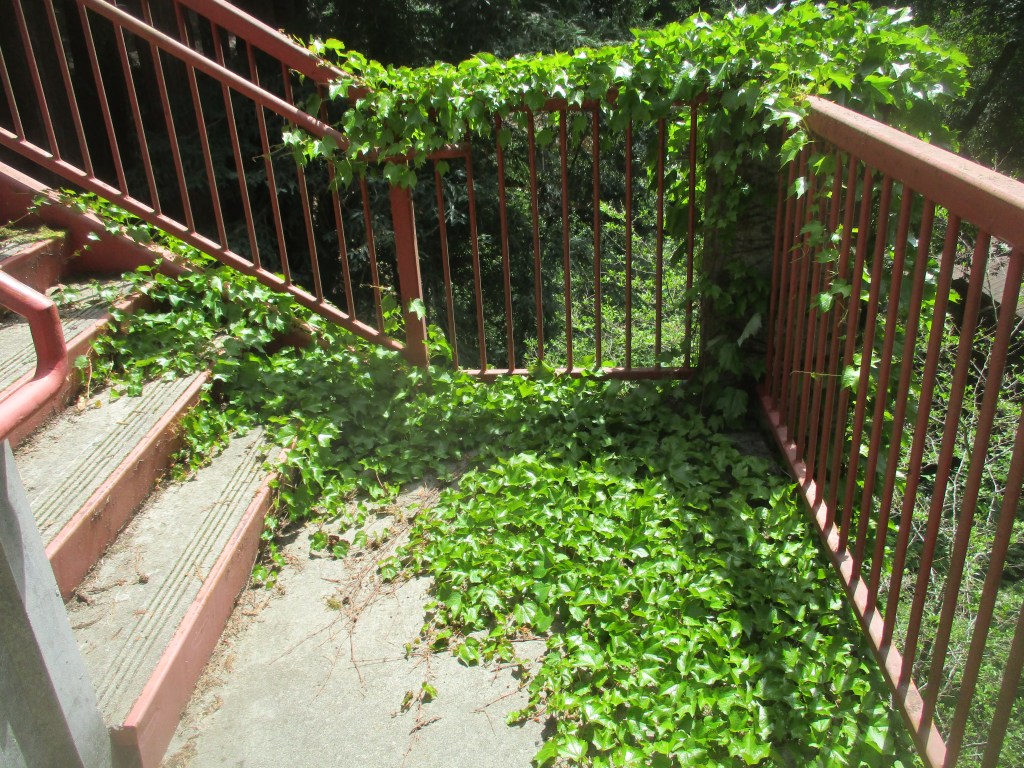
6. While unused during the past year, the buildings at work were neglected more than the landscapes were. No one was here to tell us what this Boston ivy was doing on this exterior stairwell.

This is the link for Six on Saturday, for anyone else who would like to participate:

https://thepropagatorblog.wordpress.com/2017/09/18/six-on-saturday-a-participant-guide/

Limb Failure Of Spontaneous Nature

Riparian trees notoriously shed limbs spontaneously.

Winter storms sometimes break limbs or topple trees. Such damage is no surprise during winter because that is when almost all windy weather happens here. Early storms during autumn might be more damaging because deciduous trees are less aerodynamic prior to defoliation. Nonetheless, falling trees and limb failure are typically associated with wind.

That is why spontaneous limb failure is such a surprise when it happens, typically during pleasantly mild or warm weather of spring or early summer. It is more likely without wind than with it. Humidity, although atypical here, is a contributing factor. Healthy trees within riparian situations or lawns are more susceptible than distressed trees in drier situations. 

Particular types of trees are more susceptible to spontaneous limb failure as well. Valley oak, coast live oak, sweetgum, carob, some pines and various eucalypti may shed limbs after an unusually rainy winter or an increase of irrigation. Riparian trees, such as willow, cottonwood, box elder and sycamore are notorious for shedding big limbs unexpectedly.

Spontaneous limb failure occurs if limbs are unable to support their own increasing foliar weight. Bloom can add significant weight too. Warmth promotes the vascular activity that increases foliar weight. Humidity and insufficient air circulation inhibit evapotranspiration (evaporation of foliar moisture), which typically compensates for increasing foliar weight.

As the terminology implies, spontaneous limb failure occurs suddenly, and often without warning. It is therefore potentially very dangerous. It is common among limbs that exhibit no prior structural deficiency. Even experienced and educated arborists who are familiar with vulnerable tree species can not identify and mitigate all potentially hazardous limbs. 

Arborists often suggest pruning to limit the weight of trees that are innately susceptible to spontaneous limb failure. However, limbs that are already sagging from their own weight are risky to engage. Most damage occurs in spring and early summer. Fruit trees that are too productive can succumb to the weight of fruit as it ripens through summer or autumn.

Start Young Trees Off Right

Recovery is difficult for abused trees.

Young trees are so impressionable. Too much water can damage their roots, or cause them to disperse too shallowly. Improper pruning can disfigure their branch structure, and ultimately compromise structural integrity. Improper staking to keep them stable can actually interfere with development of stabilizing roots, and interfere with trunk development.

Newly planted trees will of course want to be watered from spring to autumn for at least the first year, and more likely for a few years. Those that will eventually be less reliant on watering as they mature are actually the most demanding while young, because their confined roots are not yet adequately dispersed for self sufficiency. The problem is that too much water can keep lower soil too saturated for new roots to disperse into. This causes roots to instead disperse closer to the surface of the soil, which is not only unhealthy for the trees, but puts the roots closer to pavement, other plants and any other features that they can eventually damage as they grow.

Many young trees should be pruned as they grow to eliminate structural problems, and to instead promote good branch structure. The problem is that improper pruning can actually cause structural problems that will be with the victimized trees for the rest of their lives. Pruning should leave no stubs that will take longer to compartmentalize (heal), or that might produce vigorous but weakly attached new stems.

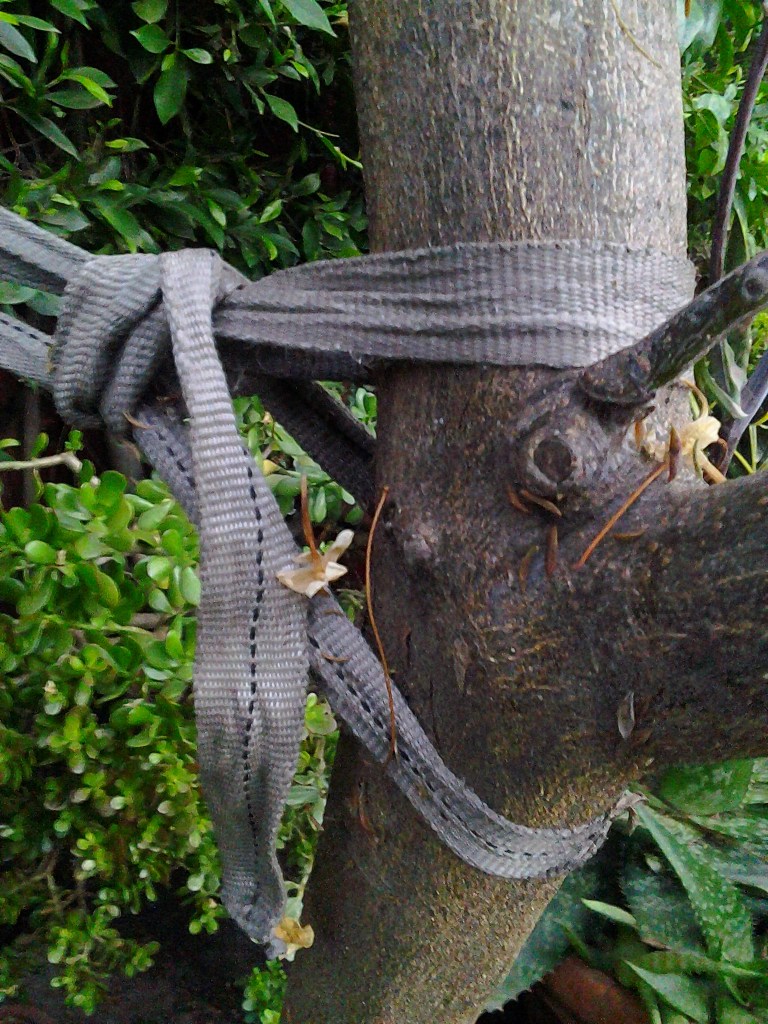
Stakes are unfortunately necessary to stabilize new trees. The problem is that the trees can become so reliant on stakes for support that they do not develop enough trunk strength to support their canopy without stakes. That is why trees should be tied loosely enough to their stakes to be able to move at least a little in a breeze. Nursery stakes (that trees are bound to for a straight trunk in the nursery) should be removed when sturdier stakes are added.

New trees are naturally a bit more distressed than mature trees that have settled into their environment. They are consequently more susceptible to disease and insect infestation.

Some Shrubs Are Better Trees

Sculptural trunks are worth showing off.

So many really nifty small trees never get an opportunity to perform to their best potential. Many function so well as shrubbery that there is no need to prune them into tree form. Many just get shorn down because that is the most obvious option.

There certainly is no problem with maintaining large shrubbery as shrubbery if that is the intended function. Oleander, photinia, privet, bottlebrush and various pittosporums are all excellent shrubbery, and except for oleander, can be shorn into hedges. Yet, any of them can alternatively be grown into small trees.

‘Standards’ are shrubs that are trained onto single staked trunks. Small shrubs trained as standards, such as boxwood, azalea and euryops, are really only shrubbery on a stick. The larger shrubs though, are more often trained onto trunks about six feet tall so that they can develop as small trees with single trunks.

However, they do not necessarily need single straight trunks. Many have naturally sculptural trunks that are worthy of display. They can be planted as shrubbery, and simply trained up on a few of the trunks that they are naturally equipped with. They only need lower growth pruned away as they mature, instead of getting pruned down.

Overgrown shrubbery that has become so obtrusive that it might otherwise need to be removed can often be salvaged by getting pruned up as small trees. For example, if a New Zealand tea tree or myoporum has gotten so wide at the base that it is awkward to work around, the basal growth can be pruned away so that only upper grown that has adequate clearance remains suspended on exposed trunks. The gnarly trunks within are often more appealing than the abused foliage that obscured them.

Japanese maple, crape myrtle, water gum (Tristania laurina) and various podocarpus really are small trees, but often get shorn instead of pruned properly by ‘mow, blow and go’ gardeners who do not know any better. Olive, coast live oak and saucer magnolia are substantial trees that often get shorn into shrubbery before they can grow beyond the reach of abusive gardeners.

Hollywood juniper as well as some of the other larger junipers naturally develop into sculptural small trees that are just as appealing with or without their lower growth. The gnarly foliated stems are just as sculptural as the trunks and stems within. If space allows, they can be left to grow somewhat wildly with only occasional pruning of superfluous stems.

Holy Guacamole!

This old article does not conform to the ‘Horridculture’ meme for Wednesday like ‘Anti-Community Garden’ would have; but I already reblogged that article, so can not do so again. (It can be found at https://tonytomeo.com/2017/12/09/hate-destroys/ .) At least this article is more amusing.

tonytomeo's avatarTony Tomeo

P71202.jpgHorticulturists have a way of making all those long Latin names sound easy to pronounce. Lyanothamnus floribundus ‘Asplenifolius’ – Syzigium paniculatum – Metasequoia glyptostroboides. I do not know why proper pronunciation of their names is so important. They have no ears. They can not hear if we simply call them ‘Earl’. Even if they could hear, they would not respond.

Communication with other people is probably more important. Yet, we are so often unable to spell something as seemingly simple as the sound of a palm frond falling to the ground. Does it sound like “whoosh”, or “splat”, or some combination of both? What do the Santa Anna Winds sound like as they blow through a grove of Aleppo pines? What does a red flowering gum full of bees sound like?

Heck, Brent could not even tell me what an incident that he heard in his own backyard sounded like…

View original post 399 more words