
There really is no such thing as a perfect tree. Some are not quite as messy as others. Some have better structural integrity than others. Some have gentle roots; and some stay proportionate to tight spots. However, without exception, all trees grow, drop leaves, and disperse roots.
This is an important consideration when selecting any tree, and especially when selecting a street tree for the narrow space between the curb and the sidewalk (which is commonly known as a park strip). Even where there is no sidewalk, or where the sidewalk is at the curb, most of the obstacles are the same.
Street trees should have reasonably complaisant roots that should not be likely to damage curbs, sidewalks or roadways, at least for several years. They should naturally develop reasonably high branches. They will need to be pruned higher than trucks that may park at the curb. Street trees must also tolerate harsh exposure.
Wider park strips can of course accommodate larger trees. Those that are only two feet wide or narrower are probably not wide enough for any tree larger than photinia, purple-leaf plum or English hawthorn, which are difficult to prune for clearance over roadways and sidewalks.
Messy leaves, flowers or fruit that might not be a problem within the garden might be more of a problem at the curb. It is not so easy to rake such debris if cars park over it. Trees that are commonly infested with scale or aphid are likely to drop sticky honeydew (scale and aphid poop) onto parked cars.
Unfortunately, those who get street trees do not always get to select them. Many municipalities assign specific trees to specific streets. Some streets have a few trees to choose from. Others have only one option. Home Owners’ Associations (HOAs) decide if and where new trees get planted.
Crape myrtle is probably the most common choice for a new street tree because the roots do not get big enough to damage pavement. However, the canopies are not very big either. They stay too low to be pruned above trucks. Crape myrtle is susceptible to scale infestation that can get bad enough to make sidewalks sticky.
For many years, London plane (sycamore) had been another popular street tree. Unfortunately, the voracious roots can damage pavement within only a few years. The messy foliage discolors and starts to fall before autumn.
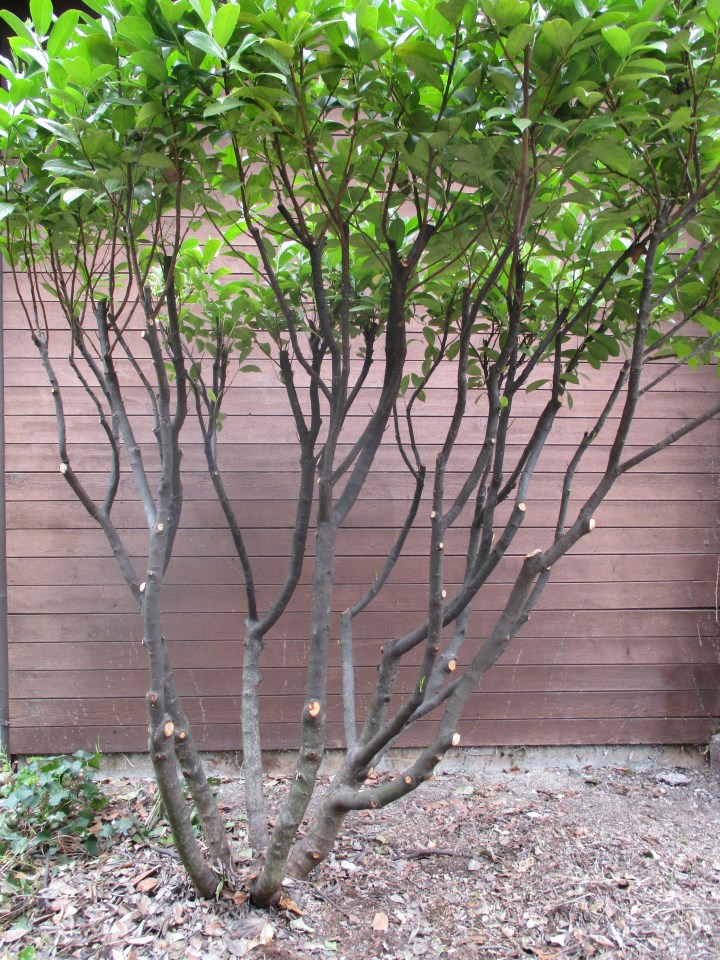

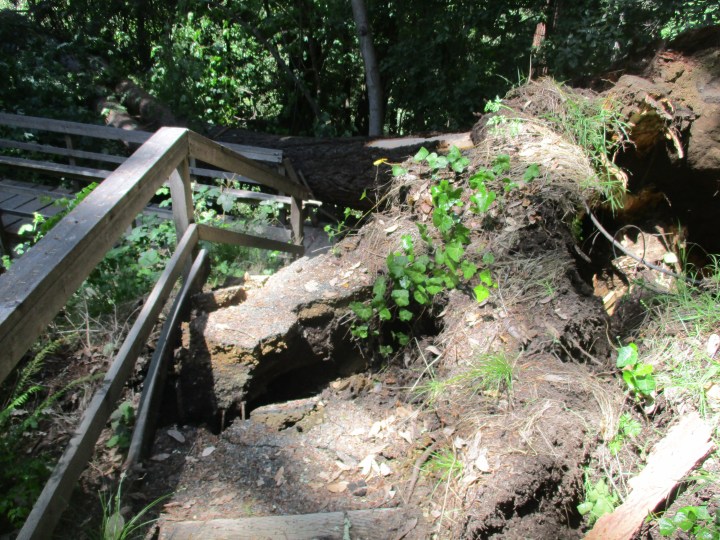


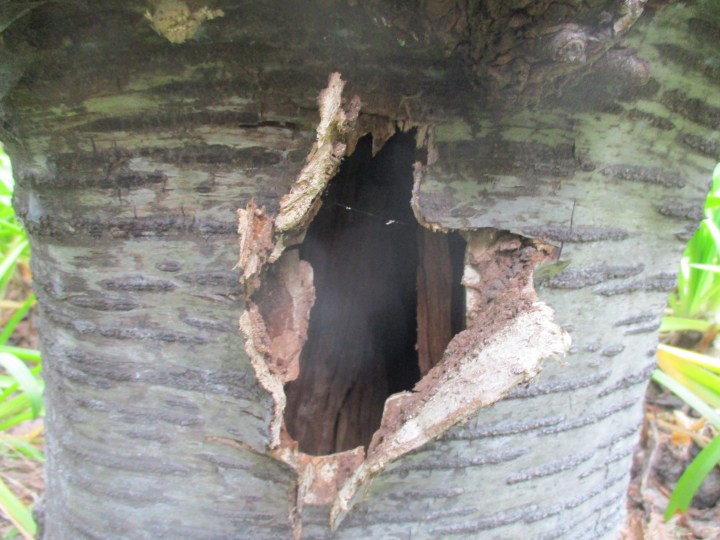

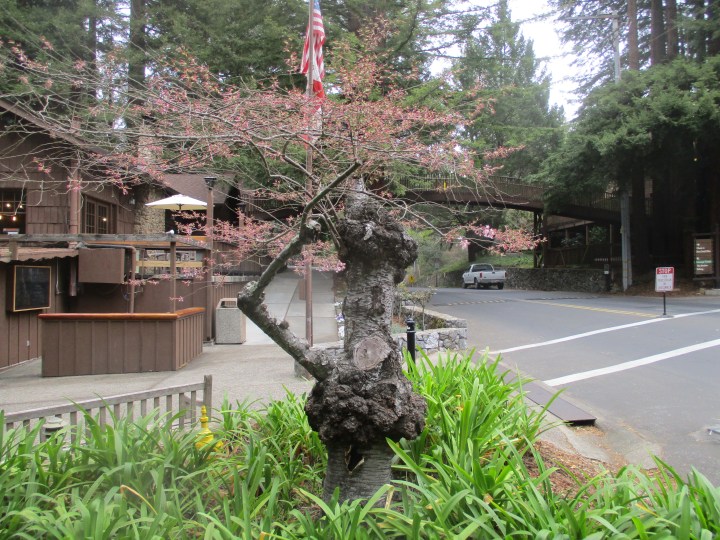


 Roots hold up trees. That is part of their job. They grow along with the trees they support, and disperse as necessary to maintain stability. Trees grown within the confinement of cans (pots) or boxes, and then installed into a landscape, are typically staked temporarily until their roots adequately disperse and stabilize. Once unnecessary,
 Tony Tomeo