
Much of my work involves inspection of trees to assess health, stability and structural integrity, and subsequent composition of associated arborist’s reports to document such assessments. These reports are necessary for the issuance of permits to remove mature trees within many municipalities. They are only effective for that purpose if they recommend and justify removal.
If there is nothing wrong with the health, stability or structural integrity of subject trees, removal might be justified for other reasons. For example, the removal of superfluous trees might be justified if it would promote healthier development of remaining trees. Trees that disperse roots that are beginning to damage adjacent infrastructure might likewise need to be removed.
It seems like it is too much to be concerned with for something that property owners should not need permission to remove from their own property. For what people pay for property here, they should be able to do whatever they want to with it. However, mature trees are considered to be assets to their respective Communities, and components of the collective urban forests.
These majorly and justifiably controversial concerns are actually not the the only difficulties associated with municipal tree preservation ordinances.
While a young coast live oak in the extreme corner of my garden was not quite big enough to require a permit for removal, I asked the next door neighbor if he would like it to be removed before the roots damaged his driveway. I explained that if we waited any longer, the tree would be protected, and that a permit to remove such an exemplary tree would not likely be issued.
Tree preservation ordinances are often the motivating factor for the removal of trees before they get big enough to be protected! I was fortunate that my neighbor wanted my oak to stay.
 Roots hold up trees. That is part of their job. They grow along with the trees they support, and disperse as necessary to maintain stability. Trees grown within the confinement of cans (pots) or boxes, and then installed into a landscape, are typically staked temporarily until their roots adequately disperse and stabilize. Once unnecessary,
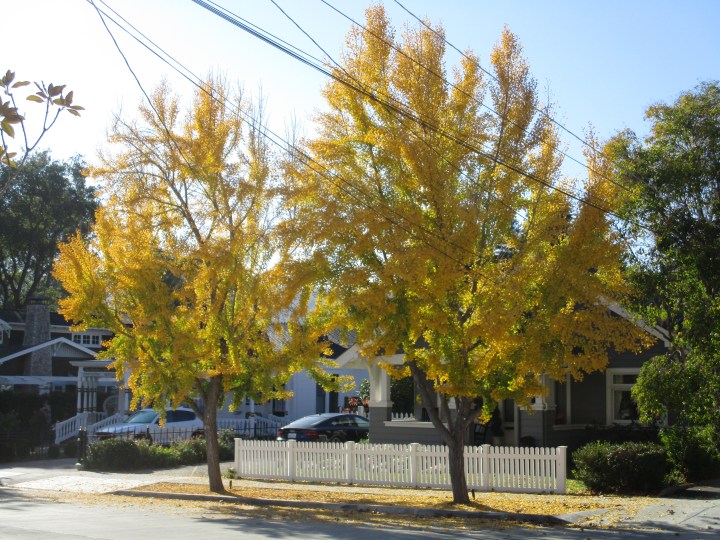 Much of my work involves street trees. They need more of my kind of attention than most other trees. They must conform to more restrictive limitations. They endure more abuse. They are the most prominent trees on urban properties. Because some are assets of their respective municipalities, they are more stringently protected by local ordinances than other trees are.


 Grafting compound is a thick sealant applied to a fresh graft union to limit desiccation while the graft knits. A bit more typically gets applied to the cut distal end of the scion. There are various formulations of grafting compound, ranging from something resembling roof patch to a something with the consistency of thick paint.
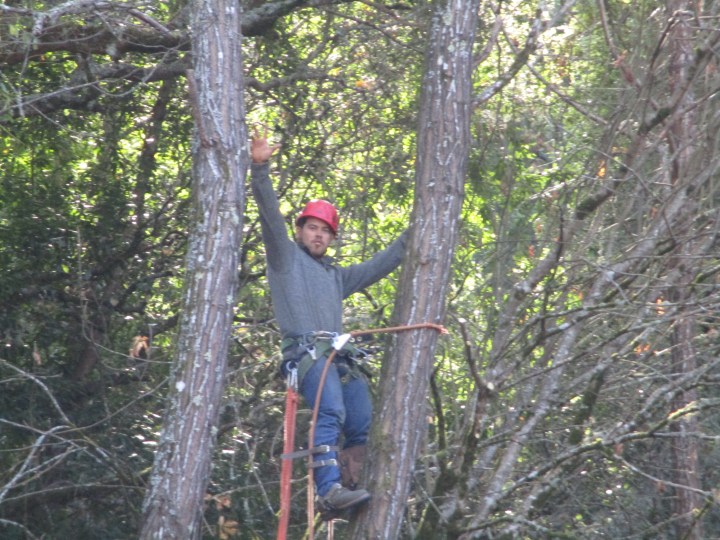
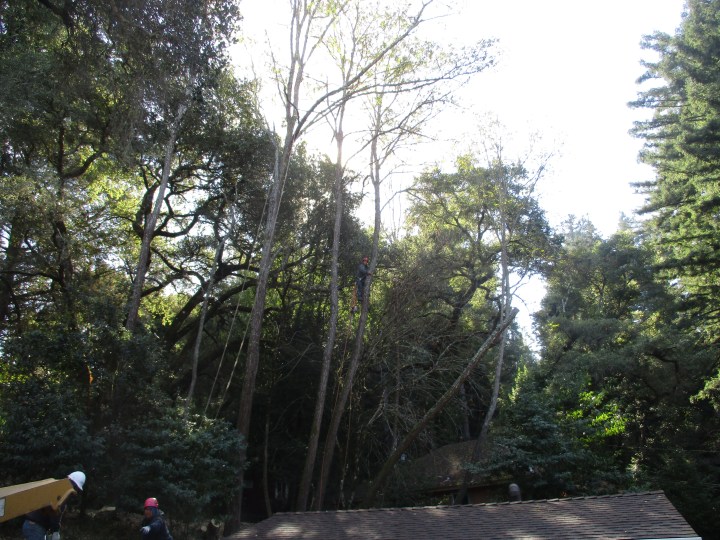
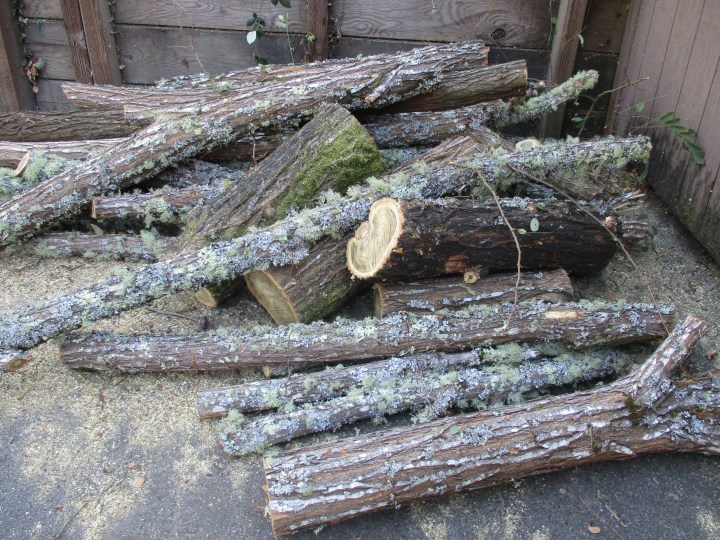
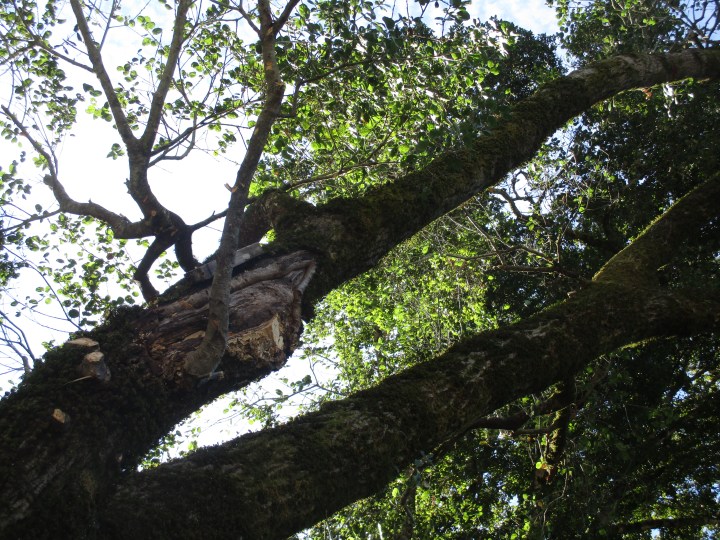
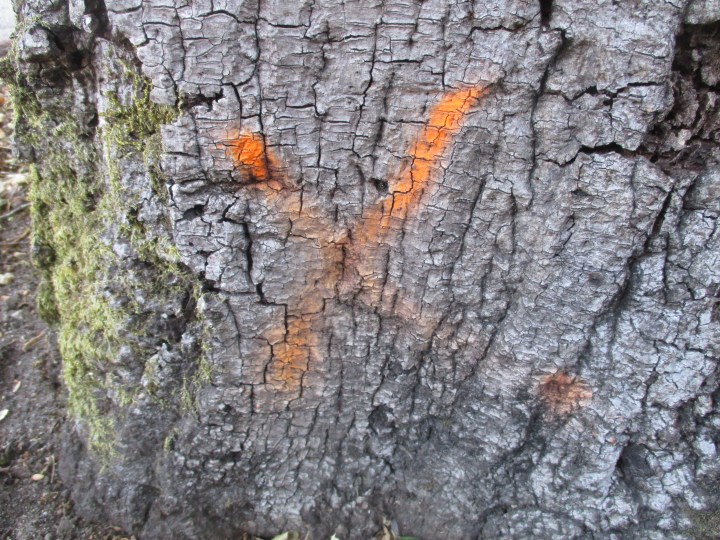 Horticulture is not all about growing things. If everyone was out planting trees, the World would eventually be overwhelmed with forest. It is sometimes necessary to cut trees down. There are several at work that we have been wanting to cut down for quite a while. Some are structurally deficient enough to eventually become hazardous, which is unacceptable in public spaces.
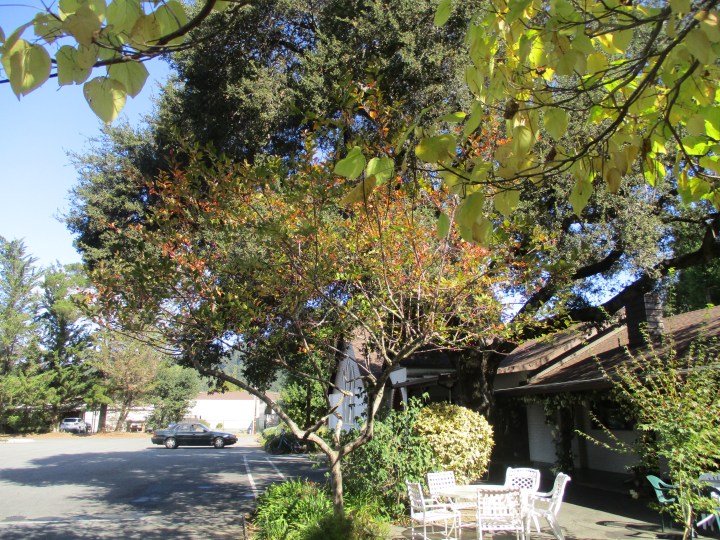
 The trees know what time of year it is. Even evergreen trees have shed some of their older foliage through late summer. Deciduous trees generally start later, but will be more blatant about their process as they defoliate completely through autumn to winter. Some get strikingly colorful first, as if to brag about it. Foliage is not so important during shorter days and dimmed sunlight anyway.
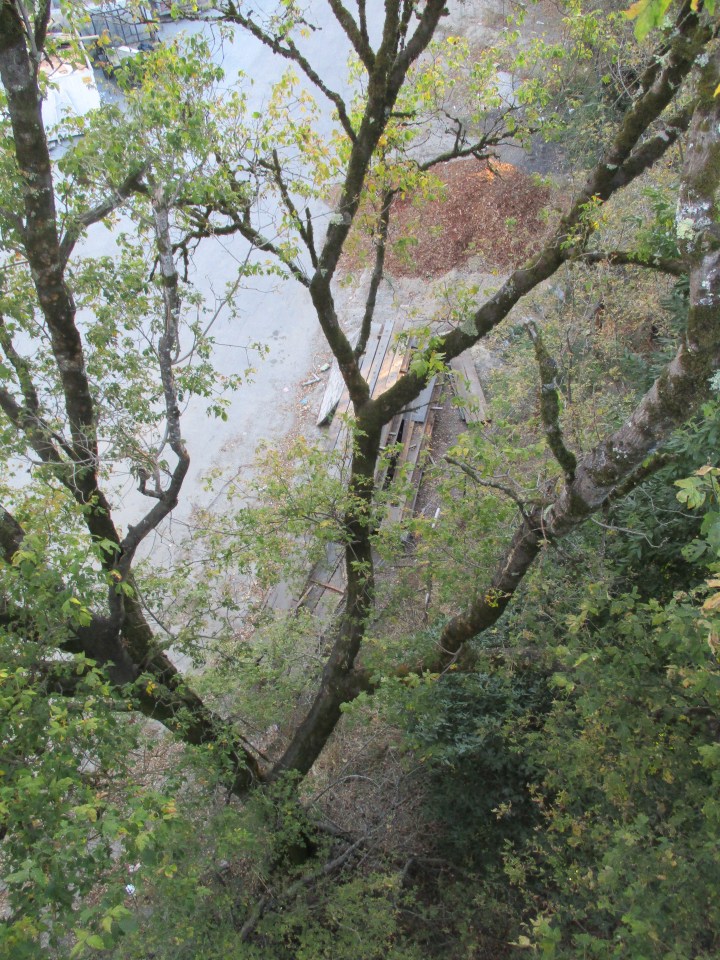 Arborists see trees very differently from how most of us see them. They know their trees very intimately, and by botanical name. Arborists know how big particular trees get, both tall and wide, and if they are likely to develop structural deficiency or aggressive roots. They can tell us which are deciduous, which are evergreen, and which are messy with foliage, bloom or fruit.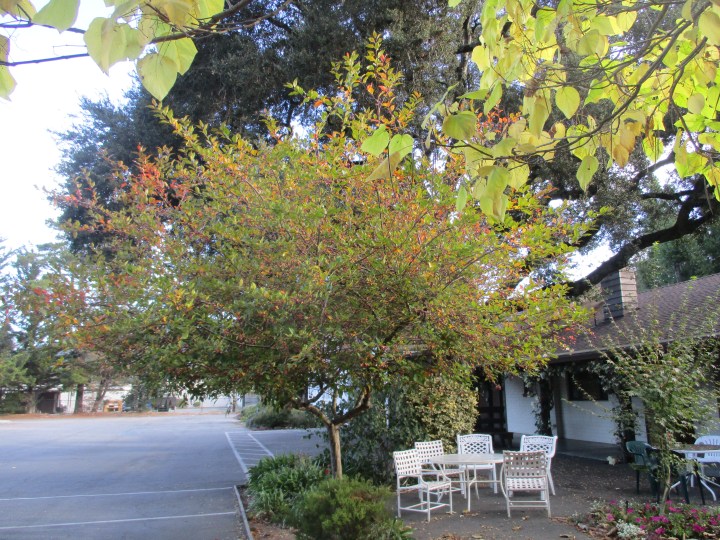
 It is amazing what just a few parishioners and friends can accomplish in just a few hours from about nine to noon on Saturday morning. It is only happens a few times through the year, so we make the most of it to catch up on all sorts of maintenance and projects at Felton Presbyterian Church. (My parish should do this sort of thing.) I was there to work in the minimal landscape.

