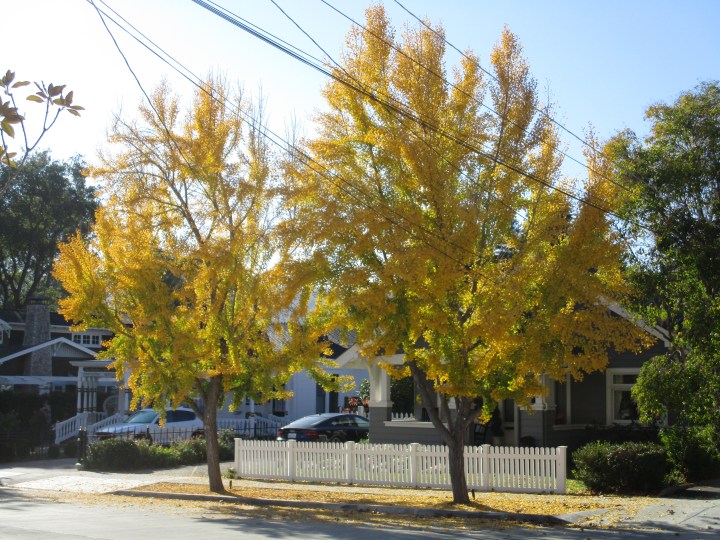
 Much of my work involves street trees. They need more of my kind of attention than most other trees. They must conform to more restrictive limitations. They endure more abuse. They are the most prominent trees on urban properties. Because some are assets of their respective municipalities, they are more stringently protected by local ordinances than other trees are.
I planted quite a few street trees too. While selecting trees for the medians of San Vicente Boulevard in Los Angeles, we considered the clearance of the lowest limbs above the highest truck traffic, the docility of roots under curbs and pavement, the potential for foliar debris, the resiliency to neglect, and the resistance to pathogens. Those were just some of the major concerns.
We sort of wanted them to look good too.
Ginkgoes, at least modern (fruitless) cultivars, work well as street trees. They are tall and slender, and can be pruned for clearance above streets and sidewalks. Their roots are reasonably complaisant, and take many years to displace concrete. ginkgoes defoliate neatly in autumn, with no debris for the rest of the year. They are resistant to pathogens and tolerant of neglect.
They also look great in their monochromatic but brilliant yellow fall color. (Try to not notice all those utility cables.)
This pair of ginkgoes is in front of an old home in town that was formerly the office of the Los Gatos Weekly Times, before it expanded into the larger Silicon Valley Community Newspapers group. Two decades and one year ago, this was where I dropped off the first of my weekly gardening columns, first as hard copy on paper, then on floppy discs. The trees were smaller then.
One day back in about 1999 or so, I stopped by on my way back from delivering rhododendrons and other horticultural commodities from the farm. I was driving the big delivery box truck. I realized how important adequate clearance is when the truck tore a significant limb from the tree on the left. The tree and I both can attest to the resiliency of the species to such abuse.

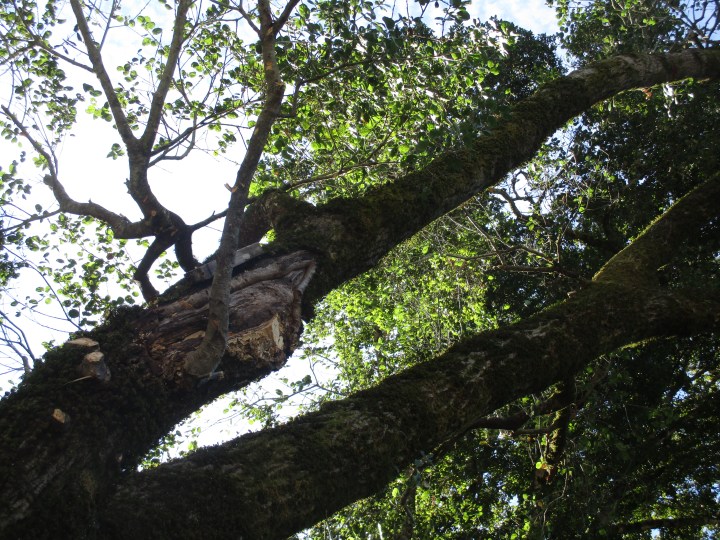

 Grafting compound is a thick sealant applied to a fresh graft union to limit desiccation while the graft knits. A bit more typically gets applied to the cut distal end of the scion. There are various formulations of grafting compound, ranging from something resembling roof patch to a something with the consistency of thick paint.
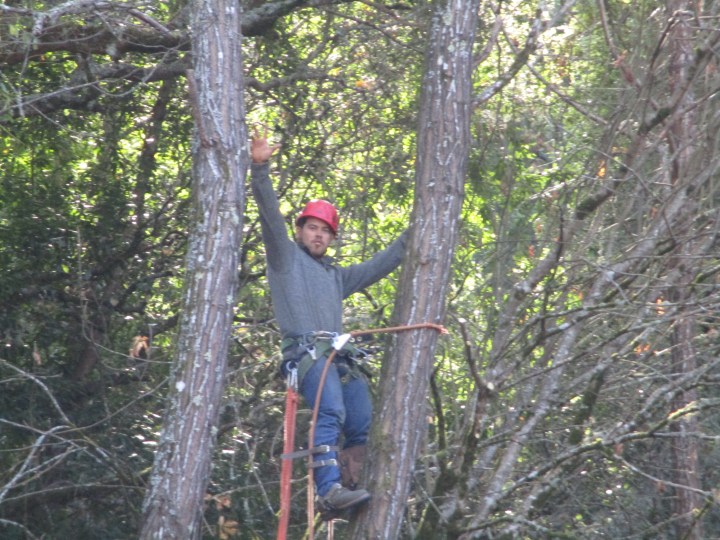
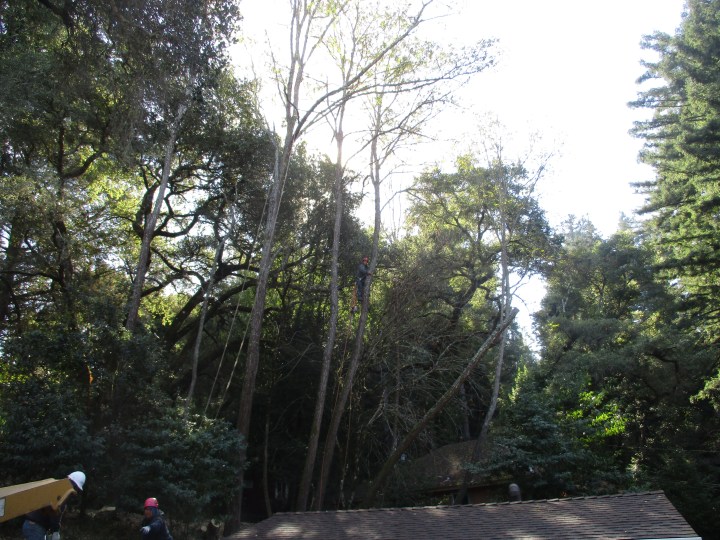
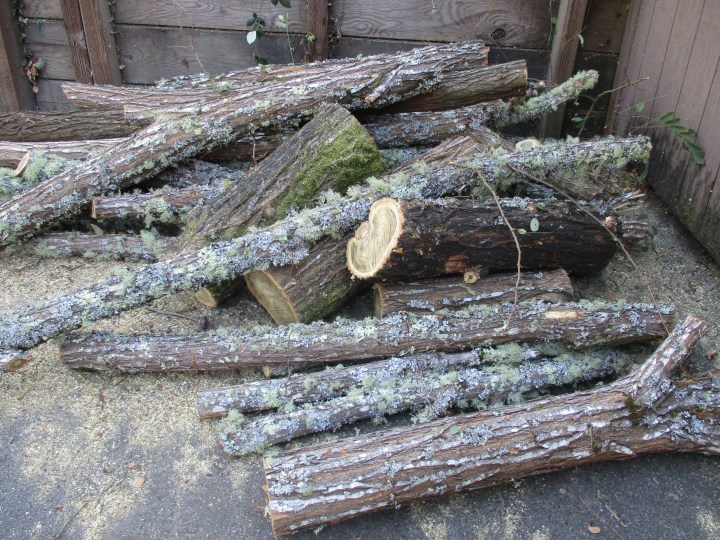
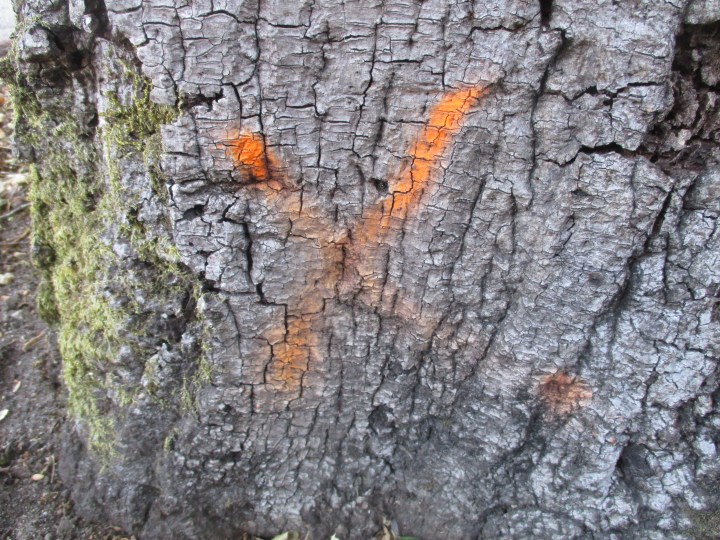 Horticulture is not all about growing things. If everyone was out planting trees, the World would eventually be overwhelmed with forest. It is sometimes necessary to cut trees down. There are several at work that we have been wanting to cut down for quite a while. Some are structurally deficient enough to eventually become hazardous, which is unacceptable in public spaces.
 The trees know what time of year it is. Even evergreen trees have shed some of their older foliage through late summer. Deciduous trees generally start later, but will be more blatant about their process as they defoliate completely through autumn to winter. Some get strikingly colorful first, as if to brag about it. Foliage is not so important during shorter days and dimmed sunlight anyway.
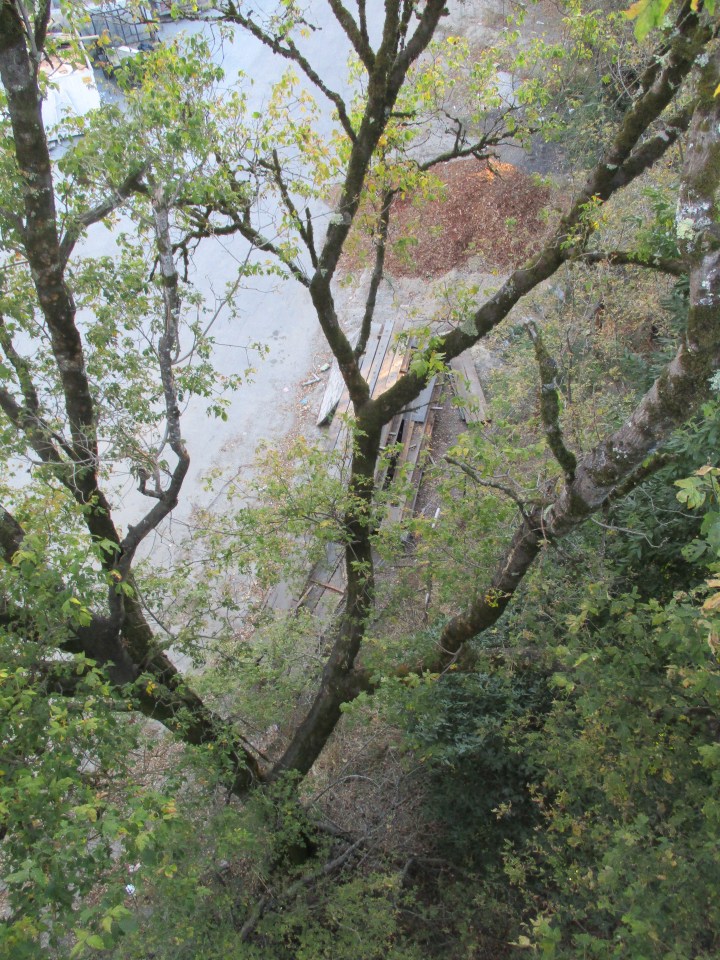 Arborists see trees very differently from how most of us see them. They know their trees very intimately, and by botanical name. Arborists know how big particular trees get, both tall and wide, and if they are likely to develop structural deficiency or aggressive roots. They can tell us which are deciduous, which are evergreen, and which are messy with foliage, bloom or fruit.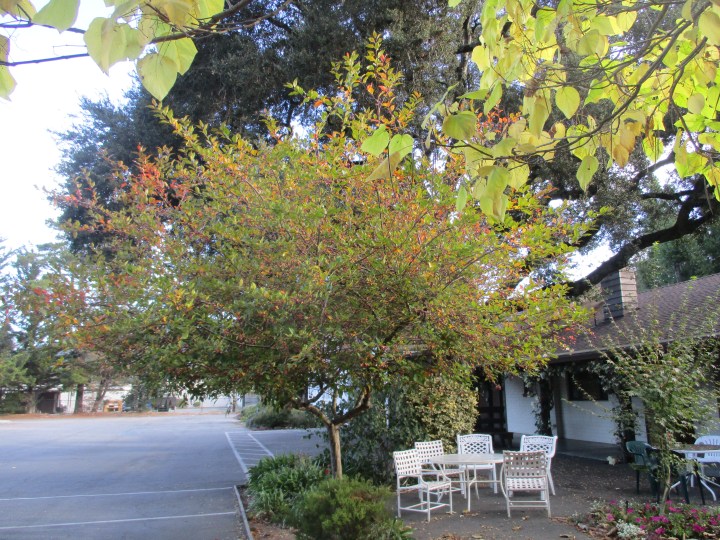
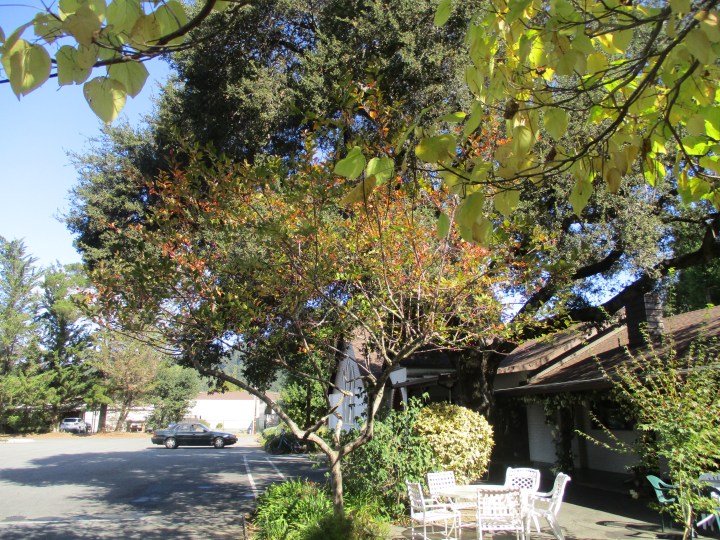 It is amazing what just a few parishioners and friends can accomplish in just a few hours from about nine to noon on Saturday morning. It is only happens a few times through the year, so we make the most of it to catch up on all sorts of maintenance and projects at Felton Presbyterian Church. (My parish should do this sort of thing.) I was there to work in the minimal landscape.
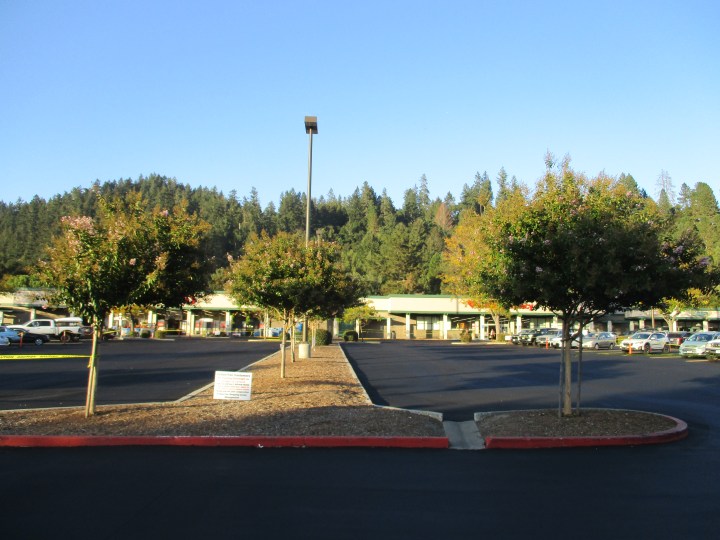 Perhaps the signs should be down instead. They are obscured by the crape myrtles where they are now. They would be more visible if they were either higher or lower, but not in line with all these trees. The trees were planted only a few years ago, but have done very well. Lodgepoles need to be removed. The specimen to the left is recovering well from earlier disfigurement.
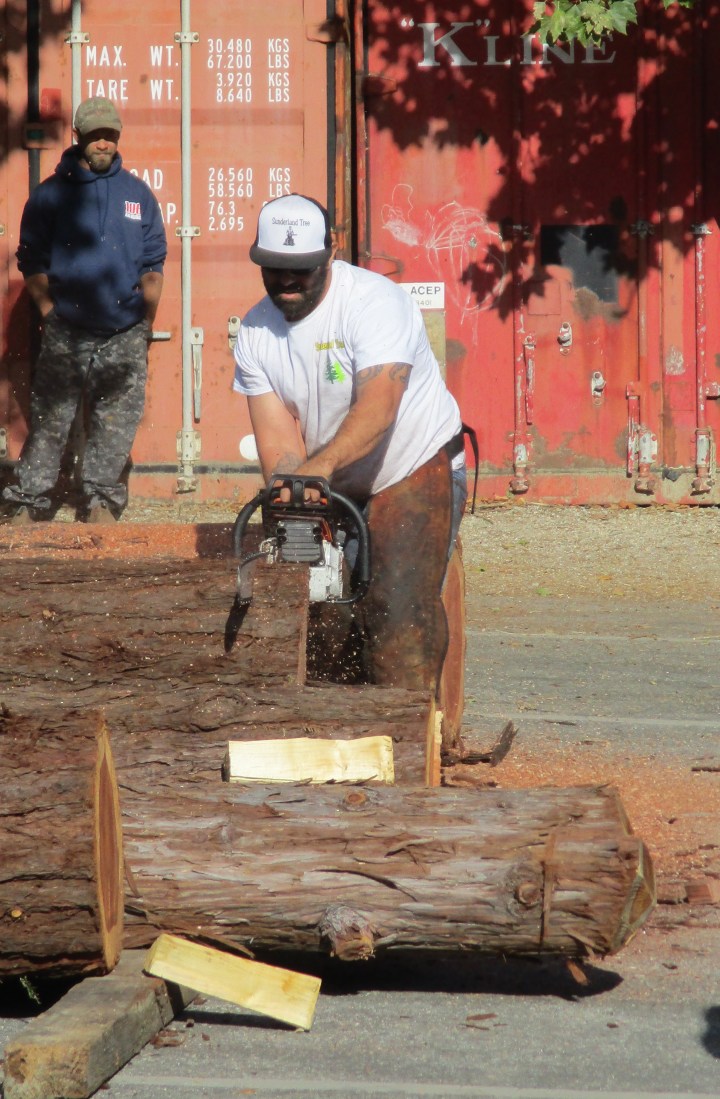 Personal Protective Equipment. That is what PPE is for. Acronyms can be so vague. PPE could be for Purple People Eater for all we know. That movie just happened to be released to cinema at the end of 1988, just a few months after my summer internship with an exemplary crew of arborists who instructed be about the importance of PPE. I am glad to have missed the movie.
 Tony Tomeo