The Importance of Proper Arboriculture

Arboriculture is horticulture of trees.

Pasadena sustained the worst of the damage caused by the strongest Santa Ana Winds in three decades. Huge piles of debris from broken trees are much more than can be removed any time soon. Falling debris and trees damaged many roofs, cars and anything else that happened to get in the way.

Other towns and neighborhoods throughout the area, particularly those at the base of mountains, also sustained major damage. At the same time, severe winds ravaged the San Francisco and Monterey Bay Areas as well, particularly in the Santa Cruz Mountains and the hills of the East Bay.

Some of the damage caused by wind in urban areas might have been less disastrous if trees had gotten the respect and attention that they deserve. Some trees develop structural deficiencies that need to be corrected by pruning, either to eliminate the problems, or at least to decrease the strain exerted onto the structurally deficient parts. A few trees that become unstable as they mature may likewise need to be pruned or even removed.

It is not always possible to prune trees to remove all structural deficiencies without damaging the affected trees more, or causing more structural problems to develop. For example, major pruning to remove all parts that may get blown down by wind, such as pollarding or ‘topping’, may seem to be effective for the short term, but actually stimulates the development of vigorous secondary growth or watersprouts that are disproportionately heavy and even more likely to tear off from the older limbs.

Structural pruning more often involves thorough reduction of weight and wind resistance. Weight of foliage and stems directly applies leverage against unions where smaller stems are attached to the larger stems from which they originate. Wind resistance adds more leverage as foliage gets blown about by wind. Thinning obviously removes significant weight, and also decreases wind resistance to allow wind to blow though the affected canopies.

Besides helping to compensate for structural deficiency, structural pruning is also beneficial to potentially unstable trees for the same reasons. However, unstable trees typically need even more reduction of weight and wind resistance. Some of the most unstable trees and those that are deteriorating need to be removed because their instability cannot be accommodated.

During winter, while deciduous trees are bare, evergreen trees are more susceptible to wind damage, obviously because they retain their weight and wind resistance through winter while the weather is the most severe. Unstable trees become even more destabilized as rain softens the soil. Regardless of the potential for susceptibility to wind damage, this would be a good time of year to get any needed tree maintenance done, prior to any more windy and rainy winter weather.

Arborists certified by the International Society of Arboriculture are the most qualified to identify potential structural problems or instability, and to prescribe corrective procedures. A list of certified arborists can be found at the website of the International Society of Arboriculture at http://www.isaarbor.com.
Trees May Benefit From Winterization

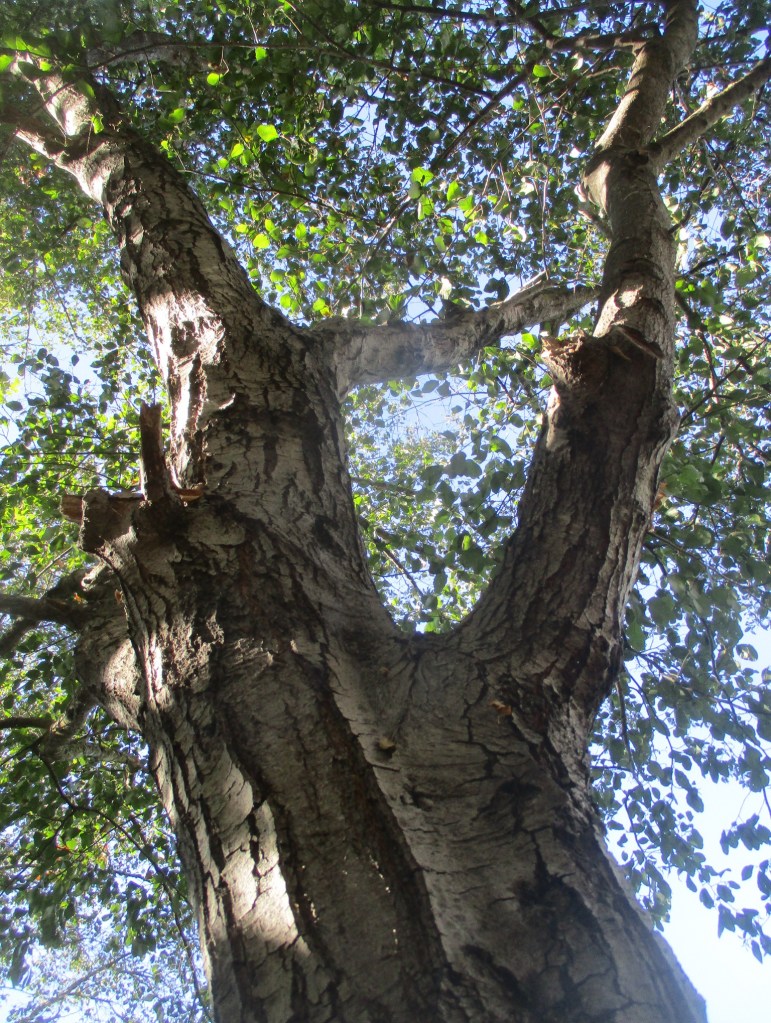
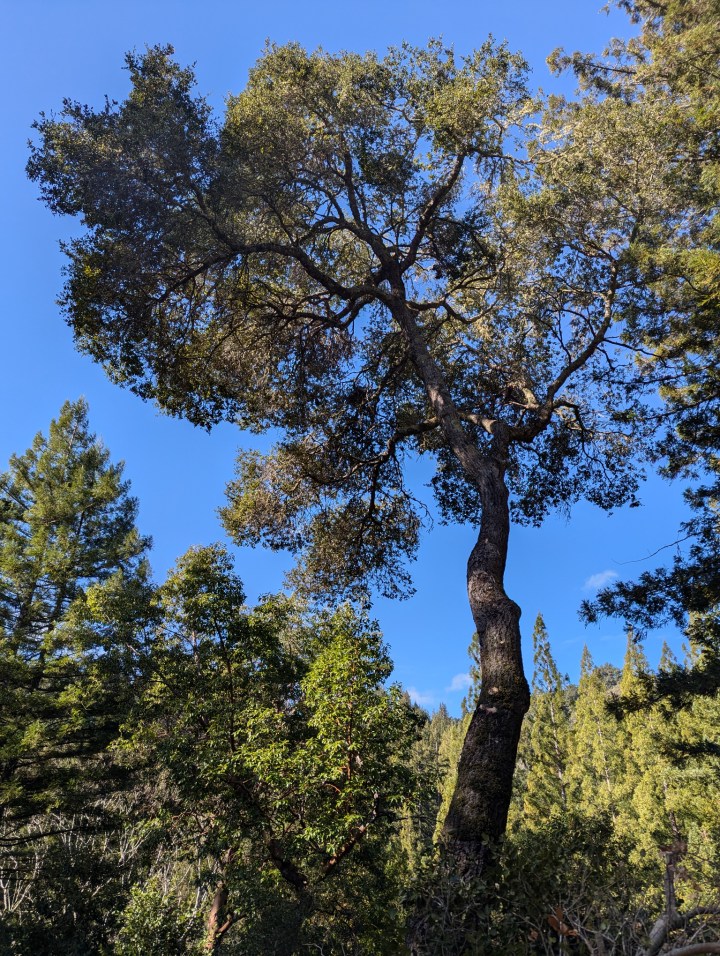
Many trees need no winterization pruning.

Arboriculture becomes more of a concern at this time of year. Although winter is a month away, the weather is becoming increasingly stormy. Wind and rain can dislodge limbs or destabilize entire trees. Some trees may benefit from winterization prior to even stormier weather in the future. Some may need the specialized services of professional arborists.

Dormant pruning of deciduous fruit trees is, incidentally, not the same as winterization. It happens later in winter, after the subjects have been dormant for a while longer. Besides, after proper dormant pruning last year, they should not need winterization now. However, if subjects are defoliated, they should not mind early pruning. They are already dormant.

Ironically, the trees that are more likely to require winterization are evergreen. Deciduous species perform almost all of their own winterization naturally. They defoliate to eliminate most of their resistance to wintry winds. In other words, they become more aerodynamic. Defoliation also eliminates most of the surface area to accumulate heavy water from rain.

Evergreen species are generally more resilient to wind than foliated deciduous species. However, as deciduous species defoliate, evergreen species can not. Evergreen foliage therefore becomes less aerodynamic and more vulnerable to wind. Also, it absorbs more heavy rainwater. The added weight of rainwater causes limbs to sag and perhaps break.

Rain does more than cause foliage to become heavier. It also saturates soils, which can potentially compromise root stability. The timing could not be worse, since wind typically accompanies rain. This is also more of a problem for evergreen species than deciduous species. However, some storms arrive early, and some deciduous species defoliate late.

Winterization pruning is as variable as the trees that benefit from it. Large trees will likely need specialized services that only arborists can provide. Japanese maples may require only minor clipping of stems that have extended too far. Many trees require nothing at all. Ultimately, such techniques should help limbs and trees survive eventual wintry weather.

Why Hire An Arborist?

Arborists work with the big trees.

Like the many different kinds of physicians who work in a hospital, there are many different kinds of horticultural professionals who specialize in particular disciplines. Although too commonly considered to be ‘landscapers’, and even though many do not work directly with landscapes, there are nurserymen, gardeners, landscape architects, horticulturists and arborists, to name a few.

Arborists specialize in the horticulture of trees. Only a few decades ago, arborists were known as tree surgeons, since they perform surgery on trees. Of all the horticultural physicians that attend to concerns in the landscape, arborists and their associated technicians are the most qualified to properly maintain trees.

Expecting a gardener to maintain large mature trees is like expecting a pediatrician to perform major surgery. Even the most proficient and educated gardeners are too specialized with maintaining other plant material in the garden to also be specialized with arboriculture, or the horticulture of trees.

Arborists who are certified by the International Society of Arboriculture, or ISA, have successfully passed and examination of their arboricultural aptitude. Certification must be maintained by attendance to educational seminars, workshops and other relevant events approved by the ISA.

The website of the International Society of Arboriculture, or ISA, at www.isaarbor.com, is the best resource for finding certified arborists and the tree service establishments that they are affiliated with. Arborists can be found within particular regions by city or ZIP code, or identified directly by name or certification number.

The ‘Public Outreach’ category at the ISA website features links to www.TreesAreGood.org, and ‘Why hire an arborist?’, as well as a few other links for consumers. After all, the website exists not only for professionals, but also to help consumers find professionals and to make responsible decisions about their trees, from the time they get planted, throughout their lifetime, and until they get old and eventually need to be removed.

The www.TreesAreGood.org link has all sorts of information about trees and their maintenance. There are many and various articles about the benefits of trees, the value of trees, tree selection, planting new trees, proper pruning techniques, insects and diseases, tree hazards, why topping hurts trees, and even an article about palms. Incidentally, the Fun Facts link mentions that the tallest tree is the coastal redwood, the biggest tree is the giant redwood, and oldest tree is the bristlecone pine, all of which are native to California.

Trees are of course the most substantial components of a landscape. Some will be around for years. Some will be around for more than a century!

Horridculture – Bad Pollarding

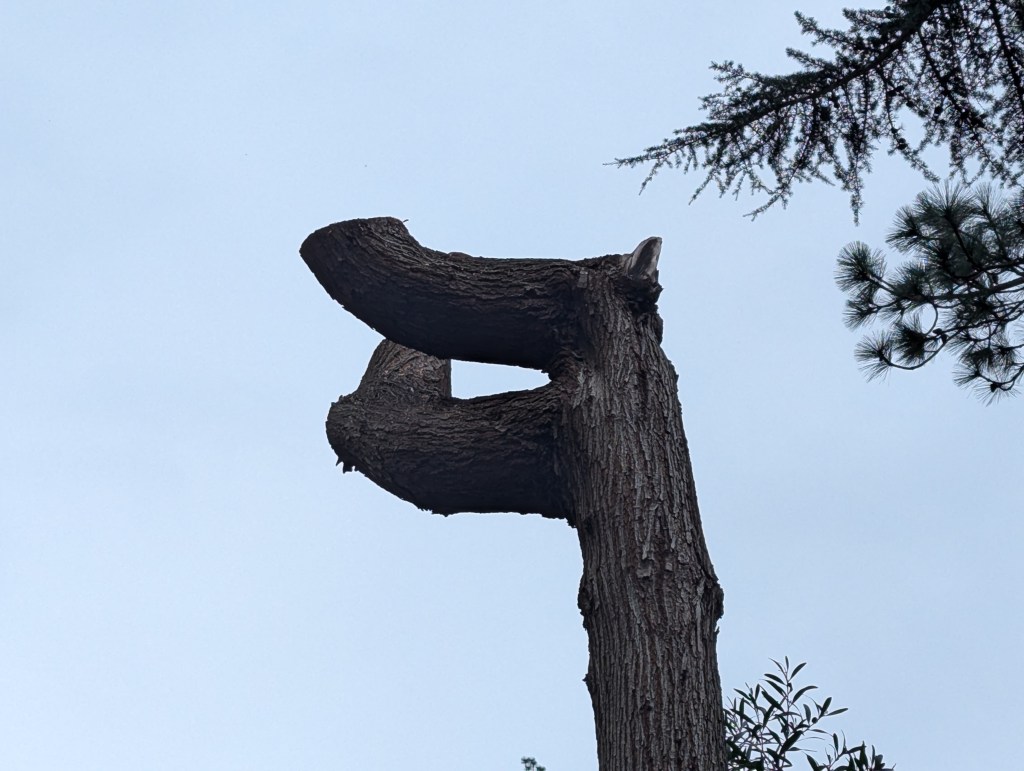
Actually, this does not even qualify as pollarding. It looks as if this tree, which was one of a few similarly damaged Acacia melanoxylon, black acacia trees, was in the process of being removed when the crew who was removing it left for the day. It would not have been so bad if they had returned to remove it and the others completely. They did not. This was the finished product. It and the others were almost twenty feet tall in this condition. They were about twice as tall prior. This sort of hack job is what gives pollarding a very bad reputation. It also demonstrates why proper pollarding should not be so vilified that arborists do not learn how to do it. Very obviously, this is not proper. Because they could not be salvaged, all of these trees were cut down a few days after I got this picture.

Pollarding can be done for a variety of reasons, and has been done for centuries in various cultures. It is still respected technique in many or most cultures. It stimulates vigorous growth that can be fodder for some types of livestock, including silkworms who consume the vigorous foliage of pollarded white mulberry trees. It can prevent some trees from producing troublesome pollen or fruit, such as old orchard olive trees that were retained as homes and their respective gardens were constructed around them. It can enhance autumn foliar color for some types of deciduous trees, such as the old Schwedler maples that were formerly common as street trees in San Jose. It stimulates growth of vigorous cane stems that are useful for basketry, fences, trellises or kindling. Locally though, it is considered to be as egregious as the technique pictured above, which is why no one here learns about it.

Arboriculture Is Very Specialized Horticulture

Arborists specialize in the big trees.

Horticulture is as diversified as horticultural professionals. Nurserymen grow horticultural commodities. Landscape designers plan installation of the commodities into landscapes. Landscapers construct the landscapes. Gardeners maintain them afterward. Florists use floral commodities. Arborists specialize in arboriculture, which is the horticulture of trees.

Arboriculture is necessary because trees are so substantial. Although most arborists can work with smaller trees, larger trees are their priority. Other horticultural professionals are neither qualified nor able to work with such trees. Similarly, arborists are too specialized to engage with landscape design or floristry. Arboriculture is truly an intensive discipline.

Many garden enthusiasts maintain their own trees while such trees are somewhat small. Some trees, such as dwarf citrus and Japanese maples, stay small. However, most trees eventually grow beyond reach from the ground. Even within gardens that lack gardeners, arborists might become necessary. This is certainly not something to be negligent about.

When pansies get tired in spring, gardeners can replace them with petunias for summer. Trees are completely different. They are the most substantial and persistent vegetation in their respective landscapes. Some can survive for a few centuries. The consequences of their neglect can be disastrous. Arboriculture is crucial to the safety of their environment.

The importance of arboriculture typically becomes more apparent during wintry weather. Rain destabilizes roots. Wind weakens the integrity of limbs and trunks. Generally, trees become messier and more hazardous than at other times of year. However, arboriculture is a concern throughout the year. Spontaneous limb failure is more likely during summer.

Besides, several procedures for certain trees are more appropriate during other seasons. Furthermore, mitigation of potential problems is easier before they become emergencies. Information about arboriculture is available from the International Society of Arboriculture or ISA. Their website, which also provides a list of certified arborists, is at isa-arbor.com.

Tree Work Will Be Less Stressful During Dormancy.

Only arborists can work on the big trees.

The taller trees are typically the first to admit that summer is finished and that it is now autumn. Perhaps because they are higher up and into the changing weather more than smaller plants that are sheltered and closer to the ground. Some trees are changing color nicely. Others are thinking about it. Evergreens are, . . . well, evergreen; so they may not seem to change so much. Nonetheless, autumn is here, and most plants will consequently be going dormant for the winter, or at least slowing down a bit.

For many trees and other plants that need to be pruned, the next few months will be the best time for it. Because they are more or less dormant, they are not very aware of whatever procedures they are subjected to. When they wake up in spring, they simply adapt to the earlier pruning and start growing as if not much happened to them. Dormancy is like a natural anesthesia for trees and plants.

Conversely, the end of winter and beginning of spring is the worst time to prune many trees and plants because they are just emerging from dormancy, so are wide awake! If necessary, minor pruning done properly is generally tolerable, but should realistically be done either before or after that time. Maples, birches, mulberries and figs express their disapproval of late pruning by bleeding profusely, and sometimes for a long time.

Deciduous trees are most dormant by winter when their leaves have fallen off. Pruning them a bit earlier would probably be harmless, but deprives them of their colorful foliage. Maples, gingkoes, poplars and mulberries typically defoliate earliest. Oaks, elms and sweetgums (liquidambars) take their time, holding onto their leaves until they get knocked out by wind and rain. Oaks and elms are not very colorful anyway. Sweetgums though can look too good to get pruned late into winter!  

Arborists are physicians of trees, so can prescribe recommended pruning and maintenance procedures. Many trees, like Chinese elms, fruitless mulberries and willows, need more attention than others. Austrian black pines and Eastern redbuds are not so needy. Blue spruces that are allowed to remain branched to the ground and have enough space around them may never need a visit by an arborist.

Regardless of how much attention any particular tree needs, when it develops a problem that is out of reach, it should be assessed by an arborist, and hopefully pruned accordingly. Because trees are the most substantial features of the landscape, and can develop worse problems if not maintained properly, it is imperative to procure the services of qualified arborists; and not trust such important tasks to a gardener or anyone who can find a chain saw and pick up. Fortunately, certified arborists can be found at the website of the International Society of Arboriculture (ISA), at www.isaarbor.com.

Horridculture – Hackers (again)

Is it really too much work to not leave such stubs while destroying a hedge?!

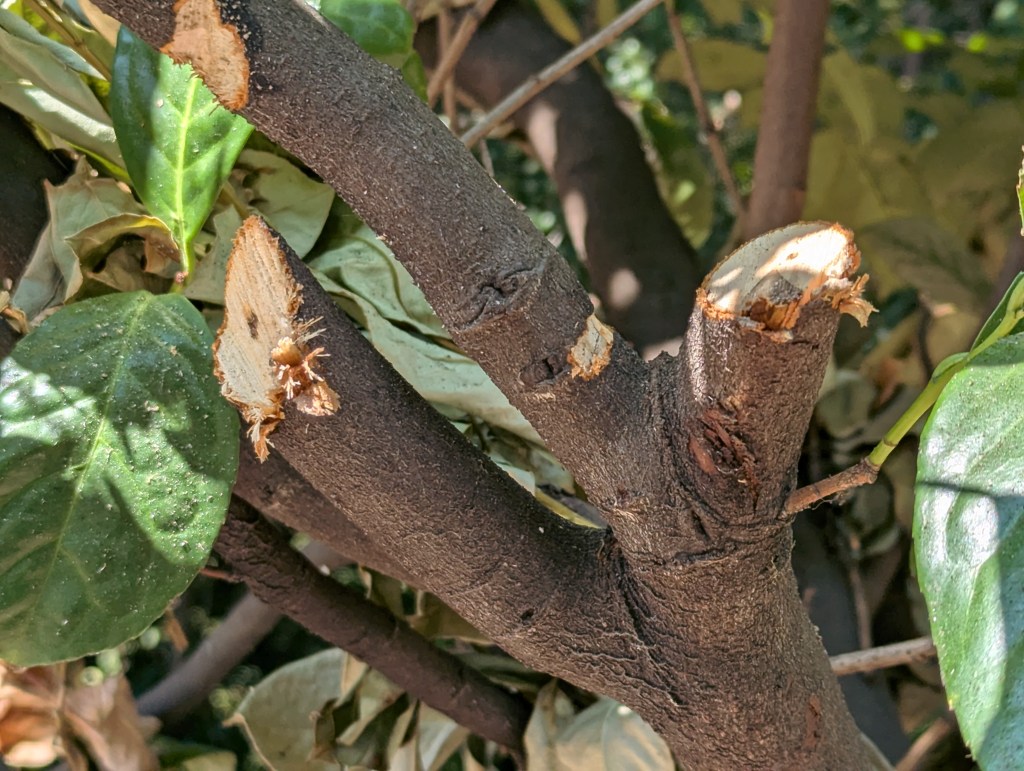
It has been quite a while since I posted anything that qualifies for the theme of ‘Horridculture’. Such topics are not only unpleasant, but have become redundant and passe. They are annoyingly frequent reminders of how several of the horticultural industries attract too many of those who either lack practical experience or simply do not care about their work. I can not even remember how many times I wrote about hackers, which is why I did not assign a number to this title. I can see that I addressed this issue as recently as February. Nonetheless, because this particular incident involves a Prunus laurocerasus, cherry laurel hedge that we have been renovating for a few years, it is difficult to ignore. The formerly severely overgrown hedge had been responding somewhat slowly but otherwise adequately to its renovation, all behind a reasonably presentable facade. Actually, until recently, the facade had become tidier and denser than it had ever been before. Then, a tree service was hired to clear some adjacent unmanaged vegetation. The objective was to remove vegetation from an area that is to be paved for dumpsters. There was no concern for the quality of the work, since remnants of such vegetation can be managed or removed later. The problem is that those who performed the task also removed a significant portion of the facade of the hedge beyond the area from which unmanaged vegetation needed to be removed. What is worse is that it was done so horridly. I do not remember seeing any proper cuts. All involved stems were stubbed and gashed. I can only guess that whoever did this expected the hedge to be removed later. I can not be certain of that, since complete removal within one process would have been less work than such thorough disfigurement. I mean that someone put a great deal of effort into disfiguring the hedge this severely. Fortunately, the hedge will eventually recover. I removed the stubs and neatened what remains, and will try not to look at it for the next several months. The tree service that did this actually removes unwanted trees for us efficiently and safely. Their arborists are quite experienced and qualified for what they do. I just do not want them to do anything else.

Someone put a great deal of effort into this degree of damage.

Hazards

Horticultural industries are innately hazardous. Most horticultural professionals work outside in all sorts of weather, regardless of what that weather might be; stormy, cold hot and so on. Some of us who grow horticultural commodities might occasionally work with hazardous chemicals, and many of us work exhaustingly long hours, and sometimes in the dark of night. Those who work with landscapes might also work with the same chemicals, as well as potentially hazardous motorized tools. Arborists work with the most hazardous machinery, as well as dangerously heavy debris falling from great heights, and those who climb do their work dangerously high above the ground. Then there is this, which sounds much worse than its bad punctuation. “!PLEASE DO NOT! SIT (I WAS HIT BY A STRAY METEOR)” It sounds like all sorts of bad! I do not know what is worse, sitting or a stray meteor. It is not actually a horticultural concern, but the implication is that whatever happened, it happened on this now broken bench that was formerly located within one of the landscapes that we work in. I suspect that the bench merely broke because it was deteriorated by the weather, which is a concern of meteorology.

Hard Hat

This is a harsh reminder.

This is why arborists wear hard hats. It is more than eight feet tall. I do not know how much of it extends into the wet sand. Nor do I know how much it weighs. It might have fallen from about twenty-five feet up. I do not know how far the pole saw that it was plucked down with was extended. Even with a hard hat, this would have been potentially very dangerous. I am glad that it is now on the ground, or will be when it falls over.

Nature is naturally hazardous. We try to make some of it safer. We can not eliminate all hazards though. Some, like this one before it fell, are not obviously hazardous. Some are not visible from the ground. As frequently as some hazards are eliminated, others are developing. Trees are always growing and shedding limbs that get shaded out. Old trees are always dying and deteriorating. It never ends.

The alder that dropped this necrotic limb took quite a beating when the creek flooded last winter. Water was higher than this broken limb now stands. Massive trunks of trees that fell upstream floated through here, battering any tree trunks that they encountered, including the trunk of the tree that dropped this limb, which is now at the edge of the water at its current depth. Such pummelling should have dislodged such decayed limbs. Perhaps this limb was not so decayed last winter, and therefore more firmly attached.

The intention of the minor tree work that was done in this area was merely to neaten the scenery a bit. Hazards such as this were not a consideration, since the trees appeared to be reasonably safe, and because they are located on the bank of a creek where no one else goes.

Horridculture – Hackers

How could anyone believe that this was appropriate?!

Of the many different types of horticultural professionals, the two most professional and educated are nurserymen and arborists. The two least professional and downright idiotic are maintenance gardeners and arborists. That means that some of the most professional and some of the least professional of horticultural professionals are arborists.

I have been very fortunate to have worded for some of the most professional, most educated and best arborists. However, much of my work as a consulting horticulturist and arborists involved damage that was caused by some of the least professional, least educated and worst of so-called arborists. They ruin the trees that their clients pay them to maintain or repair. It is infuriating.

Someone put a great deal of effort into destroying this formerly healthy tree.

This tree was formerly a nearly exemplary specimen of big cone pine, Pinus coulteri. It was impressively healthy and exhibited no indication of instability. Its only obvious problem was that it developed so many trunks that it would eventually develop structural deficiency. That will not likely be a problem now, since it will not likely survive long enough for such deficiency to develop. Even if it remains healthy enough to grow significantly, it will become too structurally deficient as a result of this recent damage to survive for long.

I can not imagine how anyone, arborist or not, could believe that this was a proper pruning technique. Nor can I imagine how anyone could have put so much effort into so blatantly destroying this formerly healthy tree. Seriously, this involved a lot of work! Every trunk, every major limb, and many minor limbs were cut. Some cuts were made at lateral branches, but many were not. It is not possible for the tree to compartmentalize all of the resulting pruning wounds, which will remain exposed to the weather until the tree succumbs to the resulting decay.

Recovery from such severe damage is impossible.