
P was for pea last Sunday. Although the spelling has not changed since then, this is a different topic now, so is not actually a sequel. P just happens to also be for the floral fragrance of Hibbertia scandens, which, to some, resembles that of what tomcats do to designate their territory. Its several common names are no more appealing. It is known as golden guinea vine, climbing guinea flower and twining guinea flower. Rather than possibly offending others of Italian descent, I refer to it simply as snake vine. Contrary to its several other common names, it is not actually from the Guinea Region of Western Africa, but is instead from Eastern Australia and New Guinea. Incidentally, New Guinea is no more affiliated with Western Africa than it is with descendents of Italian Immigrants in America, or plump rodents who identify as pigs of the Andes Mountains on the West Coast of South America. I got a few cuttings of snake vine at the end of last September. One cutting is growing quite nicely. Another took time to bloom with this single flower that looks like Carl Junior did not quite beat the train. Its floral fragrance is almost disappointingly unobjectionable. I suspect that more are necessary to be perceptibly fragrant. From my limited experience with the species, I remember than only a profusion of bloom produced merely a slightly objectionable fragrance. Like so much of what I grow here, I have no idea of what to do with these new snake vines. Fortunately, they are more docile than the white perennial pea that I mentioned last Sunday, or the cup of gold vine that I mentioned earlier. Eventually, I should be able to accommodate some within at least one of the many refined landscapes at work. If so, I will not put enough of it within the same situation to generate annoyingly objectionable floral fragrance. Nor should any individual specimen be allowed to grow large enough to do so. I would be more tolerant of a slight bit of such fragrance within my home garden only because I happen to be fond of this species now that I have reacquainted with it.
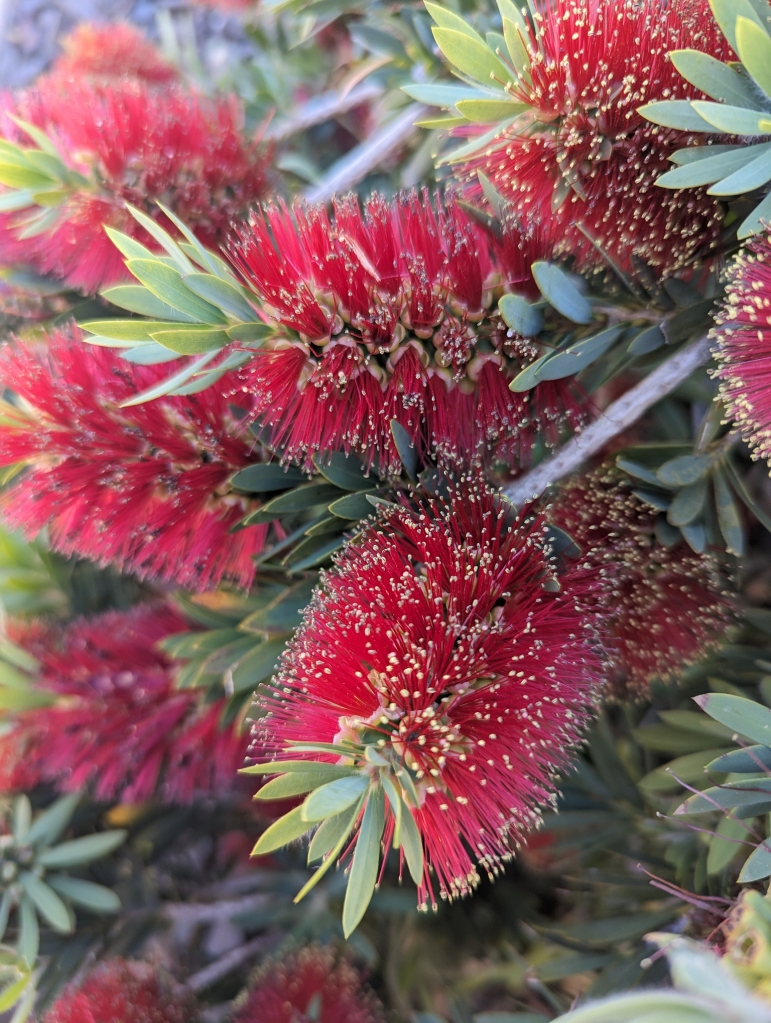

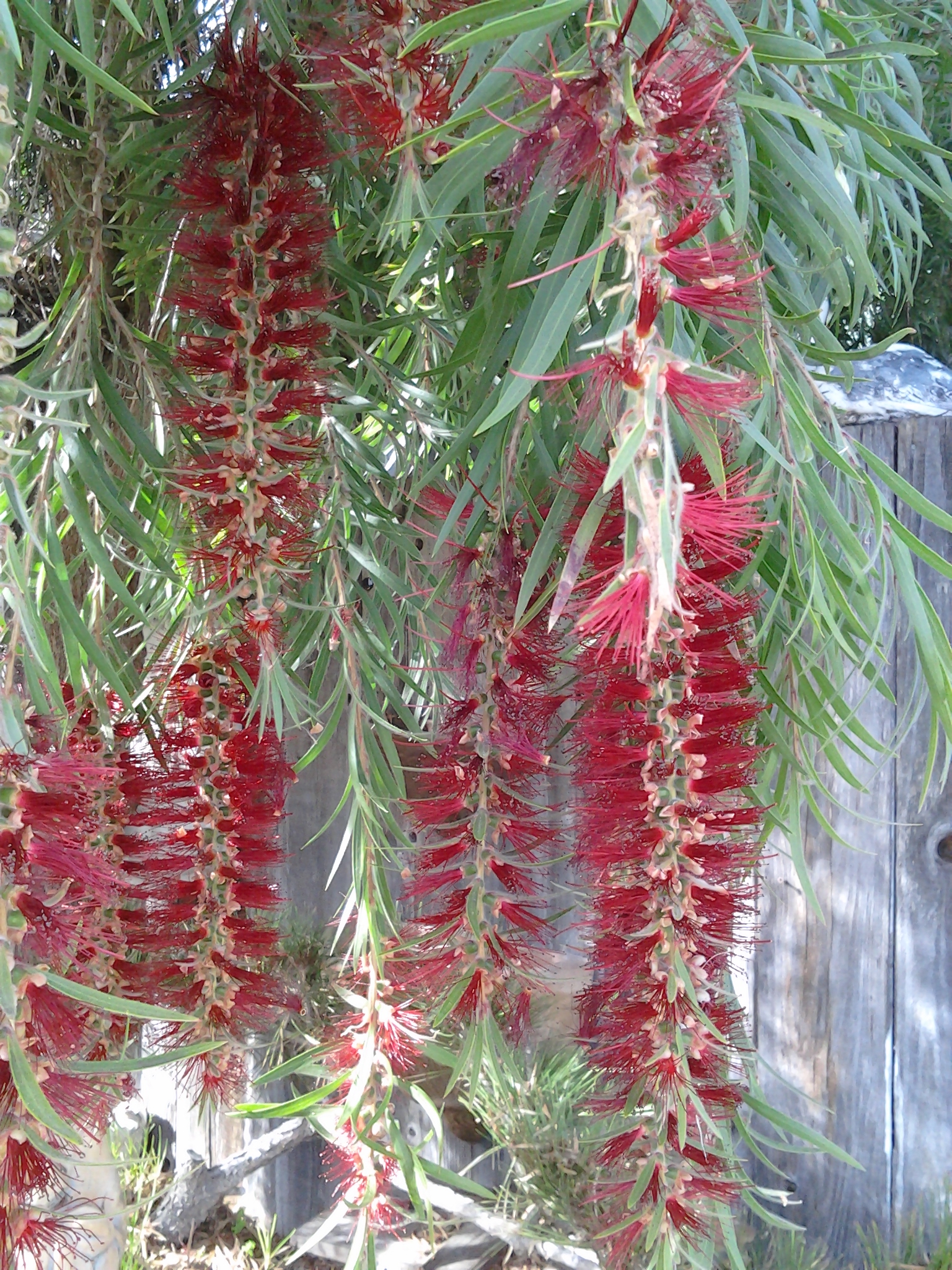
 Where it has space to grow, classic lemon bottlebrush that was so popular in the 1960’s is still a practical and resilient large shrub, and is happy to bloom with bright scarlet flowers as long as the weather is warm. It is resistant to most diseases and pests, and once established, survives on annual rainfall. Its main problem is that it simply gets too big for many situations.
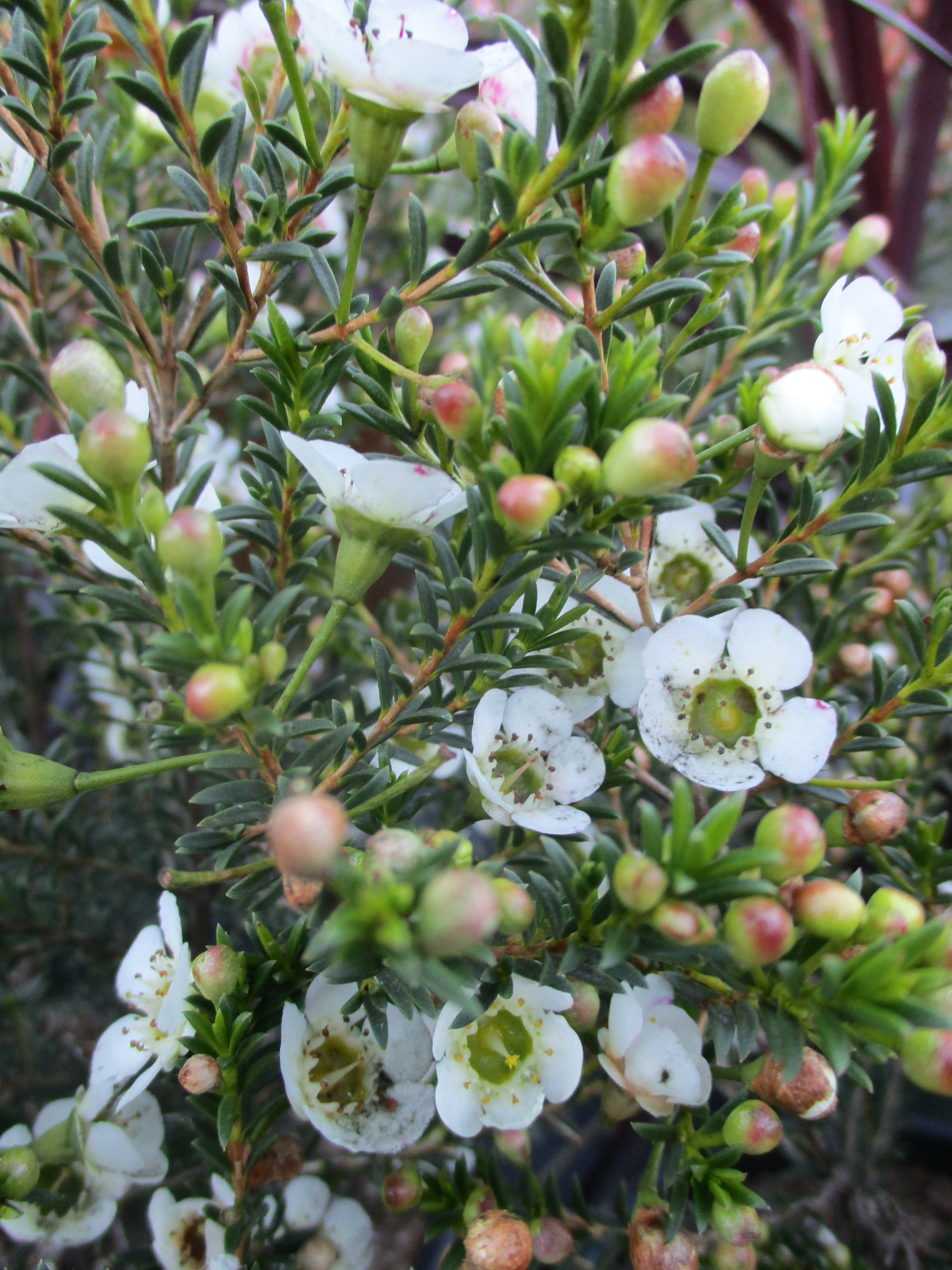 What is it about Australian plants that makes them bloom in winter? Perhaps they think they are still in Australia where it is summer. Whatever the deal is, Geraldton waxflower, Chamaelaucium uncinatum, provides a scattering of small white, pale pink or lavender pink flowers from now until spring. It is no mistake that their bloom resembles that of New Zealand tea tree. They are related.
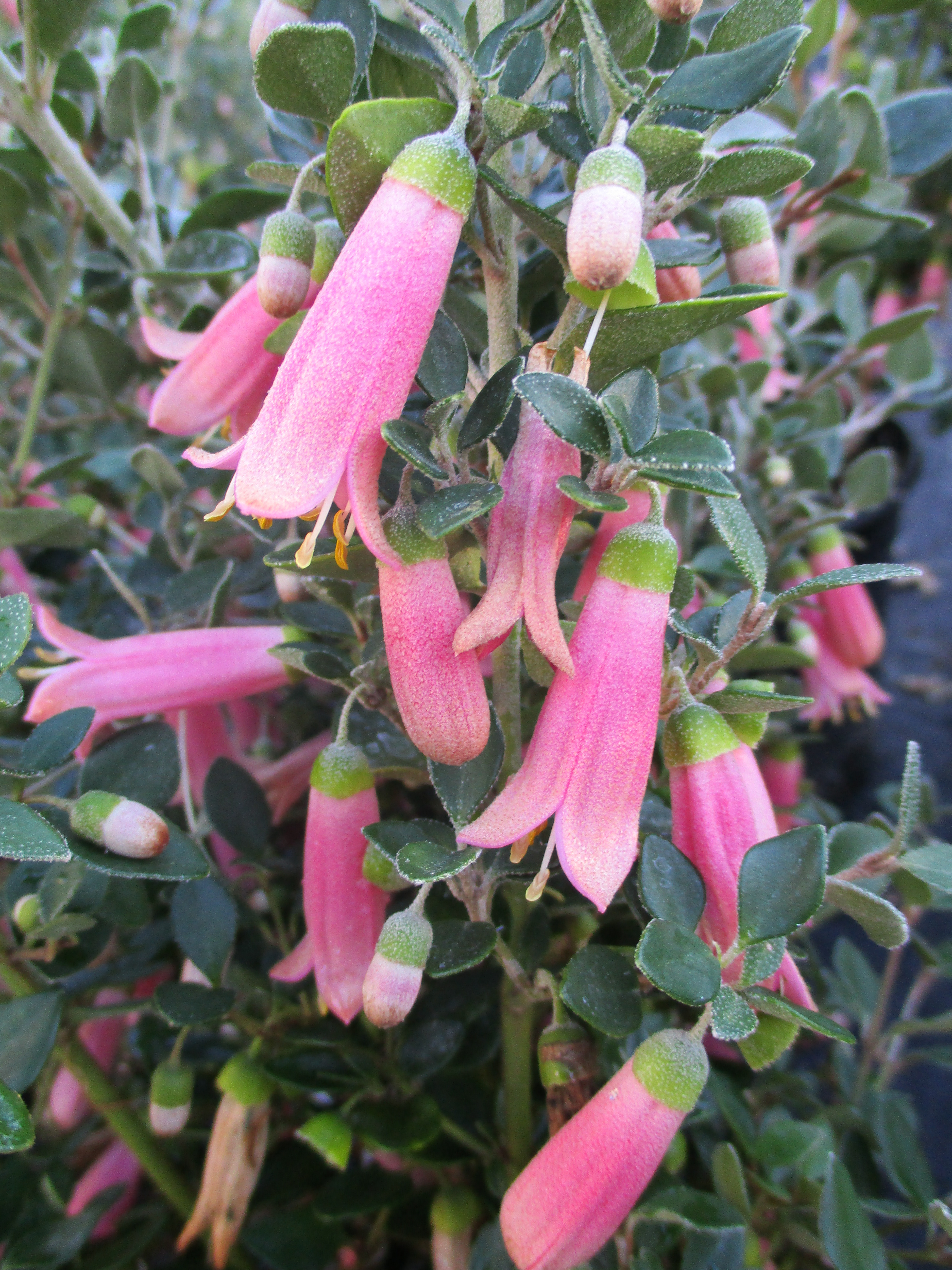 Pictures are probably prettier than the real thing. Australian fuchsia, Correa pulchella, really does bloom with pendulous soft pink flowers through winter when not much else is blooming. However, the flowers are quite small, and the color is rather hazy. The real appeal of Australian fuchsia is that it is so undemanding, and once established, only needs watering a few times through summer.
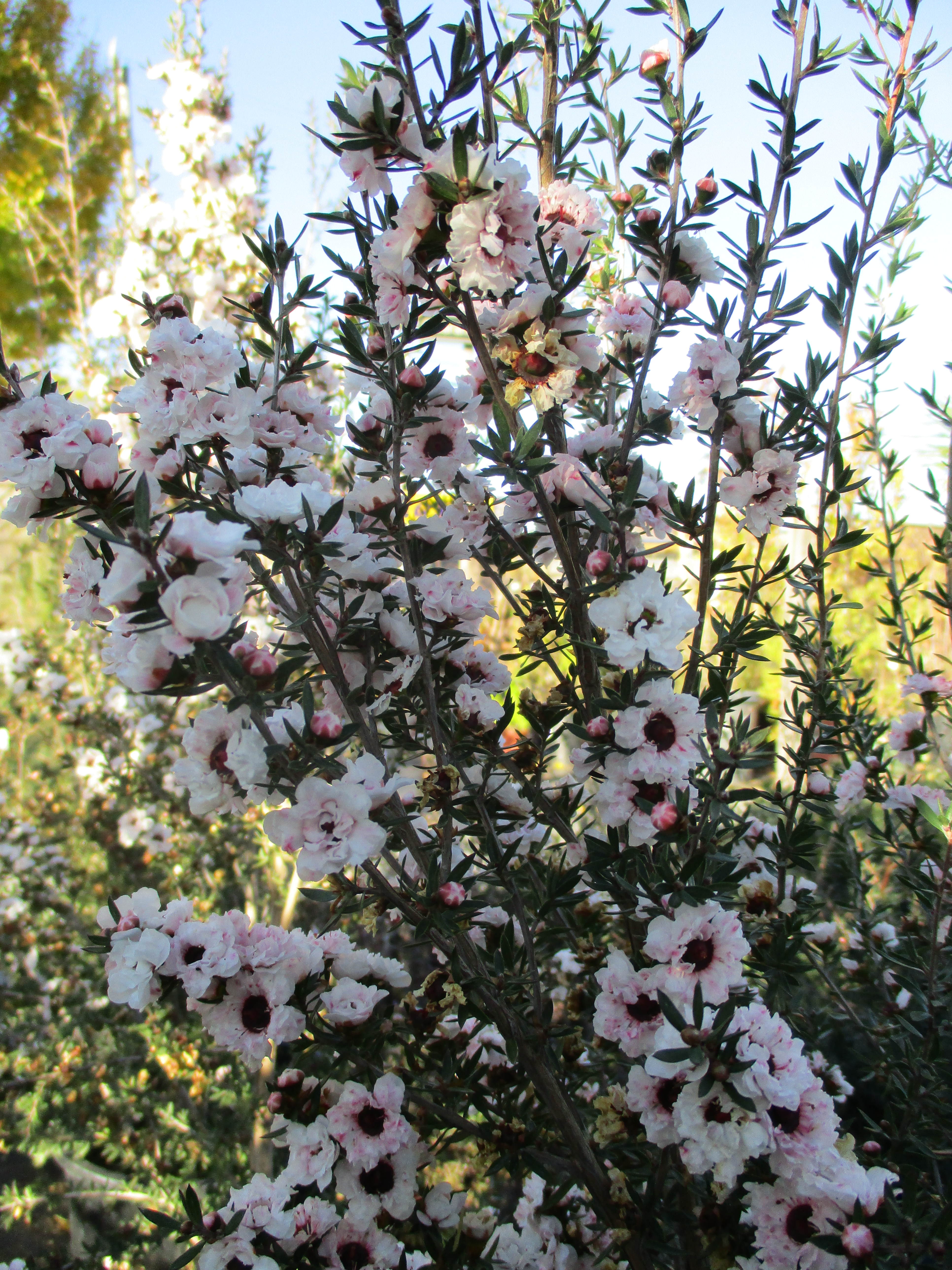 With such an odd variety of flowers blooming out of season, it should be no surprise that New Zealand tea tree, Leptospermum scoparium, decided to join the party. It starts blooming in phases in spring, and continues into autumn, so is not too terribly out of season. Besides, some varieties are known for spontaneous bloom phases at any time of year. Bloom can be pink, white or red.
 No one knows for certain who the parents were, so the hybrid Grevillea ‘Peaches and Cream’ lacks a species designation. (If it is important, the parent are most likely Grevillea banksii and Grevillea bipinnatifida.) It is an evergreen shrub that gets about four feet high and wide, with intricately lobed light green foliage. Individual leaves are about four inches long and two inches wide.
 Tony Tomeo