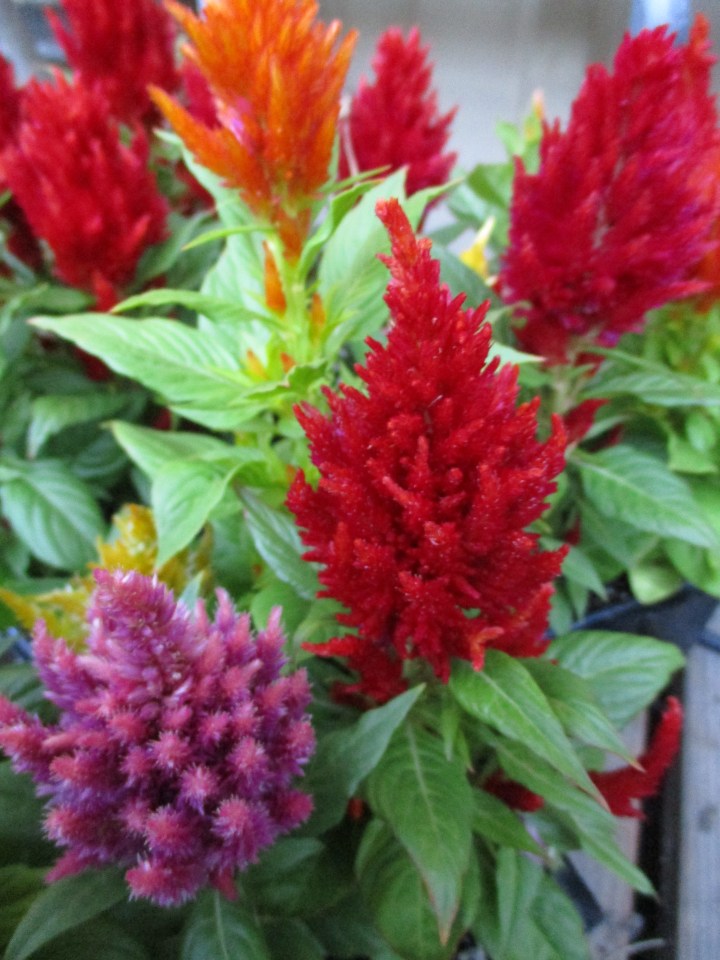
 Not all annuals last as long as petunias do through summer, or pansies do through winter. Some fill in for the in between seasons, or if longer term annuals do not last quite as long as they should. Cockscomb, Celosia plumosa, blooms best now that it is about halfway through summer, and then finishes as weather gets too cool for it in late autumn, not so much more than two months later.
The common name of cockscomb is actually derived from another species, Celosia cristata, which blooms with oddly stunted and flared blooms that supposedly resemble the combs of roosters, but the most popular varieties are so stunted that they actually look more like little fuzzy brains. Celosia plumosa blooms are more feathery, like those of pampas grass, but only three inches long.
The red, orange, yellow and pink blooms are as brightly colored as a pinata. Mixed colors, which might include softer pink, are the most popular for six packs and seed. White is notably lacking from popular mixes, and is only rarely available separately. Some varieties have bronzed foliage. Cockscomb lasts more than a week as a cut flower, but blooms on rather short and stout stems.
 Good old fashioned busy Lizzie is hard to find nowadays, if it can be found at all. The nasty mildew that kills it so quickly might not be prevalent everywhere, but happens to be a serious problem where most of the bedding plant farms are located. Now, the formerly uncommon New Guinea impatiens, Impatiens X hawkeri, which is somehow resistant to the mildew, is becoming popular.
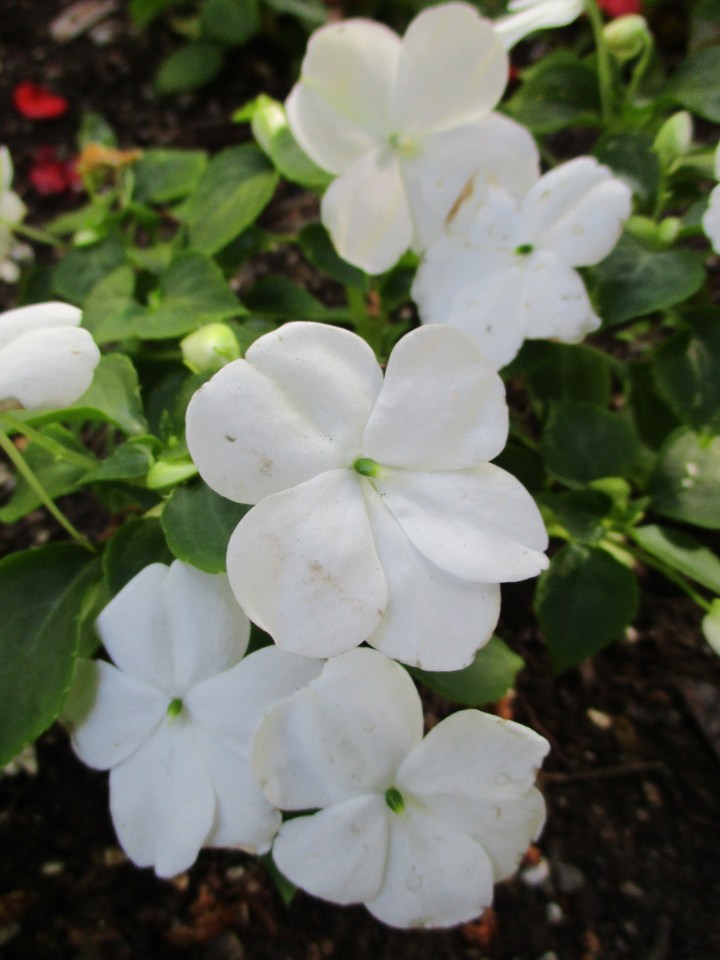 In only a few years, busy Lizzie, Impatiens walleriana, went from being one of the most popular warm season annuals to being unavailable in nurseries. It is now making a slight comeback. Most of those planted during their planting season last spring are now so profuse with bloom that their rich foliage is mostly obscured. Although they can be perennial, almost all get replaced in autumn.
 Just like warm season vegetable plants in the vegetable garden, flowering warm season annuals get replaced this time of year. Although the weather is still warm, cool season annuals should be planted now so they can disperse roots before the weather gets too much cooler. Except for a few short term annuals and perennials, most should perform until the weather gets warm next spring.
 Tony Tomeo